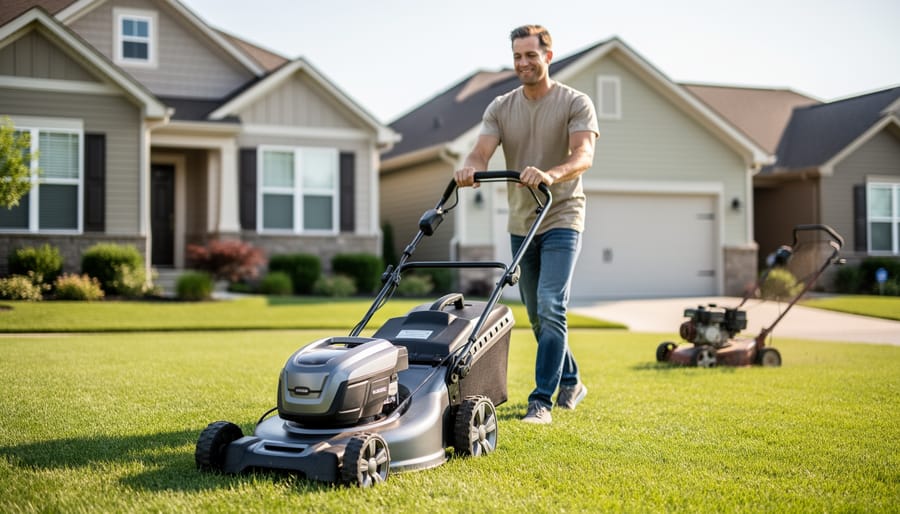
Check your local municipal website or call city hall to confirm exact quiet hours in your area—most residential zones prohibit gas-powered lawn equipment between 8 PM and 7 AM on weekdays, with stricter weekend restrictions often starting at 9 PM and ending at 9 AM. That early Saturday morning mowing session you’ve been planning? It might cost you anywhere from $100 to $1,000 in fines, depending on where you live.
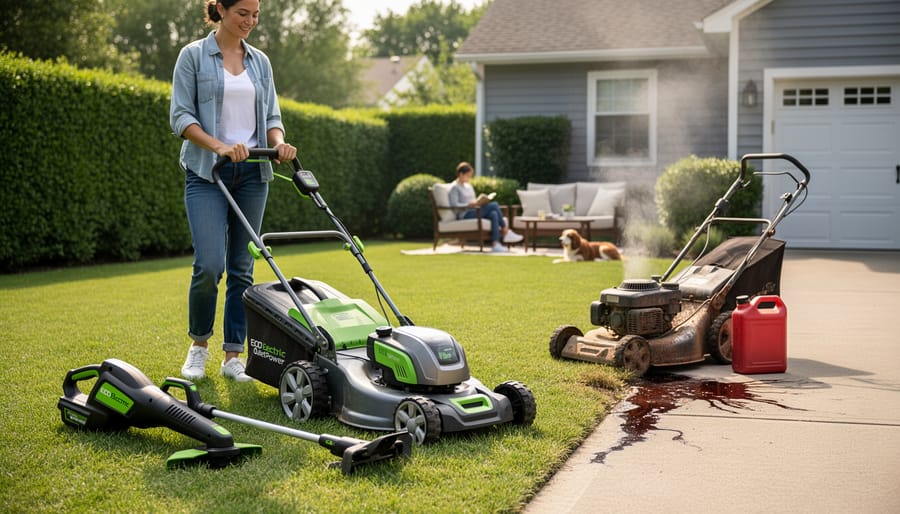
Invest in battery-powered or electric mowers and trimmers that operate at 60-75 decibels instead of gas models that roar at 90-100 decibels—these quieter alternatives keep you compliant while reducing your carbon footprint and eliminating the need to navigate complex time restrictions. Many cities specifically exempt electric equipment from noise ordinances or grant extended operating hours for their use.
Schedule your loudest tasks during mid-morning to early afternoon windows when restrictions are lifted and neighbors are less likely to be sleeping, working from home, or putting young children down for naps. Create a seasonal maintenance calendar that front-loads major projects like dethatching and aerating to spring and fall weekdays when tolerance for noise is typically higher.
Understand that repeat violations escalate quickly—second offenses often double the fine, and third violations can result in court appearances or equipment confiscation in some jurisdictions. Noise ordinances exist because someone complained, and that someone is usually watching to see if enforcement works.
The good news? You don’t have to sacrifice a beautiful lawn to be a considerate neighbor. Modern quiet equipment performs just as effectively as its louder predecessors, and strategic timing actually improves your lawn care results by allowing you to work during optimal temperature and moisture conditions rather than just “whenever you have time.”
What Loud Noise Ordinances Actually Cover
If you’ve ever wondered whether firing up your lawn mower at dawn might land you in hot water with the neighbors or local authorities, you’re not alone. Understanding what loud noise ordinances actually cover is essential for any homeowner who wants to maintain their lawn responsibly while staying on the right side of the law.
At their core, noise ordinances are local regulations designed to protect community peace and quality of life. They define what qualifies as excessive or unreasonable noise and set specific limits for different times of day. For lawn care enthusiasts, this means your weekend mowing routine might need some adjusting depending on where you live.
So what exactly counts as loud noise? Most ordinances measure sound in decibels, abbreviated as dB. To give you perspective, normal conversation registers around 60 dB, while a typical gas-powered lawn mower can reach 90 dB or higher. Many residential areas set their daytime noise limits between 55-70 dB, with nighttime thresholds dropping to 45-55 dB. These numbers might seem arbitrary, but they’re carefully chosen to balance your right to maintain your property with your neighbors’ right to peaceful enjoyment of theirs.
The distinction between daytime and nighttime restrictions is crucial. Most communities establish quiet hours, typically running from 10 PM to 7 AM on weekdays, and sometimes extending until 8 or 9 AM on weekends. During these hours, stricter decibel limits apply, and operating loud equipment like mowers, leaf blowers, or trimmers is generally prohibited. Understanding gas-powered mower regulations in your specific area can help you avoid violations.
What’s interesting is that ordinances don’t just measure volume. They also consider duration, frequency, and the nature of the noise. A few minutes of trimming might be acceptable, while hours of continuous mowing could violate local rules regardless of decibel levels. Some communities even specify which types of equipment can be used during certain hours, making it important to check your local regulations before investing in new lawn care tools or establishing your maintenance schedule.
Time Restrictions: When You Can (and Can’t) Run Your Equipment
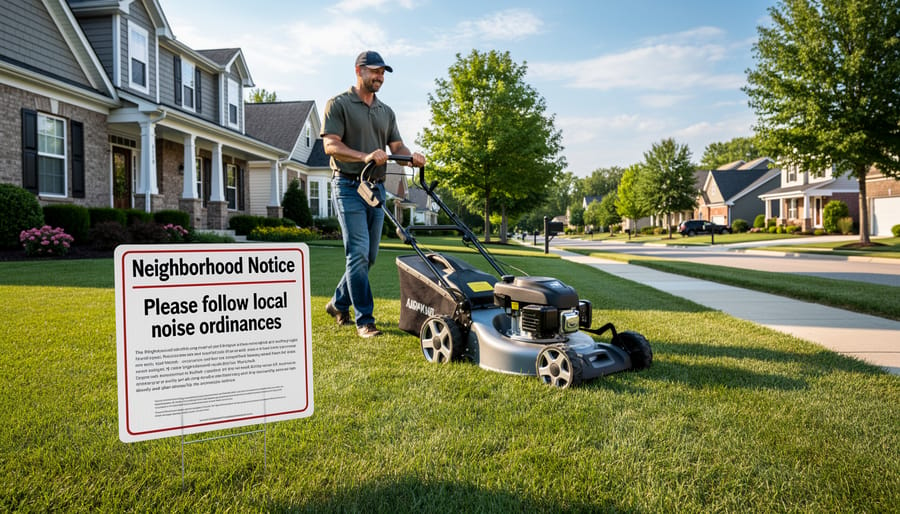
If you’ve ever wondered why your neighbor glares at you when you fire up the mower at 7 a.m. on Saturday, there’s probably a good reason. Most communities have specific time windows when lawn equipment use is permitted, and understanding these boundaries helps you stay on the right side of both the law and neighborhood goodwill.
While typical time restrictions vary significantly depending on where you live, certain patterns emerge across most jurisdictions. Weekday rules generally allow earlier start times than weekends, recognizing that many people sleep in on Saturdays and Sundays. A common framework looks something like this:
| Day Type | Permitted Start Time | End Time |
|---|---|---|
| Weekdays (Monday-Friday) | 7:00 AM | 8:00 PM or 9:00 PM |
| Saturdays | 8:00 AM or 9:00 AM | 8:00 PM |
| Sundays and Holidays | 9:00 AM or 10:00 AM | 7:00 PM or 8:00 PM |
These time windows exist for practical reasons rooted in community wellbeing. Early mornings and evenings are when people typically rest, work from home, or enjoy quiet outdoor time. Weekends see later start times because they’re designated for recovery from the workweek.
Holiday restrictions deserve special attention. Major holidays like Thanksgiving, Christmas, and New Year’s Day often carry stricter limitations or complete bans on noisy equipment use. Some municipalities extend these restrictions to include federal holidays and even religious observances.
The specific regulations in your area might be more lenient or restrictive than these common patterns. Coastal communities, dense urban neighborhoods, and HOA-governed areas frequently impose tighter restrictions, while rural zones may have none at all. Your local city or county website typically posts ordinances online, or you can call your municipal office directly. Taking ten minutes to verify these rules before establishing your mowing routine can save you from fines ranging from fifty to several hundred dollars per violation, and more importantly, it demonstrates respect for your community’s shared spaces and peace.
How HOA Rules Layer on Top of Municipal Ordinances
If you live in a community governed by a Homeowners Association, you’re dealing with a double layer of noise regulations—and it’s important to understand how they work together. Think of it this way: your city or county sets the baseline noise rules that everyone must follow, while your HOA acts like an additional filter that can make those rules even stricter for your specific neighborhood.
Here’s the key principle: HOAs can never override municipal ordinances to be more permissive. So if your city prohibits lawn mower use before 8 AM on weekdays, your HOA cannot say you can start at 7 AM. However, they absolutely can impose tighter restrictions. Your HOA might decide that lawn equipment can’t be used before 9 AM, even if the city allows it at 8 AM. When there’s a conflict between rules, the stricter one always applies.
Why do HOAs create these additional equipment use policies? Often, it’s about maintaining neighborhood character and peace. Many communities have homes closer together than typical suburban spacing, meaning noise travels more easily between properties. Your HOA board members are your neighbors too, and they’re responding to concerns they hear at community meetings. They might restrict certain high-decibel equipment on weekends entirely or designate quiet hours that extend beyond city requirements.
Before you fire up that leaf blower on Saturday morning, check both your municipal code and your HOA’s governing documents. Your CC&Rs (Covenants, Conditions, and Restrictions) and community rules should spell out specific equipment restrictions. Some HOAs even maintain approved equipment lists or encourage quieter, electric alternatives as part of sustainability initiatives.
The good news? Understanding both sets of rules helps you plan your lawn care schedule effectively and avoid potential fines from either authority. If you find the restrictions challenging, consider this an opportunity to explore quieter, more eco-friendly equipment options that benefit both your conscience and your neighbor relationships. Many modern electric mowers and battery-powered tools operate well within even the strictest noise limits while delivering excellent results for your lawn care needs.
Common Lawn Equipment and Their Noise Levels
Understanding how loud your lawn equipment actually is can help you stay on the right side of noise ordinances while maintaining good relationships with your neighbors. Most communities set their noise limits between 55 and 70 decibels during daytime hours, so knowing where your tools fall on that spectrum is incredibly valuable.
Let’s look at the typical noise levels you can expect from common lawn care equipment:
| Equipment Type | Gas-Powered (dB) | Electric/Battery (dB) |
|---|---|---|
| Lawn Mower | 85-95 | 65-75 |
| Leaf Blower | 90-100 | 65-70 |
| String Trimmer | 85-95 | 60-70 |
| Hedge Trimmer | 85-90 | 60-65 |
| Edger | 80-90 | 60-68 |
As you can see, gas-powered equipment consistently produces significantly more noise than their electric counterparts. A traditional gas mower roaring at 90 decibels is about as loud as a motorcycle, while an electric mower at 70 decibels registers closer to normal conversation levels. This dramatic difference matters not just for equipment compliance requirements, but also for your hearing health and neighborhood harmony.
Leaf blowers deserve special mention as they’re often the biggest noise offenders in residential areas. Gas-powered models can reach 100 decibels, which is why many communities have specifically banned them or severely restricted their use. If you’re facing limitations, battery-powered leaf blowers have improved tremendously in recent years, offering impressive performance at half the noise level.
The good news for sustainability-minded gardeners is that quieter equipment also tends to be more environmentally friendly. Electric and battery-powered tools produce zero direct emissions, require less maintenance, and won’t disturb the peaceful garden atmosphere you’re working to create. They’re often lighter too, making lawn care less physically demanding. While the initial investment might be higher, the long-term benefits for both your community and the environment make modern electric equipment an increasingly practical choice for conscientious gardeners.
Finding Your Local Noise Ordinance Requirements
Finding the right information about your local noise ordinance doesn’t have to feel like navigating a maze. Let me walk you through the process so you can confidently operate your lawn mower and other garden equipment without worrying about whether you’re breaking any rules.
Your first stop should be your city or county’s official website. Most municipalities now have their codes available online, often searchable by keyword. Try searching for terms like “noise ordinance,” “noise control,” or “sound regulations.” You’ll typically find these in the municipal code section, sometimes under public nuisance or quality of life ordinances. Don’t worry if the website seems a bit clunky—these aren’t always the most user-friendly, but the information is there.
If you’re part of a homeowners association, grab those HOA documents you received when you moved in. Many HOAs have their own noise restrictions that can be stricter than city ordinances. These often specify exact hours for lawn equipment use and may include weekend restrictions.
When you find your ordinance, look for these key details: permitted hours for residential equipment use (often 7 AM to 8 PM on weekdays), decibel limits if specified, and any exceptions for different days of the week. Some communities are more lenient on weekdays than weekends when neighbors are trying to relax.
Can’t find what you need online? Give your city hall or code enforcement office a call. The staff there are usually helpful and can clarify confusing language. Ask specifically about lawn maintenance equipment and whether electric or battery-powered tools have different restrictions than gas-powered ones.
Remember, understanding local regulations is just as important for sustainable lawn care as choosing the right products. Once you know the rules, you can plan your lawn care schedule accordingly and even explore quieter, eco-friendly equipment options that give you more flexibility while being a considerate neighbor.
Practical Strategies for Staying Compliant
Choosing Quieter Equipment Options
Switching to quieter equipment isn’t just about staying on the right side of noise ordinances—it’s a win for your ears, your neighbors, and the environment. Modern electric and battery-powered equipment has come a long way from the underpowered models of the past. Today’s options can handle most residential lawn care tasks while operating at significantly lower decibel levels than their gas-powered counterparts.
For small to medium-sized lawns, reel mowers offer the quietest solution of all—virtually silent except for the satisfying snip of blades cutting grass. They’re perfect for early morning touch-ups when you need to mow before work but don’t want to wake the entire neighborhood. Plus, they provide a light workout and require zero fuel or electricity.
- Operates 50-75% quieter than gas equipment, keeping you compliant with noise ordinances
- Zero emissions make them environmentally friendly and better for air quality
- Lower maintenance costs with fewer moving parts and no oil changes needed
- Can be used during restricted hours without disturbing neighbors
- Higher upfront purchase cost compared to basic gas models
- Runtime limited by battery capacity on cordless models
- May lack power for very large properties or extremely overgrown areas
- Requires planning for battery charging schedules
When shopping for quieter equipment, look for manufacturers that specifically advertise noise-reduction technology. Many newer models feature improved motor housing, vibration dampening, and blade designs engineered to minimize sound. These innovations align perfectly with sustainable gardening practices while ensuring lawn equipment safety and neighborhood harmony. Remember, investing in quieter equipment today means fewer headaches with ordinances tomorrow.
Scheduling Your Lawn Care Wisely
Creating a lawn care schedule that respects noise ordinances doesn’t have to be complicated. Start by checking your local regulations, which typically restrict loud equipment before 8 AM on weekdays and 9 AM on weekends. Mark these quiet hours clearly on your calendar or phone to avoid accidentally firing up your mower too early.
I’ve found that planning my lawn care routine around mid-morning works wonderfully. This gives early risers time to enjoy their coffee in peace while still allowing you to finish before the hottest part of the day. If you’re an early bird who loves getting tasks done at dawn, consider tackling quiet activities like hand weeding, deadheading flowers, or inspecting your garden for pests during those restricted hours.
Being proactive about communication with neighbors goes a long way. If you need to schedule lawn care during borderline times, a quick heads-up can prevent conflicts. Perhaps your neighbor works nights or has a new baby. Knowing this information helps you adjust your schedule thoughtfully.
Consider batching your noisy tasks together rather than spreading them throughout the week. Mowing, edging, and blowing leaves in one session minimizes the total disruption. For sustainable-minded gardeners, this approach also reduces equipment startup emissions and saves time.
Finally, keep a flexible schedule when possible. If weekend mornings are your only option but neighbors are hosting an event, being willing to shift by a day demonstrates consideration and builds goodwill in your community.

Communicating with Neighbors and Your HOA
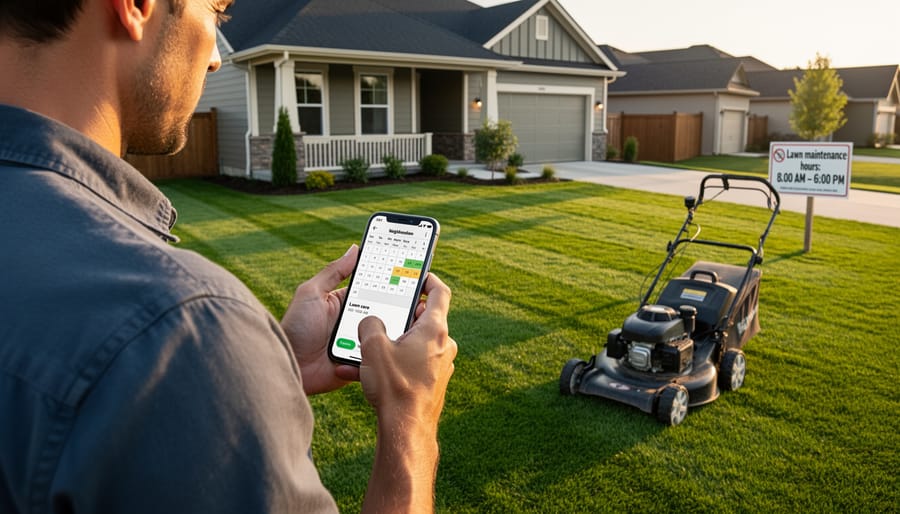
A little proactive communication goes a long way toward maintaining harmony in your neighborhood. If you’re planning an early morning mowing session or need to run your leaf blower on a weekend for a special occasion, give your immediate neighbors a friendly heads-up. A simple conversation or quick text message shows respect for their peace and often builds goodwill that works both ways.
For those living in HOA communities, familiarize yourself with both local noise ordinances and any additional restrictions your association may have. HOAs sometimes impose stricter quiet hours than municipal codes. If you have special circumstances, like hosting a wedding reception in your backyard or needing to complete urgent storm cleanup, contact your HOA board in writing to request a temporary exception. Most boards are reasonable when you explain your situation ahead of time rather than apologizing afterward.
Consider being the neighbor who sets a good example by choosing quieter equipment when possible and consistently respecting quiet hours. This consideration creates a positive reputation that makes occasional exceptions much easier to negotiate. Remember, your beautiful lawn shouldn’t come at the cost of neighborhood relationships.
What Happens If You Violate Noise Ordinances
Look, we’ve all been there—you’re excited to get the lawn mowed early on a Saturday morning, only to realize later that you might have woken up half the neighborhood. If you do violate your local noise ordinance, it’s helpful to know what might happen so you can handle the situation responsibly and maintain good relationships with those around you.
Most communities take a graduated approach to enforcement, which means first-time offenders typically receive some consideration. Here’s what you might expect if you inadvertently break the rules:
- Verbal or written warning for first-time violations
- Fines ranging from $50 to $500 for initial citations, depending on your municipality
- Increased penalties for repeat offenses, sometimes doubling with each violation
- Potential equipment confiscation in extreme cases of continued non-compliance
- HOA-specific consequences like additional community fines or loss of certain privileges
The good news is that enforcement officers and neighbors generally understand that lawn maintenance is necessary work. Many violations happen simply because someone wasn’t aware of the specific time restrictions or didn’t realize how far sound travels on a quiet morning. If you receive a warning, treat it as a learning opportunity rather than a cause for alarm.
For those living in HOA communities, enforcement might look a bit different. Your homeowners association may have its own system of warnings and fines that operate separately from municipal codes. Some HOAs send friendly reminders first, while others might levy community-specific fines that go toward neighborhood improvements.
The best approach? If you accidentally violate the ordinance, acknowledge it, apologize if needed, and adjust your schedule going forward. Most neighbors appreciate the honest effort to be considerate, and you’ll avoid any escalating penalties while keeping your lawn looking great.
Here’s the good news: complying with noise ordinances doesn’t mean compromising on a beautiful, healthy lawn. In fact, many quieter equipment options deliver results that are just as impressive, if not better, than their noisy counterparts. Battery-powered mowers and string trimmers have come a long way in recent years, offering ample power while being kinder to both your ears and the environment. By embracing these tools and being mindful of your mowing schedule, you’re not just following the rules—you’re becoming a more considerate neighbor and adopting more sustainable practices.
Think of noise ordinances as an invitation to garden smarter rather than louder. They encourage us to be more intentional about when and how we care for our lawns, which often leads to better planning and more efficient gardening routines. When you coordinate your lawn care within permitted hours, you might find yourself working during cooler parts of the day, which is actually healthier for your grass and more comfortable for you. Plus, the relationships you build with neighbors through respectful communication create a more pleasant community for everyone. Compliance isn’t a burden—it’s an opportunity to elevate your approach to lawn care while maintaining the lush, green space you’ve worked hard to cultivate.