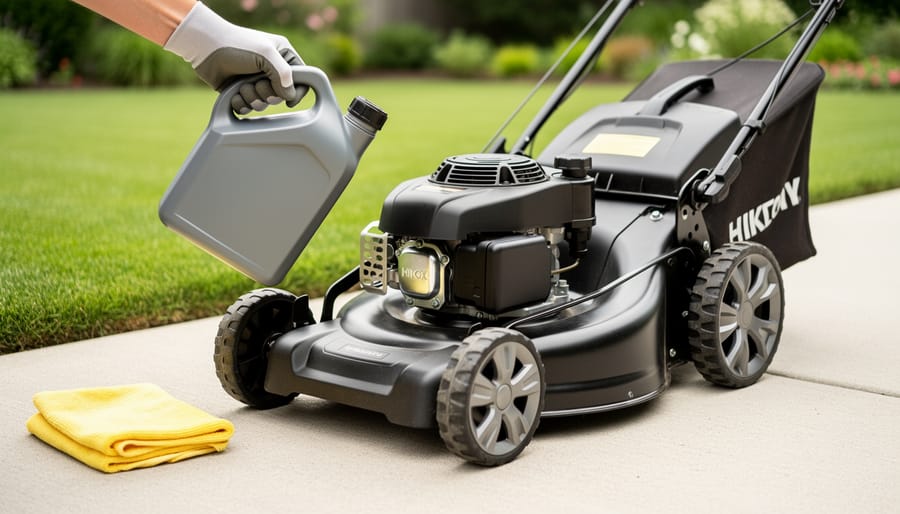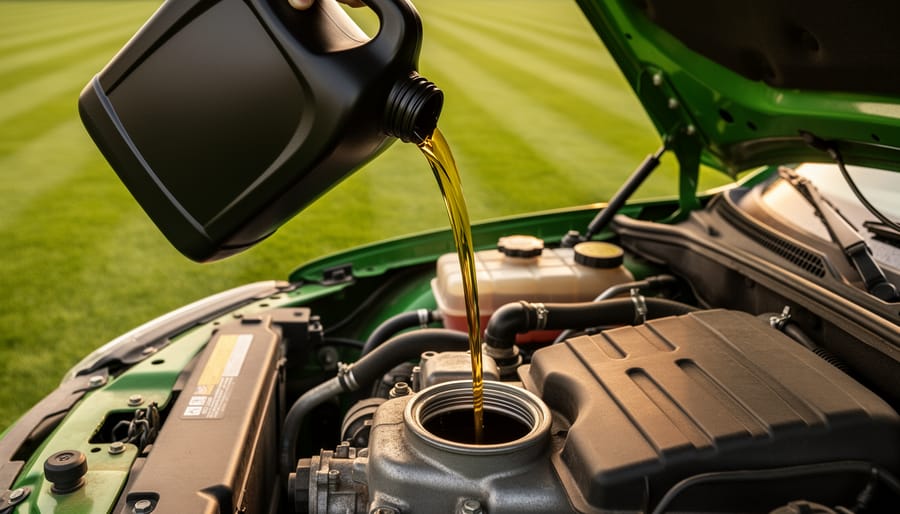
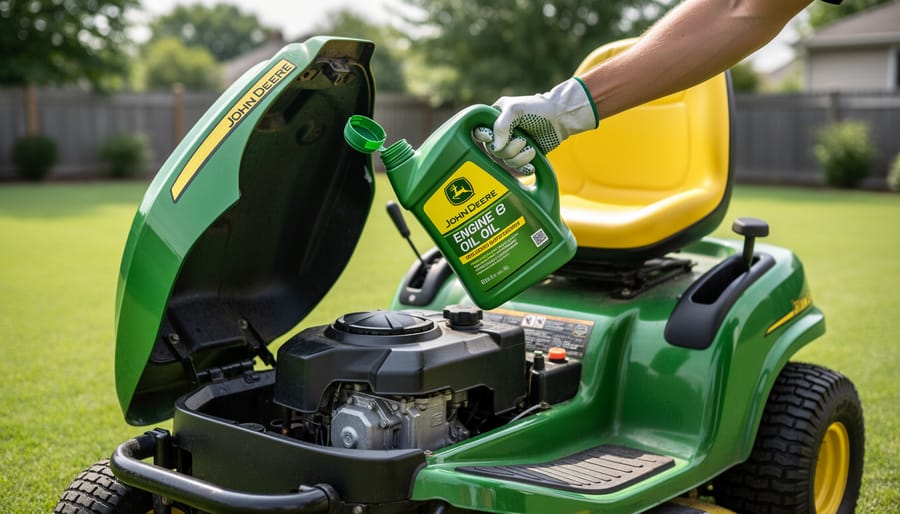
Choosing the right oil for your John Deere lawn mower protects your engine investment and ensures peak performance season after season. John Deere officially recommends SAE 10W-30 oil for most residential mowing conditions, which provides excellent protection across a wide temperature range. You’ll find this specification clearly marked in your owner’s manual, typically calling for oil that meets API service classification SJ or higher.
Temperature plays a bigger role than most homeowners realize. If you’re mowing in consistently hot weather above 80°F, switching to SAE 30 offers better viscosity stability under heat stress. For those early spring cuts when temperatures hover near freezing, 5W-30 flows more readily at startup and prevents that grinding sensation during cold starts.
Understanding lawn mower oil basics helps you decode the numbers and letters on oil bottles. The “W” stands for winter, and that first number indicates how easily oil flows in cold conditions. The second number shows thickness at operating temperature.
Synthetic versus conventional oil sparks ongoing debate among lawn care enthusiasts. Synthetic oil costs more upfront but extends change intervals and performs better under extreme temperatures. Many John Deere owners running commercial-grade equipment swear by full synthetics like Mobil 1, while weekend mowers find conventional oil perfectly adequate for seasonal maintenance schedules.
Your specific model matters tremendously. Newer John Deere models with four-cycle engines need different specifications than older two-cycle engines, which require oil mixed directly with fuel. Check your mower’s identification plate or pull out that manual you’ve been meaning to read.
Why John Deere Recommends Specific Oil Types
You know how some folks think oil is just oil? John Deere’s engineers would respectfully disagree, and for good reason. These machines are precision-built, and the lubrication flowing through their engines needs to match that level of care.
John Deere designs their mower engines with specific tolerances and operating conditions in mind. The clearances between moving parts, the materials used in construction, and even the cooling system design all factor into which oil performs best. Using the recommended oil type ensures proper lubrication flow through tight spaces while maintaining a protective film between metal surfaces. Think of it like choosing the right shoes for a long hike. Sure, any footwear might get you down the trail, but the right pair prevents blisters and keeps you comfortable mile after mile.
Temperature plays a huge role here too. Your mower operates in a wide range of conditions, from cool spring mornings to scorching summer afternoons. The oils John Deere recommends maintain their protective properties across these temperature swings, staying fluid enough to circulate when cold but thick enough to cushion components when things heat up during extended mowing sessions.
There’s also the practical matter of protecting your investment. Most John Deere warranties require following their maintenance specifications, which includes using the correct oil type. Skipping this recommendation could leave you footing a hefty repair bill that would otherwise be covered.
Beyond warranty concerns, proper oil selection directly impacts engine longevity. We’re talking about potentially years of additional service life from choosing the right product. That’s not just good for your wallet, it’s better for the environment too. Fewer replacement engines mean less manufacturing waste and fewer disposed mowers ending up in landfills. Sustainable lawn care starts with smart maintenance choices that make your equipment last.
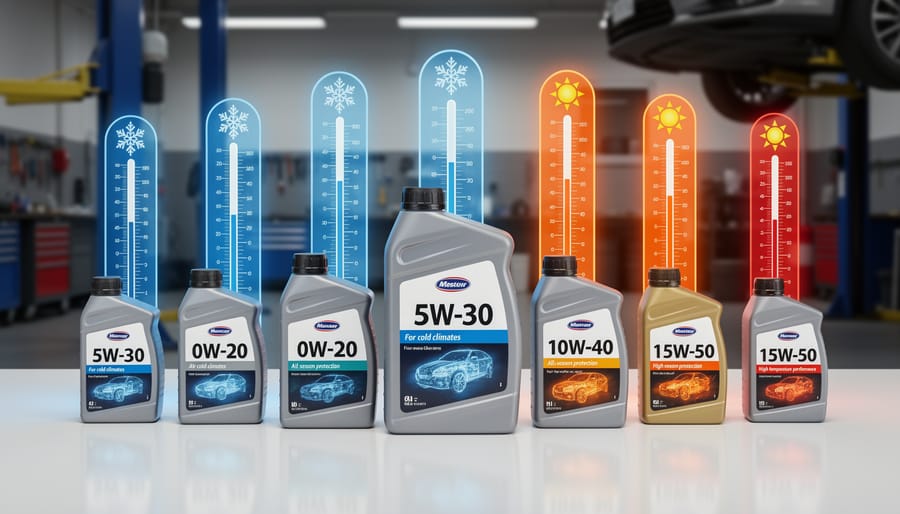
Understanding Oil Viscosity Grades for Your John Deere
SAE 30: The Traditional Choice
SAE 30 oil has been the go-to choice for John Deere lawn mowers for decades, and there’s good reason it’s still recommended today. This straight-grade oil maintains consistent viscosity in warmer temperatures, making it ideal for most mowing conditions during spring and summer months.
If you own an older John Deere model or a walk-behind mower, chances are SAE 30 is exactly what you need. Most traditional push mowers and many riding mowers manufactured before the early 2000s were designed with this oil in mind. Check your owner’s manual, but you’ll typically find SAE 30 recommended for temperatures above 32°F.
Here’s the practical advantage: SAE 30 performs beautifully in consistent warm weather. During peak mowing season, this oil provides excellent protection for your engine without the additives found in multi-grade oils. It’s straightforward, reliable, and gets the job done.
One thing to consider from a sustainability standpoint is that using the correct single-grade oil can actually extend your engine’s life, reducing waste and the need for premature equipment replacement. That’s a win for both your wallet and the environment.
However, if you live in an area with significant temperature swings or plan to mow in cooler weather, you might need to switch to a multi-grade option seasonally. SAE 30 thickens considerably in cold temperatures, which can make starting difficult and reduce initial lubrication.
10W-30: The Year-Round Performer
If you’re looking for a versatile oil that performs reliably across different seasons, 10W-30 is likely your best choice. This multi-grade oil has become the standard recommendation for most modern John Deere lawn mowers, and there’s good reason for that.
The “10W” refers to the oil’s viscosity in cold temperatures (the “W” stands for winter), while “30” indicates its thickness at normal operating temperatures. Think of it as an oil that flows easily during cold starts but maintains protective thickness once your engine heats up. This dual performance means you won’t need to switch oils as seasons change, saving you time and reducing waste.
Many John Deere models manufactured in recent years specifically call for 10W-30 in their owner’s manuals. The company tested this grade extensively and found it provides optimal protection for their four-cycle engines across a wide temperature range, typically from 0°F up to 100°F. That covers most climates where homeowners operate their mowers.
From a sustainability perspective, using a single oil year-round means fewer partially-used bottles sitting in your garage. You’ll also avoid the environmental impact of disposing of different seasonal oils. Just make sure you’re choosing a quality 10W-30 that meets John Deere’s specifications, and you’ll be giving your mower the protection it needs while keeping your maintenance routine simple and efficient.
Synthetic vs. Conventional Oil
When you’re standing in the oil aisle wondering whether to grab that premium synthetic or stick with conventional oil, you’re not alone. Many John Deere owners face this decision, and the good news is that both options work perfectly fine for your mower.
Conventional oil is petroleum-based and has been the trusted standard for decades. It gets the job done reliably and comes at a friendlier price point. Synthetic oil, on the other hand, is engineered in a lab to provide enhanced performance under extreme conditions. Think better flow in cold weather, superior heat resistance, and longer intervals between changes. For your lawn mower, that translates to easier starts on chilly spring mornings and better protection during marathon summer mowing sessions.
John Deere officially approves synthetic oils for all their mowers, provided they meet the proper SAE viscosity ratings. Their stance is straightforward: use what fits your budget and mowing conditions. If you’re running a basic residential mower for weekly cuts, conventional 10W-30 will serve you well. Similar considerations apply across different brands, which is why choosing the right Honda lawn mower oil also depends on your specific usage patterns.
- Superior engine protection in temperature extremes.
- Extended oil change intervals reduce maintenance frequency.
- Better performance during prolonged operation and heavy use.
- Cleaner engine with fewer deposits over time.
- Costs two to three times more than conventional oil.
- Performance advantages less noticeable in light residential use.
- Not necessary for basic mowing needs in moderate climates.
From a sustainability perspective, synthetic oil’s longer life means fewer oil changes and less waste oil disposal. That’s a genuine environmental benefit. But conventional oil changed on schedule still keeps your engine healthy. Your decision really hinges on how hard you work your mower and whether the extra cost fits your lawn care budget.
Finding the Right Oil for Your Specific John Deere Model
Finding the right oil for your John Deere mower starts with one simple step: grab your owner’s manual. Seriously, that little booklet tucked in your garage or tool shed holds all the answers. It lists the exact oil type, viscosity grade, and capacity for your specific model. Look for a section titled “Maintenance” or “Engine Specifications.” The information is usually straightforward, telling you something like “SAE 10W-30” or “SAE 30” along with the number of ounces your engine holds.
Here’s where things get interesting. Not all John Deere mowers need the same oil. A residential walk-behind model like the JS63 has different requirements than a heavy-duty commercial zero-turn like the Z900 series. Walk-behind mowers typically use smaller engines with simpler oil needs, while riding mowers and commercial equipment might require synthetic blends for extended operation and better performance under stress. This isn’t about upselling you on expensive products. It’s about matching the oil to how hard your mower works.
Lost your manual? Don’t panic. John Deere maintains an excellent online resource. Visit their official website and navigate to the “Parts and Service” section. Enter your model number (usually found on a plate under the seat or near the engine), and you can download a PDF of your manual for free. You can also call a local John Deere dealer. They have access to complete specifications for every model ever made.
One sustainable tip: knowing your exact oil type prevents waste. Buying the wrong oil means disposal hassles and environmental impact. Get it right the first time, and you’re saving money while reducing unnecessary consumption. That’s a win for your wallet and the planet.
John Deere-Branded Oil vs. Aftermarket Alternatives
Here’s an honest truth: John Deere-branded oil works beautifully in your mower, but you’re paying a premium for that green and yellow label. If the bottle meets the same SAE viscosity grade and API service classification your manual specifies, the oil inside performs virtually identically regardless of branding.
I’ve tested this myself over several seasons. A quality aftermarket oil like Castrol, Mobil 1, or Pennzoil that matches your mower’s requirements (typically 10W-30 with an SJ rating or higher) delivers the same engine protection as John Deere’s TY22029. The difference? You’ll pay roughly $8-12 per quart for John Deere oil versus $5-7 for comparable alternatives at most auto parts stores.
That price gap adds up. If you’re changing oil twice per season and your mower holds 1.5 quarts, switching to a quality aftermarket option saves around $10-15 annually. Not massive, but those dollars could go toward compost or native plants for a more sustainable landscape.
The real consideration is warranty coverage. If your mower is brand new and under warranty, check your paperwork. Most John Deere warranties don’t actually require their branded oil, just oil meeting specified standards. Keep your receipts either way.
For environmentally conscious gardeners, this is good news. You can choose synthetic oils that last longer between changes, reducing waste. Many aftermarket brands also offer recycled oil options that perform beautifully while supporting sustainability. The key is matching specifications, not logos.
How Much Oil Does Your John Deere Need?
Getting the oil capacity right is one of those details that makes a real difference in your mower’s performance and longevity. Too little oil, and you’re risking serious engine damage. Too much, and you’ll create excessive pressure that can blow seals or foul spark plugs. Neither scenario is fun to deal with on a Saturday morning.
The oil capacity varies significantly across John Deere’s lineup, so don’t assume all mowers are the same. Here’s a quick reference for typical capacities:
| Mower Category | Engine Type | Oil Capacity |
|---|---|---|
| Push Mowers | Small walk-behind engines | 15-20 oz |
| Residential Riding Mowers | Single-cylinder engines | 1.5-2 quarts |
| Lawn Tractors | Twin-cylinder engines | 2-2.5 quarts |
| Zero-Turn Mowers | Commercial-grade engines | 2-3 quarts |
Your operator’s manual has the exact specification for your model. Keep it handy or snap a photo of that page with your phone.
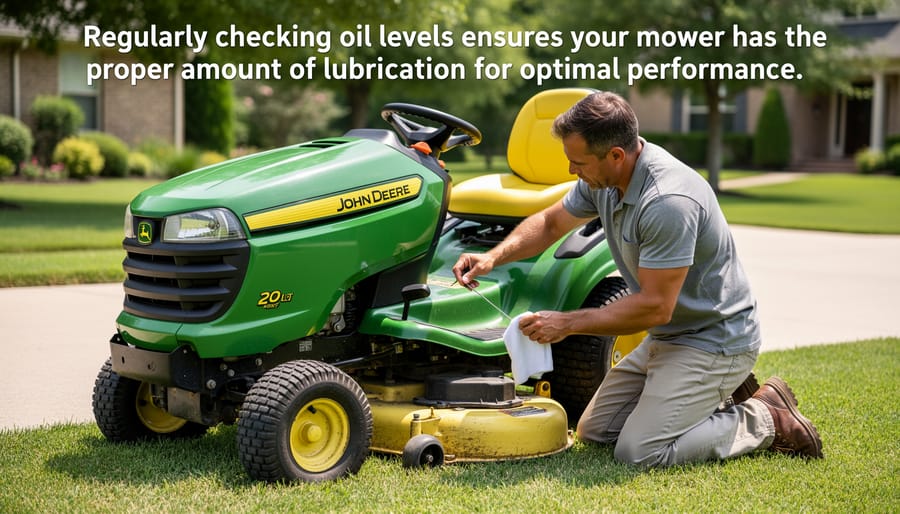
Checking your oil level is straightforward. Park on level ground and let the engine cool for a few minutes. Remove the dipstick, wipe it clean, reinsert it fully, then pull it out again to get an accurate reading. The oil should sit between the minimum and maximum marks. If you’re adding oil, pour slowly and recheck frequently. It’s easier to add a bit more than to drain excess oil.
From a sustainability perspective, using the correct amount matters too. Overfilling wastes oil and creates disposal challenges if you need to drain the excess. Getting it right the first time means fewer oil changes and less environmental impact over your mower’s lifetime.
When to Change Your John Deere’s Oil
Keeping your John Deere running smoothly means staying on top of oil changes, and the right schedule depends on how hard you work your mower. For most homeowners mowing weekly during the growing season, change the oil once per season or after every 50 hours of use, whichever comes first. If you’re mowing larger properties or running your mower commercially, you’ll want to stick closer to that 50-hour mark.
Here’s the thing about oil change intervals: they’re guidelines, not rigid rules. Your oil might need changing sooner if you mow in dusty conditions, tackle tall or wet grass regularly, or run your mower in extreme heat. These situations put extra stress on the engine and break down oil faster.
Watch for these telltale signs that your oil needs attention. If it looks black and gritty instead of amber, that’s your cue. Oil that feels thick and sludgy between your fingers has lost its protective qualities. You might also notice the engine running hotter than usual or making different sounds.
Fresh oil does more than just lubricate. It carries away heat, suspends dirt particles, and protects internal components from wear. Regular changes are among the most important regular maintenance tasks you can perform. Think of it this way: spending $15 on oil twice a year beats replacing a seized engine.
Clean oil will extend mower lifespan dramatically. I’ve seen well-maintained John Deere mowers run strong for 15 years or more, while neglected ones struggle after five. Mark your calendar, keep track of your hours, and you’ll get decades of reliable service from your investment.
The Environmentally Responsible Way to Handle Used Oil
Proper oil disposal isn’t just about following regulations. It’s about protecting the soil and water systems that make healthy lawns and gardens possible in the first place. Used motor oil contains heavy metals and contaminants that can persist in the environment for years, so dumping it down the drain or on the ground creates lasting damage.
The good news? Recycling used mower oil is easier than most people think. Many auto parts stores, quick-lube facilities, and municipal recycling centers accept used oil for free. I keep a sealed container in my garage specifically for this purpose, and once it’s full, I drop it off during my regular errands. Some communities even offer curbside used oil pickup during hazardous waste collection days.
These resources maintain updated databases of facilities that properly process used petroleum products.
To minimize spills during oil changes, work on a level surface and use a proper drain pan with a spout for easy pouring. Old milk jugs work in a pinch, but dedicated oil drain containers with secure lids prevent accidents during transport. If you do spill oil, absorb it immediately with kitty litter or sand rather than hosing it away.
By recycling your John Deere’s used oil, you’re giving it new life. That quart of old oil can be re-refined into fresh lubricant or converted into fuel oil, closing the loop on what would otherwise be hazardous waste.
Choosing the right oil for your John Deere lawn mower doesn’t need to feel overwhelming. You’ve learned that most residential models perform best with SAE 10W-30 motor oil, though certain conditions call for adjustments. If you’re mowing in cooler temperatures, SAE 5W-30 gives you better cold-start protection. For those hot summer days, straight SAE 30 works perfectly fine in many traditional models.
The most important step? Check your owner’s manual. Every model has specific requirements, and those few minutes spent confirming the right specification can save you from costly repairs down the road. Your mower represents a significant investment in keeping your lawn healthy and beautiful, so treating it with quality oil and regular changes protects that investment.
Remember that proper lubrication does more than prevent engine damage. It keeps your mower running efficiently, which means less fuel consumption and fewer emissions. That’s good for both your wallet and the environment.
Whether you choose John Deere’s own Turf-Gard Plus or a quality alternative like Mobil 1 synthetic, you’re making a smart choice for your equipment’s longevity. Stick to the recommended change intervals, typically every 50 hours of operation or once per season for casual users.
Taking care of your mower’s oil needs is one of the simplest ways to ensure reliable performance season after season. Pair this maintenance habit with the tips in our comprehensive lawn care guide and you’ll have a lawn that’s the envy of the neighborhood.