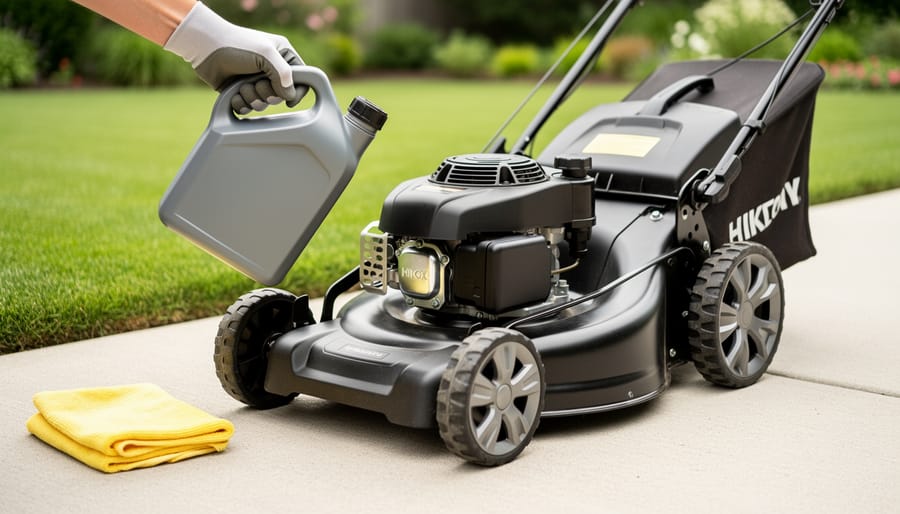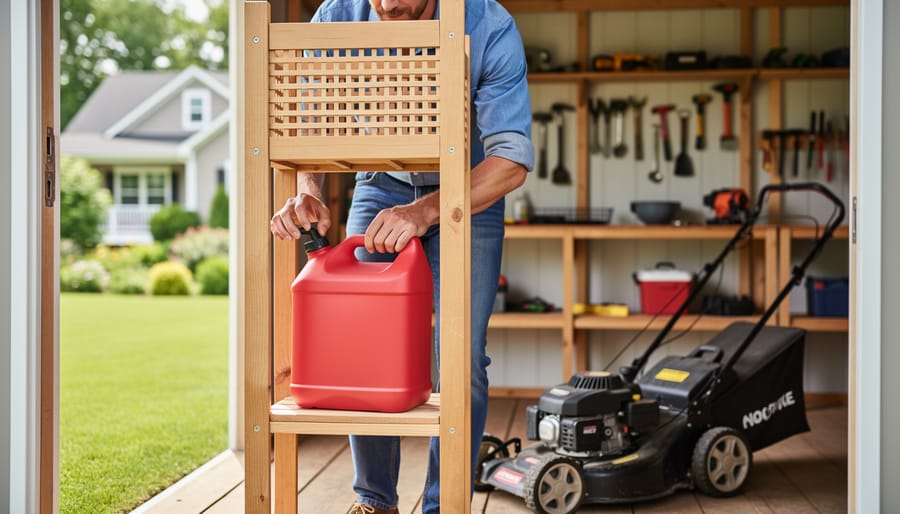
Store gasoline for your mower and trimmer in approved containers clearly marked for fuel storage, keeping them in well-ventilated areas away from living spaces, never inside your home or attached garage. The National Fuel Gas Code sets these standards not to complicate your weekend lawn care routine, but to prevent the very real dangers of fire, explosion, and toxic fumes that can result from improper fuel handling.
Most of us don’t think twice about tossing a gas can in the garage corner or storing last season’s fuel in whatever container is handy. Yet each year, thousands of residential fires and injuries occur from fuel-related incidents, many involving the exact equipment sitting in our sheds right now. Whether you’re running a traditional gas-powered mower, a string trimmer, or a leaf blower, understanding these safety requirements protects your family, your property, and your neighbors.
The code addresses everything from proper container specifications to ventilation requirements, storage locations, and safe dispensing practices. While it might sound bureaucratic, these guidelines translate into straightforward practices that take minutes to implement. Proper fuel management means your equipment starts reliably, runs efficiently, and lasts longer while eliminating unnecessary risks from your property.
This guide breaks down the National Fuel Gas Code requirements that apply to everyday lawn care equipment, translating complex regulations into practical steps you can implement immediately. You’ll learn exactly which containers meet safety standards, where to store fuel properly, how long you can safely keep gasoline, and when battery-powered alternatives might eliminate fuel storage concerns altogether. Understanding these requirements isn’t just about compliance—it’s about creating a safer outdoor maintenance routine that protects what matters most.
What is the National Fuel Gas Code and Why Lawn Care Enthusiasts Should Care
How the Code Applies to Your Backyard
Here’s a common misconception that surprises many gardeners: the National Fuel Gas Code primarily governs fixed gas installations in buildings and structures, not the portable gas cans you use for your lawn mower or trimmer. If you’ve been worried about needing permits or inspections for filling up your equipment, you can breathe easier.
However, this doesn’t mean gas-powered lawn equipment exists in a regulatory vacuum. While the fuel gas code itself focuses on natural gas and propane systems built into homes and commercial properties, related regulations do affect how you handle gasoline. Fire codes and local ordinances typically govern gasoline storage, usually limiting residential properties to specific quantities stored in approved containers. Most homeowners stay well within these limits with a standard five-gallon gas can.
What does matter for your backyard operations is following basic equipment safety standards and manufacturer guidelines. These aren’t just suggestions; they represent best practices developed through decades of experience and, unfortunately, accidents. Store fuel away from living spaces in cool, ventilated areas. Use only approved containers with proper spouts and caps. Never refuel hot equipment or work near open flames.
The good news for environmentally conscious gardeners is that battery-powered equipment continues to improve dramatically, eliminating fuel storage concerns entirely while reducing emissions. If you’re still using gas equipment, though, treating fuel with the respect it deserves keeps you safe and compliant with local regulations, even if the national fuel gas code doesn’t directly govern your weekend mowing routine.
Safe Fuel Storage: Rules That Protect Your Home and Garden
Container Requirements and Capacity Limits
When it comes to storing fuel for your lawn mower or trimmer, not just any container will do. The national fuel and gas code specifies that you must use approved safety containers, which you’ll recognize by their sturdy construction and specific color coding. Gasoline containers are typically red, diesel containers are yellow, and kerosene containers are blue. These aren’t arbitrary choices – this color system helps prevent dangerous mix-ups that could damage your equipment or create safety hazards.
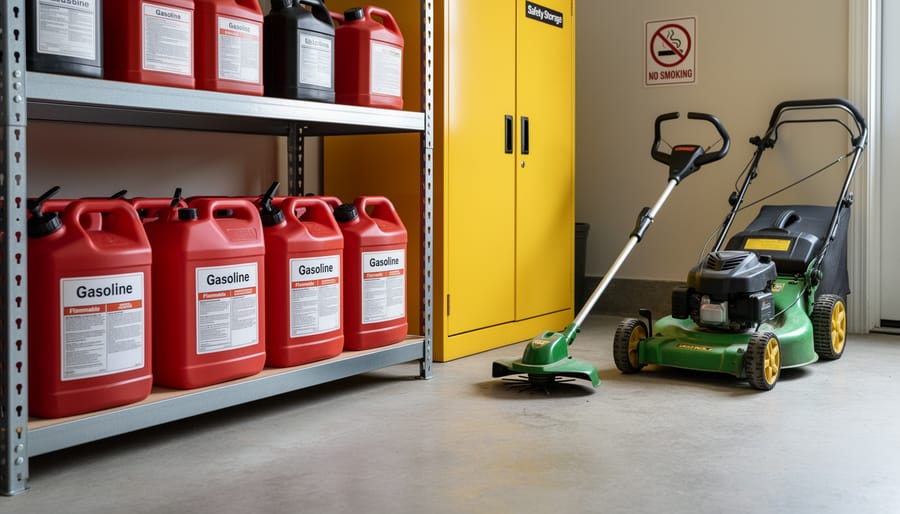
For most residential properties, you’re limited to storing a combined total of 25 gallons of flammable liquids in attached garages, with individual containers maxing out at 5 gallons for plastic or 2.5 gallons for metal safety cans. If you have a detached shed at least 10 feet from your home, you might store up to 60 gallons total. These limits exist to minimize fire risk and protect both your family and the environment from potential spills.
Here’s where sustainability comes into play: the less fuel you store, the better for everyone. Old gasoline degrades, releases harmful vapors, and poses contamination risks to soil and groundwater if containers leak. I recommend buying only what you’ll use within 30 days. This practice not only ensures your equipment runs smoothly with fresh fuel but also reduces your environmental footprint. Consider whether your lawn care needs might be better served by battery-powered equipment, which eliminates fuel storage concerns altogether while supporting cleaner air in your neighborhood.
Where to Store Fuel Safely (And Where Never to Put It)
Storing fuel safely isn’t just about following safety regulations, it’s about protecting your family, your home, and your garden. Let’s talk about where that gas can for your mower should actually live.
First, the golden rule: fuel belongs outside, away from your living spaces. Never store gasoline in your basement, garage attached to your home, or anywhere near where you sleep or spend time. I know it’s tempting to tuck it in the garage for convenience, but fuel vapors are heavier than air and can travel along the floor to reach water heaters, furnaces, or electrical equipment, creating serious fire hazards.
Your ideal storage spot is a detached shed or outdoor storage cabinet specifically designed for flammable liquids. These areas need proper ventilation, which means air circulation that prevents vapor buildup. Look for sheds with vents near the floor and roof to create natural airflow.
Temperature matters too. Store fuel in a cool location, away from direct sunlight. Extreme heat can increase vapor pressure in containers and degrade fuel quality faster, meaning it won’t work as well in your equipment come spring.
Keep fuel containers at least 50 feet from ignition sources like grills, fire pits, or pilot lights. And here’s something many gardeners overlook: don’t store fuel near your vegetable garden or areas where children and pets play. Spills happen, and gasoline can contaminate soil and groundwater.
Use only approved containers with proper seals and labels. Those old milk jugs? Absolutely not. Invest in proper fuel cans with flame arrestors and automatic pressure relief. Your future self will thank you for this simple safety measure that protects everything you’ve worked to create in your outdoor space.
Refueling Your Equipment: The Right Way Every Time
The Cool-Down Rule and Spill Prevention
Here’s something many gardeners learn the hard way: refueling a hot mower can turn a peaceful Saturday into a safety hazard. The National Fuel Gas Code requires equipment to cool down before refueling, and there’s solid science behind this rule. When fuel contacts hot engine parts, it can vaporize rapidly and potentially ignite. Take a coffee break, answer some emails, or tackle a bit of weeding while your mower cools for at least 15 minutes.
When you do refuel, think of it like proper chemical handling—careful and deliberate. Use a funnel to guide fuel into the tank, fill only to the recommended level (usually leaving some air space), and keep absorbent materials like old towels nearby. Overfilling is a common mistake that leads to spills, especially since fuel expands in warm weather.
If a spill happens, don’t panic, but do act quickly. Stop the flow immediately, absorb liquid fuel with rags or commercial absorbent pads, and dispose of contaminated materials according to local hazardous waste guidelines. Never hose spilled fuel into storm drains or soil.
The environmental impact of fuel spills extends beyond your lawn. Even small amounts contaminate soil, harm beneficial microorganisms, and can kill grass and plants in affected areas. Gasoline components persist in soil and can leach into groundwater. Prevention truly is the best medicine for both your lawn ecosystem and the environment.
Ventilation and Location Requirements
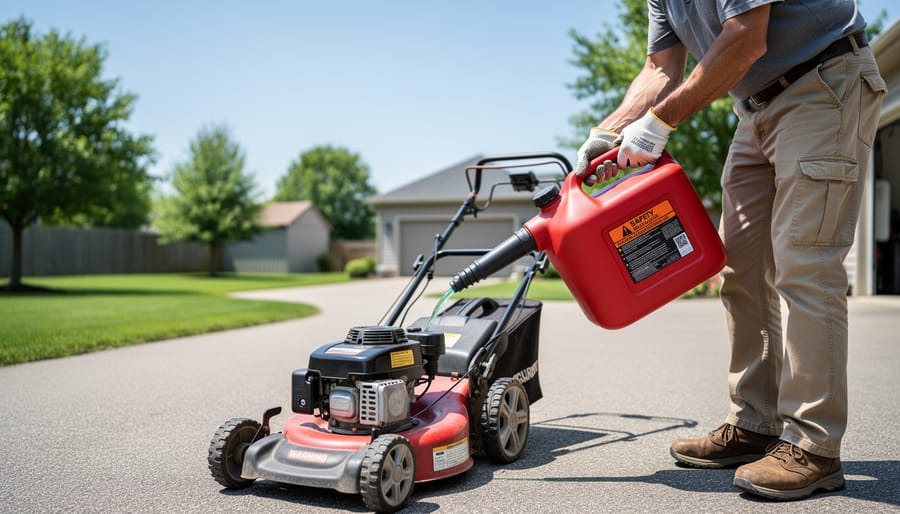
When it comes to refueling your lawn mower, string trimmer, or chainsaw, location matters more than you might think. The national fuel and gas code emphasizes one critical rule: always refuel outdoors in well-ventilated areas. I know it’s tempting to top off your mower in the garage, especially when it’s raining or cold outside, but this simple habit can prevent serious accidents.
Here’s why garages and sheds are particularly dangerous for refueling. Gasoline vapors are heavier than air, which means they sink and accumulate in low spots. These invisible vapors can travel across your garage floor and ignite from sources you wouldn’t expect, like a water heater pilot light, electrical sparks from power tools, or even a light switch. One homeowner I know nearly learned this the hard way when vapors from his garage refueling session found their way to his furnace twenty feet away.
Creating a safe refueling zone is straightforward. Choose a flat, open area away from your home, at least 10 feet from buildings, ignition sources, and any areas where children or pets play. Keep a dedicated spot with good air circulation on all sides. I’ve set up a simple concrete pad in my yard specifically for this purpose, and it makes the process routine and safe.
Before refueling, always let your equipment cool down completely. A hot engine can ignite fuel vapors instantly. Keep a fire extinguisher nearby, and never smoke while handling gasoline. These small precautions align with both code requirements and common sense, protecting your family and property while you maintain that beautiful lawn.
Battery-Powered Equipment: The Emerging Compliance Landscape
Lithium-Ion Battery Safety Standards
As more gardeners embrace the shift to battery-powered lawn equipment, understanding lithium-ion battery safety becomes just as important as knowing how to handle gasoline properly. The good news? These modern powerhouses are generally safer and more environmentally friendly than their fuel-burning predecessors, but they do require some specific care to keep them performing safely.
When charging your lithium-ion batteries, always use the manufacturer’s designated charger and never leave batteries charging overnight or unattended for extended periods. I learned this lesson after a fellow gardener’s garage fire started from an incompatible charger. Place batteries on a non-flammable surface during charging, away from direct sunlight or heat sources, and ensure adequate ventilation. Most quality batteries include built-in protection against overcharging, but it’s better to be cautious.
Storage matters too. Keep your batteries in a cool, dry location between 40-80 degrees Fahrenheit when not in use. Never store them fully depleted or at 100% charge for long periods; about 40-50% charge is ideal for seasonal storage. This simple practice extends battery life significantly and reduces fire risk.
If you notice any swelling, damage, or unusual heat during use, stop immediately and contact the manufacturer. Damaged lithium-ion batteries can pose fire hazards and should never be tossed in regular trash. Instead, take them to designated battery recycling centers or retailer take-back programs. This responsible disposal prevents toxic materials from entering landfills while recovering valuable materials for reuse—a win for both safety and sustainability in your gardening practices.
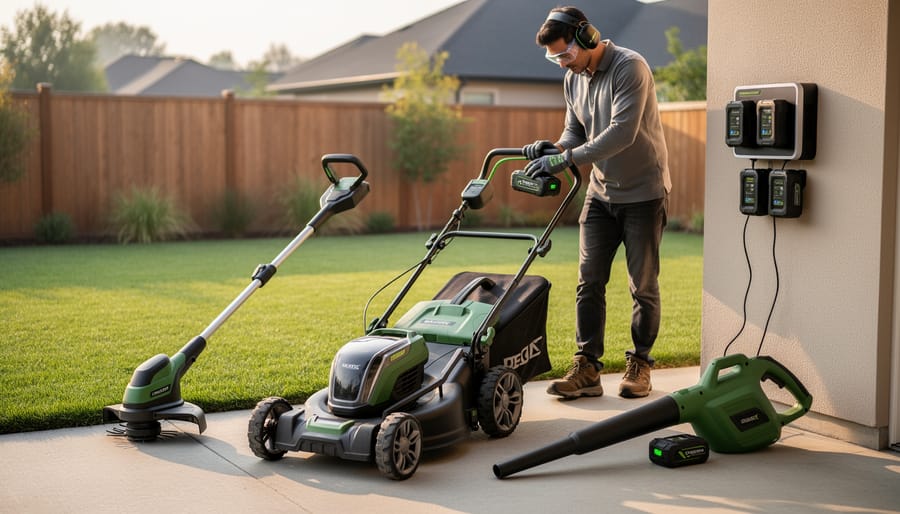
Charging Station Setup and Electrical Code Compliance
If you’re making the switch to electric lawn equipment, you’re already taking a fantastic step toward sustainable lawn care. However, setting up a proper charging station requires attention to electrical code compliance to keep your home and equipment safe.
Your charging area should be well-ventilated and protected from the elements. Most electric lawn equipment uses standard 120-volt outlets, but if you’re charging multiple batteries simultaneously or using professional-grade equipment, you might need dedicated circuits. Check your equipment’s amperage requirements and ensure your electrical panel can handle the load without overloading existing circuits.
A common mistake is using extension cords as permanent charging solutions. Instead, install GFCI-protected outlets in your garage or shed where you’ll be charging. These ground fault circuit interrupters are essential for preventing electrical shocks, especially in areas where moisture might be present.
Keep charging stations away from stored fuel containers if you’re transitioning from gas equipment. Maintain clear space around outlets and avoid daisy-chaining power strips, which creates fire hazards.
The beauty of electric equipment is that when properly managed, it eliminates fuel storage concerns entirely while reducing your carbon footprint. A well-planned charging setup makes this transition seamless, giving you reliable power without the safety headaches of gasoline storage.
Maintaining Compliance While Maintaining Your Lawn
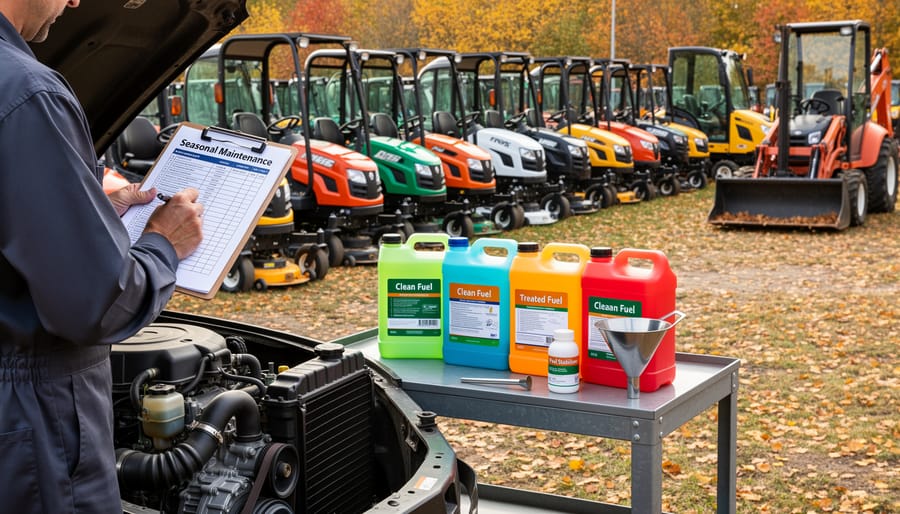
Seasonal Fuel Management Tips
As the seasons change, so should your fuel management practices. Proper seasonal fuel care isn’t just about compliance—it’s about protecting your equipment and our environment.
When storing fuel-powered equipment for extended periods, especially over winter, add a quality fuel stabilizer to prevent gasoline from breaking down and forming gum deposits. Fresh fuel typically degrades within 30 days, but stabilizers can extend its usable life up to 24 months. Before storage, run your equipment for a few minutes after adding stabilizer to ensure it circulates through the entire fuel system.
If you’re dealing with old, stale fuel from last season, don’t just dump it down the drain or on the ground. This violates environmental regulations and harms soil and groundwater. Instead, take it to your local household hazardous waste collection facility or a service station that accepts old fuel. Many communities offer seasonal collection events specifically for this purpose.
Before putting equipment away for winter, consider running small engines until the fuel tank is empty to prevent deterioration. Store any remaining stabilized fuel in approved containers in a cool, dry location away from living spaces. These simple practices ensure your equipment starts reliably next season while keeping you compliant with fuel storage regulations and supporting sustainable lawn care practices.
Quick Compliance Checklist for Lawn Care Equipment
Let me help you stay on the right side of safety regulations with this handy checklist you can print out and keep in your garage or shed. Run through these items at the start of each mowing season and periodically throughout the year:
Before refueling gas-powered equipment, always turn off the engine and let it cool for at least 10 minutes. I learned this the hard way after nearly singeing my eyebrows during an impatient moment!
Store gasoline only in approved containers with proper labels, and keep quantities under 25 gallons in residential settings unless you have approved storage cabinets.
Keep all fuel storage at least 50 feet away from ignition sources like water heaters, furnaces, and electrical panels.
Inspect fuel containers monthly for cracks, leaks, or deterioration, and replace any damaged containers immediately.
For battery-powered equipment, charge batteries in well-ventilated areas away from flammable materials and never leave them charging overnight unattended.
Store batteries at room temperature in a dry location, and recycle old batteries at designated facilities rather than tossing them in the trash.
Keep a properly rated fire extinguisher accessible in your storage area and check it annually.
Review your homeowner’s insurance policy to confirm it covers your fuel storage setup.
Following these simple steps protects your family, your property, and keeps you compliant with national safety standards while supporting sustainable lawn care practices.
When to Call the Professionals: Installation and Modification Rules
Let’s be honest—we all love a good DIY project. There’s something satisfying about maintaining your own equipment and keeping your lawn care budget under control. But when it comes to fuel and gas systems, knowing when to step back and call in the experts isn’t just smart—it’s essential for your safety and legal compliance.
If you’re considering installing a permanent fuel storage system on your property, this is definitively a job for licensed professionals. The National Fuel Gas Code has strict requirements for tank placement, ventilation, and installation procedures that go far beyond what most homeowners can safely tackle. These aren’t suggestions—they’re legal requirements designed to prevent fires, explosions, and environmental contamination.
Similarly, upgrading your electrical system to accommodate EV charging stations for battery-powered lawn equipment requires professional assistance. While it might seem straightforward, electrical work must meet code standards and typically requires permits and inspections. An improperly installed charging station can create fire hazards or damage your expensive equipment.
Making modifications to your equipment’s fuel system is another clear professional territory. Converting a gas mower to run on propane, altering fuel lines, or modifying carburetor settings might seem like money-saving moves, but they can void warranties, create dangerous operating conditions, and violate manufacturer safety specifications.
Think of it this way: you wouldn’t perform surgery on yourself just because you watched a video online. The same principle applies here. Professional installers and technicians have the training, tools, and insurance to handle these jobs safely. They understand local codes, secure necessary permits, and ensure everything works correctly. While hiring professionals costs more upfront, it protects your family, property, and peace of mind—investments no sustainable gardener should compromise.
Here’s the truth: staying compliant with fuel and gas safety standards isn’t about adding another chore to your weekend to-do list. It’s simply part of being the thoughtful, responsible gardener you already are. Think about it—you already take care to water at the right time of day, choose the best fertilizers for your soil, and protect beneficial insects. Safe fuel handling and proper battery care are just natural extensions of that same mindset.
When you store gasoline in approved containers, keep them away from living spaces, and dispose of old fuel responsibly, you’re protecting the same family members who enjoy your beautiful lawn. When you charge batteries according to manufacturer guidelines and store them at proper temperatures, you’re safeguarding the property you work so hard to maintain. These aren’t burdensome regulations—they’re practical steps that align perfectly with your commitment to creating a safe, sustainable outdoor space.
The environment you’re beautifying through careful lawn care deserves that same consideration when it comes to fuel and energy storage. Every small action, from using stabilizers to prevent fuel degradation to recycling old batteries properly, contributes to the bigger picture of environmental stewardship.
So view compliance not as a hassle, but as another way you’re demonstrating care—for your garden, your family, and the planet. You’ve got this, and your lawn will thank you for it.