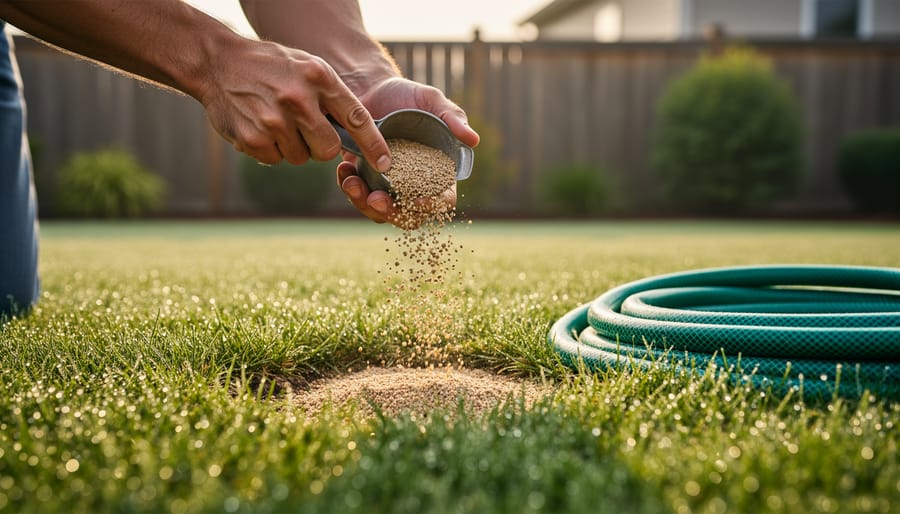
Choose zoysia varieties like Empire or Palisade specifically bred for low-water conditions—these cultivars can survive on 50% less irrigation than Kentucky bluegrass once established, typically within 18-24 months of proper root development. Water deeply but infrequently during the establishment phase, applying one inch of water weekly to encourage roots to grow 6-8 inches deep rather than staying shallow, which creates the foundation for genuine drought resistance. Allow your established zoysia lawn to go dormant during severe drought rather than fighting nature—it will turn golden-brown but bounce back quickly with rainfall, conserving both water and your effort.
Zoysia grass legitimately earns its drought-tolerant reputation, but understanding the science behind this resilience helps you set realistic expectations. This warm-season grass develops an extensive root system that mines moisture from deeper soil layers where other grasses can’t reach, one of the key warm-season grass advantages over cool-season alternatives. The catch? That drought tolerance doesn’t happen overnight, and certain cultivation practices either maximize or undermine this natural capability.
During water restrictions, established zoysia typically needs just one deep watering every 2-3 weeks compared to weekly watering for fescue or bluegrass. It achieves this through specialized leaf structures that reduce water loss and a remarkable ability to enter protective dormancy, then recover when conditions improve—though this means accepting a less-than-green lawn during peak drought periods, which not every homeowner finds acceptable.
Understanding Zoysia’s Drought Survival Mechanisms
The Root System Advantage
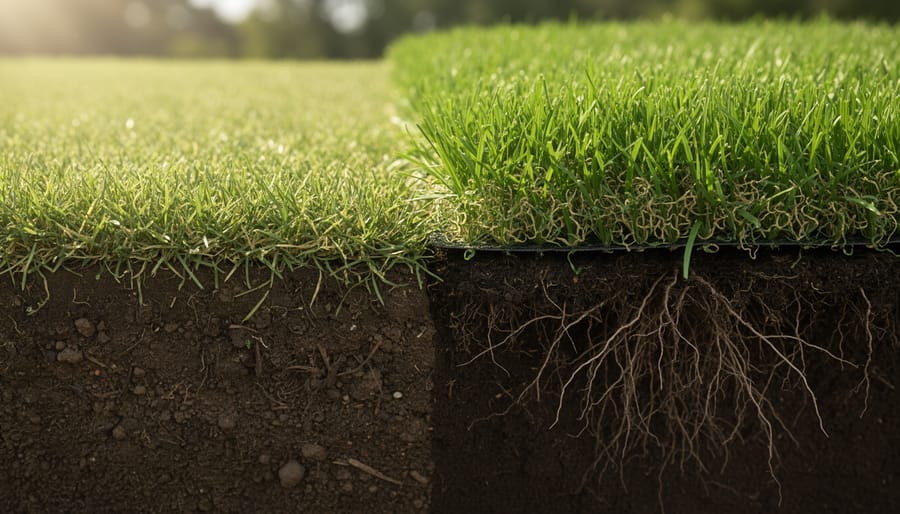
What makes zoysia grass such a champion during dry spells? The secret lies beneath the surface. While many popular lawn grasses send roots down just 4-6 inches, zoysia grass develops an impressively deep root system that can extend 8-24 inches into the soil. Think of it as having a much longer straw to reach water that other grasses simply can’t access.
This extensive root network acts like an underground insurance policy during drought conditions. When surface moisture evaporates and shallow-rooted grasses like Kentucky bluegrass or perennial ryegrass begin to stress and brown, zoysia keeps tapping into deeper soil moisture reserves. It’s similar to how desert plants survive—by going deep rather than wide.
From a sustainability perspective, this root advantage is a game-changer. You’re essentially working with nature’s design rather than fighting against it. Once established, zoysia’s roots create an efficient water-harvesting system that reduces your dependence on supplemental irrigation. This translates to lower water bills and a smaller environmental footprint for your lawn.
The practical benefit? During water restrictions or natural dry periods, your zoysia lawn maintains its green appearance while neighboring lawns struggle. It’s not magic—it’s simply smart biology at work beneath your feet.
Built-In Water Conservation Features
One of the reasons zoysia grass performs so well during drought conditions is its impressive built-in water conservation toolkit. These natural adaptations work together to help the grass survive extended dry periods without the constant watering many other lawn grasses demand.
Let’s start with what you can actually see and feel: zoysia’s thick, firm leaf blades. Unlike the thin, delicate blades of many cool-season grasses, zoysia produces sturdy leaves with a distinctive texture. This isn’t just about aesthetics—those thicker blades have a smaller surface area relative to their volume, which naturally reduces water loss through evaporation.
Even more impressive is the waxy cuticle coating each blade. Think of it as nature’s waterproofing system. This waxy layer acts as a protective barrier, sealing in moisture and preventing unnecessary water loss even on hot, windy days. When you run your hand across a healthy zoysia lawn, that slightly waxy feel you notice is actually one of its secret weapons against drought.
Here’s where things get really interesting: when water becomes scarce, zoysia has a remarkable ability to reduce transpiration, which is the process plants use to release water vapor through their leaves. During stress periods, zoysia essentially shifts into conservation mode, dramatically slowing its water loss while still maintaining essential functions. This adaptive response allows the grass to endure drought conditions that would quickly devastate less resilient species.
These features work in concert, making zoysia a genuinely sustainable choice for water-conscious homeowners looking to maintain an attractive lawn without excessive irrigation.
How Zoysia Compares to Other Turfgrasses Under Drought
Water Requirements: The Numbers That Matter
Let’s talk real numbers, because when it comes to water savings, specifics matter. During the growing season, zoysia grass typically needs about 1 to 1.25 inches of water per week to maintain its lush appearance. Compare that to cool-season grasses like Kentucky bluegrass or perennial ryegrass, which demand 1.5 to 2 inches weekly, and you’re looking at a 30-50% reduction in water consumption.
Here’s where it gets even better: once established, zoysia can survive on as little as 0.5 inches per week during drought conditions. It won’t look magazine-cover perfect, but it’ll maintain its root system and bounce back quickly when rain returns. Most cool-season varieties would turn brown and struggle under those same conditions.
To put this in practical terms, if you’re watering a 5,000 square foot lawn, switching to zoysia could save you roughly 1,500 to 3,000 gallons per week during peak summer. Over a growing season, that’s between 24,000 and 48,000 gallons—a significant reduction that benefits both your water bill and local water resources.
The sustainability angle here is clear: choosing drought-tolerant zoysia means you’re working with nature rather than against it, particularly in regions experiencing water restrictions or transitional climates where traditional lawns demand increasingly unsustainable irrigation levels.
Recovery Speed After Drought Stress
One of zoysia’s most impressive traits is how remarkably well it bounces back after drought stress ends. While many grass types struggle to recover from extended dry periods, zoysia has a natural advantage thanks to its smart survival strategy.
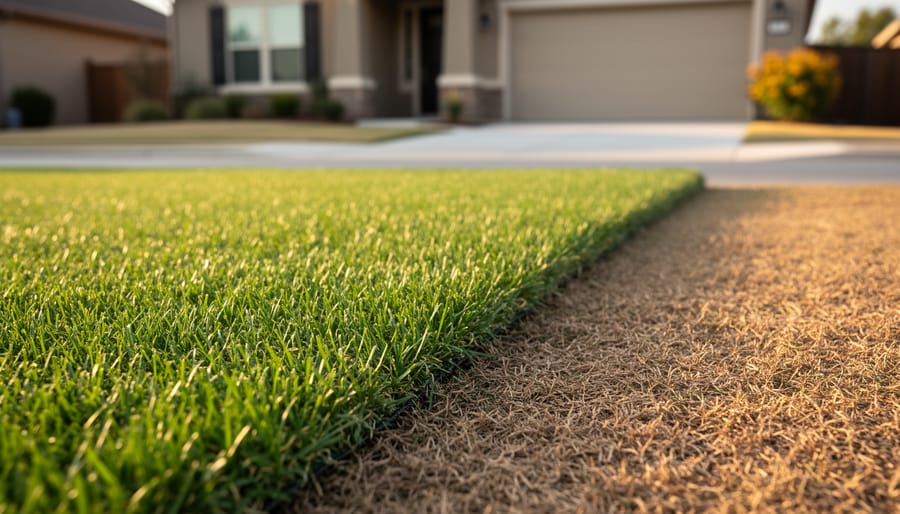
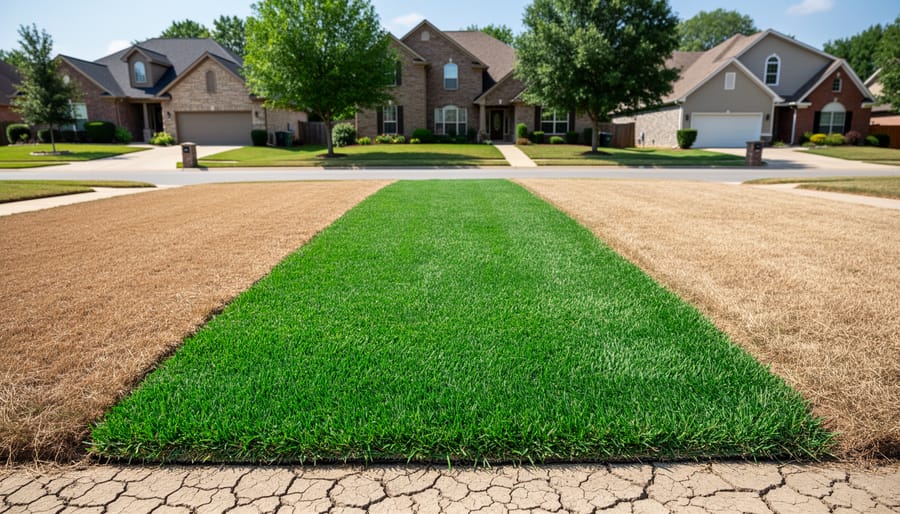
When water becomes scarce, zoysia enters dormancy, turning a golden-brown color that might initially worry homeowners. But here’s the good news: this isn’t death, it’s just a deep sleep. The grass essentially shuts down its top growth to protect its extensive root system and underground rhizomes. Once regular watering resumes or rain returns, zoysia typically springs back to its lush green state within two to three weeks.
Compare this to cool-season grasses like Kentucky bluegrass or tall fescue, which may take four to six weeks to recover from similar drought conditions. Bermudagrass recovers at roughly the same pace as zoysia, but zoysia’s deeper root system often means it can access residual soil moisture more effectively during the recovery period.
The key to maximizing recovery speed is patience and proper watering. When breaking dormancy, water deeply but infrequently, encouraging those robust roots to seek moisture at lower soil levels. Avoid the temptation to over-fertilize immediately after drought, as this can stress the recovering grass.
For homeowners in water-restricted areas, this quick recovery characteristic means you can confidently let your zoysia lawn go dormant during dry spells without permanent damage. It’s a sustainable approach that conserves water while maintaining a viable, healthy lawn long-term.
Best Zoysia Varieties for Maximum Drought Tolerance
Top Performers: Zeon, Empire, and Palisades
When it comes to surviving drought conditions, not all zoysia varieties are created equal. Three cultivars consistently stand out as the champions of water conservation: Zeon, Empire, and Palisades.
Zeon zoysia has earned its reputation as a premium choice for homeowners who want both beauty and resilience. This fine-textured variety boasts exceptional drought tolerance while maintaining that lush, carpet-like appearance we all love. It establishes relatively quickly compared to other zoysias and performs beautifully in areas with limited rainfall or watering restrictions. Zeon truly shines in high-visibility areas like front lawns where you want that magazine-worthy look without constant irrigation.
Empire zoysia might just be the workhorse of drought-resistant varieties. It’s incredibly tough, tolerating not just dry conditions but also moderate shade and foot traffic. The blades are slightly coarser than Zeon’s, but don’t let that fool you—Empire creates a dense, attractive turf that stands up to summer heat remarkably well. This variety is perfect for families with active kids or pets who need a lawn that can handle both drought stress and wear.
Palisades zoysia is the broader-bladed variety that delivers outstanding drought performance with minimal fuss. It’s particularly well-suited for larger properties or low-maintenance landscapes where sustainability is the priority. While it has a slightly coarser texture, Palisades compensates with incredible toughness and water efficiency, making it ideal for environmentally conscious homeowners looking to reduce their water footprint.
Matching Variety to Your Climate Zone
Choosing the right zoysia variety for your area makes all the difference in achieving that drought-tolerant lawn you’re dreaming about. Think of it this way: even the most water-wise grass won’t thrive if it’s constantly battling temperatures it wasn’t designed for.
For cooler transition zones (think mid-Atlantic states), Zoysia japonica varieties like Meyer and Zenith are your best friends. They handle cold winters better while still delivering impressive drought resistance during summer dry spells. These cultivars establish deep root systems that tap into moisture reserves other grasses can’t reach.
In warmer southern regions, Emerald and Zeon zoysia varieties shine. These finer-bladed options tolerate heat beautifully and require even less water once established. They’re particularly suited to areas with hot, humid summers and mild winters.
Here’s a sustainable tip: before selecting your variety, consider soil-turfgrass compatibility alongside climate. A zoysia variety matched to both your local weather patterns and soil conditions will naturally require less irrigation and fewer inputs. Check your USDA hardiness zone and average rainfall patterns, then choose accordingly. Your local extension office can provide specific variety recommendations that align with water conservation goals in your area.
Establishing Zoysia for Long-Term Drought Resistance
Planting Methods: Sod vs. Plugs vs. Seed
When establishing drought-tolerant zoysia grass, you have three main planting options, each with distinct advantages for building resilience.
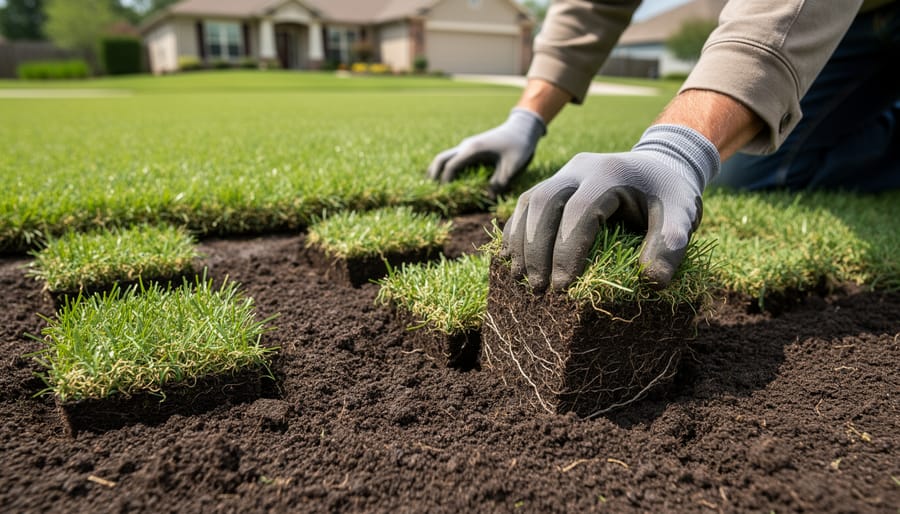
Sod offers the fastest path to drought tolerance—typically within 2-3 weeks once roots establish. You’ll get instant coverage and mature grass that’s already developed deep roots, making it drought-ready almost immediately. The downside? Cost. Sod runs $0.40-$0.60 per square foot, making it the priciest option. However, if you need quick erosion control or live in an area with water restrictions, this investment pays off through reduced watering needs.
Plugs strike a nice balance between cost and establishment time. These small sections of mature zoysia cost about $0.15-$0.25 per square foot and spread laterally to fill in bare spots over one growing season. They develop drought tolerance within 6-8 weeks as roots grow deeper. For budget-conscious gardeners willing to wait, plugs are your sweet spot. Plant them 6-12 inches apart in spring, and you’ll have full coverage by late summer with reasonable drought resilience.
Seed is the most economical option at $0.05-$0.10 per square foot, but requires patience. Zoysia seed takes 14-21 days just to germinate and won’t achieve meaningful drought tolerance for a full year. You’ll need consistent watering throughout establishment, which somewhat contradicts your water-saving goals initially.
Regardless of method, proper soil preparation remains crucial—it’s what helps those roots dive deep and access moisture during dry spells.
The First Year: Building Those Critical Deep Roots
Think of your zoysia’s first year like building a house—you need a solid foundation before anything else matters. Those critical deep roots that make zoysia such a drought champion don’t develop overnight, and your watering strategy during establishment will determine whether your grass becomes truly water-wise or remains forever dependent on frequent irrigation.
For the first two to three weeks after installation, water daily to keep the soil consistently moist at 4-6 inches deep. This isn’t babying your grass—it’s giving new roots the moisture they need to venture downward. Check soil moisture by pulling back a small section of sod or using a screwdriver test: if it easily penetrates 4-6 inches, you’re golden.
Here’s where patience pays off: starting in week four, gradually reduce watering frequency while increasing the amount per session. Transition to every other day, then twice weekly, giving your zoysia about 1 inch of water each time. This “deep and infrequent” approach forces roots to chase moisture downward rather than lounging near the surface.
By month three, aim for once-weekly deep watering sessions. Water in the early morning to minimize evaporation—a sustainable practice that maximizes every drop. During this phase, resist the temptation to water when blades show slight wilting; that mild stress actually signals roots to dig deeper.
This intentional training period transforms your zoysia from a water-dependent newcomer into the drought-tolerant champion you’re counting on for years to come.
Maintenance Strategies That Maximize Drought Tolerance
Smart Mowing Practices for Water Conservation
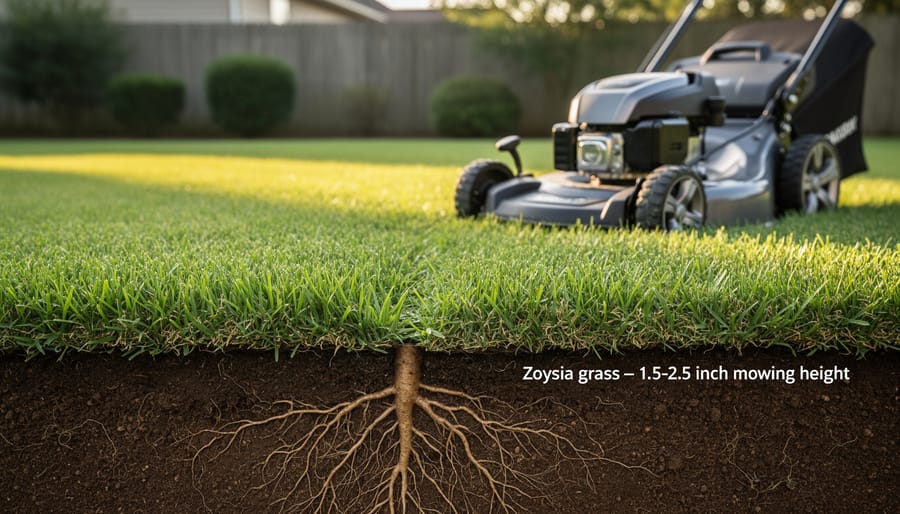
One of the simplest ways to help your zoysia grass weather dry spells is to adjust how you mow. Maintaining the proper height—between 1.5 and 2.5 inches—is essential for drought resilience. When cut within this range, zoysia develops a deeper, more extensive root system that can access moisture stored deeper in the soil. Taller grass also shades the soil surface, reducing evaporation and keeping roots cooler during heat waves.
Resist the temptation to scalp your lawn, especially during summer months. Cutting too short stresses the grass and forces it to focus energy on regrowing blades rather than strengthening roots. Instead, follow the one-third rule: never remove more than one-third of the blade length in a single mowing session. This gentle approach minimizes shock and maintains the plant’s natural defenses.
Mowing frequency matters too. During periods of drought stress, you can actually reduce mowing frequency as growth naturally slows. This conservation strategy allows the grass to preserve energy and moisture. Keep your mower blades sharp as well—clean cuts heal faster and lose less water than ragged tears from dull blades, giving your zoysia every advantage when rainfall is scarce.
Fertilization That Strengthens Without Increasing Water Demand
Smart fertilization actually enhances zoysia’s drought tolerance rather than working against it. The key is feeding your lawn strategically to build strong roots and dense growth without triggering excessive top growth that demands more water.
During establishment, apply a balanced starter fertilizer to encourage deep root development. Once established, zoysia needs surprisingly little fertilizer—typically just 1 to 2 pounds of nitrogen per 1,000 square feet annually. That’s about half what many cool-season grasses require, which makes it both water-wise and budget-friendly.
Timing matters tremendously. Apply fertilizer in late spring when zoysia actively grows, and consider a second light feeding in midsummer if needed. Avoid fall fertilization, which promotes tender growth vulnerable to stress. Slow-release formulas work beautifully here, providing steady nutrition without causing growth spurts that increase water demands.
Choose fertilizers with a 3-1-2 or 4-1-2 nitrogen-phosphorus-potassium ratio to support root development over leaf production. Organic options like compost or slow-release organic fertilizers align perfectly with sustainable practices while building soil health that further enhances drought resistance.
Remember, a slightly underfed zoysia lawn develops stronger drought tolerance than an overfed one. When resources are limited, zoysia naturally invests in survival mechanisms rather than lush growth—exactly what you want during dry spells.
Strategic Watering: Less is More
Once your zoysia is established, resist the urge to water frequently. This grass actually thrives on strategic neglect. For established lawns, watering every 7-14 days is typically sufficient, even during dry spells. The key is deep watering, applying about 1 to 1.5 inches of water per session to encourage those impressive roots to dive deeper into the soil.
Here’s your sustainability win: deep, infrequent watering not only conserves water but creates a more resilient lawn. Think of it as teaching your grass to fish rather than feeding it daily. Place a tuna can on your lawn while watering to measure when you’ve hit that inch mark.
How do you know when zoysia actually needs water? Look for these telltale signs: the grass takes on a blue-gray tint, blades start to fold or curl, and footprints remain visible long after you’ve walked across the lawn. These indicators mean your zoysia is entering dormancy mode, its natural drought defense. If aesthetic appeal matters during this period, that’s when you water. Otherwise, it’ll bounce back beautifully with the next rain, demonstrating why this grass earned its drought-tolerant reputation.
Managing Zoysia During Active Water Restrictions
Embracing Dormancy Without Panic
Don’t be alarmed when your zoysia lawn turns golden-brown during an extended dry spell—this is actually a sign of its remarkable survival strategy at work. When faced with severe water shortage, zoysia enters dormancy, essentially hitting the pause button on growth to conserve resources. This browning is completely natural and doesn’t mean your lawn is dying.
The good news? Dormant zoysia is simply sleeping, not dead. To check your lawn’s health, perform the tug test: gently pull on some brown grass blades. If they resist and stay firmly rooted, your lawn is dormant and will bounce back once water returns. Dead grass, on the other hand, pulls out easily and feels brittle with no resistance.
You can also examine the crown, the whitish area where blades meet roots. A healthy, firm crown indicates dormancy, while a mushy, dark crown suggests damage. Most zoysia lawns spring back to life within two to three weeks of receiving adequate water, whether from rain or irrigation. This resilience makes zoysia an environmentally sustainable choice for water-conscious homeowners who want a lawn that survives tough conditions without constant intervention.
Priority Watering Zones and Spot Treatment
When water restrictions kick in or drought conditions arrive, being strategic about watering makes all the difference. Instead of spreading limited water thinly across your entire lawn, focus on high-visibility areas where healthy grass matters most—think front yards, entry pathways, and the spots you see daily from your windows.
This spot treatment approach works beautifully with zoysia grass because its natural drought tolerance allows less-visible areas to go dormant without long-term damage. Your backyard or side lawn can safely enter dormancy while you concentrate resources on maintaining those showcase zones.
Create designated priority zones based on visibility and use. These areas might receive one deep watering weekly during restrictions, while lower-priority sections get none. Mark boundaries with landscape flags or natural edges like pathways to keep track.
For spot treatment, hand-water stressed patches showing early drought stress signs like leaf folding or blue-gray coloration. A soaker hose or drip irrigation in priority zones delivers water efficiently without waste. Remember, even during severe restrictions, zoysia’s deep roots help it recover remarkably well once normal watering resumes. This targeted strategy keeps your lawn looking presentable where it counts most while honoring conservation efforts and working with your grass’s natural resilience.
Potential Drawbacks and Realistic Expectations
While zoysia grass offers impressive drought tolerance, it’s important to understand its limitations before making it your lawn of choice. Setting realistic expectations will help you decide if it’s truly the right fit for your situation.
The most significant challenge with zoysia is its notoriously slow establishment period. Unlike quick-growing cool-season grasses that fill in within weeks, zoysia can take an entire growing season or longer to establish a dense lawn. This means you’ll need patience and consistent care during that first year. If you’re looking for instant gratification, zoysia might test your resolve. However, once established, that patience pays off with a resilient, low-maintenance lawn.
Cost is another consideration. Zoysia sod and plugs typically run more expensive than alternatives like bermudagrass or tall fescue. The initial investment can be substantial, especially for larger lawns. Many homeowners choose plugs to reduce costs, but this extends the establishment timeline even further.
Cold sensitivity presents challenges for northern gardeners. Zoysia goes dormant and turns brown earlier in fall than cool-season grasses and greens up later in spring. In transitional zones, you might have a brown lawn for five months or more. Some newer cultivars handle cold better, but zoysia remains best suited for warm and transitional climates rather than consistently cold regions.
Zoysia also struggles in deep shade. While it tolerates partial shade better than bermudagrass, areas receiving less than four hours of direct sunlight daily will thin out over time. For heavily shaded yards, you’re better off exploring shade-tolerant varieties instead.
Finally, zoysia’s dense growth can make overseeding difficult and may require specialized dethatching equipment. Its aggressive nature means it can creep into flower beds and gardens where it’s unwanted, requiring vigilant edging.
Understanding these trade-offs helps ensure zoysia aligns with your lawn care goals and sustainable gardening practices.
Making the switch to zoysia grass is a smart investment for anyone living in drought-prone areas. While it requires some patience during the establishment phase, typically taking one to two full growing seasons to develop its extensive root system, the payoff is substantial. Once mature, you’ll enjoy a resilient, water-efficient lawn that maintains its beauty even during dry spells when neighboring lawns turn brown.
Remember that sustainable lawn care isn’t about achieving perfection overnight. By choosing zoysia and embracing practices like proper mowing heights, minimal watering once established, and reducing chemical inputs, you’re contributing to water conservation efforts in your community. The grass naturally crowds out weeds and requires less maintenance than many alternatives, giving you more time to enjoy your outdoor space rather than constantly tending to it.
If you’re ready to reduce your water bills and environmental footprint while still maintaining an attractive lawn, zoysia deserves serious consideration. Start small with a test area if you’re hesitant, observe how it performs through your region’s dry season, and expand from there. Your future self will thank you for making this drought-smart choice.