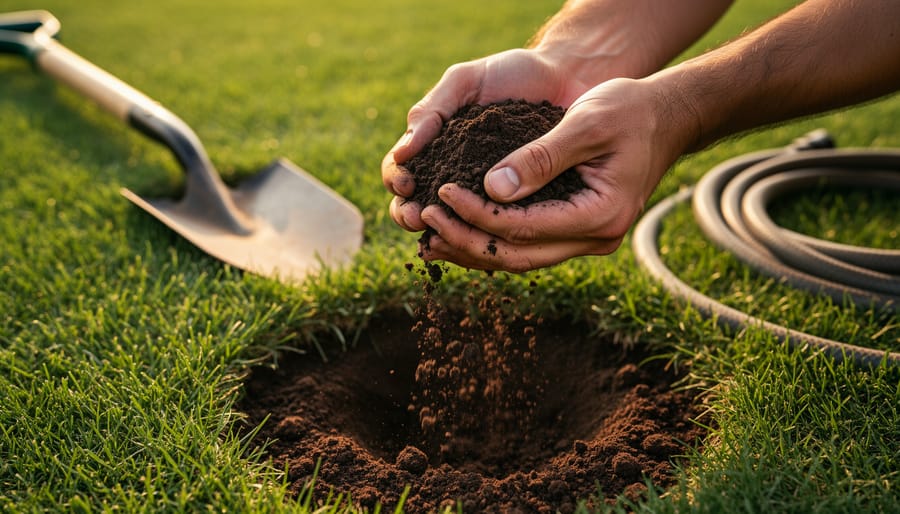
Grab a handful of soil from your lawn, squeeze it firmly, then open your palm to observe what happens—this simple test reveals whether you’re working with clay, sand, loam, silt, peat, or chalk, each requiring different grass varieties to thrive. If the soil holds its shape in a tight ball and feels slick, you’ve got clay that needs amendments and specific grass selections. When soil falls apart immediately and feels gritty between your fingers, you’re dealing with sandy conditions that drain quickly and demand drought-tolerant varieties. The perfect handful that holds shape briefly before crumbling? That’s loam, the gold standard that supports nearly any turfgrass.
Understanding your soil type isn’t just academic knowledge—it’s the foundation of every lawn care decision you’ll make, from seed selection to fertilization schedules. Matching the right grass to your specific soil conditions eliminates years of frustration, reduces water waste, and creates a naturally resilient lawn that requires fewer chemical interventions. Most lawn problems trace back to this fundamental mismatch: homeowners planting grass varieties suited for loamy soil into heavy clay or pure sand, then wondering why their lawn struggles despite constant attention.
The six primary soil types each present unique pH levels, drainage characteristics, and nutrient-holding capacities that determine which turfgrass species will flourish versus merely survive. This guide walks you through identifying your exact soil type using practical field tests, then matches you with proven grass varieties that naturally thrive in those conditions.
Why Soil Type Matters More Than You Think
Think of soil as your lawn’s foundation and life support system all rolled into one. Just like you wouldn’t build a house on unstable ground, you can’t expect a healthy lawn without understanding what’s happening beneath the surface.
Your soil type directly influences four critical factors that determine whether your grass thrives or merely survives. First, water retention varies dramatically between soil types. Sandy soils drain quickly, sometimes too quickly, leaving grass roots thirsty during hot spells. Clay soils hold water like a sponge, which sounds great until you realize poor drainage can suffocate roots and create soggy patches where nothing grows well.
Second, nutrient delivery depends entirely on your soil’s composition. Some soils naturally hold onto nutrients, making them available to grass roots over time. Others let nutrients wash right through, requiring more frequent fertilization to maintain that lush green color you’re after.
Third, root development hinges on soil structure. Compacted clay makes it nearly impossible for roots to penetrate deeply, resulting in shallow root systems that struggle during drought. Loose, well-structured soils encourage roots to grow deep and strong, creating resilient turf that bounces back from stress.
Finally, drainage issues cause many common lawn headaches. Those bare spots where grass won’t grow, the moss taking over shady areas, or persistent fungal problems often trace back to soil drainage problems rather than the grass itself.
Here’s something many gardeners overlook: soil pH quietly controls nutrient availability. Even if your soil contains plenty of nutrients, the wrong pH level locks them away where grass roots can’t access them. Understanding your soil type helps you anticipate pH challenges and address them proactively, setting the stage for sustainable lawn care success.
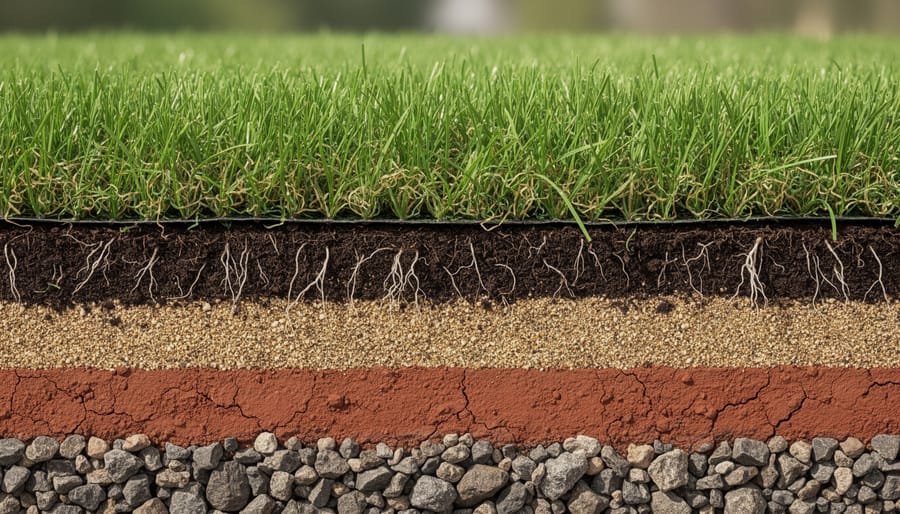
The Six Soil Types Every Lawn Owner Should Know
Sandy Soil: The Fast-Draining Challenge
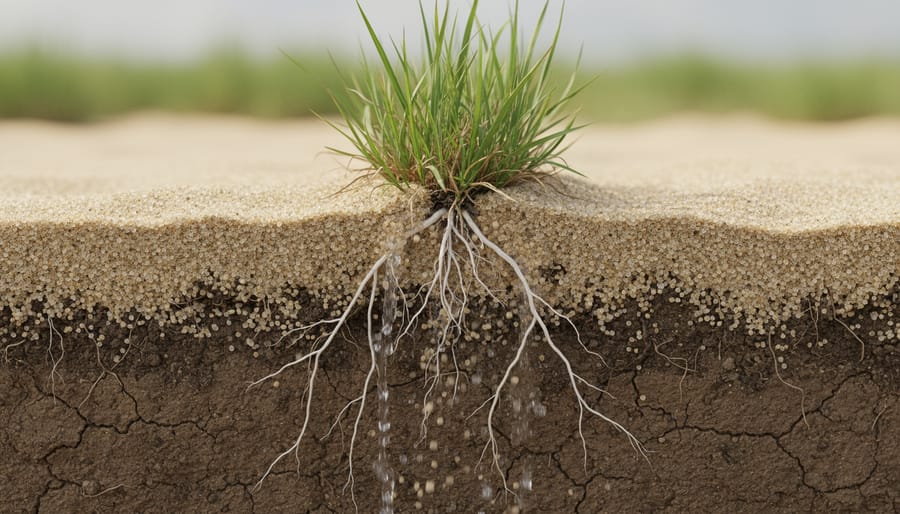
If you’ve ever noticed water disappearing from your lawn almost as quickly as you apply it, you’re likely dealing with sandy soil. This soil type feels gritty when rubbed between your fingers, almost like beach sand, and it’s one of the easiest to identify through texture alone.
Sandy soil drains exceptionally fast because of its large particle size, which creates plenty of air pockets but struggles to hold onto water and nutrients. While this excellent drainage prevents waterlogging and root diseases, it also means nutrients wash away quickly, requiring more frequent fertilization than other soil types. Think of it like a colander versus a bowl—everything passes through rather than staying put.
The good news? Several turfgrass varieties actually thrive in these fast-draining conditions. Bermuda grass is a champion performer, with deep roots that chase moisture and impressive drought tolerance. Zoysia grass offers excellent heat resistance and establishes well once its root system develops. For warmer climates, Bahia grass deserves consideration for its remarkable ability to handle infertile, sandy conditions with minimal fuss.
Managing sandy soil sustainably means building it up with organic matter. Work compost into the top few inches annually to improve water retention and create a reservoir of slow-release nutrients. Plan on fertilizing more frequently but with smaller amounts—think light, regular meals rather than heavy feedings that’ll just wash away. A split application schedule works beautifully here, feeding your lawn every 4-6 weeks during the growing season rather than dumping everything at once.
Clay Soil: Dense, Heavy, and Misunderstood
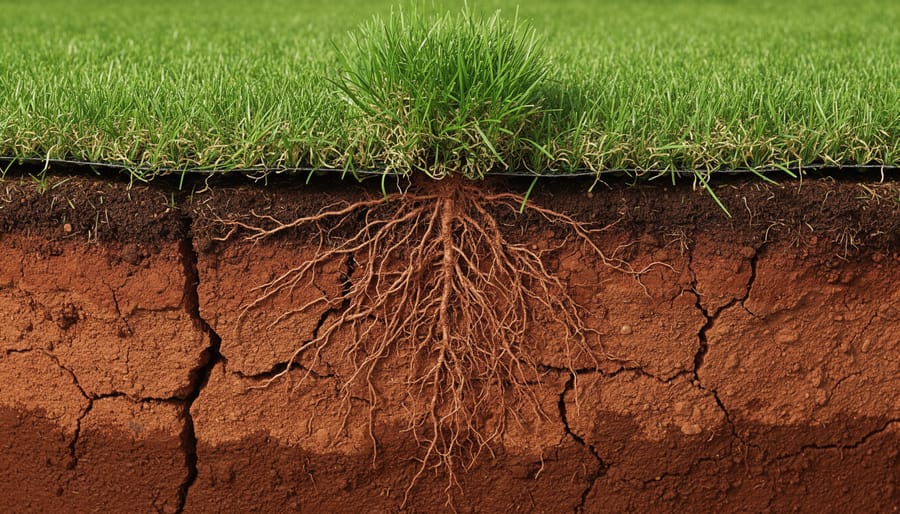
Clay soil often gets a bad reputation, but understanding its unique characteristics can help you work with it rather than against it. This dense, heavy soil type has a fine particle structure that compacts easily and holds water like a sponge, sometimes too well. You’ll recognize clay by its sticky texture when wet and rock-hard consistency when dry. Roll moist clay between your fingers, and it forms a smooth ribbon that holds its shape, unlike other soil types.
The challenges are real: clay drains poorly, warms slowly in spring, and can suffocate grass roots when compacted. But here’s the good news: certain grasses actually thrive in clay conditions. Tall fescue is your champion here, with deep roots that can penetrate dense clay and tolerate both wet and dry extremes. Kentucky bluegrass also performs well in clay, particularly in cooler climates where it can establish before summer stress hits.
Improving clay soil takes patience and the right approach. Regular core aeration is essential, creating channels for air, water, and root growth. Aim for aerating twice yearly in spring and fall. Adding gypsum helps break up clay particles without changing pH, improving soil structure naturally over time. Resist the urge to till excessively, which can worsen compaction.
Top-dress with compost after aerating to gradually increase organic matter. This sustainable practice improves drainage and microbial activity season by season. Remember, transforming clay soil is a marathon, not a sprint, but the results are absolutely worth the effort.
Loamy Soil: The Goldilocks of Lawn Soil
If you’ve ever dreamed of having that picture-perfect lawn, loamy soil is your secret weapon. Think of it as the Goldilocks zone – not too sandy, not too clayey, but just right. This balanced combination of sand, silt, and clay creates optimal conditions that most turfgrasses absolutely thrive in.
What makes loam so special? It’s all about balance. The structure allows water to drain efficiently enough to prevent waterlogging and root rot, yet retains sufficient moisture so grass roots don’t dry out between waterings. This same balanced structure holds nutrients beautifully, giving them time to be absorbed by your grass rather than washing away. And if you’ve ever tried digging in pure clay, you’ll appreciate that loam is wonderfully workable – easy to aerate, overseed, and amend when needed.
The good news for lawn lovers is that loamy soil plays well with nearly every popular turfgrass variety. Whether you’re planting Kentucky bluegrass, perennial ryegrass, tall fescue, fine fescue, or even warm-season grasses like bermudagrass and zoysiagrass, loam provides the foundation for success.
How do you recognize loam? Grab a handful of moist soil and squeeze it. It should form a ball that holds together but crumbles easily when you poke it. It feels slightly gritty yet smooth, and has a rich, earthy appearance.
Maintaining loam quality doesn’t require heroic efforts. Regular soil testing every few years helps you monitor pH and nutrient levels. Add organic matter like compost annually to sustain that perfect structure. Avoid compaction by limiting foot traffic during wet conditions and aerating once yearly. This sustainable approach keeps your loamy soil performing at its best season after season.
Silty Soil: Fertile but Fragile
Silty soil feels wonderfully smooth and almost flour-like when you rub it between your fingers—it’s one of the easier soil types to identify through touch alone. When moist, silt holds together moderately well but doesn’t feel sticky like clay. This velvety texture comes from medium-sized particles that sit perfectly between sand and clay, creating a soil that’s naturally fertile and holds moisture beautifully.
Here’s the good news: silty soil is packed with nutrients and retains water well, giving your grass a nutrient-rich foundation. The challenge? It’s surprisingly fragile. Silt compacts easily under foot traffic and erodes quickly during heavy rains, especially on slopes. Walking on wet silty soil can squeeze out air pockets your grass roots desperately need, leading to thin, struggling turf.
For silty conditions, perennial ryegrass thrives beautifully, establishing quickly with its robust root system that helps anchor the soil. Fine fescues are another excellent choice, particularly in shadier spots, as they’re naturally adapted to handle moderate compaction better than many grasses.
Managing silty soil sustainably means preventing problems before they start. Add organic compost regularly to improve soil structure and reduce compaction risk. Create defined pathways to minimize random foot traffic across your lawn. If you’re dealing with slopes, consider ground covers or strategic plantings to slow water runoff and protect against erosion. During wet periods, simply stay off the lawn—your patience will reward you with healthier grass. Aerating annually in fall helps combat any compaction that does develop, keeping your silty soil productive and your lawn thriving.
Chalky Soil: The Alkaline Exception
If you’ve ever noticed your soil looks pale, almost grayish-white, and feels gritty with visible chalky fragments, you’re likely dealing with alkaline soil. This limestone-based soil type is the high-pH exception in the soil family, typically registering between 7.5 and 8.5 on the pH scale.
The good news? Chalky soil drains exceptionally well, preventing waterlogging issues. The challenge? That high pH can lock out essential nutrients, particularly iron, leaving your grass looking pale and yellowish even when you’re fertilizing regularly. This condition, called chlorosis, is frustratingly common on chalky soils.
To identify chalky soil, look for those telltale white or pale fragments. You might also notice nearby rocks that fizz slightly when you pour vinegar on them—that’s the limestone reacting. Your lawn may struggle to green up despite your best efforts, which is your first clue something’s different about your soil chemistry.
For sustainable success on chalky soil, choose alkaline-tolerant grass varieties. Fine fescues handle high pH remarkably well, while perennial ryegrass also performs admirably. Avoid acid-loving grasses like centipedegrass, which will never thrive here.
Managing chalky soil means working with, not against, its nature. Regular applications of chelated iron fertilizer can combat chlorosis without fighting the pH. While some gardeners attempt to acidify their soil with sulfur, this is often a losing battle and not particularly sustainable. Instead, embrace alkaline-tolerant varieties and supplement with iron seasonally. Adding organic matter helps retain nutrients and moisture, making those alkaline conditions more grass-friendly over time.
Peaty Soil: Rare but Rich
Peat soil is the rarest soil type you’ll encounter in residential lawns, but if you have it, you’re working with some unique characteristics. This dark, spongy soil forms in waterlogged conditions over thousands of years as plant material slowly decomposes. It’s like nature’s own compost pile, only much more acidic.
You’ll recognize peat soil by its distinctive dark brown to black color and its ability to squeeze water out like a saturated sponge. When dry, it feels almost crumbly and surprisingly lightweight. The telltale sign? It retains moisture exceptionally well but can become hydrophobic when it dries out completely, actually repelling water rather than absorbing it.
The biggest challenge with peat soil is its acidity, typically ranging from 3.5 to 5.5 pH. Most popular turfgrasses prefer pH levels between 6.0 and 7.0, so you’ll likely need to adjust it. Fine fescues and certain bentgrass varieties tolerate acidic conditions better than other grasses, making them your best allies here.
Before planting, test your soil pH and consider adding lime to gradually raise it closer to neutral. This isn’t a one-time fix but an ongoing management practice. From a sustainability perspective, it’s worth noting that peat bogs are valuable carbon sinks, so if you’re fortunate enough to have natural peat soil, treat it responsibly.
The good news? That high organic matter content means excellent nutrient retention once you’ve addressed the pH. With proper amendments and grass selection, peat soil can support a healthy, resilient lawn.
Understanding Soil pH and Your Grass Selection
Before we dive deeper into specific soil types, let’s talk about something that might sound a bit science-class flashback: soil pH. Trust me, understanding this simple concept is like having a secret decoder ring for your lawn’s health.
Think of the pH scale as a spectrum running from 0 to 14, where 7 sits right in the middle as neutral. Numbers below 7 indicate acidic soil, while anything above 7 means your soil is alkaline (sometimes called basic). Most turfgrasses are happiest in slightly acidic to neutral conditions, typically between 6.0 and 7.0. It’s in this sweet spot that grass roots can absorb nutrients most efficiently.
Here’s why pH matters so much: even if your soil is loaded with nutrients, your grass might be starving if the pH is off. When soil becomes too acidic (below 6.0), essential nutrients like nitrogen, phosphorus, and potassium become less available to plant roots. On the flip side, alkaline soil (above 7.5) locks up iron, manganese, and other micronutrients, leading to yellowing grass and weak growth.
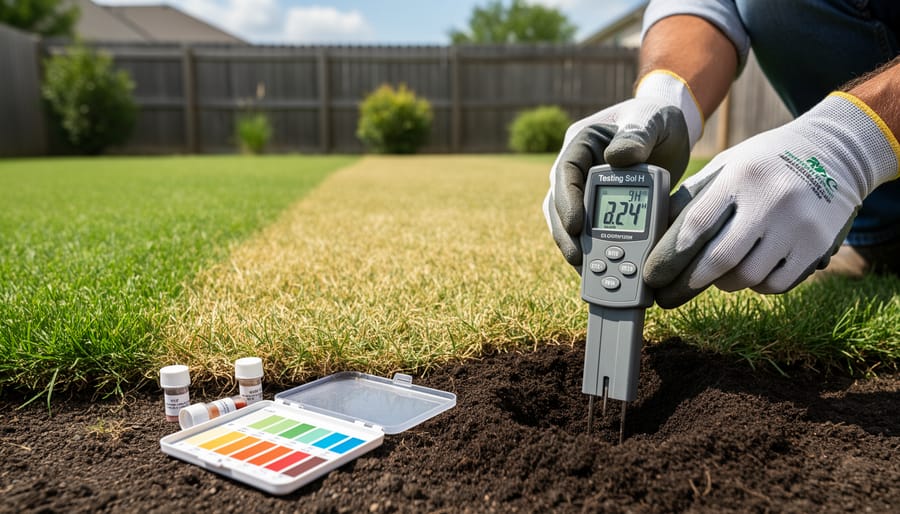
The good news? Testing your soil pH is incredibly straightforward. You can pick up an inexpensive soil test kit at most garden centers, or send a sample to your local cooperative extension office for a detailed analysis. I recommend testing in early spring or fall when you’re most likely to implement changes.
If your test reveals acidic soil, you can naturally raise the pH by applying garden lime (calcium carbonate). Work it into the top few inches of soil, and remember that this is a gradual process. For alkaline soil, elemental sulfur or sulfur-containing amendments will slowly lower the pH. Always follow recommended application rates, as overdoing it can shock your grass and beneficial soil organisms.
The sustainable approach means making small, measured adjustments over time rather than dramatic changes. Your lawn and the environment will thank you for the patience.
Making the Perfect Match: Choosing Turfgrass for Your Soil
Here’s the truth that’ll save you time, money, and frustration: the best lawn isn’t about forcing your dream grass to survive in hostile conditions. It’s about matching the right grass to the soil you already have.
Think of it like matchmaking. You wouldn’t pair a sun-loving beach enthusiast with someone who thrives in mountain snow, right? The same logic applies to your lawn. When you work with your soil’s natural characteristics rather than against them, you create a sustainable ecosystem that practically takes care of itself.
Start with your soil test results in hand. Note your soil type, pH level, and drainage characteristics. Then layer in two additional factors: your climate zone and how you’ll use your lawn. A play area for kids needs different grass than a showcase front yard.
For clay soils in cool climates, tall fescue becomes your champion, tolerating both compaction and moderate shade. Sandy soils in warm regions? Bermudagrass thrives where others would struggle. Silty loam offers flexibility, supporting most grass types beautifully.
Here’s where pH enters the conversation. If your pH falls within 6.0-7.0, you’ve got options galore. Outside that range? Choose grasses naturally adapted to your numbers. Centipedegrass tolerates acidic soils that would frustrate Kentucky bluegrass.
The beauty of this approach is its simplicity. You’re not constantly battling nature with excessive fertilizers, water, or amendments. Instead, you’re creating conditions where your grass genuinely wants to grow. That means less weekend maintenance, lower input costs, and a healthier lawn that resists pests and disease naturally.
Working with your soil isn’t settling for second best. It’s choosing the sustainable path that delivers better results with significantly less effort.
Here’s the truth that every successful lawn owner eventually discovers: healthy, thriving grass starts beneath the surface. You can pour money into premium seed, fancy fertilizers, and sophisticated irrigation systems, but if you’re fighting against your soil type instead of working with it, you’re making lawn care much harder than it needs to be.
The good news? Once you understand your soil, everything else falls into place. That’s why testing your soil should be your very first step, whether you’re troubleshooting persistent lawn problems or starting fresh. A simple soil test reveals not just your soil type, but also its pH and nutrient levels, giving you a complete picture of what you’re working with. Most county extension offices offer affordable testing, and the investment pays dividends for years to come.
When you match the right grass to your specific soil type, something almost magical happens. Those stubborn bare patches start filling in. Your lawn needs less water because the roots can actually access what’s available. You’re not constantly battling diseases that thrive when grass struggles in unsuitable conditions. The endless cycle of fertilizing, treating, and reseeding begins to break.
This isn’t just easier on you, it’s better for the environment. Grass that’s well-suited to its growing conditions naturally requires fewer chemical interventions, less supplemental watering, and minimal fertilizer. You’ll spend less time fighting nature and more time enjoying the results.
So grab that soil test kit. Identify what you’re working with. Choose grass varieties that will actually thrive in your conditions. Your future self, your wallet, and the planet will thank you.