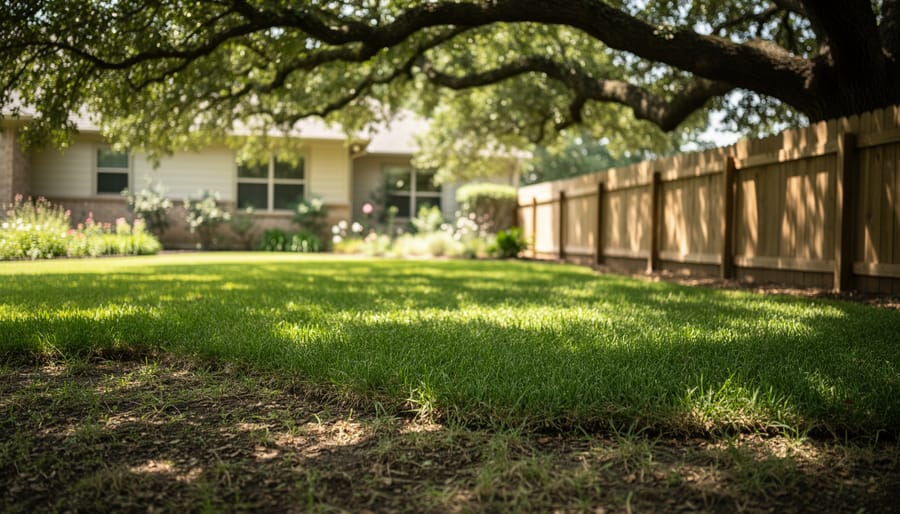
Look beneath that towering oak or along your fence line, and you’ll likely spot the evidence: patchy, struggling grass that just won’t fill in no matter how much you overseed. You’re not imagining the problem—shade fundamentally changes how grass grows, reducing photosynthesis by up to 80% in deep shade and creating an entirely different growing environment than your sunny lawn enjoys.
The good news? You don’t have to surrender those shaded areas to bare soil or endless mulch beds. Specific turfgrass varieties have evolved or been bred to thrive with limited sunlight, though “shade tolerant” doesn’t mean “shade loving”—even the toughest varieties need some filtered light to survive. Understanding which grasses genuinely perform in low-light conditions, and matching them correctly to your specific shade level and climate, makes the difference between a lush, green carpet and another season of disappointing thin patches.
This guide cuts through the marketing hype to reveal which turfgrass varieties actually deliver in shade, organized by your climate zone and the depth of shade you’re battling. You’ll learn how to honestly assess whether your site can support grass at all—because sometimes the most sustainable solution is accepting that deeply shaded areas simply aren’t meant for turf. For those spots where grass can succeed, you’ll discover exactly which varieties to choose, how to plant them for maximum success, and the specific care adjustments that help shade-dwelling grass not just survive, but genuinely thrive.
Understanding Why Most Grass Struggles in Shade
If you’ve ever wondered why your grass seems to disappear under that beautiful oak tree while thriving just a few feet away in the sun, you’re not alone. The answer lies in understanding how grass actually powers itself.
Like all green plants, grass relies on photosynthesis to survive. This process requires sunlight to convert water and carbon dioxide into the sugars that fuel growth. Most traditional turfgrasses evolved in open prairies and meadows where they received full sun, so they’ve adapted to need about 6-8 hours of direct sunlight daily to thrive. When you plant these sun-lovers in shade, they’re essentially trying to run on half a tank of gas. The result? Thin, weak growth that struggles to compete.
But inadequate light is just the beginning of the challenge. Reduced sunlight directly impacts grass growth and health by limiting energy production, which means less robust root development. Shallow, weak roots can’t effectively absorb water and nutrients, creating a downward spiral of decline.
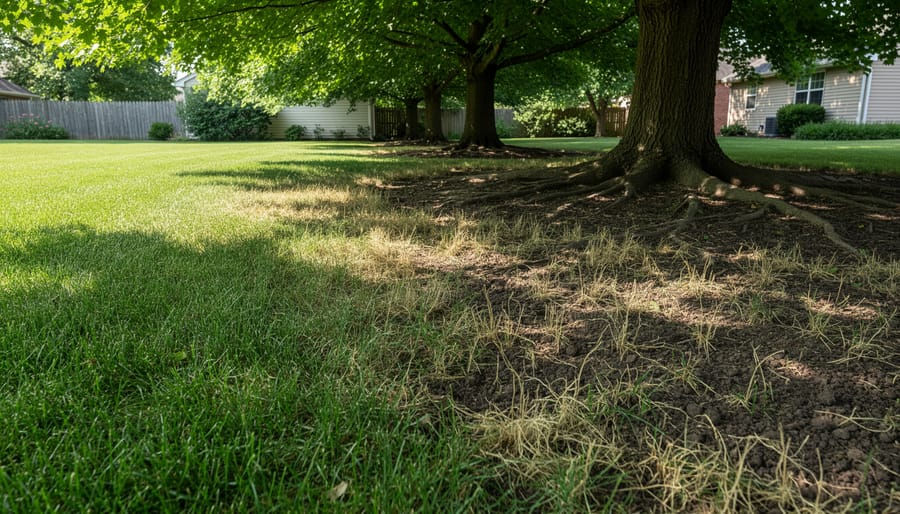
Shade also creates a host of compounding problems that make the environment even more hostile for grass. Trees don’t just block light; their extensive root systems actively compete with grass for water and nutrients, usually winning that battle. The lack of air circulation under dense canopies means moisture lingers on grass blades longer, creating perfect conditions for fungal diseases like powdery mildew and rust. Meanwhile, the soil beneath trees often becomes compacted and depleted, further stressing whatever grass manages to sprout.
Then there’s the leaf litter issue. Those fallen leaves might look picturesque, but they smother grass and alter soil chemistry as they decompose. Add in reduced evaporation rates that can lead to overly moist conditions, and you’ve got a recipe for struggle.
The good news? Understanding these challenges is the first step toward finding sustainable solutions that actually work for your shaded spaces.
Assessing Your Shade Situation: Light Levels Matter
Before you can choose the right shade-tolerant grass, you need to understand exactly what kind of shade you’re dealing with. Not all shade is created equal, and this distinction makes all the difference between success and frustration.
Let’s break down the three main categories. Light shade means your lawn receives about 4-6 hours of direct sunlight daily, or dappled sunlight throughout the day. Think of areas under high-canopied trees or spots that get morning sun but afternoon shade. Moderate shade involves 2-4 hours of direct sun or consistently filtered light through tree branches. Dense shade is the tough one—less than 2 hours of direct sunlight, typically found under evergreens, north-facing walls, or areas surrounded by buildings and fences.
Here’s a simple way to assess your situation: observe your shaded area at 9 AM, noon, and 3 PM on a sunny day. Take notes or photos. The patterns might surprise you—what seems shady all day may actually get decent morning light. Remember to check seasonally too. That same spot might receive more sun in spring before trees fully leaf out, then become much darker by midsummer.
I recommend the “hand shadow test” as a quick gauge. At midday, hold your hand a foot above the ground. If you see a sharp, defined shadow, you’ve got decent light. A fuzzy shadow indicates moderate shade, while barely any shadow at all signals dense shade conditions.
Be honest with yourself during this assessment. Dense shade is where even the best shade-tolerant grasses struggle significantly. If most of your area falls into this category, you’ll want to set realistic expectations—which might mean considering alternative ground covers or adjusting your landscape design to allow more light penetration through selective pruning.
The Best Shade Tolerant Turfgrass Varieties
Fine Fescues: Your Shade Champions
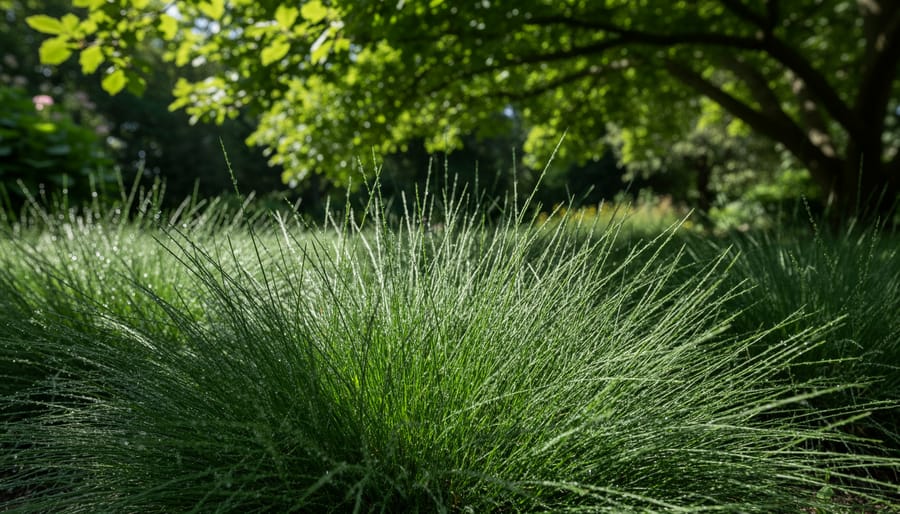
If you’re battling shady spots in your cool-season lawn, fine fescues are about to become your best friends. These unsung heroes of the turfgrass world are the most shade-tolerant cool-season options you’ll find, thriving in conditions where other grasses simply give up.
The fine fescue family includes four main varieties: red fescue, chewing fescue, hard fescue, and sheep fescue. What makes them champions in low light? Their narrow, delicate blades require less chlorophyll production than broader-leaved grasses, allowing them to photosynthesize effectively even when light is limited. Think of them as the shade garden perennials of the grass world.
Red fescue, particularly the creeping variety, spreads gently via rhizomes and tolerates up to 80 percent shade. It creates a fine-textured, dark green lawn that feels soft underfoot. Chewing fescue forms attractive bunches and handles shade nearly as well, though it doesn’t spread. Hard fescue lives up to its name with exceptional drought tolerance alongside shade tolerance, making it perfect for those difficult dry shade areas under mature trees. Sheep fescue, the finest-textured of all, thrives in poor soil conditions where other grasses struggle.
These grasses prefer cooler temperatures and actually go semi-dormant during hot summers, which is a feature, not a bug. They’re remarkably low-maintenance, requiring less water and fertilizer than traditional lawn grasses. Most homeowners can mow them just once or twice monthly during the growing season.
For best results, fine fescues prefer well-drained soil and struggle in compacted, poorly drained areas. They’re also less tolerant of heavy foot traffic, so reserve them for low-use areas. Blend different fine fescue varieties together for improved disease resistance and a more resilient lawn.
Tall Fescue: The Versatile Middle Ground
If you’re looking for a grass that can handle a variety of conditions without being too fussy, tall fescue might be your new best friend. This versatile grass sits comfortably in the middle ground between sun-loving varieties and true shade champions, making it an excellent choice for lawns with dappled sunlight or partial shade.
What makes tall fescue particularly resilient is its impressive root system, which can reach depths of 2 to 3 feet. These deep roots act like underground straws, helping the grass access water and nutrients that other varieties simply can’t reach. This characteristic means tall fescue can tolerate moderate shade while also bouncing back from drought conditions better than many other cool-season grasses.
Here’s where things get interesting: not all tall fescue is created equal. Traditional tall fescue varieties, often called K-31, are the tough, coarse-textured workhorses you might remember from roadsides and pastures. While incredibly durable, they’re not exactly what you’d call attractive. Modern turf-type tall fescues, however, are a different story entirely. These newer varieties feature finer blades, deeper color, and improved density, giving you that lush lawn look without sacrificing the hardiness tall fescue is known for.
For areas receiving 4 to 6 hours of filtered sunlight daily, turf-type tall fescue performs admirably. It’s a practical, sustainable solution that doesn’t demand constant pampering, making it perfect for gardeners who want results without endless maintenance.
Warm-Season Options: St. Augustine and Zoysia
If you’re gardening in the South and battling shade, you’re not alone—and you’ve got some solid options. While warm-season grasses generally crave sunshine, certain varieties have adapted surprisingly well to lower light conditions.
St. Augustine grass leads the pack for shade tolerance among warm-season options. This broad-leaved beauty can handle light to moderate shade better than most of its southern cousins. Among St. Augustine varieties, Palmetto stands out as a champion, tolerating up to 60-70% shade coverage while maintaining decent density. It’s also more cold-hardy than standard cultivars, making it suitable for upper South regions. Sapphire is another excellent choice, featuring a finer texture and blue-green color that looks fantastic even in shadier spots. Both varieties require less mowing than Bermuda or centipede grass—a sustainability win that saves fuel and reduces emissions.
For those seeking a lower-maintenance alternative, specific zoysia cultivars deserve serious consideration. While basic zoysia struggles in shade, improved varieties like Emerald and Zeon perform admirably with 4-5 hours of filtered sunlight. Emerald zoysia creates a dense, carpet-like lawn with minimal inputs once established, though it takes patience during the establishment phase. Zeon offers slightly better shade performance and recovers more quickly from traffic.
Here’s the honest truth: even these shade-tolerant varieties need at least 3-4 hours of dappled sunlight daily. In deep shade where trees completely block the sky, you’re better off exploring groundcover alternatives. Focus on gradually thinning tree canopies to increase light penetration—your grass will thank you with thicker, healthier growth that naturally crowds out weeds.
What About Kentucky Bluegrass and Ryegrass?
Let’s talk honestly about two grasses you’ll see everywhere: Kentucky bluegrass and perennial ryegrass. If you’ve been eyeing those beautiful bags of seed at your local garden center, I need to share some important information that might save you time, money, and frustration.
Here’s the truth: neither Kentucky bluegrass nor perennial ryegrass thrives in shade. Both need at least six hours of direct sunlight daily to maintain healthy growth. I know this might be disappointing if you already have these grasses established in your yard, but understanding their limitations helps you make better decisions moving forward.
Kentucky bluegrass, while gorgeous in full sun, becomes thin and disease-prone in shade. It struggles because it simply can’t produce enough energy through photosynthesis in low-light conditions. Perennial ryegrass performs slightly better than bluegrass in partial shade, but it still won’t give you that lush lawn you’re hoping for under trees.
So when might these grasses work? In transition zones where you have mixed light conditions, quality seed blends that include fine fescues alongside small amounts of bluegrass or ryegrass can be effective. The fescues handle the shaded areas while the sun-loving grasses fill in brighter spots, creating a more uniform appearance across your lawn.
The key is proportion. Look for blends containing at least 80% shade-tolerant varieties. This approach acknowledges reality: most yards have varying light levels, and a diverse seed mix adapts better than any single grass type.
Matching Grass Type to Your Sun and Shade Zones
Most lawns aren’t uniformly sunny or shady—they’re a patchwork of both. That big oak tree casts deep shade near the trunk but dappled light at its edges, while your sunny front yard gradually transitions to the shadier side of your house. The good news? You don’t need to choose just one grass type for your entire property.
Start by mapping your lawn’s light zones throughout the day. Take photos at 9 a.m., noon, and 4 p.m. to see where shadows fall. Areas receiving six or more hours of direct sun are your sunny zones, four to six hours are transitional, and anything less qualifies as shade. This exercise reveals opportunities for strategic matching grass type to actual conditions rather than fighting nature.
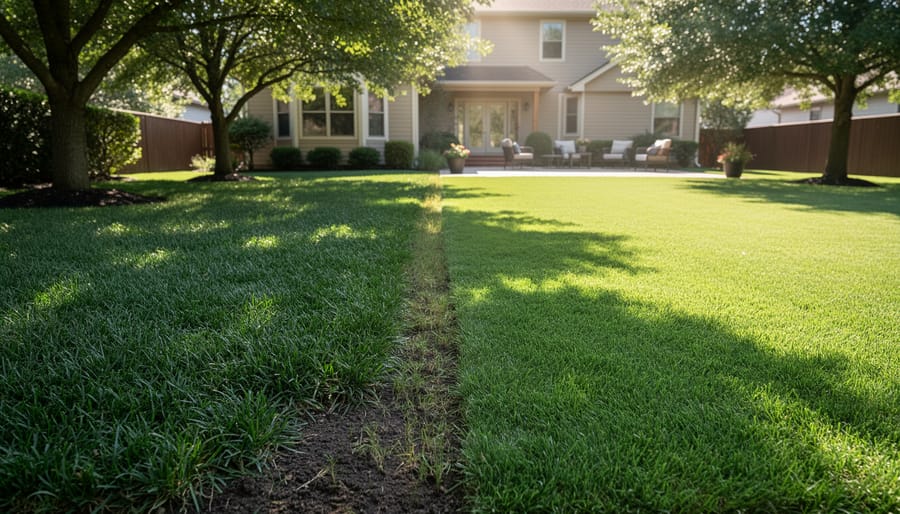
For defined zones with distinct boundaries, consider maintaining separate grass types. Plant sun-loving Kentucky bluegrass in open areas and fine fescue blends under trees. This approach creates a sustainable lawn ecosystem where each variety thrives in its preferred environment. The transition line doesn’t need to be razor-sharp—a gradual shift actually looks more natural.
Transitional seeding works beautifully for areas where sun and shade intermingle. Mix shade-tolerant varieties like fine fescue with moderately shade-tolerant types like perennial ryegrass. As conditions shift seasonally with leaf cover and sun angles, different grasses in your blend will take the lead. This diversity builds resilience—if one variety struggles during a particularly shady summer, others compensate.
For sustainable maintenance of these diverse zones, adjust your care practices accordingly. Shaded areas need less frequent mowing and lighter fertilization than sunny spots. Rather than maintaining one rigid schedule, treat each zone according to its growth rate and needs. This targeted approach conserves resources while keeping each area healthy.
Remember that attempting to force sun-loving grass into deep shade wastes time, money, and water. Embracing your yard’s natural light patterns and selecting appropriate varieties for each zone creates a healthier, lower-maintenance lawn that works with your landscape rather than against it.
Special Care Requirements for Shade Grass
Caring for grass in shaded areas requires a different approach than maintaining a sunny lawn, but don’t worry—a few strategic adjustments can make all the difference between a thin, struggling patch and a lush green carpet.
Let’s start with mowing, which might surprise you. Raise your mower blade higher for shaded turf—about half an inch to a full inch taller than you would for grass in full sun. I recommend keeping shade grass at 3 to 4 inches. Why? Those extra blade inches act like solar panels, capturing every precious ray of filtered light. It’s one of the simplest changes you can make with immediate benefits.
Fertilization is another area where less is actually more. Shaded grass grows more slowly than its sun-loving counterparts, so it needs about half the nitrogen you’d apply to sunny areas. Over-fertilizing creates weak, spindly growth that’s a magnet for disease. Apply a slow-release fertilizer in early fall when root development is prioritized over top growth, and consider skipping the heavy spring feeding that sunny lawns thrive on.
Watering demands special attention too. Shaded areas often stay moist longer, which sounds helpful until you realize it creates the perfect environment for fungal diseases. Water less frequently but deeply, and always water in early morning so foliage can dry throughout the day. Check soil moisture before watering—your finger is the best tool here. If the top two inches feel damp, hold off.
Disease prevention becomes critical in shade’s humid microclimate. Improve air circulation by pruning lower tree branches and thinning dense canopy areas when possible. Avoid walking on wet grass, which spreads fungal spores, and promptly remove fallen leaves that create damp breeding grounds for problems like snow mold and brown patch. These sustainable practices work with nature rather than relying heavily on chemical interventions.
When Grass Simply Won’t Work: Alternative Ground Covers
Let’s be real for a moment: sometimes, no matter which shade-tolerant grass variety you choose, you’re fighting a losing battle. And that’s okay! Recognizing when grass simply won’t thrive is actually a sign of gardening wisdom, not failure.
If your yard has dense, all-day shade under mature trees, receives less than two hours of dappled sunlight, or sits beneath structures that block most light, even the most shade-tolerant fescues will struggle. Heavy foot traffic in these areas makes success even less likely. Rather than spending years battling thin, patchy turf that never quite fills in, consider embracing alternatives that actually want to grow there.
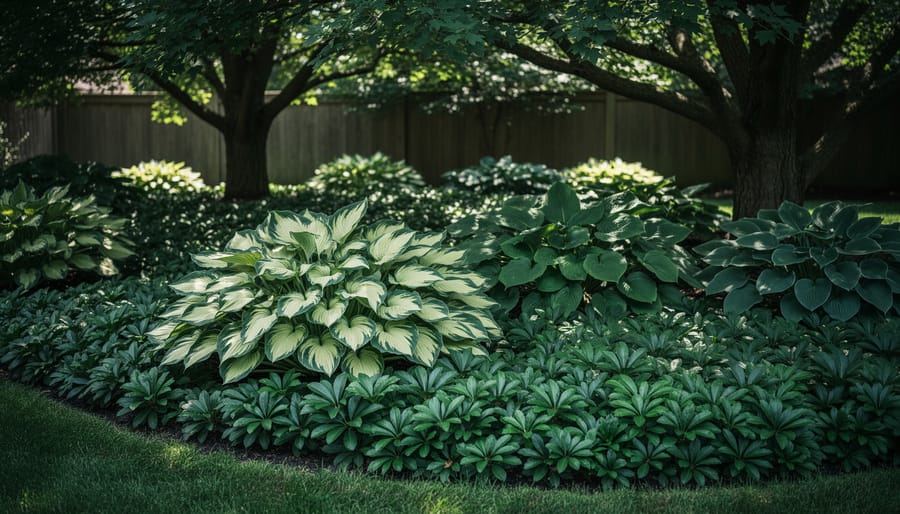
Shade-loving ground covers like pachysandra, vinca minor, or sweet woodruff create lush carpets that thrive where grass fails. These plants have evolved to flourish in low-light conditions, meaning you’re working with nature instead of against it. For high-traffic areas under trees, consider permeable hardscaping like stepping stones surrounded by mulch beds—both attractive and practical.
If you have naturally acidic soil and consistent moisture, a moss garden might be your unexpected hero. Moss requires zero mowing, minimal maintenance, and creates a serene, emerald-green carpet that actually prefers shade. You can even transplant moss from other areas of your property.
The key is matching your landscape design to your site’s actual conditions. A thriving shade garden with appropriate ground covers will always outshine a struggling, threadbare lawn. Sometimes the most sustainable solution is simply choosing plants that are already adapted to succeed in your specific environment.
Here’s the truth: achieving a lush lawn in shade isn’t about conquering nature—it’s about working with it. By now, you’ve learned that shade doesn’t have to mean giving up on green grass. Instead, it’s an invitation to think differently about your landscape and make choices that align with your actual growing conditions rather than fighting against them.
Success in shaded areas comes down to honest assessment and realistic expectations. If you’ve got light dappled shade, fine fescues or shade-tolerant bluegrass blends can thrive beautifully. Medium shade? You’re looking at tall fescue territory in most climates. But if you’re dealing with dense, all-day shade under mature trees, it’s time to embrace the alternatives—and that’s not admitting defeat.
Consider this a chance to create something even more interesting than a traditional lawn. Ground covers, shade gardens, mulched pathways, and naturalized areas often require less water, fewer inputs, and minimal maintenance compared to struggling grass. They’re not just practical solutions—they’re opportunities for creativity and environmental stewardship.
The key takeaway? Right plant, right place. When you choose grass varieties suited to your specific light conditions, adjust your care practices accordingly, and know when to pivot to alternatives, you’re setting yourself up for genuine success. You’ll spend less time fighting brown patches and more time enjoying your outdoor space. That’s not compromise—that’s smart gardening.