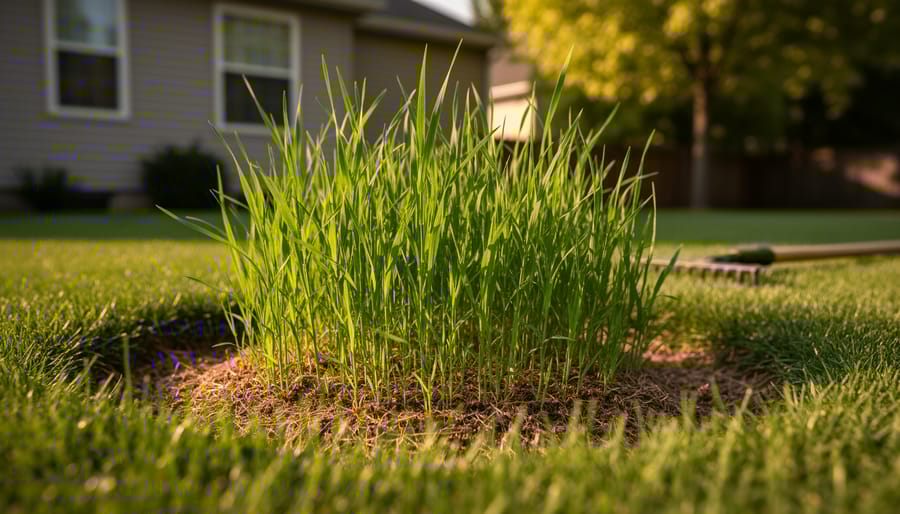
Choose disease resistant grass seed varieties bred specifically for your climate zone—tall fescue cultivars like ‘Titanium LS’ and ‘Crossfire 4’ excel in transition zones with natural resistance to brown patch and leaf spot, while perennial ryegrass varieties such as ‘Pizzazz’ handle cooler regions prone to dollar spot and red thread. Match the seed to your lawn’s specific disease pressure by identifying which fungal issues have plagued your yard in previous seasons, then select varieties with documented resistance to those exact pathogens rather than generic “disease resistant” claims.
Read seed labels carefully, looking for National Turfgrass Evaluation Program (NTEP) ratings that verify resistance claims through independent testing—varieties scoring 6 or higher for disease resistance consistently outperform cheaper alternatives that rely on fungicide treatments. This upfront investment saves you from the endless cycle of chemical applications that frustrated homeowners know too well.
Prepare your lawn for success by combining resistant seed with proper cultural practices that prevent disease establishment. Overseed thin areas in fall when cooler temperatures reduce fungal activity, apply seed at recommended rates to ensure dense turf that crowds out pathogens, and adjust your watering schedule to promote deep roots rather than the shallow, moisture-saturated conditions where fungi thrive. Disease resistant varieties give you the biological advantage, but they work best when supported by sustainable lawn care fundamentals that address the root causes of recurring infections rather than masking symptoms with temporary fixes.
Understanding Why Some Grass Seeds Resist Disease Better Than Others
Here’s something that might surprise you: disease-resistant grass isn’t sprayed with anything special or genetically modified in a laboratory. The resistance is built right into the plant’s DNA, much like how some people naturally have stronger immune systems than others.
Think of it this way. Over thousands of years, grass plants in different regions faced unique challenges. Some grew in areas prone to fungal diseases, others dealt with drought or extreme temperatures. The plants that survived passed along their hardy characteristics to the next generation. This natural selection created grass varieties with inherent disease-fighting abilities.
Modern grass breeding programs have taken this natural process and accelerated it. Scientists identify grass plants that show exceptional resistance to specific diseases like brown patch, dollar spot, or red thread. They carefully cross-breed these champion performers, combining the best traits from multiple parent plants. The result? New cultivars that can fend off diseases without chemical intervention.
But what actually makes these grasses resistant? It comes down to several fascinating plant characteristics. Some varieties have waxy leaf coatings that prevent fungal spores from taking hold. Others produce natural compounds that inhibit disease development. Certain grasses have cell wall structures that are simply tougher to penetrate. Some varieties grow in ways that improve air circulation, creating conditions where disease struggles to establish itself.
The endophyte relationship deserves special mention here. Many modern grass seeds contain beneficial fungi called endophytes that live inside the grass plant without causing harm. These microscopic allies help protect the grass from diseases and pests while requiring nothing from you. It’s a remarkable example of nature’s problem-solving at work.
Understanding this science empowers you to make smarter choices. When you select disease-resistant varieties, you’re not just buying seeds with chemical treatments that wash away after the first rain. You’re investing in grass with generations of natural defenses bred into every blade, creating a genuinely sustainable foundation for your lawn’s long-term health.

The Most Common Lawn Diseases You’re Actually Fighting
Fungal Diseases That Plague Most Lawns
If you’ve ever looked out at your lawn on a dewy morning and noticed something just isn’t right, you’re not alone. Most of us have battled at least one of these common fungal culprits at some point, and trust me, knowing what you’re dealing with is half the battle.
Brown patch is perhaps the most notorious lawn disease, and you’ll recognize it by circular patches of dead, brown grass that can spread to several feet in diameter. The telltale sign? A dark, smoke-colored ring around the perimeter of the patch, especially visible in the early morning. This disease loves hot, humid weather and particularly targets cool-season grasses when nighttime temperatures stay above 70°F.
Dollar spot earns its name from the silver dollar-sized tan or straw-colored spots it creates across your lawn. Look closely, and you might see cobweb-like threads of fungus early in the morning. These spots often merge together, creating larger irregular patches. It’s especially frustrating because it thrives in the same moderate temperatures we all enjoy being outside.
Rust disease turns your grass blades orange or yellowish-brown, and here’s the clincher: if you walk through affected areas, you’ll end up with orange-rust powder on your shoes and pant legs. While it looks alarming, rust typically appears when grass is already stressed from drought or low nitrogen.
Powdery mildew shows up as white or gray powder dusting your grass blades, most commonly in shaded areas with poor air circulation. It’s like someone sprinkled flour across sections of your lawn. This one particularly affects grass growing in less-than-ideal conditions, making it a sustainability issue as much as a disease problem.
Understanding these diseases helps you make smarter choices when selecting resistant varieties for your specific conditions.

Environmental Conditions That Trigger Outbreaks
Understanding why lawn diseases take hold in the first place can save you considerable frustration and money. Think of disease organisms as opportunistic guests—they’re always present, but they only throw a party when conditions are just right for them.
Humidity and moisture are the primary culprits. When grass blades remain wet for extended periods, especially overnight, fungal spores find the perfect environment to germinate and spread. This is why lawns watered in the evening or those in shaded areas with poor air circulation often struggle with disease. Morning dew that doesn’t dry quickly due to dense turf or lack of sunlight creates similar problems.
Temperature swings also play a significant role. Many common lawn diseases thrive in specific temperature ranges. Brown patch, for instance, loves hot, humid nights above 70 degrees, while snow mold flourishes under, well, snow. Understanding your region’s climate patterns helps you anticipate when your lawn is most vulnerable.
Your watering habits can make or break your lawn’s disease resistance. Frequent shallow watering keeps the soil surface constantly moist, encouraging shallow root systems and creating a disease-friendly microclimate. Deep, infrequent watering promotes healthier, more resilient grass.
Soil conditions matter tremendously too. Compacted soil restricts air movement and water drainage, creating wet pockets where diseases flourish. Poor soil fertility weakens grass plants, making them susceptible to infection. Conversely, excessive nitrogen fertilization produces lush, tender growth that disease organisms find irresistible. Finding that sustainable balance is key to maintaining naturally disease-resistant turf.
Disease-Resistant Grass Varieties That Actually Work
Cool-Season Champions: Fescues and Ryegrasses
If you’re living in the northern United States or cooler regions where winters are chilly and summers mild, cool-season grasses are your lawn’s best friend. Understanding the difference between cool-season versus warm-season grass helps you choose varieties that not only survive your climate but actively resist the diseases that plague these regions.
Tall fescue has become a superstar in disease-resistant lawns, particularly varieties enhanced with endophytes. These microscopic fungi live inside the grass plant in a beneficial partnership, producing compounds that deter insects and improve stress tolerance, which indirectly boosts disease resistance. Look for varieties like Lexington, Titanium 2LS, and Crossfire 4. These cultivars combine excellent brown patch and leaf spot resistance with heat tolerance and drought resilience. The endophyte enhancement means you’re essentially getting built-in protection without chemical applications, a win for sustainable lawn care.
Perennial ryegrass has undergone tremendous breeding improvements over the past decade. Gone are the days when ryegrass was merely a quick-germinating companion grass. Modern cultivars like Fiesta 5, Pizzazz, and Tetrastar offer impressive resistance to gray leaf spot, red thread, and crown rust. These varieties establish quickly, making them perfect for overseeding thin areas where disease has taken hold. Their fine texture and dark green color are bonuses that make your lawn look professionally maintained.
Fine fescues deserve special mention for their natural disease tolerance, especially in shady, low-maintenance areas. Chewings fescue varieties like Compass II and hard fescue types such as Sword II and Gladiator show remarkable resistance to red thread and dollar spot. These grasses thrive where others struggle, requiring minimal fertilization and water. They’re the ultimate sustainable choice for homeowners wanting a low-input lawn that naturally fights off disease. Strong creeping red fescue cultivars like Navigator II round out your shade solution with excellent fungal resistance and minimal care requirements.
Warm-Season Winners: Bermuda, Zoysia, and Beyond
If you’re managing a lawn in the southern United States, you know the challenges: scorching heat, humidity that seems to invite every fungal disease imaginable, and the constant battle to keep grass looking vibrant. The good news? Modern warm-season grasses have come a long way in disease resistance, giving you options that can stand up to these challenges without constant chemical intervention.
Let’s start with Bermuda grass, the workhorse of southern lawns. Traditional Bermuda has always been tough, but newer cultivars like ‘Tifway 419’ and ‘Celebration’ offer enhanced resistance to spring dead spot and dollar spot, two diseases that plague many warm-season lawns. These improved varieties maintain their disease resistance while still providing that dense, resilient turf Bermuda is known for. They’re particularly valuable if you have high-traffic areas or sports fields.
Zoysia varieties deserve special attention for homeowners seeking lower maintenance options. Cultivars like ‘Zeon’ and ‘Palisades’ show impressive resistance to large patch disease and rust, common problems in humid climates. Zoysia’s naturally dense growth pattern creates a protective canopy that makes it harder for fungal spores to establish themselves. Yes, it’s slower to establish than Bermuda, but that patience pays off with a lawn that requires less water, fewer chemicals, and handles shade better than most warm-season alternatives.
For those dealing with shady areas where St. Augustine typically struggles with disease issues, consider newer cultivars like ‘Palmetto’ St. Augustine, which shows improved resistance to gray leaf spot and brown patch while tolerating moderate shade. It’s not perfect, but it’s a significant improvement over older varieties that seemed to invite every fungus in the neighborhood.
The Power of Grass Seed Blends for Disease Defense
Here’s a scenario most of us can relate to: you plant a beautiful lawn, and within a season or two, brown patches start appearing. You treat them, they come back. It’s frustrating, right? This is where the magic of grass seed blends comes into play, and honestly, it’s one of the smartest investments you can make for long-term lawn health.
Think of a grass seed blend like a diverse ecosystem rather than a monoculture. When you plant just one variety of grass, you’re essentially putting all your eggs in one basket. If a disease finds a weakness in that particular variety, it can sweep through your entire lawn. But when you use a quality blend containing multiple varieties, you’re creating genetic diversity. Some varieties might be more resistant to brown patch, while others fight off dollar spot better. If one variety struggles, the others hold strong and fill in the gaps.
This approach mirrors sustainable gardening practices we use in vegetable gardens, where companion planting creates natural resilience. The same principle applies to your lawn. When shopping for blends, look for products that clearly list multiple varieties, not just multiple species. A quality tall fescue blend, for example, might contain three to five different cultivars, each bringing unique strengths to your turf.
The key is choosing reputable blends from trusted manufacturers who’ve done the research. Read those seed labels carefully. They should specify variety names, not just percentages of “other varieties.” You want transparency about what you’re planting. These quality blends often cost slightly more than single-variety options, but they’re worth every penny when you consider reduced disease pressure and compatibility with durable grass varieties that withstand heavy use.

Reading Seed Labels: What Disease Resistance Really Means
Walking down the seed aisle can feel overwhelming, especially when every bag seems to promise miracle results. Let me help you cut through the marketing speak and find genuinely disease-resistant options.
Start by looking for the seed analysis tag, usually a small label on the back of the bag. This tells the real story. You’ll see percentages for germination rate, weed seed content, and other crop content. A quality product should have at least 85% germination and minimal impurities. But here’s what most people miss: the variety name matters more than vague claims like “premium blend.”
Disease resistance ratings typically appear as abbreviations following variety names. Look for codes like BR (brown patch resistant), DR (dollar spot resistant), or GLS (gray leaf spot resistant). Reputable manufacturers will spell out exactly which diseases their varieties resist. If you only see general claims without specific disease names or variety information, that’s a red flag.
Third-party certifications add credibility. The National Turfgrass Evaluation Program conducts multi-year trials comparing grass varieties under real-world conditions. Varieties that perform well in NTEP trials earn that distinction on their packaging. Similarly, certification from organizations like the Association of Official Seed Certifying Agencies verifies genetic purity and quality standards.
Be skeptical of absolute claims. No grass is completely immune to all diseases under all conditions. Honest packaging uses terms like “improved resistance” or “enhanced tolerance” rather than “disease-proof.” Quality manufacturers also include recommended growing zones and light requirements, helping you match varieties to your conditions. Speaking of conditions, disease resistance works best when you select appropriate varieties, whether you need shade-tolerant varieties or sun-loving types.
Compare multiple products side-by-side. The cheapest option often contains older varieties with minimal disease resistance, while the most expensive isn’t necessarily better. Look for that sweet spot where specific variety names, clear resistance ratings, and reasonable pricing intersect. Your lawn deserves transparency, not just marketing hype.
Matching Resistant Varieties to Your Specific Lawn Conditions
Climate Zone and Regional Disease Pressures
Your location matters tremendously when selecting disease-resistant grass seed because different regions face unique pathogen challenges. Think of it like choosing the right winter coat – what works in Minnesota won’t necessarily suit Florida!
In the cool, humid Northeast and Pacific Northwest, you’ll battle brown patch, dollar spot, and snow mold. Tall fescue varieties with enhanced brown patch resistance and disease-resistant perennial ryegrass blends perform exceptionally well here. I’ve seen lawns in Connecticut transform simply by switching from generic Kentucky bluegrass to a disease-resistant tall fescue mix.
The transition zone (roughly from Kansas to Maryland) presents the trickiest conditions, experiencing both summer heat stress and winter cold. Here, turf-type tall fescues with broad-spectrum disease resistance are your best friends, offering year-round protection against everything from leaf spot to summer patch.
Southern regions battling high heat and humidity need warm-season grasses like Bermudagrass and Zoysiagrass with resistance to large patch and gray leaf spot. These varieties naturally thrive in challenging conditions that would devastate cool-season grasses.
Before purchasing seed, contact your local extension office to identify which diseases plague your specific area. This sustainable approach targets your actual problems rather than guessing, saving money and reducing unnecessary chemical applications.
Sun, Shade, and Soil Considerations
Even the most disease-resistant grass seed won’t perform miracles if it’s planted in conditions where it simply can’t thrive. Think of it this way: a shade-tolerant variety’s disease resistance is like wearing a raincoat in a thunderstorm, but planting sun-loving grass in deep shade is like jumping in a pool with that same coat. You’re just asking for trouble.
Sunlight exposure directly impacts disease susceptibility. Grass struggling in insufficient light becomes weak and stressed, making it vulnerable to fungal infections regardless of its genetic resistance. If your lawn receives less than four hours of direct sunlight daily, you need genuinely shade-tolerant varieties like fine fescues. Their disease resistance traits only function properly when they’re not already compromised by light starvation.
Soil conditions are equally critical to disease prevention. Poor drainage creates the perpetually damp environment where fungi thrive, essentially canceling out your seed’s resistance features. Heavy clay soils that stay wet or compacted areas with standing water need addressing before any seed goes down. Understanding soil-grass compatibility helps ensure your chosen variety can actually express its disease-resistant traits.
Before selecting your seed, honestly assess your yard’s microclimates. That shady corner under the oak tree needs different grass than the sunny stretch by the driveway. Match your seed selection to each area’s specific conditions. Disease resistance only works when the grass is healthy enough to use it, and health starts with putting the right plant in the right place.
Beyond the Seed: Creating Conditions Where Resistance Thrives
Watering and Mowing Practices That Prevent Disease
Even the most disease-resistant grass seed needs a little help from smart lawn care practices. Think of it this way: choosing the right seed gives you a head start, but how you water and mow determines whether you cross the finish line with a healthy lawn or end up battling fungal problems.
Let’s talk watering first. The golden rule is to water deeply but infrequently, preferably in the early morning hours between 4 and 10 a.m. This timing allows grass blades to dry before evening, and here’s why that matters: fungal diseases absolutely love moisture lingering on grass overnight. It’s like rolling out the welcome mat for pathogens. I learned this lesson the hard way when I used to run my sprinklers in the evening to avoid water evaporation. My lawn developed dollar spot within weeks. Once I switched to morning watering, the problem dramatically improved. Aim for about one inch of water per week, including rainfall, delivered in one or two deep sessions rather than daily light sprinkles that keep the surface constantly damp.
Mowing practices are equally crucial. Keep your mower blades sharp because dull blades tear grass rather than cutting cleanly, creating ragged wounds that invite disease. Set your mower height between 2.5 to 3.5 inches depending on your grass type. Taller grass develops deeper roots and shades out weeds, while extremely short cutting stresses plants and makes them vulnerable to infection. Never remove more than one-third of the blade length in a single mowing, and clean your mower deck regularly to avoid spreading disease spores between lawn areas.
Soil Health as Your First Line of Defense
Here’s a truth that might surprise you: even the most disease-resistant grass seed won’t reach its full potential in poor soil. Think of soil health as the foundation of your entire lawn defense system. When your soil is thriving, your grass develops deeper roots, stronger cell walls, and better natural immunity to diseases.
Start by testing your soil pH, which ideally should fall between 6.0 and 7.0 for most grass types. Soil that’s too acidic or alkaline creates stress that weakens your grass, making it vulnerable to fungal diseases regardless of the variety you’ve planted. You can grab an inexpensive test kit from any garden center, and many local extension offices offer testing services for just a few dollars.
Beyond pH, focus on building organic matter in your soil. I like to think of compost as a multivitamin for your lawn. A yearly top-dressing of quality compost (about one-quarter inch) feeds beneficial microorganisms that naturally suppress disease pathogens. These microscopic helpers compete with harmful fungi for resources and even produce compounds that inhibit disease development.
Sustainable practices like leaving grass clippings on your lawn (grasscycling) and avoiding synthetic fertilizers that can disrupt soil biology make a real difference over time. When you combine nutrient-rich, well-balanced soil with disease-resistant grass varieties, you’re creating an environment where disease struggles to gain a foothold. Your grass becomes naturally resilient, reducing or eliminating the need for chemical interventions while giving you that lush, healthy lawn you’re after.
Making the Switch: Overseeding and Renovation Strategies
Ready to give your lawn a disease-resistant makeover? You’ve got two main paths forward: the gradual approach through overseeding or going all-in with complete renovation. Let’s walk through both so you can choose what fits your situation and patience level.
Overseeding is perfect if your lawn isn’t totally decimated yet. Think of it as gradually introducing reinforcements to strengthen your turf army. The best time? Fall is your golden window for cool-season grasses, when soil temperatures hover between 50-65°F. Spring works too, though you’ll compete with weeds. For warm-season varieties, late spring to early summer is ideal.
Here’s the realistic timeline: Start by mowing your existing lawn short, around 1.5 inches, and rake vigorously to remove thatch and create soil contact points. You might even consider renting a slit seeder if you’re serious about results. Spread your disease-resistant seed at about half the rate you’d use for new lawns since you’re filling in, not starting from scratch. Keep the soil consistently moist for those crucial first three weeks. You’ll see baby grass blades within 7-14 days, but don’t expect miracles overnight. It typically takes two to three growing seasons of repeated overseeding to achieve a lawn that’s predominantly disease-resistant varieties.
Now, if your lawn looks more like a battlefield than a backyard, complete renovation might be your best bet. This means starting fresh. Kill off existing grass with a non-selective herbicide or use solarization if you prefer an organic approach, though that requires 4-6 weeks during hot weather. Strip or till the dead grass, amend your soil based on a soil test, and seed as you would a brand-new lawn.
The payoff? With renovation, you’ll have a uniformly disease-resistant lawn in one growing season instead of three. The trade-off is higher upfront cost and that awkward phase where your yard looks worse before it looks better.
Whichever route you choose, remember that patience and proper watering make all the difference. Your future self will thank you when disease season rolls around and your neighbors are reaching for fungicides while you’re simply enjoying your green, healthy lawn.

Choosing disease-resistant grass seed isn’t just about solving today’s brown patch problem—it’s an investment in years of healthier, more resilient turf that requires far less intervention. When you select the right variety from the start, you’re essentially giving your lawn its own immune system, reducing or eliminating the need for repeated fungicide applications that cost money, demand your time, and introduce unnecessary chemicals into your yard’s ecosystem.
Think about it this way: would you rather spend a slightly higher amount on quality seed once, or commit to an ongoing cycle of diagnosis, treatment, and reseeding every season? The math becomes pretty clear when you factor in fungicide costs, water usage for stressed lawns, and the hours spent nursing sick grass back to health. Disease-resistant varieties break that frustrating cycle.
Your specific situation matters tremendously, of course. A shaded backyard in the Pacific Northwest has completely different needs than a sun-drenched lawn in Georgia. But that’s exactly why understanding your local conditions and matching them to the right cultivars is so empowering. You’re not gambling on a generic solution—you’re making an informed choice tailored to your environment.
The beauty of this proactive approach is that it aligns perfectly with sustainable lawn care principles. Fewer chemical inputs, healthier soil biology, and grass that thrives rather than merely survives all contribute to an ecosystem that works with nature instead of against it. You become a steward of your landscape, not just someone constantly fighting problems.
Take what you’ve learned here, assess your lawn’s unique conditions, and make a choice that sets you up for long-term success. Your future self—and your lawn—will thank you for thinking ahead.