Kentucky bluegrass has earned a reputation as a water-demanding lawn that wilts at the first sign of summer heat, but the reality is more nuanced and considerably more hopeful for homeowners facing water restrictions. This classic cool-season grass actually possesses remarkable survival mechanisms that allow it to endure extended dry periods, though understanding the difference between survival and thriving is key to setting realistic expectations.
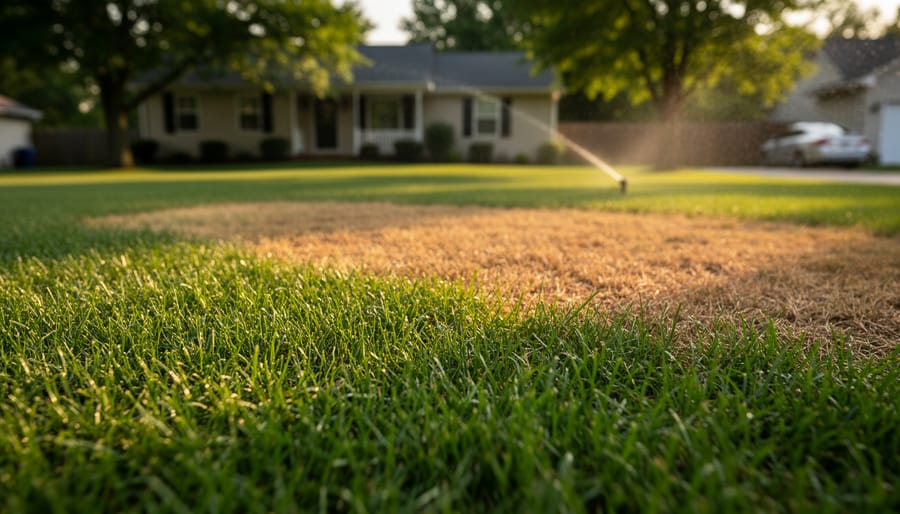
When drought hits, Kentucky bluegrass enters dormancy, a protective state where the grass turns brown above ground while preserving its crown and root system below the soil surface. This isn’t death, it’s strategic patience. The grass can remain dormant for four to six weeks without permanent damage, then green up rapidly when moisture returns. This built-in resilience makes KBG more drought-tolerant than many gardeners realize, though it certainly won’t maintain that coveted emerald appearance without supplemental water during prolonged dry spells.
The critical question isn’t whether Kentucky bluegrass can tolerate drought in absolute terms, but whether it fits your specific situation. If you’re comparing grass types for a new lawn in an arid climate or under permanent water restrictions, more drought-adapted alternatives deserve serious consideration. However, if you’re managing an established KBG lawn through occasional dry periods or looking to reduce water usage while keeping your existing turf, strategic management practices can dramatically improve performance without abandoning this traditional favorite. Understanding KBG’s actual capabilities, rather than dismissing it outright or expecting miracle performance, empowers you to make informed decisions about selection and care.
The Truth About Kentucky Bluegrass and Drought Tolerance
Let’s clear up some confusion about Kentucky bluegrass and its relationship with drought. I’ve heard countless lawn enthusiasts praise KBG as either incredibly drought-tolerant or completely helpless without constant watering. The truth, as usual, sits somewhere in the middle, and understanding how this grass actually handles dry conditions will help you make smarter decisions for your lawn.
Kentucky bluegrass has earned its reputation through a fascinating survival mechanism that’s often misunderstood. When faced with drought stress, KBG doesn’t actually maintain its lush green appearance like some drought-tolerant grasses do. Instead, it employs a clever strategy: dormancy. Think of it as your grass taking a protective nap until better conditions arrive.
Here’s how it works. KBG develops an impressive root system that can extend 18 to 24 inches deep when properly established. These roots access moisture that shallow-rooted grasses simply can’t reach. But when soil moisture depletes beyond what even those deep roots can find, Kentucky bluegrass transitions into dormancy mode. The blades turn brown and stop growing, but the crown and root system remain alive, waiting patiently underground.
The real magic happens when rain or irrigation returns. Unlike grasses that die under severe drought stress, dormant KBG can bounce back remarkably well, usually greening up within 7 to 14 days of receiving adequate water. This recovery potential is where Kentucky bluegrass truly shines compared to some alternatives.
However, let’s address a common myth: this doesn’t mean KBG is a low-water grass. During active growth periods, it actually requires more water than many alternatives, typically needing about 1.5 inches per week to maintain that coveted deep green color. The drought tolerance refers specifically to its survival ability and recovery potential, not its water requirements for optimal appearance.
There are also limits to this resilience. Extended dormancy periods beyond 4 to 6 weeks, especially combined with traffic or extreme heat, can cause permanent damage. The grass may not recover uniformly, leaving you with thin, patchy areas that require renovation.
For sustainable lawn care, understanding this distinction is crucial. Kentucky bluegrass can survive drought conditions and recover beautifully, making it suitable for regions with seasonal dry spells. But if you’re seeking a consistently green lawn with minimal water input during active growing seasons, you’ll want to consider your expectations carefully.

How Kentucky Bluegrass Stacks Up Against Other Drought-Tolerant Grasses
Cool-Season Grass Comparisons
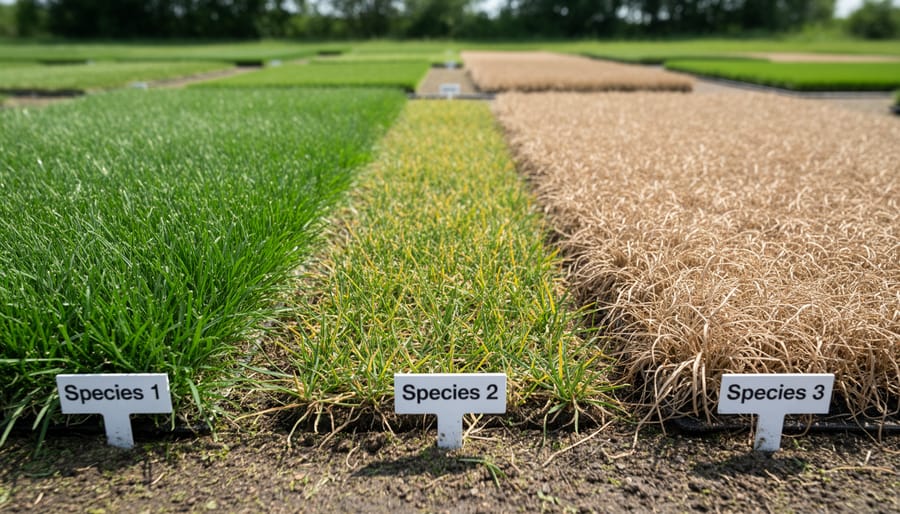
When you’re deciding which cool-season grass to plant, understanding how different varieties handle drought can save you both water and worry. Let’s look at how Kentucky bluegrass stacks up against its two main competitors.
Tall fescue is often the go-to recommendation for drought-prone areas, and for good reason. Its deep root system, reaching 2-3 feet down compared to KBG’s 6-12 inches, allows it to access moisture that Kentucky bluegrass simply can’t reach. This means tall fescue can stay green through dry spells that would send bluegrass into dormancy. If you’re in a region with regular summer droughts or water restrictions, tall fescue requires about 30-40% less water than Kentucky bluegrass to maintain acceptable quality.
Fine fescues, including creeping red fescue and hard fescue, are the true drought champions of cool-season grasses. They’re perfectly content with less than an inch of water weekly and tolerate shade beautifully. However, they don’t handle heavy foot traffic well, making them less ideal for active family lawns.
Here’s where things get practical: many successful lawns use blended seed mixes. A common sustainable approach combines 60% tall fescue with 40% Kentucky bluegrass, giving you tall fescue’s drought tolerance alongside KBG’s repair ability and richer color. For shadier yards with lower traffic, mixing fine fescue with a smaller percentage of bluegrass creates an even more water-thrifty lawn. These blends let you enjoy some of Kentucky bluegrass’s appealing qualities while building in natural drought insurance.
Warm-Season Alternatives Worth Considering
If you live in the transition zone or areas where summers are particularly brutal, it might be worth considering warm-season grass alternatives that handle heat and drought far more efficiently than Kentucky bluegrass. These grasses actually thrive during hot weather and require significantly less water once established.
Buffalograss stands out as one of the most drought-tolerant lawn options available. Native to the Great Plains, it can survive on as little as one-quarter of the water needed for Kentucky bluegrass. It stays green with minimal irrigation and develops an extensive root system that reaches deep into the soil. The trade-off? It goes dormant and turns tan in cooler weather, which some homeowners find less appealing.
Bermuda grass is another excellent option for those prioritizing drought resilience. It tolerates heat exceptionally well and recovers quickly from stress. Once established, Bermuda grass needs roughly half the water of Kentucky bluegrass while maintaining a dense, attractive lawn throughout summer.
For readers seeking a middle ground, drought-resistant zoysia grass offers impressive heat and drought tolerance while maintaining better cold-season color than pure warm-season options. It’s particularly well-suited for transition zone gardeners who want year-round appeal with reduced watering needs.
Making the switch requires consideration of your climate, aesthetic preferences, and willingness to accept seasonal dormancy, but for many homeowners facing persistent water restrictions, these sustainable alternatives provide beautiful lawns with far less environmental impact.
Cultivar Matters: Choosing the Right Kentucky Bluegrass Variety
Not all Kentucky bluegrass is created equal when it comes to surviving dry spells. While KBG as a species has moderate drought tolerance, specific cultivars within the family show dramatically different performance levels when water becomes scarce. Understanding these differences can be the deciding factor between a lawn that limps through summer and one that maintains respectable color and density.
Traditional Kentucky bluegrass varieties, the ones you might find in bargain-bin seed mixes, typically enter dormancy quickly when moisture drops. But here’s where things get exciting: modern breeding programs have developed cultivars specifically engineered for superior drought performance. Varieties like ‘Bluestone’, ‘Stoney Creek’, and ‘Midnight II’ have earned reputations for maintaining deeper root systems and more efficient water usage. ‘Award’ and ‘Serene’ are other standouts that combine drought tolerance with the dense growth habit that makes KBG so desirable.
What makes these improved varieties better? It comes down to genetics. Breeders select plants with naturally deeper roots (sometimes reaching 24 inches or more versus 12-18 inches for older types), better cellular water retention, and improved recovery speed after stress. Many of these advanced cultivars also offer disease-resistant cultivars characteristics, which matters because drought-stressed grass becomes more vulnerable to fungal problems.
When shopping for seed, resist the temptation to grab the cheapest option. Look for product labels listing specific cultivar names rather than generic “Kentucky bluegrass” designations. Quality seed usually costs more upfront but delivers better long-term water efficiency and lower maintenance needs. Consider blends containing multiple drought-tolerant cultivars rather than a single variety, as this genetic diversity helps your lawn adapt to varying conditions across your yard.
For sustainable lawn care, investing in the right cultivar from the start means less water, fewer inputs, and better performance during those inevitable dry periods we all face.
Making Kentucky Bluegrass Work in Drought-Prone Areas
Proper Establishment for Drought Resilience
The secret to drought-resilient Kentucky bluegrass starts before you even put seed in the ground. Think of establishment as teaching your lawn good habits from day one—you want those roots reaching deep rather than lounging near the surface.
First, timing matters tremendously. Late summer to early fall is your golden window for establishing KBG. The soil is warm enough for quick germination, but cooler air temperatures mean seedlings aren’t stressed by heat while trying to get established. This gives roots several weeks to grow deep before winter dormancy.
Prepare your seedbed with at least six inches of quality topsoil. This isn’t just about fertility—it’s about giving those roots somewhere to actually go. Compacted or shallow soil forces shallow roots, which means you’ll be fighting drought battles for years. Good soil-turfgrass compatibility sets the foundation for everything that follows.
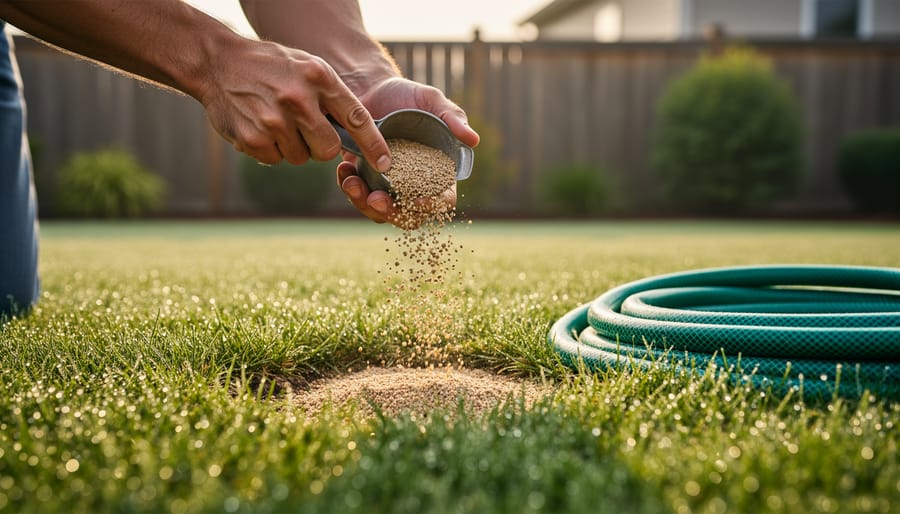
During establishment, water deeply but less frequently once seedlings are up. Yes, you’ll need consistent moisture for germination, but after that first inch of growth, start training roots to chase water downward. Think one inch of water once or twice weekly rather than daily spritzing. This early training pays enormous dividends when drought stress eventually arrives.
Maintenance Practices That Reduce Water Needs
Good news: you can significantly improve your Kentucky bluegrass’s drought tolerance through smart maintenance choices. These practices work with your lawn’s natural survival mechanisms rather than against them.
Let’s start with mowing height, which might be the single most important adjustment you can make. Raise your mower blade to 3-4 inches during the growing season, and even higher during drought periods. Taller grass develops deeper roots—sometimes extending 12-18 inches down instead of just 4-6 inches. Those extra inches of root growth access moisture that shorter grass simply can’t reach. As a bonus, the taller blades shade the soil, reducing evaporation by up to 50%.
Fertilization timing deserves careful attention. Heavy spring feeding might give you that gorgeous emerald carpet, but it also creates lush growth that demands more water. Instead, focus your fertilization efforts in fall when Kentucky bluegrass naturally thrives. A light feeding in late spring is fine, but skip summer applications entirely—stressed grass can’t use those nutrients anyway.
Core aeration in early fall is your secret weapon for drought preparedness. Those plugs you pull create channels for water to penetrate deeper and break up compacted soil that prevents root expansion. Plan to aerate annually if you have clay soil or heavy foot traffic.
Finally, practice deep, infrequent watering when you do irrigate. Training your lawn to expect daily sprinkles creates shallow roots that panic at the first sign of drought. Instead, water thoroughly once weekly, encouraging those roots to dive deep where consistent moisture lives.

Smart Watering Strategies for Water Restrictions
When water restrictions hit your neighborhood, smart irrigation becomes essential for keeping Kentucky bluegrass healthy without breaking the rules or wasting precious resources. The secret is training your lawn to develop deeper roots through strategic watering practices.
Deep, infrequent watering is your best friend during drought conditions. Instead of daily sprinkles that encourage shallow roots, aim for one thorough soaking per week that penetrates 6-8 inches into the soil. This might mean running your sprinkler for 45-60 minutes in one session rather than 15 minutes daily. Your grass will respond by sending roots deeper into the soil where moisture lingers longer, making it naturally more drought-resistant over time.
Timing makes a huge difference too. Water between 4-8 AM when temperatures are cooler and winds are calmer. You’ll lose less water to evaporation and give grass blades time to dry before nightfall, reducing disease risk. If morning watering isn’t possible, early evening works as a second choice.
Working within municipal restrictions often means getting creative. Check if your area allows hand watering on off days, which lets you spot-treat stressed areas without soaking the entire lawn. Some communities also exempt newly seeded areas or offer variances for establishing lawns. Most importantly, remember that allowing Kentucky bluegrass to go dormant during severe restrictions is a sustainable choice that won’t kill your lawn.
When Kentucky Bluegrass Isn’t the Right Choice
Let’s be real with each other: Kentucky bluegrass isn’t always the hero of the drought story. While I love its lush, velvety appearance as much as anyone, there are situations where choosing KBG is like bringing a water-loving house plant to the desert—it’s simply fighting nature instead of working with it.
If you live in regions with chronic drought conditions or severe water restrictions, Kentucky bluegrass probably isn’t your most sustainable choice. Areas of the Southwest, parts of California facing ongoing water scarcity, or regions where summer watering bans are the norm will demand constant struggle to keep KBG looking decent. You’ll find yourself either watching your lawn go dormant for months on end or using precious water resources that might be better allocated elsewhere.
Similarly, if you’re not prepared to invest in a solid irrigation system and regular maintenance, KBG will disappoint you. This grass demands consistent attention during dry spells. Folks who want a truly low-maintenance, set-it-and-forget-it lawn should honestly look at native alternatives or drought-tolerant grasses like buffalo grass or tall fescue blends.
Climate matters enormously here. KBG thrives in cooler northern climates where natural rainfall patterns support its growth cycle. But if you’re in transition zones or warmer regions where temperatures regularly soar above 90 degrees with minimal rain, you’re fighting an uphill battle.
The good news? Recognizing that KBG isn’t right for your situation isn’t failure—it’s smart, sustainable gardening. Choosing grasses adapted to your specific climate and water availability means less frustration, lower water bills, and a healthier lawn overall. Sometimes the most environmentally responsible choice is simply acknowledging that beautiful Kentucky bluegrass belongs in Kentucky-like conditions, not everywhere we wish it would grow.
The Sustainable Approach: Mixing Kentucky Bluegrass for Better Drought Performance
Here’s a secret that lawn care professionals have known for years: you don’t have to go all-in on Kentucky bluegrass to enjoy its benefits. In fact, mixing KBG with more drought-tolerant grasses creates a resilient lawn that handles water restrictions far better than a pure bluegrass stand.
Think of it like diversifying an investment portfolio. When you blend Kentucky bluegrass with durable grass varieties like tall fescue or fine fescue, you’re essentially hedging your bets against drought. While Kentucky bluegrass contributes that gorgeous deep green color and self-repair capability, the drought-tolerant partners maintain density and color when water becomes scarce.
For most homeowners, a 40-60% Kentucky bluegrass blend works beautifully. Try mixing 40% KBG with 60% tall fescue for sun-to-partial-shade areas, or combine 50% KBG with 50% fine fescue for shadier spots. These ratios give you the aesthetic appeal of bluegrass while significantly improving overall drought performance.
The magic happens at the root level. Tall fescue’s deep roots access moisture that shallow-rooted bluegrass can’t reach, while fine fescues naturally require less water. During drought stress, these companions keep your lawn looking respectable while the bluegrass goes dormant. When water returns, the Kentucky bluegrass bounces back and fills in any thin spots.
Mixed lawns also develop more complex soil ecosystems, with varied root structures improving water infiltration and reducing runoff. This means every drop of water you apply works harder for your lawn. Plus, diverse grass communities are naturally more resistant to disease and pest pressure, reducing your need for chemical interventions. It’s sustainable lawn care at its finest, combining beauty with environmental responsibility.
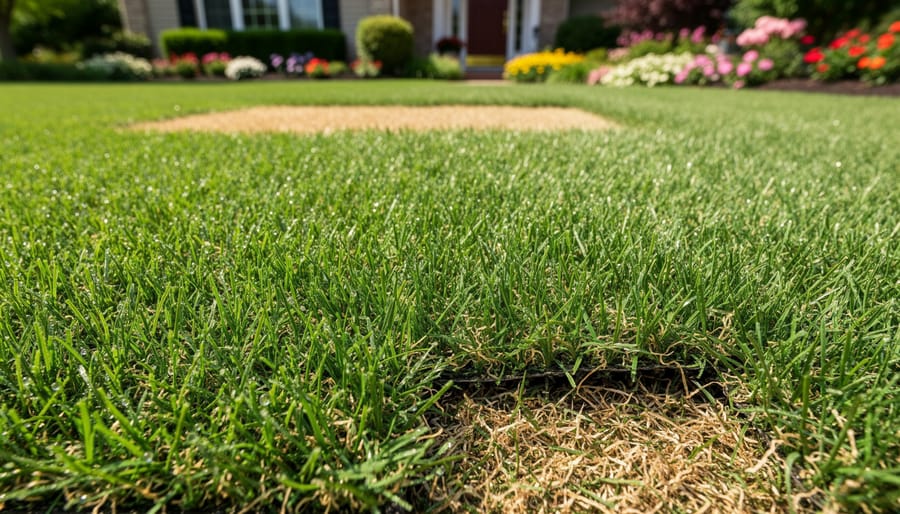
Kentucky bluegrass offers moderate drought tolerance that can work beautifully in the right situations, but it’s not a miracle grass for water-scarce environments. The key takeaway? KBG can survive dry periods through dormancy and recover impressively when water returns, but it does need consistent moisture during active growth to maintain that lush, green appearance we all love.
If you’re considering KBG for your lawn, be honest about your local climate, your willingness to provide supplemental irrigation during dry spells, and your long-term maintenance commitment. In cooler, northern regions with regular rainfall, Kentucky bluegrass can be a relatively low-stress choice. In hot, arid climates, you’ll be fighting an uphill battle that benefits neither your lawn nor the environment.
For existing KBG lawns facing water restrictions, remember that proper cultural practices make all the difference. Mowing high, aerating compacted soil, and watering deeply but infrequently builds resilience that carries your lawn through challenging conditions.
Ultimately, sustainable lawn care means choosing the right grass for your specific situation and managing it thoughtfully. Whether that’s embracing KBG’s strengths in appropriate climates or selecting drought-tolerant alternatives where they make more sense, you’re making a water-conscious decision that benefits both your landscape and your community.