Look beyond the familiar NPK trio on your fertilizer bag. Your lawn’s persistent yellowing, stunted growth, or sudden disease susceptibility might signal calcium or magnesium deficiency—two secondary nutrients beyond NPK that quietly orchestrate hundreds of essential plant processes. Calcium strengthens cell walls, enabling grass blades to stand firm against foot traffic and disease. Magnesium sits at the heart of every chlorophyll molecule, literally powering photosynthesis and that deep green color you’re chasing.
Most gardeners don’t realize their soil pH adjustments with lime are actually calcium applications, or that Epsom salt treatments deliver magnesium directly to struggling plants. These nutrients work as a team—too much of one can block the other’s uptake, creating deficiencies even when your soil test shows adequate levels. Sandy soils leach them away with every rain, while clay soils may lock them up in forms plants cannot access.
Understanding when your lawn actually needs these nutrients—versus when it needs something else entirely—saves money and prevents the environmental waste of unnecessary applications. The difference between a struggling lawn and a thriving one often comes down to balancing these foundational elements correctly. This guide cuts through the confusion with soil-test interpretation, visual deficiency diagnosis, and targeted application strategies that work with your soil’s unique chemistry.
The Hidden Partnership: How Calcium and Magnesium Actually Work in Your Soil
Calcium: Your Soil’s Structural Engineer
Think of calcium as your lawn’s behind-the-scenes contractor, quietly building the infrastructure that keeps everything standing strong. While nitrogen gets all the glory for green growth, calcium works underground, literally holding your soil together.
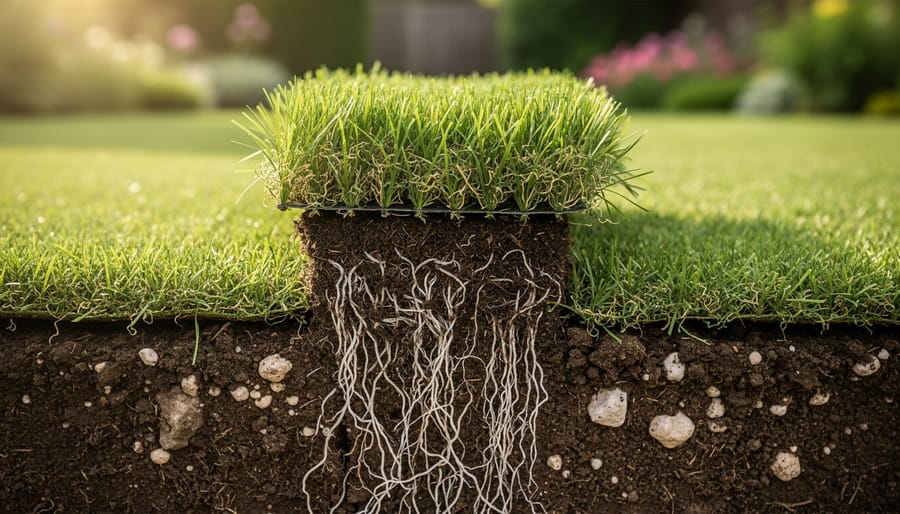
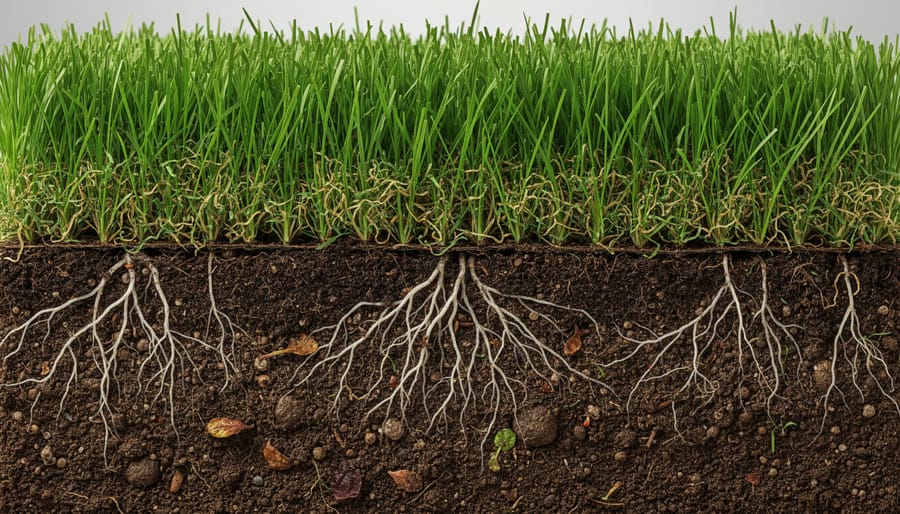
Here’s what makes calcium so valuable: it acts like mortar between soil particles, creating stable aggregates that improve drainage and air circulation. Ever noticed how some lawns feel spongy and healthy underfoot while others are rock-hard? That’s often calcium at work, or the lack of it. Good soil structure means roots can easily penetrate deeper, accessing water and nutrients during dry spells.
Calcium is equally crucial for your grass plants themselves. It forms the backbone of cell walls, making grass blades more resilient to foot traffic, disease, and environmental stress. Think of it as the rebar in concrete—you don’t see it, but everything falls apart without it.
When calcium levels drop, you might notice poor root development, even if you’re feeding your lawn regularly. That’s because roots literally can’t grow properly without adequate calcium to build strong cell structures. Plus, sufficient calcium helps prevent soil compaction, which is especially important in high-traffic areas where kids and pets play.
Magnesium: The Chlorophyll Powerhouse
If calcium is the backbone of your lawn, magnesium is its engine. This often-overlooked nutrient sits right at the heart of every chlorophyll molecule, literally making photosynthesis possible. Without adequate magnesium, your grass simply can’t convert sunlight into the energy it needs to grow thick and green.
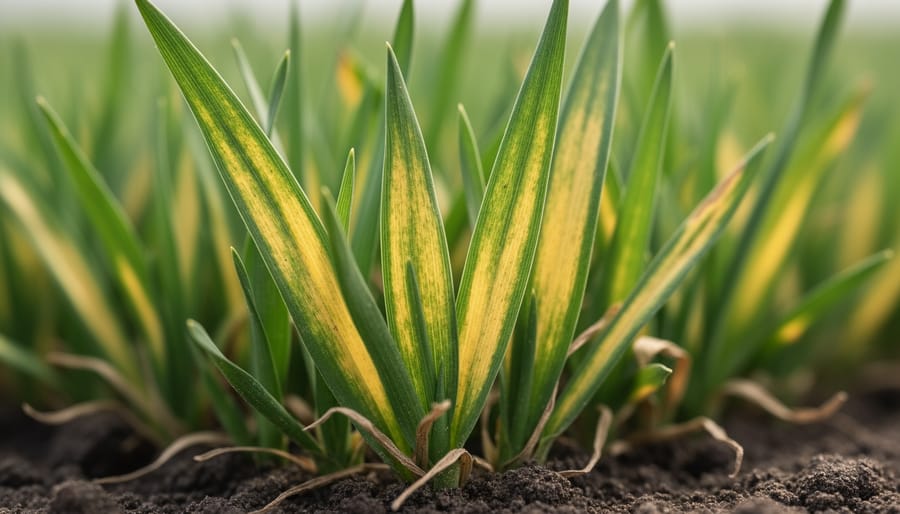
You’ll recognize magnesium deficiency by the telltale yellowing between leaf veins while the veins themselves stay green, a pattern called interveinal chlorosis. This typically shows up first on older grass blades since plants redirect magnesium to new growth when supplies run short. That weak, pale lawn that never seems to green up, even after fertilizing? Magnesium shortage could be the culprit.
Beyond photosynthesis, magnesium plays a crucial role in activating enzymes that support protein synthesis and energy transfer throughout the plant. It helps your grass metabolize phosphorus more effectively and supports strong root development. Think of it as the facilitator that helps other nutrients do their jobs properly.
Sandy soils and areas with heavy rainfall are particularly prone to magnesium depletion since it leaches away more easily than calcium. Testing your soil is the best way to confirm a deficiency before taking action.
Reading the Warning Signs: Is Your Turf Deficient?
Visual Symptoms You Can Spot From Your Back Deck
The good news? Your lawn will tell you exactly what it needs if you know what to look for. Grab your morning coffee and take a stroll around your yard—spotting these deficiencies is easier than you might think.
Magnesium deficiency shows up as interveinal chlorosis, which is just a fancy way of saying the tissue between leaf veins turns yellow while the veins themselves stay green. You’ll typically notice these yellowing grass symptoms on older, lower leaves first, since plants pull magnesium from mature growth to support new shoots. In severe cases, leaf edges may turn brown or purple.
Calcium deficiency is trickier to spot because it affects new growth rather than old. Look for distorted or stunted young leaves, poor root development that you might notice when aerating, and grass that seems weak or prone to disease. The growing points may appear burned or twisted.
Both deficiencies often create turf that lacks that vibrant, healthy color we all want. The grass might grow slowly, struggle to recover from mowing stress, or develop thin, patchy areas. If your lawn looks perpetually tired despite proper watering and mowing, nutrient deficiencies could be the hidden culprit.
When to Get a Soil Test (And What to Look For)
Think of a soil test as your lawn’s annual checkup—it’s not an expense, it’s an investment that prevents you from throwing money at the wrong problems. I recommend testing every 2-3 years for established lawns, or immediately if you’re noticing persistent issues like yellowing grass, poor growth despite fertilizing, or moss taking over.
The best time to test is early spring or fall when you’re planning your soil amendments anyway. A professional soil testing lab will give you precise calcium and magnesium levels, along with that crucial calcium-to-magnesium ratio.
What should you look for? Ideally, you want a Ca:Mg ratio between 5:1 and 7:1. Calcium levels should be around 1,000-1,500 ppm, while magnesium should sit at 150-250 ppm. If your ratio is way off—say 10:1 or higher—your soil might struggle to absorb magnesium even if it’s present. Conversely, ratios below 3:1 suggest calcium deficiency.
Don’t skip the pH reading either. It tells you whether your soil can actually deliver these nutrients to your grass roots, no matter how much is sitting in the ground.
The Balancing Act: Why the Calcium-to-Magnesium Ratio Matters More Than You Think
Here’s something I learned the hard way after years of lawn care: throwing calcium at your turf without considering magnesium is like trying to balance a seesaw with only one person. These two nutrients work together in a delicate dance, and when that balance gets disrupted, your grass suffers even if you think you’re doing everything right.
The issue comes down to what soil scientists call “competitive uptake.” Calcium and magnesium compete for the same entry points into your plant’s roots. When you’ve got too much calcium in your soil, it literally blocks magnesium from getting absorbed, and vice versa. I’ve seen beautiful lawns turn pale and thin simply because well-meaning homeowners kept adding lime without checking their magnesium levels first.
So what’s the sweet spot? Most turf experts recommend a calcium-to-magnesium ratio between 5:1 and 7:1 in your soil. Some sandy soils can handle ratios up to 10:1, while clay-heavy soils often do better closer to 3:1. The key is getting a proper soil test before you start amending anything. Those basic pH test kits won’t tell you the full story.
The most common mistake I see is the over-application of lime. Homeowners hear “lime is good for grass” and apply it year after year without testing. Before you know it, you’ve created a magnesium lockout situation. Your grass shows yellowing between the leaf veins, growth slows down, and no amount of fertilizer seems to help because the calcium excess is blocking magnesium uptake.
The sustainable approach here is simple: test first, then address what’s actually needed. If your ratio is off, you can use dolomitic lime for combined calcium and magnesium, or calcitic lime paired with Epsom salt for more precise adjustments. Balance beats bombardment every time.
Smart Application Strategies for Healthier Turf
Lime: The Traditional Calcium Powerhouse
Lime has been the go-to calcium amendment for generations of gardeners, and for good reason. It’s affordable, widely available, and does double duty by raising pH while delivering essential calcium. But here’s where it gets interesting: not all lime is created equal.
Calcitic lime contains primarily calcium carbonate, making it perfect when your soil needs calcium but already has adequate magnesium. Dolomitic lime, on the other hand, contains both calcium and magnesium carbonates, typically in a 2:1 calcium-to-magnesium ratio. This makes dolomitic lime your best choice when soil tests reveal deficiencies in both nutrients.
The timing matters tremendously. Since soil pH affects nutrient availability, lime works slowly to neutralize acidity, often taking several months to show full effects. Apply lime in fall for spring lawns, or early spring for summer benefits. This gives it time to react with soil particles and become available to your grass roots.
Application rates depend entirely on your soil test results, but typical ranges fall between 25-50 pounds per 1,000 square feet. Split heavy applications into multiple lighter treatments spaced several months apart for better results and less waste. Always water thoroughly after application to start the chemical reaction that makes these nutrients available to your lawn.
Gypsum: The pH-Neutral Alternative
Here’s a situation I see all the time: gardeners apply lime to add calcium, only to discover they’ve inadvertently raised their soil pH too high, especially problematic if you’re growing acid-loving plants or already dealing with alkaline conditions. That’s where gypsum becomes your best friend.
Gypsum (calcium sulfate) delivers calcium without affecting pH levels, making it the ideal choice when your soil test shows calcium deficiency but adequate or high pH. It’s particularly valuable in clay soils, where it helps improve structure by breaking up compacted particles, enhancing drainage and root penetration. The sulfur component also benefits plants that need this secondary nutrient.
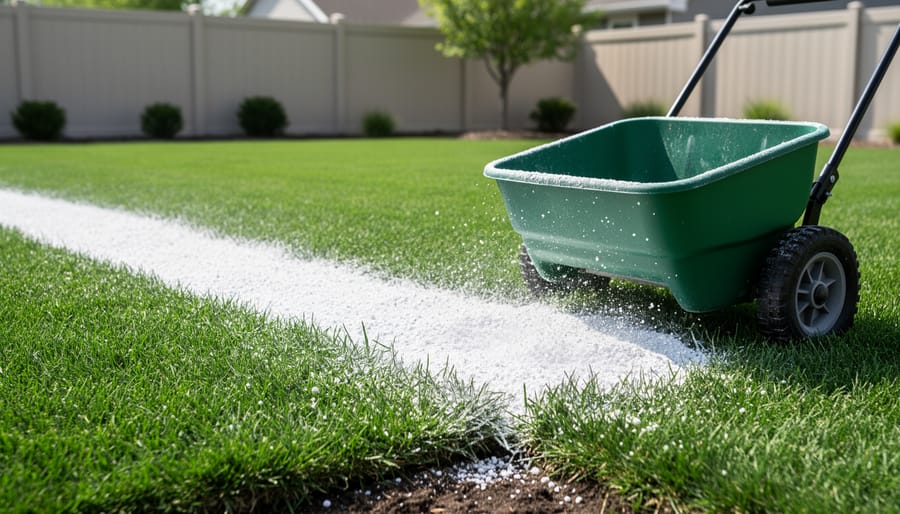
For lawns, apply gypsum at 40 pounds per 1,000 square feet, though your soil test results should guide the exact rate. Unlike lime, gypsum works quickly, often showing results within weeks. Simply spread it evenly across your lawn using a broadcast spreader, then water it in thoroughly.
One sustainability win: gypsum is a byproduct of various industrial processes, so using it supports resource recycling. It won’t burn plants even if over-applied, though there’s no benefit to excess, so stick to recommended rates to avoid waste.
Epsom Salt and Other Magnesium Sources
Epsom salt, or magnesium sulfate, is your go-to solution when plants need a quick magnesium boost without adding calcium. I keep a bag handy because it’s inexpensive and incredibly effective for spot-treating deficiencies. For lawns showing yellowing between leaf veins, dissolve 2-3 tablespoons per gallon of water and apply as a foliar spray or soil drench. You’ll often see improvement within a week or two.
For longer-term magnesium management, consider sulfate of potash magnesia, which delivers both magnesium and potassium without raising soil pH. This works beautifully in alkaline soils where magnesium tends to lock up. Dolomitic limestone remains my favorite sustainable option when you need both calcium and magnesium, gradually improving soil structure while feeding your lawn.
Remember, magnesium moves easily through soil, especially in sandy conditions, so light, regular applications beat heavy, infrequent doses. Always test your soil first to avoid over-application, which can interfere with calcium uptake and create new problems. Balance is everything in sustainable lawn care.
Seasonal Timing: When to Feed Your Lawn These Essential Nutrients
Timing your calcium and magnesium applications isn’t just about convenience—it’s about maximizing absorption and supporting your lawn’s natural growth cycles. Let me walk you through a seasonal approach that works with nature, not against it.
Early spring is your prime window for calcium applications. As soil temperatures warm and grass breaks dormancy, roots become active and hungry for nutrients. Apply calcium between March and May, depending on your region, when your lawn is gearing up for its most vigorous growth period. This timing helps strengthen cell walls right when new growth is emerging, setting your turf up for a resilient season ahead.
Magnesium works beautifully as a late spring or early summer supplement, typically April through June. Since magnesium drives chlorophyll production, feeding it when grass is actively photosynthesizing gives you the most bang for your buck. I’ve seen lawns transform from pale and tired to vibrant green within weeks of properly timed magnesium applications.
Fall deserves attention too. A second calcium application in September or October helps fortify grass before winter stress sets in. Think of it as giving your lawn a nutritional insurance policy before the challenging months ahead. This fall feeding supports root development when top growth slows down, creating a stronger foundation for spring.
Here’s the key: never apply these nutrients to frozen ground or during extreme heat stress. Your lawn simply can’t absorb them effectively under these conditions, and you’ll waste both product and effort. Instead, coordinate applications with your regular maintenance schedule—perhaps alongside aeration or overseeding for efficient, sustainable care. Water thoroughly after application to move nutrients into the root zone where they’re needed most.
Common Mistakes That Waste Your Time and Money
I’ve seen countless gardeners throw money at calcium and magnesium supplements without actually knowing whether their soil needs them. The biggest mistake? Skipping soil testing entirely. You might be adding nutrients your lawn already has plenty of, which wastes resources and can actually create new problems. Always test your soil before supplementing – it’s like diagnosing before prescribing medicine.
Another common pitfall is ignoring pH levels. I learned this the hard way when a neighbor complained his lawn wasn’t responding to expensive cal-mag treatments. Turns out, his soil pH was sitting at 7.8, making those nutrients virtually unavailable to his grass. Calcium and magnesium work best when your pH is in the right range for your specific turf type, typically between 6.0 and 7.0 for most lawns.
Over-application creates its own headaches too. Too much calcium can interfere with potassium uptake, while excessive magnesium blocks calcium absorption – they’re actually competing for the same spots in your soil. Follow recommended application rates based on your soil test results, not the “more is better” philosophy.
Lastly, many gardeners apply these nutrients at the wrong time. Spreading lime or gypsum right before heavy rain means you’re literally watching your investment wash away. Apply during dry periods when soil can absorb amendments properly, and avoid frozen ground where nothing penetrates effectively. Timing and testing are your best friends for sustainable, effective nutrient management.
Getting calcium and magnesium right isn’t about chasing the latest lawn care trend—it’s about building genuine, lasting turf health from the ground up. These two nutrients work together as foundational elements that support everything else you do for your lawn. Without adequate calcium to maintain soil structure and magnesium to power photosynthesis, even the best fertilizers and watering schedules won’t deliver the results you’re hoping for.
The good news? You’re not starting from scratch. The first actionable step is simple: get a soil test. This single investment gives you the roadmap you need, eliminating guesswork and preventing you from throwing products at problems that may not exist. Armed with accurate information, you can make targeted amendments that actually address your lawn’s specific needs.
Remember, sustainable lawn care isn’t about constantly adding more products—it’s about working with soil biology to create an environment where your turf can thrive naturally. When calcium and magnesium levels are balanced, beneficial microorganisms flourish, nutrient cycling improves, and your grass becomes naturally more resilient against stress.
The improvements you’ll see are absolutely achievable. Healthier root systems, deeper green color, better drought tolerance—these aren’t distant dreams reserved for professionals with unlimited budgets. They’re the natural result of giving your lawn what it truly needs. Start with that soil test, and you’re already on your way to better turf.