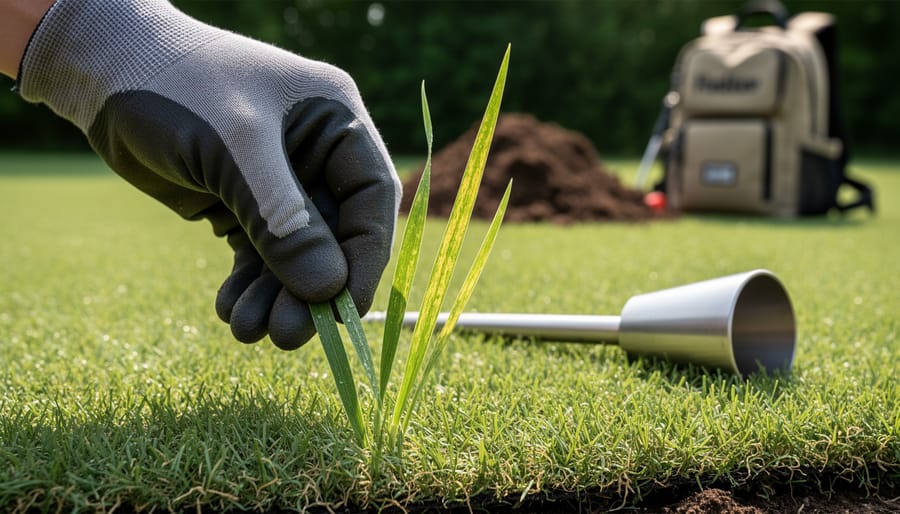
Check your lawn’s leaf tissue with a soil test that includes micronutrient analysis, not just NPK levels, to identify hidden deficiencies causing persistent problems like yellowing grass, stunted growth, or weak root development. Apply iron supplements first if your grass shows interveinal chlorosis—that distinctive pattern where leaf veins stay green while tissue between them turns pale yellow—which appears most commonly in alkaline soils above 7.0 pH. Address manganese deficiencies by foliar feeding with chelated products during active growing seasons, delivering nutrients directly to leaf surfaces for rapid uptake when root absorption is compromised. Incorporate zinc into your feeding program if new growth emerges small and distorted, particularly in sandy soils or areas with high phosphorus levels that block zinc availability.
These trace elements—iron, manganese, zinc, copper, boron, and molybdenum—make up less than 1% of your turf’s nutritional needs but control critical processes like chlorophyll production, enzyme activation, and disease resistance. Without them, even the most expensive nitrogen-heavy fertilizer won’t produce the thick, vibrant lawn you’re working toward. Most lawns receive adequate micronutrients from organic matter decomposition and quality compost applications, but construction sites with removed topsoil, heavily leached sandy soils, or areas with extreme pH levels often need targeted supplementation. Understanding which specific micronutrient your soil lacks, rather than applying broad-spectrum products blindly, creates healthier turf while supporting sustainable practices that avoid excess chemical applications and environmental runoff.
What Makes Micronutrients and Sulfur Different (And Why They Matter)
Think of your lawn like your own body. Just as you need large amounts of macronutrients like proteins and carbohydrates but only trace amounts of vitamins and minerals, your grass requires both macronutrients (nitrogen, phosphorus, potassium) and micronutrients in vastly different quantities. This doesn’t make one more important than the other—it’s about getting the right balance for optimal health.
Micronutrients like iron, manganese, zinc, copper, and boron are needed in tiny amounts, sometimes just a few ounces per thousand square feet compared to pounds of nitrogen. Sulfur sits in an interesting middle ground, needed in slightly larger quantities than micronutrients but still less than the “big three” macronutrients. That’s why some experts consider it a secondary macronutrient.
Here’s the catch: despite being required in such small doses, these nutrients perform absolutely critical jobs. Iron helps grass produce the chlorophyll that gives it that rich green color. Manganese activates enzymes essential for photosynthesis. Zinc plays a vital role in growth hormone production. Without adequate micronutrients, your lawn simply can’t function properly, no matter how much traditional fertilizer you apply.
I like to compare it to baking a cake. You might use cups of flour and sugar, but only a teaspoon of vanilla extract or a pinch of salt. Try leaving out that small amount of leavening agent, though, and your cake won’t rise. The same principle applies to your soil—those trace elements might be present in minuscule quantities, but their absence creates problems that more nitrogen alone can’t fix.
The beauty of understanding this distinction is that it helps explain why your lawn might look stressed or discolored even when you’re following a regular fertilization program. Sometimes it’s not about feeding more; it’s about feeding smarter with the complete nutritional profile your grass actually needs.

Sulfur: The Overlooked Workhorse of Your Lawn
How Sulfur Actually Works in Your Soil
Sulfur is like that friend who shows up to help you move—it doesn’t take the spotlight, but everything falls apart without it. In your soil, sulfur works behind the scenes in some pretty remarkable ways that directly impact your lawn’s health.
First, sulfur plays a critical role in regulating soil pH. When bacteria in your soil break down elemental sulfur, they convert it into sulfuric acid, which gradually lowers pH levels. This matters tremendously because many nutrients—especially iron, manganese, and zinc—become unavailable to plants when soil is too alkaline. By gently acidifying your soil, sulfur essentially unlocks these nutrients that were already there but locked away.
Beyond pH management, sulfur is actually a vital nutrient itself. Plants need it to produce proteins and enzymes, and it’s essential for chlorophyll formation. You might notice sulfur-deficient grass showing pale yellow leaves, similar to nitrogen deficiency but starting with younger growth.
Here’s where it gets really interesting: sulfur supports an entire ecosystem of beneficial soil microorganisms. Sulfur-oxidizing bacteria transform elemental sulfur into forms plants can use, while other microbes depend on sulfur compounds for their metabolic processes. This microbial activity improves soil structure, nutrient cycling, and overall soil health—creating that rich, living soil that sustainable gardening is all about.
The beauty of sulfur is its slow, steady work. Unlike quick-fix fertilizers, sulfur amendments continue working for months, supporting both your grass and the invisible helpers living beneath it.

Signs Your Lawn Is Crying Out for Sulfur
Your lawn has a funny way of communicating when something’s not quite right, and sulfur deficiency speaks in a distinct visual language. The telltale sign that sets sulfur shortage apart from nitrogen deficiency is where the yellowing appears. While nitrogen-starved grass shows yellowing in older, lower leaves first, sulfur deficiency creates a pale yellow or light green color in the newest growth at the tips of your grass blades.
Take a walk across your lawn and look closely at the younger shoots. Are they struggling to develop that rich, vibrant green color? Sulfur-deficient grass often appears thin and weak, with a generally stunted appearance that makes your turf look lackluster even when you’re watering and mowing regularly. The grass blades themselves may seem more delicate and less robust than usual.
You might also notice your lawn simply lacks vigor, growing more slowly than expected during peak growing season. This overall tired appearance, combined with that characteristic pale new growth, is your lawn’s way of asking for sulfur support. The good news? Once you identify these symptoms, addressing them through targeted sulfur application can restore your lawn’s health relatively quickly.
When and How to Add Sulfur to Your Turf
Timing your sulfur application correctly makes all the difference in effectiveness. The best window is fall or early spring when soil microbes are active enough to break down elemental sulfur but before your grass hits peak growth. I’ve found that applying in fall gives the sulfur time to work its magic over winter, so your lawn wakes up ready to thrive.
For application rates, start conservatively. Most lawns need between 5-10 pounds of elemental sulfur per 1,000 square feet to lower pH by one point, but always test first and adjust gradually over seasons rather than dumping it all at once. Quick-acting sulfate forms like ammonium sulfate work faster but don’t provide the long-lasting benefits of elemental sulfur.
When spreading, use a broadcast spreader for even coverage and water thoroughly afterward to help soil incorporation. Here’s a sustainable tip: elemental sulfur naturally occurs in soil ecosystems and breaks down slowly through microbial action, making it the eco-friendlier choice compared to synthetic acidifiers.
Remember, sulfur works slowly, taking 3-6 months to significantly impact pH. Retest your soil annually and adjust applications accordingly. Patience pays off with healthier grass that’s naturally more resilient, reducing your need for other interventions down the road.
The Essential Micronutrients Your Turf Can’t Live Without
Iron: The Green-Up Champion
Ever wonder why some lawns look magnificently deep green while yours stays pale despite your best efforts? Iron might be your missing ingredient. This hardworking micronutrient is essential for chlorophyll production, the process that gives grass its rich, vibrant color. Without adequate iron, your lawn simply can’t manufacture enough of that green pigment we all love.
Iron deficiency shows up as interveinal chlorosis, where grass blades turn yellow between the veins while the veins themselves stay green, creating a distinctive striped appearance. Young leaves typically show symptoms first, and in severe cases, entire grass plants may become pale yellow or even whitish.
Here’s something many gardeners don’t realize: your soil might actually contain plenty of iron, but in alkaline conditions with pH above 7.0, iron becomes locked up and unavailable to plants. This is why iron deficiency is so common in regions with naturally alkaline soils, even when the mineral is technically present.
The good news? Iron sulfate or chelated iron products provide quick greening results, often within days. You can apply iron as a foliar spray for fast absorption or work it into the soil for longer-lasting effects. Just be careful—iron products can stain concrete and hardscapes, so apply carefully and water in thoroughly afterward.
Manganese: Your Lawn’s Photosynthesis Helper
Manganese might not get much attention, but this micronutrient plays a starring role in your lawn’s ability to photosynthesize effectively. Think of manganese as the behind-the-scenes crew member that activates crucial enzymes, helping your grass convert sunlight into the energy it needs to stay green and healthy. Without adequate manganese, your lawn simply can’t perform at its best.
Spotting a manganese deficiency is relatively straightforward once you know what to look for. Young grass blades often develop interveinal chlorosis, where the tissue between leaf veins turns yellow or pale while the veins themselves remain green, creating a distinctive striped appearance. You might also notice stunted growth or brownish patches that don’t respond to regular fertilization.
Here’s where things get interesting: manganese availability has a strong interaction with soil pH. In alkaline soils above 7.0, manganese becomes locked up and unavailable to your grass roots, even if it’s present in the soil. Conversely, highly acidic soils can release too much manganese, potentially reaching toxic levels. Testing your soil pH is the first step in addressing manganese issues sustainably, as adjusting pH often resolves deficiencies without additional inputs.
Zinc: Small Amount, Big Impact
Think of zinc as your lawn’s quality control manager—it may be needed in tiny amounts, but without it, everything starts to fall apart. Zinc plays a crucial role in growth regulation, helping grass produce growth hormones and proteins that keep it thriving. It’s also your turf’s bodyguard against environmental stress, strengthening cell walls and boosting disease resistance.
Here’s the tricky part: zinc deficiencies are surprisingly common, especially if you’re gardening in sandy soils or dealing with high pH levels above 7.0. Sandy soils simply don’t hold onto zinc well—it washes away with irrigation and rainfall. Meanwhile, alkaline conditions lock zinc into forms your grass can’t absorb, even when it’s technically present in the soil.
Warning signs include stunted growth, yellowing between leaf veins (particularly on newer growth), and an overall sparse appearance despite adequate watering and feeding. If you’re working with either soil type, consider a soil test to check zinc levels before problems become visible. Chelated zinc products work particularly well in high-pH situations, staying available to plants even in challenging conditions. The good news? A little supplementation goes a long way, and addressing zinc deficiency often produces dramatic improvements in just a few weeks.
The Supporting Cast: Boron, Copper, and Molybdenum
While iron, zinc, and manganese often steal the spotlight, three other micronutrients quietly support your lawn’s health behind the scenes. Think of boron, copper, and molybdenum as the reliable stage crew—you might not notice them until they’re missing, and then everything falls apart.
Boron helps your grass develop strong cell walls and plays a crucial role in how plants use other nutrients. In turf, boron deficiency is relatively rare but can show up as stunted growth or abnormal blade development. Sandy soils are most prone to boron shortages since it leaches easily with rainfall. The good news? A little goes a long way—in fact, too much boron can be toxic, so careful application is essential.
Copper assists in photosynthesis and helps grasses metabolize nitrogen properly. You’ll rarely see copper deficiency in established lawns, but it might appear in highly organic soils or areas with excessive phosphorus. Look for bluish-green discoloration or twisted leaf tips as potential signs.
Molybdenum is the least common deficiency of all, but it’s vital for nitrogen fixation and protein synthesis. This micronutrient becomes less available in acidic soils, so if you’ve already addressed your soil pH and still see yellowing similar to nitrogen deficiency, molybdenum might be the culprit.
Most complete micronutrient blends include all three of these supporting players. Unless you’ve identified a specific deficiency through soil testing, there’s usually no need to apply them individually. Remember, sustainable lawn care means applying only what your grass actually needs—not just throwing everything at it and hoping something works.

Reading Your Soil: Testing and Diagnosis Made Simple
DIY Testing vs. Professional Lab Analysis
When it comes to testing your soil’s micronutrient levels, you’ve got two main paths: grab a DIY kit or send samples to a professional lab. Both have their place in your gardening toolkit.
DIY test kits, which typically cost between $10-$40, are wonderfully convenient for quick checks and ongoing monitoring. They’re perfect if you’re curious about general deficiencies or want to track improvements after treatment. However, they usually measure fewer micronutrients and provide less precise results. Think of them as your lawn care “check engine light”—helpful for spotting problems, but not always showing the full picture.
Professional lab analysis runs $30-$100 but delivers comprehensive results with specific nutrient concentrations and pH levels. You’ll receive tailored recommendations based on your exact soil composition. This is your best bet when dealing with persistent lawn problems, starting a new garden bed, or planning significant landscape investments.
My recommendation? Start with a professional test every 2-3 years to establish your baseline, then use DIY kits for annual monitoring. If you’re troubleshooting stubborn yellowing or patchy growth despite proper care, skip the DIY route and go straight to the pros. Your lawn’s health is worth the investment, and accurate information prevents the costly mistake of applying unnecessary amendments that could harm your soil’s delicate balance.
Understanding Your Soil Test Results
When your soil test results arrive, they might look intimidating at first, but I promise they’re easier to decode than you think. Let’s focus on the micronutrient section together.
Your report will typically list micronutrient levels as parts per million (ppm) or pounds per acre, along with a rating like “low,” “medium,” or “high.” For iron, anything below 25 ppm often signals a deficiency, especially if your lawn shows yellowing between leaf veins. Manganese readings under 20 ppm and zinc below 5 ppm also warrant attention.
Sulfur results appear separately, usually measured in pounds per acre. If your test shows less than 10 pounds per acre, your grass likely needs supplementation, particularly in sandy soils where sulfur leaches away quickly.
Here’s my practical advice: don’t panic if one micronutrient reads low. Instead, look at the overall picture. Is your lawn showing visible symptoms? Are multiple nutrients deficient? Most importantly, check the pH reading first, because acidic or alkaline conditions dramatically affect how plants access nutrients.
Many soil labs include specific recommendations tailored to your results. Follow these guidelines as your starting point, but remember that sustainable lawn care means making gradual adjustments. You’re not looking for perfection overnight, just steady improvement toward a healthier, more resilient lawn.
Smart Application Strategies That Actually Work
Choosing the Right Products for Your Lawn
When you’re ready to add micronutrients to your lawn, you’ll encounter several product types, each with distinct advantages. Let’s break down your options so you can choose what works best for your situation and budget.
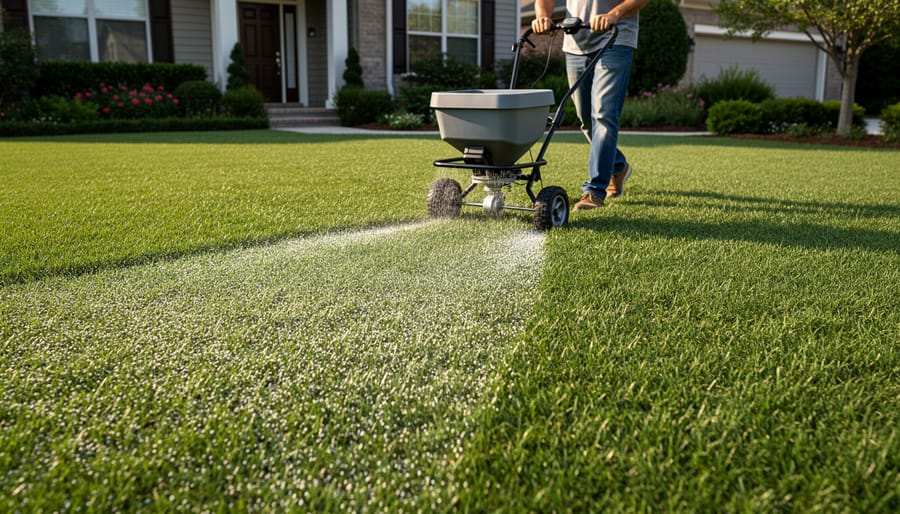
Granular products are the workhorses of lawn micronutrient application. They’re easy to spread with your existing fertilizer spreader, cost-effective, and provide slow, steady release over several weeks. The downside? They need moisture to activate and take longer to correct deficiencies, sometimes 4-6 weeks before you see improvement. They’re perfect if you’re taking a preventive approach or can wait for results.
Liquid micronutrient products work much faster, often showing visible improvement within 2-3 weeks. You’ll apply them through a hose-end sprayer or backpack sprayer, which gives you precise control. However, they require more frequent applications and cost more per treatment. If your lawn is showing severe deficiency symptoms, liquids are your friend for that quick correction.
Now, about chelated versus non-chelated formulations. Chelated micronutrients are bound to organic molecules that protect them from becoming locked up in your soil, especially important in alkaline conditions. They’re more expensive but significantly more effective in challenging soil chemistry. Non-chelated versions cost less and work fine in neutral to slightly acidic soils where nutrient availability isn’t compromised.
For most home lawns, I recommend starting with a quality granular product containing multiple micronutrients. It’s the most practical, sustainable choice that won’t break the bank while addressing your lawn’s hidden hunger.
Timing and Techniques for Best Results
Timing your micronutrient applications can make all the difference in their effectiveness. The best window is during active growing seasons—spring and fall for cool-season grasses, late spring through summer for warm-season varieties. Your lawn absorbs nutrients most efficiently when it’s actively growing, so avoid applications during dormancy or extreme heat stress.
For application rates, always start conservatively. A good rule of thumb is applying half the recommended rate initially, then reassessing after four to six weeks. More isn’t better with micronutrients, and you can actually harm your lawn with excessive amounts. Foliar sprays work faster for quick corrections, while granular applications provide longer-lasting results. Combining both methods gives you immediate improvement plus sustained feeding.
Here’s a sustainability tip: combine micronutrient treatments with regular fertilization to reduce application frequency and minimize runoff. Water products in thoroughly but avoid applying before heavy rain, which washes nutrients away before absorption.
Common mistakes to avoid include applying to wet grass (reduces foliar uptake), treating during midday heat (causes leaf burn), and mixing incompatible products. Always conduct a soil test first rather than guessing—overloading your soil with unnecessary micronutrients wastes money and potentially creates imbalances. Patience matters too; visible improvements typically take three to four weeks.
The Sustainable Approach: Less Can Be More
When it comes to micronutrients, more isn’t better. Think of them like vitamins for your lawn—essential in small amounts, but potentially harmful in excess. Over-application can actually lock up other nutrients in the soil, creating new problems while trying to solve old ones.
The most sustainable approach starts with understanding what your soil actually needs through testing. This prevents waste and protects waterways from unnecessary runoff. Work with your soil’s natural biology by applying micronutrients during active growing seasons when grass can actually use them.
Consider using slow-release formulations that feed gradually rather than dumping concentrated doses all at once. This mimics how nutrients naturally become available in healthy ecosystems. And remember, building organic matter through composting and leaving grass clippings on your lawn creates a self-sustaining system where beneficial microbes help make existing micronutrients more accessible. Sometimes the best solution isn’t adding more—it’s helping your soil work smarter.
Common Mistakes That Waste Your Time and Money
Even the most well-intentioned gardeners can stumble when it comes to micronutrient management. Let’s look at some common pitfalls so you can sidestep them and keep both your lawn and your wallet happy.
The biggest mistake? Applying micronutrients without testing your soil first. It’s tempting to throw everything at unexplained lawn problems, but adding micronutrients your soil already has in adequate amounts won’t help your grass and wastes your money. Think of it like taking vitamins you don’t need—your body just flushes them out. A simple soil test costs around twenty to fifty dollars and tells you exactly what your lawn actually needs.
Another frequent error is over-applying micronutrients, thinking more equals better results. This can actually harm your lawn and create new problems. Iron overload can inhibit phosphorus uptake, while too much manganese can cause iron deficiency. Micronutrients earned their name for a reason—plants need them in tiny amounts. Always follow application rates carefully.
Many gardeners also apply micronutrients at the wrong time. Applying during drought stress or extreme heat can burn your grass, while winter applications simply wash away before your lawn can use them. The best timing is during active growth periods in spring and fall when your grass can actually absorb and utilize these nutrients.
Using the wrong product form is another costly mistake. Granular products work well for some micronutrients but foliar sprays deliver faster results for others. Chelated forms cost more but provide better availability in alkaline soils, while sulfate forms work fine in acidic conditions. Matching the product to your specific soil conditions makes all the difference.
Finally, don’t ignore sulfur. Many gardeners focus solely on traditional micronutrients while overlooking sulfur deficiency, which has become increasingly common as cleaner air reduces atmospheric sulfur deposits. Including sulfur in your fertility program supports better nitrogen utilization and overall plant health.
Building Long-Term Soil Health
Here’s something I’ve learned through years of working with lawns: addressing micronutrient deficiencies isn’t just about quick fixes—it’s about building a soil ecosystem that naturally supports nutrient availability for the long haul. Think of it like investing in your lawn’s future rather than just paying rent on temporary solutions.
The foundation of excellent micronutrient availability starts with organic matter. When you add compost, aged manure, or allow grass clippings to decompose on your lawn, you’re doing something remarkable. These organic materials act like slow-release nutrient banks, gradually releasing micronutrients as they break down. I always tell gardeners that a soil rich in organic matter is like having a built-in insurance policy against deficiencies. Aim to maintain at least 5% organic matter in your soil—it improves nutrient retention and creates the perfect environment for beneficial soil life to thrive.
Speaking of soil life, this is where things get really interesting. The billions of microorganisms living in healthy soil are nature’s nutrient processors. Mycorrhizal fungi, for instance, form partnerships with grass roots and actually extend the root system’s reach, helping your lawn access micronutrients that would otherwise remain locked away. Bacteria break down organic matter and convert nutrients into plant-available forms. When you use harsh chemicals or over-apply synthetic fertilizers, you can inadvertently harm these beneficial organisms. That’s why I’m such a fan of gentle, sustainable approaches that work with biology rather than against it.
pH management deserves special mention because it’s the master key to nutrient availability. Even if micronutrients are present in your soil, they might be chemically locked up if your pH is off. Most lawn grasses prefer slightly acidic conditions between 6.0 and 7.0. In this sweet spot, micronutrients remain soluble and accessible. Test your pH annually and adjust gradually with lime or sulfur as needed.
The beautiful thing about building soil health is that it reduces your dependency on frequent applications. A biologically active, organic-rich soil with proper pH essentially manages micronutrients for you. You’ll spend less time troubleshooting deficiencies and more time enjoying a naturally vibrant, resilient lawn that takes care of itself.
Taking care of your lawn’s micronutrient needs doesn’t have to be complicated or overwhelming. The truth is, most lawns won’t require intensive micronutrient programs, but understanding these essential elements and knowing when to address deficiencies can make a remarkable difference in your turf’s health and appearance.
The best place to start is always with a comprehensive soil test. Think of it as getting a health checkup for your lawn—you wouldn’t take vitamins blindly without knowing what your body needs, and the same logic applies to your soil. A proper test takes the guesswork out of micronutrient management and prevents you from over-applying nutrients that could harm the environment or waste your hard-earned money.
Once you understand what your soil needs, take a measured approach. If you’re dealing with sulfur or micronutrient deficiencies, address them thoughtfully rather than dumping everything on at once. Start with the most critical deficiency, observe how your lawn responds over a few weeks, and adjust as needed. This patient, sustainable strategy not only protects your lawn from potential nutrient imbalances but also aligns with environmentally responsible gardening practices.
Remember, even small improvements in micronutrient management can create surprisingly noticeable results. You might see deeper green color, improved stress tolerance during hot weather, or better overall vigor. These aren’t just cosmetic changes—they’re signs of a healthier, more resilient lawn that requires less intervention over time.
So grab that soil test kit, take a closer look at what your lawn is telling you, and make informed decisions about micronutrient care. Your lawn will thank you with the kind of health and beauty that comes from truly balanced nutrition.