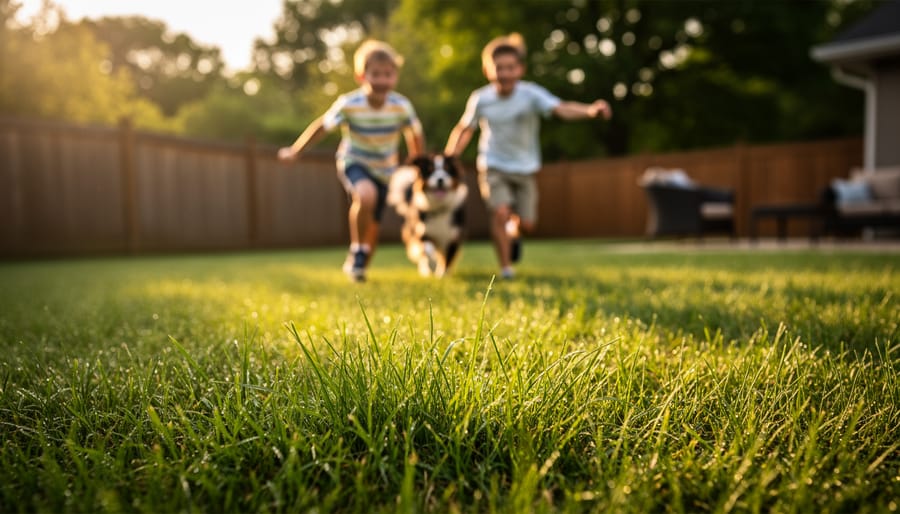
Expect your lawn to take a beating from kids, pets, and constant foot traffic—but it doesn’t have to look like a battlefield. Start by selecting grass varieties bred specifically for durability: perennial ryegrass establishes quickly and repairs itself rapidly, tall fescue develops deep roots that withstand drought and wear, and Bermudagrass (in warm climates) practically thrives under punishment. Match your grass to your climate zone before anything else, since choosing between grass types based on temperature tolerance determines whether your lawn survives or struggles regardless of its traffic rating.
Raise your mowing height to 3-4 inches immediately—taller grass develops stronger roots, shades out weeds naturally, and recovers faster from damage. Apply compost topdressing twice yearly instead of relying solely on synthetic fertilizers, building soil structure that supports dense growth and rapid repair. Overseed high-traffic areas every fall with the same variety you’re growing, maintaining thickness that prevents bare patches from forming in the first place.
The difference between a lawn that looks perpetually worn and one that stays lush under pressure isn’t luck or endless maintenance—it’s selecting the right grass for your specific conditions and giving it the foundation to withstand real-world use. Your family and pets deserve outdoor space they can actually enjoy, and your lawn can handle it when you work with biology instead of against it.
What Makes Turfgrass ‘Quality’ When Pets and People Are Involved

The Difference Between Pretty Grass and Tough Grass
Here’s the thing about grass that might surprise you: the lush, emerald-green varieties you see in photographs aren’t always the ones that’ll survive your kids’ soccer games or your dog’s daily zoomies. Pretty grass and tough grass often live at opposite ends of the spectrum, and understanding this distinction is key to ending your lawn frustration cycle.
Ornamental grasses bred for visual appeal typically feature fine blades, vibrant color, and soft texture. They’re gorgeous to look at but often lack the deep root systems and rapid recovery abilities needed for high-traffic areas. These varieties shine in low-use showcase spaces but struggle when life happens on them regularly.
Functional, resilient grasses prioritize survival over showiness. They develop robust root networks, bounce back quickly from wear, and tolerate compacted soil better than their prettier cousins. Sure, they might not photograph quite as dramatically, but they’re the workhorses that actually thrive where you live your life.
The secret to success isn’t just choosing tough varieties though. Even the most resilient grass will fail without proper soil-turfgrass compatibility. When you match durability-focused varieties with your specific conditions, you’ll finally have a lawn that looks good and performs even better.
Recovery Speed: The Trait Nobody Talks About
Here’s a truth that might surprise you: the most beautiful grass isn’t always the best performer. When you’re dealing with kids running soccer drills, dogs doing zoomies, or simply heavy foot traffic from everyday life, recovery speed becomes your lawn’s most valuable asset.
Think of it this way—every lawn takes a beating. Grass blades get torn, soil gets compacted, and bare patches inevitably appear. The difference between a perpetually struggling lawn and one that looks consistently healthy isn’t about avoiding damage altogether. It’s about how quickly your grass can repair itself and fill in those trouble spots.
Recovery speed refers to how fast grass spreads, regrows, and heals damaged areas. Some grasses accomplish this through aggressive rhizomes (underground runners) or stolons (above-ground runners) that quickly colonize bare soil. Others simply regrow damaged blades at remarkable rates. This trait is especially critical in high-traffic zones where damage happens repeatedly in the same spots.
For example, Bermuda grass and perennial ryegrass are recovery champions. Bermuda spreads aggressively through both rhizomes and stolons, essentially repairing itself from multiple directions. Perennial ryegrass, while not a spreader, germinates incredibly fast and regrows damaged areas quickly when overseeded. These grasses might show wear during peak activity, but give them a few days, and they bounce back impressively.
This resilience means less time staring at brown patches, less money spent on repairs, and ultimately, a lawn that stays usable year-round. When selecting turfgrass for active areas, prioritize this often-overlooked characteristic alongside traditional concerns like drought tolerance and color.
The Toughest Cool-Season Grasses for Active Yards

Perennial Ryegrass: The Quick-Fix Champion
If you’re dealing with a patchy, worn-down lawn and need results fast, perennial ryegrass might just become your new best friend. This grass variety has earned its reputation as the quick-fix champion for good reason, especially if you’re managing high-traffic areas where kids and pets spend their days.
The standout feature of perennial ryegrass is its incredible germination speed. While many grass varieties take weeks to show their faces, perennial ryegrass sprouts in just 5-7 days under the right conditions. This makes it perfect for those bare spots that seem to appear overnight or for overseeding tired lawns that need a quick refresh before the next backyard barbecue.
But speed isn’t its only superpower. Perennial ryegrass boasts excellent wear tolerance, bouncing back quickly from foot traffic, play sessions, and pet activity. Its fine texture and rich green color create an attractive lawn that can actually handle real life, not just look pretty in theory.
For successful establishment, timing matters. Aim to plant in early fall when soil temperatures are still warm but air temperatures are cooling down. This gives your grass the best chance to develop strong roots before winter. Prepare your soil by removing debris and loosening the top few inches, then spread seed at the recommended rate of 5-8 pounds per 1,000 square feet. Keep the soil consistently moist during germination, which means light, frequent watering until seedlings are established. Within three weeks, you’ll have a lawn ready to handle whatever your household throws at it.
Tall Fescue: The Low-Maintenance Workhorse
If you’re looking for a grass that can handle whatever your family throws at it—literally—tall fescue deserves your attention. This variety has earned its reputation as the workhorse of residential lawns, and for good reason.
What sets tall fescue apart is its remarkable root system. While many grasses send roots down just a few inches, tall fescue develops roots that can extend two to three feet deep into the soil. Think of it as your lawn’s secret anchor, allowing it to access moisture and nutrients that other grasses simply can’t reach. This deep root structure translates directly into exceptional drought tolerance, meaning you’ll water less frequently while still maintaining a green, healthy lawn—a win for both your water bill and the environment.
For families with active kids and energetic pets, tall fescue truly shines. Its broad, sturdy blades can withstand constant foot traffic, pet play, and the inevitable wear patterns that come with outdoor living. I’ve seen tall fescue lawns bounce back from everything from weekly soccer games to daily dog runs with minimal fuss.
Another practical advantage? Tall fescue performs well in transition zones where temperatures swing between hot summers and cold winters. It stays green longer into fall and greens up earlier in spring compared to warm-season grasses. Modern turf-type tall fescue varieties have also been bred for finer texture and improved density, giving you durability without sacrificing appearance. The key is choosing quality seed and establishing it properly—usually in early fall for best results.
Kentucky Bluegrass Blends: When You Want Beauty AND Durability
Here’s the reality: Kentucky bluegrass alone can struggle under heavy foot traffic, but blended with tougher grasses, it becomes a lawn superhero. The secret is mixing it with perennial ryegrass or fine fescues to create the perfect balance of beauty and resilience.
For high-traffic areas with kids and pets, try a blend of 40% Kentucky bluegrass, 40% perennial ryegrass, and 20% fine fescue. The ryegrass germinates quickly and handles wear beautifully, while the bluegrass fills in bare spots with its spreading rhizomes and maintains that rich, green appearance everyone loves. The fine fescue adds drought tolerance and thrives in shadier spots where the others might thin out.
If your lawn gets moderate use, you can increase the Kentucky bluegrass to 60%, keeping 30% ryegrass and 10% fescue. This gives you more of that lush, classic lawn look while maintaining durability. These blends work smarter together, each grass compensating for the others’ weaknesses while creating a sustainable, low-maintenance turf that recovers quickly from damage.
Warm-Season Warriors That Laugh at Foot Traffic
Bermudagrass: The Athletic Field Standard
If you’ve ever wondered why sports stadiums and golf courses seem to favor bermudagrass, there’s good science behind that choice. This warm-season grass has earned its reputation as the go-to option for high-traffic areas, and for good reason—it’s practically designed to take a beating and bounce back stronger.
What sets bermudagrass apart is its aggressive growth habit. It spreads through both above-ground stolons and below-ground rhizomes, creating a dense, interlocking mat that can repair itself remarkably quickly. Think of it as nature’s own self-healing lawn. When your kids play soccer in the backyard or your dog runs the same path daily, bermudagrass responds by filling in bare spots within weeks during the growing season. This recuperative ability is unmatched among warm-season grasses.
The trade-off for this durability is maintenance commitment. Bermudagrass thrives in full sun and requires regular mowing during peak growth—sometimes twice weekly in summer. It’s also quite thirsty and nutrient-hungry compared to more low-maintenance options. You’ll need to stay on top of fertilization schedules and irrigation to keep it looking its best.
One consideration that matters for sustainable gardening: bermudagrass can become invasive, spreading into flower beds and garden areas where you don’t want it. Installing proper edging from the start saves headaches later.
For homeowners in warm climates dealing with constant foot traffic, bermudagrass delivers unparalleled resilience. Just be prepared to meet its needs with consistent care, and you’ll have a lawn that truly performs under pressure.
Zoysia: Slow Start, Incredible Finish
If you’re willing to wait a season or two for the payoff, zoysia grass rewards your patience with one of the most durable lawns you can grow. This warm-season grass starts slowly—sometimes frustratingly so—but once established, it creates a thick, carpet-like turf that’s incredibly difficult to damage. The secret lies in its dense growth pattern, where stolons and rhizomes weave together to form a mat so tight that weeds struggle to penetrate and worn spots repair themselves surprisingly well.
For high-traffic lawns with kids and pets constantly on the move, zoysia becomes your best friend after that initial establishment period. Its exceptional wear tolerance means it bounces back from heavy use better than most grasses, and zoysia’s drought tolerance is a sustainability bonus that reduces your watering needs significantly. The trade-off? You’ll need patience during the first growing season while those roots establish deeply. Think of it as an investment: slower growth means less frequent mowing later, and that dense turf creates a lawn that handles whatever your family throws at it with remarkable resilience.
Buffalo Grass: The Sustainable Native Option
If you’re looking for a native grass that practically takes care of itself, buffalo grass deserves your attention. This warm-season prairie native thrives across the Great Plains and adapts beautifully to drought-prone regions, making it an excellent sustainable choice for the right climate zones.
What makes buffalo grass special is its incredibly low-maintenance nature. Once established, it needs minimal watering—sometimes surviving on rainfall alone—and requires mowing only once or twice per season if you prefer a more manicured look. Its dense, fine-textured growth creates a soft carpet that handles moderate foot traffic well, though it won’t match the durability of tall fescue or perennial ryegrass for high-activity areas.
Buffalo grass does have some trade-offs to consider. It goes dormant and turns brown during winter months, and it’s slower to establish than traditional turfgrasses. However, for environmentally conscious homeowners in suitable climates who want to reduce water consumption and lawn care time, buffalo grass offers an appealing balance of beauty and sustainability.
Pet-Specific Considerations That Actually Matter

The Urine Spot Problem: Prevention and Recovery
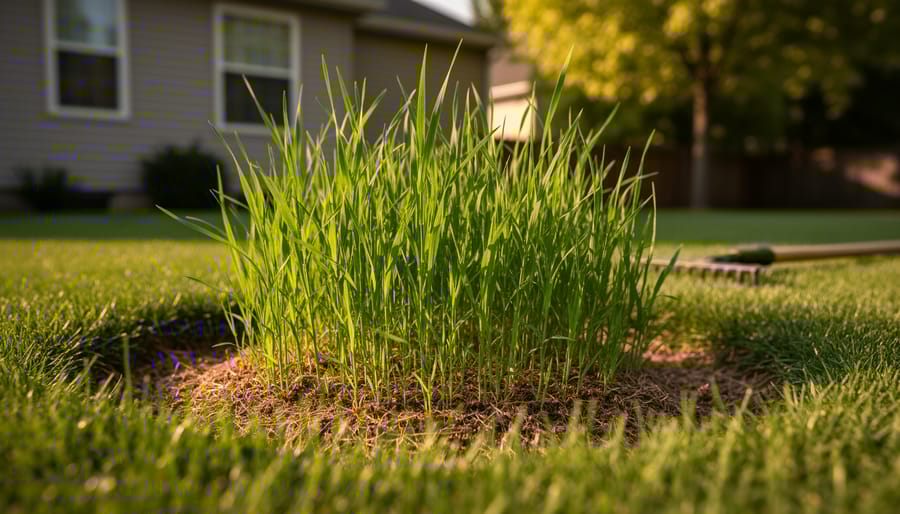
If you have dogs, you’ve probably seen those telltale brown circles dotting your otherwise green lawn. These spots aren’t a disease or mysterious lawn ailment—they’re nitrogen burn from concentrated pet urine. While nitrogen is actually a beneficial nutrient in small doses, the high concentration found in dog urine essentially “fertilizes” the grass to death, creating those unsightly patches that can frustrate even the most dedicated lawn enthusiast.
The good news? You’re not fighting a losing battle. Some grass varieties handle urine exposure better than others. Perennial ryegrass and tall fescue show impressive resilience, bouncing back more quickly than delicate varieties. Their deeper root systems and natural vigor help them recover from the nitrogen shock. If you’re in a warm climate, Bermuda grass is your champion—it spreads aggressively and can fill in damaged spots naturally.
Prevention starts with simple habits. Encourage your dog to use a designated potty area, or train them to urinate in mulched sections rather than on the lawn. Watering the spot immediately after your pet goes dilutes the nitrogen concentration before damage occurs. You can also create a small rock garden or mulched area as their preferred bathroom spot.
For existing damage, recovery is straightforward. Rake out the dead grass, sprinkle some compost to restore soil health, overseed with a resilient variety, and keep it consistently moist. Within a few weeks, you’ll see fresh green growth. Consider this an opportunity to upgrade to a tougher grass variety that’ll handle whatever your four-legged friends throw at it.
Creating Designated Pet Areas
One of the smartest strategies for protecting your lawn while keeping pets happy is creating designated pet zones. Think of it as giving everyone their own space—your dog gets a dedicated bathroom area, and you get to preserve the rest of your beautiful turf.
Start by observing your pet’s natural habits. Most dogs prefer relieving themselves in specific spots anyway, so work with their preferences rather than against them. Choose an area that’s somewhat out of sight but easily accessible, ideally along the yard’s perimeter. A 10×10 foot zone works well for most households, though larger dogs may appreciate more room.
For the designated pet area, consider using more resilient groundcover options like mulch, gravel, or even artificial turf designed specifically for pet use. If you prefer keeping it natural, tall fescue or perennial ryegrass handles concentrated pet traffic better than most varieties. Install a simple border using landscape edging or decorative stones to clearly define the space.
Pathway management is equally important. Dogs are creatures of habit and will typically follow the same routes through your yard. Rather than fighting this behavior, embrace it by creating defined pathways using stepping stones, mulch, or pet-friendly groundcover. This protects your main lawn areas from constant trampling while giving your pets clear routes to their favorite spots.
Train your pets to use these designated areas through positive reinforcement—treats and praise work wonders. Within a few weeks, most dogs naturally gravitate toward their special zones, leaving the rest of your lawn healthier and more resilient to occasional pet activity.
Establishing Quality Turfgrass That Stands Up to Abuse
Soil Preparation: The Foundation That Makes or Breaks You
Here’s the truth that many lawn care guides gloss over: even the toughest grass variety will struggle in poor soil. Before you spend a dime on seed or sod, invest time in proper soil preparation. Start with a soil test from your local extension office, which costs around $15-30 and reveals pH levels, nutrient deficiencies, and organic matter content. This simple step prevents you from applying amendments blindly and wasting money on unnecessary products.
Compacted soil is especially problematic in high-traffic areas. If water pools on your lawn or the soil feels rock-hard, core aeration becomes essential. This process removes small plugs of soil, allowing oxygen, water, and nutrients to penetrate deeper. For sustainable results, work in 2-3 inches of quality compost before seeding. This builds soil structure naturally, improves drainage, and feeds beneficial microorganisms that support grass health long-term. Think of soil prep as building a strong foundation for a house. Skip it, and everything else you do will be compromised from day one.
Seed vs. Sod: Making the Right Choice for Your Situation
When you’re facing a worn-out lawn from constant foot traffic and energetic pets, choosing between seed and sod can feel overwhelming. Let’s break down what works best for your high-traffic situation.
Seeding is the budget-friendly champion, costing roughly 90% less than sod. It’s perfect if you’re patient and can keep kids and pets off the lawn for 6-8 weeks during establishment. For high-traffic areas, this patience pays off because seeded lawns develop deeper root systems that ultimately create tougher, more resilient turf. You’ll also have greater variety selection, letting you choose exactly the right drought-resistant or shade-tolerant mix for your conditions.
Sodding offers instant gratification and immediate usability, though you’ll still need to restrict heavy traffic for about two weeks. This quick turnaround makes sod ideal if you’re dealing with erosion problems or need results before a specific event. The established root system means less vulnerability to pet urine spots during the critical establishment phase.
For sustainable lawn care, consider a hybrid approach. Sod your main traffic corridors where durability matters most, then seed less-traveled areas to save money while still building that deep root structure. This strategy gives you the best of both worlds.
Whatever you choose, remember that proper soil preparation matters more than your installation method. Even premium sod will struggle in compacted, nutrient-poor soil, while well-prepared ground helps seeded lawns thrive despite the chaos of family life.
Maintenance Strategies to Keep Your Tough Lawn Thriving
Mowing Height and Frequency for Resilient Turf
Getting your mowing height right is one of those game-changing practices that transforms an okay lawn into a truly resilient one. Here’s the thing: taller grass develops deeper roots, and deeper roots mean your turf can better handle the pounding from kids playing tag or your dog’s enthusiastic zoomies. For high-traffic lawns, aim to keep your grass at the higher end of its recommended range—typically 3 to 4 inches for most cool-season grasses and 2 to 3 inches for warm-season varieties.
The one-third rule is your best friend here: never remove more than one-third of the grass blade in a single mowing. Scalping your lawn might feel satisfying in the moment, but it weakens the grass and makes it vulnerable to wear, weeds, and disease. During peak growing season, this might mean mowing twice weekly, but your lawn will thank you with thicker, more durable growth.
Here’s a practical tip from my own yard: I raise my mower deck by half an inch during summer heat or when the lawn sees extra activity. That slight adjustment gives the grass enough leaf surface to photosynthesize efficiently while protecting the crown from damage. Sharp mower blades matter too—clean cuts heal faster than ragged tears, keeping your turf healthy and ready for action.
Fertilization for Recovery and Strength
High-traffic lawns endure significant stress, depleting essential nutrients faster than those in less active areas. Think of it like this: a grass plant that’s constantly being trampled by kids playing soccer or patrolled by your energetic golden retriever is working overtime to repair itself. It needs fuel to bounce back.
Focus on slow-release, organic fertilizers that provide steady nutrition without the environmental downsides of synthetic options. Nitrogen is your grass’s best friend for recovery, promoting leaf growth and that rich green color we all want. Look for products with a balanced N-P-K ratio like 10-6-4, which supports both top growth and root development. Organic options such as compost-based fertilizers or those derived from alfalfa meal release nutrients gradually, reducing runoff and supporting beneficial soil microbes.
During peak growing season, fertilize every 6-8 weeks, but avoid the temptation to overfeed. More isn’t always better and can actually weaken grass by forcing excessive soft growth that’s more vulnerable to damage. For eco-conscious homeowners, corn gluten meal serves double duty as a gentle fertilizer and natural pre-emergent herbicide. Apply in early spring and again in fall when your grass is actively growing and can make the most of these nutrients.

Aeration and Overseeding: Your Annual Reset
Think of aeration and overseeding as your lawn’s annual spa treatment—it’s the refresh that keeps high-traffic areas resilient year after year. Aeration tackles soil compaction, which is inevitable when kids, pets, and weekend activities compress the earth beneath your grass. Using a core aerator (you can rent one or hire a service), you’ll pull small plugs of soil, creating channels that allow water, air, and nutrients to reach the root zone. This simple step encourages deeper root growth, which means tougher, more drought-resistant turf. Follow up immediately with overseeding to fill in thin spots and maintain that lush density. The combination works beautifully because new seed falls directly into those aeration holes, giving it ideal soil contact for germination. Schedule this duo in early fall for cool-season grasses or late spring for warm-season varieties, and you’ll notice the difference within weeks—thicker coverage and fewer bare patches where life happens most.
Here’s the truth: the difference between a lawn that’s constantly struggling and one that genuinely thrives under heavy use comes down to choosing the right grass type from the start. If you’ve been battling bare patches and brown spots despite your best efforts, it’s likely not about what you’re doing wrong—it’s about working with a grass variety that simply can’t handle your lifestyle.
Take the time to honestly assess your specific situation. What’s your climate zone? How much shade versus sun does your yard get? Are you dealing with kids, dogs, or both? These aren’t trivial questions—they’re the foundation of a lawn that actually works for you instead of against you.
The good news is that once you match the right grass to your conditions, maintenance becomes significantly easier. Tall fescue for transitional zones, perennial ryegrass for cool climates with active families, or zoysia for warm regions all offer durability without demanding excessive water or chemical inputs. That’s sustainable lawn care in action—working with nature rather than fighting it.
Your lawn doesn’t need to be perfect to be beautiful and functional. Set realistic expectations, make an informed choice based on what you’ve learned here, and give your new turf the establishment period it needs. The payoff is a resilient, low-frustration lawn that keeps pace with your life.