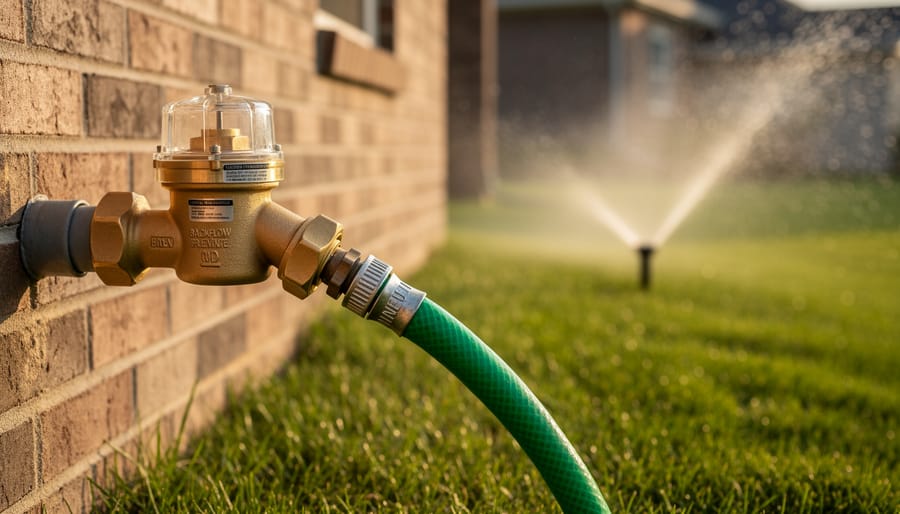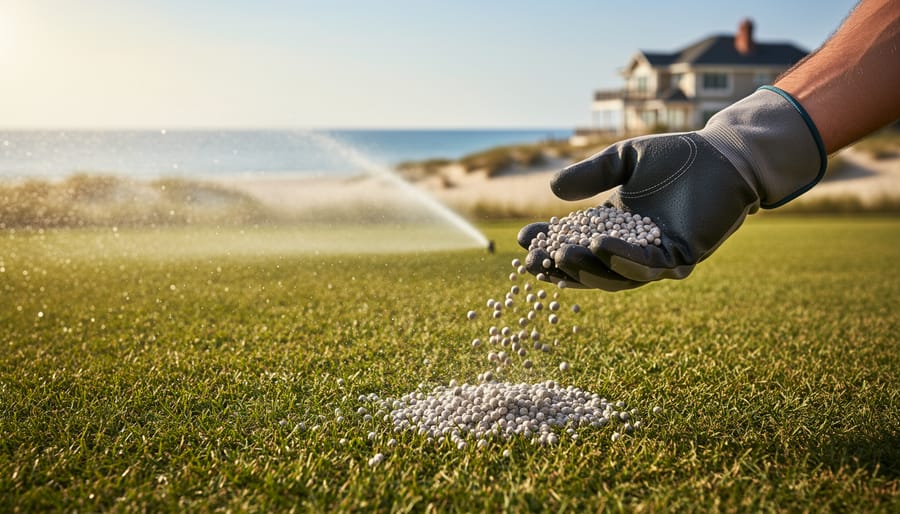
Flush salt from your lawn’s root zone with deep, infrequent irrigation—aim for one inch of water weekly to push salts below the grass roots while avoiding shallow watering that concentrates salt at the surface. Apply fertilizers specifically formulated for saline conditions at half the recommended rate but twice as frequently, which reduces salt index buildup while maintaining steady nutrient availability your grass desperately needs. Choose slow-release nitrogen sources like sulfur-coated urea or organic options that won’t spike soil salinity the way fast-acting synthetic fertilizers do, and always water immediately after application to move nutrients into the soil before salt damage occurs.
The frustration is real: you fertilize your lawn religiously, yet it still looks stressed, burned at the edges, or refuses to green up despite your best efforts. If you live near the ocean, in areas with naturally salty groundwater, or regions where winter road salt runs off into your yard, the culprit isn’t your fertilizing schedule—it’s the invisible enemy of sodium and chloride ions attacking your grass from the ground up. Salt doesn’t just harm your lawn directly; it fundamentally changes how fertilizers work, blocking nutrient absorption even when those nutrients are present in abundance.
Understanding this salt-fertilizer relationship transforms everything about your lawn care approach. The conventional wisdom about fertilizing simply doesn’t apply when you’re gardening in saline conditions. Salt creates osmotic stress that prevents grass roots from taking up water and nutrients, meaning your expensive fertilizer applications may be feeding the problem rather than solving it. Success requires a complete strategy reset—one that accounts for your unique soil chemistry, embraces the right soil-turfgrass match, and works with nature rather than fighting against coastal realities.
Understanding the Salt Challenge in Coastal Lawns
How Salt Interferes with Nutrient Uptake
When you spread fertilizer across your lawn, you’re essentially offering your grass a nutritious meal packed with nitrogen, phosphorus, and potassium. But here’s where salt becomes the uninvited guest at the dinner table: it fundamentally changes how your grass roots can access those nutrients.
Think of your grass roots like tiny straws trying to sip water and dissolved nutrients from the soil. Under normal conditions, this works through a process called osmosis, where water naturally moves from areas of lower salt concentration (the soil) into areas of higher concentration (inside the root cells). It’s like water flowing downhill, following a natural gradient.
When salt accumulates in your soil, this gradient reverses. Suddenly, the salt concentration outside the roots becomes higher than inside, and water actually flows out of the roots instead of in. This is what we call physiological drought—your grass is literally surrounded by moisture and nutrients, but it can’t drink them up. Imagine trying to sip a thick milkshake through a coffee stirrer; that’s what nutrient uptake feels like for salt-stressed grass.
The result? Even premium fertilizers sit in the soil, largely unavailable to your lawn. Your grass shows classic starvation symptoms—yellowing, stunted growth, and thin patches—despite your best fertilizing efforts. The fertilizer nutrients are there, but the salt barrier prevents absorption, making your investment frustratingly ineffective. Understanding this dynamic is the first step toward developing a fertilizing strategy that actually works in saline conditions.
The Coastal Double-Whammy: Soil and Air Salt
If you’re gardening near the ocean, you’re dealing with a unique one-two punch that makes lawn care especially challenging. Coastal lawns face both soil salinity from salt accumulation in the ground and airborne salt spray that lands directly on grass blades. Think of it as your lawn getting attacked from below and above simultaneously.
This double exposure changes everything about fertilizing. Salt spray can actually burn leaf tissue, making freshly fertilized grass more vulnerable to damage since the new growth is tender and salt-sensitive. Meanwhile, salty soil affects nutrient uptake, meaning your carefully chosen fertilizer might not get absorbed efficiently no matter how perfectly you apply it.
The timing becomes critical here. I’ve learned from coastal gardeners that fertilizing right before a storm or during particularly windy periods is basically throwing money away—salt spray will stress the grass just when it’s trying to use those nutrients. Instead, fertilize during calmer weather windows and follow up with gentle irrigation to wash salt off blades while pushing nutrients into the root zone. This approach addresses both challenges simultaneously, giving your lawn the best chance to actually benefit from your fertilizing efforts rather than just fighting to survive.
Choosing Salt-Tolerant Turfgrass: Your First Line of Defense
Warm-Season Champions for Coastal Areas
If you’re managing a lawn in a coastal area, choosing the right grass is half the battle won—and thankfully, several warm-season grass varieties handle salt exposure remarkably well while responding beautifully to proper fertilization.
Bermudagrass stands out as a salt-tolerant warrior, thriving in full sun and bouncing back quickly from salt exposure. It prefers moderate nitrogen applications during the growing season—about 1 pound of nitrogen per 1,000 square feet monthly from late spring through summer. Just remember that Bermudagrass grows aggressively, so you’ll want to balance your fertilizing to avoid excessive mowing.
Seashore Paspalum takes salt tolerance to championship levels, actually tolerating irrigation with ocean water in some cases. This makes it ideal for properties right on the coast. Feed it similarly to Bermudagrass, but be prepared for a slightly coarser texture in exchange for its remarkable durability.
St. Augustine offers a softer, shade-tolerant option with moderate salt tolerance. It needs less nitrogen than Bermudagrass—about 2 to 4 pounds per 1,000 square feet annually, split across the growing season. Apply iron supplements if you notice yellowing, as salt can interfere with iron uptake.
Zoysia provides an excellent middle ground with good salt tolerance and lower maintenance needs. Beyond Zoysia’s drought tolerance, it requires only 2 to 3 pounds of nitrogen annually and develops a dense turf that naturally resists weeds. For coastal lawns, Zoysia’s slower growth means less stress on grass already challenged by salt.
Cool-Season Options for Northern Coasts
If you’re maintaining a lawn along the northern coastline, you’re dealing with cool temperatures and salt spray—a challenging combination! The good news is that certain cool-season grasses have evolved to handle these conditions beautifully when given the right fertilizing support.
Tall fescue stands out as your most salt-tolerant option for northern coastal lawns. Its deep root system helps it access water below the salt-affected surface layer, and varieties like ‘Coronado Gold’ and ‘Arid 3’ show exceptional tolerance. For saline conditions, fertilize tall fescue lightly in fall and spring, using about 2 to 3 pounds of nitrogen per 1,000 square feet annually. Split this into smaller applications to prevent salt stress from concentrated nutrients.
Fine fescues, particularly hard fescue and Chewings fescue, also perform admirably in coastal settings and require even less fertilizer—making them wonderfully sustainable choices. They thrive on just 1 to 2 pounds of nitrogen annually, which actually helps them maintain their natural salt tolerance. Over-fertilizing these low-maintenance beauties can make them more susceptible to disease and salt damage.
Perennial ryegrass offers moderate salt tolerance and establishes quickly, making it great for overseeding bare patches. Look for newer disease-resistant grass varieties that combine salt tolerance with improved durability. Feed perennial ryegrass with 2 to 4 pounds of nitrogen annually, focusing applications in early fall when coastal conditions are milder and salt concentrations typically lower in the soil.
The Saline-Smart Fertilizing Strategy
Choosing the Right Fertilizer for Salty Soil
When you’re dealing with salty soil, not all fertilizers are created equal. In fact, choosing the wrong one can actually make things worse by adding more salt to an already challenging environment. Let me walk you through what works best and why.
The key concept here is the salt index, which measures how much a fertilizer increases salt concentration in soil. In saline conditions, you’ll want fertilizers with a low salt index. Think of it this way: your grass is already struggling to drink water because of existing salt, so the last thing you need is fertilizer that piles on more. Look for products labeled as low-salt-index or specifically formulated for coastal areas.
Calcium-based fertilizers are your friends in salty soil. Calcium nitrate and calcium sulfate (gypsum) not only feed your lawn but actually help displace sodium, the troublemaker in salt-affected soils. It’s like inviting a helpful friend to nudge out an unwelcome guest. Gypsum is particularly wonderful because it improves soil structure without raising pH levels.
Organic alternatives deserve serious consideration here. Compost, well-aged manure, and organic lawn fertilizers release nutrients slowly and improve soil health over time. They won’t shock your already-stressed grass with sudden salt spikes, and they build resilience naturally.
For NPK ratios in salt-stressed lawns, lean toward balanced formulations like 10-10-10 or even lower nitrogen options. High nitrogen fertilizers often have higher salt indexes and can burn struggling grass. A gentler approach with moderate nitrogen, adequate phosphorus for root development, and potassium for stress tolerance works best.
Remember, with saline soil, less is often more. Split applications of smaller amounts throughout the season beat one heavy feeding every time.
Application Rates: Less Can Be More
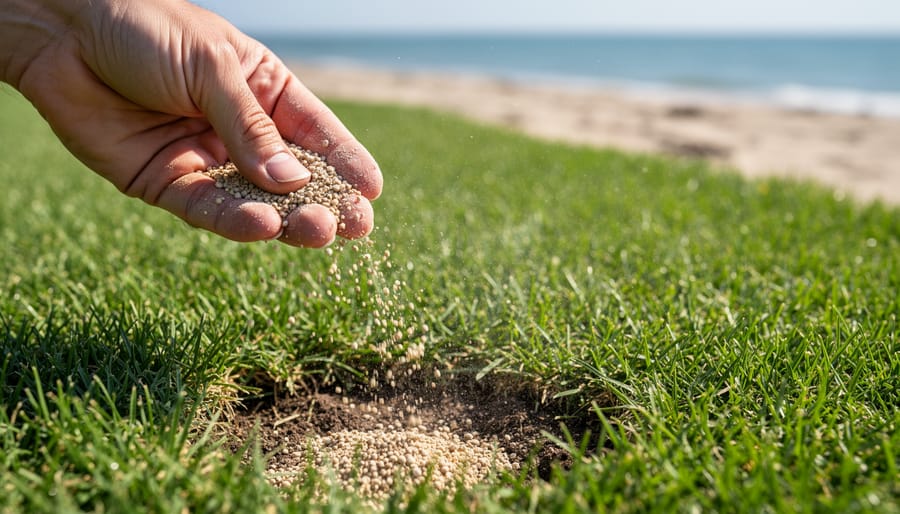
When fertilizing lawns in saline conditions, your instinct might be to apply more product to compensate for struggling grass. Resist that urge! The counterintuitive truth is that lighter, more frequent applications actually work better in salty soils.
Think of it this way: every fertilizer application adds some salt to your soil. In coastal or salt-affected areas, you’re already working with elevated salt levels. Dumping on a full-strength dose of fertilizer is like adding salt to an already over-seasoned dish. Instead, apply fertilizer at half to two-thirds the recommended rate, but increase the frequency. For example, if a product suggests four pounds per 1,000 square feet quarterly, try two to three pounds every six to eight weeks during the growing season.
This approach delivers consistent nutrition without overwhelming your soil’s salt-processing capacity. Your grass gets a steady diet rather than feast-or-famine cycles, and you avoid the salt spikes that can burn roots and damage soil structure.
During particularly hot or dry periods when salt concentration naturally increases, consider skipping an application altogether. Your lawn will thank you for the restraint. Remember, sustainable lawn care means working with your soil’s limitations, not against them. Patience and lighter feeding schedules create healthier, more resilient turf in challenging saline environments.
Timing Your Applications Around Salt Stress
Timing is everything when you’re managing a lawn in salty conditions. Think of it this way: your grass is already working overtime to cope with salt stress, so the last thing you want to do is add fertilizer when it’s struggling the most.
The golden rule? Avoid fertilizing during peak salt stress periods. In coastal areas, this typically means holding off during late summer when evaporation is high and salt concentrates in the soil. Similarly, if you live where winter road salt is common, skip early spring applications until you’ve had a chance to flush the soil.
Instead, coordinate your fertilizing schedule with Mother Nature’s help. The ideal time is just before or during rainy seasons when natural rainfall can help leach salts deeper into the soil profile, away from grass roots. This creates a window of opportunity where your lawn can actually absorb and use the nutrients you’re providing.
If rainfall isn’t reliable in your area, plan fertilizer applications around your irrigation schedule. Apply fertilizer, then run your irrigation system deeply to both activate the nutrients and push accumulated salts downward. This one-two approach maximizes fertilizer effectiveness while minimizing salt interference. A sustainable practice that works with nature rather than against it always yields better results for your lawn’s long-term health.
Essential Partners: Irrigation and Leaching Practices
The Leaching Schedule That Makes Fertilizer Work
Here’s the truth about fertilizing saline lawns: your grass can’t actually use those nutrients if salt keeps building up in the soil. Think of it like trying to drink through a straw filled with sand. That’s why a strategic leaching schedule is your secret weapon for making fertilizer actually work.
Leaching is simply the process of applying enough water to flush accumulated salts below the root zone, typically about 18 inches deep. For lawns in salt-affected areas, this isn’t just helpful—it’s essential. Without regular leaching, salts from irrigation water, ocean spray, or naturally saline soil create a barrier that prevents grass roots from absorbing the nutrients you’re applying.
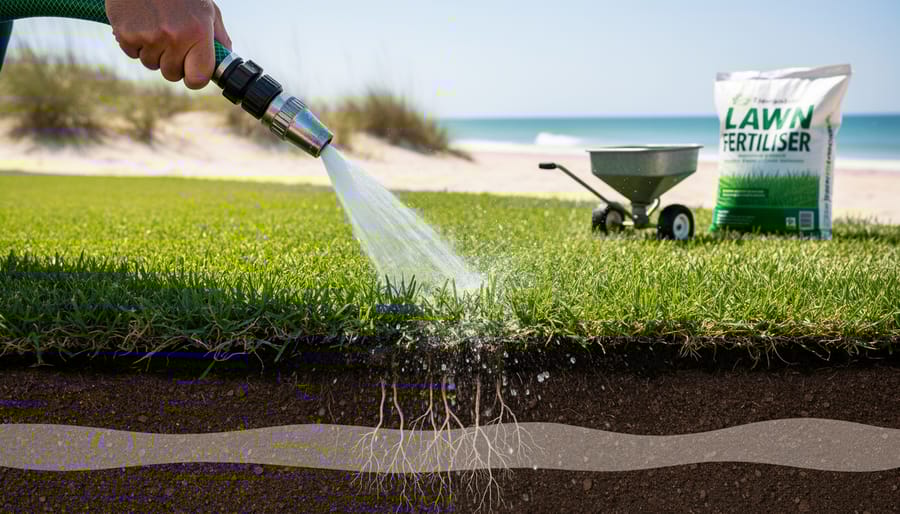
The timing matters tremendously. I recommend a deep watering session about 24-48 hours after fertilizing. Apply roughly 1.5 to 2 times your normal irrigation amount, allowing water to penetrate deeply rather than running off. This pushes both existing salts and your fresh fertilizer down to where roots can access them. During growing season in coastal areas, plan for this deep leaching every 4-6 weeks, or more frequently if you’re battling particularly high salinity.
Here’s a practical tip: water in the early morning to minimize evaporation and maximize penetration. You’ll know you’re doing it right when your soil stays moist several inches down for a day or two afterward. This sustainable practice transforms fertilizing from a wasteful exercise into an effective feeding program that actually reaches your grass.
Water Quality: Are You Adding to the Problem?
Before you blame your fertilizer for lackluster results, take a closer look at your water source. If you’re irrigating with well water or municipal supplies in coastal regions, you might be adding salt to your lawn every time you turn on the sprinkler. Many irrigation water sources contain dissolved salts that accumulate in soil over time, creating a double-whammy when combined with fertilizer salts.
Here’s a practical approach: Test your irrigation water’s electrical conductivity (EC) or total dissolved solids (TDS). Most county extension offices offer this service affordably. If your water tests high in salinity, adjust your fertilizing strategy accordingly. Apply fertilizers at the lower end of recommended rates since you’re already introducing salts through irrigation. Consider switching to slow-release or organic fertilizers that add fewer salts per application.
The solution isn’t to stop watering, but to water more strategically. Deep, infrequent watering helps flush accumulated salts below the root zone, a process called leaching. Apply about 20-30% more water than your lawn needs every fourth or fifth irrigation cycle. This sustainable practice prevents salt buildup while maintaining the effectiveness of your fertilizing program.
Soil Amendments That Boost Fertilizer Effectiveness
Gypsum: The Salt-Busting Amendment
If you’re battling salty soil, gypsum might just become your lawn’s best friend. This naturally occurring mineral works like a miracle worker without adding more salt to your already challenged soil. Here’s the beautiful part: gypsum (calcium sulfate) doesn’t increase soil salinity like many fertilizers can, making it the perfect companion for coastal and salt-affected lawns.
How does it work? Gypsum improves soil structure by replacing sodium ions with calcium ions. Think of it as a swap meet in your soil—the good guys (calcium) kick out the troublemakers (sodium). This exchange helps break up compacted clay soils, improves drainage, and allows water to flush existing salts deeper into the ground where they can’t harm grass roots.
Beyond salt management, gypsum enhances nutrient availability. When soil structure improves, your grass roots can better access the nutrients you’re applying through fertilization. It’s like clearing the traffic jam so nutrients can actually reach their destination.
Apply gypsum at 40-50 pounds per 1,000 square feet as a pre-treatment before fertilizing in saline conditions, then water thoroughly. Most lawns benefit from biannual applications during spring and fall for sustained results.
Building Organic Matter for Resilience
When you’re dealing with salty soil, building organic matter isn’t just beneficial—it’s essential. Think of compost and organic amendments as your lawn’s protective shield against salt stress. These materials work wonders by improving your soil’s structure, helping it hold onto both moisture and nutrients that salt would otherwise push away.
Adding a quality compost layer annually, even just a quarter-inch spread across your lawn, dramatically improves nutrient retention. The organic matter acts like a sponge, buffering against salt fluctuations and creating healthier soil conditions where beneficial microbes can thrive. These microorganisms help break down nutrients into forms your grass can actually use, even when salt is present.
Consider incorporating well-aged manure or leaf mold alongside compost. These amendments increase your soil’s cation exchange capacity—fancy talk for its ability to hold onto nutrients rather than letting them wash away. For lawns in particularly salty areas, humic acid products provide an extra boost, helping roots absorb nutrients more efficiently. The key is consistency; regular organic additions create long-term resilience that chemical fertilizers alone simply can’t match in saline environments.
Product Recommendations for Saline Lawn Fertilizing
Finding the right products for saline lawn care can feel overwhelming, but I’ve tested several options that genuinely make a difference in coastal conditions. Let me share what actually works when you’re battling salt-affected soil.
For fertilizers, I consistently recommend slow-release, granular organic options over quick-release synthetic formulas. Milorganite has been a game-changer for many coastal gardeners I know. This organic nitrogen fertilizer releases nutrients gradually, reducing the risk of salt buildup that happens when synthetic fertilizers accumulate in already-saline soil. Another excellent choice is Espoma Organic Lawn Food, which combines slow-release nitrogen with beneficial microbes that help rebuild soil health damaged by salt exposure.
If you prefer liquid feeding, Neptune’s Harvest Fish & Seaweed Fertilizer offers a sustainable option that’s surprisingly effective in saline conditions. The seaweed component contains natural growth hormones and trace minerals that help grass tolerate salt stress better. Apply it every three to four weeks during the growing season, diluted according to package directions.
Soil amendments deserve equal attention to your fertilizer choice. Gypsum is your best friend in saline lawns because it helps displace sodium ions without raising pH levels. I recommend Espoma Garden Gypsum, which you can apply twice yearly in spring and fall. For improving overall soil structure, add compost regularly. Coast of Maine Cobscook Blend Organic Compost works beautifully, introducing beneficial organisms while improving drainage and reducing salt concentration through dilution.
Don’t overlook the importance of quality testing tools. A basic soil test kit like the MySoil Test Kit will measure your salt levels and help you track improvement over time. For ongoing monitoring, consider investing in a handheld EC (electrical conductivity) meter, which measures soil salinity quickly and accurately.
For application, a quality broadcast spreader ensures even distribution, preventing fertilizer hot spots that compound salt problems. The Scotts Turf Builder EdgeGuard works well for most homeowners and provides consistent coverage.
Remember, the most environmentally responsible approach combines these products with proper watering practices and regular soil testing. Start with modest applications, observe how your lawn responds, and adjust accordingly. Your coastal lawn will thank you for the thoughtful, sustainable care.
Troubleshooting Common Coastal Fertilizing Problems
Even with the best intentions, coastal fertilizing can sometimes go sideways. Let’s walk through the most common hiccups and how to get your lawn back on track.
Fertilizer burn is probably the most frustrating problem for coastal gardeners. You might notice brown or yellow leaf tips, crispy edges, or entire patches that look scorched. In saline soil, this happens more easily because salt from both the environment and the fertilizer creates a double whammy effect. The solution? Immediately water the affected area deeply to flush excess salts below the root zone. Going forward, always apply fertilizer at half the recommended rate and water thoroughly afterward. Think of it as being extra gentle with already stressed grass.
If your lawn still looks pale and struggling despite regular fertilizing, you’re likely dealing with nutrient lockout. Salt interferes with your grass’s ability to actually absorb nutrients, so even though food is available, the roots can’t take it up. Watch for symptoms like yellowing between leaf veins (often iron deficiency) or overall pale color (nitrogen issues). The fix involves improving soil structure with organic matter like compost, which helps buffer salt effects and improves nutrient availability. Consider switching to slow-release or organic fertilizers that work more gently over time.
Brown patches that appear after fertilizing can signal uneven application combined with salt stress. Saline soils are less forgiving of mistakes, so those overlapping passes with your spreader become visible problems quickly. Always calibrate your spreader, maintain consistent walking speed, and water immediately after application to distribute nutrients evenly.
Sometimes the answer isn’t more fertilizer but better timing and technique. If problems persist, get a soil test to see what’s really happening below the surface. You might discover your pH is off or specific nutrients are locked up. Adjusting your approach based on actual data rather than guesswork makes all the difference in challenging coastal conditions.
Creating a lush, healthy lawn in saline conditions isn’t just wishful thinking—it’s entirely achievable when you bring together the right strategies. The journey to a thriving coastal lawn isn’t about working harder with conventional methods, but rather working smarter by understanding how salt changes the game. Remember, there’s no single magic solution here. Success comes from combining salt-tolerant grass varieties with modified fertilizing practices, strategic irrigation to flush excess salts, and ongoing soil improvements that gradually reduce salinity over time.
Yes, it requires more patience than maintaining an inland lawn, and you might need to adjust your expectations about what perfection looks like in a coastal setting. But here’s the encouraging truth: thousands of homeowners in seaside communities have gorgeous lawns that prove it’s possible. The key is consistency—sticking with your soil testing schedule, applying fertilizers at reduced rates during optimal times, and maintaining that deep watering routine that keeps salt levels in check.
As you move forward, I encourage you to embrace sustainable coastal lawn care practices. Choose organic amendments when possible, conserve water through efficient irrigation methods, and work with your environment rather than against it. Your lawn doesn’t need to look exactly like those in salt-free zones to be beautiful. By respecting your coastal ecosystem and applying these targeted strategies, you’ll create a resilient, attractive lawn that thrives in its salty home for years to come.