Biological control of weeds uses living organisms to suppress or eliminate unwanted plants without synthetic chemicals. Instead of reaching for a spray bottle, you introduce natural enemies like insects, fungi, or grazing animals that target specific weeds, keeping them in check through predation, disease, or competition.
For gardeners frustrated with the endless cycle of chemical applications and the environmental concerns they bring, biological control offers a smarter path forward. It’s not a magic bullet that erases weeds overnight, but it provides long-term suppression that works with nature rather than against it. The approach has been successfully deployed against invasive species in agriculture and natural areas for decades, and those same principles are now accessible to home gardeners looking to manage persistent lawn weeds sustainably.
The beauty of biological weed control lies in its specificity. While broad-spectrum herbicides kill everything they touch, biological agents typically target one weed species or a closely related group. This precision means your desirable plants stay safe while problem weeds face constant pressure from their natural enemies.
Understanding how this process works, what agents are available, and how to implement them in your own yard requires a shift in thinking. You’re not just applying a product and walking away. You’re introducing a living system that needs the right conditions to establish and thrive. This article breaks down the science behind biological control, walks through the types of organisms you can deploy, and provides practical guidance for integrating this approach into your lawn care routine. Whether you’re battling a single stubborn species or looking to reduce your overall reliance on herbicides, biological control deserves a place in your sustainable gardening toolkit.
What Biological Weed Control Really Means
Biological weed control means enlisting nature’s own systems to keep unwanted plants in check. Instead of reaching for a spray bottle or hoe, you’re introducing or encouraging living organisms, insects, fungi, bacteria, even certain grazing animals, that naturally feed on, infect, or outcompete specific weeds in your lawn. These organisms act as natural enemies of the weeds, reducing their populations over time without the chemical residues or repeated manual labor that other methods require.
This approach differs from pulling weeds by hand or applying organic herbicides, though all three fall under the umbrella of natural lawn care. Manual weeding gives you immediate results but demands constant effort and never truly addresses the root cause if conditions favor weed regrowth. Organic herbicides, while plant-derived or naturally occurring, still kill weeds through chemical action and often lack selectivity, potentially harming your turfgrass alongside the targets. Biological control, by contrast, relies on ecological relationships. The agents you introduce are highly selective, targeting only the weed species they’ve evolved to consume or parasitize, leaving your grass untouched.
To understand how this works in practice, a few core concepts help:
- Biocontrol agents
- Living organisms, insects, pathogens, or other natural enemies, that suppress weed populations through predation, herbivory, or disease. They’re the workforce in biological control.
- Host-specificity
- The narrow feeding or infection range of a biocontrol agent, ensuring it attacks only the target weed and not your desirable plants. This specificity is what makes biological control safe for lawns.
- Classical vs. augmentative control
- Classical control involves introducing a new agent that establishes a permanent population, providing long-term suppression. Augmentative control means releasing agents periodically to boost their numbers for immediate, short-term impact.
- Integrated pest management (IPM)
- A holistic strategy combining multiple tactics, biological, cultural, mechanical, to manage weeds sustainably. Biological control works best as one tool within an IPM framework, not a silver bullet on its own.
The ecological foundation here is crucial. Biological control doesn’t eliminate weeds overnight or aim for sterile perfection. It works with natural population dynamics, gradually shifting the balance in your lawn’s favor while supporting biodiversity and soil health. That makes it a sustainable choice for gardeners committed to working with nature rather than against it.
How Biological Weed Control Works in Your Lawn
The Science Behind Natural Weed Suppression
Natural weed suppression works through three main biological mechanisms that target unwanted plants while leaving your grass unharmed.
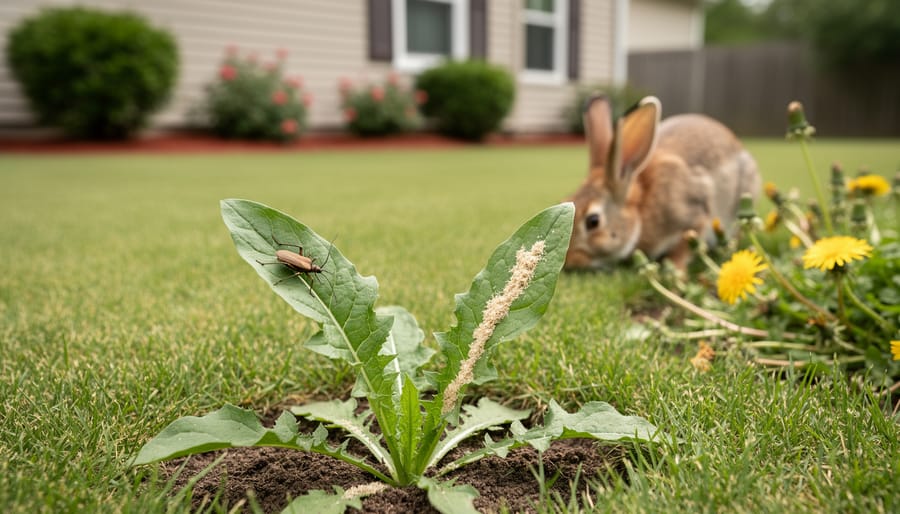
Herbivory occurs when insects feed exclusively on specific weed species. These specialized feeders evolved alongside their host plants, developing the ability to digest chemicals and compounds that would sicken or kill other insects. When a beetle munches on thistle leaves or a weevil bores into dandelion roots, they’re removing the weed’s ability to photosynthesize and store energy. Heavy feeding stress weakens the plant over successive growing seasons, reducing seed production and eventually killing established specimens.
Parasitism takes a different approach. Parasitic organisms attach to or invade weed tissues, stealing nutrients and water that the plant needs to survive. Some fungi insert thread-like structures into weed roots, siphoning resources directly. Unlike herbivores that simply eat the plant, parasites create a slow drain that prevents normal growth and reproduction.
Pathogen-based control relies on disease-causing bacteria, fungi, or viruses that infect target weeds. These pathogens attack specific plant species by exploiting vulnerabilities in their cellular structure or biochemistry. A fungal pathogen might produce enzymes that break down a weed’s cell walls, causing lesions and rot. The infection spreads through the plant’s vascular system, disrupting water transport and nutrient flow until the weed collapses.
The beauty of all three mechanisms is their specificity. Turfgrasses evolved different defenses and biochemistry, making them naturally resistant to agents targeting broadleaf weeds or invasive species.
Why Results Take Time (And That’s Okay)
Unlike chemical herbicides that deliver a knockout punch within days, biological weed control operates on nature’s schedule, and that means weeks or even months before you notice significant change. This isn’t a flaw; it’s how healthy ecosystems restore balance.
Chemical sprays disrupt plant cells almost immediately, causing visible wilting within 48 hours. Biological agents, on the other hand, must establish populations, locate their target weeds, and work through the natural weed life cycle. An introduced beetle needs time to reproduce, and its larvae require multiple feeding cycles to weaken a dandelion’s taproot. A fungal pathogen must spread through favorable conditions, infecting new plants gradually rather than all at once.
This slower timeline actually delivers superior long-term results. Chemical treatments kill what’s visible today but do nothing about seeds waiting in your soil or new weeds arriving next week. You’re back to spraying every season. Biological controls, once established, create ongoing pressure, a persistent population of natural enemies that suppresses weeds year after year without repeated applications.
The patience pays off. You’re not just removing weeds; you’re building a self-regulating system that keeps them in check naturally. That first season requires trust in the process, but by year two, you’ll have fewer weeds and less work, exactly what sustainable lawn care promises.
Types of Biological Control Agents for Lawn Weeds
Insect Biocontrol Agents
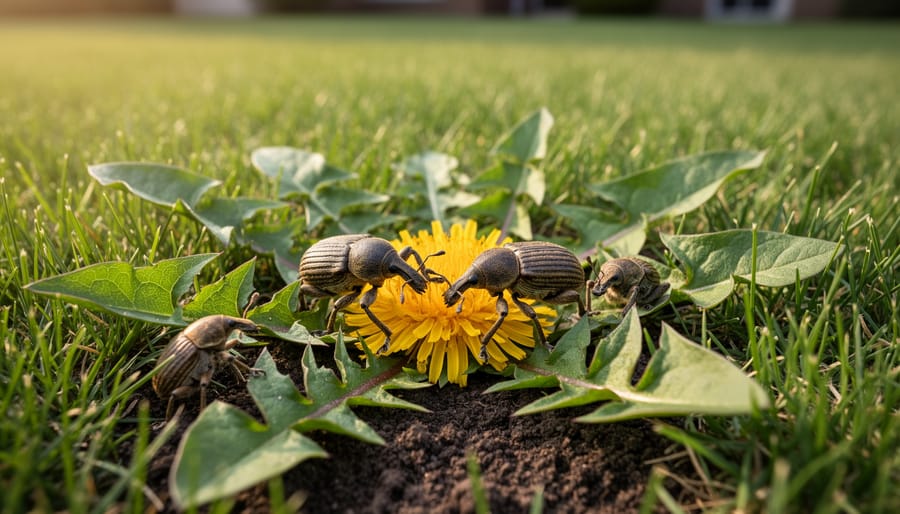
Insect biocontrol agents are host-specific natural enemies that feed only on their target weed without touching your grass or other desirable plants. Think of them as specialized eaters with incredibly picky diets.
Beetles and weevils top the list for lawn applications. The cinnabar moth caterpillar, for instance, devours ragwort, while certain flea beetles attack specific thistle species. Dandelion stem weevils feed inside dandelion stems, weakening plants over time. These insects work through feeding damage, they consume leaves, bore into stems, or destroy seed heads, gradually depleting the weed’s energy reserves.
The key advantage? Once established, these insects reproduce naturally, creating ongoing control without reapplication. You release them once, and their populations build as long as host weeds remain.
The catch is specificity cuts both ways. A beetle targeting Canada thistle won’t touch bull thistle or your lawn. You need correct weed identification and the right agent, which isn’t always commercially available for every turf weed. Most insect agents excel in larger areas where weed populations support viable insect colonies, making them less practical for scattered dandelions in a small backyard. Still, for persistent, widespread weed problems in organic lawns, they’re an elegant long-term solution.
Fungal and Bacterial Pathogens
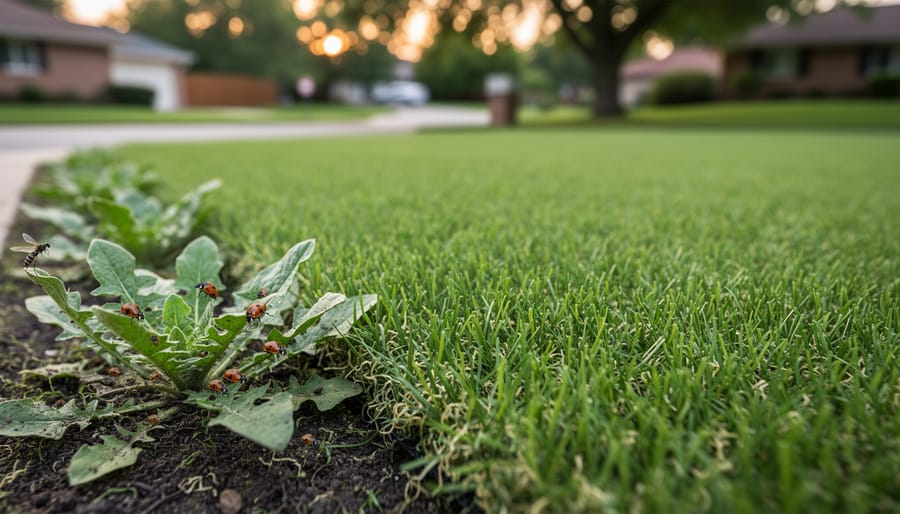
Fungal and bacterial pathogens offer another layer of biological weed control, working much like diseases that target humans, except these microscopic agents are highly selective, bioherbicides infect weeds while leaving your turfgrass completely unharmed. These organisms attack specific weed species by causing leaf spots, blights, wilts, or root rot, gradually weakening and suppressing the weed population over time.
Commercially available mycoherbicides, fungal-based products, are the most common form you’ll find for home lawn use. These formulations contain spores of weed-specific fungi that germinate on target plants under the right moisture and temperature conditions. For instance, certain Sclerotinia species have been developed to control broadleaf weeds in turf, while specific Phoma strains target dandelions and other common lawn invaders.
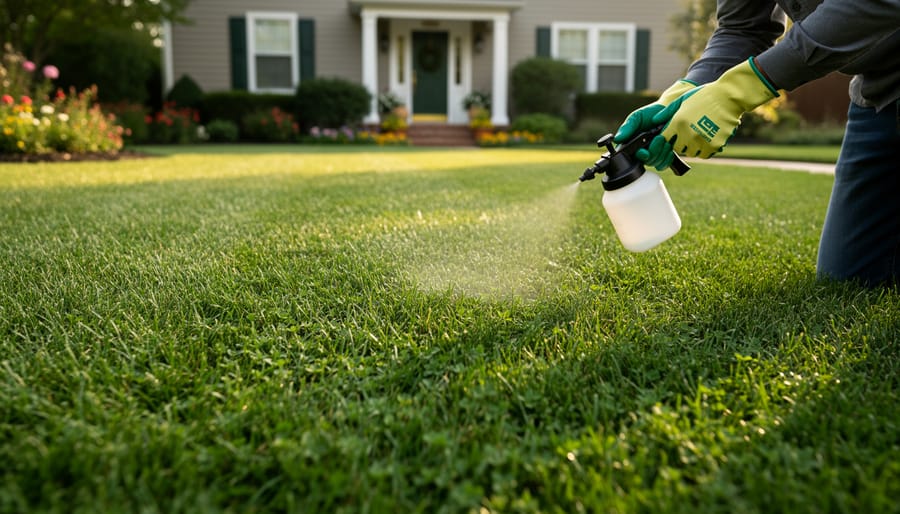
Application typically involves spraying the product directly onto actively growing weeds during warm, humid weather when fungal establishment is most successful. Unlike instant chemical knockdown, you’ll notice gradual yellowing, wilting, and decline over several weeks as the pathogen colonizes the plant. The key is patience and proper timing, these agents need favorable environmental conditions to establish and spread effectively, making them ideal for spring or early summer applications when weeds are young and vulnerable.
Competitive Plants and Cover Strategies
Thick, vigorous turfgrass is one of your most powerful biological weapons against weeds. When you maintain a dense lawn canopy, desirable grass plants physically crowd out weed seedlings by monopolizing sunlight, water, and soil nutrients. Cool-season grasses like tall fescue and perennial ryegrass, when properly established, form such tight root systems that weed seeds struggle to germinate. This competitive suppression works best when you support your turf with consistent mowing at the correct height (typically 3-4 inches), adequate watering, and timely overseeding to fill bare patches. Healthy grass doesn’t just tolerate weeds, it actively prevents them from gaining a foothold. Think of it as preventive biological control: you’re creating conditions where your lawn outcompetes invaders before they become a problem, no chemicals required.
Grazing Animals (For Larger Properties)
If you have a larger lawn or a property that transitions into meadow or pasture, grazing animals can double as biological weed control agents. Geese are surprisingly effective at targeting young broadleaf weeds and grasses while leaving established turf relatively unscathed. Sheep and goats excel at controlling taller weeds, brush, and invasive plants that creep into lawn edges or rough areas.
This approach works best for properties measured in acres rather than square feet, where animals have enough space to graze without overgrazing and damaging desirable grass. Managed grazing requires fencing, water access, and basic animal husbandry knowledge. While not practical for typical suburban yards, it’s a proven, chemical-free solution for larger properties where mowing alone can’t keep aggressive weeds in check. Many homesteaders and rural landowners find that a small flock or herd pays dividends in reduced maintenance and natural weed suppression.
Where and When to Use Biological Weed Control
Biological weed control isn’t a one-size-fits-all solution, but there are specific situations where it truly excels, and understanding these scenarios helps you decide if it’s the right approach for your lawn.
Organic lawns are the most obvious candidates. If you’re committed to maintaining a certified organic landscape or simply prefer to avoid synthetic inputs entirely, biological controls offer a genuine alternative to chemical herbicides. They align perfectly with organic certification standards and won’t disqualify your lawn from maintaining its status. For properties near ponds, streams, or wetlands, biological agents eliminate the risk of chemical runoff that can devastate aquatic ecosystems. You don’t need to worry about contaminating water sources or harming fish and amphibians.
Families with young children and pets benefit enormously from biological control. There’s no need to cordon off treated areas or worry about toxic residues on grass where kids play barefoot or dogs roll around. The control agents pose no health risk to mammals, giving you genuine peace of mind that chemical treatments simply can’t match.
Biological control also shines in these situations:
- Certified organic landscapes requiring non-synthetic weed management
- Environmentally sensitive areas near waterways, wetlands, or protected habitats
- Long-term weed suppression goals where sustainable control outweighs quick fixes
- Properties where weeds have developed resistance to chemical herbicides
- Wildlife-friendly landscapes supporting pollinators, beneficial insects, and biodiversity
Timing matters as much as location. Introduce biological agents when target weeds are actively growing and most vulnerable, typically spring through early summer for most lawn weeds. Avoid releasing organisms during drought stress or extreme temperatures when establishment rates plummet.
The most effective strategy treats biological control as one component of an integrated approach rather than a standalone solution. Combine it with proper mowing height (taller grass shades out weed seedlings), adequate fertilization to strengthen turf density, and overseeding bare patches where weeds gain footholds. A comprehensive season-by-season plan that coordinates these practices amplifies the impact of biological agents and creates lasting suppression.
Think of biological control as the patient, ecological foundation of your weed management strategy, especially valuable when sustainability, safety, and long-term lawn health matter more than overnight results.
Common Lawn Weeds You Can Target Biologically
While you can’t walk into most garden centers and buy a shelf full of biocontrol agents like you would herbicides, certain common lawn weeds do have established biological solutions worth exploring. Here’s what’s actually available and proven for typical turf invaders.
- Dandelion (Taraxacum officinale)
- Several rust fungi naturally attack dandelions, though commercial formulations remain limited. Your best biological approach combines encouraging competitive grass growth through proper mowing height and overseeding to crowd out these deep-rooted perennials before they establish.
- White Clover (Trifolium repens)
- The clover seed weevil (Protapion fulvipes) feeds on clover seed heads, reducing spread. However, clover fixes nitrogen and many sustainable gardeners now embrace it as a beneficial companion plant rather than targeting it for removal.
- Thistle Species (Cirsium and Carduus)
- Several weevils and beetles show excellent results against thistles, including Rhinocyllus conicus for musk thistle. These agents are established in some regions and may naturally colonize your lawn if thistle populations are significant enough to attract them.
- Broadleaf Plantain (Plantago major)
- No widely available commercial biocontrol exists yet, but dense turf maintained at proper height outcompetes plantain by shading it out. Hand-pulling remains effective for isolated plants, particularly after rain when soil is soft.
For crabgrass and other grassy weeds, biological options are sparse. Your strongest defense remains cultural: thick, healthy turf established through correct weather timing for seeding and maintained at optimal height prevents these opportunistic annuals from gaining a foothold. Pre-emergent corn gluten meal offers some natural suppression, though it works chemically rather than biologically.
Creeping Charlie, ground ivy, and weeds in cracks similarly lack robust commercial biocontrol solutions. The reality is that biological control works best as part of integrated management: identify your specific weeds accurately, research whether proven agents exist for your region, then combine any available biological tools with cultural practices that favor your turfgrass over invaders.
Getting Started: Implementation Tips for Homeowners
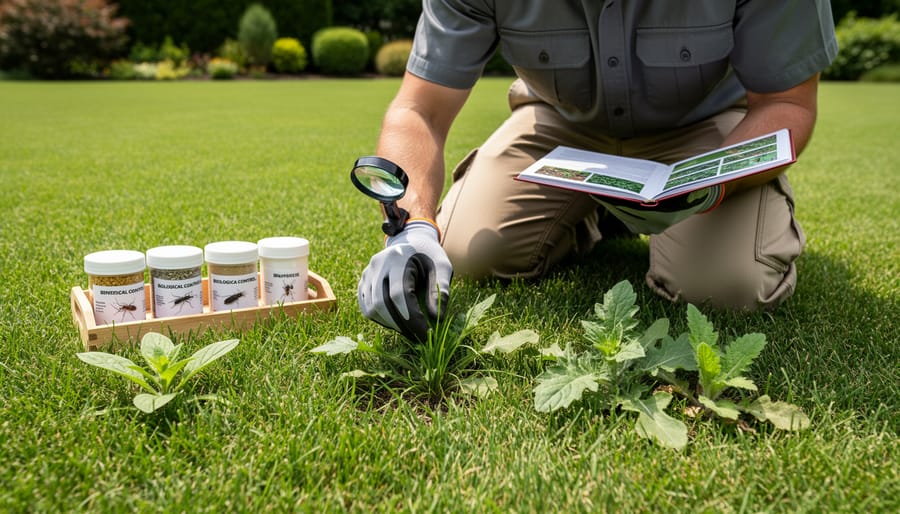
Starting with biological weed control doesn’t require a complete lawn overhaul, just a thoughtful, patient approach. Begin by identifying your specific weed problems with certainty. Accurate identification is crucial because most biological agents are highly species-specific. Snap clear photos of your weeds, consult extension service guides, or use reliable plant ID apps to confirm exactly what you’re fighting before purchasing any control agents.
Once you know your target weeds, source your biological controls from reputable suppliers. University extension offices often maintain lists of approved biocontrol agents and vetted commercial sources. Specialty biological control companies, conservation organizations, and some progressive garden centers stock these products, though availability varies by region. Always verify that agents are approved for use in your area and suited to your climate, what works in humid Florida may struggle in arid Colorado.
Timing your introduction matters significantly. Most insect agents establish best when released during their natural activity period and when target weeds are actively growing. This often aligns with spring weed control timing, though some agents perform better in fall. Follow supplier instructions precisely regarding release rates, application methods, and site preparation. For fungal or bacterial pathogens, apply during conditions that favor infection, typically warm, moist periods when weeds are vulnerable.
Integrate biological controls into your existing lawn care thoughtfully. Maintain proper mowing height, water deeply but infrequently, and ensure adequate fertility to keep your turfgrass competitive while the biocontrol agents establish. Avoid broad-spectrum pesticides that could harm your newly introduced allies. If you must treat other issues, use targeted products and create buffer zones around release areas.
Monitor your lawn regularly but resist the urge to judge results too quickly. Keep simple records: photograph treatment areas monthly, note weed density changes, and track biocontrol agent activity if visible. Most biological controls need one to three seasons to show meaningful suppression. You might see gradual thinning of weed patches rather than dramatic overnight disappearance.
Patience truly is your greatest asset here. Think in seasons rather than weeks, and remember that establishing a self-sustaining population of beneficial organisms creates ongoing control that intensifies over time, a far better outcome than the temporary knockdown chemical approaches provide.
What to Expect: Benefits and Limitations
The Sustainability Advantage
Biological weed control offers clear environmental wins that extend far beyond your lawn’s edge. Unlike synthetic herbicides that can leach into groundwater or wash into storm drains during heavy rain, biocontrol agents stay where you put them, targeting only the weeds they’re designed to suppress. This dramatically reduces your property’s chemical footprint and protects local watersheds.
For families with children and pets, the safety advantage is immediate. You won’t need to cordon off treated areas or worry about residue on paws and bare feet. Kids can play on the grass right after application, and curious pets face no toxic exposure.
The ecosystem benefits multiply over time. By preserving beneficial insects like pollinators and natural pest predators, biological control helps your lawn function as part of a healthy landscape rather than a chemical desert. Native insects thrive, birds find more food sources, and soil microbes remain undisturbed. You’re not just managing weeds, you’re actively supporting biodiversity while maintaining the turf you want.
Real-World Challenges to Consider
Finding biological control agents for lawn weeds can be frustrating. Unlike chemical herbicides sold at every garden center, biocontrol insects and pathogens have limited commercial availability. You’ll often need to order from specialized suppliers, and shipping live organisms comes with its own logistical headaches and higher costs upfront.
Climate plays a bigger role than most homeowners expect. Many biocontrol agents need specific temperature ranges and humidity levels to establish and reproduce. A beetle that thrives in Oregon might struggle in Arizona. Your region’s winters can wipe out populations that aren’t locally adapted, forcing you to reintroduce agents repeatedly.
Proper weed identification becomes critical because these organisms are specialists. Release the wrong agent, and you’ve wasted money on something that will ignore your actual problem. Misidentification is common with look-alike weeds.
The slowest part? Seeing results. While herbicides knock down weeds in days, biological control works on nature’s timeline. Expect weeks or months before populations decline noticeably. For homeowners accustomed to quick fixes, this patience requirement is the biggest adjustment.
Frequently Asked Questions
Is biological weed control safe for my children and pets?
Yes, biological control agents are specifically chosen because they target only the pest weeds and pose no threat to people, pets, or desirable plants. Unlike chemical herbicides, there’s no toxic residue to worry about on grass where kids play or dogs roll.
Can I still use my regular lawn fertilizers with biological controls?
Absolutely. Most biological control agents work independently of your fertilization routine. Just avoid applying broad-spectrum pesticides or fungicides that might harm the beneficial organisms you’ve introduced.
Where can I actually buy these biological control agents?
Availability varies by region and target weed. Some university extension services, specialty organic gardening suppliers, and biocontrol companies sell specific agents. Your best starting point is contacting your local extension office for recommendations on what’s available and appropriate for your area.
How long before I see results?
Expect to wait several weeks to months for noticeable weed reduction. Biological controls work through natural population dynamics, not instant kill, so patience is essential, but the payoff is sustained, long-term suppression without repeated applications.
Will biological control eliminate all my lawn weeds?
No single method eliminates all weeds completely. Biological control excels at managing specific problem species over time, but it works best as part of a broader strategy that includes proper mowing height, watering practices, and maintaining thick, healthy turf that naturally crowds out invaders.
Does biological weed control work in all climates?
It depends on the specific agent and target weed. Many biocontrol organisms have temperature and moisture requirements that limit their effectiveness in certain regions. Research options suited to your climate zone, or consult local experts who understand which agents thrive in your conditions.
These questions reflect the practical concerns most homeowners have when first considering biological control. The truth is, this approach requires a mindset shift. You’re not looking for the overnight transformation that a spray bottle promises. Instead, you’re investing in a system that balances naturally over time.
Cost is another common concern worth addressing directly. Biological control agents vary widely in price depending on the organism, the target weed, and the supplier. Some are surprisingly affordable, especially when you consider the long-term savings from not buying herbicides season after season. Others, particularly specialized insects or pathogens, can require a larger upfront investment. However, many establish permanent populations that continue working year after year without additional cost.
The compatibility question goes beyond just fertilizers. If you’re treating for grub worms or fungal diseases with chemical products, check whether those treatments might affect your biocontrol agents. The goal is building a holistic lawn care system where each component supports the others rather than working at cross purposes.
Remember that biological control shines brightest when you view your lawn as an ecosystem rather than a problem to be solved with a single product. It won’t replace every tool in your shed, but it can become one of the most reliable, safest, and most satisfying methods you use.
Biological weed control won’t give you instant results, but it offers something better: a lasting, eco-friendly solution that works with your lawn’s natural ecosystem rather than against it. By using insects, pathogens, and competitive plants to suppress weeds, you’re building a healthier, more resilient lawn that becomes easier to manage over time.
Think of biological control as one essential piece in your lawn care toolkit, not a magic bullet. It works best when combined with proper mowing height, adequate watering, smart fertilization, and dense turfgrass coverage. Together, these practices create conditions where desirable grasses thrive and weeds struggle to gain a foothold. You’re not just fighting weeds, you’re cultivating an environment where they can’t easily compete.
The beauty of this approach lies in its sustainability. Unlike chemical herbicides that require repeated applications and can harm beneficial organisms, biological controls establish themselves and continue working season after season. Your lawn becomes safer for kids, pets, and the pollinators that visit your garden. Runoff concerns disappear. And you’ve contributed to a healthier local ecosystem.
Yes, you’ll need patience. Biocontrol agents take weeks or months to show visible impact, and they won’t eliminate every weed overnight. But if you’re willing to shift your perspective from chemical quick-fixes to long-term lawn health, you’ll find biological control remarkably effective.
Whether you’re just starting your sustainable lawn journey or you’ve been gardening organically for years, adding biological weed control to your strategy makes sense. Start small, monitor your progress, and trust the process. Your lawn will thank you for it.