Grab a narrow weeding knife or crack weeder tool and run it along pavement seams at a 45-degree angle to sever taproots below the surface—this prevents regrowth that manual pulling can’t achieve. Pour boiling water directly onto crack weeds on sunny mornings when roots are most active, then sweep away dead plant material within 24 hours to stop seed dispersal into nearby lawn areas. Invest in a propane-powered weed torch for driveways and walkways, applying heat for just 2-3 seconds per weed to rupture cell walls without creating fire hazards or damaging surrounding concrete. Apply polymeric sand or crack sealant immediately after removing weeds to eliminate the growing space, creating a physical barrier that prevents new seeds from germinating while protecting your lawn’s perimeter.
These persistent intruders aren’t just unsightly—they’re launching pads for lawn invasion. Weeds thriving in pavement cracks produce thousands of seeds that wind and rain carry directly onto your carefully maintained grass, undermining months of fertilizing and mowing efforts. The right tools transform this frustrating chore into a manageable task that takes minutes rather than hours, and choosing between manual precision tools, heat-based solutions, or powered equipment depends on your specific situation: crack width, weed density, and proximity to desirable plants.
Whether you’re a weekend warrior tackling your first driveway cleanup or an experienced gardener refining your preventive maintenance routine, understanding which tools work best for different crack weed scenarios saves time, protects your back, and keeps your lawn healthy. The most effective approach combines immediate removal with long-term prevention, stopping the seed-to-lawn pipeline before it starts.
Why Crack Weeds Are Lawn Care’s Sneaky Problem
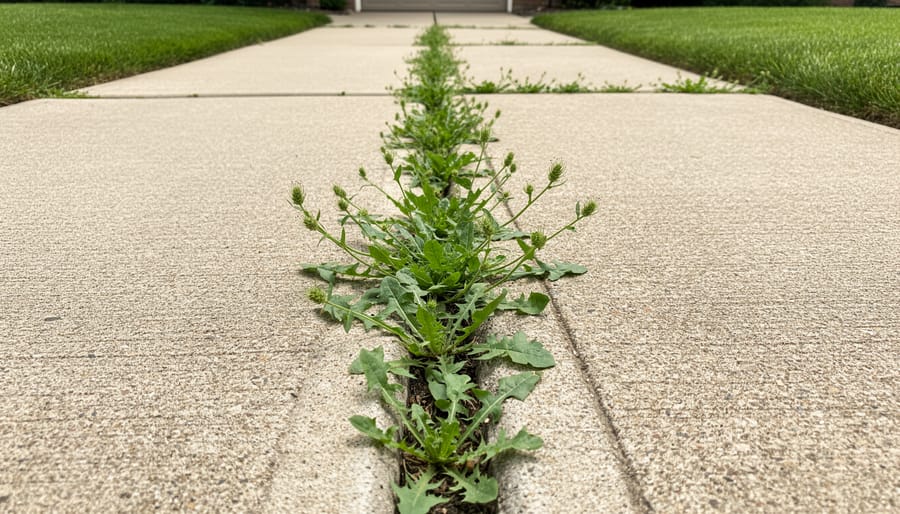
You know that stubborn dandelion growing in the crack between your driveway sections? It’s not just an eyesore—it’s a weed factory actively working against your lawn care efforts. Those seemingly harmless weeds tucked into pavement crevices, sidewalk gaps, and patio joints are actually strategic saboteurs, producing thousands of seeds that drift straight onto your carefully maintained turf.
Here’s what makes crack weeds such a sneaky problem: they’re protected fortresses. While you’re diligently pulling dandelions from your lawn and applying pre-emergent treatments to your grass, those crack dwellers sit safely beyond your usual lawn care routine. They mature undisturbed, flower freely, and release seeds that travel surprising distances on the breeze. A single dandelion can produce up to 2,000 seeds, and crack-dwelling varieties often produce even more because they face less competition for resources.
This creates a frustrating cycle that explains why weeds keep returning to your lawn despite your best efforts. You might spend hours spot-treating lawn weeds, only to have crack weeds reseed your turf within days. It’s like bailing water from a boat without plugging the leak.
The connection to lawn health goes deeper than just seed spread. Crack weeds often include aggressive species like crabgrass, purslane, and oxalis—the same troublemakers you’re fighting in your lawn. When you leave them unchecked in cracks, you’re essentially maintaining a breeding ground for weeds hiding in your lawn.
That’s why comprehensive lawn care forecasting must include crack management. If you’re planning seasonal weed prevention strategies, your hardscapes deserve equal attention to your grass. The good news? With the right tools and a sustainable approach, you can break this cycle and protect your lawn from these persistent invaders. Addressing crack weeds isn’t extra work—it’s essential prevention that saves you time and effort in the long run.
Manual Tools: Your First Line of Defense
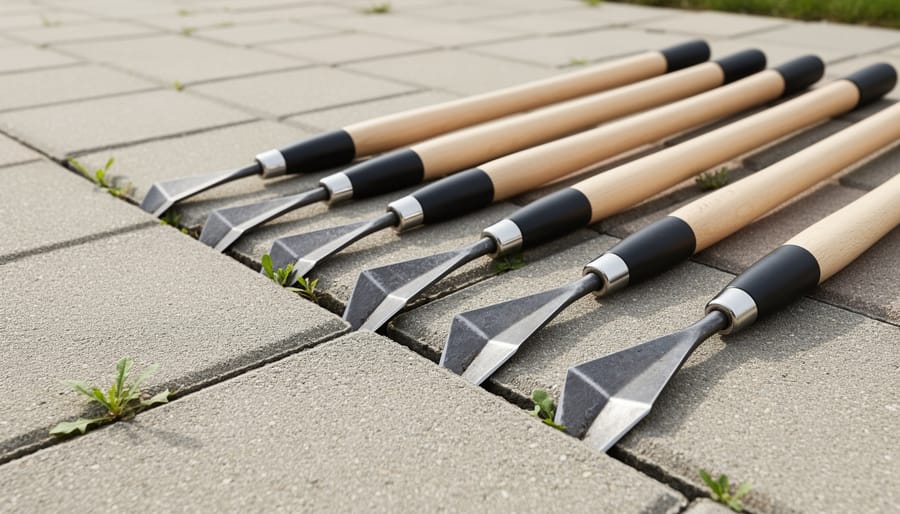
Crack Weeders and Long-Handled Scrapers
When it comes to tackling those stubborn weeds sprouting between paving stones and driveway cracks, specialized crack weeding tools are absolute game-changers. I’ve battled my fair share of crack weeds over the years, and let me tell you, having the right tool makes all the difference between a frustrating afternoon and a satisfying garden session.
Angled blade weeders are my go-to for precision work. These clever tools feature a sharpened blade set at an angle, allowing you to slice through weed roots while working at a comfortable standing position. The Fiskars Crack Weeder is a standout option, with its V-shaped blade that fits perfectly into narrow spaces. I particularly appreciate how it gets under the weed crown to ensure complete removal, preventing quick regrowth.
L-shaped scrapers excel when you’re dealing with multiple cracks in quick succession. Their perpendicular blade design lets you push or pull along crack lines, clearing out both weeds and accumulated debris. The Corona HL 4200 L-Shaped Crack Weeder features a sturdy steel blade that handles tough root systems without bending, plus its 54-inch handle saves your back during extended weeding sessions.
For those tight spaces where traditional tools struggle, consider the Cobrahead Long Handle Weeder and Cultivator. Its curved blade mimics a hand weeding motion but extends your reach significantly. This tool is particularly useful for removing weeds between deck boards or along fence lines.
Use angled blades for individual spot-weeding, L-shaped scrapers for clearing longer crack sections, and long-handled options whenever you’re covering substantial areas. The sustainability bonus? These durable metal tools last decades, eliminating the need for harsh chemicals while giving you excellent control over exactly which plants you remove.
Wire Brushes and Stiff Brooms
Wire brushes and stiff brooms are wonderfully simple yet effective tools for tackling weeds in cracks, and I’ve found them particularly useful for regular maintenance between more intensive weeding sessions. These tools work by loosening soil, debris, and shallow-rooted weeds from crack crevices, making removal much easier.
A quality wire brush with sturdy bristles can dig into narrow cracks where other tools struggle to reach. The key is using a firm scrubbing motion along the crack, which breaks up compacted soil and dislodges weed roots. I like to work systematically, brushing in one direction first, then sweeping away the loosened debris immediately. This prevents you from accidentally spreading weed seeds to other areas of your pavement or nearby lawn.
Stiff-bristled brooms serve a dual purpose. After using your wire brush or weeding knife, a good stiff broom sweeps away all the loosened material effectively. Choose a broom with synthetic or metal bristles rather than soft natural fibers, as these have the strength to really get into those crevices.
Here’s a pro tip from years of crack weeding: always sweep debris onto a tarp or directly into a bucket rather than just brushing it aside. Many weeds drop seeds as you work, and sweeping them into your lawn creates future problems. Dispose of this material in your trash rather than compost, especially if you’ve spotted seed heads. This sustainable approach prevents the spread of invasive species while keeping your outdoor spaces looking pristine.
For best results, use these tools on a dry day when weeds pull away more easily from loosened soil.
Patio Knives and V-Notch Tools
When it comes to tackling weeds in those impossibly tight cracks between pavers or along driveways, patio knives and V-notch tools are your best friends. These precision instruments are designed specifically for the narrow spaces where regular weeding tools just can’t reach effectively.
A quality patio knife features a long, narrow blade that slides easily into tight crevices, allowing you to cut beneath the weed’s crown and sever the root system. Look for models with comfortable grips and stainless steel blades that resist rust, especially if you’ll be working in damp conditions. The blade should be sturdy enough to handle rocky soil but thin enough to navigate narrow gaps.
V-notch tools, sometimes called crack weeders, have a distinctive V-shaped blade at the end that hooks around stubborn roots. This design gives you excellent leverage for prying out deep-rooted weeds like dandelions that love to establish themselves in pavement cracks. The notch grabs onto roots rather than just pushing them aside, which is crucial for preventing regrowth.
For best results, use these tools when the soil is slightly moist, making roots easier to extract completely. Work the blade deep enough to get below the root crown, not just the visible growth. I’ve found that taking an extra moment to ensure complete root removal saves countless hours of dealing with the same weeds returning weeks later. These tools are sustainable, require no chemicals, and when used properly, they prevent weeds from migrating into your lawn areas.
Heat-Based Tools: The Eco-Friendly Power Option
Propane Weed Torches
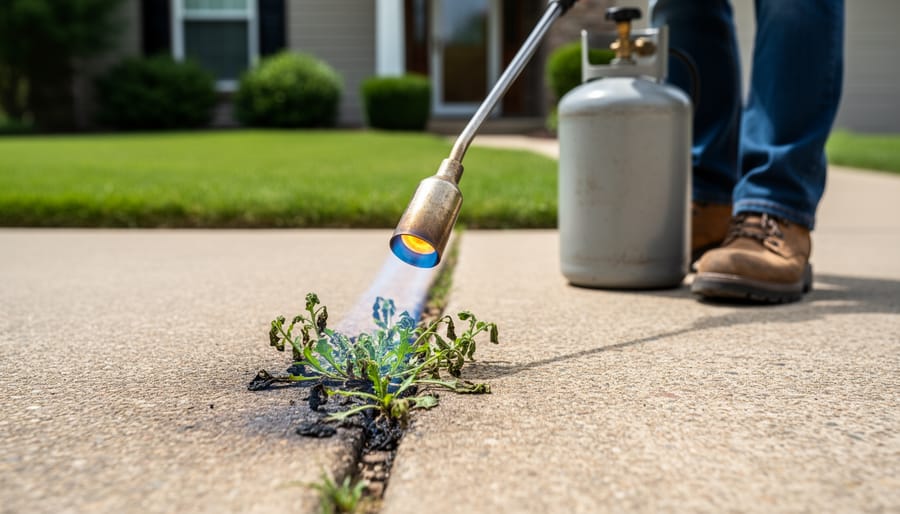
If you’re looking for a chemical-free solution that delivers instant results, propane weed torches might become your new favorite tool. These flame weeders work by applying intense heat directly to unwanted plants, causing their cell walls to rupture and moisture to evaporate. Within hours, those stubborn crack weeds will wilt and die without leaving any harmful residues behind.
The beauty of flame weeding is its simplicity. Most propane torches connect to standard propane tanks and feature extended wands that let you target weeds without bending over. I’ve found them particularly satisfying for clearing driveways and patios before family gatherings – there’s something immediately gratifying about watching those pesky weeds shrivel up on contact.
Safety should always come first when working with open flames. Keep a water source nearby, avoid using torches on windy days, and never apply flame near wooden structures or dry vegetation. Work systematically in sections, holding the flame over each weed for just 2-3 seconds. You’re not trying to incinerate the plant, just heat it enough to damage its cellular structure.
From an environmental perspective, propane torches offer significant advantages over chemical herbicides. They produce no toxic runoff that could contaminate groundwater or harm beneficial insects. They’re also perfect for organic gardeners who want to maintain certification or simply prefer sustainable practices.
The main limitation is efficiency on larger areas – flame weeding works best for targeted spot treatments rather than extensive weed coverage. Propane torches are also less effective on deep-rooted perennial weeds, which may require multiple treatments. For crack weeds specifically though, where root systems are typically shallow and confined, flame weeding delivers excellent results while keeping your lawn care routine completely chemical-free.
Electric Heat Weeders and Steam Cleaners
If you’re looking for a more modern, eco-friendly approach to crack weeding, electric heat weeders and steam cleaners offer compelling alternatives to chemical herbicides. These tools harness the power of extreme temperatures to essentially cook weeds from the outside in, causing cell walls to rupture and plants to wither within hours.
Electric infrared weeders work by directing concentrated heat at targeted weeds, typically reaching temperatures between 1000-2000°F. The beauty of these devices is their precision—you’re not burning the weed so much as shocking its cellular structure beyond recovery. I’ve found that a quick two to three second pass over each weed does the trick, making them surprisingly efficient once you get the hang of it. Most residential models cost between $50-150 and are lightweight enough for extended use without arm fatigue.
Steam-based weeders take a gentler but equally effective approach, using superheated water vapor to penetrate deep into plant tissues and soil. These systems heat water to around 240-260°F and deliver it through a wand or nozzle directly onto weeds. The steam not only kills the visible plant but also penetrates cracks to affect root systems below. While steam units tend to be pricier—ranging from $200-500 for quality residential models—they offer the added bonus of sanitizing surfaces, making them popular for folks managing weeds on patios and walkways near outdoor dining areas.
Both options shine in terms of sustainability since they eliminate chemical runoff concerns entirely. The tradeoff? They require electricity access and work best on smaller infestations. For extensive crack weed problems, you’ll need patience and multiple treatments to exhaust root reserves, but the environmental peace of mind makes them worthwhile investments for conscientious gardeners.
Power Tools for Larger Areas
String Trimmers with Edging Attachments
String trimmers aren’t just for lawn edges anymore. With the right edging attachment, these versatile tools become incredibly effective at tackling stubborn crack weeds without the backbreaking effort of hand weeding. I’ll admit, I was skeptical at first, but after clearing a particularly weed-infested driveway in about twenty minutes, I became a true believer.
The key is choosing the right attachment for your string trimmer. Look for narrow edging wheels or guards specifically designed for precision work. These attachments guide your trimmer along crack lines, keeping the cutting string at the perfect angle while preventing damage to surrounding concrete or pavers. Many trimmers come with adjustable heads that let you rotate the cutting angle, which is essential for getting into those tight spaces where weeds love to hide.
For best results, hold the trimmer at a slight angle and move slowly along the crack, allowing the string to work through the weeds rather than forcing it. This technique gives you cleaner cuts and prevents the string from breaking constantly. Battery-powered models work beautifully for this task since you won’t wrestle with cords around driveways and walkways.
One sustainable bonus: string trimmers mulch weeds as they cut, which means less debris to dispose of. Just make sure you’re catching weeds before they’ve gone to seed, otherwise you’ll be spreading future problems across your lawn. This proactive approach fits perfectly into a forecasting mindset, where preventing weed spread today means less work tomorrow. String trimmers excel at regular maintenance passes, making them ideal for gardeners who prefer staying ahead of weed problems rather than constantly playing catch-up.
Pressure Washers and Surface Cleaners
If you’re looking for a powerful, chemical-free solution to blast weeds right out of those stubborn cracks, a pressure washer might be your new best friend. There’s something deeply satisfying about watching those persistent dandelions disappear in seconds under a strong jet of water, and as a bonus, you’re using nothing but good old H2O.
For weed removal, you don’t need a commercial-grade beast. A pressure washer with 1,500 to 2,000 PSI works perfectly for most residential applications. Anything higher risks damaging softer surfaces like older concrete or brick pavers. I learned this the hard way when I got overly enthusiastic with a 3,000 PSI unit and ended up etching my driveway – not my finest moment!
Nozzle selection makes all the difference. The 15-degree yellow nozzle offers concentrated power ideal for dislodging weed roots from deep cracks, while the 25-degree green nozzle provides gentler coverage for delicate areas. Avoid the red zero-degree nozzle unless you enjoy replacing your pavement – it’s simply too aggressive for most surfaces.
Surface cleaners, those round attachments that look like hovering discs, are fantastic for covering larger areas efficiently. They contain the spray pattern and prevent that annoying splatter that sends dirt and debris flying everywhere. Just remember to work systematically, allowing the high-pressure water to penetrate deep into cracks where weed roots hide. For best results, follow up with a stiff brush to clear loosened debris, then consider applying a preventive treatment to discourage regrowth.
Preventive Tools and Barriers
Polymeric Sand and Crack Fillers
Once you’ve removed weeds from cracks, preventing their return becomes your next mission. This is where polymeric sand and crack fillers shine as your long-term defense strategy.
Polymeric sand has become a game-changer for patio pavers and walkways. Unlike regular sand, it contains polymer additives that bind together when activated with water, creating a solid barrier that weeds struggle to penetrate. Popular brands like Alliance Gator and Techniseal offer excellent options that withstand weather and foot traffic. Application is straightforward: sweep the sand into clean, dry cracks, ensuring they’re filled completely, then mist with water to activate the binding process. The key is using a proper polymeric sand applicator brush with stiff bristles to work the material deep into joints without scratching your pavement.
For driveway cracks and larger gaps, consider flexible crack fillers like rubberized sealants or specialized asphalt crack filler. These products not only block weed growth but also prevent water infiltration that can worsen damage and create future weed havens. Look for eco-friendly formulations without harsh chemicals that might leach into your lawn.
Application tools matter here. A standard caulking gun works for smaller jobs, while pour pots with extended spouts give you better control for longer cracks. For substantial driveway projects, invest in a crack filler applicator with a v-shaped pour spout.
Pro tip: tackle this preventive maintenance in late spring or early fall when temperatures are moderate. This timing ensures proper curing and sets you up for a weed-free season ahead.

Sealants and Application Equipment
Once you’ve tackled existing weeds, preventing their return is the smart, sustainable approach. Sealing cracks in driveways, patios, and walkways cuts off the very spaces where weeds establish themselves, saving you repeated removal efforts down the road.
For asphalt surfaces, rubberized asphalt crack fillers work wonderfully. These flexible sealants expand and contract with temperature changes, preventing new cracks from forming while blocking weed seeds. Concrete surfaces benefit from polyurethane or silicone-based sealants that bond securely and withstand weathering. I’ve found that taking an afternoon to seal cracks can give you years of weed-free pavement.
Application equipment ranges from simple to sophisticated. For small jobs, a standard caulking gun paired with crack sealant tubes gets the job done efficiently. These cost around ten to fifteen dollars and work perfectly for homeowners tackling modest areas. For larger projects, pour pots with spouts allow you to heat and apply liquid sealant smoothly into wider cracks. These typically run thirty to fifty dollars but make quick work of extensive damage.
Before applying any sealant, thoroughly clean cracks using a wire brush or pressure washer to ensure proper adhesion. This preventive maintenance protects both your pavement and your lawn from invasive weeds.
Building Your Crack Weed Management Kit
Creating an effective crack weed management kit doesn’t require breaking the bank, but it does need some thoughtful planning based on your specific situation. Let me walk you through building the right toolkit for your needs.
For small properties with minimal crack weed problems, start with a basic beginner kit. You’ll need a quality V-notch weeding knife (around $15-25), a sturdy hand-held wire brush for loosening soil ($8-12), and a spray bottle for vinegar-based solutions ($5). This modest investment of about $30-45 handles most occasional crack weeding tasks beautifully. Add a pair of knee pads ($15-20) if you’ll be working on larger driveways, and you’re set.
Medium-sized properties or those facing moderate weed invasion benefit from an intermediate kit. Consider upgrading to a long-handled crack weeder with a foot pedal (around $40-60) to save your back, a propane torch weeder ($25-35), and a specialized crack cleaning tool ($20-30). This setup runs approximately $85-125 but dramatically reduces physical strain while improving efficiency. Many gardeners find this sweet spot balances cost with capability perfectly.
For large properties or severe infestations, an advanced kit makes sense. Invest in a heavy-duty wheeled crack weeder ($150-250), an electric string trimmer with edging capabilities ($80-150), and a pressure washer attachment designed for crack cleaning ($30-50). While this represents a $260-450 investment, the time savings and thoroughness justify the cost when you’re managing extensive paved areas.
Don’t forget maintenance essentials regardless of your kit level. Keep replacement brush heads, spare fuel canisters for torch weeders, and protective gloves on hand. A small bucket for collecting debris keeps your work area tidy and prevents redistributing weed seeds.
Remember, building your kit over time works perfectly fine. Start with manual tools and add powered options as your budget allows and your needs become clearer through experience.
When to Use Each Tool: A Seasonal Forecasting Approach
Timing your crack weed attacks makes all the difference between easy maintenance and an overwhelming battle. Just like you wouldn’t mow in January or fertilize in August, choosing the right tool for each season maximizes your effectiveness while minimizing effort.
Early spring is your golden opportunity for prevention. Before those crack weeds establish deep roots, a quick pass with a crack weeding tool or narrow hoe eliminates seedlings effortlessly. This is when spring weed prevention pays the biggest dividends. Invest twenty minutes in March, and you’ll save hours throughout summer. The soil is often moist from snow melt, making roots easier to extract completely.
Late spring through early summer shifts your strategy to more aggressive intervention. Weeds are actively growing, and manual tools become your workout routine. This is prime time for propane torches on sunny, dry days when fire risk is low and weeds are most vulnerable to heat stress. For stubborn perennial weeds developing deep taproots, powered rotary brushes work best now before roots become woody and impossible to budge.
Mid-summer brings its own challenges. Heat makes manual weeding uncomfortable, but also makes thermal tools incredibly effective. Early morning sessions with your crack scraper, before temperatures soar, keep you comfortable while catching weeds before they set seed. Avoid using vinegar-based solutions during peak heat, as they can volatilize and lose effectiveness.
Fall deserves attention too, even as your lawn slows down. A thorough crack cleaning now prevents overwintering weed seeds and roots from causing spring headaches. This fits perfectly into a comprehensive season-by-season battle plan for total lawn health.
Winter maintenance is minimal but valuable. During mild days, spot-treat any stubborn winter annuals before they spread. Your crack tools require only basic cleaning and storage, ready for spring’s inevitable challenges. This cyclical approach transforms crack weed management from reactive frustration into proactive lawn protection.
Tackling those stubborn weeds growing in cracks isn’t just about aesthetics—it’s a vital part of protecting your lawn’s overall health. Those seemingly harmless weeds lurking in sidewalk crevices and driveway gaps are actually seed factories, constantly threatening to invade your carefully tended grass. By making crack weed control part of your comprehensive lawn care routine, you’re essentially creating an early warning system that prevents problems before they take root in your lawn.
The best news? You don’t need to invest in expensive equipment to get started. A simple hoe, stand-up weeder, or even a sturdy screwdriver can make an immediate difference. The key is consistency rather than complexity. Spending just 15 minutes each week removing crack weeds dramatically reduces the weed pressure on your entire property.
Think of it as preventive medicine for your lawn. Regular maintenance means fewer weeds germinating, less competition for water and nutrients, and ultimately, a healthier, more vibrant lawn that naturally resists pest and weed invasions. Plus, by choosing manual or heat-based tools over chemical solutions, you’re making an environmentally conscious choice that benefits your family, pets, and local ecosystem.
So grab a tool, head outside, and start reclaiming those cracks. Your future self—and your lawn—will thank you for establishing this simple but powerful habit today.