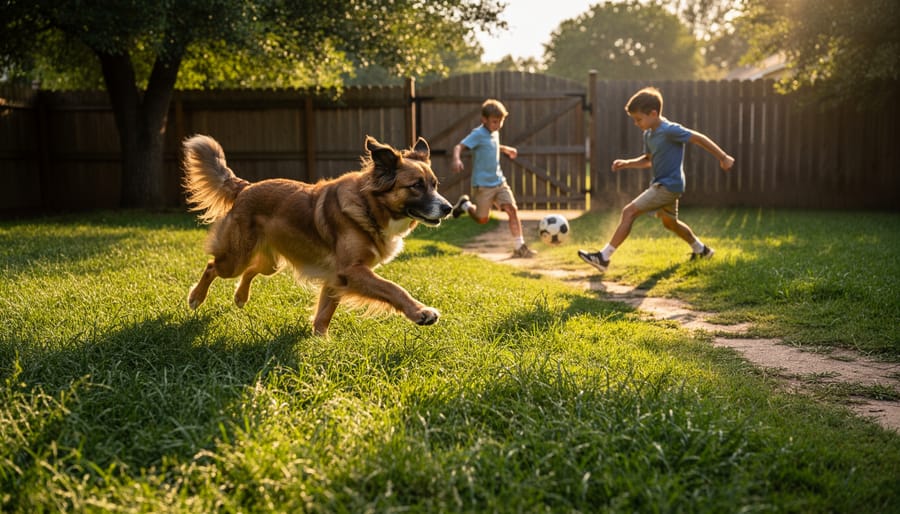
Choose perennial ryegrass or tall fescue varieties specifically bred for durability—these establish quickly, tolerate heavy foot and paw traffic, and repair themselves through tillering rather than spreading, which means fewer bare patches where dogs repeatedly run. Look for cultivar names including “traffic,” “sport,” or “play” in their description, as these indicate breeding programs focused on wear tolerance rather than ornamental appearance.
Overseed high-traffic zones twice annually in early fall and mid-spring when soil temperatures reach 50-65°F, applying seed at 1.5 times the recommended rate in pathways, entry points, and favorite digging spots. This aggressive overseeding approach compensates for the constant damage dogs inflict and ensures your lawn maintains density even under pressure.
Select grass types for dogs based on your specific climate zone and dog size—large breeds running at speed require different grass characteristics than small dogs who primarily impact lawns through urine spots and digging. Cool-season grasses work best in northern climates where summer heat stress won’t compound the physical damage, while warm-season varieties like Bermudagrass thrive in southern regions and recover remarkably fast from wear.
Test your soil pH before planting, targeting 6.0-7.0 for optimal grass establishment, and incorporate compost to improve soil structure in compacted areas where dogs congregate. Compacted soil prevents root development and makes grass vulnerable to being torn out by running paws, so addressing this foundational issue determines whether your new grass seed investment succeeds or fails.
The reality facing dog owners is straightforward: standard lawn seed mixtures cannot withstand the concentrated, repetitive stress that pets create. Understanding which grass varieties possess genuine durability, how to plant them strategically, and what maintenance practices support their survival transforms frustrating bare spots into a resilient lawn that accommodates both your family’s outdoor activities and your desire for attractive landscaping.
Why Your Current Lawn Can’t Handle the Pressure

What Dogs Actually Do to Your Grass
Let’s be honest—our four-legged friends can be tough on lawns, but understanding exactly how helps us choose the right solutions. The most visible damage comes from dog urine, which contains high concentrations of nitrogen. While nitrogen fertilizes grass in small amounts, concentrated urine essentially “burns” the lawn, creating those telltale brown spots surrounded by darker green rings where diluted nitrogen actually promotes growth. Female dogs and larger breeds typically cause more noticeable damage because they release larger volumes in one spot.
Beyond chemical burns, there’s the physical wear and tear. Dogs create established pathways through repetitive running patterns, compacting soil and wearing away grass in high-traffic zones like along fence lines or near doors. Their enthusiastic digging—whether chasing critters, creating cool spots to rest, or just burning energy—tears up roots and displaces soil. Even regular play sessions compress the ground beneath paws, reducing oxygen flow to grass roots and making it harder for typical turf varieties to recover.
The good news? Understanding these specific challenges means we can select grass varieties bred to handle nitrogen fluctuations, recover quickly from physical damage, and thrive despite soil compaction—which is exactly what high-traffic grass seed delivers.
The Hidden Damage of Foot Traffic
When your dog races across the lawn for the twentieth time today, something invisible but damaging is happening beneath the surface. Soil compaction is the silent enemy in high-traffic areas. Each paw print, each game of fetch, gradually presses soil particles closer together, squeezing out precious air pockets that grass roots desperately need. Think of it like pressing a sponge flat – eventually, water and nutrients can’t penetrate properly, and roots suffocate in the dense earth.
Beyond compaction, there’s the physical beating grass plants endure. The crown of each grass plant, that critical growing point just above the soil surface, takes constant abuse from paws and feet. When crowns get damaged repeatedly, plants struggle to produce new growth, leading to those familiar bare patches that seem to expand no matter what you try.
Here’s the real challenge: grass needs recovery time to repair this damage. In moderate-traffic areas, plants can bounce back between uses. But in true high-traffic zones where dogs play daily, there’s simply no break. This is why choosing grass varieties specifically bred for durability isn’t just helpful – it’s essential for long-term success.
What Makes a Grass Seed Dog-Proof and Traffic-Tough
The Four Non-Negotiable Traits
When choosing grass seed that can handle the daily marathon of paws, playtime, and foot traffic, four essential traits separate the champions from the also-rans. Let me walk you through what really matters.
First up is wear tolerance, and this is absolutely non-negotiable. The best high-traffic grass varieties bounce back quickly after being compressed by running dogs or active kids. Think of it like a memory foam mattress for your lawn. Perennial ryegrass and tall fescue excel here because their blade structure recovers rapidly from being trampled, whereas delicate Kentucky bluegrass alone might struggle without blending.
Fast germination and establishment come next, and here’s why this matters so much: the quicker your grass fills in, the less opportunity weeds have to invade those bare patches your dog creates. Perennial ryegrass typically sprouts within 5-7 days, giving you visible results quickly and keeping your motivation high during the repair process.
Deep root development is your lawn’s secret weapon against drought stress and heavy use. Tall fescue can send roots down 2-3 feet deep, accessing water and nutrients that shallow-rooted grasses miss entirely. This means less watering and a more resilient lawn that withstands both summer heat and constant activity.
Finally, resistance to disease and pests protects your investment. Dog urine already stresses grass, so choosing varieties with natural fungal resistance and pest tolerance means you’re working smarter, not harder. This sustainable approach reduces the need for chemical treatments while keeping your lawn healthy and safe for everyone.
Understanding Grass Blade Texture and Density
When you’re choosing grass for areas where your pups love to play, the physical structure of the grass blades themselves makes a huge difference in how well your lawn holds up. Think of it this way: wider blades are like having a thicker carpet compared to delicate threads. They’re naturally more resilient under paw traffic and bounce back better after your dogs have had their zoomies session.
Grass varieties with fine, narrow blades might look elegant, but they tend to tear and bruise more easily when dogs repeatedly run across them. In contrast, medium to wide-bladed grasses like tall fescue and perennial ryegrass have the physical strength to withstand the pressure without showing as much wear. These tougher blades don’t just survive the impact—they actually maintain their upright structure better, which means fewer bare patches and less matting.
Density is equally important, and here’s where things get really interesting for dog owners. Dense growth patterns create a natural cushioning effect that distributes the impact of your dog’s weight across more individual plants. When grass grows in thick, the roots interweave into a strong underground network that holds the soil together and resists compaction—a common problem in high-traffic dog areas.
The best high-traffic grass seeds produce plants that naturally grow close together, filling in gaps quickly. This density also provides a built-in recovery mechanism. If a few blades get damaged, the surrounding grass can spread laterally to fill those spots, keeping your lawn looking consistently green and lush despite daily doggy adventures.
The Best High-Traffic Grass Varieties for Dog Owners
Perennial Ryegrass: The Fast-Recovering Workhorse
If you’re looking for the fastest way to get your lawn back in action after your pups have been playing hard, perennial ryegrass deserves serious consideration. This grass is the sprinter of the lawn world, germinating in just 5-7 days under ideal conditions—meaning you’ll see results quickly when repairing those worn patches.
What makes perennial ryegrass particularly excellent for dog owners is its remarkable ability to bounce back from trampling and recover from wear. The grass has naturally strong, flexible blades that resist tearing and crushing, which is exactly what you need when Fido is making his daily rounds. It establishes a dense turf that can handle repeated foot traffic, both canine and human.
For high-traffic areas, look for improved cultivars like Zoom, Revenge GLX, or Fiesta 4. These newer varieties have been specifically bred for better disease resistance and improved durability compared to older ryegrass types. They maintain their rich green color even under stress and require less frequent overseeding.
The downside? Perennial ryegrass isn’t the most drought-tolerant option and performs best in cooler climates. It also needs regular watering and fertilization to maintain its vigor. Consider it your go-to companion grass in blends rather than a solo performer, where it provides quick establishment while more permanent grasses fill in around it.

Tall Fescue: The Deep-Rooted Survivor
If you’re looking for a grass that can truly stand up to your pup’s favorite digging spots and racing routes, tall fescue deserves serious consideration. This variety has become my go-to recommendation for dog owners who’ve watched other grasses surrender to four-legged traffic.
What makes tall fescue such a survivor? It all comes down to those impressive roots. While many grasses develop shallow root systems that barely scratch the surface, tall fescue sends roots deep into the soil—sometimes reaching 2 to 3 feet down. This deep root system does double duty: it helps the grass bounce back quickly from wear and tear, and it makes tall fescue remarkably drought-resistant, reducing your watering needs during dry spells.
The wear tolerance of tall fescue is genuinely impressive. Those thick, sturdy blades can handle repeated trampling without turning into a muddy mess. For sustainable lawn care, this means fewer reseeding projects and less maintenance overall.
When selecting cultivars, look for newer varieties like Titanium, Rebel, or Falcon. These have been specifically bred for improved density and resilience. They establish quickly, which means your lawn recovers faster from those inevitable bare patches your dog creates.
Kentucky Bluegrass: The Self-Repairing Champion
If you’ve ever watched your lawn bounce back from wear and tear like magic, Kentucky bluegrass might be doing the heavy lifting behind the scenes. This grass variety has earned its reputation as a self-repairing champion, thanks to its unique underground network of stems called rhizomes.
Think of rhizomes as nature’s lawn repair crew. These horizontal stems spread beneath the soil surface, constantly sending up new grass shoots to fill in bare spots and damaged areas. When your dog creates a well-worn path to their favorite sunny spot or enthusiastically digs in the yard, Kentucky bluegrass responds by naturally knitting itself back together. This built-in recovery system means you’ll spend less time reseeding and more time enjoying your outdoor space.
The rhizomatous growth pattern makes Kentucky bluegrass particularly valuable for dog owners dealing with concentrated traffic patterns. While individual grass blades might get trampled or damaged, the underground rhizome network remains protected and ready to generate fresh growth. This resilience translates to a more sustainable lawn care approach, as you’re relying on the grass’s natural abilities rather than constant interventions.
For best results, Kentucky bluegrass thrives in cooler climates and performs exceptionally well when given adequate sunlight and consistent moisture. Pairing it with proper soil preparation and regular maintenance creates a durable, attractive lawn that works with your lifestyle rather than against it.
Fine Fescues: The Shade and Low-Maintenance Option
While fine fescues aren’t your top choice for areas where your dogs race around daily, they deserve consideration for those quieter, shaded corners of your yard. If you have a side yard or back area under trees where your pups occasionally wander but don’t actively play, fine fescues can be a practical, low-maintenance solution.
These grasses excel where others struggle, particularly in dry shade where even watering is a challenge. Their fine texture creates an attractive lawn appearance, and they require minimal mowing and fertilization, making them wonderfully sustainable. For dog owners, this means less work maintaining areas that see occasional paw traffic rather than constant activity.
Consider mixing fine fescue with more durable shade-tolerant varieties like shade-adapted tall fescue in transition zones between high-traffic play areas and truly shaded rest spots. This creates a natural gradient that maximizes both durability and coverage throughout your yard while keeping maintenance requirements reasonable.
Grass Seed Blends: Why Mixing Varieties Wins
Here’s the thing about grass seed blends: they’re like having a backup plan built right into your lawn. Rather than betting everything on a single variety, quality blends combine three to five complementary grasses that work together brilliantly. If disease strikes one type, the others fill in. When summer heat stresses one variety, another thrives. This diversity creates a resilient, self-healing lawn that bounces back from your dog’s zoomies and family barbecues. Blends also ensure consistent green coverage throughout the seasons, as different grasses peak at different times. For high-traffic, pet-friendly lawns, this teamwork approach means fewer bare patches and less reseeding down the road.
Climate Matters: Matching Grass to Your Region
Cool-Season Zones: Northern and Transition Areas
If you’re living in the northern states or transition zones where winters bite and summers can still get toasty, you’ll want to focus on cool-season grasses that laugh in the face of dog traffic. These champions thrive in cooler temperatures and bounce back beautifully from the paw-pounding they’ll receive.
Perennial ryegrass is my top pick for northern dog owners. It germinates incredibly fast, often within a week, which means less time staring at muddy patches and more time enjoying your lawn. It handles heavy traffic like a champ and repairs itself quickly when damaged. The fine texture is pleasant under both paws and bare feet.
Tall fescue varieties, particularly the turf-type cultivars, are another excellent choice. Their deep root systems make them drought-tolerant and incredibly resilient. Once established, they create a dense carpet that withstands even the most enthusiastic zoomies. They’re also naturally disease-resistant, reducing the need for chemical treatments.
For the best results in high-traffic dog areas, consider a blend combining perennial ryegrass and turf-type tall fescue. This gives you the quick establishment of ryegrass with the long-term durability of fescue. Kentucky bluegrass can be added to the mix for its self-repair capabilities, though it does require more water and maintenance than the other two.
Warm-Season Zones: Southern Selections
If you’re gardening in the South or any region with hot summers, warm-season grasses are your best friends when it comes to handling both scorching heat and energetic pups. These varieties actually thrive in temperatures that would leave cool-season grasses struggling, making them perfect for zones 7 through 10.
Bermuda grass tops the list for southern lawns with dogs. This powerhouse grass spreads aggressively through both stolons and rhizomes, meaning it fills in those bare patches from digging and running remarkably fast. It’s incredibly drought-tolerant once established, which aligns beautifully with sustainable lawn care practices by reducing your watering needs. The key is providing full sun—Bermuda needs at least 6 hours daily to perform its best.
Zoysia grass offers a different advantage: its dense growth pattern creates a thick, cushiony lawn that naturally resists weeds and wear. While it establishes more slowly than Bermuda, this patience pays off with a carpet-like texture that recovers well from pet traffic. Zoysia also tolerates partial shade better than Bermuda, making it versatile for yards with tree coverage.
For budget-conscious gardeners, Bahia grass deserves consideration. Though less refined in appearance, it’s incredibly tough, requires minimal fertilization, and handles both drought and sandy soils exceptionally well. It’s a workhorse grass that won’t demand constant attention while still standing up to your four-legged family members.
Seeding for Success: How to Plant for Maximum Durability
Soil Preparation That Actually Works
Let’s face it—even the toughest grass seed won’t thrive if your soil is compacted like a sidewalk. Dogs create serious compaction issues, and soil preparation is your first line of defense.
Start with core aeration, which pulls out plugs of soil rather than just poking holes. This allows oxygen, water, and nutrients to penetrate deep into the root zone. For high-traffic dog areas, aerate twice yearly—once in spring and again in fall. Those ugly soil plugs sitting on your lawn? Leave them. They’ll break down and add beneficial organic matter back into the soil.
Next, address compaction with a quality topdressing. Mix equal parts compost and coarse sand, spreading a half-inch layer over aerated areas. This combination improves drainage while adding nutrients—a win-win for grass stressed by constant paw traffic.
For severely compacted zones where your dog habitually runs, consider loosening the top 4-6 inches with a garden fork before seeding. Yes, it’s manual labor, but this one-time effort creates the foundation for years of healthy growth. Remember, sustainable lawn care means working with nature, not fighting it.

Overseeding Rates and Timing
Timing makes all the difference when overseeding high-traffic areas frequented by dogs. The sweet spot for cool-season grasses is early fall, when soil temperatures hover between 50-65°F and there’s less competition from weeds. Spring works too, though you’ll battle crabgrass and other warm-weather invaders. For warm-season varieties, late spring through early summer gives seedlings the heat they need to establish strong roots before winter.
As for rates, don’t skimp in dog-prone zones. While new lawns typically need 5-8 pounds per 1,000 square feet, overseeding worn patches requires 3-5 pounds for that same area. I’ve found that going slightly heavier in the most trampled spots gives you insurance against patchy results. Think of it as investing upfront rather than reseeding multiple times. Keep the soil consistently moist for those critical first two weeks, watering lightly twice daily if needed. Once you see green sprouts emerging, you’re on your way to a resilient, dog-friendly lawn that can handle whatever paws throw at it.
The Critical First Six Weeks
Your newly seeded lawn needs consistent attention during these crucial early weeks to develop the deep roots and dense growth that will stand up to paw traffic later. Think of this period as an investment that pays dividends for years to come.
Water is your primary focus right now. For the first two weeks, keep the top inch of soil consistently moist with light, frequent watering—typically 10 to 15 minutes, two to three times daily. You’re aiming for damp, not waterlogged. Once germination occurs (usually within 7-14 days depending on your grass variety), gradually transition to deeper, less frequent watering to encourage roots to grow downward rather than staying shallow.
Here’s the tough part: you’ll need to keep your dogs off the new grass for at least three to four weeks, ideally six. I know this feels like forever when you have an eager pup staring out the window, but premature traffic will uproot tender seedlings and create bare patches you’ll be reseeding all season. Create a temporary potty area with mulch or gravel in a corner of your yard, or increase those neighborhood walks.
Once grass reaches about 3 inches tall, mow to 2 inches using a sharp blade. This first trim encourages lateral growth and thickening. After the six-week mark and a few mowings, gradually reintroduce your dogs to their refreshed play space.
Keeping Your High-Traffic Lawn Healthy Long-Term

Mowing Height and Frequency for Resilience
Proper mowing practices make a tremendous difference in helping your lawn withstand daily dog traffic. Set your mower blade between 3 to 4 inches for most high-traffic varieties like tall fescue and perennial ryegrass. Taller grass develops deeper root systems, which anchor plants firmly against paw pressure and provide better resilience during dry spells. It’s counterintuitive, but keeping grass slightly longer actually makes it tougher.
Mow frequently enough that you’re never removing more than one-third of the blade height in a single session. This prevents stress that weakens grass at precisely the wrong time. During peak growing seasons, you might mow weekly, but adjust based on growth rates rather than sticking to a rigid schedule. Sharp mower blades are equally important since clean cuts heal faster than ragged tears, reducing disease entry points. Think of it as giving your lawn a proper haircut rather than a hack job. These simple adjustments create a naturally stronger turf that bounces back from dog activity remarkably well.
Fertilization Without Harming Pets
A healthy, well-fertilized lawn recovers faster from dog traffic, but choosing the right fertilizer matters immensely when you have pets running around. I learned this the hard way when my neighbor’s dog got sick from a heavily treated lawn—it was a wake-up call for all of us on the block.
The good news is that you can absolutely fertilize your high-traffic dog areas safely. The key is timing and product selection. Apply fertilizer when your dogs won’t be using the lawn for at least 24-48 hours, which gives the product time to absorb into the soil. Early morning applications work well since you can water thoroughly and keep pets off until the next day.
Look for organic, slow-release fertilizers that break down naturally without harsh chemicals. Products containing corn gluten meal, composted poultry litter, or seaweed extracts provide excellent nutrition while being gentler on paws and the environment. These sustainable options support robust root development, which is exactly what you need for grass that withstands constant paw traffic.
For high-traffic dog areas, fertilize lightly but more frequently rather than heavy applications. A schedule of every 6-8 weeks during the growing season keeps grass vigorous without creating chemical buildup. Always water in fertilizer completely to prevent granules from sticking to paws, and store products safely away from curious pets.
Managing Urine Spots and Burn Patches
Dog urine contains high concentrations of nitrogen, which can overwhelm grass and create those telltale brown patches we all dread. The good news? Prevention is surprisingly straightforward and repair is entirely achievable.
Start with the most sustainable solution: water dilution. When your dog finishes their business, quickly douse the spot with water from a watering can or hose. This dilutes the nitrogen concentration before it can burn the grass. Think of it as spreading fertilizer evenly rather than dumping it all in one place.
For existing burn patches, rake out the dead grass and reseed with your dog-resistant variety. Before seeding, water the area thoroughly to flush remaining nitrogen deeper into the soil. Adding a thin layer of compost helps neutralize pH imbalances and gives new seedlings a healthy start.
Some gardeners find success with designated potty areas using mulch or gravel, training dogs to use specific spots. This concentrates wear in one manageable zone while preserving the rest of your lawn.
Remember, choosing nitrogen-tolerant grass varieties like perennial ryegrass or fescue blends makes recovery faster and prevents severe damage in the first place.
Product Recommendations: Tested Seed Blends That Deliver
After testing numerous seed blends in real-world conditions with actual dogs doing their dog things, I’ve narrowed down the products that truly deliver on their promises. These recommendations come from observing how each blend handles the triple threat of paw traffic, urine spots, and enthusiastic digging sessions.
Jonathan Green Black Beauty Ultra is my top pick for most situations. This blend combines three turf-type tall fescues with perennial ryegrass, creating a lawn that recovers remarkably well from wear. I’ve watched this grass bounce back from weekend soccer games and daily fetch sessions in backyards across various climates. The deep root system handles drought stress beautifully, which means less watering and a more sustainable lawn overall. At around 60 dollars for a 25-pound bag covering 10,000 square feet, it’s a mid-range investment that pays off in reduced reseeding costs.
For those dealing with shade and dogs, Pennington Smart Seed Dense Shade Mix has proven its worth. Traditional dense shade formulas often create thin, patchy lawns that dogs quickly destroy, but this fine fescue blend maintains surprising density even under tree canopies. The WaterStar coating technology helps seeds establish faster, getting your lawn dog-ready sooner. Expect to pay about 50 dollars for coverage of 2,000 square feet.
Budget-conscious gardeners should consider Scotts Turf Builder Grass Seed High Traffic Mix. While it requires more frequent overseeding than premium options, this perennial ryegrass and tall fescue combination handles moderate dog traffic admirably well. A 7-pound bag runs around 25 dollars and covers 2,275 square feet, making it accessible for testing small areas before committing to larger projects.
For warm-season regions, Outsidepride Bermuda Grass Seed performs exceptionally well. Bermuda’s aggressive spreading habit means it naturally repairs damage from dogs, and its heat tolerance suits southern climates perfectly. A 5-pound bag covering 2,500 square feet costs approximately 30 dollars.
The honest truth is that no grass seed eliminates all maintenance when dogs are involved, but these blends significantly reduce the frustration of constant bare spots and weak turf. Choose based on your climate, budget, and willingness to follow proper establishment practices for the best results.
Creating and maintaining a beautiful lawn that can withstand the daily adventures of your four-legged friends is absolutely achievable, and you’re now equipped with the knowledge to make it happen. The key takeaway is simple: success starts with selecting the right grass seed varieties for your specific climate and conditions. Whether you choose perennial ryegrass for quick establishment, tall fescue for deep roots and durability, or Kentucky bluegrass for its remarkable self-repair abilities, you’re setting yourself up for long-term success.
Remember that establishing a resilient lawn is a process that requires patience. Those first few weeks of keeping dogs off newly seeded areas might feel challenging, but this initial investment of time pays dividends for years to come. During establishment, focus on consistent watering, proper mowing height, and giving your grass the chance to develop strong root systems before exposing it to heavy traffic.
As you move forward, embrace sustainable practices that benefit both your lawn and the environment. Deep, infrequent watering encourages drought resistance, organic fertilizers support soil health, and slightly taller grass naturally crowds out weeds while staying greener longer. Your lawn can be both functional and beautiful, serving as a safe play space for your dogs while enhancing your home’s curb appeal. With the right grass seed choice and committed care during those crucial early months, you’ll soon enjoy a thick, lush lawn that stands up to paws, play, and everything in between.