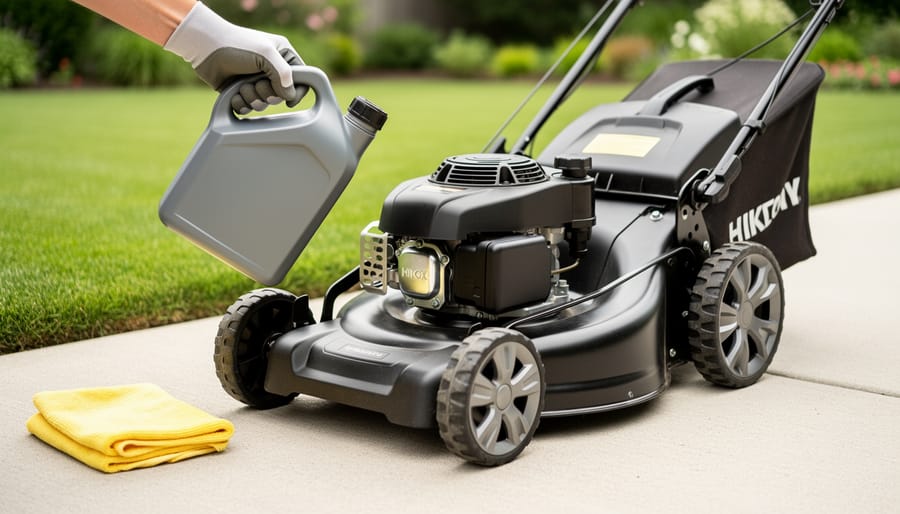
Applying Fluid Film to your lawn mower deck takes about 30 minutes and creates a slick, protective barrier that prevents grass clippings from sticking while simultaneously guarding against rust and corrosion throughout the mowing season. This lanolin-based spray penetrates into metal surfaces and displaces moisture, making it particularly effective for gardeners who mow frequently or store equipment in damp conditions.
Unlike silicone sprays that simply coat the surface or cooking oils that turn rancid and gummy, Fluid Film’s wool-grease formula stays active for weeks at a time. The application process is straightforward: clean your deck thoroughly, spray an even coating on all exposed metal surfaces underneath, let it cure for about an hour, and you’re done. Most gardeners find they need to reapply every four to six weeks during peak growing season, though sandy or abrasive soil conditions may require more frequent treatment.
The reason this product has become a favorite among both homeowners and lawn care professionals comes down to performance and longevity. Grass clippings slide off treated decks with minimal buildup, which means less time spent scraping stubborn residue and more consistent cutting quality throughout each session. The rust protection extends equipment life significantly, a practical consideration for anyone investing in quality mowing tools.
This guide walks you through the complete application process, from gathering your materials to verifying your deck is properly protected. You’ll learn the exact steps that ensure even coverage, common mistakes to avoid, and how to tell when it’s time for your next application. Whether you’re treating a brand-new deck or rescuing one that’s seen better days, the technique remains consistent and reliably effective.
Why Fluid Film Works Better Than Traditional Undercoating
Fluid film stands out from other mower deck treatments because it tackles all three major problems at once: grass buildup, corrosion, and moisture damage. The lanolin-based formula creates a thin, creeping barrier that penetrates into every seam and crevice, then stays slippery enough that wet grass clippings can’t bond to the metal. Unlike petroleum-based coatings that harden over time or drip off in hot weather, fluid film remains pliable and active throughout the mowing season.
The rust prevention happens through moisture displacement rather than just creating a surface barrier. When you spray fluid film onto a deck that already has surface rust, it actually creeps under the oxidation and pushes water away from the metal. This gives you active protection even in areas you can’t directly see or reach with the spray nozzle. Traditional rubberized undercoating, by contrast, seals moisture underneath if the coating cracks or chips, which accelerates rust rather than preventing it.
Silicone sprays work well for a few mowing sessions but break down quickly under the constant abrasion of grass clippings and dirt. WD-40 evaporates within days and was never designed for long-term protection. Vegetable oils attract dirt, turn rancid in summer heat, and can actually promote bacterial growth on the deck surface. Some gardeners swear by cooking spray as a cheap alternative, and it does provide short-term grass release, but you’ll need to reapply before every mow.
Fluid film typically lasts an entire season with just one or two maintenance applications. The environmental advantage matters too: lanolin is a renewable wool byproduct that biodegrades naturally and won’t contaminate your soil or harm beneficial insects if overspray reaches the lawn.
What You’ll Need to Get Started
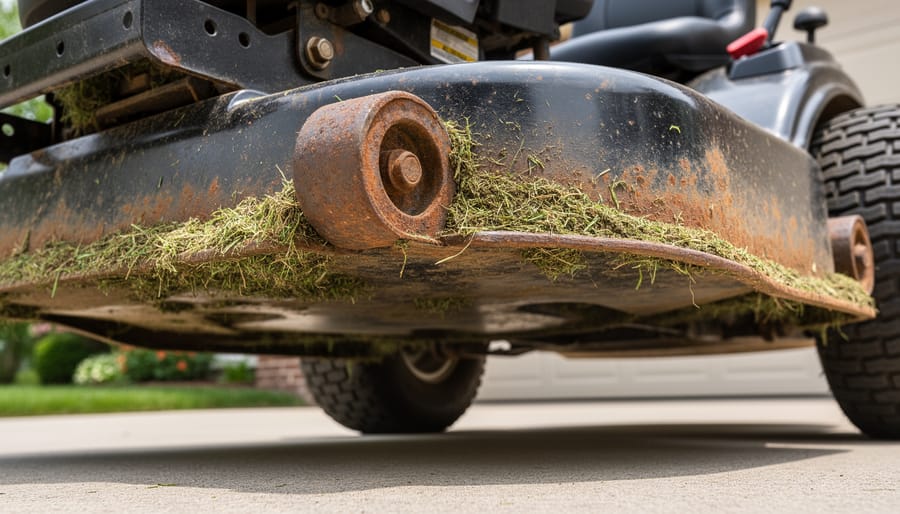
Before you start coating your mower deck with fluid film, gather everything you’ll need so the job goes smoothly from start to finish. Having all your supplies ready beforehand prevents mid-project trips to the hardware store and ensures you can complete the application in one session.
Required Materials:
- Fluid Film aerosol cans (2-3 cans for most decks) or bulk container with spray gun
- Plastic scraper or putty knife for removing caked-on grass
- Wire brush or abrasive pad for loosening stubborn debris
- Degreaser or all-purpose cleaner (Simple Green works well)
- Safety glasses and chemical-resistant gloves
- Drop cloth, cardboard, or plastic sheeting to protect your work area
- Clean rags or paper towels for wiping surfaces
- Garden hose with spray nozzle for rinsing
Optional Tools That Make the Job Easier:
- Lawn mower lift or sturdy jack stands for better deck access
- Mechanic’s creeper to roll under the deck comfortably
- Flashlight or work light to see hard-to-reach areas
- Masking tape to protect painted surfaces or mower deck parts you don’t want coated
The aerosol version of fluid film is most convenient for homeowners tackling one or two mowers, while the bulk container with spray gun becomes cost-effective if you’re treating multiple machines or plan regular seasonal applications. Either format delivers the same rust protection and grass-shedding benefits, it’s simply a matter of project scale and budget.
Safety Precautions and When NOT to Apply
Before you grab that can of fluid film, understanding proper safety protocols protects both you and your equipment. This lanolin-based product is generally safe, but like any maintenance task involving aerosols and machinery, a few precautions make all the difference.
Work outdoors or in a garage with doors wide open. The aerosol mist can build up quickly in enclosed spaces, causing headaches and respiratory irritation. Wear chemical-resistant gloves and safety glasses, fluid film isn’t caustic, but it creates a slippery film that’s annoying to wash off skin and can sting if it gets in your eyes.
Temperature matters more than you might think. Don’t apply fluid film when it’s below 40°F, as the product won’t spread evenly or penetrate properly. On the flip side, avoid application during extreme heat above 95°F when the aerosol can becomes pressurized and the coating may flash-dry before it can penetrate. These temperature considerations align with when not to mow your lawn in general.
Never spray fluid film on a hot engine or deck immediately after mowing. Let your mower cool completely for at least 30 minutes. The product is petroleum-based and, while it has a high flash point, applying it to hot metal creates unnecessary fire risk and causes uneven coverage as it runs off too quickly.
If you care about your mower’s appearance, protect painted surfaces with masking tape or cardboard. Fluid film leaves a brownish, oily sheen that’s nearly impossible to remove from paint without damaging the finish. The coating also darkens over time as it collects dust.
Timing your application matters for effectiveness. Don’t spray your deck right before mowing, you need at least 15 minutes of dwell time, and ideally several hours, for the product to penetrate and bond to the metal. Applying it just before cutting grass wastes product and creates a mess as fresh coating transfers to clippings.
Step-by-Step Application Process
Preparing Your Mower Deck
Start by tipping the mower on its side or elevating it on jack stands so you can comfortably reach the underside of the deck. Disconnect the spark plug wire first, this prevents accidental starts while you’re working underneath.
Use a plastic scraper or putty knife to remove the bulk of dried grass clippings stuck to the deck surface. Work systematically from one end to the other, paying special attention to the areas around blade spindles and along the discharge chute where clippings accumulate thickest. A wire brush handles stubborn buildup and helps knock off loose rust flakes.
For surface rust, switch to a more aggressive wire wheel on a drill or hand-held wire brush. You don’t need to remove every speck, fluid film penetrates light surface rust, but heavy rust patches should be addressed down to bare metal. If rust has created pitting, that’s fine; just clear away the loose material.
Next, spray the entire deck underside with a degreaser or simple dish soap solution. This step removes oily residue, old lubricants, and grime that would prevent fluid film from bonding properly. Scrub with a stiff brush, then rinse thoroughly with a garden hose.
The critical final step: let everything dry completely. Water trapped under a coating invites rust rather than preventing it. Wait at least an hour in warm weather, longer if it’s humid. Run a clean rag over the surface, if it comes away damp, keep waiting.
Applying the Fluid Film Coating
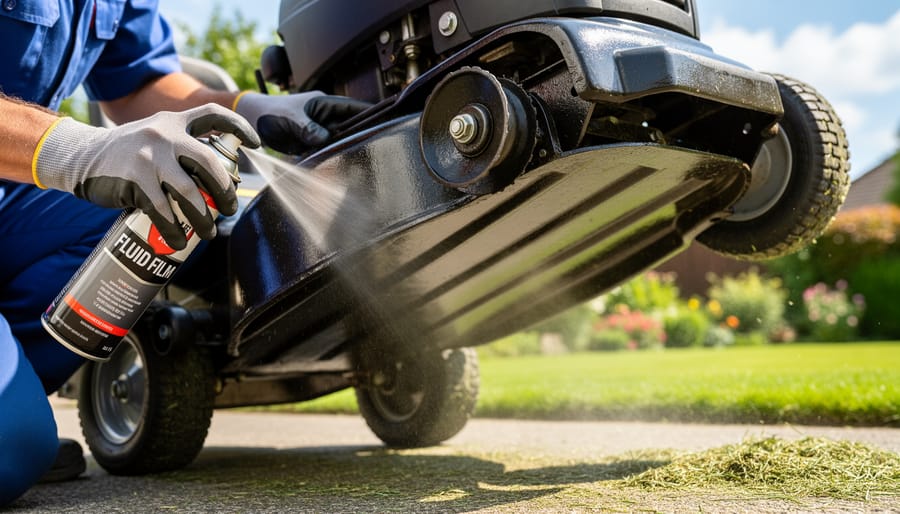
Hold the aerosol can 6 to 8 inches from the deck surface, closer causes drips, farther means wasted product and thin coverage. Start at one side of the deck and work across in overlapping horizontal passes, moving the nozzle steadily rather than pausing in any spot. Each pass should overlap the previous one by about 30%, creating a consistent wet sheen without pooling.
Apply a light first coat to the entire underside, including all exposed metal. You’ll see the surface darken as the lanolin penetrates. Pay special attention to the spindle housings and blade mounting points, rotating the nozzle angle to reach recessed areas. When coating around the blade bolts, check your blade orientation to ensure you’re treating all surfaces that contact grass flow.
The discharge chute requires a different approach. Spray from multiple angles to cover both the curved interior and the mounting brackets. Tilt the mower slightly if needed for better access, or remove the chute entirely if your model allows quick detachment.
Two thin coats beat one heavy application. After the first coat looks evenly wet, typically two to three minutes, apply a second pass using the same overlapping pattern. You want a glossy amber finish, not dripping excess. If you see runs forming, you’ve applied too much in that area; wipe the excess with a clean rag and let it level out. The coating should look uniform across the entire deck, with no bare patches or thick buildup.
Allowing Proper Cure Time
After applying fluid film, resist the urge to fire up your mower immediately. The product needs time to penetrate the metal and form a protective barrier that will actually work.
Wait at least 15 to 30 minutes before mowing. The coating will feel touch-dry within this window, meaning you won’t get oily residue on your hands if you touch it. However, if you have the luxury of time, letting it sit for a full hour gives the lanolin formula a chance to migrate into surface pores and create a more durable shield against moisture and grass adhesion.
During your first mow after application, expect some initial grass clippings to stick more than usual. This is normal. The fluid film is still settling, and the first cut actually helps work the coating into the deck’s texture. You might also notice a slight oily sheen on clippings for the first few minutes of operation.
Patience here pays dividends. Rushing the process by mowing too soon can wipe away the coating before it bonds properly, forcing you to clean and reapply. Give it time, and you’ll enjoy weeks of cleaner cutting with minimal buildup underneath.
How to Know It’s Working (and What to Do Next)
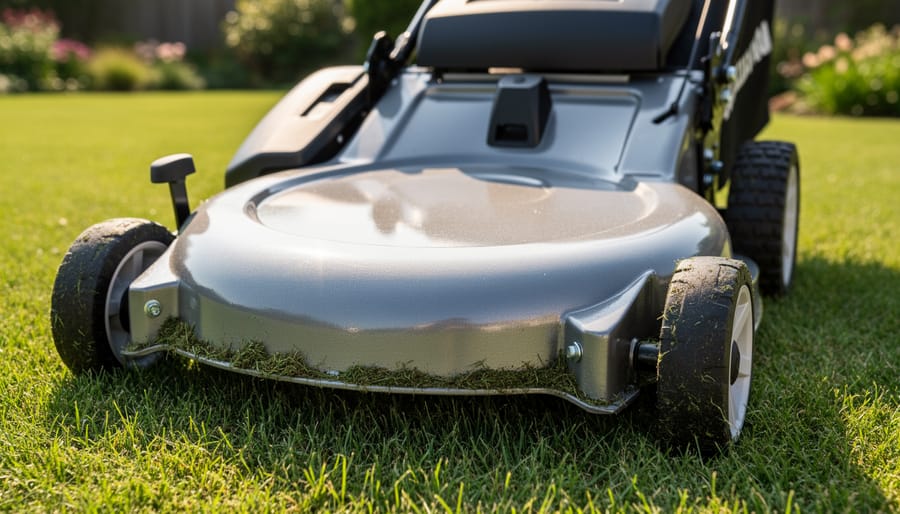
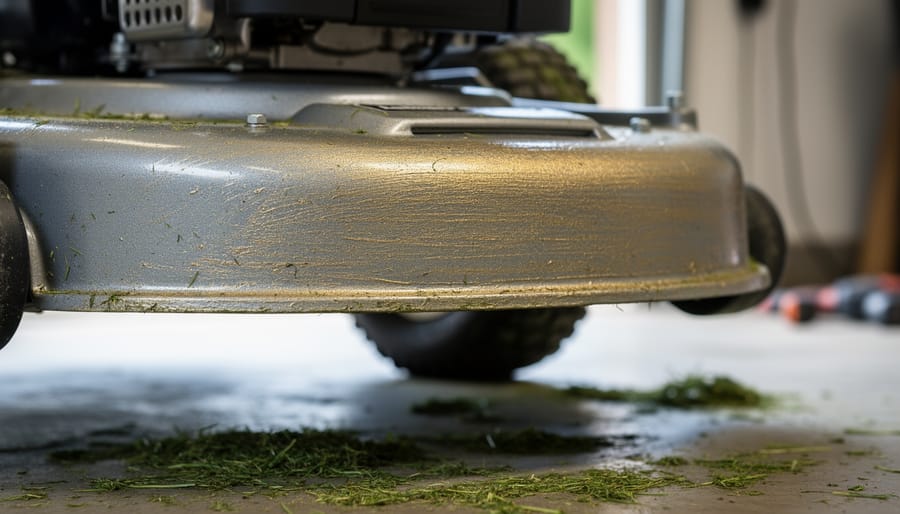
After your first mow, you’ll notice grass clippings sliding right off the deck instead of sticking in clumps. Properly applied fluid film leaves a slightly tacky, amber-tinted coating on the metal, it won’t be completely dry to the touch, which is exactly what you want. That thin, oily layer is what prevents grass from adhering and keeps moisture away from the metal surface.
During your first cutting session, pay attention to the discharge chute. Clippings should flow freely without clogging, and when you tilt the deck to inspect afterward, you should see minimal buildup. Any grass that does stick will wipe away easily with your hand or a quick spray of water. This is a dramatic improvement over untreated decks, where wet grass forms stubborn mats that require scraping.
Here’s what to look for and address:
- Smooth, even coating with no dry patches or heavy drips that create thick spots
- Grass clippings that slide off cleanly rather than building up in layers
- Reduced cleaning time after mowing, with most debris rinsing away easily
- No new rust spots forming on previously treated areas
- If grass still sticks heavily, the surface may not have been clean enough before application
- Persistent buildup means you likely need a second coat or missed hard-to-reach areas
A single thorough application typically lasts an entire mowing season, roughly four to six months of regular use. You’ll know it’s time to reapply when grass starts adhering more stubbornly or you notice the coating looking thin and dry. Plan to touch up high-wear areas like the discharge chute and blade zone every two months if you mow frequently in wet conditions.
If you’re still fighting thatch and buildup after proper application, the culprit is usually mowing wet grass or cutting too much length at once. Fluid film works best when you’re removing only the top third of grass blades and mowing when the lawn is relatively dry. For maintenance, a quick spray on trouble spots before each season keeps protection consistent without redoing the entire deck.
Comparing Fluid Film to Other Deck Treatment Options
Fluid film earns its place among several viable deck treatment options, each with distinct trade-offs. Cooking spray and vegetable oil offer the cheapest approach, many gardeners swear by a quick coat of PAM before each mow. These work surprisingly well for immediate grass release, but they rinse away quickly with rain and attract dirt. You’ll reapply after every few mows, and the oil can turn rancid in hot weather.
Silicone lubricants like WD-40 Specialist Dry Lube provide clean, long-lasting slickness without the oily residue. They excel on painted decks where appearance matters, though they cost more per application than fluid film and don’t actively displace moisture the way lanolin-based products do. If rust prevention isn’t your primary concern, silicones work beautifully.
Graphite coatings deliver the longest intervals between applications, sometimes an entire season, but require thorough deck preparation and careful application to avoid uneven coverage. They’re messy to apply and nearly impossible to remove if you change your mind.
Commercial deck sprays split the difference, offering moderate longevity at moderate cost. Most use synthetic polymers that shed grass effectively but lack fluid film’s biodegradability.
Fluid film occupies the sweet spot for sustainable lawn care: it lasts through multiple rains, actively protects against corrosion, won’t harm your lawn or soil, and requires reapplication only two or three times per season. The slightly higher upfront cost pays off in both equipment longevity and reduced maintenance time.
Common Questions About Fluid Film on Mower Decks
Can I use fluid film on aluminum mower decks?
Yes, fluid film works safely on aluminum decks without causing corrosion or discoloration. The lanolin-based formula actually provides excellent protection for aluminum surfaces while preventing grass buildup just as effectively as on steel decks.
Will fluid film harm my grass or soil?
No, fluid film is non-toxic and environmentally safe. The product is lanolin-based (derived from sheep’s wool) and contains no harsh chemicals, making it safe for use around lawns, gardens, pets, and children once it has dried on the deck surface.
How often should I reapply fluid film to my mower deck?
Most applications last an entire mowing season with a single coat, though high-use conditions may require a touch-up application midseason. Plan to reapply at the start of each season, or sooner if you notice grass beginning to stick again.
Can I apply fluid film to a wet deck?
While fluid film can displace moisture, you’ll get better adhesion and longer-lasting protection on a completely dry surface. If the deck is damp, wipe it down and let it air dry for 15-20 minutes before applying the coating.
Another concern you might have is whether the coating attracts dirt or dust. Fluid film does have a slightly tacky feel when first applied, but this diminishes within hours as the product penetrates and sets. Any minor dust accumulation during the cure period won’t affect performance, and normal mowing quickly removes surface debris.
Understanding these practical aspects helps you approach deck maintenance with confidence. As you integrate this technique into your broader lawn care basics you’ll find that small preventive steps like treating your mower deck save time and frustration throughout the season. The product’s safety profile means you don’t need to cordon off treated equipment or worry about accidental contact, making it a practical choice for busy households.
Applying fluid film to your mower deck isn’t complicated, you’ve just cleaned, sprayed, and given it time to work. That’s it. No specialized skills required, no expensive equipment to buy. Yet this simple routine delivers real results: less scraping between mows, better grass discharge, and a deck that resists rust season after season.
What makes this worth your time isn’t just the immediate payoff. When you protect your mower deck properly, you’re extending the life of equipment that otherwise corrodes and fails prematurely. That means fewer replacements, less waste heading to landfills, and more money staying in your pocket. The fact that fluid film is lanolin-based rather than petroleum-derived fits naturally into a broader approach to lawn care that considers environmental impact alongside performance.
Small maintenance habits like this one add up. You’re not just treating metal; you’re building a relationship with your equipment that prioritizes longevity over convenience. Your mower works hard for you all season. A 30-minute application once or twice a year seems like a fair exchange for years of reliable service and cleaner cuts. Give it a try this weekend, your deck will thank you next spring.