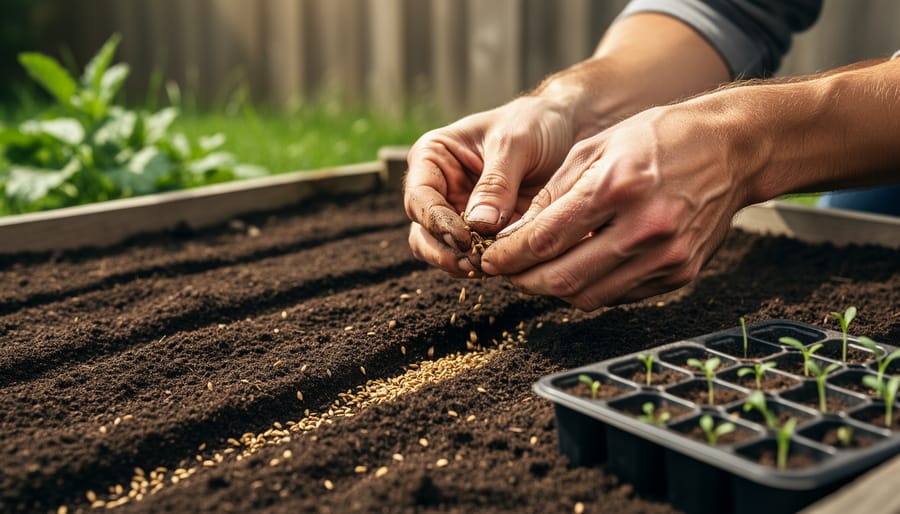
The best time to plant depends on one thing above all: your last and first frost dates. For most cool-season crops like peas, lettuce, and spinach, aim for 2 to 4 weeks before your last spring frost. Tender crops like tomatoes, beans, and squash go in 1 to 2 weeks after it, once the soil has warmed. Trees, shrubs, and perennials do best in early fall or early spring, when roots can settle in without summer heat or winter freeze.
Your region shifts those windows by a month or more. A gardener in the Deep South may be sowing carrots in October, while someone in the northern Midwest is already pulling the covers over the beds. Your local frost dates are the anchor for everything else, and a quick check with your county extension office gives you numbers you can trust.
Frost dates are only the start, though. Soil temperature, microclimates, and the type of plant all nudge the calendar earlier or later, and a single date rarely tells the full story. A planting calendar works best as a rhythm you follow all year, not a one-day deadline.
Below, you’ll find regional windows at a glance, the factors that move your timing, and simple seasonal habits that keep your garden thriving with less water, fewer inputs, and healthier soil.
Quick Answer: When Should You Plant in Each Region?
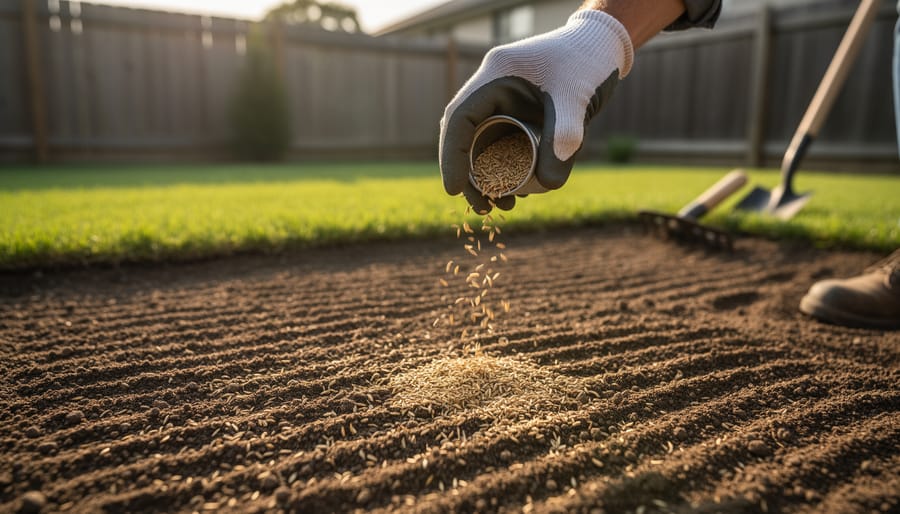
Here’s the short answer: plant cool-season grasses and hardy crops in early fall and early spring, and save warm-season grasses and tender plants for late spring to early summer, once the soil has truly warmed up.
Cool-season grasses like fescue, ryegrass, and Kentucky bluegrass love mild air and cool soil. Hardy crops such as peas, spinach, kale, and lettuce shrug off a light frost, so they can go in early. Warm-season grasses like Bermuda and zoysia, along with tender plants like tomatoes, peppers, and basil, sulk in the cold. They need warm soil to get going, and a chilly snap can stall or kill them.
Here’s what trips up a lot of new gardeners: the date on the calendar matters less than what’s happening outside. Your climate zone and your local frost dates (the average last spring frost and first fall frost) tell you far more than “plant on May 1st.” Two neighbors a few hundred miles apart can have planting windows weeks apart, and even a sheltered yard and an exposed one down the street can differ.
Think of the seasons as general guardrails and your own frost dates as the real map. The next sections walk through what that looks like region by region, so you can find your window and plant with confidence.
Regional Planting Windows: Timing by Climate Zone
Cold and Northern Regions
In cold northern regions, the growing season is short and spring can be fickle, so timing matters even more. Early fall is the star window for seeding cool-season lawns: the soil is still warm, nights are cooler, and weeds are fading. Spring garden planting waits until after your last frost date, the average final spring freeze for your area.
Here’s how the regions compare at a glance:
| Region | Best lawn seeding window | Best garden planting window | Soil temperature cue |
|---|---|---|---|
| Cold northern | Late summer to early fall | After last frost, late spring | Soil near 50-65°F |
| Transition zone | Early to mid fall | Mid spring through early summer | Soil near 50-65°F |
| Warm southern | Late spring to early summer | Early spring and fall | Soil above 65°F |
| Arid/southwest | Late spring or early fall | Cooler months | Soil near 65-70°F |
| Pacific coast | Early fall | Spring through early summer | Soil near 50-65°F |
Up north, resist the urge to rush in spring. A warm week in April is tempting, but a late frost can undo your work overnight. Wait until the soil crumbles easily and your last frost has passed.
The Transition Zone
The transition zone is the stretch across the middle of the country where summers run too hot for cool-season grasses and winters run too cold for warm-season ones. Neither type gets an easy ride, so timing matters more here than almost anywhere.
Fall is your strongest window. Soil is still warm from summer, which helps seed sprout fast, while cooler air and gentler sun keep young blades from scorching. Weeds also fade, so your seedlings face less competition. Early to mid fall usually gives roots enough time to settle in before winter.
For forgiving options, tall fescue is the go-to. Its deep roots handle heat and dry spells better than most cool-season grasses, which means less watering and a more sustainable lawn. Zoysia can also work if you prefer a warm-season turf, though it browns in winter. Whichever you pick, a mix suited to your local conditions beats chasing one perfect grass.
Warm Southern and Humid Regions
In the warm South and humid Southeast, your lawn calendar flips. Warm-season grasses like Bermuda, zoysia, centipede, and St. Augustine thrive when soil temperatures hold steady around 65 to 70°F, which usually means late spring to early summer. Planting earlier risks cold, wet soil that rots seed or stalls sod. Planting later means roots face peak heat before they’ve settled in.
Wait for consistent warmth, not just one balmy weekend. A cheap soil thermometer pushed two inches down takes the guesswork out of it.
Gardeners here get a bonus most regions don’t: a long cool season. Fall through winter is prime time for greens, broccoli, carrots, peas, and garlic, since mild temperatures mean fewer pests and less watering. Spring crops like tomatoes and peppers go in after the last frost, often by March or April.
Humidity also invites fungal trouble, so choose disease-resistant varieties, water in the morning, and give plants room for airflow.
Dry and Coastal Regions
In dry and coastal regions, the calendar follows rainfall more than frost. Across the arid Southwest and much of the Pacific coast, the best planting window usually opens in fall and runs through early spring, when cooler air and winter rains let roots settle in without constant irrigation. Planting in the heat of summer just means more watering and more stress on young plants.
In these areas, many people plant warm-season lawns like Bermuda or buffalograss in late spring, once soil warms, but fall is gentler for most trees, shrubs, and perennials. Mild winters also mean a cool-season vegetable garden can keep going well past what northern gardeners can manage.
Lean toward water-wise choices: native grasses, lavender, yarrow, and California poppies handle dry spells beautifully. Add a couple of inches of mulch to hold moisture, and set up rain barrels if your winters bring steady showers. Your plants, and your water bill, will thank you.
How to Find Your Own Planting Dates
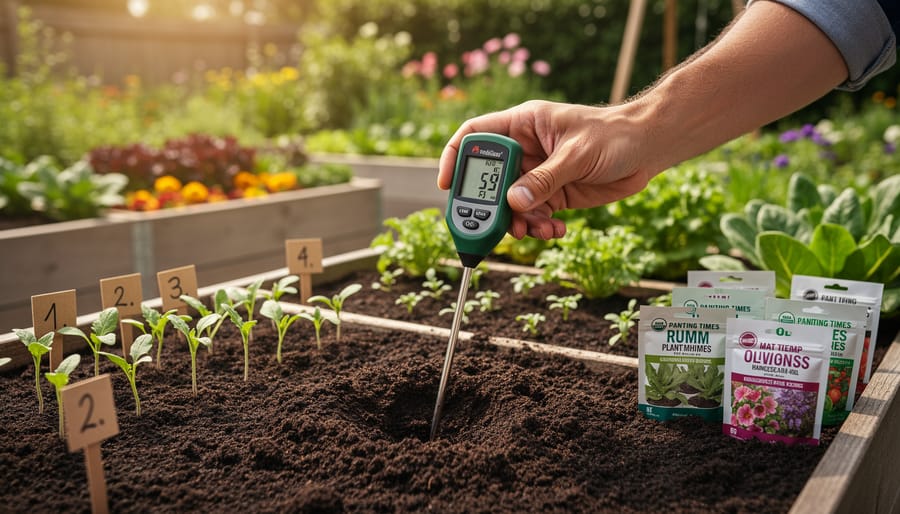
You don’t need special training to work out your own planting dates. You just need a few numbers and a little patience. Here’s the simple process I’d follow:
- Identify your hardiness zone. Enter your zip code into the USDA Plant Hardiness Zone Map to find your zone, which tells you roughly how cold your winters get.
- Look up your average last and first frost dates. Your local extension office or a regional frost-date lookup will list these. The last spring frost opens your window for tender plants, and the first fall frost closes it.
- Check your soil temperature. Push a soil thermometer or probe a few inches down in the morning. Cool-season grass seed generally likes soil in the 50s to low 60s °F, while warm-season grasses want it consistently warmer.
- Match each plant’s needs to those numbers. Seed packets and plant tags usually list a preferred planting time or soil temperature, so compare them to what you measured.
- Mark your windows on a calendar. Pencil in a start and end date for each planting, leaving a little wiggle room on either side.
Frost dates are averages, not promises, so treat them as a starting point and let your soil thermometer have the final say. A warm week in March doesn’t mean the ground is ready.
Your county cooperative extension office is a free, friendly resource for all of this. Staff there know your local conditions inside and out, and they’re happy to answer beginner questions. It also helps to understand the soil-turfgrass match because even perfect timing struggles when the grass type doesn’t suit your soil.
Start with one lawn or one garden bed, and build your calendar from what you learn each season.
Factors That Shift Your Timing
Your planting date isn’t a fixed point on the calendar. It’s a window, and a handful of local factors slide it earlier or later. Before we get to those, a few terms are worth knowing:
- Microclimate
- A small pocket where conditions differ from the surrounding area, like a sunny south-facing wall or a frosty low corner of the yard.
- Last frost date
- The average date of the final spring freeze in your area, which marks when tender plants are usually safe outdoors.
- Soil temperature
- How warm the ground is a couple of inches down, which matters more to seed germination than the air temperature does.
- Cool-season and warm-season grass
- Cool-season grasses grow best in spring and fall, while warm-season grasses thrive in summer heat and go dormant in cold weather.
Now for what shifts your timing. Microclimates are the sneakiest. A bed beside a brick wall may warm up a week before the open lawn, while a shady hollow holds frost longer. Elevation does the same thing on a bigger scale, since every few hundred feet up can push your spring later and your fall earlier.
Sun exposure and soil matter too. Sandy, well-drained soil warms quickly and can be planted sooner, but heavy clay stays cold and soggy, so give it extra time. Standing water is a sign to wait.
Then there’s the weather itself. A late cold snap or a drenched spring can delay everything, so it pays to use weather forecasts alongside your calendar rather than trusting the date alone. Finally, the variety you choose counts. Early-maturing vegetables and fast-germinating grass blends can squeeze into tighter windows than slower, fussier types.
Don’t stress if your timing lands a week or two off the ideal. That’s completely normal, and plants are more forgiving than most beginners expect. Treat the calendar as a guide, watch your soil, and adjust as you go.
Seasonal Care Calendar: What to Do and When
A planting date is only the start. Once things are in the ground, your lawn and garden settle into a yearly rhythm, and a simple care calendar keeps you ahead of it instead of scrambling. If you want the full picture on keeping trouble away through the year, here’s a season-by-season battle plan for weeds, pests, and disease. Here’s the basic cycle, with a sustainable twist for each season:
- Spring: Seed bare patches, feed lightly with compost or an organic slow-release fertilizer, and set up a rain barrel to catch the wet weather.
- Summer: Mow high, around three to four inches, leave the clippings as free fertilizer through grasscycling, and water deeply but rarely in the early morning.
- Fall: Aerate compacted soil, overseed thin areas, and add native perennials or shrubs while the soil is still warm.
- Winter: Let the lawn rest, keep foot traffic off frozen grass, and mulch garden beds with shredded leaves to protect roots.
Notice how often “less” is the right answer. Taller mowing shades out weeds and holds moisture, and grasscycling returns nutrients to the soil, so you buy less fertilizer. Native plantings need far less water once established, which makes every other task easier.
Your equipment matters more than most beginners expect. Dull mower blades tear grass instead of cutting it cleanly, leaving ragged tips that brown and invite disease. A quick blade sharpening and oil change in early spring, a mid-season check on tire pressure and air filters, and a thorough cleaning before winter storage all keep your machine running efficiently and using less fuel. Stale gas left in the tank over winter is a classic cause of spring-start headaches, so drain it or add stabilizer.
Don’t worry about doing every task perfectly. Hit the big ones each season, adjust for your weather, and let the rest slide. A lawn that gets steady, modest attention beats one that gets frantic overcare any day.
Aftercare: Helping New Plantings Get Established
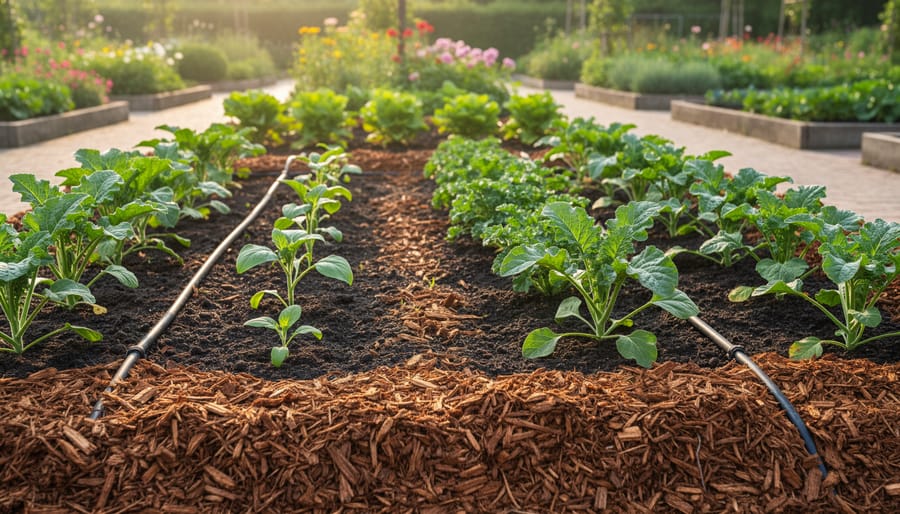
The weeks after planting decide whether all that careful timing pays off. New roots are fragile, so a little steady attention goes a long way.
Water is the biggest lever, and seed and transplants want different treatment. Seed needs the top inch of soil to stay damp, which usually means light watering once or twice a day until it sprouts. Transplants prefer deeper, less frequent soaks, every two or three days at first, so roots chase moisture downward. Water early in the morning to cut evaporation and fungus, and a rain barrel makes this far greener.
When that day comes, mow high and never remove more than a third of the blade. Leave the clippings where they fall. They return nutrients to the soil, so you can skip extra feeding in the early weeks. Once the lawn is established, a light application of compost or an organic slow-release fertilizer is plenty.
Weeds love bare soil, but you don’t need harsh sprays. Hand-pull them while the soil is soft, and spread a thin layer of mulch around garden transplants to block light. For stubborn problems, biological weed control offers a gentler path that works with nature rather than against it.
Finally, protect your investment. Rope off seeded areas, keep pets and kids on the paths, and drape row cover over seedlings during a cold snap or heavy downpour.
Planting Calendar Questions Gardeners Ask Most
Even seasoned gardeners trip over timing now and then, so no question here is a silly one. These are the ones that come up most.
What if I miss my planting window?
Don’t panic. For lawns, hold off until the next good window, usually early fall or spring, and keep the bare patch covered with a thin layer of mulch in the meantime. For vegetables, switch to a faster-maturing variety or a different crop that suits the season you’re in.
Can I plant in summer?
You can, but it takes more effort. Heat and dry spells stress young roots, so you’ll need frequent, careful watering. Warm-season grasses are the exception, since they actually prefer summer warmth once the soil is up to temperature.
How late is too late for fall seeding?
Seedlings need enough time to establish before the first hard freeze, generally several weeks of mild weather. If frost is already close, wait for spring rather than watch tender seedlings fail. Choosing varieties with strong grass seed disease resistance also gives late plantings a better fighting chance.
Should I use a printed calendar or an app?
Either works. A printed calendar on the shed wall is simple and always visible, while an app can send reminders and track frost forecasts. Pick whichever you’ll actually check, and jot down what worked each year.
Whichever route you take, treat your calendar as a living document. A little note-taking each season turns guesswork into a plan that fits your own yard.
Planting well really comes down to a few simple habits. Match your timing to your region’s frost dates and your soil temperature rather than the date on the wall. Jot down your windows for seeding, transplanting, feeding, and rest, and you’ve got a planting calendar that works as hard as you do. Then care for what you’ve planted in a way that treats the soil kindly: water deeply but sparingly, feed with organic options, and let your grass clippings go back to the lawn.
Here’s the part nobody tells beginners. Your calendar is a guide, not a contract. A cold snap, a soggy spring, or a shady corner will nudge things by a week or two, and that’s completely normal. Every gardener, seasoned or brand new, adjusts as they go.
So grab a notebook or open a simple spreadsheet and sketch out your first season. Start small, note what happens, and tweak it next year. Your lawn and garden will thank you.