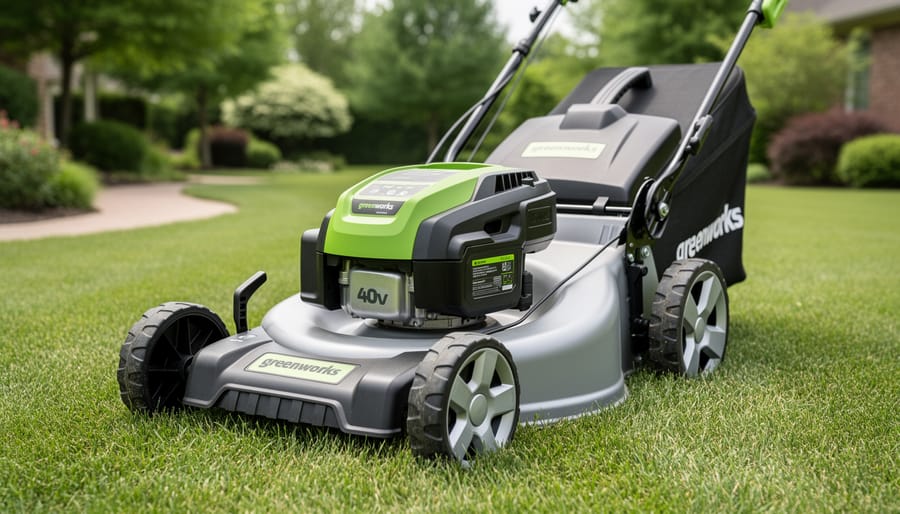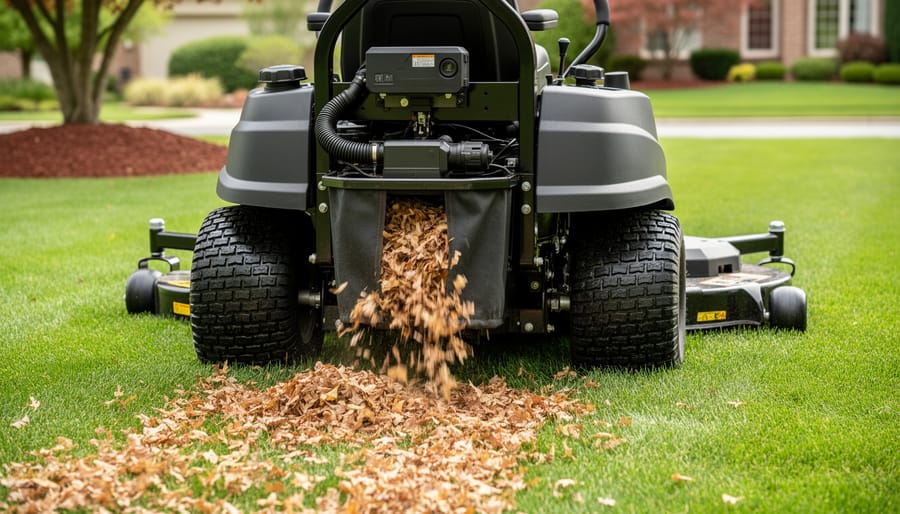
Yes, you can absolutely use your zero turn mower for picking up leaves and with the right bagger attachment or vacuum system, it’s one of the most efficient ways to clear your lawn. The key is matching your mower’s deck size and horsepower to a compatible collection system, whether that’s a two-bin, three-bin, or high-capacity bagger setup. Most modern zero turn mowers handle leaf collection remarkably well thanks to their powerful engines and superior maneuverability, letting you navigate around trees and landscaping beds without multiple passes.
The beauty of using a zero turn for leaf pickup lies in the speed and coverage. Where a standard push mower might take hours to clear a large yard, a zero turn with a 50-inch deck and proper bagger can cut that time in half or more. You’ll get best results when leaves are dry and you’re running the mower at three-quarters throttle, not full speed. The clippings and shredded leaves you collect make excellent compost material or natural mulch for garden beds, turning yard waste into a resource rather than a disposal problem.
This guide walks through everything you need to know: choosing the right attachment, preparing your mower and yard, operating safely and effectively, and maintaining your system for peak performance season after season. Whether you’re tackling early fall cleanup or managing heavy leaf drop, you’ll learn how to maximize your zero turn’s collection capacity while protecting your lawn and equipment.
What You’ll Need: Equipment and Materials for Zero Turn Leaf Collection
Before you fire up your zero turn mower for leaf collection, you’ll want to gather the right equipment. The good news? Most of what you need either comes with your mower or can be easily sourced. Having everything ready beforehand saves you mid-job frustrations and makes the whole process smoother.
Essential Equipment and Attachments:
– Bagger attachment or collection systemMost zero turn mowers can accommodate two- or three-bin baggers that mount to the rear. Check your mower’s manual for compatible models and capacity (typically 6-8 bushels total).
– Mulching blades or high-lift bladesMulching blades work well for light leaf layers you want to recycle into the lawn; high-lift blades create better suction for filling bags.
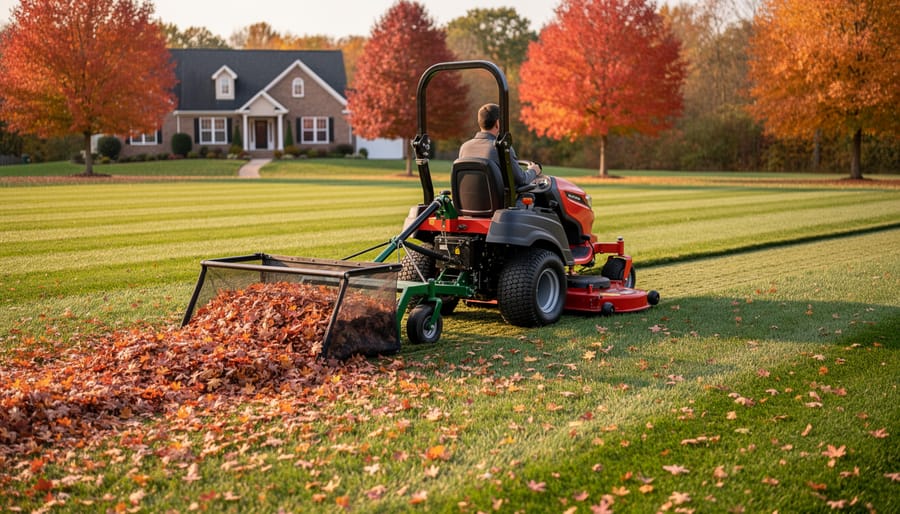
– Tow-behind leaf sweeper or vacuumIf your mower doesn’t support a mounted bagger, a tow-behind sweeper with a hopper attachment offers an alternative collection method.
– Rake or leaf blowerFor clearing beds, corners, and tight spots your mower can’t reach.
– Tarps or lawn bagsNeeded when emptying collection bins, especially if you’re composting or transporting leaves.
– Work gloves and safety glassesProtect your hands during attachment installation and your eyes from flying debris.
Compatibility matters more than you might think. Not every zero turn model accepts every bagger system, so verify fitment before purchasing. Most manufacturers offer proprietary baggers designed specifically for their mower lines, and while universal-fit options exist, they sometimes require mounting brackets or modifications. Check the weight capacity too; overloading a bagger can stress your mower’s frame and affect handling.
For sustainable practices, consider a mulching kit first if you’re dealing with moderate leaf fall. Mulching returns nutrients to your soil and eliminates disposal concerns entirely. When leaves pile too thick for effective mulching, that’s when collection systems become necessary. You can always make multiple passes: mulch the first layer to feed your lawn, then collect the remainder with a bagger.
Tow-behind sweepers offer flexibility since they work with any zero turn and don’t interfere with your mower deck setup. They’re particularly useful if you switch between bagging grass clippings in summer and leaves in autumn. The trade-off? They require more storage space and add another piece of equipment to maintain, but their versatility often justifies the investment for larger properties.
Safety First: Precautions Before You Start Collecting Leaves
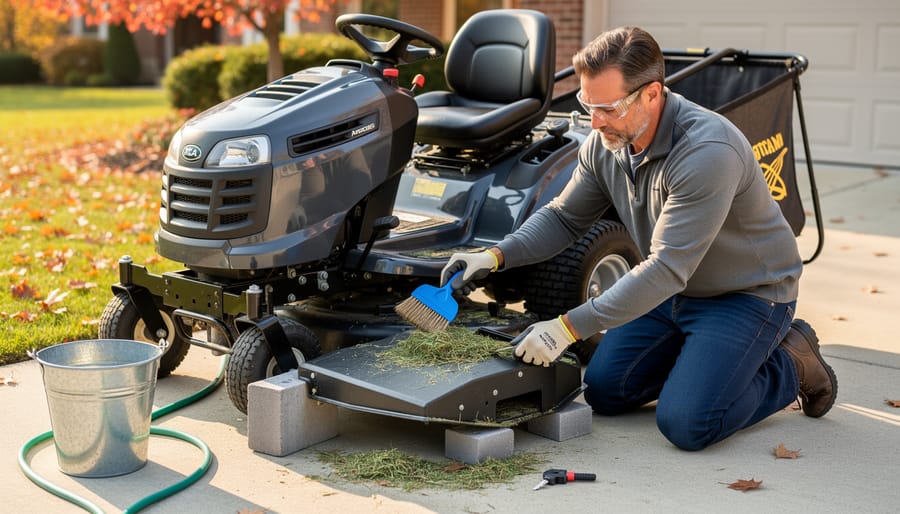
Before you fire up your zero turn mower for leaf collection, take five minutes to address the serious safety risks that come with this task. Zero turn mowers handle differently than traditional lawn tractors, and adding collection attachments changes their balance and visibility in ways that can lead to injury if you’re not prepared.
Your first concern is visibility. A full bagger or tow-behind collector blocks your rearward view and shifts your mower’s center of gravity backward. Before each session, walk your entire lawn to spot and remove rocks, branches, toy trucks, garden stakes, and anything else hidden under leaves. These projectiles can shoot out at alarming speeds, potentially injuring bystanders or shattering windows. Check that children and pets are indoors, and maintain at least a 75-foot clearance from anyone nearby.
Attachment installation demands your full attention. Follow the manufacturer’s instructions exactly when mounting baggers, brackets, or collection systems. A loose chute or improperly secured bag can detach mid-operation, jamming under your mower or tangling in the blades. Double-check every bolt, pin, and connection point before starting the engine. If something rattles or feels unstable during your first pass, stop immediately and investigate.
Protective gear isn’t optional. Wear safety glasses or goggles to guard against flying debris, closed-toe boots with good traction, and hearing protection if you’ll be running the mower for more than 30 minutes. Long pants protect your legs from sticks and thorns kicked up during collection. Wet leaves create slippery conditions that amplify the zero turn dangers you already face, so postpone collection until leaves and grass are dry. If visibility drops, winds pick up, or you feel fatigued, shut down and resume later, no lawn is worth a preventable accident.
Preparing Your Zero Turn Mower and Lawn for Leaf Collection
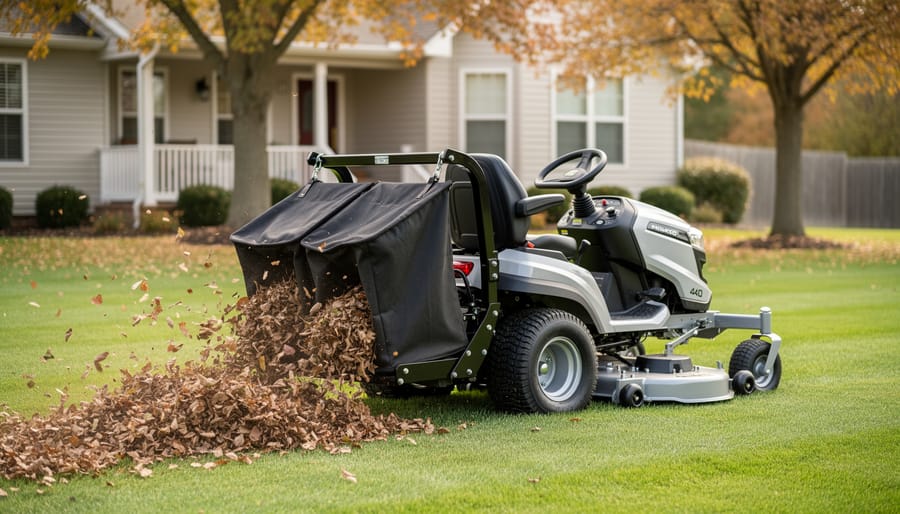
Before you fire up your zero turn mower to tackle those fallen leaves, proper preparation makes all the difference between a smooth collection job and a frustrating afternoon. Taking fifteen minutes now to ready your equipment and lawn saves you time and prevents potential problems midway through the task.
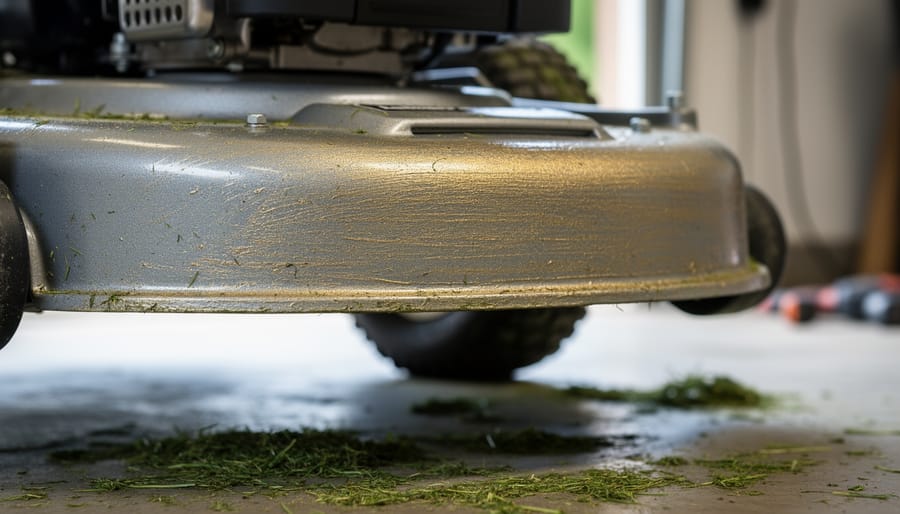
Start by addressing your mower deck, which is the heart of effective leaf collection. Lower it to ground level and inspect underneath for packed-on grass clippings, mud, or leftover debris from your last mow. A dirty deck reduces airflow and prevents leaves from lifting into your collection system. Use a putty knife or deck scraper to remove caked-on material, then rinse if needed. While you’re down there, check the blade condition. Dull or damaged blades tear leaves rather than cutting cleanly, creating clumps that clog your bagger. Sharpen or replace blades before collection season begins.
Next, examine your collection attachment carefully. If you’re using a bagger system, confirm all mounting brackets are secure and that chutes connect tightly without gaps. Inspect bags for tears, worn seams, or holes that will spill leaves back onto your lawn. For tow-behind sweepers, verify the hitch connection and brush height adjustment. Run through a quick attachment test by engaging the system without leaves to ensure everything operates smoothly and nothing rattles loose.
- Walk your entire lawn and remove large debris that could damage your mower or jam collection systems: branches thicker than a pencil, fallen fruit, rocks, toys, garden stakes, and any hard objects hidden beneath leaf piles.
- Adjust your mower deck height to 3-4 inches for the first pass. This setting gives you ground clearance for efficient leaf pickup while still cutting any remaining grass that’s grown since your last mow.
- Check the weather forecast and choose a dry day when leaves have had at least 24 hours without rain or heavy dew. Wet leaves clump together, weigh more, clog chutes faster, and strain your mower’s engine.
- Consider a sustainability-first approach: if your leaf coverage is moderate, make an initial mulching pass without the bagger attached. This chops leaves into smaller pieces that can leaves break down into compost naturally or become easier to collect on a second pass, reducing the volume you need to haul away.
- Top off your fuel tank and check oil level. Leaf collection typically takes longer than regular mowing because you’ll move more slowly and make multiple passes, so you don’t want to run dry halfway through.
Finally, mentally map your mowing strategy before you begin. Note areas with particularly thick leaf accumulation, slopes that require extra caution with a loaded bagger, and tight spaces where you’ll need to maneuver carefully. This planning step prevents you from boxing yourself into corners or missing sections that become harder to reach as collection bags fill and add weight to your machine.
Step-by-Step: How to Collect Leaves with Your Zero Turn Mower
Best Mowing Patterns for Maximum Leaf Pickup
The perimeter-first pattern works best for most leaf collection jobs with a zero turn mower. Start by making two or three passes around the outer edge of your lawn, moving inward, which creates a collection zone and prevents leaves from blowing into areas you’ve already cleared. Once you’ve established your border, work in straight, overlapping rows across the main lawn area, overlapping each pass by about 6 inches to catch stragglers.
For heavily leaf-covered areas, a double-cut strategy pays off. Make your first pass in one direction to break up and partially collect leaves, then come back perpendicular on the second pass to grab what remains. This cross-hatch approach especially helps when leaves are thick or damp (though you should avoid trying to mow wet leaves when possible, as they clump and clog).
Use your zero turn’s tight radius to navigate around obstacles without lifting the deck. Slow down slightly on turns to maintain consistent suction and prevent leaves from spilling out before they reach the bagger. If you notice streaking or missed strips, you’re likely moving too fast or your overlap is too narrow, adjust immediately rather than finishing the whole lawn and starting over.
Managing Full Bags and Collection Bins
Stop mowing when your bagger is about three-quarters full, not completely packed. Most collection systems lose suction efficiency once they’re more than 75% filled, and you’ll start leaving leaf trails behind your mower. Listen for changes in engine sound, if the motor bogs down or the collection chute makes gurgling noises, you’ve waited too long.
Turn off the mower deck and let the blades stop completely before emptying. Park on level ground, engage the parking brake, and shut off the engine if you need to dismount. Never reach into the discharge chute while the engine runs.
Empty bags directly onto a tarp for easy transport to your compost pile, where shredded leaves create excellent brown matter. Mix them with green materials at a 3:1 ratio for faster decomposition. Many municipalities offer curbside leaf collection in biodegradable bags, check your local schedule. You can also spread a thin layer of finely mulched leaves back over garden beds as winter insulation.
Keep a second set of bags handy if you’re tackling large areas. Wet leaves compress and weigh significantly more, so expect to empty more frequently after morning dew or light rain.
Verifying Your Results and Troubleshooting Common Issues

After you’ve made your final pass, take a moment to walk the lawn and inspect your work. A well-cleared lawn will show consistent grass color without leaf clumps or windrows blocking the turf. Look for missed patches near obstacles, along fence lines, and in corners where the zero turn’s deck might not have reached. Small amounts of finely mulched leaf material pressed into the grass are fine, they’ll actually benefit the soil, but visible leaf layers or damp mats need another pass.
If you spot uneven pickup or streaking, check your mowing pattern first. Overlapping each pass by a few inches prevents gaps. For stubborn areas, try approaching from a different angle; sometimes leaves pack down in one direction but lift easily from another.
Why are leaves left in rows after collection?
Your bagger might be full, reducing suction, or the discharge chute could be partially clogged. Empty the bag and check for blockages before continuing.
What if the bagger keeps clogging?
Wet or matted leaves clog easily. Let the lawn dry, raise your cutting height slightly, and slow down to give the system time to process material. Consider mulching wet leaves first, then bagging on a second pass.
Can I collect wet leaves with a zero turn mower?
You can, but it’s much less efficient. Wet leaves are heavier, stick together, and overwhelm collection systems quickly. Wait for dry conditions when possible, or use multiple passes with frequent bag emptying.
For clogged chutes, shut off the engine and disconnect the spark plug before clearing debris with a stick or gloved hand. Never reach into the discharge area while the engine runs. Regular clogs suggest you’re moving too fast or the leaves are too wet for effective collection.
Torn bags happen, especially with sticks or sharp debris mixed in. Patch small tears with duct tape temporarily, but replace damaged bags before the next season to maintain collection efficiency. Clearing the lawn of sticks and branches before you start prevents most tears.
If your mower bogs down or loses power during collection, you’re likely overloading the system. Slow your ground speed, raise the deck, or switch to a mulching pass to reduce material volume before bagging. These adjustments help you extend mower life by preventing unnecessary strain.
When leaf coverage is heavy or multilayered, plan for a second pass. Make the first run with the deck higher to break up the top layer, then lower it slightly for the collection pass. This two-stage approach prevents overwhelming your bagger and produces better results than struggling through thick coverage in one attempt. After you finish, clean your mower deck and bagger to prevent rust and maintain performance for future use.
Next Steps: Maintaining Your Equipment and Planning for Future Seasons
After collecting leaves with your zero turn mower, proper maintenance ensures your equipment stays ready for next season and your collected leaves serve a useful purpose. Start by removing the bagger or collection attachment and thoroughly rinsing it with a garden hose to prevent mold growth during storage. Use a scraper or putty knife to remove packed leaves and debris from the mower deck, paying special attention to the discharge chute and around the spindles where buildup restricts airflow and reduces cutting efficiency.
Inspect your blades for damage, dullness, or bending caused by hidden sticks or rocks encountered during collection. Sharpen or replace them now rather than waiting until spring, when you’ll be eager to get mowing. Check all bolts and fasteners on your bagger system, tightening any that loosened during use. Store attachments in a dry location where they won’t be crushed or exposed to moisture, and consider applying a light coat of oil to metal components to prevent rust.
Your collected leaves represent valuable organic matter that shouldn’t go to waste. Composting is the most sustainable option, turning this autumn abundance into nutrient-rich soil amendment for your garden beds and lawn. Layer leaves with green materials like grass clippings or kitchen scraps, maintaining moisture and turning the pile every few weeks. If you have more leaves than your compost bin can handle, many municipalities offer leaf collection programs that convert them into community compost. Alternatively, shred collected leaves and return them to garden beds as mulch, suppressing weeds and feeding soil organisms throughout winter.
Looking ahead to 2026 and future seasons, timing your leaf collection makes all the difference. Schedule collection sessions after most leaves have fallen but before heavy autumn rains mat them down into stubborn layers. Consider switching to mulching blades for your first pass when leaves are light, then installing the bagger for final cleanup as the season progresses. This two-stage approach reduces the volume you need to collect while returning some organic matter directly to your lawn. Mark your calendar for mid-autumn blade sharpening so you’re always cutting cleanly, and budget time for a final deck cleaning before winter storage to prevent corrosion during the off-season.
You’ve now got a proven method for turning your zero turn mower into a leaf-collecting powerhouse. By following the setup steps, safety precautions, and mowing patterns we’ve covered, you can clear your lawn efficiently while taking full advantage of your mower’s maneuverability. The time you save compared to raking or using less agile equipment adds up quickly, especially across multiple autumn cleanups.
Remember, the leaves you collect don’t have to be waste. Composting them or using them as garden mulch closes the loop on your lawn care, enriching your soil naturally and reducing what ends up in landfills. That’s sustainable gardening in action.
As you refine your technique through 2026 and beyond, you’ll discover what patterns and settings work best for your specific yard conditions. Each season brings new opportunities to improve efficiency and reduce environmental impact.
Want to dive deeper into maximizing your zero turn mower’s potential? Explore more expert guides, equipment reviews, and sustainable lawn care strategies here at . Your lawn deserves the best care, and we’re here to help you deliver it.