Proper yard grading typically costs between $500 and $3,000 for most residential properties, though complex projects requiring heavy equipment and extensive regrading can reach $5,000 to $10,000. Understanding these numbers upfront helps you budget effectively and avoid the far more expensive problems that poor drainage creates—foundation damage, basement flooding, and dead grass can cost tens of thousands to repair.
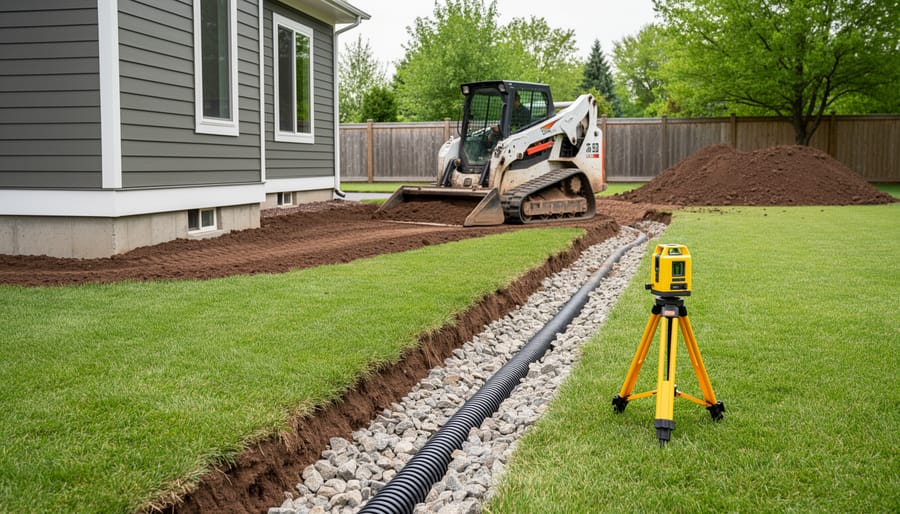
The price you’ll pay depends on four main factors: your yard’s size and slope severity, soil composition and compaction needs, equipment requirements (simple hand tools versus excavators), and whether you’re addressing minor puddling or major water flow issues. A modest 1,000-square-foot area with gentle regrading might cost $800 using a skid-steer and topsoil, while a 5,000-square-foot property with significant elevation changes could require $4,500 in excavation, French drain installation, and professional grading.
You can tackle simple projects yourself for $100 to $300 in materials—renting a plate compactor, purchasing quality topsoil, and dedicating a weekend to the work. However, projects requiring precise grading calculations, heavy machinery operation, or integration with existing drainage systems warrant professional expertise. The investment protects your home’s foundation, eliminates standing water that breeds mosquitoes and kills grass, and creates the healthy, sustainable landscape you’re working toward.
This guide breaks down exactly what you’ll pay, which variables drive costs up or down, when DIY makes sense, and how to ensure every dollar spent delivers lasting drainage solutions.
Why Yard Grading Matters More Than You Think
You might think your yard’s slope is just an aesthetic detail, but proper grading is actually one of the most critical elements of a healthy, functional outdoor space. The way water moves across and away from your property affects everything from your lawn’s vitality to your home’s structural integrity.
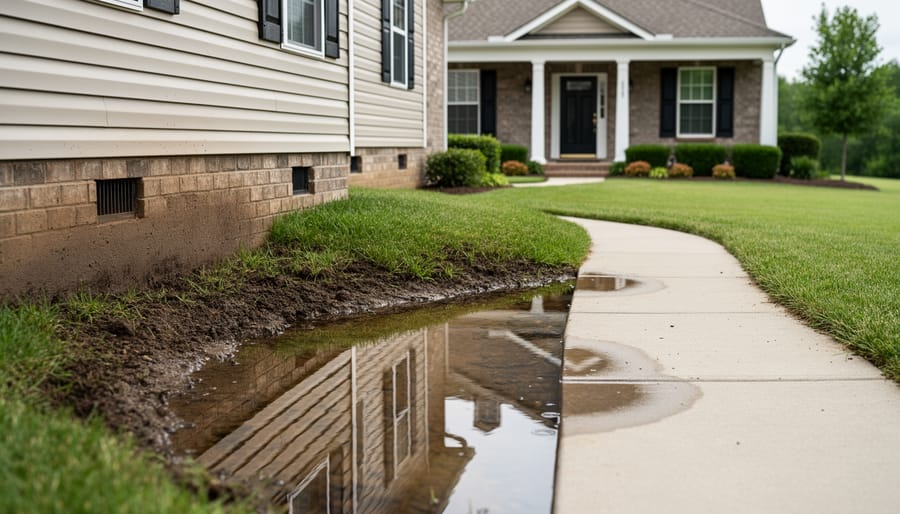
When water doesn’t drain properly, it pools in low spots, creating soggy patches where grass simply can’t thrive. These waterlogged areas become breeding grounds for disease, moss, and weeds while your desirable grass suffocates from lack of oxygen at the root level. Understanding why yards flood is the first step toward creating a landscape that works with nature rather than against it.
Beyond your lawn’s appearance, poor drainage triggers a cascade of problems. Erosion washes away precious topsoil you’ve spent years building up with compost and natural amendments. Those standing water puddles attract mosquitoes and other pests, turning your backyard retreat into an uncomfortable space you’ll want to avoid. Even worse, water that doesn’t move away from your foundation can seep into basements, crack concrete, and cause thousands of dollars in structural damage.
From a sustainability perspective, proper grading is about smart water management. When your yard slopes correctly, rainwater flows where it should, potentially feeding rain gardens or directing runoff to areas where it can naturally percolate into the ground rather than overwhelming storm drains. This approach supports local ecosystems and reduces strain on municipal water systems.
The financial reality is straightforward: investing in correct grading now prevents exponentially more expensive repairs later. Foundation work, basement waterproofing, and major landscape restoration all cost significantly more than addressing drainage issues proactively. Think of grading as preventive medicine for your property. A well-graded yard isn’t just prettier; it’s healthier, more usable, and protects your largest investment while working in harmony with natural water cycles.
The Real Costs: What to Expect for Yard Grading Projects
Small Fix vs. Full Yard Transformation
Not all drainage problems require the same level of intervention, and understanding the difference can save you a significant amount of money. Think of it like this: sometimes your lawn just needs a spot treatment, while other times it needs a complete makeover.
For minor grading projects, you’re looking at much more budget-friendly solutions. Leveling a single low spot where water pools after every rain might cost between $200 and $800, depending on the size and accessibility. Creating a simple swale—a gentle, grass-lined channel that redirects water away from problem areas—typically runs $500 to $1,500 for a basic installation. I recently helped a neighbor who had persistent pooling near their patio, and a small French drain with minimal grading solved the issue for about $900. These targeted fixes work beautifully when you have isolated drainage problems rather than widespread issues.
Full yard transformations are a different story entirely. Comprehensive regrading involves reshaping your entire property’s topography to ensure proper water flow away from structures and throughout the landscape. These projects typically range from $1,500 to $5,000 for average residential lots, but can climb to $10,000 or more for larger properties or complex situations requiring significant soil movement and multiple drainage solutions.
The key to making the right choice is honest assessment. If you’re dealing with one or two soggy spots, start small. However, if water consistently pools in multiple areas, drains toward your foundation, or you notice erosion patterns across your yard, a comprehensive approach often proves more cost-effective long-term than multiple band-aid fixes. A professional evaluation can help you determine which path makes sense for both your yard’s health and your wallet.
What Drives the Price Up (or Down)
Understanding what influences your yard grading project cost helps you budget realistically and avoid surprises. Let’s break down the key factors that’ll affect your final bill.
First up is yard size, which makes the biggest impact on pricing. A small 1,000-square-foot problem area costs significantly less than regrading your entire half-acre property. Equipment time, materials, and labor all scale with square footage, so measure your drainage problem zone carefully before getting quotes.
Soil type matters more than most homeowners realize. Sandy, loose soil is a dream to work with and moves quickly, keeping labor costs down. Clay-heavy soil? That’s a different story. It’s stubborn, requires more passes with equipment, and sometimes needs soil amendments to improve drainage, adding both material and labor expenses. Rocky soil can really drive up costs since contractors might need specialized equipment or extra time removing obstacles.
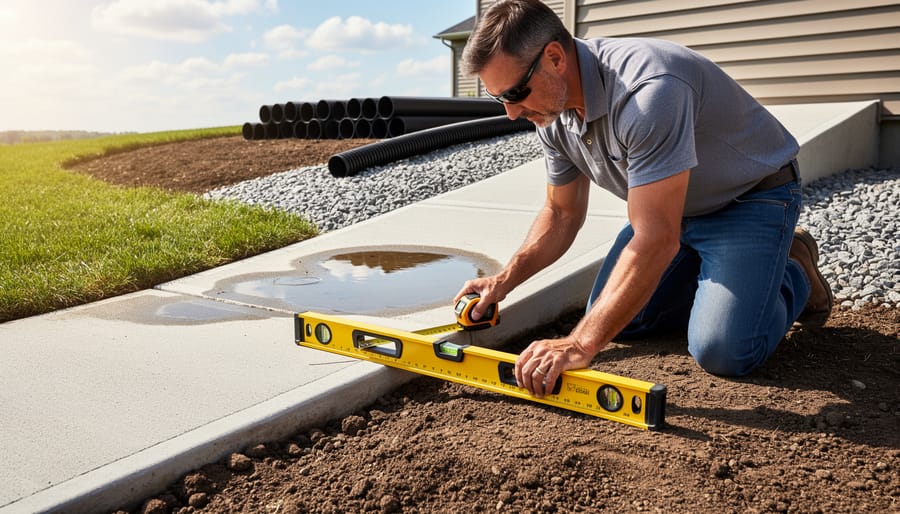
The severity of your slope plays a dual role. Mild grading adjustments cost less than dramatic reshaping, but sometimes a steeper slope is actually necessary for proper drainage. Your contractor will need to calculate the ideal grade, typically aiming for a 2-3 percent slope away from structures.
Equipment accessibility can make or break your budget. If grading machinery can easily reach your problem area, great. But tight spaces, narrow gates, or backyards only accessible through your house mean hand-grading or specialized compact equipment, both of which increase labor hours and costs.
Regional differences are real. Labor rates in urban areas or regions with high living costs run considerably higher than rural locations. Get multiple local quotes to understand your area’s going rate.
Existing landscaping complexity adds to the expense. If contractors need to work around mature trees, remove and replace sod, or relocate garden beds, expect higher bills. Finally, the drainage solution itself varies widely in cost. Simple regrading is most affordable, while adding French drains, catch basins, or dry wells increases material and installation expenses but often provides more comprehensive, long-lasting results.
DIY vs. Professional Grading: The Honest Comparison
Let’s talk honestly about when you can tackle yard grading yourself and when it’s time to call in the pros. I’ve seen both approaches work beautifully, and I’ve also witnessed some expensive learning experiences.
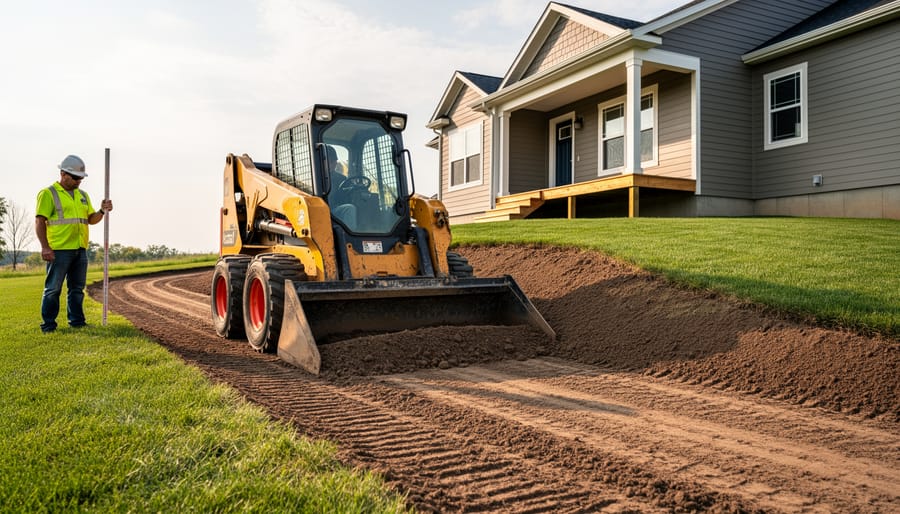
For minor grading projects, DIY can absolutely make sense. If you’re dealing with a small slope adjustment near your foundation or fixing a modest low spot in your lawn, and we’re talking about moving less than 10 cubic yards of soil, you’re probably a good candidate for the DIY route. Equipment rental will run you $75-200 per day for a basic skid steer or sod cutter, plus your time and elbow grease. Budget a full weekend, maybe two, depending on your project scope and physical fitness level.
Here’s where I encourage honest self-assessment. Moving soil is genuinely hard work. That beautiful loam weighs about 2,000 pounds per cubic yard. If you’re renting equipment you’ve never operated before, add learning curve time and potential mistakes. I’ve talked with homeowners who spent three weekends and $600 on rentals for projects a professional crew finished in six hours.
Professional grading becomes essential when you’re dealing with significant elevation changes, poor drainage affecting your foundation, or areas exceeding 500 square feet. Professionals bring experience reading grades, proper compaction techniques, and equipment efficiency you simply can’t match. More importantly, they understand sustainable drainage solutions that prevent future problems.
The real cost comparison isn’t just dollars. A botched DIY grading job might create new drainage problems, damage underground utilities, or require expensive corrections. Meanwhile, a well-executed professional job includes proper erosion control and typically comes with warranties protecting your investment.
Consider starting small if you’re DIY-curious. Fix that minor swale, see how it goes, and scale up your ambitions from there.
Breaking Down the Cost Components
Labor, Equipment, and Materials
Understanding the line items on your yard grading estimate helps you make informed decisions and spot fair pricing. Let’s break down what you’re actually paying for when you hire professionals or tackle this project yourself.
Labor costs typically represent the largest portion of your grading bill. Professional contractors generally charge between $50 and $100 per hour, depending on your location and the crew’s experience level. In metropolitan areas, expect rates on the higher end. Most grading projects require 2-3 workers, so you’re looking at $100-$300 per hour for the team. A straightforward residential grading job might take 8-16 hours of labor, though complex drainage issues can extend this considerably.
Equipment rental forms another significant cost component. Bobcats or skid steers run about $200-$400 per day, while larger excavators cost $300-$600 daily. Contractors typically include equipment costs in their overall bid, but DIYers need to budget separately for rentals. You’ll also need hand tools like rakes, shovels, and wheelbarrows, which are minimal investments if you don’t already own them.
Material costs vary widely based on what your yard needs. Topsoil, the premium option for areas where you’ll replant grass, costs $12-$55 per cubic yard. Fill dirt, perfect for building up low spots, runs cheaper at $5-$25 per cubic yard. Sand or gravel for drainage layers costs $15-$50 per cubic yard. Most residential projects require 10-50 cubic yards of material, though this depends entirely on your yard’s size and existing conditions.
Don’t forget delivery fees for materials, which add $50-$150 per load. This sustainable approach of strategic material selection ensures you’re not overspending where premium materials aren’t necessary while investing appropriately in areas that matter most for long-term drainage success.
Hidden Costs Nobody Warns You About
When you’re budgeting for yard grading, the quoted price is just the beginning. I’ve learned this the hard way, and I want to spare you the sticker shock I experienced!
First up, permit fees can catch you off guard. Many municipalities require permits for significant grading work, especially if you’re altering drainage patterns. These typically run $50 to $500, depending on your location and project scope. Before anyone breaks ground, call your local building department to understand what’s required.
Next, utility location services are non-negotiable. While many areas offer free utility marking through 811, private utility location for things like invisible dog fences, low-voltage lighting, or sprinkler lines can cost $200 to $600. Trust me, it’s worth every penny compared to repairing a severed cable.
Don’t skip soil testing either. At $50 to $200, it seems optional until you realize your soil’s composition affects drainage effectiveness and what amendments you’ll need. Poor soil can turn your grading project into a muddy disappointment.
Erosion control measures like silt fencing or straw wattles add $100 to $800 but protect neighboring properties and keep you compliant with environmental regulations. They’re especially crucial on sloped properties.
Once grading’s complete, you’ll need to restore your lawn. Sod replacement runs $0.35 to $0.85 per square foot, while seeding costs $0.10 to $0.25 per square foot. Budget for at least 500 square feet of restoration.
Finally, existing systems rarely survive grading unscathed. Irrigation system adjustments can add $300 to $1,500 to your bill.
My advice? Add a 20-25% buffer to any estimate. This cushion transforms potential budget disasters into manageable adjustments, keeping your project sustainable and stress-free.
Getting the Most Value from Your Grading Investment
Smart Planning That Saves Money
Here’s the truth about saving money on yard grading: smart planning beats hasty decisions every single time. When you’re staring at a waterlogged lawn, it’s tempting to rush into the first solution you find, but taking a step back can save you thousands.
Consider bundling projects together. If you’re already planning a patio installation, new garden beds, or landscape renovation within the next year or two, tackle the grading simultaneously. Contractors often offer better rates when they can complete multiple jobs in one visit, and you’ll only need to bring in heavy equipment once. Plus, addressing drainage issues before adding hardscaping prevents costly do-overs down the road.
Timing matters more than you’d think. Late fall through early spring typically sees softer demand for grading work in many regions, which can translate to 10-20% savings on labor costs. Just avoid scheduling during ground-freeze periods or extremely wet conditions when work becomes impossible.
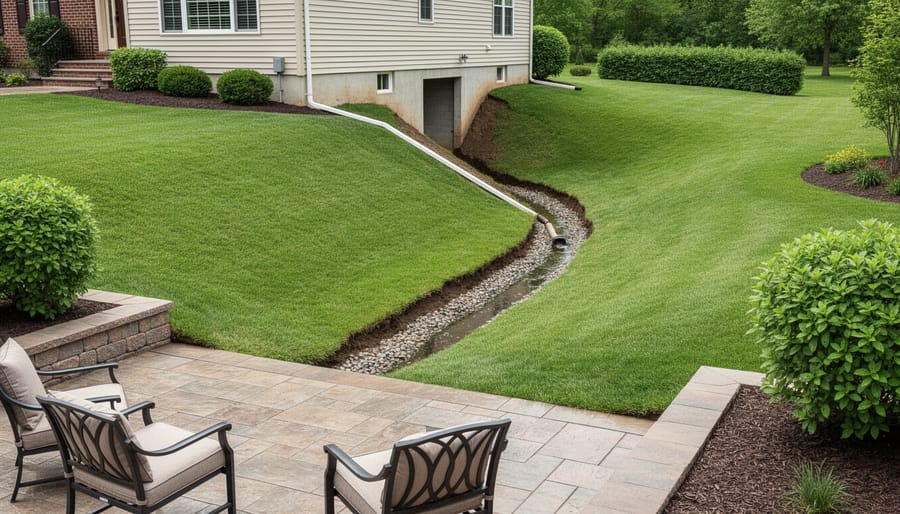
Don’t overlook sustainable drainage solutions that work with your landscape rather than against it. Rain gardens, bioswales, and French drains planted with native species handle water beautifully while supporting local ecosystems and reducing long-term maintenance costs. These nature-based approaches often cost less initially and certainly pay dividends over time.
If budget constraints feel overwhelming, ask contractors about phasing the work. Start with the most critical drainage problems near your foundation, then address secondary areas as funds allow. This practical approach prevents the “all or nothing” trap while still making meaningful progress toward a healthier, better-draining yard.
Questions to Ask Before Hiring
Before signing any contract, arm yourself with the right questions to find a contractor who’ll solve your drainage problems for good—not just push water around temporarily. Start by asking how long they’ve been doing grading work specifically, and request photos of completed projects similar to yours. A quality contractor should happily show you their portfolio and provide references from recent clients dealing with drainage issues.
Dig deeper into their proposed solution. Ask them to explain exactly where water will flow after grading, how they determined the slope percentages, and whether the plan addresses the root cause of your drainage problem or just the symptoms. If they can’t clearly articulate this, that’s a red flag. You want someone who understands hydrology, not just someone with equipment.
Verify they carry both liability insurance and workers’ compensation coverage—request certificates, not just verbal assurances. Ask what’s included in their estimate and what might cost extra. Does the price cover topsoil, seeding, or just the grading itself? What happens if they encounter unexpected issues like buried debris or compacted clay?
Don’t forget to discuss sustainability practices. Will they preserve existing healthy vegetation where possible? Do they use organic amendments to improve soil drainage naturally? A contractor who values environmental stewardship often delivers more thoughtful, long-lasting solutions.
Finally, ask about their warranty or guarantee. Reputable contractors stand behind their work and should offer some protection if drainage issues persist after completion.
After the Grading: Maintaining Your Investment
Congratulations! You’ve invested in proper yard grading, and now it’s time to protect that investment. Think of your newly graded yard like fresh paint—it needs a little TLC before it can truly do its job.
The first few weeks are critical. Your freshly graded soil is vulnerable to erosion, especially during rainstorms. The best defense? Get something growing on it quickly. Within the first week after grading, you’ll want to establish grass or other ground cover. Grass seed mixed with an erosion control mulch works beautifully, or consider hydroseeding for faster results. For steeper slopes, erosion control blankets provide extra protection while vegetation takes hold.
Water your new seed consistently but gently—you’re nurturing growth while avoiding washouts. A light sprinkler setting works better than a heavy spray that could disrupt your careful grading work.
Monitor your drainage system after every significant rain, especially during the first season. Walk your yard and look for standing water, new soft spots, or areas where water isn’t flowing as intended. Early detection of problems means easier, less expensive fixes.
Long-term maintenance is simpler than you might think. Keep downspouts and drainage channels clear of leaves and debris. Aerate compacted areas annually to maintain soil permeability. When adding mulch to garden beds, avoid piling it against your home’s foundation or creating dams that block water flow.
Sustainable practices support your drainage investment beautifully. Deep, infrequent watering encourages robust root systems that stabilize soil. Diverse plantings along drainage paths help absorb excess water naturally. Avoid heavy equipment on wet soil to prevent compaction that undoes your grading work.
Remember, proper drainage isn’t a one-time fix but an ongoing partnership between good design and thoughtful maintenance. Your yard will reward your attention with a healthier lawn, stronger plants, and a home protected from water damage for years to come.
Looking at yard grading costs can feel overwhelming at first, especially when quotes range from a few hundred to several thousand dollars. But here’s the reassuring truth: understanding what you’re investing in puts you in the driver’s seat. Whether your property needs minor leveling or a complete drainage overhaul, knowing the variables that affect pricing helps you make informed decisions that align with both your budget and your yard’s unique needs.
Think of proper drainage as the foundation of everything else you’re working toward in your garden. Without it, even the most carefully selected plants, the richest soil amendments, and your dedicated weekend efforts face an uphill battle against pooling water and erosion. When you address grading issues, you’re not just moving dirt around—you’re creating the conditions for a thriving, sustainable landscape that brings you joy for years to come.
The beauty of this investment is that it compounds over time. A well-graded yard means healthier grass, fewer pest problems, reduced mosquito breeding grounds, and protection for your home’s foundation. You’ll spend less time battling soggy patches and more time enjoying the lush, beautiful lawn you’ve been envisioning.
So take a deep breath and take control. Get those quotes, ask questions, and remember that you’re making a smart investment in your property’s health and your own peace of mind. Your yard—and your future self—will thank you.