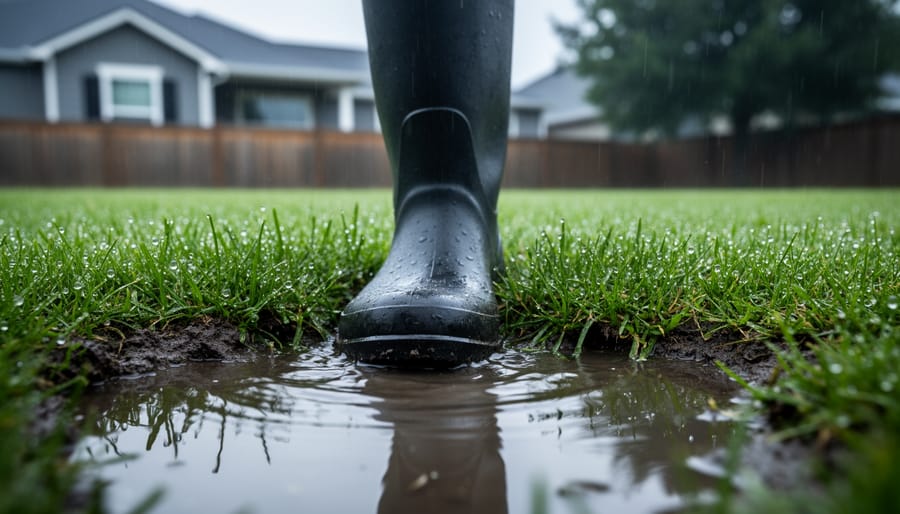
Walk across your lawn after heavy rain, and those squishy, waterlogged patches tell a troubling story. When soil stays saturated for too long, the air pockets your grass roots desperately need get filled with water instead, essentially suffocating your turf from below. This isn’t just about drainage issues you can see on the surface—beneath your feet, a complex chemical transformation is taking place that fundamentally changes how nutrients behave in your soil.
Understanding waterlogged soils matters because they create a domino effect of lawn problems. Without oxygen reaching the root zone, beneficial soil microbes can’t function properly, and your grass roots literally can’t breathe. The soil chemistry shifts in ways that lock up essential nutrients your turf needs while releasing others that can actually harm plant health. That beautiful green lawn you’ve worked so hard to establish starts yellowing, develops bare patches, and becomes vulnerable to disease—all because of what’s happening in that oxygen-starved soil below.
The good news? Once you understand the science behind waterlogging and its impact on nutrient availability, you can take practical steps to restore your soil’s health and get your lawn thriving again. Whether you’re dealing with occasional soggy spots or persistent drainage challenges, the solutions are more accessible than you might think, and many align perfectly with sustainable lawn care practices that benefit both your yard and the environment.
What Actually Happens When Your Soil Gets Waterlogged
The Oxygen Crisis Underground
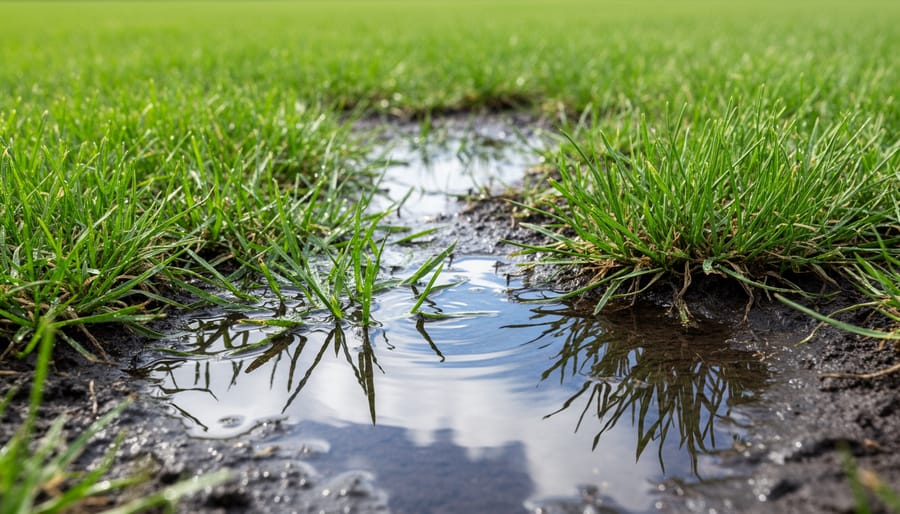
When soil becomes waterlogged, the tiny air pockets between soil particles fill with water instead of oxygen. This creates a crisis for your grass roots, which need oxygen to survive and thrive. Think of it like holding your breath underwater – your lawn is essentially suffocating beneath the surface.
Grass roots depend on a constant supply of oxygen for respiration, the process that gives them energy to absorb nutrients and grow. When waterlogged conditions persist for more than a day or two, oxygen levels plummet, and roots begin to struggle. Within just 48 hours, beneficial soil microorganisms that require oxygen start dying off, replaced by anaerobic bacteria that can actually harm your lawn.
The warning signs appear gradually but unmistakably. You might first notice patches of yellowing grass, particularly in low-lying areas where water tends to collect. The grass loses its vibrant green color because stressed roots cannot efficiently absorb iron and nitrogen, essential nutrients for healthy chlorophyll production.
As oxygen deprivation continues, you will see thinning turf where grass plants simply give up and die. The remaining grass appears weak and spindly, with shallow root systems that make your lawn even more vulnerable to stress. You might also detect a sour or rotten egg smell – that is hydrogen sulfide gas produced by those anaerobic bacteria, a telltale sign that your soil has turned into an unhealthy, oxygen-starved environment. The good news is that understanding this underground crisis is your first step toward restoration.
How Long Does It Take for Problems to Start?
Understanding the timeline of waterlogging helps you respond appropriately and avoid unnecessary panic after a heavy rainstorm. After significant rainfall, it’s perfectly normal for your lawn to stay soggy for 12 to 24 hours. Most healthy soils with decent drainage will recover within this window, and your grass won’t suffer any lasting damage.
The real concern begins when water remains pooled or the soil stays saturated for more than 48 hours. At this point, oxygen levels in the soil start dropping significantly, and those problematic chemical reactions we mentioned earlier begin accelerating. Your grass roots will start feeling stressed within two to three days of continuous saturation.
By day four or five of persistent waterlogging, you’ll typically notice visible symptoms—yellowing grass, a sour smell from the soil, or that telltale spongy feeling underfoot. If conditions don’t improve within a week, you’re dealing with chronic waterlogging rather than temporary wetness, and it’s time to take action.
Here’s a helpful rule of thumb: if the same area stays wet through multiple dry days, or if you notice water pooling repeatedly in the same spots after every rain, you’ve got a drainage problem that needs addressing rather than just weather-related saturation.
The Chemical Transformation: Understanding Redox Reactions in Your Lawn
From Aerobic to Anaerobic: Your Soil’s Identity Crisis
When your soil becomes waterlogged, it’s like your lawn is suddenly holding its breath underwater. Here’s what’s happening beneath the surface, and why it matters for your grass.
In healthy soil, tiny air pockets between soil particles are filled with oxygen. This oxygen-rich environment is what we call aerobic, and it’s where beneficial bacteria, earthworms, and grass roots thrive. These aerobic microorganisms are the good guys, breaking down organic matter efficiently and releasing nutrients your lawn can easily absorb.
But when water floods these air spaces and stays there, oxygen gets pushed out within just 24 to 48 hours. This triggers your soil’s identity crisis. Without oxygen, the aerobic bacteria can’t survive, and a completely different cast of characters takes over: anaerobic bacteria.
Think of anaerobic bacteria as the emergency backup crew, but they’re not nearly as efficient. They work much slower and produce some pretty unpleasant byproducts in the process. Instead of creating plant-friendly nutrients, they generate compounds like hydrogen sulfide (that rotten egg smell), methane, and various organic acids. These substances can actually be toxic to your grass roots.
This bacterial changeover also affects nutrient availability. Iron and manganese change form in these oxygen-poor conditions, sometimes becoming so abundant they’re toxic to plants. Meanwhile, nitrogen, which your lawn desperately needs for that lush green color, literally escapes into the atmosphere through a process called denitrification.
The good news? Understanding this shift helps you recognize why drainage solutions are so important for restoring your soil’s health.
What ‘Reduced’ Soil Actually Means
If you’ve ever wondered why your waterlogged lawn develops strange gray patches or smells a bit like rotten eggs, you’re witnessing what soil scientists call “reduction.” Don’t worry, this isn’t as complicated as it sounds!
When soil becomes waterlogged, oxygen gets pushed out by all that excess water. Without oxygen, beneficial soil microbes that normally breathe air have to find other elements to survive, like iron, manganese, and sulfur. As these microbes consume these alternative elements, they chemically change them in a process called reduction.
Here’s what you might notice: Reduced soils often develop a grayish or bluish-gray color, quite different from the rich brown of healthy soil. You might also catch a whiff of that distinctive sulfur smell, similar to rotten eggs, which happens when microbes process sulfur compounds in the absence of oxygen. Some gardeners even notice a rusty sheen on water puddles, which indicates iron compounds being released.
These visual and sensory clues are your lawn’s way of telling you it’s struggling to breathe. Understanding this helps you recognize the problem early and take action before your grass suffers permanent damage.
How Waterlogging Hijacks Your Lawn’s Nutrient System
Nitrogen’s Disappearing Act
When your lawn sits in waterlogged conditions, something frustrating happens beneath the surface—nitrogen literally vanishes into thin air. This process, called denitrification, is one of the main reasons your grass looks pale and weak even when you’ve been diligent about fertilizing.
Here’s what’s happening: In saturated soil, oxygen becomes scarce as water fills the air pockets between soil particles. Certain soil bacteria, desperate for oxygen to survive, turn to nitrate—a form of nitrogen that plants readily use—as an alternative oxygen source. As these microorganisms break down nitrate, they convert it into nitrogen gases that escape into the atmosphere. Think of it as your expensive fertilizer literally floating away.
This chemical escape act explains why waterlogged lawns often show classic signs of nitrogen deficiency—yellowing blades, stunted growth, and thin turf—despite your best fertilization efforts. You might apply nitrogen-rich fertilizer one week, only to watch it convert to gas and disappear within days if the soil remains saturated.
The longer your soil stays waterlogged, the more nitrogen you lose. Studies show that poorly drained soils can lose up to 50 percent of applied nitrogen through denitrification during extended wet periods. That’s not just bad for your lawn—it’s wasteful for your wallet and problematic for the environment, as some of these nitrogen gases contribute to greenhouse emissions. Understanding this process helps explain why improving drainage is often more effective than simply adding more fertilizer to struggling wet-area lawns.
Iron and Manganese: From Friend to Foe
Under normal circumstances, iron and manganese are valuable allies in maintaining a healthy lawn. Iron helps produce that rich green color we all love, while manganese supports essential plant functions like photosynthesis and nitrogen metabolism. But when your soil becomes waterlogged, these friendly nutrients transform into something quite different.
Here’s what happens: in oxygen-starved conditions, soil chemistry shifts dramatically. Iron and manganese convert from their stable forms into highly soluble versions that become toxic to grass roots. Think of it like having too much of a good thing at exactly the wrong time. These concentrated metals can accumulate in root tissues, causing significant damage and stress to your turf.
The visible signs are hard to miss. You might notice orange or rust-colored staining on sidewalks, driveways, or even on the grass blades themselves. Black or dark brown patches may appear in your lawn, sometimes accompanied by a slight sheen on the soil surface. These discolorations often indicate iron and manganese toxicity at work.
Your grass roots, already struggling in waterlogged conditions, now face an additional challenge. The excess metals interfere with other nutrient uptake and can physically damage root cells. This creates a vicious cycle where compromised roots are even less capable of handling the wet conditions, making recovery more difficult without intervention.
Phosphorus Gets Locked Away
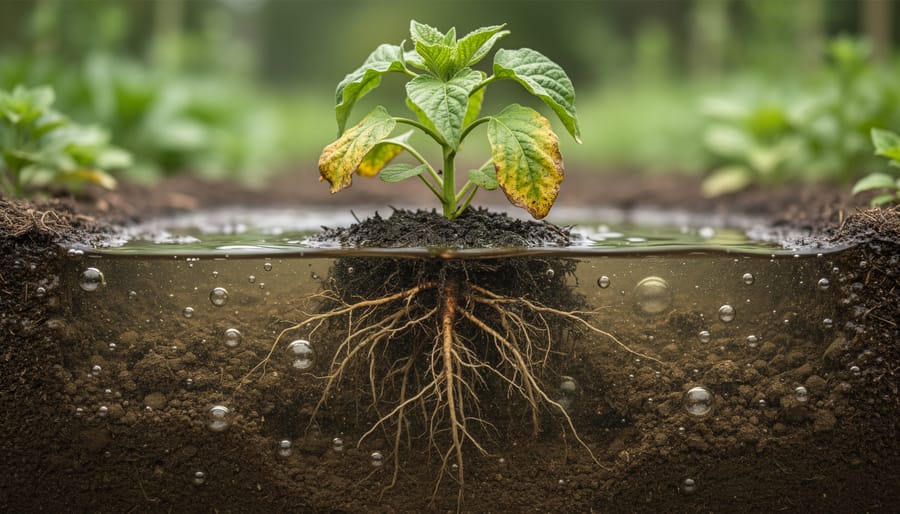
When your soil becomes waterlogged, phosphorus plays an interesting disappearing act that can leave your lawn looking lackluster. Here’s what happens: in well-drained soils, phosphorus exists in forms that plant roots can readily absorb. But when excess water fills those crucial air pockets in your soil, chemical reactions transform phosphorus into compounds that essentially become locked away from your grass roots.
Think of it like having food in your pantry but no way to open the door. The phosphorus is still there in your soil, but it’s bound up with iron and aluminum in ways that make it unavailable to your turf. This is particularly frustrating because phosphorus is essential for strong root development, and when your grass is already stressed by soggy conditions, it desperately needs robust roots to survive.
You’ll notice the effects pretty quickly. Your lawn may develop a purplish tint, especially on older blades, and growth slows to a crawl. Young grass and newly seeded areas are especially vulnerable since they’re working hard to establish root systems. The good news? Once drainage improves and oxygen returns to the soil, much of that locked-up phosphorus becomes available again, giving your lawn a chance to bounce back naturally.
Why Your Fertilizer Isn’t Working Anymore
I know how frustrating it is to watch your lawn struggle despite faithfully following a fertilizer schedule. You’re doing everything right, yet the grass stays pale and patchy. Here’s the hard truth: when your soil is waterlogged, fertilizing is like pouring money down the drain – literally.
In saturated soil, grass roots can’t absorb nutrients properly because they’re essentially drowning. Without oxygen, roots shut down their nutrient uptake mechanisms as a survival response. Even worse, those expensive nutrients you’ve applied are likely washing away with excess water or transforming into forms your grass can’t use. Nitrogen converts to gas and escapes into the atmosphere, while phosphorus and potassium either leach away or become chemically locked up in the anaerobic soil.
The encouraging news? Once you address the drainage problem, your lawn will bounce back remarkably quickly. Focus your energy and budget on improving water movement through your soil first. Save that fertilizer for when your lawn can actually use it – you’ll see dramatically better results and practice more sustainable lawn care by not wasting resources on treatments that can’t work under waterlogged conditions.
Reading the Warning Signs: Is Your Lawn Waterlogged?
Above-Ground Symptoms You Can’t Miss
Your lawn talks to you through its appearance, and waterlogged soil creates some telltale signs you’ll want to catch early. The most obvious clue is that spongy, squelchy feeling when you walk across your grass—if your footprints fill with water or the ground feels like a wet sponge, you’ve got a waterlogging issue.
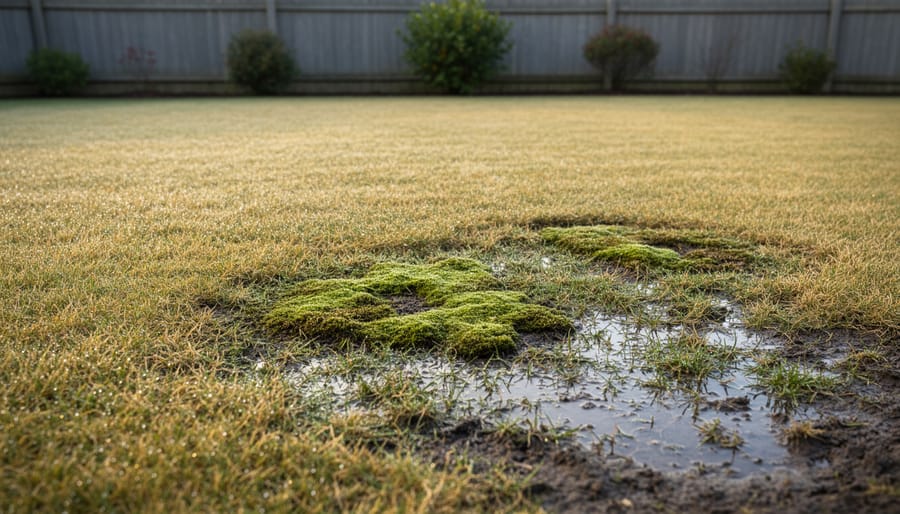
Look for yellowing grass that doesn’t perk up despite warmer weather. Unlike drought stress, which starts at the tips, waterlogging yellowing often appears patchy and can have a pale, washed-out look. You might also notice moss creeping in, taking advantage of grass that’s too weak to compete. Moss loves what your grass hates: constant moisture and poor growing conditions.
Check for areas that stay wet long after rain or irrigation stops. While a day of dampness is normal, puddles lingering for 24 hours or more signal drainage problems. Here’s a simple test: try pulling up a small plug of grass. In waterlogged conditions, you’ll find surprisingly shallow, sparse roots instead of the deep, fibrous network healthy turf develops. Those struggling roots simply can’t penetrate oxygen-starved soil, leaving your lawn vulnerable and weak.
The Simple Drainage Test
Here’s a quick test you can do right in your yard to figure out just how serious your drainage problem is. Grab a shovel and dig a hole about 12 inches deep and 6 inches wide in the problem area. Fill it completely with water and let it drain. Once empty, fill it again and start timing. In well-draining soil, the water should drop about an inch per hour. If your hole is still full after four hours, you’ve got significant drainage issues that need addressing. This simple percolation test takes the guesswork out of diagnosing waterlogged conditions and helps you decide whether you need minor amendments like adding organic matter or more substantial solutions like installing drainage systems. I recommend doing this test in a few spots across your lawn, especially if you notice some areas staying wetter than others. It’s a small time investment that gives you valuable information about what’s really happening beneath your grass.
Fixing the Problem: Sustainable Solutions for Waterlogged Turf
Aeration: Your First Line of Defense
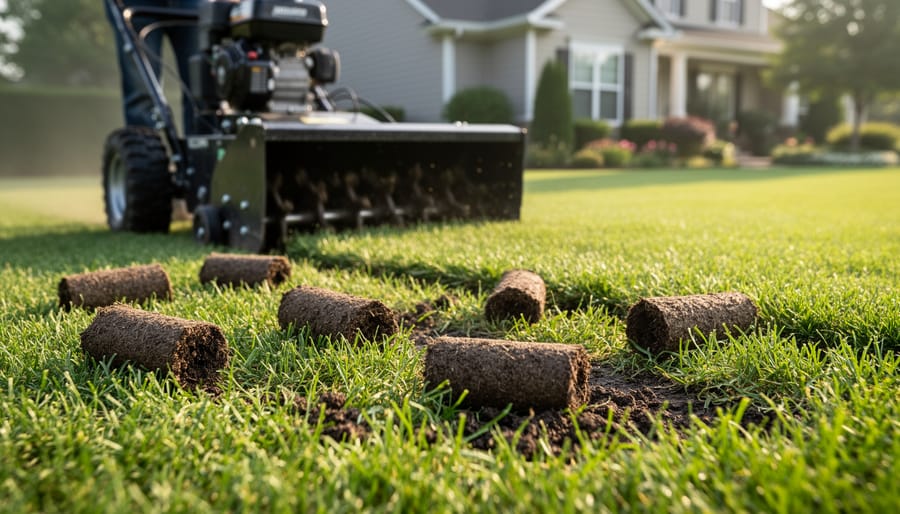
Think of core aeration as giving your waterlogged lawn a chance to breathe again. When soil becomes compacted and saturated, grass roots literally suffocate from lack of oxygen. Core aeration tackles this head-on by pulling small plugs of soil from your lawn, creating channels that allow air, water, and nutrients to penetrate deeper into the root zone.
For lawns prone to waterlogging, timing is everything. The best window is during your grass’s active growing season when it can quickly recover and take advantage of improved conditions. For cool-season grasses, aim for early fall or spring. Warm-season varieties benefit most from late spring to early summer aeration. If you’re dealing with serious drainage issues, consider aerating twice yearly until conditions improve.
How often should you aerate? Most waterlogging-prone lawns benefit from annual treatment, though heavily compacted clay soils might need attention twice a year initially. You’ll know it’s working when you see better water absorption and healthier grass growth.
Equipment-wise, core aerators that remove actual soil plugs work far better than spike aerators, which can actually worsen compaction. You can rent a gas-powered aerator from most garden centers for around fifty dollars a day, or invest in a manual aerator for smaller lawns. For the sustainability-minded gardener, those removed soil cores are gold. Leave them on the lawn to break down naturally, returning valuable organic matter and microorganisms back into your soil ecosystem while reducing waste.
Topdressing with Compost: Building Better Soil Structure
One of the most effective long-term solutions for waterlogged soil is topdressing with compost. Think of compost as a soil conditioner that works magic over time. The organic matter in compost creates tiny aggregates in your soil, forming channels that allow water to drain more efficiently while still retaining moisture when your lawn needs it.
When applying compost, spread a thin layer of about one-quarter to one-half inch across your lawn using a shovel or drop spreader. Work it into the grass with a rake or by dragging a doormat over the surface. The best times are early spring or fall when your grass is actively growing.
For sustainable sourcing, consider making your own compost from kitchen scraps and yard waste, or contact local municipal composting programs that often offer free or low-cost compost to residents. You can also check with local farms or garden centers for organic options. Apply compost annually, and you’ll gradually transform your soil structure, improving drainage while building a healthier, more resilient lawn ecosystem.
When You Need to Go Deeper: Addressing Serious Drainage Issues
Sometimes surface fixes just won’t cut it, and that’s okay. If you’ve tried improving drainage with amendments and aeration but still find yourself dealing with standing water, it’s time to consider more substantial interventions.
French drains are a reliable solution for persistent waterlogging. These underground trenches filled with gravel redirect water away from problem areas, and while they require some digging effort, they’re a one-time fix that can transform your lawn. Installing one involves excavating a shallow trench, laying perforated pipe, and covering it with gravel and landscape fabric before replacing the soil.
Regrading your yard addresses the root cause by reshaping the landscape to encourage proper water flow. Even a gentle slope of 2-3% away from buildings and toward drainage areas can work wonders. This is definitely a bigger project, but it’s incredibly effective for severe cases.
Raised beds offer an elegant workaround when drainage problems are simply too challenging to fix. By elevating your planting areas 8-12 inches, you create ideal growing conditions above the waterlogged zone. This sustainable approach works beautifully for both ornamental gardens and vegetable patches.
For extensive drainage issues, complicated grading problems, or situations involving property boundaries and municipal regulations, don’t hesitate to consult a landscape professional. Their expertise can save you time, money, and frustration in the long run.
Maintaining Healthy Soil Chemistry After Recovery
Smart Watering Practices That Prevent Problems
The best defense against waterlogged soil is smart watering from the start. Think of it as giving your lawn a drink when it’s thirsty, not on a rigid schedule. During spring and fall when rainfall is typically higher, you might not need to irrigate at all. In summer, water deeply but less frequently—this encourages roots to grow downward rather than staying shallow where they’re vulnerable to waterlogging.
Here’s a simple rule: if you can push a screwdriver six inches into your soil easily, you don’t need to water yet. This hands-on test beats any timer setting. Early morning watering between 4-10 AM is ideal since it allows grass blades to dry before evening, reducing disease risk while minimizing evaporation loss.
Consider investing in a rain sensor for your irrigation system—it’s a small upgrade that prevents unnecessary watering after storms. If you’re using sprinklers, aim for about one inch of water per week total, including rainfall. You can measure this by placing empty tuna cans around your lawn during watering.
Adjust your approach seasonally. Dormant grass in late fall needs minimal water, while actively growing turf in late spring requires more attention. Remember, overwatering doesn’t just waste water—it creates the exact conditions that lead to oxygen-starved, waterlogged soil.
Choosing Grass Varieties for Problem Areas
While you work on drainage improvements, selecting the right grass varieties can make a significant difference in waterlogged areas. Some grasses naturally tolerate “wet feet” better than others, giving you a fighting chance while you address the underlying moisture issues.
For cooler climates, tall fescue stands out as a moisture-tolerant champion. Its deep root system helps it access oxygen even in compromised soil conditions. Perennial ryegrass also handles periodic waterlogging reasonably well, though it’s not ideal for constantly soggy spots.
In warmer regions, consider Bahiagrass if you’re dealing with persistent moisture problems. It’s remarkably tolerant of both waterlogging and poor drainage. Zoysia grass offers another solid option, particularly the cultivars bred for shade and moisture tolerance, though it grows more slowly than some alternatives.
Here’s the reality check: even moisture-tolerant varieties have their limits. No grass thrives in standing water or permanently saturated soil. Think of these selections as a practical bridge while you implement drainage solutions, not a magic fix. They’ll struggle less and recover faster than moisture-sensitive varieties, but lasting success still requires addressing the waterlogging itself. Consider these recommendations as part of your overall strategy, working alongside aeration, soil amendments, and drainage improvements to create genuinely healthy growing conditions.
You’ve now got a solid understanding of what’s happening beneath the surface when your lawn becomes waterlogged. The science of redox reactions and nutrient transformations might have seemed daunting at first, but knowing these fundamentals gives you real power to tackle your lawn’s challenges with confidence. When you see yellowing grass or muddy patches, you’re no longer just guessing at solutions. You understand that oxygen-starved roots need help, that nutrients are locked away waiting for better conditions, and that your soil’s natural processes can be your greatest ally with a bit of patience and the right intervention.
Here’s the encouraging truth: most waterlogging problems are absolutely solvable. Whether your yard needs improved drainage, amended soil structure, or simply better watering practices, you’ve got options that work with nature rather than against it. The sustainable approaches we’ve discussed, like incorporating organic matter, choosing appropriate grass varieties, and improving soil structure, might take longer than dumping synthetic fixes on the problem, but they create lasting change. Your lawn becomes more resilient, your soil ecosystem thrives, and you’re building a foundation that will serve you for years to come.
Remember, even the most experienced gardeners face waterlogging challenges. The difference isn’t that they have perfect lawns, it’s that they understand what’s happening and respond thoughtfully. Take what you’ve learned, observe your specific conditions, and give your solutions time to work. Your lawn will thank you with deeper roots, healthier growth, and the resilience to handle whatever weather comes its way.