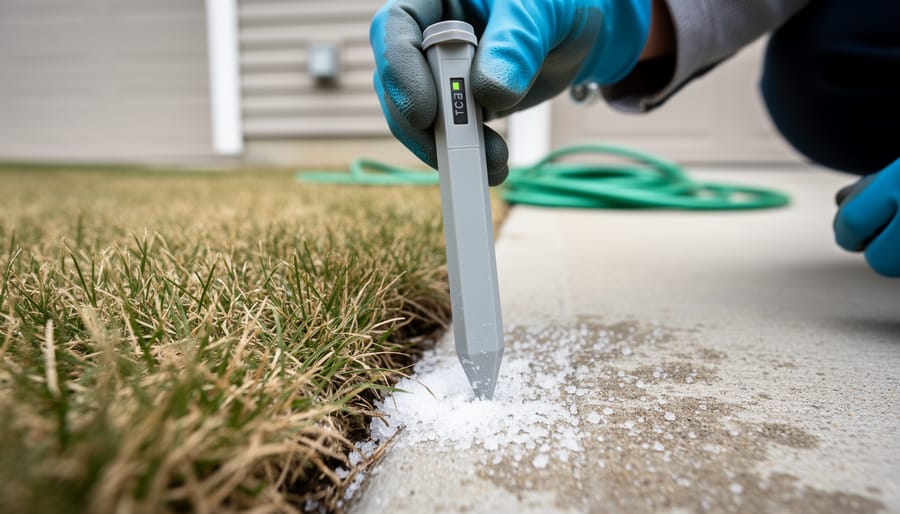
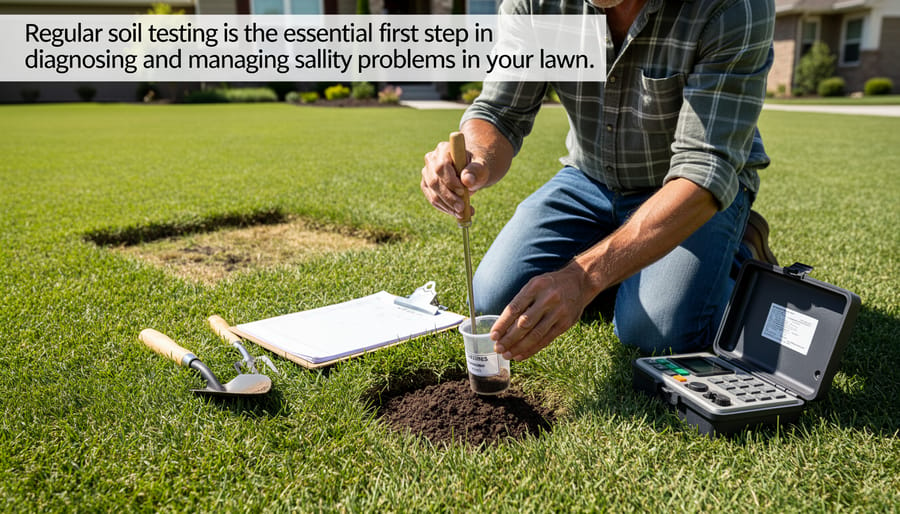
Test your soil’s electrical conductivity using an affordable home meter or send samples to your local extension office—readings above 4 dS/m indicate problematic salt levels that require immediate intervention. Flush affected areas with 6 inches of fresh water applied slowly over several hours, allowing it to leach salts below the root zone, then repeat monthly during growing season for persistent issues. Switch to salt-tolerant grass varieties like tall fescue or perennial ryegrass if you’re in coastal regions or areas with naturally saline soils, as they’ll withstand up to 6 dS/m while maintaining acceptable turf quality.
Salt accumulation ranks among the most frustrating common lawn problems because it often masquerades as drought stress, nutrient deficiency, or disease. You’ll notice brown patches that don’t respond to watering, stunted growth along driveways and sidewalks, or gradual lawn decline despite your best care efforts. The culprits vary—over-application of synthetic fertilizers, road deicing salts, irrigation with hard water, poor drainage trapping salts near roots, or even natural soil conditions in arid climates.
Understanding soil salinity management empowers you to restore your lawn’s health without resorting to complete renovation. The process combines smart testing, strategic water management, thoughtful grass selection, and sustainable soil amendments that address root causes rather than symptoms. Whether you’re dealing with winter salt damage, irrigation-related buildup, or inherent soil conditions, the solutions ahead offer practical pathways to a resilient, thriving lawn that aligns with environmentally responsible practices.
What Is Soil Salinity and Why Should Lawn Owners Care?
The Difference Between Salinity and Sodicity
Here’s a simple way to understand the difference: salinity means too much salt in your soil, while sodicity means too much sodium specifically. Think of it like this—if salinity is the total amount of all salts present, sodicity is about one particular troublemaker in that mix.
Both cause lawn problems, but they damage grass differently. High salinity makes it harder for grass roots to absorb water, essentially causing drought-like symptoms even when you’re watering regularly. Your lawn might look scorched and struggle to grow because it’s working overtime just to take up moisture against those concentrated salts.
Sodicity, on the other hand, creates a different headache. Excess sodium breaks down your soil structure, causing clay particles to disperse and leading to poor drainage, hard crusted surfaces, and compacted soil that roots can’t penetrate easily.
Why does this distinction matter? Because the solutions differ. You might successfully flush out general salts through improved watering practices, but sodic soils often need amendments like gypsum to displace that stubborn sodium. Understanding which problem you’re facing—or if you’ve got both—ensures you choose the right treatment approach and don’t waste time or money on solutions that won’t work.
Signs Your Lawn is Suffering from Salt Stress
Your lawn has a way of telling you when something’s wrong, and salt stress comes with some pretty distinctive calling cards. The good news? Once you know what to look for, you’ll be able to catch the problem early and take action before it gets worse.
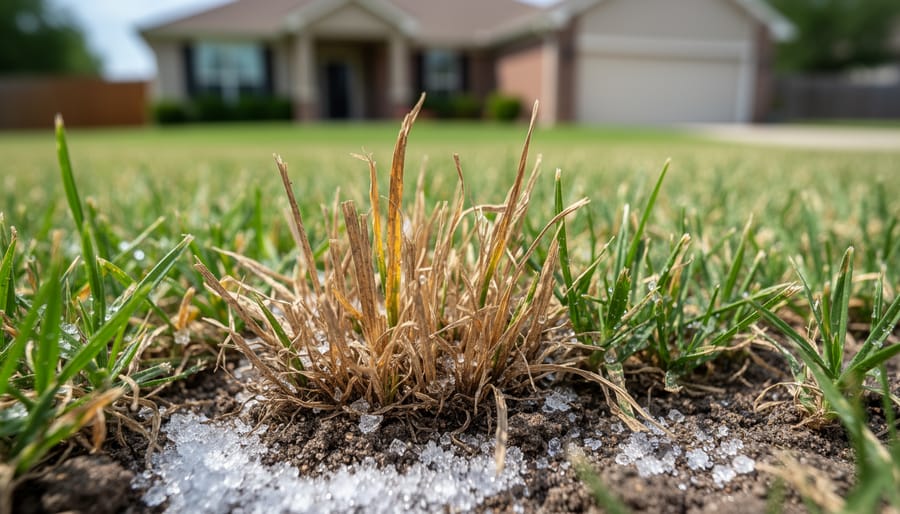
One of the first signs you’ll notice is leaf tip burn – those telltale brown or yellowish edges on grass blades that look scorched, even though there’s been no heat wave. This happens because salt pulls moisture away from the grass tips, essentially dehydrating them from the inside out.
You might also spot patchy, irregular growth patterns across your lawn. Some areas may be thriving while others look thin and struggling, creating an inconsistent, mottled appearance that’s frustrating no matter how much you care for your turf.
Here’s something that catches many homeowners off guard: grass that stays stressed despite regular watering. If you’re diligent about irrigation but your lawn still looks thirsty and wilted, salt buildup might be preventing those roots from actually absorbing the water you’re providing. It’s like offering someone a drink through a clogged straw.
Keep an eye out for crusty white or grayish deposits on the soil surface, particularly after watering or rain has evaporated. This chalky residue is literally salt rising to the surface – a clear visual indicator that you’re dealing with salinity issues.
The key to managing salt stress effectively starts with recognizing these symptoms early. The sooner you identify the problem, the easier it’ll be to restore your lawn to its healthy, vibrant state using sustainable solutions.
Testing Your Soil: Know What You’re Dealing With
When to Test Your Turf Soil
Timing your soil salinity test correctly can save you both time and money while helping you catch problems before they seriously damage your lawn. The best time for a baseline test is early spring, just as your grass is waking up from winter dormancy. This gives you a clear picture before the growing season kicks into high gear and allows time to implement any necessary treatments.
For established lawns, testing every two to three years is usually sufficient unless you notice problems. However, some situations call for immediate testing. If you’re dealing with new construction, test before laying sod or seeding since builders often leave compacted, salt-laden soil behind. Coastal properties should be tested annually, as salt spray and storm surges constantly introduce new salts into your soil. Living in areas where winter road salt is heavily applied? Test each spring to assess accumulated damage.
Don’t wait for your scheduled test if your lawn is telling you something’s wrong. Persistent brown patches that don’t respond to normal care, grass that looks perpetually thirsty despite adequate watering, or white crusty deposits on the soil surface all warrant immediate testing. Think of soil testing as your lawn’s health checkup—sometimes routine is fine, but symptoms demand prompt attention for effective, sustainable management.
Proven Strategies to Reduce Soil Salinity in Your Lawn
Leaching: The Most Effective Salt Removal Method
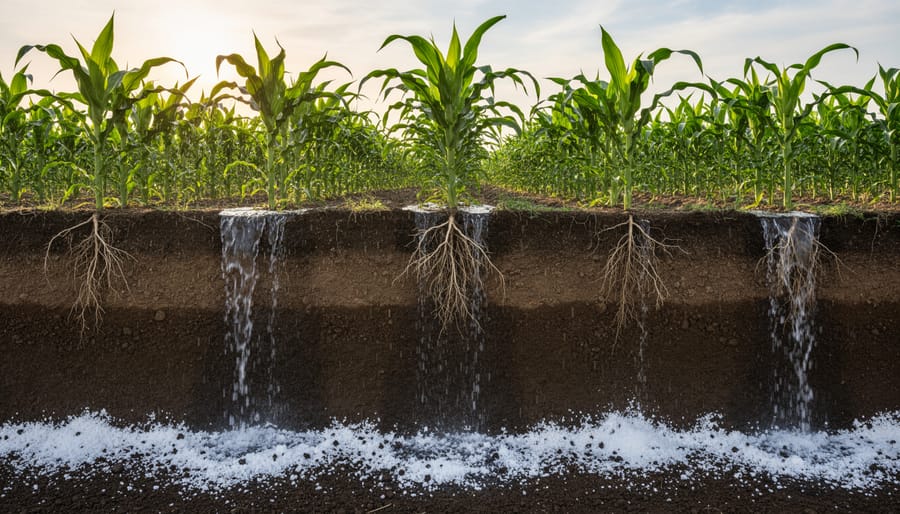
Leaching is essentially giving your soil a thorough rinse to flush out accumulated salts, and while it sounds simple, doing it right makes all the difference. Think of it like running water through a coffee filter – you’re washing those unwanted salts down past the root zone where they can’t harm your grass anymore.
Here’s how to leach effectively: First, you’ll need to apply about 6 inches of water over several hours or days. I know that sounds like a lot, but here’s the important part – apply it slowly. A sudden deluge will just run off without doing much good. Instead, water in cycles: apply an inch, let it soak in for 30-60 minutes, then repeat. This gives the water time to actually move through the soil profile, carrying salts downward as it goes.
Timing matters tremendously. Late spring or early fall works best when temperatures are moderate and your grass isn’t already stressed. Avoid leaching during summer heat waves or winter dormancy. You want your lawn strong enough to recover from this heavy watering event.
Now, here’s the reality check: leaching only works if you have proper drainage. Without somewhere for that salty water to go, you’re just relocating the problem temporarily. If water pools in your yard after heavy rain, you’ll need to address drainage issues first, possibly by aerating compacted soil or improving your yard’s grade.
Expect to see improvement within 2-4 weeks as roots access fresher soil. However, in heavy clay soils or severely salinized areas, you might need to repeat the process. Be patient and realistic – leaching is effective but not always instantaneous, especially when dealing with years of salt buildup.
Improving Drainage to Prevent Salt Buildup
Good drainage is your first line of defense against salt buildup, and the good news is that you can start improving it today with solutions ranging from simple to more advanced.
Let’s begin with the easiest approach: aeration. By poking holes in your soil, you’re creating pathways for water to move through more freely, carrying excess salts downward and away from grass roots. Core aeration works particularly well because it removes plugs of compacted soil entirely. For best results, aerate at least once annually in spring or fall.
Next up is organic matter addition, which is like giving your soil a complete makeover. Compost, aged manure, or leaf mold improve soil structure by creating spaces between particles where water can drain. Spread a quarter-inch layer over your lawn twice yearly and let nature work its magic. This sustainable practice not only aids drainage but also feeds beneficial microorganisms that keep your lawn healthy.
For persistent drainage problems, consider installing French drains or catch basins to redirect water away from problem areas. These systems intercept standing water before salts can concentrate.
Soil amendments like gypsum can also help, particularly in clay soils. Gypsum improves soil structure without raising pH levels, allowing water to percolate more effectively. Apply according to soil test recommendations rather than guessing.
Remember, prevention beats treatment every time. By maintaining good drainage year-round, you’re stopping salt problems before they start.
Choosing the Right Irrigation Water and Methods
When it comes to managing salty soils, the water you use and how you apply it can make all the difference. Think of it as choosing the right medicine and dosage for your lawn.
First, let’s talk water quality. If you’re dealing with salt problems, using more salty water is like fighting fire with gasoline. Municipal water varies widely in salt content, so consider having your irrigation water tested. Generally, water with an electrical conductivity below 0.75 dS/m is safe for most lawns, while anything above 3.0 dS/m can cause serious issues.
Here’s where rainwater becomes your best friend. Collecting rainwater through barrels or cisterns gives you nature’s purest irrigation source, completely salt-free. It’s a sustainable solution that’s kind to both your lawn and your wallet. Even supplementing your regular watering with collected rainwater can significantly reduce salt buildup over time.
Timing matters tremendously. Deep, infrequent watering is your mantra for salty soils. This approach leaches salts below the root zone rather than leaving them concentrated near the surface. Water early in the morning to maximize absorption and minimize evaporation, which otherwise leaves salt residue behind. During peak growing season, one thorough soaking that penetrates 6-8 inches deep beats several shallow waterings every time.
Consider installing a smart irrigation controller that adjusts based on weather conditions. These devices prevent overwatering during humid periods while ensuring adequate leaching during dry spells. The goal is applying just enough extra water beyond your lawn’s needs to push salts downward without waterlogging the soil.
Soil Amendments That Actually Work
Before reaching for soil amendments, you need to understand what you’re treating. This distinction is crucial: saline soils have too much salt, while sodic soils have too much sodium that’s bonded to soil particles. Your soil test results will tell you which problem you’re facing, and the treatments differ significantly.
For sodic soils (indicated by high sodium levels and elevated pH), gypsum is your best friend. This affordable amendment works by replacing sodium on soil particles with calcium, allowing the sodium to wash away. Apply gypsum at 40-50 pounds per 1,000 square feet for moderate sodicity, working it into the top few inches. You’ll start seeing improvement in 3-6 months, but severe cases may need annual applications for 2-3 years. The beauty of gypsum? It won’t harm your lawn if you overapply, making it beginner-friendly.
Pure salinity problems require a different approach. Since you can’t chemically change salt, you need to flush it away with water and prevent reaccumulation. Here’s where organic matter becomes invaluable. Adding compost at 1/4 to 1/2 inch annually improves soil structure, helping water move salt below the root zone more effectively. It’s a long game, but incredibly sustainable.
For alkaline sodic soils, elemental sulfur can help by lowering pH and improving calcium availability. Apply 5-10 pounds per 1,000 square feet, but patience is essential—sulfur works slowly, taking 6-12 months to show results.
The realistic timeline? Expect noticeable improvements in one growing season with consistent treatment, but complete rehabilitation of severely affected soils often takes 2-3 years. Stay consistent, and your lawn will reward your persistence.
Selecting Salt-Tolerant Grass Varieties
Sometimes the smartest solution to a salinity problem is choosing grass varieties that can actually handle the challenge. If you’ve tested your soil and discovered moderate salinity levels, selecting salt-tolerant grasses can save you from constant battles and disappointing results.
Let’s talk about your best options. For warm-season grasses, Bermudagrass stands out as the champion of salt tolerance, particularly varieties like ‘Tifway’ and ‘Celebration’. These cultivars have developed specialized cells in their leaves that actually sequester salt away from sensitive tissues, essentially compartmentalizing the problem. Seashore paspalum takes this even further and can handle irrigation with brackish water, making it ideal for coastal properties or areas with naturally salty groundwater.
In cooler climates, tall fescue varieties like ‘Barlexas’ and ‘Silverado’ offer impressive tolerance for a cool-season grass. They achieve this through deep root systems that can access fresher water below the salt-affected surface layer. Alkaligrass, though less common, performs remarkably well in challenging conditions and deserves consideration if you’re dealing with persistent salinity.
Here’s the practical question: should you replant or try to rehabilitate existing grass? If your current lawn shows less than 30 percent damage and you’re addressing the salt source, rehabilitation makes sense. Apply the leaching and amendment strategies we’ve discussed, overseed bare spots, and give your grass time to recover. However, if damage exceeds 50 percent or you’re battling repeated salinity issues from irrigation water or coastal exposure, replanting with tolerant varieties is the sustainable choice.
The environmental benefit here is significant. Salt-tolerant grasses reduce your need for excessive watering, chemical treatments, and repeated reseeding efforts. They’re working with your site conditions rather than against them, which is always the most sustainable approach. Think of variety selection as choosing the right tool for the job rather than forcing the wrong one to work through sheer effort.
Maintenance Practices That Prevent Salt Problems
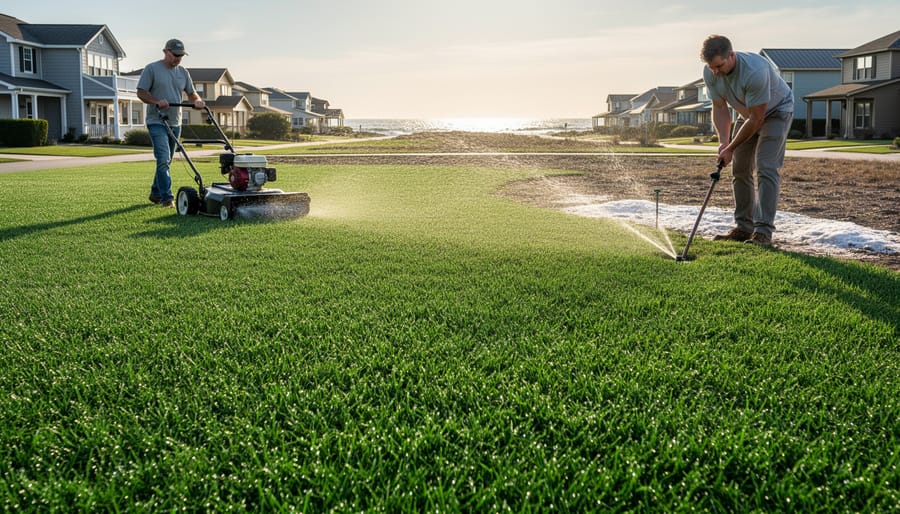
An ounce of prevention truly is worth a pound of cure when it comes to keeping salt from building up in your lawn. The good news? Most preventive measures are simple tweaks to your regular lawn care routine that’ll pay dividends for years to come.
Let’s start with fertilizers, since they’re one of the sneakiest sources of salt accumulation. Proper fertilizer selection means choosing products with a lower salt index and avoiding overfeeding your grass. I always recommend slow-release organic fertilizers when possible—they’re gentler on your soil and release nutrients gradually, reducing salt concentration spikes. When you do fertilize, apply lighter amounts more frequently rather than heavy doses all at once. And here’s a pro tip: always water thoroughly after fertilizing to help move nutrients into the root zone and flush away excess salts.
Your mowing height matters more than you might think. Keeping grass a bit taller—around 3 to 4 inches for most cool-season grasses—helps shade the soil and reduce evaporation, which naturally concentrates salts at the surface. Those deeper roots you’ll encourage also help your lawn better tolerate any salt that’s present.
Seasonal monitoring is your best defense against creeping problems. Check soil moisture regularly, especially during hot, dry periods when evaporation accelerates salt concentration. Consider testing your soil salinity annually, particularly if you’re in a coastal area or irrigate with hard water.
Finally, embrace deep, infrequent watering over shallow, frequent sprinklings. This practice leaches salts below the root zone naturally while encouraging robust root development. Think of it as giving your lawn the resilience to handle whatever salty challenges come its way.
Common Mistakes That Make Salinity Worse
Even well-meaning gardeners sometimes accidentally worsen salinity problems through common but misguided practices. Understanding these pitfalls helps you avoid setbacks and protect your lawn investment.
Over-fertilizing ranks as the most frequent culprit. Many homeowners think more fertilizer equals greener grass, but synthetic fertilizers are essentially concentrated salts. Excessive applications compound existing salinity issues rather than correcting nutrient deficiencies. The solution? Test your soil first and apply only what’s needed according to results.
Improper watering creates a double trap. Light, frequent sprinklings leave salts concentrated near the surface where grass roots struggle most. Conversely, inadequate watering volumes fail to push salts beyond the root zone. Deep, infrequent watering sessions work best for salt management.
Using water-softened water introduces sodium directly into your soil with every irrigation. Home water softeners replace calcium and magnesium with sodium, gradually poisoning your lawn. Always bypass your softener for outdoor taps or consider alternative softening systems.
Ignoring drainage problems means salts have nowhere to go. Without proper water movement through the soil profile, even correct leaching practices fail. Address compaction and poor drainage before attempting other remedies.
Misapplying amendments like gypsum without testing wastes money and potentially worsens conditions. Gypsum helps only with sodium-based salinity issues, not general salt accumulation. Similarly, adding sulfur to already-acidic soils creates new problems while ignoring the original salt issue. Always test before treating, and follow recommended application rates carefully for sustainable, effective results.
Recovering a salt-affected lawn is absolutely achievable, and you’ve already taken the most important step by learning about the problem. While restoring your turf won’t happen overnight, the good news is that with consistent care and the right approach, you’ll start seeing genuine improvements within just a few weeks to months. Every lawn is different, but the combination of proper irrigation practices, strategic amendments, improved drainage, and mindful plant selection creates a sustainable path forward that works with nature rather than against it.
Remember, patience is your ally here. Salt damage didn’t occur instantly, and recovery follows the same gradual timeline. The strategies we’ve covered—from leaching salts with deep watering to building healthier soil biology—are proven, practical solutions that countless gardeners have used successfully. You’re not just fixing a problem; you’re creating a more resilient, environmentally sound landscape that will thrive for years to come.
Ready to start your lawn’s transformation? The first step is simple: test your soil. Understanding your baseline salinity levels gives you a clear roadmap and helps you track your progress along the way. You’ve got this!