Test your soil with a home kit or professional lab analysis to confirm potassium deficiency before taking action—yellowing leaf tips, weak stems, and poor drought tolerance often signal low levels, but these symptoms can overlap with other underlying soil problems. Apply potassium-rich fertilizers like sulfate of potash or greensand at rates matching your soil test recommendations, typically 1-2 pounds of potassium per 1,000 square feet for moderate deficiencies. Incorporate organic matter such as compost, wood ash, or kelp meal into your lawn care routine to build long-term potassium reserves while improving overall soil structure. Monitor your lawn’s response over 4-6 weeks and retest soil annually, since potassium leaches readily in sandy soils and becomes locked up in heavy clay.
Understanding potassium’s role transforms how you approach lawn health. This essential nutrient strengthens cell walls, regulates water movement, and activates enzymes that fuel grass growth. When potassium drops below optimal levels—generally 150-250 ppm for most turf grasses—your lawn becomes vulnerable to disease, heat stress, and winter damage. The challenge is that potassium deficiency develops gradually and mimics other conditions, making proper diagnosis crucial before investing in treatments. Whether you’re troubleshooting brown patches or proactively managing soil fertility, addressing potassium deficiency requires both immediate correction and sustainable prevention strategies that work with your soil type and local climate conditions.
Understanding Potassium’s Role in Your Lawn’s Health
The Three Essential Nutrients (N-P-K Explained Simply)
You’ve probably heard about N-P-K on every bag of fertilizer you’ve picked up, but let’s break down what this trio actually does for your lawn. Nitrogen (N) is the showstopper that gives you that lush, green growth everyone notices. Phosphorus (P) works behind the scenes, building strong roots and helping your grass establish itself. Then there’s potassium (K), the often-overlooked third member that doesn’t get nearly enough credit.
Here’s the thing: while nitrogen makes your lawn look gorgeous and phosphorus keeps it anchored, potassium is your lawn’s personal trainer and immune system booster rolled into one. It strengthens cell walls, helps grass survive drought and cold snaps, improves disease resistance, and keeps your turf resilient when life throws challenges its way. Think of it this way: nitrogen is about growth, phosphorus is about establishment, but potassium is about survival and strength.
Many gardeners focus so heavily on nitrogen for that Instagram-worthy green that they forget potassium’s crucial role in the complete nutrient picture. Without adequate potassium, even the greenest lawn becomes vulnerable and weak.
What Potassium Actually Does for Your Grass
Think of potassium as your lawn’s personal trainer and bodyguard rolled into one. While nitrogen gets all the glory for that lush green color, potassium works behind the scenes keeping your grass strong and resilient.
Here’s where potassium really shines: it’s your grass’s water manager. Potassium controls the opening and closing of tiny pores in grass blades called stomata, which regulate water movement throughout the plant. When your lawn has adequate potassium, it uses water more efficiently, meaning you’ll see better performance during dry spells without constantly running the sprinkler.
Disease resistance is another superpower potassium brings to your turf. Grass with sufficient potassium develops thicker cell walls, making it harder for fungal diseases and pests to penetrate and wreak havoc. You’ll notice fewer brown patches and healthier overall appearance throughout the growing season.
If you live where winters are harsh, potassium becomes absolutely essential. It helps grass plants build up carbohydrate reserves and strengthens their cellular structure, so they can survive freezing temperatures without turning into a brown, dead mess come spring. Think of it as your lawn’s winter coat.
Finally, potassium excels at wear recovery. Got kids playing soccer in the backyard or heavy foot traffic? Potassium-rich grass bounces back faster from physical stress, filling in bare spots and maintaining density. This makes it particularly valuable for active lawns that take a beating but need to look presentable. When combined with proper fertilization practices, potassium truly transforms lawn resilience from the ground up.
Signs Your Soil is Running on Empty
Visible Symptoms in Your Turf
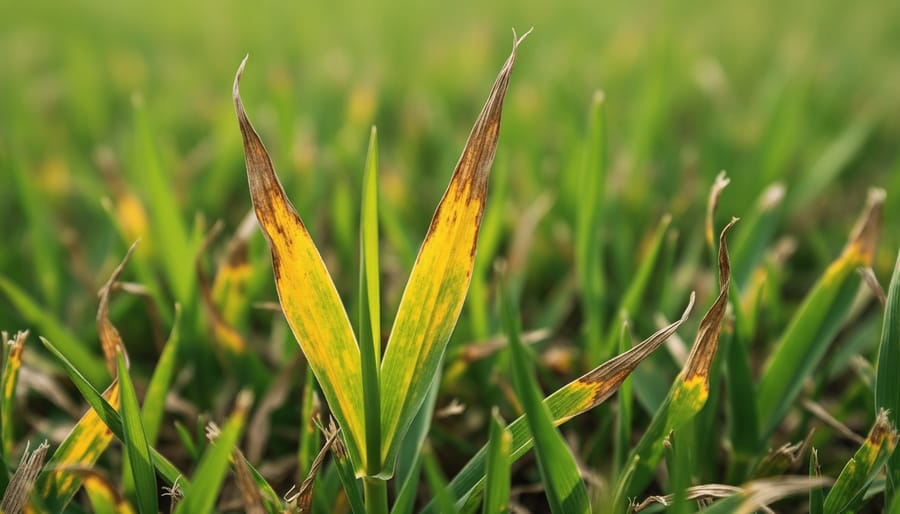
When potassium levels drop too low in your soil, your lawn will start sending out distress signals that are pretty hard to miss once you know what to look for. The most telltale sign is yellowing grass blades that start at the tips and work their way down, often accompanied by brown or scorched-looking edges. It’s almost as if someone took a tiny blowtorch to the leaf margins.
You’ll also notice that your grass just doesn’t have that robust, vigorous look anymore. Growth becomes stunted and weak, with blades that feel thin and fragile rather than thick and resilient. The turf might look acceptable from a distance, but up close, it lacks that lush, healthy appearance we all want.
Here’s where it gets really frustrating: potassium-deficient grass becomes a magnet for diseases and pests. Without adequate potassium, your lawn’s natural defense systems are compromised, making it vulnerable to fungal infections and insect damage that healthy turf would normally shrug off. You might find yourself battling issues you’ve never dealt with before.
Perhaps most noticeably during hot, dry spells, your lawn will struggle significantly with drought stress. While your neighbor’s grass bounces back after watering, yours stays wilted and brown. Potassium plays a crucial role in water regulation within grass plants, so without enough of it, your turf simply can’t maintain proper hydration, even with adequate watering.
Why Soil Testing is Your Best Friend
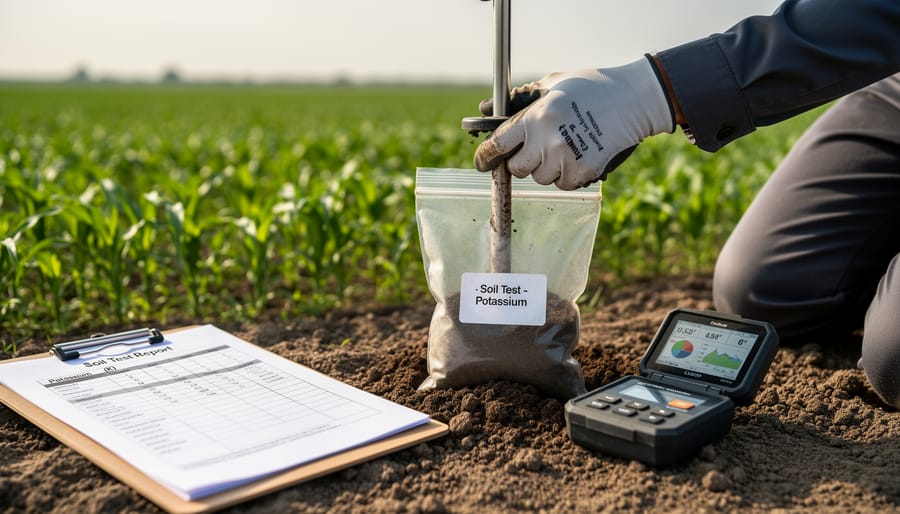
Before you start throwing fertilizer at your lawn and hoping for the best, let me share the smartest investment you can make: a proper soil test. Think of it as a health checkup for your yard. While visual symptoms can hint at potassium deficiency, only a soil test gives you the complete picture of what’s actually happening beneath the surface.
Getting a test done is easier and more affordable than you might think. Your local cooperative extension office typically offers comprehensive soil testing for around $15-30, and they’ll provide detailed recommendations specific to your region. You can also purchase DIY testing kits from garden centers, though professional lab analysis gives more accurate results.
When your results arrive, look for the potassium reading, usually expressed as parts per million (ppm) or pounds per acre. For healthy lawns, you want potassium levels between 150-250 ppm. Anything below 100 ppm signals a deficiency that needs addressing.
The beauty of soil testing is it eliminates guesswork. You’ll discover not just your potassium levels, but also pH, phosphorus, and other nutrients that affect how well your grass can actually use the potassium you apply. This knowledge prevents wasted money on unnecessary treatments and helps you create a targeted, sustainable approach to lawn care. Test every 2-3 years to track your progress.
Common Causes of Potassium Depletion
Soil Types That Struggle to Hold Potassium
Not all soils are created equal when it comes to holding onto potassium, and understanding your soil type is the first step toward addressing deficiencies.
Sandy soils are notorious for their inability to retain potassium. Think of sand particles like large boulders with huge spaces between them—water drains through quickly, taking dissolved potassium along for the ride. If you’ve ever noticed how fast sandy soil dries out after watering, that same rapid drainage is washing away nutrients your lawn desperately needs. This is especially problematic in areas with heavy rainfall or frequent irrigation.
Highly leached soils face similar challenges. In regions with consistent rainfall, potassium literally gets washed down through the soil profile, moving beyond your grass roots’ reach. This is why gardeners in rainy climates often need more frequent potassium applications.
Clay soils present a different puzzle. While they actually contain more potassium than sandy soils, much of it remains locked up and unavailable to plants. Clay particles bind potassium tightly, releasing it very slowly. It’s like having money in a savings account you can’t access—technically it’s there, but your lawn can’t use it when needed. This is why even clay-based lawns can show deficiency symptoms despite decent potassium levels in soil tests.
Management Practices That Drain Potassium
Sometimes the best intentions in lawn care can actually work against us. While you’re out there maintaining your turf with regular mowing and watering, certain management practices might be quietly draining potassium from your soil faster than nature can replenish it.
One of the biggest culprits is consistently removing grass clippings after mowing. Those clippings contain valuable nutrients, including potassium, that would naturally cycle back into the soil. When you bag them week after week, you’re essentially mining nutrients from your lawn. Consider grasscycling—leaving clippings on the lawn—as a simple way to return some potassium where it belongs.
Heavy or frequent watering also contributes to potassium loss through leaching, especially in sandy soils. Potassium is highly water-soluble, so excessive irrigation literally washes it past your grass roots and into the subsoil. Aim for deep, infrequent watering rather than daily shallow sprinklings.
Finally, applying nitrogen-heavy fertilizers without balancing other nutrients creates an imbalance. Grass absorbs potassium in large quantities, and when you push growth with high nitrogen, you accelerate potassium depletion without replacing it. A balanced fertilization approach considers all essential nutrients, not just the one that creates quick greening.
Fixing Low Potassium Soil: Practical Solutions
Choosing the Right Potassium Fertilizer
Selecting the right potassium fertilizer can feel overwhelming with so many options on the shelves, but I’m here to help you navigate the choices. Let’s break down the most common sources so you can make the best decision for your lawn.
Potassium chloride, often called muriate of potash, is the most economical option you’ll find. It contains about 60% potassium and works quickly to address deficiencies. However, there’s a catch: the chloride component can accumulate in soil over time, potentially harming beneficial microorganisms and sensitive plants. If you’re managing salt-sensitive grass varieties or already have salinity issues, this might not be your best bet.
Potassium sulfate, also known as sulfate of potash, is my go-to recommendation for most lawns. With around 50% potassium content, it provides the nutrient boost your grass needs without the chloride concerns. As a bonus, it adds sulfur to your soil, which many lawns appreciate. It costs a bit more than potassium chloride, but the environmental benefits make it worthwhile for sustainable gardening practices.
For those committed to organic lawn care, several excellent options exist. Greensand releases potassium slowly over time while improving soil structure, though it contains only 3-5% potassium. Kelp meal offers 1-2% potassium plus beneficial trace minerals and growth hormones that promote overall plant health. Wood ash can provide 3-7% potassium, but use it sparingly since it raises soil pH.
Application rates vary by product and soil test results, but general guidelines suggest 1-2 pounds of potassium per 1,000 square feet for moderate deficiencies. Always follow your soil test recommendations and product labels. I recommend applying potassium fertilizers in split applications during early spring and fall for best results without overwhelming your lawn.
Application Timing and Methods That Work
Timing is everything when it comes to feeding your hungry lawn. The best time to apply potassium fertilizers is during the growing season when your grass can actually use those nutrients. For cool-season grasses, aim for early fall applications, which help strengthen roots before winter stress hits. Spring applications work too, but fall feeding gives you the biggest bang for your buck. Warm-season grasses respond best to potassium in late spring through early summer when they’re actively growing.
Here’s something I learned the hard way: never fertilize during drought conditions or when your lawn is stressed. Wait until you’ve had some rain or can water thoroughly before and after application. This prevents fertilizer burn and helps nutrients move into the root zone where they belong.
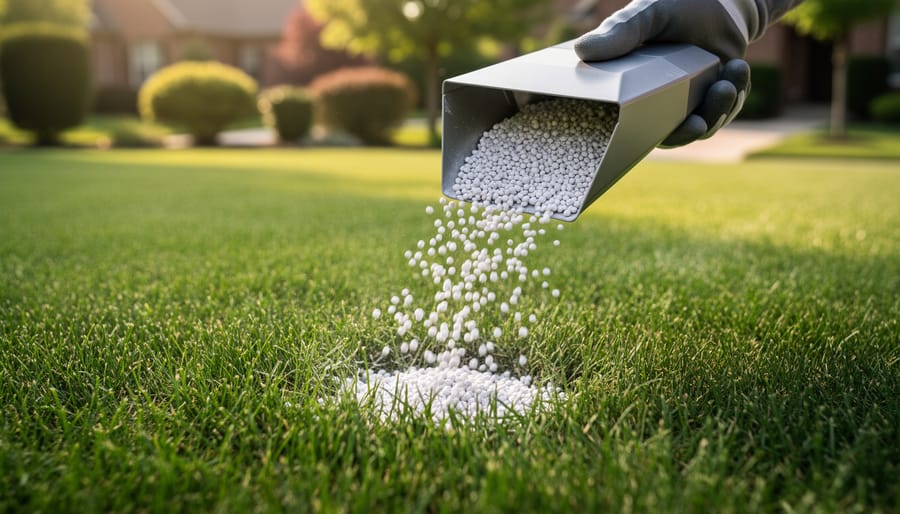
For spreading technique, use a calibrated broadcast spreader for even coverage. Start with the perimeter, then fill in with a back-and-forth pattern, slightly overlapping each pass. Water immediately after application unless you’re using a slow-release formula, which can wait for the next rain.
A practical tip: apply potassium fertilizers when winds are calm to avoid drift, and always wear gloves when handling products. Keep kids and pets off treated areas until after watering in. Store any leftover fertilizer in a cool, dry place in its original container. And remember, more isn’t better. Following label rates protects both your grass and the environment from nutrient runoff that can affect local waterways.
Organic and Sustainable Approaches
If you’re committed to sustainable lawn care, you’ll be happy to know there are several organic options for addressing low potassium soil. However, I want to be upfront with you: these methods work more slowly than synthetic fertilizers, requiring patience and consistent application.
Compost is your foundation for sustainable potassium management. While it won’t deliver the rapid results of chemical fertilizers, quality compost typically contains 0.5-1% potassium and continuously improves soil structure. Apply a half-inch layer twice yearly, working it into the top few inches of soil. You’re not just adding potassium; you’re building a healthier soil ecosystem that retains nutrients better.
Wood ash from untreated hardwood can provide a substantial potassium boost, containing 3-7% potassium along with beneficial calcium. Spread it lightly at about 10-15 pounds per 1,000 square feet, but use caution since it’s highly alkaline. Test your soil pH first, and skip this option if your pH is already above 7.
Greensand and kelp meal are gentler, long-term solutions. Greensand contains about 7% potassium that releases slowly over several seasons, making it ideal for building soil reserves. Kelp meal offers 1-2% potassium plus beneficial micronutrients and natural growth hormones. Apply both according to package directions in spring or fall.
Don’t overlook grasscycling, the simple practice of leaving grass clippings on your lawn. Those clippings return valuable potassium to the soil as they decompose. It’s free, effortless, and surprisingly effective over time.
The reality check: organic amendments typically take 6-12 months to show noticeable improvements in severely deficient lawns. For urgent situations, consider combining organic methods with targeted conventional fertilizers initially, then transitioning to fully organic maintenance once levels stabilize.
Building Long-Term Soil Resilience
Creating a Balanced Fertilization Schedule
Think of fertilizing like meal planning—you wouldn’t eat only protein and skip vegetables and carbs, right? Your lawn needs the same balanced approach with nutrients. Creating a year-round fertilization schedule prevents the frustrating boom-bust cycle where your grass looks amazing one month and struggles the next.
Start by establishing a baseline. If your soil test showed potassium deficiency, make correcting it your first priority. Apply a potassium-rich fertilizer in early spring, then switch to a balanced formula for subsequent applications. A typical year might include four feedings: early spring (potassium boost), late spring (balanced NPK), summer (light feeding with micronutrients), and fall (another balanced application with slightly higher potassium for winter hardiness).
The key is maintaining ratios. When you add nitrogen to green up your lawn, remember that potassium needs to tag along. A good rule of thumb is maintaining a nitrogen-to-potassium ratio of roughly 2:1 or 3:2 in your overall program. If you’re applying one pound of nitrogen per 1,000 square feet annually, aim for about half that amount in potassium.
Keep a simple garden journal noting what you applied and when. Take photos monthly to track progress. This helps you spot patterns—maybe your lawn always looks stressed in July, signaling a need for adjustment. By spreading applications throughout the growing season rather than dumping everything at once, you’ll maintain consistent nutrient availability while supporting sustainable practices that protect groundwater and reduce waste.
Soil Amendments That Support Nutrient Retention
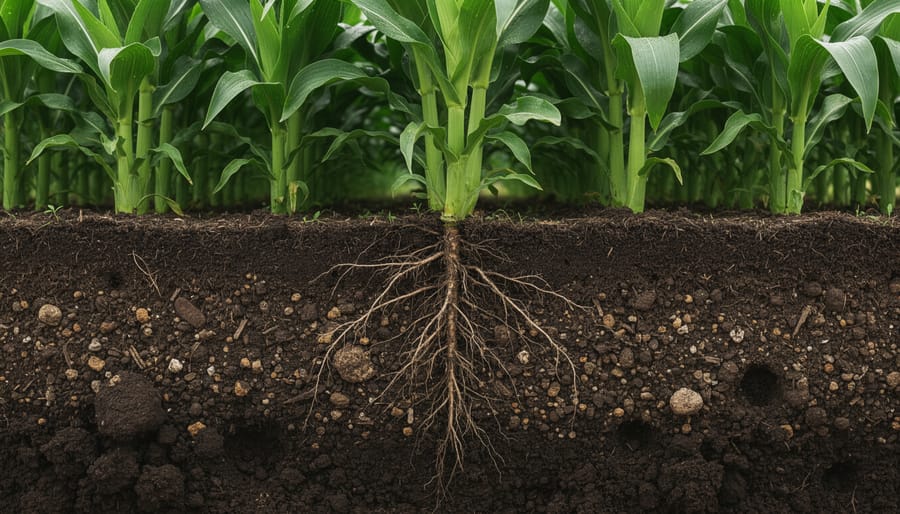
Here’s the thing about potassium – even if you’re adding it to your soil, it won’t stick around unless your soil has the right structure to hold onto it. Think of it like trying to fill a bucket with holes in it. That’s where soil amendments come in, and trust me, they’re game-changers for creating a soil environment that actually retains nutrients.
The foundation of good nutrient retention is organic matter. When you incorporate compost, well-aged manure, or leaf mold into your soil, you’re doing so much more than just adding nutrients. These materials dramatically improve soil structure and health by increasing what’s called cation exchange capacity, or CEC. In simple terms, CEC is your soil’s ability to hold onto positively charged nutrients like potassium. The higher your CEC, the better your soil clings to the good stuff instead of letting it wash away with the next rain.
Biochar is another fantastic amendment that’s gaining popularity among sustainable gardeners. This charcoal-like material not only improves water retention but also provides lots of surface area for nutrients to attach to, essentially creating a nutrient savings account in your soil.
Don’t overlook proper pH management either. When soil pH strays too far from the ideal range for your grass type, potassium becomes locked up and unavailable, even if it’s technically there. Regular soil testing and appropriate lime or sulfur applications keep your pH in the sweet spot where potassium remains accessible to your turf.
Monitoring and Adjusting Your Approach
Creating Your Soil Testing Routine
Testing your soil regularly is like getting a health checkup for your lawn—it keeps you informed and ahead of potential problems. For most home gardeners, testing every 2-3 years strikes the perfect balance between staying knowledgeable and not overdoing it. However, if you’re actively treating a potassium deficiency, consider testing annually during the first couple of years to monitor your progress.
Here’s a game-changer: keep a simple garden journal or spreadsheet documenting your test results, amendment applications, and lawn observations. Note the date, potassium levels, pH readings, and what treatments you applied. Over time, you’ll see patterns emerge and understand exactly what works for your unique soil conditions. This record-keeping transforms guesswork into informed decision-making.
I recommend testing in early spring or fall when you’re planning seasonal treatments anyway. Many cooperative extensions offer affordable soil testing services, making it easy to stay on track without breaking the bank. Your future self will thank you for maintaining these records.
Reading Your Lawn’s Response
Your lawn will tell you whether your potassium efforts are paying off—you just need to know what to look for. Within 4-6 weeks of addressing potassium deficiency, you should notice improvements in overall grass health.
Start by observing color changes. Grass blades that previously showed yellowing along the edges should develop richer, more vibrant green tones throughout. This uniform coloring signals that your lawn is properly utilizing nutrients again.
Pay attention to density and growth patterns. As potassium levels improve, your turf should fill in thin or patchy areas more readily, creating that lush carpet effect we all love. The grass blades themselves will feel sturdier and more resilient when you walk across them.
Watch how your lawn handles stress. During hot spells or dry periods, potassium-sufficient grass maintains better color and recovers faster from foot traffic. You’ll notice less wilting during summer afternoons and quicker bounce-back after those backyard gatherings.
Disease resistance offers another clue. If your lawn previously struggled with fungal issues or brown patches, you should see fewer outbreaks as potassium strengthens cell walls and improves the plant’s natural defenses. This sustainable approach to lawn health means less reliance on treatments down the road.
If there’s one takeaway from our deep dive into low potassium soil, it’s this: potassium truly is the unsung hero of lawn resilience. While nitrogen gets all the glory for that lush green color, potassium is working behind the scenes, strengthening your grass against drought, disease, and cold stress. It’s the difference between a lawn that merely survives and one that genuinely thrives through whatever your climate throws at it.
Before you rush out to buy fertilizer, though, remember that successful lawn care starts with understanding what’s actually happening beneath your feet. A simple soil test is your most valuable investment, giving you the roadmap you need rather than having you guess in the dark. Those few dollars spent on testing can save you hundreds in unnecessary amendments and frustrated efforts.
Here’s the truth about sustainable lawn care that nobody likes to hear at first: there are no magic bullets. Correcting potassium deficiency and building truly healthy soil takes time, patience, and consistent management. You’re not looking for overnight transformation but steady, reliable improvement that compounds year after year. Think of it as a marathon, not a sprint.
The good news? Once you establish that foundation of balanced nutrition and healthy soil, maintenance becomes remarkably easier. Your lawn develops the resilience to handle stress naturally, reducing your need for constant intervention. That’s the real reward of patient, informed lawn care.