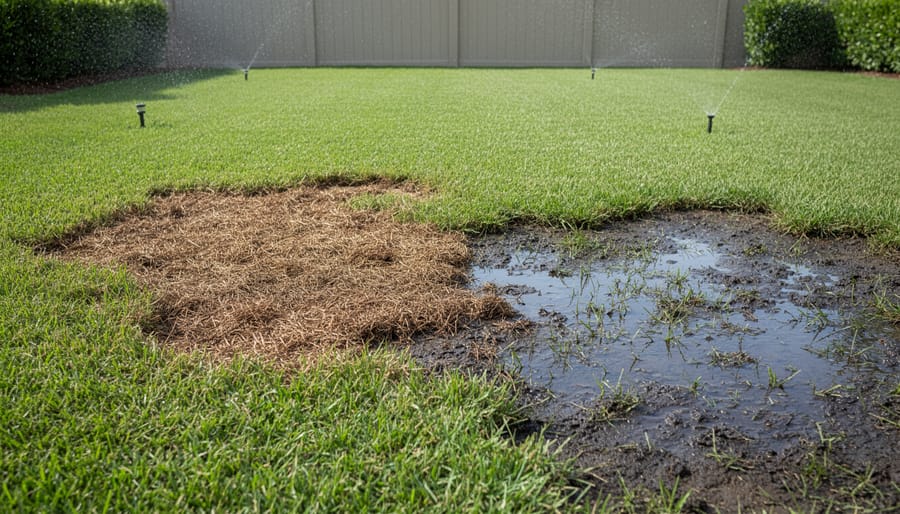
Your underground irrigation system could be silently hemorrhaging hundreds of gallons of water each week, driving up your utility bills while turning sections of your lawn into parched wastelands or soggy swamps. The frustrating part? Most leaks remain completely invisible until the damage becomes severe, whether that’s a $400 water bill, foundation issues from oversaturation, or dead grass zones that won’t respond to any amount of care.
A pipe leak detection system acts as an early warning network for your irrigation infrastructure, identifying problems before they escalate into expensive disasters. These systems range from simple pressure monitors that alert you to sudden drops indicating a breach, to sophisticated smart controllers with flow sensors that detect even minor irregularities in water usage patterns. For homeowners managing residential irrigation systems, this technology represents a straightforward investment that typically pays for itself within a single growing season through prevented water waste alone.
The environmental case is equally compelling. The average irrigation leak wastes approximately 6,300 gallons monthly, equivalent to the water needed to sustain a quarter-acre lawn through an entire summer. By catching these failures early, you’re not just protecting your wallet but also honoring your commitment to sustainable water stewardship, a principle that should guide every aspect of thoughtful lawn care.
Whether you’re troubleshooting mysterious brown patches, noticing unexplained spikes in your water consumption, or simply want to modernize your system with preventative technology, understanding how leak detection works and which solutions match your specific needs will transform your approach to irrigation management. The right system eliminates guesswork, provides peace of mind, and ensures every drop of water serves its intended purpose: nurturing a healthy, vibrant lawn.
Why Traditional Irrigation Systems Fail You
We’ve all been there – you’re enjoying your morning coffee when you notice that suspiciously green patch in your lawn that seems to grow faster than the rest, or worse, that brown dying section that no amount of extra watering seems to fix. These telltale signs often point to irrigation problems lurking beneath the surface, and by the time they’re visible, you’ve likely been wasting water and money for weeks or even months.
Traditional irrigation systems operate out of sight and out of mind, which is precisely the problem. Underground pipes can crack due to freezing temperatures, shifting soil, or simple age-related wear. Sprinkler heads break from lawnmower impacts or UV degradation. Valves stick open or closed, creating uneven water distribution across your property. The frustrating part? All of this happens silently underground while you assume everything’s working perfectly.
Most homeowners discover these issues through unpleasant surprises. Perhaps it’s the shock of opening a water bill that’s doubled without explanation. Maybe you spot that persistently soggy area near your driveway that never dries out, even days after watering. Or you’re left scratching your head at those mysterious brown patches appearing despite your irrigation schedule running like clockwork. By this point, the damage is done – to your lawn, your wallet, and the environment.
From a sustainability perspective, this hidden waste is heartbreaking. A single underground leak can waste thousands of gallons monthly, precious water literally disappearing into the ground while your plants struggle. In drought-prone regions, this isn’t just inefficient; it’s irresponsible. Even a small crack can mean detecting sprinkler waste becomes critical to both environmental stewardship and practical lawn care.
The good news? Modern pipe leak detection systems can catch these problems early, before they escalate into costly disasters and environmental waste.
How Modern Pipe Leak Detection Systems Actually Work
Irrigation Flow Sensing: Your System’s Watchful Eye
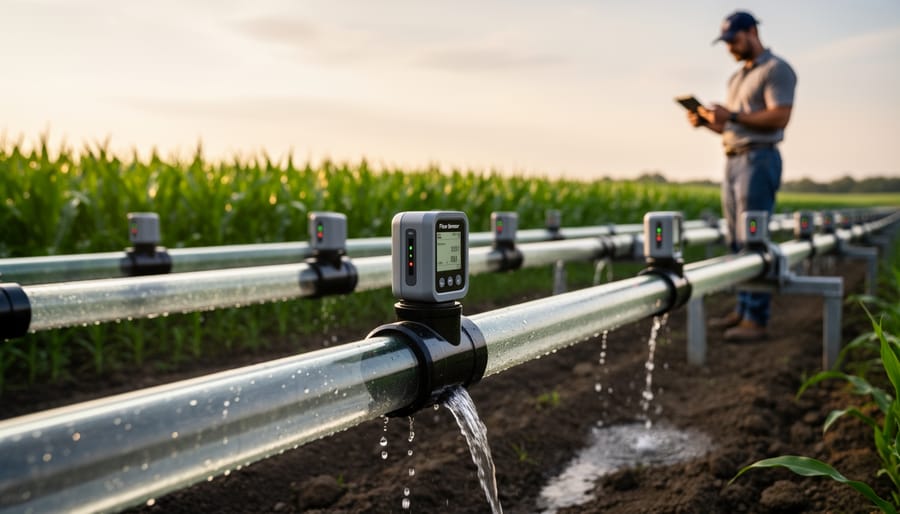
Think of flow sensors as the pulse monitors for your irrigation system—they’re constantly checking the “heartbeat” of water moving through your pipes. These clever devices measure exactly how much water flows past a certain point, creating a baseline of what’s normal for your system.
Here’s how they work their magic: Flow sensors sit inside your irrigation pipes, where a small turbine or magnetic sensor tracks water movement. Just like you’d notice if your kitchen faucet suddenly started running faster or slower than usual, these sensors detect any changes in your water flow patterns. They’re always watching, measuring gallons per minute and comparing that data to what should be happening.
The real genius comes in what happens next. If your flow sensor notices water moving through the pipes at 2 AM when your system should be completely off, it raises a red flag. Similarly, if a zone that normally uses 10 gallons per minute suddenly jumps to 15, that’s a clear sign something’s wrong—likely a burst pipe or broken sprinkler head.
This continuous monitoring is especially valuable for those of us committed to water conservation. Instead of losing hundreds of gallons to an undetected leak over weeks or months, flow sensors catch problems within minutes or hours. They’re like having a vigilant guardian standing watch over every drop of water entering your irrigation system, ensuring nothing goes to waste.
Master Valves: The Gatekeeper of Your Irrigation
Think of master valves as the main security guard for your entire irrigation system. Located right where your system connects to your home’s water supply, this single valve controls water flow to all your irrigation zones at once. When it’s open, water can reach your sprinkler heads. When it’s closed, everything shuts down completely.
Here’s where things get really smart for those of us who care about water conservation. When you pair a master valve with a leak detection system, you create an automatic safety net that protects both your water bill and the environment. If your leak detector senses unusual water flow, like a burst pipe or broken sprinkler head running when it shouldn’t, it sends a signal to close the master valve immediately. No more water gushing into your lawn while you’re at work or on vacation.
I learned this lesson the hard way when a raccoon damaged my sprinkler line overnight. By morning, I had a small pond in my yard and a hefty water bill coming. Now with my master valve and leak detection working together, similar mishaps get stopped within minutes, not hours. It’s like having a responsible friend watching your irrigation system 24/7, ready to turn off the tap the moment something goes wrong. This simple combination saves thousands of gallons annually while giving you genuine peace of mind.
The Smart Integration That Makes It All Work
Here’s how the magic happens: flow sensors constantly monitor water moving through your pipes, establishing what’s normal for your system. When they detect unusual flow patterns—like water running when no zone should be active—they communicate instantly with the master valve, which acts as your system’s emergency shut-off switch. Think of it like a vigilant guard who notices something’s wrong and immediately locks the door.
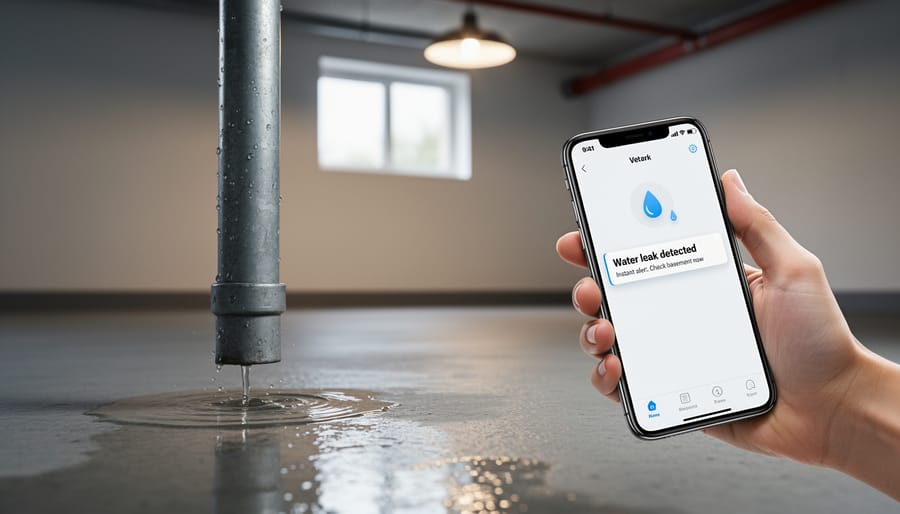
The moment a leak is detected, the system springs into action. The master valve closes, stopping water flow and preventing further damage. Simultaneously, you receive alerts through multiple channels—a push notification on your smartphone app, an email to your inbox, and sometimes even a text message. Many systems integrate seamlessly with smart irrigation controllers, creating a comprehensive network that protects both your water resources and your lawn’s health. This immediate response prevents the hundreds or thousands of gallons that could otherwise escape unnoticed overnight, making it a practical solution for sustainable water management.
Real Benefits for Your Lawn and Wallet
Let’s talk real numbers, because that’s where leak detection systems truly shine. A hidden irrigation leak can waste between 6,300 and 90,000 gallons of water annually, depending on the severity. With average water rates around $1.50 per 1,000 gallons, that translates to $9 to $135 in direct water costs each year. But here’s the kicker: many municipalities charge escalating rates for high usage, meaning that leak could actually cost you considerably more when you hit those higher pricing tiers.
Installing a leak detection system typically pays for itself within the first year, especially when you consider the hidden costs of undetected leaks. Beyond your water bill, think about the damage caused by oversaturated soil. Excess water creates breeding grounds for fungal diseases like brown patch and dollar spot, weakens root systems, and promotes weed growth. Treating these lawn health issues can easily run $200 to $500 annually in fungicides, herbicides, and reseeding costs.
From an environmental perspective, the impact is equally compelling. The average American household uses approximately 320 gallons of water daily, with outdoor irrigation accounting for nearly 30 percent of that consumption. When you prevent even a moderate leak of 15,000 gallons per year, you’re conserving enough water to fill a standard swimming pool halfway. Multiply that across neighborhoods implementing smart irrigation technology, and we’re looking at millions of gallons saved collectively.
The peace of mind factor shouldn’t be underestimated either. Imagine heading out for a week-long vacation without worrying whether a sprinkler line will burst and flood your yard or, worse, seep toward your foundation. Modern leak detection systems send instant alerts to your smartphone, letting you address problems immediately rather than discovering damage weeks later.
When paired with other smart irrigation tools like soil moisture sensors, leak detection systems create a comprehensive approach to water management. You’re not just preventing waste from leaks; you’re optimizing every drop that reaches your lawn. This combination typically reduces overall water consumption by 20 to 50 percent while maintaining healthier, greener grass. That’s the kind of practical, sustainable solution that benefits both your property and our shared environment.
Choosing the Right Leak Detection System for Your Property
Essential Features to Look For
When shopping for a pipe leak detection system, you’ll want features that actually make a difference in protecting your lawn and conserving water. Let’s walk through what really matters.
Flow rate accuracy is your first priority. Look for systems that can detect changes as small as 0.5 gallons per minute – this sensitivity catches even minor leaks before they become water-wasting disasters. Think of it like having a watchful guardian for your irrigation system, alerting you the moment something seems off.
Response time matters too. The best systems trigger alerts within seconds of detecting irregular flow patterns, not minutes or hours later. Every moment counts when water is escaping underground, potentially drowning your grass roots or washing away precious topsoil.
Smartphone integration has become pretty standard, and honestly, it’s a game-changer. Being able to check your system status from the grocery store or receive instant leak alerts while you’re at work means you can take action immediately, rather than discovering a soggy mess days later.
Don’t overlook battery backup capability. Power outages shouldn’t leave your irrigation system unmonitored, especially during storm season when pipe damage is most likely to occur.
Weather resistance is essential for any outdoor component. Look for ratings of IP65 or higher to ensure your system withstands rain, humidity, and temperature swings.
Finally, verify compatibility with your existing irrigation controller. Most quality systems work with standard controllers, but it’s worth confirming before purchasing to avoid installation headaches and unnecessary expenses.
Top Leak Detection Systems Worth Considering
Finding the right leak detection system for your irrigation setup doesn’t have to be overwhelming. Here are some standout options that balance effectiveness with ease of use, perfect for homeowners who care about their lawns and water conservation.
The Flo by Moen Smart Water Monitor stands out as a comprehensive whole-home solution that’s particularly valuable if you’re serious about protecting your landscape investment. This system installs on your main water line and uses pressure sensors and machine learning to detect even tiny leaks. The real beauty? It automatically shuts off water when it detects problems, potentially saving your lawn from flooding disasters. The downside is the higher price point and professional installation requirement, but for those with extensive irrigation systems or valuable plantings, it’s worth every penny.
For a more budget-friendly approach, the LeakSMART Snap Leak Detector offers targeted protection. These battery-powered sensors sit right where you need them most, like near your irrigation valve boxes or hose bibs. They’ll alert your smartphone when moisture appears, giving you a heads-up before minor issues become major headaches. The limitation? They only monitor specific spots, so you’ll need multiple units for comprehensive coverage.
The Flume 2 Smart Home Water Monitor takes a different approach by monitoring your water usage patterns without any pipe cutting. It straps onto your existing meter and learns your irrigation schedule, flagging unusual consumption that might indicate leaks. It’s ideal for renters or anyone wanting a non-invasive option, though it won’t provide the instant shutoff protection of systems like Flo.
Each system shines in different scenarios, so consider your property size, budget, and how hands-on you want to be with monitoring.
Installation and Setup: Easier Than You Think
I’ll be honest with you—when I first heard about installing a pipe leak detection system, I imagined calling in expensive professionals and dealing with complicated wiring. But here’s the good news: modern systems are surprisingly homeowner-friendly, and you’ve got options that fit your comfort level.
For many DIY enthusiasts, the installation process is completely manageable. Most wireless systems are designed with simplicity in mind. You’ll typically start by mounting sensor units along your irrigation lines, particularly at vulnerable points like connection joints and valve areas. These sensors usually attach with simple clips or straps—no digging up your entire yard required. Next, you’ll place the main monitoring unit somewhere accessible, like your garage or utility room. The whole process often takes just an afternoon, similar to setting up a new sprinkler timer.
If you’re choosing a smart system that connects to your home’s Wi-Fi, you’ll download the companion app and follow the guided setup. Most manufacturers have done excellent work making these steps intuitive, with video tutorials walking you through each stage. Think of it like setting up a smart thermostat—if you’ve done that, you can definitely handle this.
For those preferring professional installation, irrigation specialists can integrate the system during routine maintenance or when installing new irrigation equipment. This route makes particular sense if you’re adding sensors to an underground system that requires accessing buried pipes.
Common setup hiccups? The most frequent issue is sensor placement—position them where they’ll detect moisture but won’t give false alarms from normal irrigation spray. Check your Wi-Fi signal strength if you’re going wireless, and always test the system before considering the job complete.
Remember, protecting your lawn and conserving water doesn’t require being a master plumber. These systems were designed with gardeners like us in mind—people who care about our lawns but appreciate solutions that just work without complexity.

Maintaining Your Detection System for Long-Term Reliability
Just like your lawn mower needs regular tune-ups, your leak detection system requires a bit of TLC to keep performing reliably year after year. The good news? Maintenance is straightforward and takes minimal time—think of it as a small investment that protects your larger investment in water conservation.
Start with seasonal check-ins, ideally in spring before peak watering season and again in fall. Walk your property and visually inspect all sensors and valve connections. Look for corrosion, debris buildup, or any signs of pest damage to wiring. While you’re out there, test the system by triggering a sensor (most have test modes) to confirm alerts are working properly.
Sensor cleaning is simple but essential. Dirt and mineral deposits can interfere with moisture and flow sensors, causing false readings. Gently wipe sensors with a damp cloth every few months, and if you have hard water, occasionally use a mild vinegar solution to dissolve mineral buildup. Always follow your manufacturer’s specific cleaning recommendations.
Battery-powered components typically need replacement annually or every two years. Mark replacement dates on your calendar—dead batteries during a nighttime leak won’t help anyone. Keep spare batteries on hand so you’re never caught unprepared.
Many advanced systems benefit from annual calibration, especially flow sensors. Check your manual for calibration procedures, or schedule a professional service visit if needed. This ensures your system maintains accuracy as components naturally age.
By committing to regular maintenance, you’re not just protecting your system—you’re embracing sustainable practices through equipment longevity, reducing electronic waste, and ensuring your water conservation efforts continue paying dividends for years to come.
Investing in a pipe leak detection system is one of the smartest decisions you can make for your lawn and your wallet. Think about it: peace of mind knowing your irrigation system is running efficiently, the satisfaction of conserving precious water resources, and the real dollars you’ll save on utility bills and expensive emergency repairs. Plus, your lawn will thank you with healthier, more vibrant growth when it’s getting exactly the water it needs, nothing more and nothing less.
If you’ve made it this far, you’re clearly someone who cares about doing right by your lawn and the environment. That’s fantastic, and it puts you ahead of the curve. Now comes the fun part: taking action. Start by giving your current irrigation setup an honest evaluation. Walk your property and look for those telltale signs we discussed, like soggy patches, unexplained water bills, or areas where your grass just isn’t thriving. Even if everything seems fine now, remember that prevention is always easier than cure.
Whether you choose a simple wireless moisture sensor to dip your toes in, or you’re ready to go all-in with a comprehensive smart controller and flow monitoring system, you’re making a move toward smarter, more sustainable lawn care. This isn’t just about technology for technology’s sake. It’s about being a responsible steward of your landscape and our shared water resources while keeping more money in your pocket.
So why wait? Your lawn, your budget, and the planet will all benefit from this upgrade. You’ve got this!