Your irrigation system’s master valve is the unsung hero standing between a healthy, thriving lawn and a water-wasting disaster that could flood your yard and spike your utility bills. This single component controls water flow to your entire system, acting as a fail-safe that shuts everything down when your controller isn’t actively running a zone—but its real superpower emerges when paired with modern flow sensing technology that detects leaks before they cause serious damage.
Think of your master valve as the front door to your irrigation system. Without it, water can seep through slightly leaky zone valves even when your system is supposedly off, wasting hundreds of gallons weekly without you noticing. With it, you gain precise control and the foundation for smart leak detection that can save thousands in water costs and prevent the heartbreak of discovering a ruptured pipe has been flooding your foundation for days.
Most homeowners don’t realize their basic timer-based systems are missing this critical layer of protection. Whether you’re installing a new irrigation setup, troubleshooting mysterious wet spots in your yard, or considering an upgrade to water-conserving smart technology, understanding how master valves integrate with flow sensors transforms your approach to responsible lawn care. The initial investment pays for itself quickly through reduced water waste, while giving you peace of mind that your sustainable gardening practices aren’t undermined by hidden system failures silently draining resources and money.
What Exactly Is a Master Irrigation Valve?
Think of your irrigation system like a house with multiple rooms, each needing its own light switch. The zone valves are like those individual light switches, turning water on and off for different areas of your lawn. But what if you could have one main switch that controls power to the entire house? That’s essentially what a master irrigation valve does for your sprinkler system.
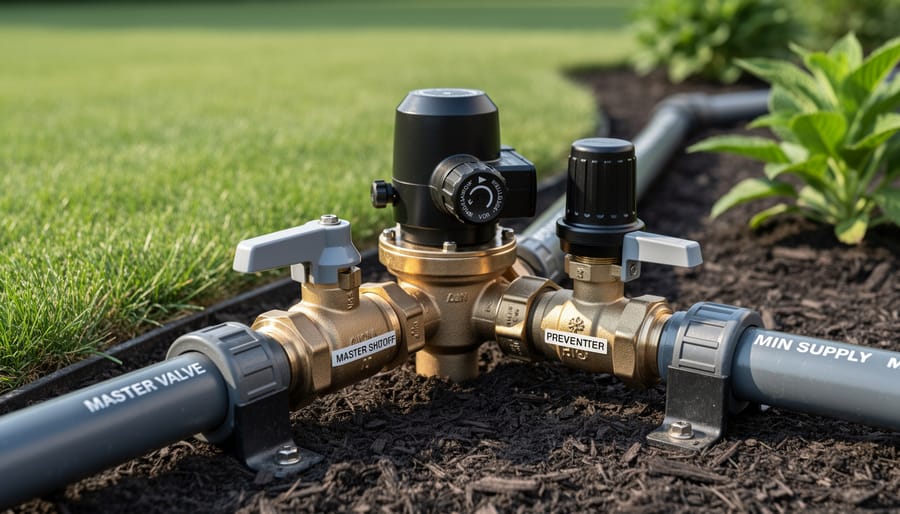
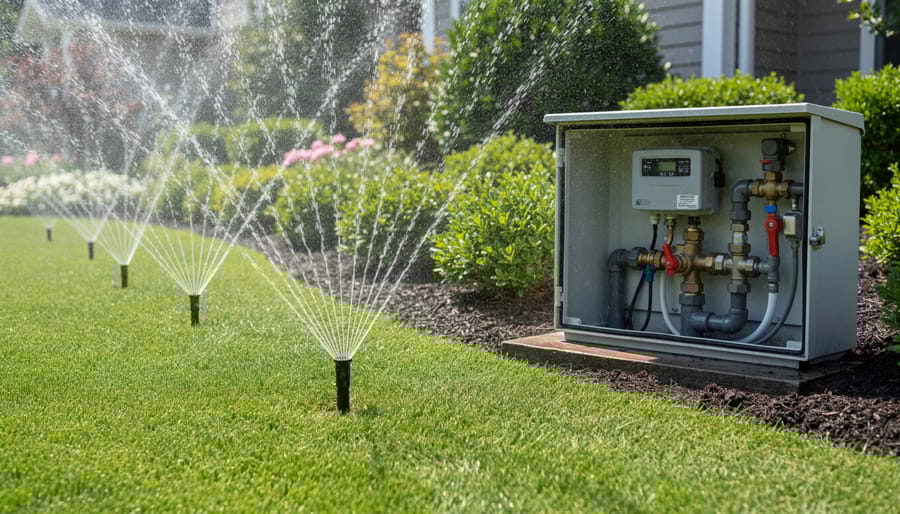
A master valve sits at the beginning of your irrigation system, right after the water supply connection and before all your zone valves. When your irrigation controller signals any zone to water, the master valve opens first, allowing water to flow through the entire system. Once all zones finish their watering cycles, the master valve closes, shutting off water to the whole network.
Here’s where it gets practical: while zone valves control which section of your lawn gets watered, the master valve acts as a safety gatekeeper for your entire system. It’s typically installed near your water meter or main supply line, often in a valve box underground or in your garage if your system runs from indoor plumbing.
The key difference between master and zone valves is their function and scope. Zone valves work independently, opening and closing based on your watering schedule to direct water to specific lawn sections. The master valve, however, only cares about one thing: is any zone asking for water? If yes, it opens. If no, it stays firmly closed.
This might seem redundant at first glance, but consider this: zone valves can fail, develop leaks, or stick open. When that happens without a master valve, water continues flowing until you notice the problem. With a master valve in place, you’ve got that extra layer of protection, which is especially valuable for water conservation and preventing those nightmare scenarios of returning from vacation to a flooded yard and a shocking water bill.
The Real Job of Your Master Valve: Protection First, Control Second
Stopping Leaks Before They Drain Your Wallet
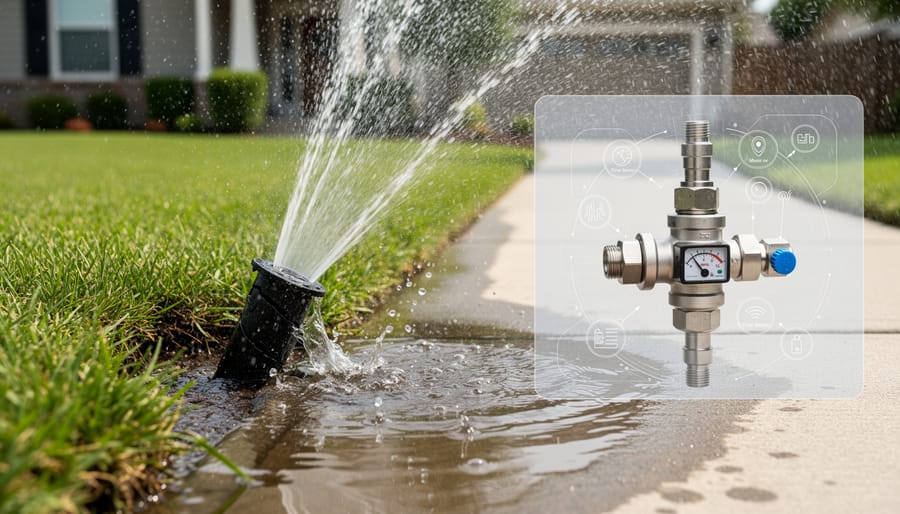
Picture this: You head out for a weekend getaway, and while you’re gone, a sprinkler head breaks off completely. Without a master valve, your irrigation system keeps pumping water through that broken line for hours—or even days—until you return home. The result? Hundreds or even thousands of gallons of wasted water and a jaw-dropping water bill.
This scenario happens more often than you’d think, but a master valve acts as your safety net. When paired with flow sensing technology, it detects unusual water flow patterns that signal problems. If a lateral line cracks underground or a zone valve gets stuck open, the system recognizes that something’s wrong and shuts everything down automatically.
The cost savings are real and substantial. One homeowner in Arizona discovered a cracked mainline that had been detecting water waste for weeks before their smart controller caught it—saving an estimated $300 in that billing cycle alone. Another gardener avoided a $800 repair nightmare when their master valve prevented flooding from a failed zone valve.
Beyond protecting your wallet, you’re also being a responsible water steward. In drought-prone regions, preventing even one major leak can save thousands of gallons of precious water. That’s water that stays in local reservoirs and aquifers rather than pooling uselessly in your yard. For environmentally conscious gardeners, this protection aligns perfectly with sustainable practices while keeping your landscape healthy and your budget intact.
Working with Flow Sensors to Catch Problems Early
Think of your master valve and flow sensor as the dynamic duo of water conservation—they’re basically the Batman and Robin of your irrigation system. When these two work together, they create a powerful early warning system that can save you from costly water waste and potential property damage.
Here’s how this partnership works: Your flow sensor constantly monitors how much water is moving through your system. It learns what’s normal for your setup—say, when Zone 3 runs, it expects to see about 5 gallons per minute flowing through. The master valve, meanwhile, acts as the main gatekeeper controlling water access to your entire system.
When something goes wrong—maybe a pipe breaks, a sprinkler head pops off, or you’ve got a leak you haven’t noticed yet—the flow sensor detects unusual water usage patterns. If the flow rate suddenly spikes or drops significantly from what it expects, the sensor signals your controller, which immediately commands the master valve to shut down the entire system. This happens automatically, even if you’re away on vacation.
This combination is particularly brilliant for catching common sprinkler system problems before they spiral out of control. A small leak that might waste thousands of gallons over a weekend gets stopped within minutes instead. You’re not just protecting your water bill—you’re preventing soggy lawns, foundation issues, and unnecessary strain on our water resources. It’s responsible homeownership and environmental stewardship rolled into one smart system.
Preventing Backflow and Protecting Water Quality
Here’s something many people don’t realize: your irrigation system connects directly to your home’s water supply, which means there’s potential for contaminated water to flow backward into your drinking water. Not a pleasant thought, right? This is where your master valve becomes an environmental hero.
Think of the master valve as a protective guardian. When your irrigation system shuts off, the master valve creates a physical barrier that prevents any possibility of dirty water, fertilizers, or pesticides from being drawn back into your household plumbing. This process, called backflow prevention, is actually required by plumbing codes in most areas for good reason.
By automatically isolating your irrigation system when it’s not in use, the master valve protects both your family’s health and the broader water supply in your community. It’s a simple component that plays a surprisingly important role in responsible water management. When you’re investing in sustainable gardening practices, knowing that your system includes this built-in safety feature should give you real peace of mind.
How Flow Sensing and Leak Detection Actually Work in Your Yard
The Flow Sensor: Your System’s Water Meter
Think of a flow sensor as your irrigation system’s water meter—but smarter. This clever device measures exactly how much water passes through your pipes, giving you real-time insight into what’s happening underground.
Most flow sensors install right after your master valve, where they can monitor every drop flowing to your sprinkler zones. They work like a tiny turbine or paddle wheel inside the pipe. As water rushes past, it spins, and the sensor converts those rotations into precise gallons-per-minute readings. Pretty neat, right?
Here’s where it gets really useful for your lawn care routine. During the first few weeks after installation, the sensor learns your system’s personality. It figures out that Zone 1 (maybe your front lawn) typically uses 15 gallons per minute, while Zone 3 (those flower beds with drip lines) only needs 3 gallons per minute. This baseline becomes your system’s normal fingerprint.
Once established, your flow sensor watches for anything unusual. If Zone 1 suddenly jumps to 25 gallons per minute, something’s wrong—maybe a broken sprinkler head or a cracked pipe. The sensor alerts your controller, which can automatically shut the master valve to prevent water waste and potential damage.
For those of us committed to sustainable gardening, this technology is a game-changer. You’re not just conserving water; you’re catching problems before they flood your yard or inflate your water bill. It’s like having a vigilant gardening partner watching your system 24/7.
When Your System Detects Something’s Wrong
Think of your master valve system as having its own built-in watchdog that’s constantly monitoring your water usage. Here’s how it springs into action when trouble strikes.
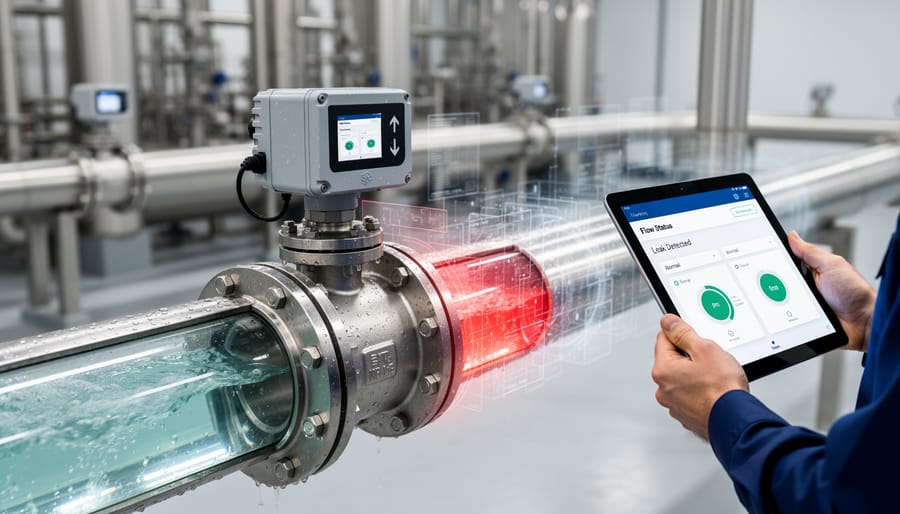
When everything’s running normally, your flow sensor measures a steady, expected amount of water moving through your system. But the moment something goes wrong—like a broken sprinkler head spraying water everywhere or a line that’s been accidentally cut by a shovel—the sensor detects an unusual flow pattern. Maybe there’s suddenly too much water flowing, or water continues moving even after a zone should’ve shut off.
The flow sensor immediately sends this information to your irrigation controller, which acts as the brain of the operation. Within seconds, the controller processes the data and recognizes the anomaly. If the readings exceed preset thresholds, the controller triggers the master valve to slam shut, stopping water flow to the entire system.
This quick response is a game-changer for both your water bill and the environment. I’ve heard from countless homeowners who discovered breaks in their systems only after receiving shocking water bills. One friend found a severed line hidden beneath mulch that had been watering absolutely nothing for weeks—her master valve system would’ve caught that instantly.
Common culprits include cracked pipes from freezing temperatures, sprinkler heads snapped off by lawn mowers, or even curious critters chewing through irrigation lines. Your master valve catches these problems before they become water-wasting disasters, making it an essential tool for sustainable lawn care.
Smart Controllers vs. Traditional Timers
Here’s the thing about irrigation controllers: they’ve come a long way from the simple dial timers your parents might have used. Traditional timers work with master valves just fine, opening them on schedule regardless of weather conditions. They’re reliable workhorses, but they can’t adjust to rain or changing soil moisture levels.
Smart controllers, on the other hand, transform your master valve into a conservation powerhouse. These WiFi-enabled devices monitor weather data, adjust watering schedules automatically, and many integrate seamlessly with flow sensors connected to your master valve. When a flow sensor detects unusual water usage, the smart controller receives that signal and can shut down the entire system instantly, sending you a notification right to your phone.
For homeowners serious about water conservation, this combination is game-changing. You’re not just watering on autopilot anymore. The system actually thinks about whether your lawn needs water today, protects against costly leaks, and can save you 30-50% on outdoor water use. That’s sustainability meeting smart technology in the best possible way for your lawn and your wallet.
Should You Add a Master Valve to Your Existing System?
Signs Your Lawn Would Benefit from a Master Valve
Wondering if your irrigation system could use an upgrade? Here’s a practical checklist to help you decide if a master valve makes sense for your property.
If you have a larger property—say, over half an acre—the investment really starts to pay off. The more zone valves you’re running, the greater your potential for leaks and water waste. Speaking from experience, I’ve seen too many friends discover puddles in remote corners of their yards weeks after a valve failed.
Are your water bills creeping up despite no obvious changes in usage? A master valve with leak detection can catch problems with your irrigation water distribution before they become expensive disasters. This is especially valuable in areas with tiered water pricing, where excessive use dramatically increases your per-gallon costs.
Consider your system’s age too. If your irrigation setup is over ten years old, adding a master valve provides an extra layer of protection as older zone valves become more prone to failure. It’s like adding insurance for aging infrastructure.
Local water restrictions are another key factor. Many communities now mandate automatic shutoff capabilities during drought conditions. A master valve helps you stay compliant while being a responsible neighbor.
Finally, if you’re already calling in repair technicians more than once a season, that’s your lawn telling you something. Environmental concerns matter here too—every gallon saved is a win for your watershed and your wallet.
What the Installation Actually Involves
Installing a master irrigation valve is moderately straightforward, but your comfort level with basic plumbing will determine whether you tackle it yourself or call in a pro. The valve itself typically costs between $40 and $150, depending on features like flow sensing capabilities. If you’re hiring a professional, expect installation to run another $150 to $300 for labor.
For confident DIYers, the process involves shutting off your water supply, cutting into the main irrigation line near your water source, and connecting the valve according to manufacturer instructions. You’ll need PVC cutters, primer, cement, and possibly some electrical knowledge if you’re wiring it to your controller. Most installations take 2-4 hours if everything goes smoothly.
Here’s my honest take: if your system is already up and running and you’re just adding a master valve for leak protection, it’s very doable with some patience and YouTube tutorials. However, if you’re dealing with complex wiring, integrating flow sensors, or working with metal pipes instead of PVC, professional installation might save you headaches and potential water damage from mistakes. There’s no shame in getting help, especially when you’re protecting your home and conserving water in the process.
The Long-Term Payoff: Water Savings and Peace of Mind
Here’s the real-world impact: homeowners with master valves paired with flow sensors typically report water bill reductions of 15-30% within the first year. One gardener in Arizona shared how her system caught a sprinkler head leak during vacation, automatically shutting down and saving an estimated 5,000 gallons before she returned home. Beyond personal savings, you’re contributing to water conservation in your community, especially crucial during drought conditions. The environmental benefit compounds over time as you prevent waste from undetected leaks, broken lines, or stuck zone valves. Plus, there’s genuine peace of mind knowing your system monitors itself 24/7. Combined with other strategies like reducing irrigation costs through smart water management, these automated protections transform your irrigation system from a water guzzler into an efficient, responsible tool. You maintain a healthy lawn while being a better steward of precious water resources.
Choosing the Right Master Valve and Flow Sensor Setup
Master Valve Features That Actually Matter
When shopping for a master valve, forget the fancy marketing claims and focus on what genuinely impacts performance. Let me walk you through the features that’ll actually make a difference in your irrigation system.
First up is size matching. Your master valve should match your mainline pipe diameter, typically 1 inch for residential systems, though larger properties might need 1.5 inches. Using an undersized valve creates a bottleneck that reduces water pressure throughout your entire system. I’ve seen too many homeowners frustrated by weak sprinkler performance, only to discover their 3/4-inch master valve was choking a 1-inch system.
Pressure ratings matter more than you’d think. Look for valves rated at least 150 PSI, even if your home pressure runs around 60 PSI. This headroom ensures longevity and prevents failures during pressure surges. Brands like Rain Bird and Hunter consistently deliver reliable pressure tolerances without breaking the bank.
For reliability and maintenance, prioritize valves with replaceable diaphragms and solenoids. The Irritrol 2400T series, for example, lets you swap these wear parts in minutes without excavating the entire valve box. This accessibility saves money and reduces water waste from delayed repairs.
From a sustainability perspective, choose valves with internal bleed features that prevent water hammer, which can damage pipes and waste water through micro-leaks. Quality brass or reinforced plastic construction typically outlasts cheaper alternatives by years, reducing landfill waste and the environmental cost of replacements.
Flow Sensor Options for Different Budgets and Needs
When it comes to flow sensors for your master valve system, you’ve got options that fit virtually any budget and property size. Let’s break down what makes sense for your situation.
Basic mechanical flow sensors are the workhorse option, typically costing between $50-150. These simple devices physically measure water movement through your pipes and trigger an alert when flow exceeds normal parameters. They’re fantastic for smaller properties under half an acre where your irrigation needs are straightforward. I’ve seen countless homeowners successfully protect their systems with these budget-friendly sensors, and they’re remarkably reliable with minimal maintenance. The tradeoff? You won’t get detailed data or remote monitoring capabilities.
Smart digital flow sensors represent the premium end, ranging from $200-500 or more. These tech-savvy devices connect to your smartphone, providing real-time water usage data, zone-by-zone monitoring, and instant leak alerts wherever you are. For larger properties over an acre, commercial landscapes, or anyone serious about water conservation, the investment pays dividends. One gardener I know discovered a small leak within hours using her smart sensor, saving hundreds of gallons before it became a major problem.
Here’s my practical advice: if you’re managing a typical suburban yard and want basic protection, start with a mechanical sensor. It’s sustainable, effective, and won’t break the bank. But if you’re deeply committed to tracking water usage, optimizing efficiency, or managing multiple zones remotely, the smart sensor’s detailed insights make it worth the extra investment. Either choice beats no protection at all.
Think of a master irrigation valve as an insurance policy for both your lawn and your water bill. It’s that reliable safety net working quietly in the background, ready to protect your property from costly leaks and unnecessary water waste. Whether you’re dealing with a midnight pipe burst or a slow drip you haven’t noticed yet, this simple addition to your irrigation system can save you hundreds or even thousands of dollars while conserving precious water resources.
Take a moment to assess your current irrigation setup. Does your system have a master valve? Is it functioning properly? If you’re unsure, it’s worth checking or calling in a professional for a quick evaluation. For those planning new installations or system upgrades, including a master valve should be non-negotiable. It’s a relatively small investment that pays dividends in peace of mind and environmental responsibility.
Remember, responsible lawn stewardship isn’t just about what we do above ground with fertilizers and mowing schedules. It’s equally about being smart with our water systems and protecting against waste. Every gallon saved matters, both for your budget and our shared environment.
Ready to take action? Start by locating your main irrigation shutoff and inspecting your current setup. If you don’t have a master valve, reach out to a trusted irrigation specialist to discuss your options. Your lawn, your wallet, and the planet will thank you for taking this important step toward a more efficient, sustainable watering system.