Picture this: you’re fertilizing your lawn with a hose-end sprayer when suddenly the water pressure drops. Unknown to you, that nutrient-rich solution meant for your grass is now flowing backward into your home’s drinking water supply. This isn’t a scare tactic—it’s a real phenomenon called backflow, and it happens more often than most gardeners realize.
A water backflow prevention device is your invisible guardian against contamination, stopping fertilizers, pesticides, herbicides, and even bacteria from reversing course through your outdoor faucets and contaminating the clean water you drink, cook with, and bathe in. Whether you’re using a simple spray attachment, running an irrigation system, or connecting a garden hose to apply treatments, any time your hose touches chemicals or sits in standing water, you’re creating a potential pathway for contamination.
Most homeowners discover backflow prevention in one of two ways: either their municipality sends a compliance notice requiring installation, or they learn about it while researching safe gardening practices. If you’re here, you’re already ahead of the curve. These devices aren’t just regulatory checkboxes—they’re essential safety equipment that protects your family’s health and your community’s water supply.
The good news? Installing backflow prevention doesn’t require a plumbing degree, and modern devices are surprisingly affordable and low-maintenance. From simple hose bib vacuum breakers that cost less than twenty dollars to more sophisticated pressure vacuum breakers for irrigation systems, there’s a solution for every outdoor water setup. Understanding which device you need, how to install it correctly, and how to maintain it will ensure your sustainable gardening practices stay truly safe and environmentally responsible.
What Is Water Backflow and Why Should Gardeners Care?
Two Types of Backflow That Threaten Your Water Supply
Understanding what can go wrong with your water supply helps you protect both your garden and your family. Backflow occurs in two main ways, and both are surprisingly common in everyday gardening situations.
Backsiphonage happens when water gets sucked backward through your system, similar to drinking through a straw in reverse. This typically occurs when there’s a sudden drop in water pressure on the main supply line. Picture this: you’re filling a fertilizer sprayer attached to your garden hose when a water main breaks down the street. The pressure drop can actually pull contaminated water from your sprayer back into your home’s drinking water pipes. The same thing can happen with hose-end pesticide applicators or even a simple garden hose left submerged in a bucket of soapy water. It’s like your plumbing system takes an unintended gulp of whatever’s in your garden equipment.
Backpressure is the opposite problem but equally concerning. This occurs when the pressure in your irrigation system or garden equipment actually exceeds the pressure in your main water supply. Common culprits include booster pumps on drip irrigation systems or elevated sprinkler setups on hillside gardens. When the downstream pressure is higher, contaminated water can be forced back into the clean water supply. Think of it as water flowing uphill when it shouldn’t, carrying fertilizers, pesticides, or other garden chemicals where they don’t belong.
The Real Risks: From Lawn Chemicals to Contaminated Water
Let’s talk about what can actually go wrong when your irrigation system connects to your home’s drinking water—and trust me, these scenarios are more common than you might think.
Picture this: you’re using a fertilizer injector on your hose to feed your lawn, making the job easier and more efficient. Sounds great, right? But if water pressure suddenly drops—say, when your neighbor turns on their sprinkler or the fire department opens a hydrant down the street—that fertilizer solution can get sucked backward into your drinking water pipes. Suddenly, the water coming out of your kitchen tap contains the same nutrients you just applied to your grass.
The same risk applies to pesticide applicators attached to garden hoses. Herbicides, insecticides, and fungicides are designed to kill unwanted organisms in your yard, but they have no business in your drinking water. Even small amounts of these chemicals can pose serious health risks, especially for children, pregnant women, and pets.
And here’s something many gardeners don’t consider: irrigation systems that draw from ponds, wells, or rainwater collection barrels. These water sources often contain bacteria, algae, parasites, and other contaminants that are harmless outdoors but dangerous if they backflow into your potable water supply.
The environmental impact matters too. When lawn chemicals contaminate municipal water systems through backflow, they can affect entire neighborhoods and strain water treatment facilities that weren’t designed to handle these substances.
Understanding Water Backflow Prevention Devices
Common Types of Backflow Preventers for Lawn and Garden Use
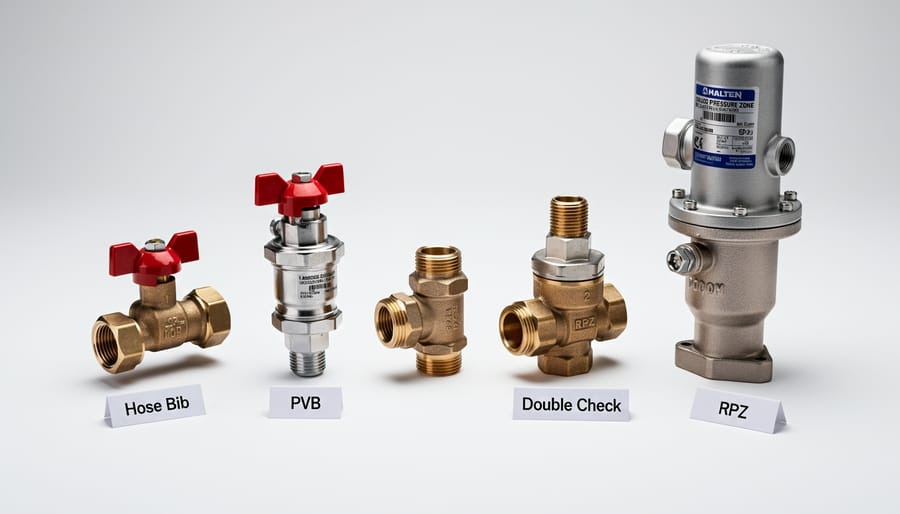
Choosing the right backflow preventer for your lawn and garden isn’t as complicated as it sounds once you understand the four main types available. Let me walk you through each one so you can make the best choice for your outdoor watering needs.
Atmospheric vacuum breakers are the simplest and most affordable option, perfect for basic garden hose connections and drip irrigation systems. These devices work by allowing air into the water line when the pressure drops, preventing contaminated water from flowing backward. They’re ideal if you’re watering flower beds or vegetable gardens at ground level. Just remember, they must be installed at least six inches above the highest downstream outlet and can’t handle continuous pressure, so they won’t work for systems that stay pressurized all the time.
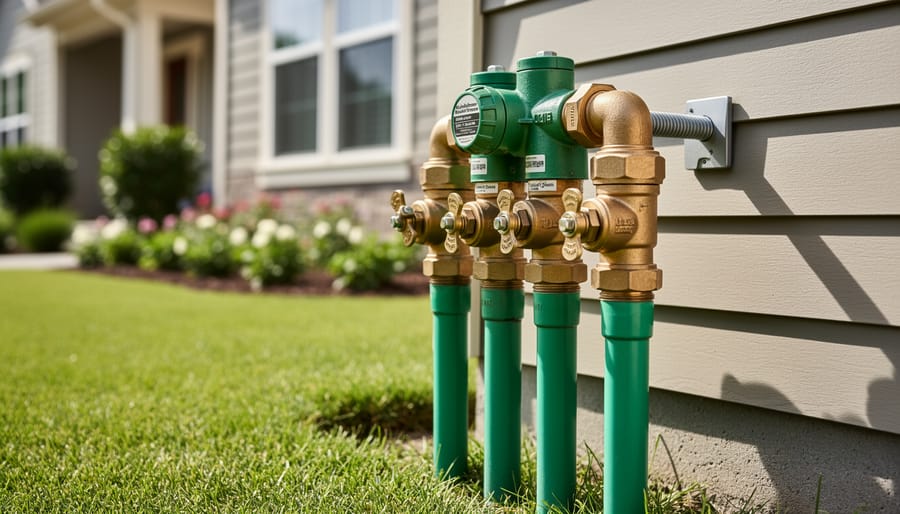
Pressure vacuum breakers step things up a notch and can handle continuous pressure, making them suitable for in-ground sprinkler systems. These devices include a spring-loaded check valve that provides better protection than atmospheric models. If you’re running a typical residential irrigation system, this is often your sweet spot between cost and protection. They’re particularly practical for yards with automated watering schedules.
Double check valve assemblies offer even more robust protection and work well for systems that include fertilizer injectors or chemical applicators. These units feature two independent check valves with a pressure monitoring port between them, creating redundant protection. While pricier than vacuum breakers, they’re essential when you’re introducing any substances into your irrigation water, helping protect both your family and the broader water supply.
Reduced pressure zone devices provide the highest level of protection available for residential use. These sophisticated units include two check valves plus a relief valve that opens if either check valve fails. While they’re the most expensive option, they’re sometimes required by local codes for high-hazard situations or properties near water treatment facilities. The investment pays off in peace of mind, especially if you’re using reclaimed water or have complex irrigation setups.
For most home gardeners, a pressure vacuum breaker offers the best balance of protection, cost, and ease of installation for standard sprinkler systems, while atmospheric vacuum breakers work perfectly fine for simple hose-end watering.
How to Choose the Right Device for Your Watering System
Choosing the right backflow prevention device doesn’t have to be complicated once you understand your watering setup. Think of it like selecting the right tool for different garden tasks – each system has specific needs.
For basic hose bibs where you connect your garden hose, an atmospheric vacuum breaker is typically your most cost-effective and straightforward option. These simple devices screw right onto your outdoor faucet and work perfectly for everyday watering tasks. They’re budget-friendly, usually running between $10-$30, and require minimal maintenance – a great starting point for most gardeners.
If you’re running a sprinkler system, you’ll likely need a pressure vacuum breaker or reduced pressure zone assembly, depending on your local codes. These handle the constant pressure and automated operation that irrigation systems demand. While they cost more upfront (typically $50-$200), they’re built to last and protect your larger investment in your lawn care system.
Drip irrigation users should consider backflow preventers specifically rated for low-flow applications. The good news? Drip systems pose lower contamination risks since they operate at lower pressure, often allowing you to use simpler, more affordable devices.
Here’s where sustainability meets practicality: if you’re using fertilizer injectors or connecting to rain barrels, you absolutely need a more robust device like an RPZ valve. These systems introduce chemicals or non-potable water into your lines, creating higher hazard levels. Yes, they’re pricier, but they prevent contaminating your drinking water – something we should never compromise on.
Consider your long-term needs too. Installing a slightly more capable device now might save you from upgrading later when you expand your garden or add that automated watering system you’ve been dreaming about. Your local water utility can provide specific recommendations based on your planned uses and regional requirements.
Backflow Prevention Compliance: What the Law Requires
When Your Irrigation System Legally Needs Protection
Knowing when you’re legally required to install a backflow prevention device can save you from hefty fines and protect your community’s water supply. Let’s walk through the most common scenarios where these devices aren’t just recommended—they’re mandatory.
If you have underground sprinkler systems, you almost certainly need backflow prevention. These systems create a direct connection between your drinking water and the soil, which contains bacteria, fertilizers, pesticides, and other contaminants. When water pressure drops unexpectedly in the main line—say, during a water main break or heavy usage from fire hydrants—that contaminated water can be sucked back into your home’s plumbing.
Chemical injection systems trigger automatic compliance requirements. Whether you’re using a fertilizer injector for your lawn or adding treatments to your irrigation water, you’re introducing substances that absolutely cannot enter the drinking water supply. Most municipalities require specific high-hazard backflow preventers for these applications.
Cross-connections are the trickiest to identify. These occur anytime your irrigation system connects to features like ponds, pools, water features, or hose-end sprayers with chemical applicators. Even something as simple as leaving a hose submerged in a bucket of fertilizer solution creates a cross-connection.
The good news? Most local water authorities provide free assessments to determine your specific requirements. Contact your water utility before installing new irrigation features—it’s much easier than retrofitting later.
Annual Testing and Certification Explained
Here’s the reality: once your backflow prevention device is installed, you’re not quite done. Most municipalities require annual testing to ensure it’s still protecting your water supply effectively. Think of it like getting your car inspected—it’s a simple checkpoint that keeps everyone safe.
So who can test your device? You’ll need a certified backflow prevention tester, which typically means a licensed plumber or irrigation specialist who’s completed specific training and certification. Your local water authority maintains a list of certified testers in your area, making it easy to find someone qualified. You can also check with your plumber or irrigation company, as many already offer this service.
The testing process itself is straightforward and usually takes about 30 minutes. The tester will check valves, measure pressure differentials, and ensure everything’s functioning as designed. They’ll provide you with a certification form that you’ll need to submit to your water company, proving compliance.
Cost-wise, expect to pay between $50 and $150 for annual testing, depending on your location and device complexity. Some irrigation companies offer package deals if you bundle testing with your spring system startup—a smart way to save money while checking an important task off your list.
Pro tip: Schedule your test during your irrigation system’s spring activation. This timing ensures your backflow preventer is ready for the gardening season ahead and keeps you compliant without extra trips. Many testers book up quickly in spring, so calling ahead in late winter secures your preferred appointment time.
Installing Your Backflow Prevention Device: A Practical Guide
DIY Installation for Simple Systems
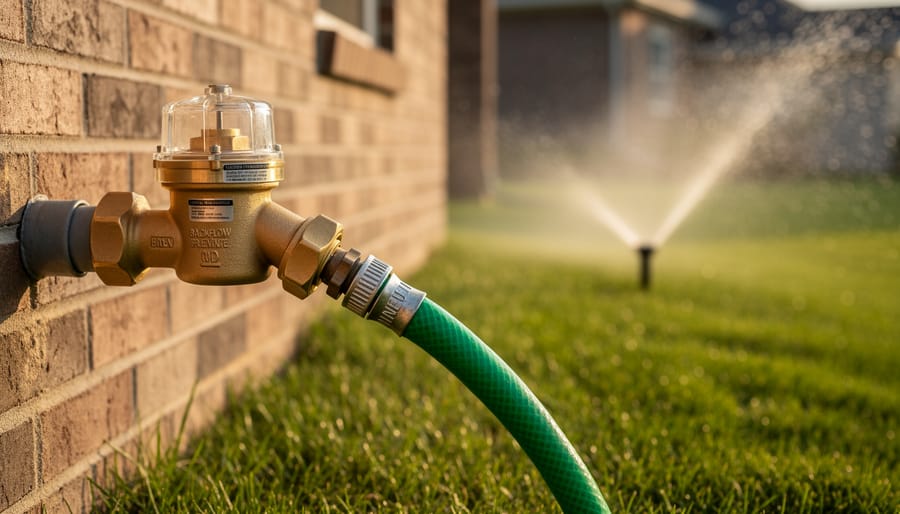
Good news for DIY-minded gardeners: installing a basic backflow prevention device is totally doable, even if you’ve never tackled a plumbing project before. Let’s walk through the process together, focusing on hose bib vacuum breakers, which are the most common devices for outdoor faucets.
Before you start, gather these simple tools: an adjustable wrench, Teflon tape (also called plumber’s tape), and a clean cloth. You might also want protective gloves and safety glasses, since we’re working with metal fittings. The whole project typically takes about 15 minutes per faucet.
First, turn off the water supply to your outdoor faucet. If you can’t find a dedicated shutoff valve, you may need to shut off your main water line temporarily. Open the faucet to release any remaining water pressure, then unscrew any existing attachments like hoses or spray nozzles.
Now for the installation: wrap 2-3 layers of Teflon tape clockwise around the faucet threads. This creates a watertight seal and prevents leaks. Take your vacuum breaker and hand-tighten it onto the faucet threads, making sure the device’s arrow points upward (this is crucial for proper function). Use your adjustable wrench to snug it down, but don’t overtighten or you might crack the fitting.
Turn the water back on and check for leaks. A few drops initially is normal, but steady dripping means you should remove the device, add more Teflon tape, and reinstall.
One important safety note: these simple devices protect against low-hazard situations like garden hoses. If you’re connecting to irrigation systems or using fertilizer injectors, you’ll need professional-grade backflow prevention, and I’d recommend calling in a licensed plumber for those installations.
When to Call a Professional
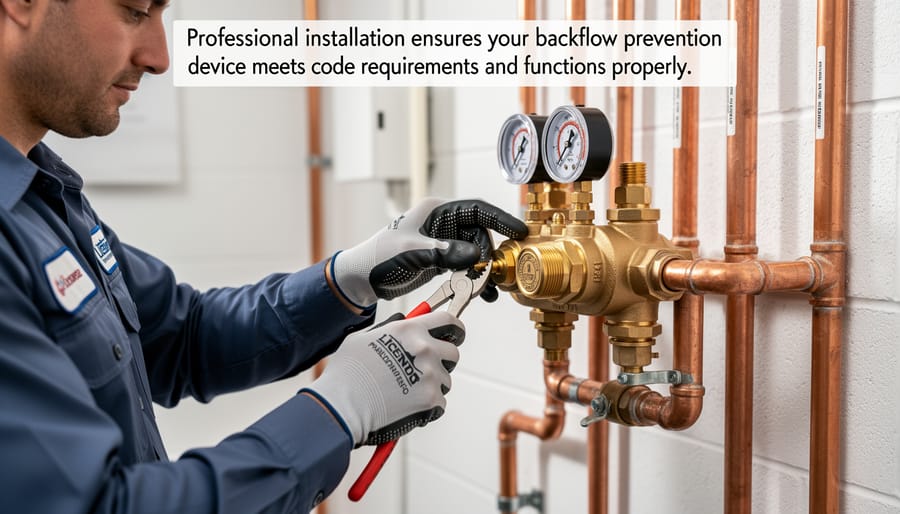
While many backflow preventers are straightforward DIY projects, some situations definitely call for professional help. If you’re dealing with a complex irrigation system installation, multiple zones, or connections to your home’s main water supply, it’s time to bring in a licensed plumber or irrigation specialist. These professionals ensure proper installation that meets local codes and protects your family’s drinking water.
Professional installation typically costs between $150 and $500, depending on your system’s complexity and local labor rates. While this might seem pricey, consider it an investment in peace of mind and compliance. Improperly installed devices can fail inspections or, worse, allow contamination.
To find qualified installers, check with your local water authority for recommended contractors who specialize in backflow prevention. Look for licensed plumbers with backflow certification, and don’t hesitate to ask for references from other homeowners. Many municipalities maintain lists of approved testers and installers on their websites. Remember, a good professional will explain the process, answer your questions patiently, and provide documentation for your records.
Maintaining Your Backflow Preventer for Long-Term Protection
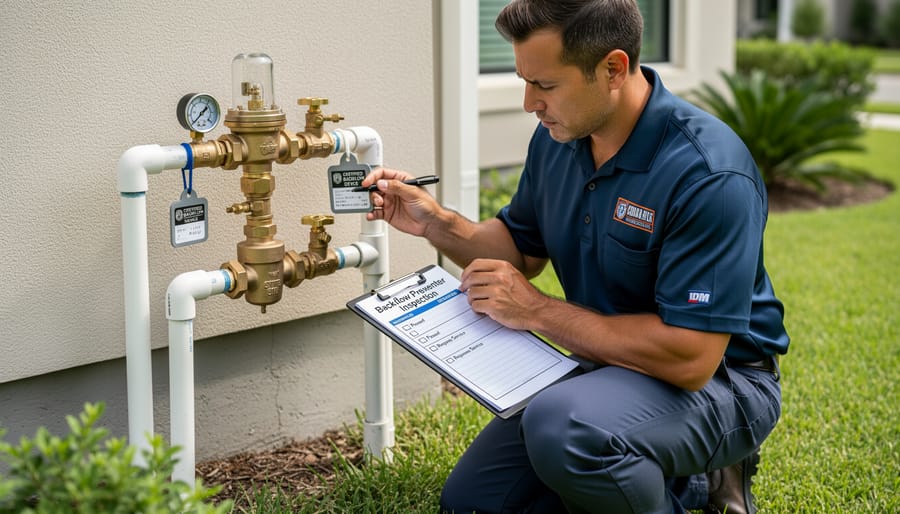
Seasonal Maintenance Checklist
Keeping your backflow prevention device in top shape doesn’t require a lot of effort, but a little seasonal attention goes a long way toward protecting both your family and your garden investment.
When spring arrives and you’re eager to fire up your irrigation system, start with a careful inspection of your backflow preventer. Before turning on the water, check for any cracks, corrosion, or damage that might have occurred during winter. Slowly open the supply valve and watch for leaks around connections and test cocks. If you have a pressure vacuum breaker, make sure the air inlet opens freely—you should hear a little whoosh of air. For reduced pressure zone devices, open the test cocks briefly to confirm water flows properly through the relief valve.
During the active watering season, plan a quick monthly checkup. Walk by your device and look for continuous dripping from relief valves, which might indicate internal problems. Check that nothing has settled against or damaged the unit—I’ve seen everything from garden hoses to climbing vines interfere with proper operation.
Come fall, winterization becomes crucial in freeze-prone areas. Before the first hard frost, shut off the water supply and open all test cocks and drain valves to release trapped water. Some gardeners remove the entire device for indoor storage, which offers maximum protection. If your device stays outside, insulating covers provide some defense, though they’re not foolproof in severe cold.
Remember, proper seasonal care means fewer repairs and reliable protection year after year, letting you focus on growing that beautiful, sustainable garden you’re working toward.
Common Problems and Quick Fixes
Even the best backflow prevention devices can occasionally hiccup, but don’t worry—most issues are easily resolved! If you notice water dripping from your device, the culprit is often a worn rubber seal or debris caught in the valve. Try cleaning the device first by flushing it according to the manufacturer’s instructions. If leaking persists, replacement seals are inexpensive and readily available at hardware stores.
Experiencing reduced water pressure? This usually signals that your backflow preventer needs cleaning or that sediment has built up inside. Disassemble and rinse the internal components with clean water. Installing a simple pre-filter before your backflow device can prevent this frustrating problem from recurring, which is especially helpful if you have well water or older pipes.
If your device fails a required annual test, it might be time for replacement rather than repair. Most backflow preventers last 5-10 years with proper maintenance, but freezing damage or constant exposure to harsh weather can shorten their lifespan. When buying a replacement, choose a frost-resistant model if you live in colder climates—your future self will thank you! Remember, keeping your water supply clean protects both your garden and your community’s drinking water.
Product Recommendations: Reliable Backflow Preventers for Every Need
Finding the right backflow preventer doesn’t have to be complicated. I’ve tested several models over the years, and I’m happy to share what works best for different garden setups while keeping both your budget and the environment in mind.
For basic garden hose connections, the Watts 800M4-QT atmospheric vacuum breaker is my go-to recommendation for beginners. Priced around $12-18, it’s affordable and dead simple to install by hand-tightening onto any standard outdoor faucet. The brass construction means it’ll last several seasons without corroding, making it a sustainable choice that keeps devices out of landfills. It’s perfect for everyday watering and works beautifully with sprinklers on flat lawns. The downside? You can’t leave it under constant pressure, so you’ll need to shut off the water after each use.
If you’re running drip irrigation or soaker hoses for water-efficient gardening, step up to a pressure vacuum breaker like the Febco 765. At $45-65, it’s pricier but allows continuous pressure, meaning your automated watering systems can run on timers. This model has served me faithfully for five years with just annual spring checks. The environmental benefit here is significant since drip systems already conserve water, and protecting your home’s water supply means you’re being doubly responsible.
For those with in-ground sprinkler systems or vegetable gardens where you’re using fertilizers, a reduced pressure zone device (RPZ valve) offers maximum protection. Models like the Wilkins 975XL run $150-300 and require professional installation, but they’re mandated by many municipalities for high-hazard situations. Yes, they’re an investment, but they provide peace of mind knowing chemicals absolutely cannot backflow into your drinking water.
My honest advice? Start with what matches your current setup. A simple atmospheric vacuum breaker handles 80% of residential garden needs beautifully. As your garden grows and you add more sophisticated watering systems, you can upgrade accordingly. Remember, any backflow preventer is better than none, and choosing quality devices means fewer replacements and less waste over time.
Protecting your lawn, your family, and your community’s water supply doesn’t have to be complicated. By now, you understand that backflow prevention devices are more than just regulatory checkboxes—they’re essential safeguards that keep contaminated water from flowing back into the clean water supply we all depend on. Whether you’re watering your garden, applying fertilizers, or running an irrigation system, these simple devices work quietly behind the scenes to maintain water quality and safety.
Take a moment to assess your current outdoor water setup. Do you have backflow prevention devices installed on all your hose connections, irrigation systems, and outdoor faucets? Are they tested annually as required? If you’re uncertain, now is the perfect time to take action. Check with your local water authority about specific requirements in your area, and consider scheduling a professional inspection if needed.
Remember, responsible water use goes hand in hand with sustainable lawn care. By ensuring your backflow prevention devices are properly installed and maintained, you’re not just protecting your own lawn’s health—you’re contributing to a larger commitment to environmental stewardship. Clean water is a shared resource, and every gardener has a role to play in preserving it.
Embracing these simple preventive measures empowers you to garden confidently, knowing you’re protecting both the beauty of your outdoor space and the wellbeing of your community. That’s the kind of lawn care legacy worth cultivating.