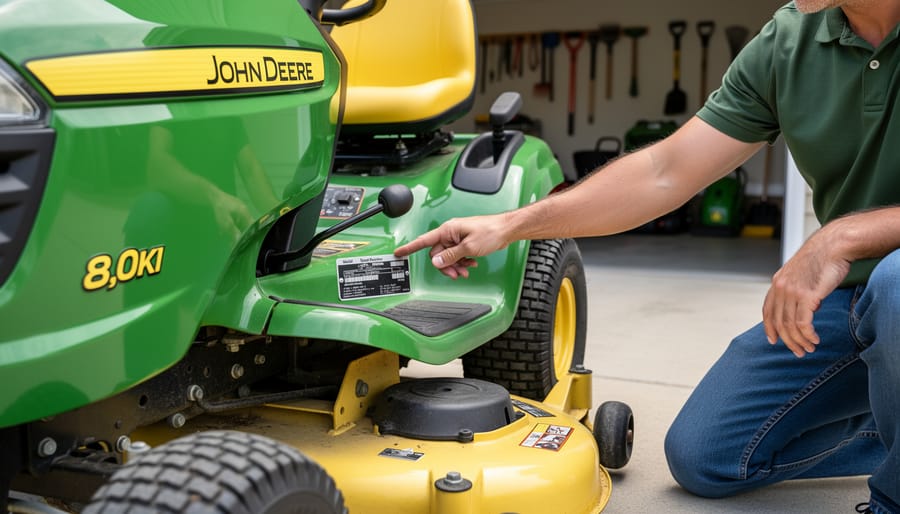
Match your John Deere tractor’s model number to the compatible deck series by checking the identification tag located beneath the seat or on the frame—this serial number determines which deck mounting system your machine uses. Cross-reference this information with John Deere’s official compatibility documentation, available through authorized dealers or the manufacturer’s website, where decks are organized by series letter (100, 200, 300, X-series) and production year ranges.
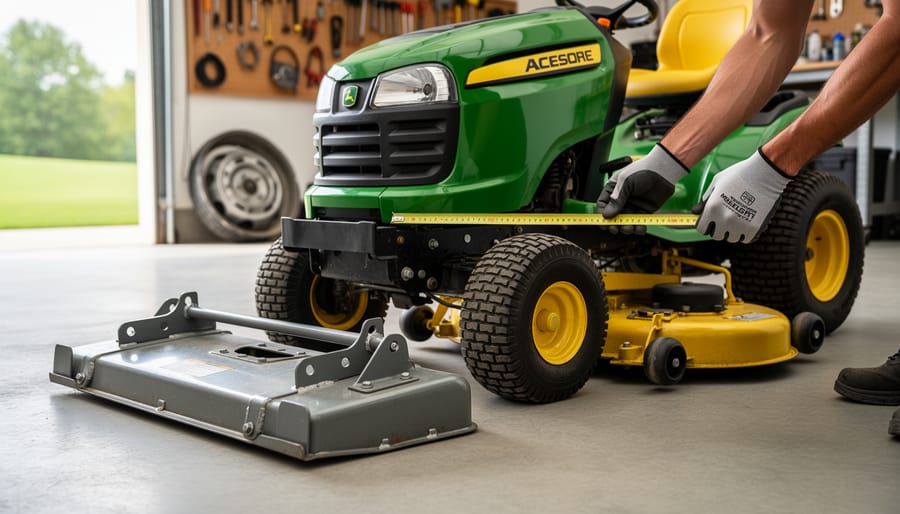
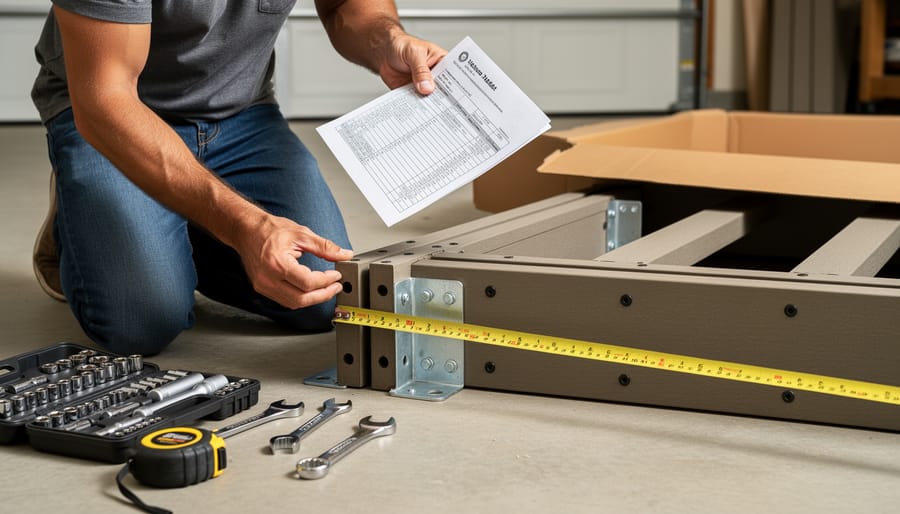
Verify the deck mounting bracket configuration on your existing tractor before purchasing, as John Deere has used multiple attachment systems over the decades, including clevis-style pins, bolt-on brackets, and quick-hitch systems that aren’t interchangeable even within the same tractor series. Measure the distance between mounting points and photograph the current setup to compare against potential replacement decks.
Consider cutting width requirements based on your property size and terrain—38-inch decks suit small yards with tight spaces, 42-48 inch decks handle most residential properties efficiently, while 54-60 inch commercial-grade decks accelerate larger acreage mowing but require adequate tractor horsepower. Undersized engines paired with oversized decks result in poor blade tip speed, uneven cuts, and premature transmission wear.
Confirm blade spindle compatibility when selecting a replacement deck, as older models use different spindle housing designs and bearing assemblies than current production units. This seemingly minor detail prevents frustrating installation failures and ensures optimal cutting performance for years of reliable service.
Why John Deere Mower Deck Compatibility Matters
Getting the right mower deck for your John Deere tractor isn’t just about making sure the pieces fit together—it’s about protecting your investment and ensuring your lawn gets the quality cut it deserves. I’ve seen too many folks learn this lesson the hard way, and I’m here to help you avoid those pitfalls.
When you match an incompatible deck to your tractor, you’re setting yourself up for a cascade of problems. First, there’s the cutting performance issue. An ill-fitted deck won’t maintain the proper height consistently, leading to uneven cuts that leave your lawn looking patchy and stressed. This isn’t just an aesthetic problem—scalped areas become vulnerable to weeds and disease, while overgrown patches harbor pests and moisture issues. Your lawn essentially suffers because the equipment can’t do its job properly.
Safety is another critical concern that people often overlook. Mower decks operate with multiple high-speed blades, and when components don’t align correctly, you risk serious mechanical failures. Vibrations from improper mounting can loosen bolts, damage bearings, and in worst-case scenarios, cause blades or debris to eject unexpectedly. These aren’t theoretical risks—they’re real dangers that put you and anyone nearby at risk.
Then there’s the financial aspect. Installing an incompatible deck can void your tractor’s warranty faster than you can say “buyer’s remorse.” John Deere, like most manufacturers, specifies compatible components for good reason, and deviating from those specifications gives them legitimate grounds to deny warranty claims. Whether you’re buying a riding mower for the first time or upgrading your existing setup, this consideration matters enormously.
The good news? Taking fifteen minutes to verify compatibility using the proper charts saves you from costly repairs, dangerous malfunctions, and the frustration of returning equipment. It’s the difference between years of reliable service and an expensive headache that could have been easily prevented.
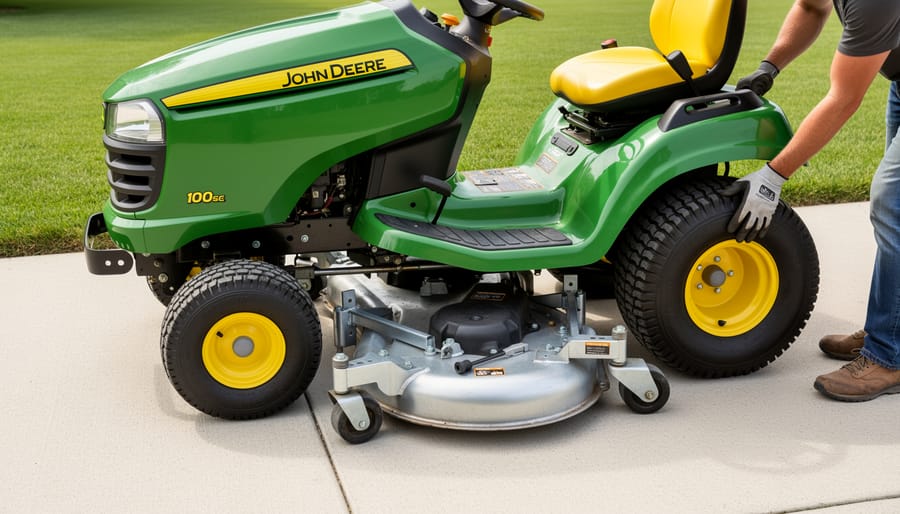
Understanding John Deere’s Model Numbering System
If you’ve ever stared at a John Deere compatibility chart and felt like you were decoding a secret language, you’re not alone. The good news is that John Deere’s model numbering system is actually quite logical once you understand the basics, and cracking this code will save you time, money, and the headache of ordering the wrong deck.
John Deere uses a series-based system to organize their lawn tractors and mowers. You’ll typically see model numbers like X350, X500, or 1025R. That first letter and number combination tells you which series your machine belongs to, and this is your first clue to compatibility. The X-Series, for example, includes lawn tractors designed for residential use, while the 1-Series represents compact utility tractors built for more demanding tasks.
Here’s where it gets practical for your shopping experience: tractors within the same series often share similar deck mounting systems and compatibility features. A 54-inch deck compatible with an X350 will likely work with other X300-series models, though there are always exceptions we’ll discuss later.
The numbers following the series designation generally indicate the relative power and capability within that family. Higher numbers typically mean more horsepower and the ability to handle larger, heavier decks. An X590, for instance, can manage deck sizes that an X350 simply wasn’t designed to support.
Mower decks themselves carry designations that reference their cutting width, typically in inches. When you see “54-inch Accel Deep deck,” that measurement is your cutting path width. From a sustainability perspective, choosing the right deck size for your property means you’re not wasting fuel pushing more machine than necessary, while still getting efficient coverage that reduces mowing time and emissions per cut.
Understanding these fundamentals transforms compatibility charts from confusing grids into helpful roadmaps for making the right choice.
The John Deere Mower Deck Compatibility Chart Explained
Residential Riding Mower Deck Compatibility
If you own a residential John Deere riding mower, you’re probably looking at one of the most popular series: the 100 Series, X300, or X500. The good news? Understanding deck compatibility for these models is pretty straightforward once you know what to look for.
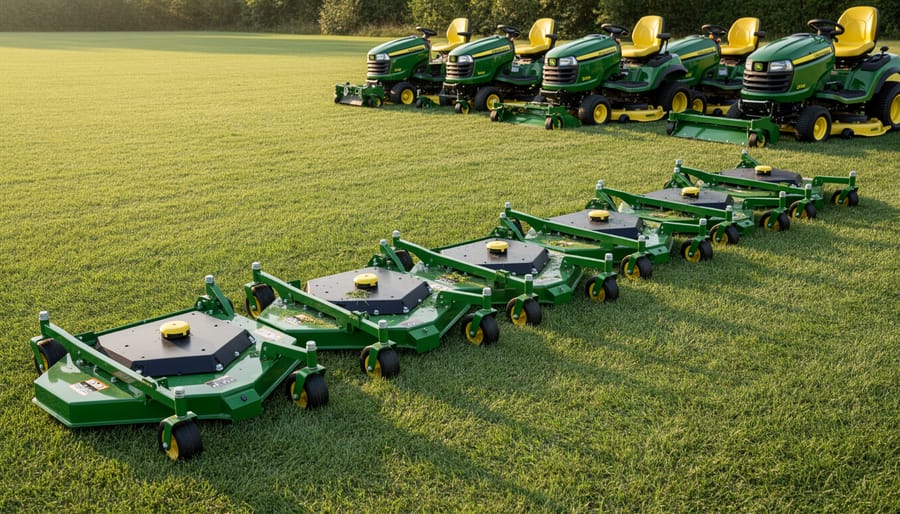
The 100 Series represents John Deere’s entry-level residential mowers, and they typically accommodate smaller decks ranging from 42 to 48 inches. These are perfect for yards under two acres where maneuverability matters as much as cutting power. Most 100 Series models use Edge Xtra decks, which are stamped steel construction designed for durability and efficient grass dispersal. When shopping for a replacement deck, you’ll want to verify your specific model number, as some early 100 Series tractors have slightly different mounting systems than newer versions.
The X300 Series steps up the game with deck options from 42 to 54 inches, offering more versatility for medium-sized properties. These models typically feature the Accel Deep deck design, which creates better airflow for cleaner cuts and improved bagging performance. From a sustainability perspective, this improved cutting efficiency means you’re mulching more effectively, returning valuable nutrients to your lawn rather than bagging and disposing of clippings.
The X500 Series, John Deere’s premium residential line, handles the largest residential decks at 48 to 62 inches. These tractors use heavy-duty fabricated decks that can withstand years of use while maintaining cutting quality. The larger deck sizes allow you to cover more ground per pass, reducing mowing time and fuel consumption, which aligns with practical lawn care efficiency.
Always check your tractor’s serial number against compatibility charts before purchasing, as mid-year production changes can affect fitment.
Commercial and Zero-Turn Deck Compatibility
If you’re managing a larger property or run a professional landscaping operation, understanding Z Series and commercial-grade John Deere compatibility is essential for maximizing your investment. These robust machines typically support wider deck options, ranging from 48 to 72 inches, designed to handle demanding workloads while maintaining that pristine lawn finish we all appreciate.
The Z Series zero-turn mowers generally accommodate high-capacity decks with advanced features like the 7-Iron PRO deck, which offers superior mulching and bagging performance. Models like the Z335E, Z355E, and Z375R each have specific deck configurations, so cross-referencing your exact model number with John Deere’s commercial compatibility charts prevents costly mistakes. You’ll find these charts detail mounting hardware requirements and hydraulic lift compatibility, which differ significantly from residential models.
For professional operators, deck durability matters tremendously for both your bottom line and environmental sustainability. Choosing the right commercial deck means fewer replacements over time, reducing waste and keeping equipment out of landfills. When verifying compatibility, pay attention to spindle assembly differences and blade tip speed ratings, as commercial decks often operate at higher speeds for cleaner cuts on varied terrain. Don’t hesitate to contact your John Deere dealer with your serial number handy—they can quickly confirm which deck options suit your specific machine and workload demands.
Key Factors Beyond the Compatibility Chart
While the compatibility chart is your starting point, choosing the right mower deck involves several practical considerations that go beyond simple model matching. Think of it like buying shoes—getting the right size is essential, but you also need to consider where you’ll be walking and what activities you’ll be doing.
Cutting width is often your first decision point. Smaller decks, typically 42 to 48 inches, offer excellent maneuverability around trees, garden beds, and tight corners. They’re perfect for properties with landscaping features or irregular shapes. Larger decks, ranging from 54 to 72 inches, cover more ground quickly and work beautifully on open, expansive lawns. I’ve seen homeowners upgrade to larger decks thinking bigger is always better, only to struggle with navigation issues. Measure your narrowest gates and pathways before committing to a wider deck.
Your terrain type matters considerably. If you’re working with rolling hills or uneven ground, a floating deck design provides better ground contour following and prevents scalping on high spots. For flat, well-maintained lawns, a fixed deck may serve you just fine and typically costs less.
Discharge options significantly impact both your lawn’s health and your workload. Understanding the differences between mulching versus side discharge helps you choose the right setup for your needs. Mulching decks finely chop grass clippings and return them to the soil, providing natural nutrition and reducing your need for synthetic fertilizers. This sustainable approach saves you money and time while supporting healthier soil biology. Side discharge works well for tall, wet grass or overgrown areas where mulching might clog the deck. Many modern John Deere decks offer convertible options, letting you switch between modes based on conditions.
Bagging capability appeals to homeowners who prefer that manicured, clipping-free appearance or need to remove debris during fall leaf season. However, removing clippings also removes nutrients, requiring more fertilizer applications to maintain lawn health.
Consider your long-term lawn care philosophy. If you’re moving toward more sustainable practices, prioritize mulching capability. The initial investment pays dividends through reduced fertilizer costs and improved soil structure over time.
Common Deck Types and Their Best Uses
Choosing the right mower deck isn’t just about what fits—it’s about matching the deck to how you actually use your lawn. Think of it like picking the right tool for a job; you wouldn’t use a sledgehammer to hang a picture frame, right?
Let’s start with the fundamental choice between stamped versus fabricated decks. Stamped steel decks are the budget-friendly workhorses of the John Deere lineup. They’re pressed from a single sheet of metal, making them lighter and less expensive. For homeowners with relatively flat yards under two acres, these decks deliver reliable performance without breaking the bank. However, if you’re tackling rougher terrain, dealing with demanding commercial use, or simply want a deck that’ll outlast your tractor, fabricated decks are worth the investment. These welded steel decks handle abuse better and typically offer superior cut quality in challenging conditions.
Cutting width matters more than many people realize. Smaller 42-inch and 48-inch decks excel in yards with gates, trees, and tight spaces. I’ve seen countless folks regret buying the biggest deck possible only to spend half their mowing time backing up and maneuvering. Mid-size decks around 54 inches strike a nice balance for most suburban properties. The larger 60-inch and 72-inch decks shine on open acreage where efficiency trumps maneuverability—you’ll cut your mowing time significantly on properties over three acres.
Now, let’s talk cutting systems. Standard side-discharge decks remain the most versatile option for general lawn care. They handle tall grass and wet conditions reasonably well. Mulching decks, however, deserve serious consideration for sustainability-minded gardeners. These decks recirculate clippings multiple times, creating finer particles that decompose quickly and return nutrients to your soil. You’re essentially creating free fertilizer while eliminating bagging waste. The catch? Mulching decks demand more frequent mowing and struggle in wet conditions or overgrown grass.
High-capacity collection decks suit those who prefer the manicured look of completely cleared lawns, though they require more effort emptying bags and don’t contribute to soil health like mulching does. Consider your lawn’s characteristics and your environmental priorities when making this decision.
How to Verify Compatibility Before Purchasing
Before you hand over your hard-earned money for a new or used mower deck, taking a few verification steps can save you from an expensive mistake and a lot of frustration. Think of it like checking measurements twice before cutting lumber—it’s always worth the extra few minutes.
Start with your tractor’s serial number, which you’ll typically find on a metal plate attached to the frame near the operator’s seat. This number is your golden ticket to accurate information. When you call a John Deere dealer or use their online resources, this serial number tells them exactly what your tractor can accommodate. I’ve heard too many stories from fellow gardeners who assumed compatibility based on model year alone, only to discover their specific tractor had different mounting points.
John Deere’s parts catalog website is remarkably user-friendly, even for those of us who aren’t tech wizards. Enter your serial number, and it will show you the exact deck configurations designed for your machine. This free tool has saved me countless trips to the dealer over the years.
If you’re buying used equipment, ask the seller for both their tractor’s model number and the deck’s part number. Cross-reference these with the compatibility chart or dealer information. Don’t feel awkward about asking detailed questions—any legitimate seller understands the importance of compatibility and should welcome your diligence.
Consider calling your local John Deere dealer with both serial numbers before committing to a purchase. Most dealers are happy to verify compatibility over the phone, and this personal touch often reveals additional considerations, like whether you’ll need adapter kits or additional hardware. This approach supports local businesses while ensuring you’re making a sustainable investment that won’t end up gathering dust in your garage or, worse, in a landfill.
Troubleshooting Compatibility Issues
Discovering you’ve purchased an incompatible mower deck can be frustrating, but don’t worry—you have several options to resolve the situation effectively.
First, contact your retailer immediately. Most reputable dealers have generous return policies for unopened or unused equipment, especially if the incompatibility stems from their recommendation. Keep your receipt and any compatibility documentation handy. If you purchased online, review the seller’s return window, which typically ranges from 30 to 90 days.
Before returning, double-check your compatibility research. Sometimes what appears to be incompatibility is actually related to deck mounting issues or missing adapter hardware. Consult your local John Deere dealer—they can often identify if simple brackets or belt adjustments would make the deck work safely with your tractor.
Regarding modifications, approach with extreme caution. While some experienced operators successfully adapt decks using aftermarket parts, unauthorized modifications can void warranties, create safety hazards, and potentially damage your equipment. Never compromise on safety for the sake of making something fit.
If you’re stuck with an incompatible deck, consider the sustainable route. Rather than discarding it, list it on local marketplace platforms, farm equipment forums, or Craigslist where someone with a compatible model might need exactly what you have. You’ll recoup some costs while keeping perfectly good equipment out of landfills.
For complex compatibility questions or persistent issues, seek professional help from certified John Deere technicians. Their expertise ensures you’ll get the right deck without wasting money on trial-and-error purchases.
Taking the time to find the right mower deck for your John Deere tractor isn’t just about getting compatible parts—it’s about investing in the long-term health of your lawn and equipment. Compatibility charts might seem overwhelming at first, but they’re genuinely your best friend when making these decisions. By verifying model numbers, understanding your tractor’s specifications, and double-checking fitment details, you’re setting yourself up for years of reliable mowing performance. Remember, a properly matched deck means less wear on your machine, cleaner cuts for your grass, and fewer headaches down the road. Whether you’re just getting started with lawn care basics or you’re a seasoned gardener upgrading your equipment, don’t rush this process. Your lawn will thank you for the careful research, and your well-maintained mower will reward you with sustainable, effective performance season after season.