We link to products we cover, and some of those links pay us a commission if you make a purchase.
A mower with a stamped deck will generally be cheaper to buy. A mower with a fabricated deck will generally be more robust and reliable.
Choosing the right lawn mower deck between stamped vs fabricated decks is vital when it comes to maintaining a beautiful lawn.
Mower decks are responsible for cutting and shaping the grass, so selecting a durable, efficient deck that meets your needs is essential.
A stamped lawn mower deck is made by pressing a sheet of metal into shape using a hydraulic press while a fabricated deck is made by welding pieces of metal together.
Each type of deck has unique advantages and disadvantages, and it’s essential to understand their differences to make an informed decision.
In this beginner’s guide, we will compare stamped vs fabricated mower decks to help you determine which type of deck is right for your lawn care needs.
We will explore the manufacturing process of each type of deck, their respective advantages, and disadvantages, and provide tips for selecting the right deck for your specific terrain, grass type, and lawn size.
Additionally, we will advise on properly maintaining your deck to keep it running efficiently for years.
Stamped Decks

Stamped mower decks are a popular option for those looking for an affordable and lightweight deck. These decks are made by pressing a metal sheet into the desired shape using a hydraulic press.
The metal used for stamped decks is typically thinner and less durable than those used for fabricated decks, so stamped decks are often found on lower-priced residential or commercial mowers.
Despite their lower durability, stamped decks offer several advantages over fabricated deck mowers. Firstly, stamped decks are cost-effective and easy to manufacture, so they are commonly found on entry-level lawn mowers. They are also lightweight, making them easier to maneuver and transport.
However, stamped decks do have their disadvantages. Due to their thinner metal construction, they are less durable and more prone to cracking or warping over time. Additionally, stamped decks are less customizable and may not provide the exact precision cutting that a fabricated deck can offer.
In summary, stamped mower decks are a good option for those on a tight budget with relatively flat terrain and smaller lawns. However, a fabricated deck may be better if you have rougher terrain or want more precise cutting.
Fabricated Mower Decks

Welding metals make fabricated decks together to form the desired shape. This manufacturing method allows for thicker, more durable metal, making fabricated decks more resistant to wear and tear.
One advantage of fabricated decks is their durability, and your mower will last longer. They are more resistant to cracking and warping than stamped decks, making them a better option for those with rougher terrain or larger lawns. Additionally, fabricated decks are more customizable and can be designed to provide a more precise cut.
However, fabricated decks are more expensive and heavier than stamped decks, making them more challenging to maneuver and transport. They are also more time-consuming to manufacture, so they are typically found on a mid to high-end mower.
In summary, fabricated decks are a good option for those with more extensive lawns, rougher terrain, or who desire a more precise cut. However, they are more expensive and heavier than stamped decks, making them less ideal for those on a budget or with smaller lawns.
Choosing the Right Deck for Your Needs
When selecting a deck, it’s essential to consider several factors to ensure you get a deck best suited for your needs. Below are some key factors to consider when choosing between a stamped deck mower and a fabricated deck lawn mower.
Budget
Stamped decks are generally more affordable than fabricated decks, making them a good option for those on a tight budget. You can expect stamped deck mowers to cost 20-40% less than comparable fabricated models, with entry-level residential stamped decks starting around $1,200-$1,800, while fabricated decks typically begin at $2,000-$2,500 for similar cutting widths. In 2026, the price gap remains significant, especially in the residential and semi-professional categories. If you’re mowing a typical suburban yard and cost is a primary concern, a quality stamped deck from a reputable manufacturer will deliver reliable performance without breaking the bank.
Terrain
If you have rough terrain or uneven ground, a fabricated deck may be a better option as they are more durable and cracking-resistant.
Type of Grass
The type of grass in your yard should influence your deck choice. Thick, dense turf puts more stress on a mower deck than fine grass, and not every deck handles that workload equally well.
Fabricated decks excel when cutting through heavy, thick grass like St. Augustine or tall fescue. The reinforced construction and thicker gauge steel resist flexing under load, maintaining blade tip speed and cutting efficiency even in challenging conditions. If you’re mowing overgrown areas or dealing with dense spring growth, a fabricated deck won’t bog down as easily.
Stamped decks perform well on fine to medium grass types such as Kentucky bluegrass or perennial ryegrass, especially when maintained regularly. They’ll handle normal residential mowing without issue, but can struggle when grass gets too thick or wet. The thinner steel may flex slightly under heavy load, which can affect cut quality.
| Deck Type | Best for Grass Type | Grass Thickness Capability | Performance Notes |
|---|---|---|---|
| Stamped | Fine to medium (bluegrass, ryegrass) | Light to moderate | Works well with regular mowing; may flex in overgrown conditions |
| Fabricated | Medium to thick (St. Augustine, fescue) | Moderate to heavy | Handles dense, tall grass without loss of cutting power |
Consider your typical mowing frequency too. If you mow weekly and keep grass height in check, a stamped deck will likely serve you fine. But if you’re mowing every two weeks or dealing with rapid spring growth, a fabricated deck provides the extra durability to power through without slowing down.
Size of Lawn
For those with larger lawns, a fabricated deck may be a better option due to its durability and precision cutting capabilities.
Ultimately, deciding which deck to choose will depend on your specific needs and budget. Be sure to do your research and consider all factors before making a purchase.
Maintenance Tips

Proper mower maintenance, including the deck, is essential to ensure longevity and efficiency. Below are some tips for maintaining your deck:
Clean the Fabricated or Stamped Deck Regularly
Grass clippings, dirt, and debris can accumulate on the underside of your deck and lead to corrosion and rust. Clean your deck after each use to prevent buildup.
Check for Damage on Stamped or Fabricated Decks
Inspect your deck regularly for cracks, warping, and other signs of damage. Catching problems early prevents them from escalating and keeps your mower running safely.
Look for these specific damage signs during your inspection:
- Hairline cracks, especially around weld points on stamped decks
- Weld separation or broken seams on fabricated decks
- Rust spots or surface corrosion
- Warping or bending of the deck surface
- Loose or wobbly spindles
- Excessive wear around blade housing areas
Address any issues promptly to prevent further damage, ensure safe operation, and avoid dangers associated with mowers. Small cracks can spread quickly under stress, and what starts as minor corrosion can compromise structural integrity over time.
Sharpen Blades
Dull blades can damage your lawn and make mowing more difficult. Sharpen them regularly to maintain a clean, even cut.
Adjust Deck Height
Adjusting the deck height can improve the quality of your cut and help prevent the scalping of your lawn. Consult your mower’s manual for guidance on adjusting deck height.
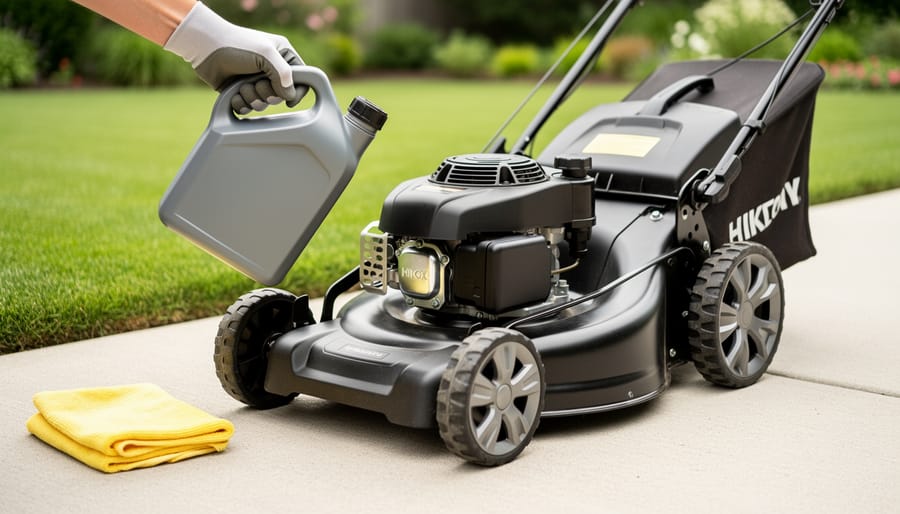
Lubricate Moving Parts
One important aspect of deck maintenance is ensuring that all moving parts are adequately lubricated.
This includes the bearings, spindles, and other components that enable the blades to rotate smoothly. Proper lubrication can reduce wear and tear, prevent rust and corrosion, and prolong the life of your mower deck.
When lubricating your deck, use a high-quality lubricant designed for outdoor equipment. Consult your mower’s manual for guidance on which type of lubricant to use and where to apply it.
By following these maintenance tips, you can help ensure that your deck operates efficiently and lasts for years to come.
Final Thoughts
Choosing the right mower deck can significantly impact the quality of your lawn and the efficiency of your mowing. Stamped decks are more affordable and lightweight, while fabricated decks are more durable and offer excellent precision cutting capabilities.
When selecting a mower deck, consider factors such as budget, terrain, grass type, and lawn size to determine which type of deck best suits your needs.
Proper mower deck maintenance is also essential to ensure longevity and efficiency. Regular cleaning; inspection for damage, including a loose deck belt; blade sharpening; deck height adjustment; and lubrication of moving parts are all vital maintenance steps.
Whether you choose a stamped or fabricated mower deck, regular maintenance is critical to ensuring your equipment’s optimal performance and longevity. Your mower deck can provide beautifully manicured lawns with proper care and attention for years.