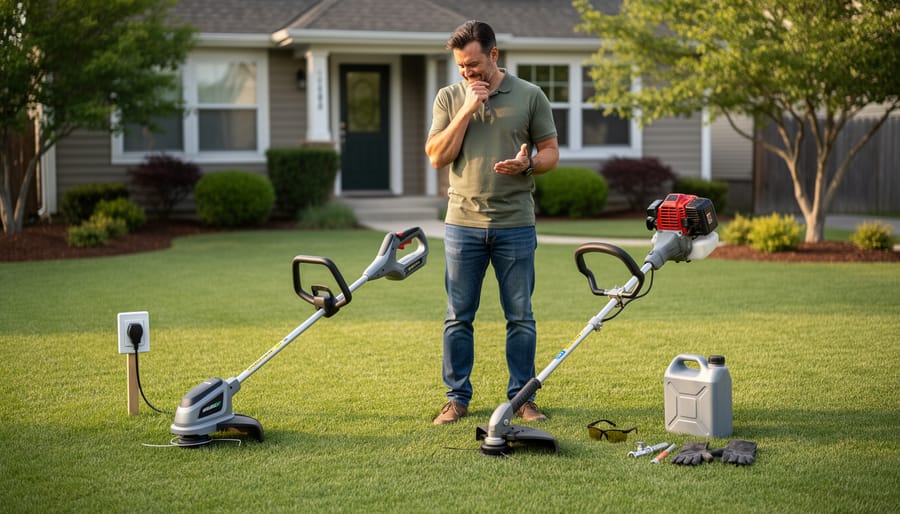
Standing in the garden center aisle, staring at rows of string trimmers, you’re facing a decision that will shape your lawn care routine for years to come. The electric versus gas debate isn’t just about power sources—it’s about matching a tool to your property, your physical capabilities, and your environmental values.
Gas trimmers promise raw cutting power and unlimited runtime, perfect for tackling thick weeds on large properties far from electrical outlets. They’re the workhorses that landscaping professionals have relied on for decades. But that power comes with trade-offs: they’re heavier, louder, require regular maintenance, produce emissions, and demand you master the art of fuel mixing.
Electric trimmers, whether corded or battery-powered, have evolved dramatically. Today’s models deliver surprising cutting performance while eliminating fuel costs, reducing noise pollution, and requiring virtually zero maintenance beyond blade replacement. They’re lighter, start instantly with a button press, and align perfectly with sustainable gardening practices. The catch? Corded models tether you to an outlet, while battery versions limit your runtime and may struggle with the toughest overgrowth.
The right choice depends entirely on your specific situation—your lawn size, terrain challenges, physical strength, budget constraints, and commitment to environmental stewardship. This comprehensive comparison will walk you through every critical factor, helping you invest confidently in the trimmer that will make your lawn care easier, not harder.
The Real Cost of Ownership: Beyond the Price Tag
Let’s talk about what these trimmers will really cost you over time, because that sticker price is only part of the story.
A quality gas trimmer typically runs between $150-$400 upfront, while electric models range from $100-$350 for corded versions and $200-$500 for battery-powered options. Already, you might notice the ranges overlap quite a bit, but here’s where things get interesting.
Over five years of regular use (let’s say weekly trimming during the growing season), a gas trimmer will consume approximately 5-8 gallons of fuel annually. At current fuel prices around $3.50 per gallon, that’s $87.50-$140 yearly just in gas. Add in two-stroke oil at roughly $20 per year, and you’re looking at $107.50-$160 annually in fuel costs alone. Over five years, that totals $537.50-$800.
An electric trimmer, by contrast, uses about 10-15 kilowatt-hours per year for the average homeowner. At the national average electricity rate of $0.14 per kWh, your annual operating cost is approximately $1.40-$2.10. Yes, you read that right. Over five years, you’ll spend less than $11 on electricity. Even if you need to replace a lithium-ion battery after 3-4 years (costing $50-$150), you’re still way ahead financially.
Maintenance costs tell a similar story. Gas trimmers need annual tune-ups including spark plug replacements ($5-$10), air filter changes ($10-$15), and fuel filter replacements ($5-$10). Many homeowners also pay for professional servicing at least once yearly, adding another $50-$75. Electric trimmers? Maybe replace the cutting line more frequently since you’ll use them more often, but that’s about $10-$20 annually.
When you crunch the numbers, a mid-range gas trimmer costing $250 upfront will set you back approximately $1,000-$1,200 over five years. A comparable electric model at $275 (including a spare battery) costs roughly $450-$500 total over the same period. That’s genuine money back in your pocket for seeds, soil amendments, or that rain barrel you’ve been eyeing.
The environmental savings are just as real. By choosing electric, you’re eliminating 25-40 gallons of gasoline consumption and the associated emissions over that five-year period. That’s sustainability you can actually measure, both in your wallet and in your carbon footprint.
Power and Performance: Cutting Through the Myths
Cordless Electric: Battery Technology Has Changed Everything
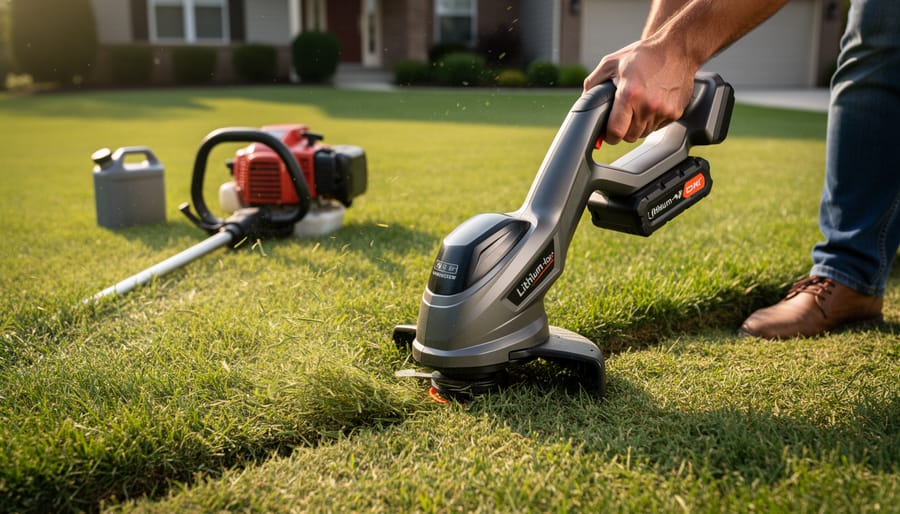
The revolution in cordless technology has transformed how we think about battery-powered lawn equipment. Remember those old cordless tools that barely made it through a small job? Those days are long gone.
Modern lithium-ion batteries have genuinely changed the game. Today’s cordless string trimmers can run anywhere from 30 to 90 minutes on a single charge, depending on the battery capacity and how thick your grass is. For most residential properties, that’s plenty of time to tackle edging and trimming tasks without breaking a sweat over power loss.
The key difference lies in voltage and amp-hours. You’ll typically see batteries ranging from 20V to 80V systems. Higher voltage generally means more power and longer runtime, much like what you’d see with electric mower performance. A 40V battery with 4.0 amp-hours offers a sweet spot for most homeowners, delivering enough muscle for tough weeds while keeping the tool lightweight.
Here’s a practical tip that’ll extend your battery life considerably: don’t let it fully discharge before recharging. Lithium-ion batteries actually prefer partial discharge cycles. Store them at room temperature, around 40-80% charge if you won’t be using them for a while.
The beauty of going cordless today? You’re getting near-gas performance with zero emissions and minimal noise. Plus, many manufacturers offer interchangeable battery systems across their entire tool line, meaning your trimmer battery can power your leaf blower or hedge trimmer too. That’s smart sustainability and budget-friendly planning rolled into one.
Corded Electric: The Underestimated Workhorse
Don’t overlook corded electric trimmers – they’re the reliable workhorses that many gardeners swear by! If you have a smaller property (up to half an acre) with accessible outdoor outlets, corded models offer unlimited runtime without battery concerns or gas refills. They’re incredibly lightweight, whisper-quiet, and require virtually zero maintenance beyond occasional string replacement.
The main limitation? You’re tethered to an extension cord, typically limiting your range to about 100 feet. But here’s where creativity comes in: invest in a bright-colored outdoor extension cord so you can easily track it while working. I’ve found that draping the cord over my shoulder prevents it from snagging on plants and obstacles – a simple trick that transforms the experience.
Corded trimmers are surprisingly powerful for their size and perfect for quick touch-ups around flower beds, along fences, and near foundations. They’re also the most budget-friendly option upfront, usually costing 30-50% less than comparable battery models. For urban and suburban gardeners with modest lawns, they deliver professional results without the environmental impact of gas engines or the eventual battery replacement costs of cordless models.
Gas Power: When You Actually Need It
Let’s be honest—gas trimmers aren’t going anywhere, and there are good reasons why. If you’re managing more than half an acre, especially with varied terrain or overgrown areas, gas power becomes your best friend. These workhorses tackle thick brush, dense weeds, and brambles that would bog down most electric models without breaking a sweat.
Professional landscapers and those maintaining multiple properties absolutely rely on gas trimmers. The extended runtime without recharging breaks means you can work continuously throughout the day, switching out fuel tanks in seconds rather than waiting for batteries. When you’re running a business or managing expansive grounds, that efficiency translates directly to productivity.
Gas trimmers also shine in remote areas where electrical outlets are scarce or nonexistent. Clearing fence lines, maintaining trails, or managing rural property edges becomes straightforward when you’re not tethered to power sources.
Here’s the practical truth: if you’re trimming less frequently but need serious cutting power when you do, or if you face genuinely challenging vegetation regularly, gas delivers the muscle you need. While they require more maintenance and aren’t the sustainable choice, sometimes the job simply demands that extra punch.
Maintenance Reality Check: Time and Effort Required
Let’s talk about what you’re really signing up for with each option, because the maintenance story is dramatically different.
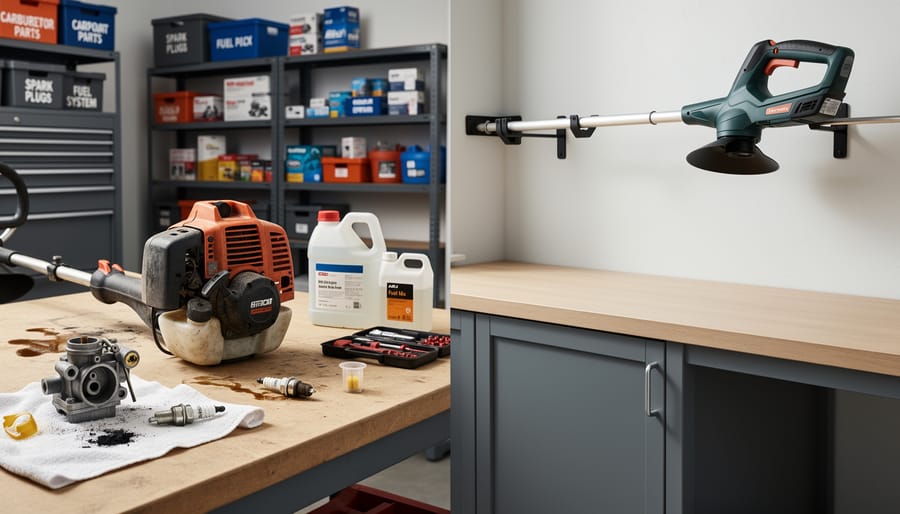
Gas string trimmers demand regular attention, plain and simple. Before each season starts, you’ll need to check and likely replace the spark plug, clean or replace the air filter, and inspect the fuel lines for cracks. That’s just the beginning. Throughout the mowing season, you’re dealing with carburetor maintenance, which can be finicky. Old fuel left sitting gums up the carburetor faster than you’d think, often requiring a thorough cleaning or professional service. Then there’s winterization: draining fuel completely, running the engine dry, or adding stabilizer and hoping for the best come spring. Many gardeners discover their gas trimmer won’t start after winter storage, leading to frustration and repair bills.
You’ll also spend time on oil changes for four-stroke engines, checking and tightening bolts that vibrate loose, and cleaning debris from cooling fins. Honestly, it adds up to several hours per season, not counting the troubleshooting time when something goes wrong.
Electric trimmers, whether corded or battery-powered, flip this script entirely. Your maintenance routine becomes refreshingly simple: keep the cutting head clear of tangled line and debris, occasionally wipe down the motor housing, and store it in a dry place. That’s essentially it. Battery models require charging, obviously, but modern lithium-ion batteries are remarkably low-maintenance compared to the old nickel-cadmium days. No winterization rituals, no stabilizers, no carburetor headaches.
The time difference is substantial. Where gas models might require three to five hours of maintenance annually, electric versions need maybe thirty minutes of basic cleaning. For gardeners who’d rather spend time actually gardening than wrenching on small engines, this difference matters enormously. It’s also worth noting that these simplified maintenance requirements make electric trimmers particularly appealing for beginners who might feel intimidated by engine maintenance or those with physical limitations that make small engine work challenging.
Environmental Impact: What the Numbers Actually Show
Let’s talk about what really matters for the planet. Gas trimmers emit measurable pollutants with every use. According to EPA data, a gas-powered trimmer running for one hour produces as much hydrocarbon emissions as driving a modern car for over 100 miles. That’s significant when you consider the cumulative impact across millions of yards every weekend.
Electric trimmers produce zero direct emissions, making them clearly better for local air quality. However, the complete picture requires looking at where your electricity comes from. If your power grid relies heavily on coal, some environmental benefit diminishes. That said, even electricity from fossil fuel plants is generally cleaner than small gas engines, which lack the sophisticated emission controls found in vehicles. Plus, as your local grid transitions to renewable energy, your trimmer automatically becomes cleaner without any action on your part.
The noise pollution difference is dramatic too. Gas trimmers typically operate at 90-100 decibels, while electric models run at 65-75 decibels. That’s not just numbers; it means you can trim early morning without disturbing neighbors and without needing hearing protection for shorter jobs.
Battery disposal deserves honest discussion. Lithium-ion batteries contain materials that require proper recycling. However, most manufacturers now offer take-back programs, and battery technology continues improving in both lifespan and recyclability. A quality battery pack typically lasts 3-5 years with proper care.
For those committed to eco-conscious lawn care, electric trimmers represent a meaningful reduction in your yard’s carbon footprint. They eliminate fuel storage concerns, reduce maintenance waste like oil and filters, and contribute to quieter, healthier neighborhoods. The environmental choice becomes even clearer if you can charge batteries using solar panels or during off-peak hours when cleaner energy sources dominate the grid.
Ease of Use: Which One Makes Lawn Care Less of a Chore?
Let me share something I’ve learned from years of helping gardeners choose the right tools: the best trimmer is the one you’ll actually want to use. And that’s where ease of use becomes your deciding factor.
Electric string trimmers win hands-down for everyday convenience. They’re significantly lighter, typically weighing between 5-10 pounds compared to gas models at 10-15 pounds. This might not sound dramatic, but after twenty minutes of holding that weight above ground level, your shoulders will definitely notice. I’ve watched countless beginners who felt intimidated by gas trimmers confidently tackle their lawn edges with a cordless electric model on their first try.
Starting procedures tell an even clearer story. Electric trimmers require a simple button push or trigger pull, while gas models need you to prime the bulb, adjust the choke, and repeatedly yank a pull cord. On cold mornings or when you haven’t used it in a while, that pull cord can feel like a workout before the actual workout begins. For anyone with arthritis, limited upper body strength, or just those mornings when you want quick results, electric models eliminate that frustration entirely.
Noise levels make a real difference too, especially if you’re trimming early morning or live in a tight-knit neighborhood. Electric trimmers operate at around 65-75 decibels, similar to normal conversation volume, while gas models roar at 95-100 decibels, requiring hearing protection for extended use.
Vibration is another comfort factor often overlooked until you’ve spent an hour trimming. Gas engines create significantly more hand-numbing vibration, while electric motors run smoother and quieter, making them genuinely more pleasant for longer sessions.
Finding Your Perfect Match: Decision Framework
Best Choice for Small to Medium Yards (Under 1/2 Acre)
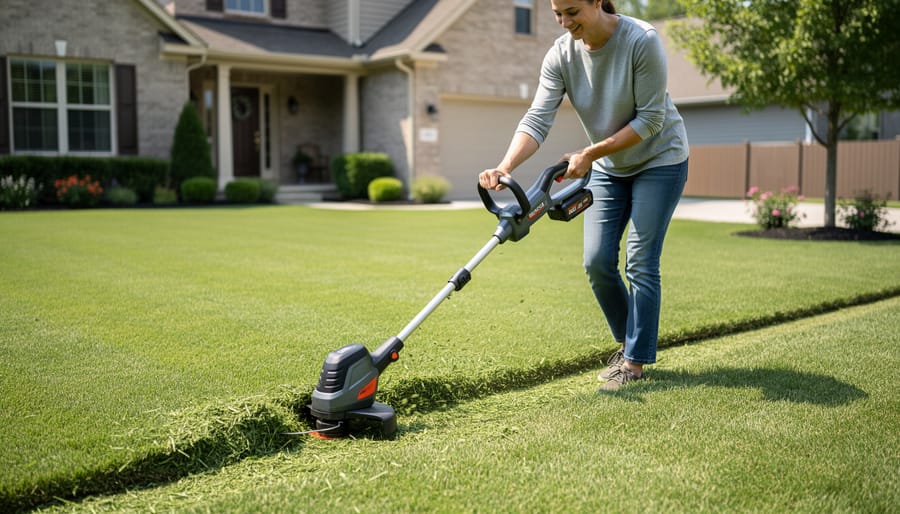
For most small to medium suburban yards under half an acre, an electric string trimmer is your best bet. Here’s why: you’ll complete typical trimming jobs in 20-30 minutes, well within the runtime of modern battery-powered models. Electric trimmers handle common grass types and light weeds with ease, which covers about 90% of routine yard maintenance.
From a sustainability perspective, electric models shine in smaller spaces. You’ll eliminate emissions entirely while keeping noise levels neighborhood-friendly. The lower maintenance requirements mean you’ll spend more time enjoying your garden rather than tinkering with equipment.
If you have particularly thick weeds or overgrown areas, consider investing in a quality battery trimmer with at least 40V power. These offer plenty of muscle for demanding tasks without the downsides of gas engines. The cost savings on fuel and maintenance typically recover your initial investment within two seasons of regular use.
Best Choice for Large Properties (Over 1/2 Acre)
For properties exceeding half an acre, gas-powered trimmers typically prove more practical, despite the environmental trade-offs. The extended runtime and raw power of gas models become essential when tackling extensive trimming jobs that would drain multiple electric batteries.
Large properties demand sustained cutting power without frequent recharge breaks. A quality gas trimmer can run for hours on a single tank, letting you complete sprawling property lines, lengthy fence rows, and overgrown areas in one efficient session. Property size considerations matter significantly here—what works beautifully for a quarter-acre becomes impractical on larger landscapes.
That said, consider investing in a commercial-grade gas trimmer rather than consumer models. These offer better fuel efficiency and lower emissions while delivering the durability needed for demanding work. Regular maintenance becomes your sustainability contribution, ensuring the engine runs cleanly and efficiently throughout its extended lifespan.
Best Choice for Eco-Conscious Gardeners
For eco-conscious gardeners, electric trimmers are the clear winner. Battery-powered models have evolved tremendously, offering impressive runtime and power that rivals gas options for most residential properties. If you maintain a yard under half an acre, a quality cordless trimmer with a lithium-ion battery will handle your needs beautifully while producing zero emissions and minimal noise pollution.
The environmental benefits extend beyond just emissions. Electric models require no oil changes, eliminate fuel spills, and reduce your carbon footprint significantly. You’ll also appreciate the quieter operation, which means you can trim early morning or evening without disturbing neighbors or local wildlife.
For larger properties where runtime is critical, consider investing in a second battery rather than switching to gas. Modern fast-charging technology means your backup battery can be ready quickly. This approach lets you maintain your environmental values while ensuring you have enough power to complete bigger jobs efficiently.
Top Recommendations in Each Category
Finding the right trimmer can feel overwhelming with so many options available, but I’ve narrowed down some standout models that consistently deliver great results without breaking the bank. Let me share my top picks across each category, based on real-world performance and value.
In the cordless electric category, the EGO Power+ ST1511S has earned its reputation as a workhorse for suburban yards. This 15-inch trimmer runs on EGO’s excellent 56-volt battery system, which delivers runtime comparable to many gas models. I particularly appreciate the automatic line feed system that actually works reliably, unlike some competitors. The brushless motor runs whisper-quiet, and the powerhead can accept different attachments if you want to expand your tool collection. It handles thick grass and light weeds beautifully, though you’ll want to keep a spare battery charged for properties over half an acre. The main drawback is the upfront cost, but the long-term savings on fuel and maintenance make it worthwhile.
For budget-conscious gardeners with smaller yards, the BLACK+DECKER BESTA510 corded electric trimmer offers incredible value. This lightweight 6.5-amp model costs less than filling a gas tank, yet it tackles regular lawn edging and trimming duties reliably. The automatic feed spool means you’re not constantly bumping to release more line. Yes, you’re tethered to an extension cord, which limits your range to about 100 feet from an outlet, but for typical suburban lots, this isn’t a dealbreaker. I recommend this especially for first-time homeowners who need basic trimming capability without a major investment.
Among gas trimmers, the Husqvarna 128LD strikes an excellent balance between power and user-friendliness. The 28cc engine starts more easily than most two-cycle engines, thanks to the Smart Start system. It cuts through heavy brush and established weeds that would bog down most electric models. The straight shaft design gives you better reach under shrubs and around obstacles. The detachable shaft also accepts multiple attachments, transforming it into a versatile yard tool. On the downside, it’s noticeably heavier than electric alternatives and requires the usual gas engine maintenance, including winterization if you live in colder climates.
Each of these models excels in different scenarios, so consider your specific yard conditions and how much ongoing maintenance you’re comfortable performing.
So, which trimmer wins the electric versus gas debate? Here’s the truth: there isn’t a universal winner. The best choice depends entirely on your unique situation, and that’s actually good news because it means you get to choose what works for you, not what marketing campaigns tell you to buy.
If you’ve got a small to medium-sized yard, value quiet operation, and appreciate lower maintenance, an electric trimmer—whether corded or battery-powered—will likely serve you beautifully. You’ll enjoy cleaner air around your property, less time fussing with maintenance, and a tool that’s ready to go at a moment’s notice. For those with larger properties, challenging terrain, or professional demands, a gas trimmer’s raw power and unlimited runtime might be non-negotiable.
The key is being honest about your actual needs rather than theoretical ones. Consider how much lawn you really have, how often you’ll use the trimmer, and what matters most to you personally. Are you willing to manage a charging schedule to reduce your environmental footprint? Do you need that extra power for tackling overgrown areas regularly? There’s no wrong answer here.
Remember, the best tool is the one that makes lawn care feel less like a chore and more like satisfying work. By understanding your priorities and matching them to the right trimmer type, you’re setting yourself up for years of easier, more enjoyable yard maintenance. Trust your assessment, make an informed choice, and get ready to enjoy a beautifully maintained lawn without the frustration of using the wrong tool for your situation.