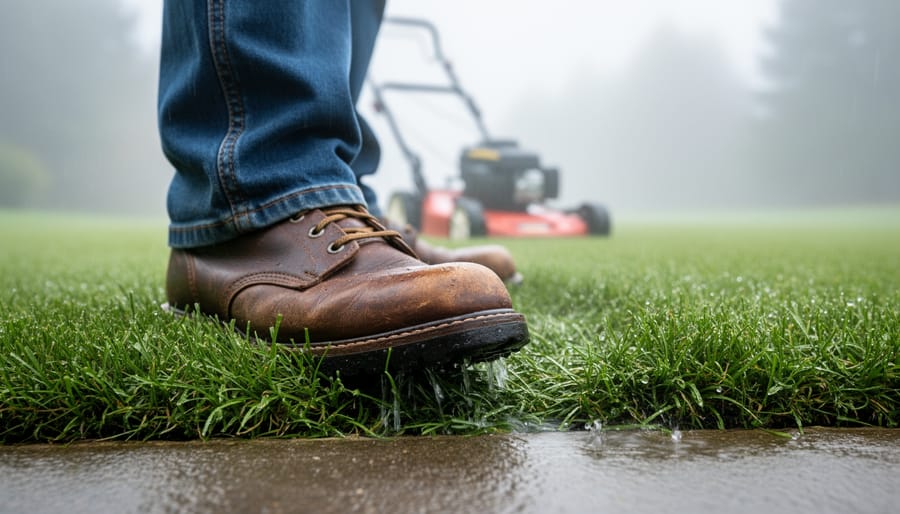
The single best defense against wet-lawn mowing damage is checking your local seven-day forecast and waiting 24 hours after the last rain before you fire up the mower. If you step on your grass right now and water squeezes up around your shoes, you’re already past the point where mowing is safe. That soggy turf will tear instead of cut, inviting fungal disease and compacting soil so badly that roots struggle for months afterward.
Most homeowners who search for a lawn mowing forecast face the same frustration: they’ve carved out time to mow, the rain has finally stopped, but they’re not sure if the grass is actually dry enough. The difference between good timing and lawn damage often comes down to a single day. Cut too early and you’ll leave wheel ruts, clump wet clippings that smother healthy grass, and dull your mower blade in a single pass. Wait just 24 hours longer, and the same lawn will mow cleanly with zero stress to the turf.
This guide walks you through the telltale signs that grass is still too wet, explains exactly why moisture wreaks havoc on your equipment and soil structure, and gives you a step-by-step system for reading weather data to schedule mowing with confidence. You’ll also find long-term fixes for yards that stay soggy too long, so you’re not constantly fighting the forecast. Whether you’re just getting started with lawn care basics or managing a yard that drains poorly after every storm, matching your mowing schedule to actual grass conditions will save you hours of repair work and keep your turf healthy through the wettest seasons.
When Wet Grass Becomes a Problem: Recognizing the Warning Signs
Knowing when your lawn crosses the line from “slightly damp” to “too wet for mowing” saves you from costly mistakes. The good news? Your grass and soil send clear signals once you know what to look for.
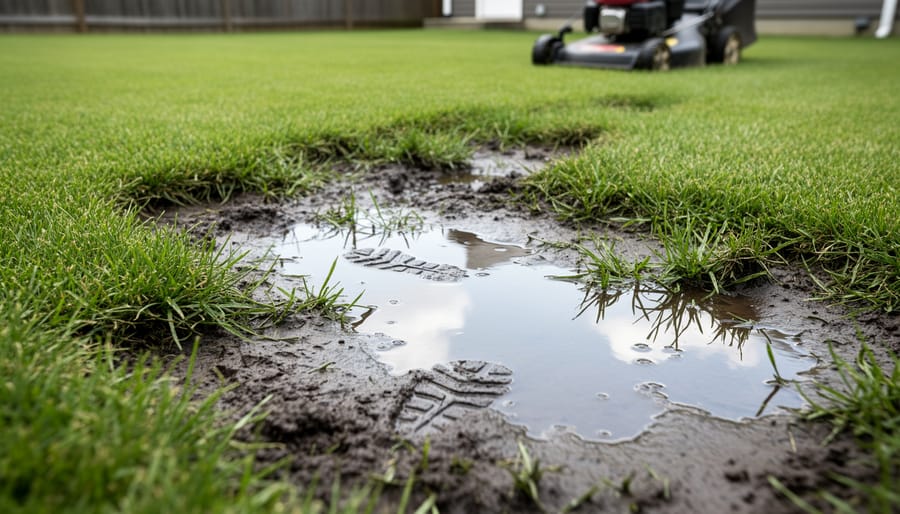
Start with a simple walk across your lawn. If your footsteps leave visible impressions that don’t spring back within a few seconds, the soil is saturated. Muddy footprints or water squelching up around your shoes are obvious red flags. Look for areas where water pools on the surface rather than absorbing, these low spots will compact severely under a mower’s weight.
Your grass itself tells the story. Wet blades clump together and lay flat instead of standing upright. Run your hand across the turf; if your palm comes away wet or the grass stays matted down, conditions aren’t ready. Morning dew is one thing, but grass that remains soaked hours after sunrise indicates excess moisture.
Watch for these key warning signs before you start the mower:
- Water droplets clinging to grass blades mid-morning or later
- Dark, saturated soil visible between grass plants
- Footprints that leave lasting depressions or muddy tracks
- Grass blades stuck together in clumps rather than standing separate
- Spongy feel underfoot when walking across the lawn
Your mower’s behavior provides another diagnostic layer. If the discharge chute clogs repeatedly within the first few passes, or you’re stopping every few minutes to scrape clumped grass from under the deck, you’re fighting a losing battle. Wet clippings don’t flow smoothly, they stick to everything, creating uneven coverage and forcing your engine to work harder.
The cut quality itself suffers noticeably. Instead of clean, crisp blade tips, you’ll see ragged, torn edges that turn brown within a day or two. Wheel ruts in soft soil and scattered clumps of wet clippings across your lawn are damage already done. When you spot these symptoms, it’s time to wait for better conditions.
Why Wet Lawn Mowing Creates Challenges
Soil Compaction and Root Damage
When you roll a mower over saturated turf, the wet soil beneath acts like a sponge being squeezed. The pore spaces that normally hold air collapse under pressure, creating a dense, oxygen-starved layer that grass roots can’t penetrate. Wet soils are compacted far more easily than dry ones, sometimes with just a single pass, because water fills the gaps between soil particles, eliminating the cushioning air pockets that resist compression.
Compacted soil blocks the gas exchange roots need to breathe. Shallow root systems develop as grass struggles to push through the hardened layer, making your lawn less drought-tolerant and more vulnerable to heat stress. The damage compounds over time: repeated wet mowing creates increasingly impermeable zones where water pools rather than infiltrating, turning minor timing mistakes into chronic lawn health problems that require aeration or even soil replacement to fix.
Disease Spread and Clumping Issues
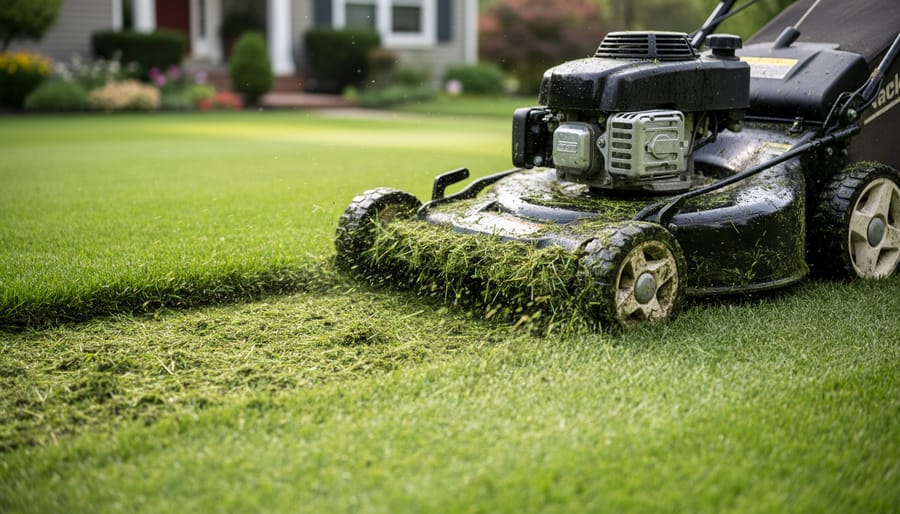
Wet clippings act as tiny carriers for fungal spores, spreading disease from infected patches across your entire lawn with every pass of the mower. When you cut damp grass, the clumps stick to your mower deck, wheels, and boots, then deposit spores into healthy areas, turning a small brown patch outbreak into a widespread problem. The moisture on grass blades also provides ideal conditions for spores to germinate and infect fresh wounds left by mower blades.
The clumps themselves create a secondary hazard. Heavy, wet grass doesn’t disperse evenly; instead, it forms dense mats that suffocate the turf underneath. These mats block sunlight and trap moisture against the soil, creating oxygen-poor conditions where fungi thrive. Common culprits include brown patch (circular tan patches with dark edges) and dollar spot (small, silver-dollar-sized bleached areas), both of which spread rapidly in warm, humid conditions. University of Maryland Extension research on clippings and lawn diseases confirms that poor mowing practices during wet weather significantly accelerate infection rates, making forecast-based timing essential for disease prevention.
Equipment Strain and Safety Concerns
Wet grass doesn’t just threaten your lawn, it puts your mower and your safety at risk. Clippings clog the deck and chute within minutes, forcing you to stop repeatedly for cleaning. Moisture accelerates blade corrosion and dulls cutting edges faster, reducing performance and requiring more frequent sharpening. The mower’s engine works harder pushing through wet, heavy grass, straining belts and increasing fuel consumption.
Slippery conditions create serious hazards. Wet grass reduces traction on slopes, and damp surfaces around walkways or hard edges turn treacherous underfoot. Extension cords and electric mowers introduce shock risks when moisture is present. Safety experts consistently avoid mowing wet grass for these reasons. Even small slip incidents can result in contact with moving blades or loss of control on inclines. The cleanup time and repair costs from wet-mowing damage quickly outweigh any perceived time savings from rushing the job.
How to Use a Lawn Mowing Forecast to Time Your Cuts
Step 1: Check Multi-Day Weather Patterns
Start with a 5-to-7-day forecast rather than checking tomorrow’s weather in isolation. You’re looking for a stable dry window of at least 48 hours with no rain, time for your lawn to dry out and for you to complete the job without rushing.
Focus on precipitation amounts, not just the rain icon. Light drizzle under 0.1 inches won’t saturate soil like a half-inch downpour will. Check hourly breakdowns to spot brief showers versus all-day soakers, and note the timing: evening rain gives grass overnight to dry, while morning storms leave it wet until afternoon.
For lawn-specific forecasting in 2026, use Weather Underground or the National Weather Service for hyperlocal data. Many weather apps now include soil moisture indices and evaporation rates, features that translate general forecasts into lawn care timing. Cross-reference two sources if a borderline call exists between mowing and waiting another day.
Step 2: Test Soil and Grass Moisture Levels
Weather forecasts give you the big picture, but your lawn might dry faster or slower than predicted depending on shade, soil type, and recent watering. Before you start the mower, run these quick field tests to confirm the grass is truly ready.
The Squeeze Test: Grab a handful of grass blades and squeeze firmly. If water drips out or your hand feels wet, wait longer. Slightly damp is acceptable, but visible moisture means the grass hasn’t dried enough.
The Footprint Test: Walk across your lawn in a straight line. If your footprints leave deep impressions or muddy marks that don’t spring back within a minute, the soil is too saturated. Mowing now will compact the ground and damage roots.
The White Tissue Test: Press a white tissue or paper towel against the grass for five seconds. Heavy moisture transfer indicates the lawn needs more drying time. A barely-visible dampness is fine for mowing.
Step 3: Identify Your Optimal Mowing Window
Once you know dry conditions are approaching, pinpoint the exact hours when your lawn will be ready. Most grass needs 24 to 48 hours of dry weather after rain, but that window shifts based on several factors. Sandy loam drains fastest, often ready within a day, while heavy clay can hold moisture for three days or more. Cool-season grasses like fescue and bluegrass dry slower than warm-season Bermuda or zoosia because their denser growth traps humidity. Sun exposure accelerates evaporation, shaded lawns stay damp twice as long as those in full sun. Seasonal conditions matter too: spring’s cool temperatures and high humidity extend drying time, while summer heat and timing work in your favor, drying turf quickly. For a reliable guideline, wait until mid-morning on the second dry day after moderate rain, then perform the squeeze test before starting your mower.
Step 4: Adjust Your Schedule for Unexpected Rain
Weather forecasts aren’t perfect, and sudden showers can upend your carefully planned mowing schedule. When rain arrives earlier than predicted, resist the urge to rush out immediately afterward. Instead, add 24-48 hours to your original wait time, unexpected rain often leaves soil more saturated than forecast amounts suggest.
If continuous rain threatens to push grass beyond healthy height (generally more than one-third above your target), consider a compromise approach: mow at the highest deck setting when conditions are merely damp rather than soaking wet. This prevents overgrowth without aggressive cutting into saturated turf.
Keep a backup mowing window planned three to five days out. When your primary slot gets rained out, you’ll already know your next opportunity rather than making hasty decisions. During persistently wet periods in spring or fall, switch to a ten-day mowing cycle instead of weekly cuts, longer intervals between sessions reduce the pressure to mow in marginal conditions.
When You Must Mow Wet: Damage-Control Techniques

Sometimes you can’t wait for perfect conditions. Maybe towering grass threatens to become unmanageable before a week of forecasted storms, or you’re preparing for an outdoor event with no scheduling flexibility. When circumstances force you to mow wet grass, strategic damage control can minimize harm to your lawn, equipment, and safety.
Start by sharpening your mower blade the day before. Wet grass fibers are tougher to slice cleanly, and a dull blade will tear rather than cut, leaving ragged brown edges that invite disease. A freshly sharpened blade reduces the force needed per pass and produces cleaner cuts even under moisture stress.
Raise your mowing deck at least one setting higher than usual. Taller grass blades tolerate the added weight and stress of wet mowing better than closely cropped turf, and the elevated deck reduces soil contact that causes compaction. You can always adjust your cut height safely back down once conditions dry out in the following weeks.
Slow your walking or driving speed by at least half. Rushing through wet grass increases clumping, deck clogging, and the likelihood of slipping or creating wheel ruts. Patience here pays immediate dividends in cut quality and reduces the number of passes you’ll need to make.
Stop every five to ten minutes to scrape clumped clippings from under the deck using a stick or putty knife (never your hands, even with the engine off). Wet grass accumulates rapidly and chokes airflow, making each subsequent pass less effective and straining your engine.
If possible, bag or rake clippings immediately after mowing rather than leaving them to mat on the lawn. Wet clumps block sunlight, trap moisture against grass crowns, and create perfect conditions for fungal outbreaks within 24 hours. The extra effort now prevents weeks of disease management later.
Preventing Wet Lawn Mowing Problems Long-Term
The best defense against wet lawn problems is reducing how often you face them in the first place. By addressing your yard’s underlying drainage, grass selection, and scheduling habits, you can create a lawn that dries faster and requires less weather-dependent timing precision.
Start with improving surface drainage in problem areas. Aerating compacted soil twice yearly, spring and fall, creates channels for water to penetrate instead of pooling. For persistent wet spots, consider installing French drains or regrading slopes to redirect water away from low areas. Even simple fixes like filling depressions with quality topsoil can eliminate moisture traps that keep grass wet long after rain stops.
Your grass species choice makes a significant difference in wet-weather resilience. Tall fescue and perennial ryegrass tolerate moisture better than fine fescues, which struggle in soggy conditions. These varieties also recover faster from occasional wet mowing stress, making forecast timing less critical.
| Grass Type | Wet Tolerance | Dry-Down Time | Post-Rain Mowing Window |
|---|---|---|---|
| Tall Fescue | High | 12-18 hours | Next morning after evening rain |
| Perennial Ryegrass | Moderate-High | 18-24 hours | 24 hours minimum wait |
| Kentucky Bluegrass | Moderate | 24-36 hours | Skip a day for safety |
| Fine Fescue | Low | 36-48 hours | Wait 2 days after heavy rain |
Adjust your cutting height and frequency to reduce urgency around specific mowing dates. Keeping grass at the taller end of its recommended range, 3 to 4 inches for cool-season grasses, means you can safely delay a cut by several days without creating overgrowth problems. Different mowing methods also affect flexibility: mulching works better than bagging when you need to wait longer between cuts, since it returns nutrients while avoiding heavy clipping piles.
Build seasonal awareness into your routine. Spring typically demands more forecast checking due to frequent rain and rapid growth, while summer heat naturally extends safe mowing windows. Fall schedules can flex around harvest moisture patterns. Track which weeks in your climate zone historically see wet spells, and plan other lawn tasks like fertilizing or thatch and recovery work for those periods instead.
Finally, maintain a rolling three-week schedule rather than a rigid weekly commitment. This mental shift lets you mow twice in eight days during dry stretches and wait eleven days after prolonged rain without feeling behind. Your lawn stays healthier when you follow its needs rather than the calendar.
Tools and Resources for Accurate Lawn Mowing Forecasts
Getting reliable weather data doesn’t require expensive equipment or complicated systems. A combination of free digital tools and simple observation methods gives you everything needed to time your cuts perfectly.
Weather Apps Worth Downloading
WeatherBug and Weather Underground offer hyperlocal forecasts pulled from neighborhood weather stations, often more accurate than national services for your specific yard. Both apps display hourly precipitation chances, wind speed, and humidity levels, the three factors that determine how quickly grass dries. The free versions work fine for basic lawn timing, though premium subscriptions add radar overlays and extended forecasts.
For lawn-specific planning, the RainMachine app integrates weather data with your grass type and soil conditions, suggesting optimal mowing windows based on actual ground moisture, not just rainfall amounts. It’s particularly helpful in spring when overnight dew and morning fog complicate scheduling.
Physical Monitoring Tools
Inexpensive soil moisture meters ($15-30) take the guesswork out of surface wetness checks. Push the probe into your lawn’s root zone in several spots, readings below 40% typically indicate safe mowing conditions. These battery-free tools last years and prevent unnecessary delays when grass looks wet but soil has already drained.
Rain gauges mounted at lawn level show exactly how much water your yard received, not what fell at the airport ten miles away. A half-inch of rain usually means waiting 24 hours, while two inches might require three days of drying time depending on your soil.
The Most Reliable Method
Your own consistent observation beats any app. Walk your lawn at the same time daily, noting wet spots, sun exposure patterns, and typical dry-down rates. This hands-on knowledge, combined with a quick forecast check, builds the intuition that makes scheduling second nature.
Common Questions About Lawn Mowing Forecasts and Wet Grass
How long should I wait to mow after it rains?
The safest rule is to wait 2 to 4 hours after rain stops for light showers, or up to 24 hours after heavy downpours. Your actual wait time depends on several factors: soil drainage (sandy soil dries faster than clay), sun exposure (full sun areas dry quicker than shade), grass type (tall fescue holds moisture longer than Bermuda), and air temperature. Use the squeeze test, if a handful of grass releases water when squeezed, it’s still too wet. In cooler spring weather or humid climates, err on the side of waiting longer rather than risking soil compaction.
Can I mow when there’s just morning dew on the grass?
Light morning dew is generally fine to mow through once the sun burns it off, usually by mid-morning. If the dew is heavy enough that your shoes get soaked walking across the lawn, wait another hour or two for evaporation.
Do wet grass rules change with the seasons?
Yes, spring and fall bring slower evaporation due to cooler temperatures and lower sun angles, so grass stays wet longer. Summer heat dries lawns faster, sometimes within an hour after light rain, while winter mowing (in mild climates) almost always involves some moisture.
What if I absolutely must mow before extended rain is forecast?
Raise your mower deck to remove only the top third of the blade, sharpen blades beforehand, mow slowly, and clean the deck every few passes. Remove clumps immediately and consider bagging clippings to prevent disease spread, it’s damage control, not ideal practice.
Is checking a lawn mowing forecast really worth the effort?
A quick 30-second forecast check can prevent hours of cleanup, costly lawn repairs from compaction and disease, and premature equipment wear. Most homeowners find the habit pays for itself after one avoided wet-mowing mistake.
Remember that local conditions trump general guidelines. Your lawn develops its own personality based on slope, shade, soil composition, and microclimate. After a few seasons of forecast-aware mowing, you’ll instinctively know when your specific yard is ready, even if the neighbour’s dries faster or slower. Keep notes on what works, how long your lawn takes to dry after different rainfall amounts in different seasons, and you’ll build a personal forecast system that’s more accurate than any app for your unique patch of grass.
Adopting a weather-aware mowing routine doesn’t require fancy equipment or radical changes to your schedule. Start by checking the forecast the day before you plan to mow, then give your lawn the squeeze test or walk across it to assess conditions. You’ll quickly develop an instinct for what “ready to mow” feels like in your specific yard, with your soil type and sun exposure patterns.
The patience you invest in waiting for drier conditions pays dividends in lawn health. You’re not just avoiding visible ruts and clumps, you’re protecting the root zone, minimizing fungal spread, and keeping your mower blades sharp and your deck clean. Over a growing season, these small timing adjustments add up to a more resilient lawn that requires less intervention.
Experiment with your mowing window throughout the year. Spring might demand afternoon cuts after morning dew evaporates, while late summer could offer all-day flexibility. Track what works for your property, stay flexible when forecasts shift, and remember that skipping one scheduled cut is always better than forcing a wet mow. Your lawn will recover faster, your equipment will thank you, and you’ll spend less time fixing problems you could have prevented with a quick weather check.