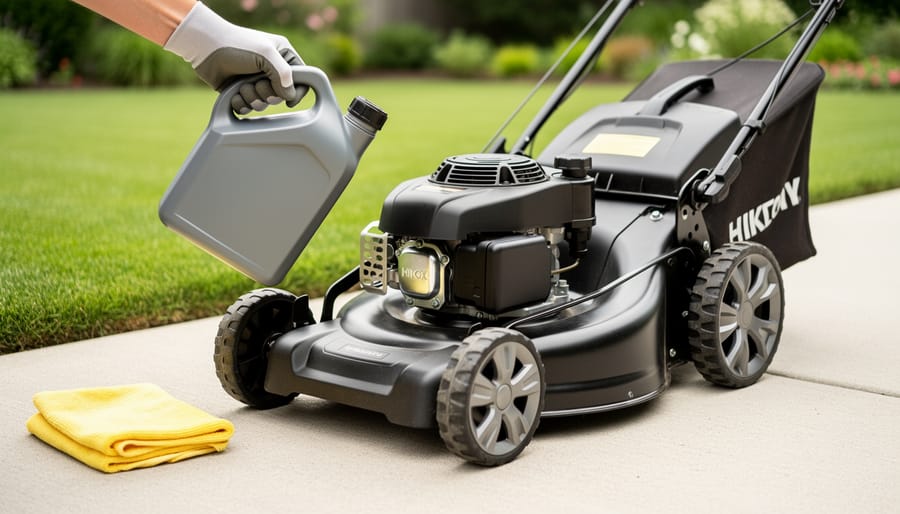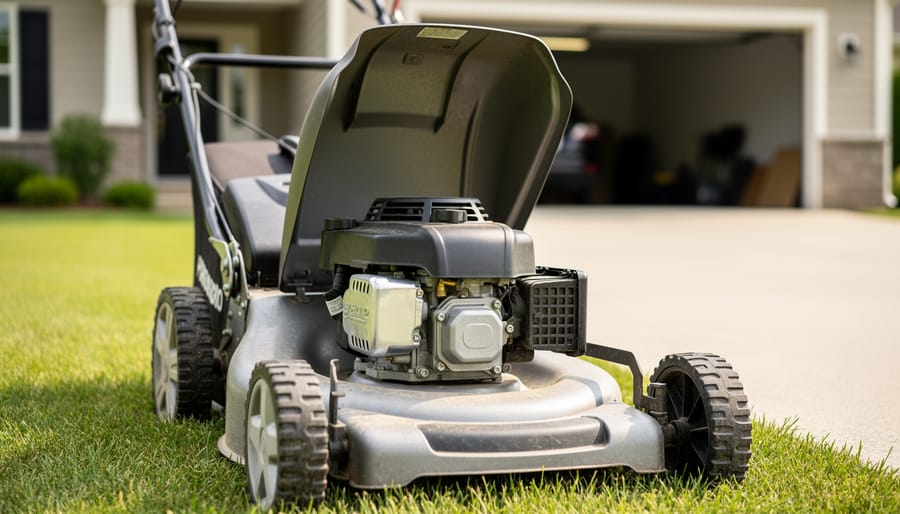
Nine times out of ten, a surging lawn mower engine points straight to a dirty carburetor that’s restricting fuel flow. That telltale rhythm of the engine speeding up and slowing down on its own happens when the carburetor can’t maintain a consistent fuel-to-air mixture, and the good news is you can usually fix it yourself in under an hour with basic tools and a can of carburetor cleaner.
Before you tear anything apart, though, do this quick check: pop off the air filter cover and look at the filter. A clogged air filter chokes your engine and mimics surging symptoms, but it takes thirty seconds to inspect and two minutes to replace if needed. If the filter looks clean, you’re likely dealing with fuel delivery issues, either in the carburetor itself, a gunked-up fuel line, or stale gasoline that’s left varnish deposits throughout the system.
The troubleshooting path we’ll walk through starts with the easiest checks and works toward more involved repairs. You’ll learn how to identify what’s causing your specific surging problem, then follow step-by-step instructions matched to your diagnosis. Most homeowners can handle carburetor cleaning with confidence, but we’ll also flag the point where calling a small engine repair shop makes more sense than continuing on your own. Think of this as organized detective work: each test eliminates possibilities until you’ve zeroed in on the culprit stealing your smooth-running Saturday morning.
What Does Engine Surging Look and Sound Like?
Before you can fix engine surging, you need to be certain that’s actually what you’re experiencing. Surging has a distinctive rhythm that sets it apart from other lawn mower problems, and recognizing these telltale signs will save you time diagnosing the wrong issue.
When your mower engine surges, it sounds and feels like the motor is constantly trying to find the right speed but can’t settle down. You’ll notice the engine revving up and down in a repeating cycle, usually every few seconds. This isn’t a brief stumble or hiccup but a persistent pattern that continues throughout your mowing session.
The most noticeable symptoms of a surging lawn mower engine include:
- Engine RPMs repeatedly rising and falling in a rhythmic pattern rather than running at steady speed
- Hunting behavior at idle where the motor races then slows down continuously
- Mower blades spinning unevenly, speeding up and slowing down as the engine surges
- Pulsing or wavering exhaust note instead of a consistent hum
- Difficulty maintaining consistent cutting power, creating uneven results in your lawn
- Engine seeming to struggle or labor even when cutting light grass
Pay attention to when the surging occurs. Some mowers surge constantly from startup, while others only develop the problem after warming up or when under load during cutting. You might notice the issue gets worse as your fuel tank empties, which often points to a fuel delivery problem.
Unlike a mower that simply won’t start or one that runs rough with missing or backfiring, surging creates this characteristic up-and-down pattern. The engine isn’t dying or coughing, it’s cycling through speeds it shouldn’t be changing. If what you’re experiencing matches these symptoms, you’re almost certainly dealing with surging rather than spark plug issues, compression problems, or other engine troubles.
Common Causes of Lawn Mower Engine Surging
Dirty or Clogged Carburetor
A dirty carburetor is far and away the most common reason you’ll experience engine surging, I’d estimate it’s behind at least 70% of the cases I’ve seen. Here’s what happens: When gasoline sits in your mower’s carburetor for more than a few weeks, it starts to break down and evaporate. What’s left behind is a sticky, varnish-like residue that clogs the tiny passages and jets inside the carburetor that precisely meter fuel to the engine.
These jets are incredibly small, we’re talking openings smaller than a pinhole. Even a thin layer of varnish can partially restrict fuel flow, creating that characteristic surge cycle. The engine gets starved for fuel and starts to slow down, which creates suction that pulls a slug of fuel through the restriction. This floods the engine momentarily, causing it to speed up. Then the cycle repeats, over and over.
Ethanol-blended fuels make this problem worse. Most pump gas contains 10% ethanol, which attracts moisture from the air and separates from the gasoline as it sits. This ethanol-water mixture is particularly good at forming those gummy deposits and can cause corrosion inside the carburetor bowl and passages.
If your mower sat over winter with fuel in it, or you’re using gas that’s been in the can for months, a clogged carburetor is almost certainly your culprit.
Contaminated or Old Fuel
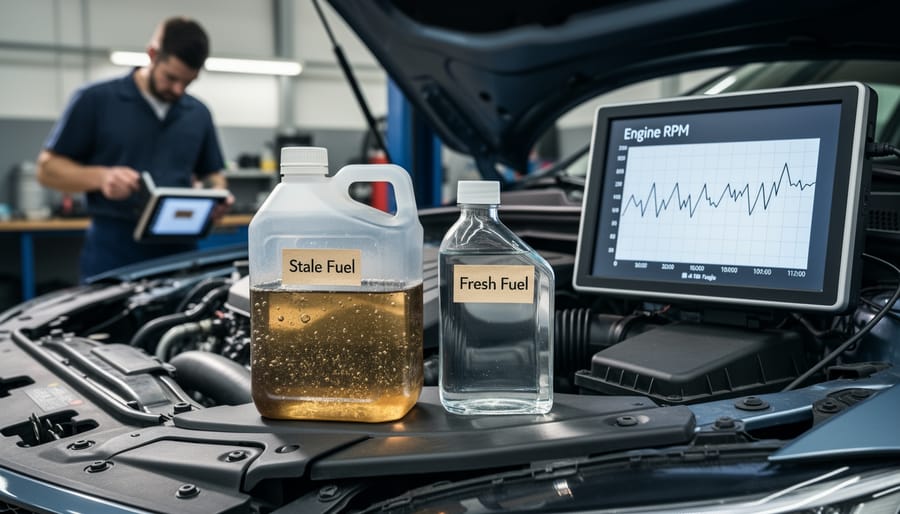
Gasoline starts degrading the moment you pump it, and after about 30 days sitting in your mower’s tank, it’s already losing its combustive potency. The volatile compounds that make gas burn efficiently evaporate first, leaving behind heavier components that don’t ignite properly. This breakdown accelerates with ethanol-blended fuels, which attract moisture from the air.
Water contamination is surprisingly common. Condensation forms inside partially-filled tanks as temperatures fluctuate between day and night. Even a small amount of water separates from the gasoline and settles at the bottom of your tank, eventually making its way to the carburetor. When your engine draws in this mixture of degraded fuel and water, combustion becomes inconsistent. One moment the engine gets mostly gasoline and runs strong, the next it gets watered-down fuel and bogs down, creating that characteristic surge-and-recover pattern.
Ethanol makes this worse because it bonds with water, creating a phase separation where the ethanol-water mixture literally separates from the gasoline. Your engine can’t run smoothly on this unstable cocktail.
Dirty or Damaged Air Filter
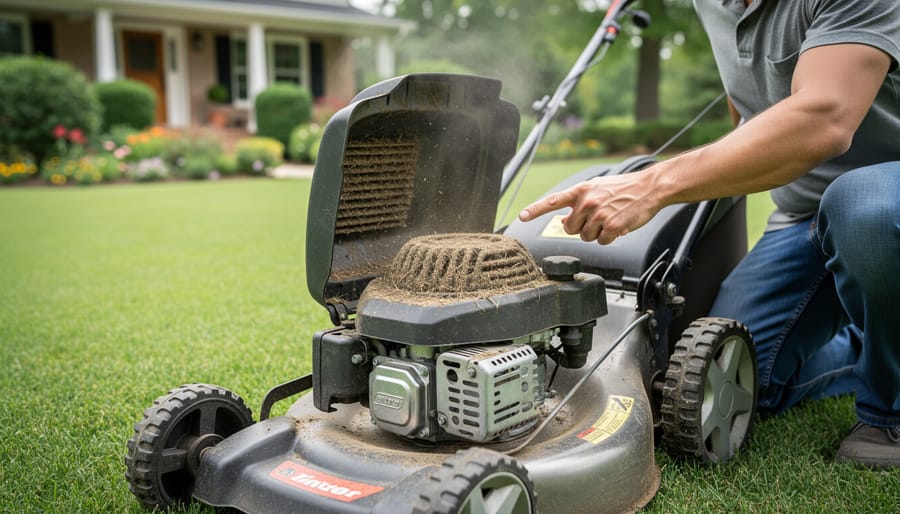
A dirty or damaged air filter is another frequent culprit behind engine surging. Your lawn mower engine needs a precise balance of air and fuel to run smoothly. When the air filter becomes clogged with grass clippings, dust, and debris, it restricts the airflow into the carburetor. This creates a fuel mixture that’s too rich, meaning there’s more gasoline than air in the combustion chamber.
The engine responds to this imbalance by trying to self-correct, which creates the surging cycle you’re experiencing. As it struggles to find the right mixture, the RPMs fluctuate up and down rather than maintaining steady power.
Lawn mowers typically use one of two air filter types. Foam filters are washable and reusable, designed to trap particles while allowing adequate airflow when properly maintained. Paper filters, similar to what you’d find in a car, are disposable and need replacement when dirty. Both types lose effectiveness over time. A foam filter can become oil-saturated and compacted, while paper filters simply get clogged beyond cleaning.
Checking your air filter takes just minutes and should be part of regular mower maintenance, especially during heavy mowing season.
Fuel Cap Vent Blockage

Your mower’s fuel cap isn’t just a lid, it has a small vent that lets air into the tank as fuel gets consumed. When this tiny vent gets clogged with dirt, grass clippings, or debris, it creates a vacuum inside the tank. This vacuum makes it harder and harder for fuel to flow out to the carburetor.
The result? Classic surging that gets worse the longer you mow. At first, your mower runs fine when you start it with a full tank. But as fuel level drops and the vacuum builds, the engine starts surging because it’s getting starved of fuel intermittently. You might notice it runs better if you loosen or remove the fuel cap while mowing, that’s the telltale sign of a vent blockage.
The good news is this is one of the easiest problems to diagnose and fix, and it’s more common than many people realize, especially if you store your mower in a dusty garage or shed.
Governor Problems
Your lawn mower’s governor is the mechanical system that automatically adjusts throttle position to maintain consistent engine speed under varying loads. When you hit a thick patch of grass, the governor opens the throttle to keep the blades spinning at the proper RPM. When the load decreases, it closes the throttle back down.
When governor components wear out or fall out of adjustment, this regulation breaks down. The most common issue is a stretched or broken governor spring, which allows the throttle to fluctuate erratically. Worn linkage bushings create slop in the system, causing delayed or exaggerated throttle responses that manifest as surging. A misadjusted governor arm can also prevent the engine from settling at the correct speed, making it continuously hunt for the right RPM.
Unlike carburetor problems that create a steady rhythm of surging, governor-related surging often responds to load changes. You might notice the engine speed swinging wildly when you engage the blades or encounter varying grass heights. The surging pattern can feel random rather than predictable because the governor is fighting against itself to find equilibrium it can’t achieve with damaged or misadjusted components.
Vacuum Leaks
A vacuum leak occurs when unwanted air sneaks into your mower’s engine somewhere between the carburetor and the combustion chamber. This extra air isn’t measured by the carburetor, so it throws off the carefully balanced fuel-to-air mixture your engine needs to run smoothly.
The most common leak points are the gasket between the carburetor and the engine block, loose mounting bolts that secure the carburetor, and any rubber intake boots or connectors that have cracked from age and heat exposure. Even a small crack can let in enough air to lean out the fuel mixture, causing the engine to surge as it alternates between getting the right amount of fuel and getting too much air.
Vacuum leaks often worsen as the engine warms up because heat makes gaskets compress and cracks expand. If your mower runs better when cold but develops surging after a few minutes of operation, a vacuum leak is a strong possibility worth investigating.
How to Diagnose Which Cause Is Affecting Your Mower
Before diving into fixes, let’s figure out exactly what’s causing your mower to surge. A few simple observations can point you in the right direction and save you from unnecessary work.
Start by asking yourself these questions: How long has the gas been sitting in your tank? If it’s been more than a month since you filled up, old fuel is your prime suspect. When does the surging happen? If it starts fine but begins surging after five or ten minutes of mowing, you’re likely dealing with a fuel cap vent issue. Does it surge constantly from the moment you start it? That usually points to carburetor problems or a dirty air filter.
Here’s a quick diagnostic guide to help narrow things down:
| What You’re Seeing | Most Likely Cause | Quick Test |
|---|---|---|
| Surging starts after 5-10 minutes of running | Blocked fuel cap vent | Loosen fuel cap while running; if surging stops, you’ve found it |
| Constant surging from cold start | Dirty carburetor or air filter | Remove air filter; if surging improves, replace filter |
| Worse when trying to idle down | Governor adjustment or vacuum leak | Listen for hissing sounds around carburetor mounting |
| Intermittent surging, harder to start recently | Old or contaminated fuel | Drain tank and refill with fresh gas |
The fuel cap test is particularly useful because it takes five seconds and rules out one common cause immediately. While the engine’s running and surging, simply crack the fuel cap loose. If the surging stops or improves dramatically, you’ve got a venting problem.
Pay attention to your maintenance history too. If you stored your mower with fuel in it over winter, the carburetor almost certainly has varnish buildup. If you can’t remember the last time you changed the air filter, start there since it’s the easiest fix.
Step-by-Step Fixes for a Surging Lawn Mower Engine
Replace Old or Contaminated Fuel
This is often the quickest win for stopping a surging engine. Gasoline deteriorates surprisingly fast, after 30 days, it starts breaking down and forming gum deposits that clog the carburetor’s tiny jets. If your fuel has been sitting since last season or even a few months, replacing it should be your first move.
Here’s how to safely drain and replace contaminated fuel:
- Disconnect the spark plug wire to prevent accidental starting while you work.
- Position an approved gas container next to the mower. Tilt the mower toward the fuel tank side (check your manual for the safe tilt direction) or use a hand siphon pump to transfer old fuel into the container.
- Once drained, inspect the tank with a flashlight. If you see debris, varnish buildup, or water droplets, wipe the inside with a clean rag or rinse with a small amount of fresh gas, then drain completely.
- Refill with fresh gasoline appropriate for your engine (most small engines use regular unleaded, but verify in your manual).
- Add fuel stabilizer according to package directions, especially if the mower will sit unused for more than two weeks. This prevents future breakdown.
Take the old fuel to a hazardous waste facility or auto parts store that accepts it. Never pour gasoline down drains or into the ground. Fresh fuel eliminates the most common surging trigger and sets you up for reliable starts all season. For sustainable lawn care, consider buying only what you’ll use within a month rather than storing large quantities.
Clean or Replace the Air Filter
Locate the air filter housing, typically a plastic or metal cover on the side of the engine secured by a clip, wing nut, or screws. Remove the cover and carefully pull out the filter, noting which direction it faces for reinstallation.
For foam filters, inspect for tears, excessive oil saturation, or permanent dirt staining. If the foam is intact but dirty, wash it in warm water with a few drops of dish soap, squeezing gently until the water runs clear. Never wring or twist the foam. Let it air dry completely, then apply a light coating of clean engine oil, just enough to lightly dampen the foam throughout. Squeeze out excess oil so it doesn’t drip.
Paper filters cannot be washed. Tap them gently against a hard surface to dislodge loose debris. If the pleats remain deeply embedded with dirt, show dark staining, or look torn or collapsed, replacement is necessary. A compromised filter won’t protect your engine properly.
Before reinstalling, wipe out the filter housing to remove accumulated debris. Install the clean or new filter with any tabs or markings facing the correct direction, then secure the cover firmly.
Test and Clean the Fuel Cap Vent
A blocked fuel cap vent creates a vacuum inside the tank that literally chokes off fuel flow to the carburetor. As you mow, the engine consumes fuel but air can’t enter to replace it, creating negative pressure that eventually starves the carburetor and causes surging. This fix takes about two minutes and often solves the problem completely.
Start with a simple diagnostic test: loosen the fuel cap about a quarter turn while the engine is surging. If the surging immediately stops or dramatically improves, you’ve found your culprit, a blocked vent. You’ll often hear air rushing into the tank when you crack the cap open, confirming the vacuum.
To clean the vent, remove the fuel cap and locate the small vent hole (usually on top or along the edge). Use compressed air to blow through it from both directions, or carefully clear it with a thin wire or needle. Rinse the cap with warm soapy water and let it dry completely before reinstalling.
If cleaning doesn’t restore proper venting, replacement caps are inexpensive and widely available at hardware stores or online. Just match your mower’s make and model. Always use a vented cap, non-vented caps will create the same surging problem you’re trying to eliminate.
Clean the Carburetor
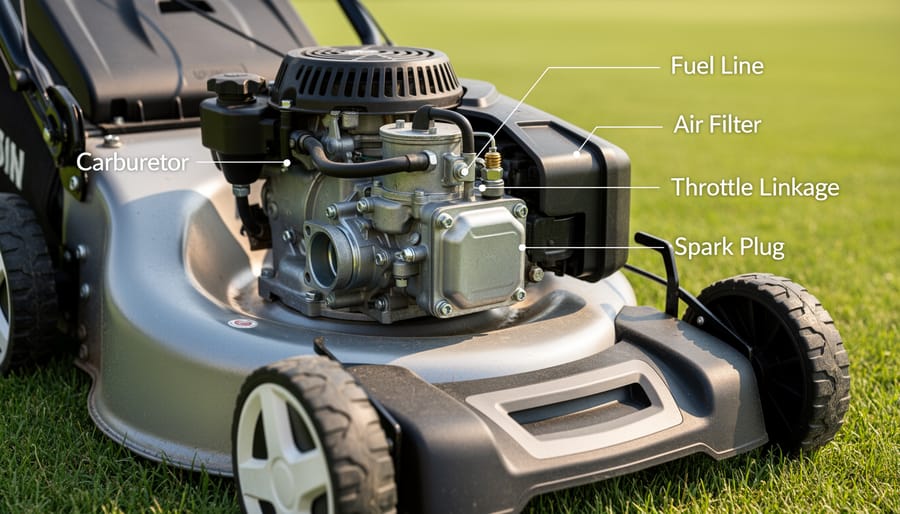
Cleaning the carburetor tackles the most common cause of surging directly, and while it sounds intimidating, this job is within reach for most DIY-minded homeowners with basic tools and a clean workspace. You’ll need a socket wrench set, screwdrivers, carburetor cleaner spray, a small wire brush or toothbrush, and a clean container for soaking parts.
Start by removing the air filter assembly to expose the carburetor. Disconnect the fuel line, being ready with a container to catch dripping gasoline. Most carburetors attach to the engine with two or three bolts, and you’ll need to disconnect the throttle linkage and any electrical connections before lifting it free. If the linkage seems complicated, label connections with masking tape or snap reference photos.
Once the carburetor is off, remove the bottom bowl by unscrewing the bolt or nut that holds it in place. Inside, you’ll find the float, needle valve, and main jet. These components control fuel delivery, and even tiny deposits here cause surging. Remove the main jet (usually a brass screw with a hole through the center) and carefully inspect all passages for varnish buildup or blockage.
Spray carburetor cleaner liberally through all openings, paying special attention to the main jet, pilot jet, and any small passages you can see. The cleaner should flow freely through jets when they’re clean. For stubborn deposits, soak the disassembled carburetor body and jets in a shallow pan of carburetor cleaner for 30 minutes to an hour. Use the small wire brush to gently scrub away softened varnish, but never use metal wire or drill bits in jets as you’ll enlarge the precisely-sized openings and ruin fuel metering.
After soaking and scrubbing, blow out all passages with compressed air if available, or spray more cleaner through until it flows clear. Reassemble the carburetor in reverse order, making sure the float moves freely and the gasket between bowl and body is in good condition. A torn gasket creates air leaks that cause surging even after cleaning, so replace it if there’s any question.
If your carburetor has heavy corrosion, the float is damaged, or you find a stuck needle valve that won’t free up, a rebuild kit (typically $15-25) provides fresh gaskets, a new needle valve and seat, and sometimes a new float. These kits are carburetor-specific, so note your mower’s engine model number before shopping. For carburetors that are truly corroded or have damaged mounting surfaces, replacement is the better choice. New aftermarket carburetors run $25-50 for most residential mowers and eliminate the guesswork of whether your cleaning job was thorough enough.
Check for Vacuum Leaks
A vacuum leak lets extra air sneak into the engine where it shouldn’t, leaning out the fuel mixture and causing surging. Check the gasket between the carburetor and intake manifold first, it’s a common failure point. Look for cracks, compression damage, or areas where the gasket material has deteriorated. Tighten the carburetor mounting bolts to manufacturer specs (usually hand-tight plus a quarter turn), as loose bolts create gaps that draw in air.
Inspect the intake manifold gasket and any rubber boots connecting the carburetor to the engine. Cracks in these rubber components often appear near bends or where they attach to metal surfaces. Even small splits can cause noticeable surging.
The spray test pinpoints leaks quickly: with the engine running (carefully, avoiding moving parts), spray carburetor cleaner around gasket seams, bolt connections, and intake boots. If the engine RPM suddenly increases or smooths out when you spray a specific area, you’ve found your leak. The engine briefly burns the cleaner spray, temporarily sealing the leak and revealing its location. Replace any damaged gaskets or boots you identify, these parts are inexpensive and prevent ongoing air infiltration problems.
Adjust or Repair the Governor
The governor system regulates your engine’s speed, and when it’s not working properly, you’ll see that characteristic surging as the engine hunts for the right RPM. While basic governor checks are manageable for most DIYers, complex adjustments can be tricky.
Start by locating the governor linkage, it connects the throttle to the governor arm. With the engine off and spark plug disconnected, gently move the throttle lever and watch how the linkage responds. It should move smoothly without binding or excessive play. Tighten any loose nuts or bolts you find along the linkage using the appropriate wrench.
Next, inspect the governor spring. This thin spring maintains tension between the governor arm and throttle. Look for signs of stretching, corrosion, or damage. A weak or damaged spring needs replacement, and you can usually find the correct part through your mower’s manual.
Be cautious with governor adjustments. The governor is typically set at the factory, and incorrect adjustments can cause serious engine damage from over-revving. If tightening loose connections doesn’t solve your surging problem, or if you notice bent linkage or a clearly misadjusted governor arm, this is where professional service makes sense. Small engine shops have the tools and expertise to properly set governor tension without risking your engine.
Preventing Engine Surging: Maintenance Best Practices
The best cure for surging is prevention. A consistent maintenance routine keeps your mower running smoothly season after season while reducing waste and extending the life of your equipment. These sustainable practices take minimal time but save you from frustrating repairs down the road.
Start with smart fuel management. Always use fresh gasoline and plan your purchases so you’re not storing fuel for more than 30 days. If you can’t avoid longer storage, add fuel stabilizer immediately after purchase, it prevents the breakdown that leads to carburetor varnish. Better yet, switch to ethanol-free fuel when available. It costs more upfront but prevents the moisture absorption and deposit formation that ethanol blends cause, ultimately saving you money on carburetor cleanings and repairs.
Your air filter deserves regular attention. Check it before each mowing season and more frequently if you mow in dusty conditions. Foam filters can be washed and reused multiple times with simple dish soap and a light coating of clean motor oil. Paper filters should be replaced rather than cleaned. A clean filter protects your engine while ensuring the proper air-fuel mixture that prevents surging.
End-of-season winterization is critical. Drain the fuel tank completely or run the engine until it stops, ensuring no old fuel sits in the carburetor over winter. This single step prevents most spring startup problems and keeps your carburetor passages clear. For comprehensive winter prep and related engine care, our Briggs & Stratton troubleshooting guide covers additional preventive measures.
Establish a simple maintenance schedule:
- Before each season: Replace air filter, check fuel freshness, inspect fuel cap vent
- Mid-season (every 25 hours): Clean or replace air filter, check fuel quality
- End of season: Drain fuel system, clean or replace air filter, inspect carburetor externally
- Annually: Replace spark plug, change oil, sharpen blade
These habits keep your mower reliable while reducing the environmental impact of premature equipment replacement and chemical-heavy repairs.
When to Call a Professional
Sometimes the surging problem runs deeper than basic maintenance can fix, and there’s no shame in calling for backup. If you’ve worked through the troubleshooting steps, fresh fuel, clean air filter, carburetor cleaning, and your mower still won’t settle into a steady rhythm, you’re likely dealing with an issue that needs professional diagnosis.
Governor problems beyond basic linkage adjustment require specialized knowledge and tools. Internal engine wear, worn piston rings, or valve timing issues can also cause surging symptoms but demand expertise to repair correctly. If you’re uncomfortable taking apart the carburetor or lack the time for detailed mechanical work, a small engine repair shop can knock out the job in an hour or two.
Before authorizing expensive repairs, ask for a diagnostic estimate and weigh it against your mower’s age and overall condition. A 15-year-old mower with multiple worn components might be better replaced with a newer, more efficient model rather than sinking money into extensive repairs. On the other hand, a well-maintained three-year-old mower absolutely deserves professional attention. Trust your gut, if the repair cost approaches half the price of a comparable new mower, replacement often makes more financial and environmental sense.
Frequently Asked Questions About Lawn Mower Engine Surging
Can I still use my mower if it’s surging?
You can technically use a surging mower for short periods, but it’s not recommended. The uneven cutting speed will produce poor results, and continuing to run a surging engine can worsen the underlying problem and potentially cause additional damage.
Is engine surging dangerous?
Surging itself isn’t immediately dangerous, but it indicates a problem that needs attention. The fluctuating speed can make the mower harder to control, and if caused by fuel system issues, there’s a small risk of fuel leaks or flooding.
Will fuel additives fix a surging engine?
Fuel stabilizers and cleaners can help prevent surging by keeping fuel fresh and carburetor passages clean, but they rarely fix an existing surging problem. If your mower is already surging due to varnish buildup or contaminated fuel, you’ll need to clean the carburetor and replace the fuel rather than just adding an additive.
Does surging damage the engine over time?
Yes, prolonged surging can cause engine wear. The constant speed fluctuations put stress on internal components, and running lean (too much air) can cause overheating, while running rich (too much fuel) can foul the spark plug and leave carbon deposits.
How much does professional repair cost for a surging mower?
Professional carburetor cleaning typically costs between $75 and $150, depending on your location and the mower type. More complex repairs involving governor adjustment or vacuum leak fixes might run $100 to $200, though many DIYers can handle carburetor cleaning themselves for the cost of a cleaning kit and fresh fuel.
Why does my mower surge only when it’s hot?
Surging that appears only after the engine warms up usually points to vapor lock in the fuel line, a heat-warped carburetor gasket creating a vacuum leak, or fuel evaporating from the carburetor bowl. This issue is common with mowers that sat unused over winter and is often addressed with the same after winter fix steps like fresh fuel and carburetor cleaning.
While these questions cover the most common concerns, remember that every mower situation is slightly different. If you’ve worked through the troubleshooting steps and fixes outlined earlier but still have questions about your specific surging issue, don’t hesitate to consult your mower’s manual or reach out to a small engine repair shop for guidance. The investment in understanding your particular problem now will save you frustration and potentially costly repairs down the road.
The good news? A surging lawn mower engine isn’t a death sentence for your machine. In most cases, you’re dealing with a straightforward maintenance issue that’s completely within your power to fix. We’ve covered a lot of ground here, but the overwhelming majority of surging problems trace back to just two culprits: a dirty carburetor gunked up with old fuel residue, or contaminated gasoline that’s simply past its prime.
Start with the easy wins. Fresh fuel and a clean air filter take minutes to address and solve surging more often than you’d expect. If those don’t do the trick, a carburetor cleaning is your next logical step. You don’t need to tackle everything at once or jump straight to the most complex repair.
Beyond fixing the immediate problem, think of this as your wake-up call to establish a regular maintenance schedule. Consistent care keeps your mower running smoothly for years, saves you money on repairs, and reduces waste by extending equipment life. That’s good for your wallet and the planet.
Now get out there and enjoy the satisfaction of a smooth-running mower and a perfectly cut lawn. You’ve got this.