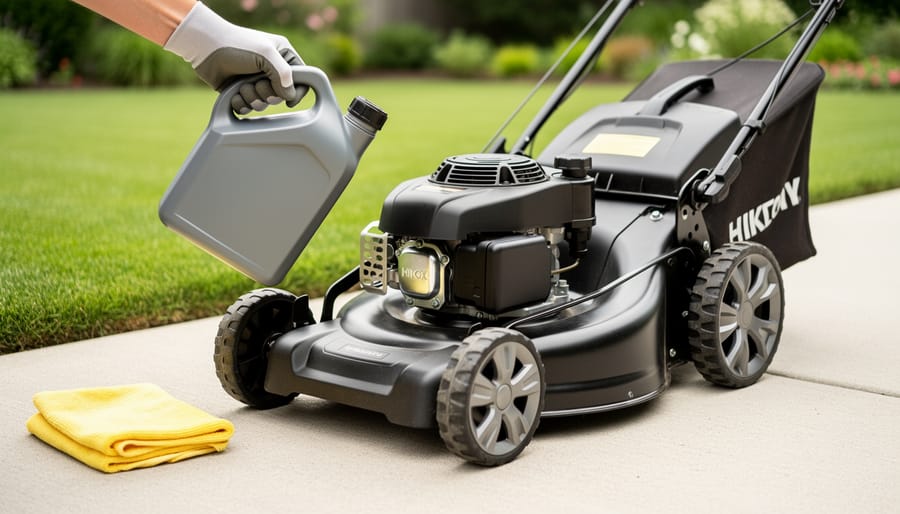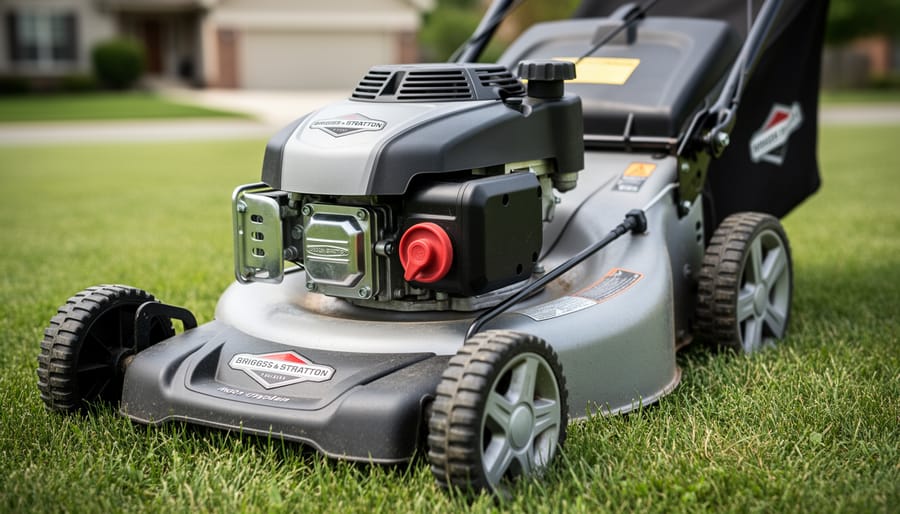
Your Briggs and Stratton engine won’t start, and nine times out of ten, you’re dealing with stale fuel or a clogged carburetor. Before you consider expensive repairs or hauling your mower to a shop, try this: drain any old gas (anything sitting more than 30 days), refill with fresh fuel, and give the primer bulb three firm pushes. Then pull the starter cord. If it fires up, you’ve just saved yourself a service call.
Most Briggs and Stratton problems stem from fuel issues, but not all of them. A dead engine could also mean a fouled spark plug, a dirty air filter choking off oxygen, or a safety switch that’s doing exactly what it’s designed to do: keeping you safe. The good news? You can diagnose and fix the majority of these issues yourself with basic tools and about 30 minutes of your time.
This guide walks you through a systematic troubleshooting path, starting with the simplest checks and moving to more involved repairs. You’ll learn how to identify symptoms, pinpoint the actual cause, and apply the right fix without guessing or wasting money on parts you don’t need. We’ll also cover when a problem signals something more serious that requires professional help, because knowing your limits is just as valuable as knowing how to repair.
Whether your engine cranks but won’t catch, runs rough and sputters out, or refuses to turn over at all, the answer is usually straightforward. Let’s get your mower running again so you can get back to what matters: a healthy, well-maintained lawn.
Quick Symptom Triage: What’s Your Engine Doing?
Before you start turning wrenches and pulling apart components, take a moment to observe what your engine is actually doing. This quick diagnostic snapshot will save you time and point you toward the right fix. Listen, watch, and note exactly how your Briggs and Stratton is behaving when you try to start it.
Your engine’s symptoms fall into one of these categories:
- Won’t turn over at all: You pull the cord or press the start button and nothing happens, no sound, no movement
- Cranks but won’t fire: The engine turns over but won’t start you hear the normal cranking sound but no ignition
- Starts then immediately dies: The engine catches and runs for a few seconds before shutting off
- Starts but runs rough: It fires up but sputters, backfires, smokes excessively, or lacks power
- Won’t stay running consistently: The engine acts like out of gas surges, stalls when you engage the blades, or quits after warming up
Each symptom pattern points toward specific underlying causes. An engine that won’t turn over at all typically indicates electrical or mechanical seizure issues. If it cranks but won’t fire, you’re dealing with fuel delivery, spark, or air supply problems. Starting then dying suggests fuel starvation or safety switch activation. Rough running points to carburetor issues, bad fuel, or compression problems.
Identifying your specific symptom now will guide you through the troubleshooting steps ahead. You’ll focus on the most likely culprits first rather than checking everything randomly. Keep in mind that some engines display multiple symptoms, which often means you have more than one issue to address.
Most Likely Causes (And Why They Happen)
When your Briggs and Stratton engine refuses to cooperate, you’re usually dealing with one of a handful of familiar culprits. The good news? Most problems stem from preventable issues rather than serious mechanical failure, and knowing what to look for saves hours of guesswork.
The single most common reason engines won’t start after winter is stale fuel. Gasoline begins breaking down after just 30 days, and modern ethanol blends accelerate this degradation. Over a winter storage period, that fuel transforms into a gummy varnish that clogs jets, gunks up the carburetor, and prevents proper combustion. Think of it like leaving orange juice in your fridge for six months, then wondering why it doesn’t taste right.
Right behind fuel problems, you’ll find spark plug issues and air filter blockages fighting for second place. Spark plugs foul from carbon buildup, oil contamination, or simply wear out from repeated use. A clogged air filter chokes your engine by restricting airflow, creating an overly rich fuel mixture that won’t ignite properly. Both problems develop gradually through normal operation but worsen dramatically when engines sit unused.
| Problem | Likelihood | Fix Difficulty | Typical Cause |
|---|---|---|---|
| Stale or contaminated fuel | Very High | Easy | Seasonal storage, ethanol degradation |
| Fouled or worn spark plug | High | Easy | Carbon buildup, normal wear |
| Clogged air filter | High | Very Easy | Dust accumulation, neglected maintenance |
| Low or dirty oil | Medium | Easy | Oil consumption, infrequent changes |
| Battery or electrical issues | Medium | Easy to Moderate | Corrosion, weak charge, connection problems |
Beyond these frequent offenders, low or contaminated oil triggers safety shutoffs in newer models equipped with low-oil protection systems. Many frustrated owners have perfectly healthy engines that simply refuse to start because the oil level dropped below the sensor threshold.
The pattern here? Most Briggs and Stratton problems trace back to three root causes: seasonal storage without proper preparation, poor fuel management, and skipped maintenance intervals. Understanding this helps you focus your troubleshooting efforts where they’ll actually pay off, rather than chasing obscure mechanical gremlins that probably aren’t your issue.
Step-by-Step Troubleshooting and Fixes
Step 1: Check the Fuel System
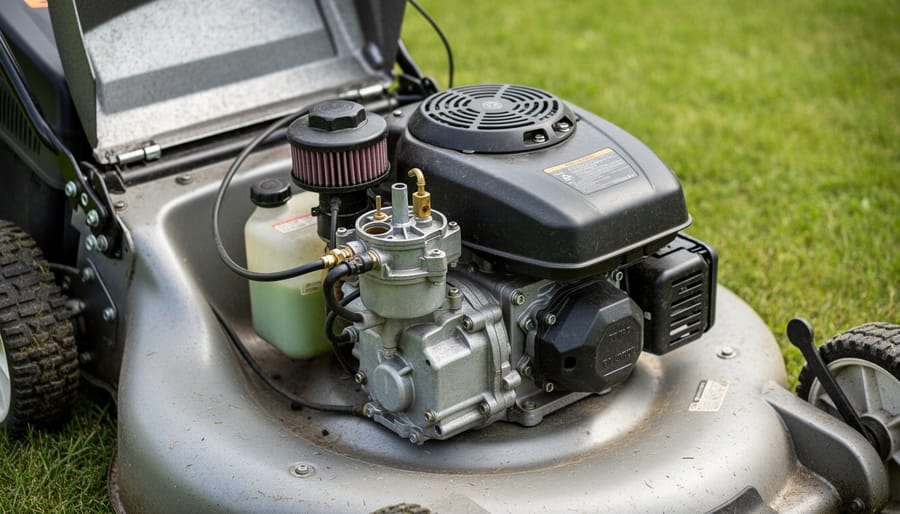
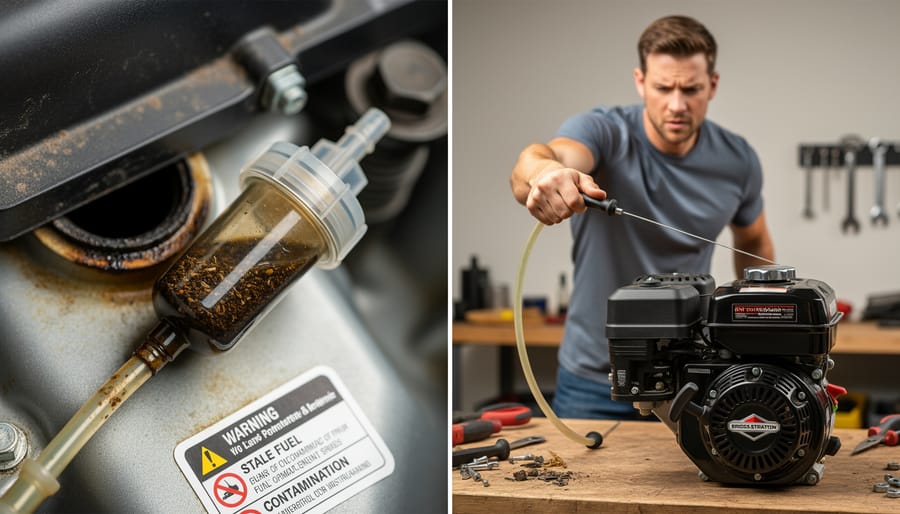
The fuel system causes roughly 70% of all Briggs and Stratton starting problems, making it your best starting point. Old fuel, ethanol buildup, and clogged components stop engines cold, but the good news is you can diagnose and fix most fuel issues in 20 minutes with basic tools.
The 2026 Ethanol Problem
Modern pump gas contains up to 15% ethanol (E15), which absorbs moisture and degrades within 30 days. When ethanol fuel sits in your mower over winter or between uses, it separates, turns to varnish, and gums up the carburetor. This chemistry hasn’t changed, but E15 has become standard at more stations in 2026, accelerating the problem. If your mower sat for more than a month with fuel in the tank, suspect stale gas first.
Check for these telltale signs: fuel that smells sour or varnish-like, visible separation with water pooling at the bottom of the tank, or a sticky residue around the carburetor. Fresh gas smells sharp and looks clear.
Systematic Fuel System Check
- Verify the fuel shutoff valve (if equipped) is in the ON position. It sounds obvious, but this trips up many gardeners after maintenance or storage.
- Drain old fuel completely. Use a hand pump or tip the mower (air filter side up) to empty the tank into an approved container. Never let questionable fuel sit and cause further damage.
- Inspect the fuel line for cracks, kinks, or blockages. Squeeze it gently, it should feel pliable, not brittle. Look inside for debris or varnish buildup that restricts flow.
- Remove and examine the fuel filter. Hold it up to light; you should see through it clearly. Replace any filter that looks discolored, clogged with debris, or hasn’t been changed in a year.
- Test fuel flow by disconnecting the fuel line at the carburetor inlet. Fresh gas should flow freely when you open the shutoff valve. Weak or no flow indicates a blockage upstream.
- Clean the carburetor if fuel flows but the engine still won’t start. Remove the bowl, spray carburetor cleaner through all passages, and use a small wire to clear the main jet. Varnish accumulates here and blocks fuel delivery to the engine.
After cleaning, refill with fresh ethanol-free fuel or add fuel stabilizer to regular gas. Ethanol-free options cost more but eliminate moisture problems and extend storage life to six months, making them worth the investment for occasional-use equipment.
Step 2: Inspect the Spark Plug
The spark plug creates the ignition spark your engine needs to fire. If it’s fouled, worn, or damaged, your Briggs and Stratton won’t start no matter how well everything else is working.
First, locate your spark plug, it’s typically on the side or top of the engine cylinder head, attached to a thick rubber boot. Pull the boot straight off (you may need to twist it slightly if it’s stuck), then use a spark plug socket wrench to unscrew the plug counterclockwise. A spark plug socket has a rubber insert that grips the plug, making removal easier.
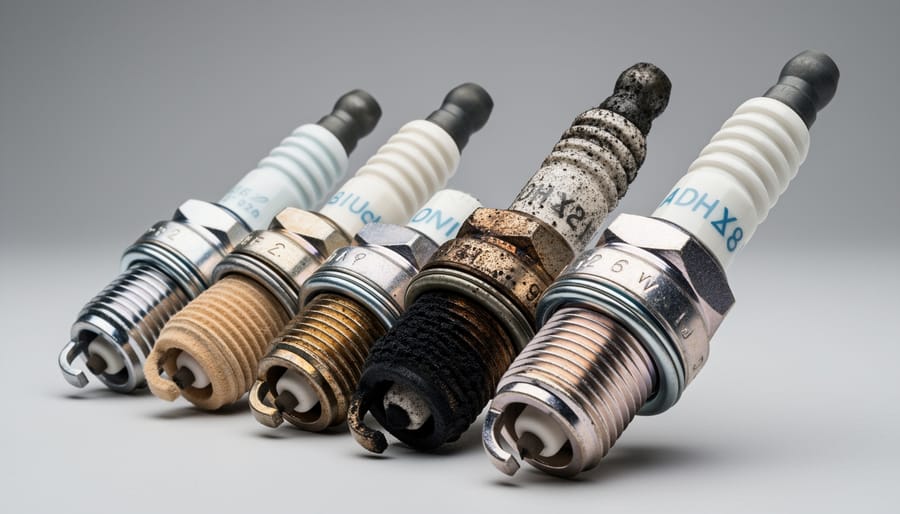
Once removed, examine the plug’s condition closely. A healthy spark plug has a light tan or gray electrode with minimal deposits. If you see heavy black carbon buildup, the engine has been running too rich, meaning too much fuel relative to air. Wet, oily deposits indicate oil is seeping into the combustion chamber, often from worn piston rings. White, chalky deposits or a blistered electrode suggest the engine’s been running too hot. Heavy electrode wear, where the center or ground electrode looks rounded or eroded, means it’s time for replacement.
To test for spark, reconnect the spark plug to its boot and rest the plug’s metal threads against a bare metal engine surface. Have someone pull the starter cord or turn the key while you observe the electrode gap, you should see a bright blue spark jump between the electrodes. No spark means either the plug is faulty or you’ve got an ignition system problem upstream.
Light fouling can be cleaned with a wire brush and spray carburetor cleaner. After cleaning, check the gap between the center and ground electrode using a gap tool, Briggs and Stratton engines typically require 0.030 inches, but check your owner’s manual. Bend the ground electrode carefully if adjustment is needed.
Replace rather than clean if the plug shows heavy deposits, electrode erosion, a cracked ceramic insulator, or if it’s more than two seasons old. A new plug costs just a few dollars and eliminates doubt, it’s cheap insurance for reliable starting.
Step 3: Examine the Air Filter
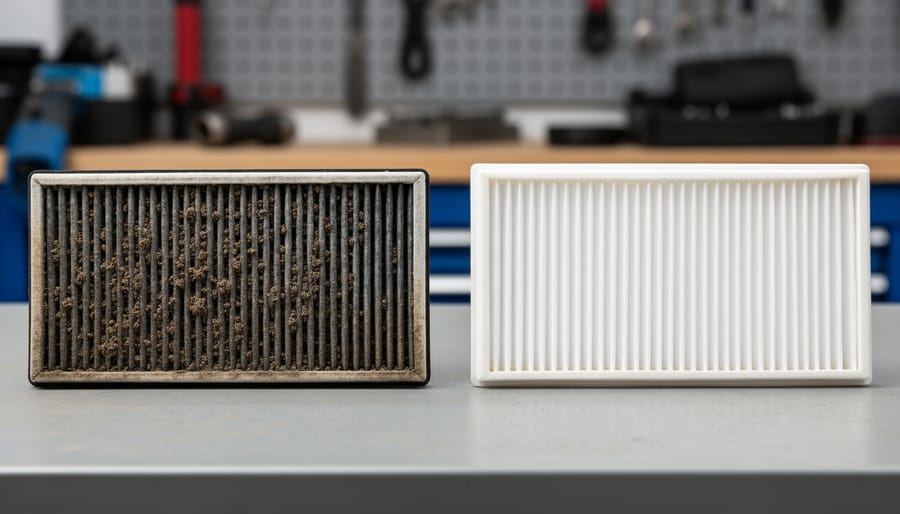
A clogged air filter is one of the easiest problems to fix, yet it’s surprisingly common. Your Briggs and Stratton engine needs a precise air-to-fuel ratio to run properly. When the air filter gets caked with dust, grass clippings, and debris, it chokes off airflow. The engine then runs “rich”, too much fuel, not enough air, causing hard starting, rough running, or stalling.
Locating and Removing Your Air Filter
The air filter housing sits on the side of the engine, usually secured by a single screw, wing nut, or metal clip. Remove the fastener and lift off the cover. You’ll see either a foam filter (typically yellow or blue) or a pleated paper element. Note which type you have before proceeding.
Foam Filters: Clean and Reuse
Foam filters are wonderfully sustainable because they’re washable. Remove the foam element and tap it gently to dislodge loose debris. Wash it in warm, soapy water, dish soap works perfectly, then rinse thoroughly until the water runs clear. Squeeze out excess water (never wring or twist), then let it air dry completely. Once dry, apply a light coating of clean engine oil, squeezing it through the foam to distribute evenly. This oil coating is essential; it traps fine particles the foam alone would miss.
Paper Filters: Replace When Dirty
Paper filters cannot be washed. Tap them lightly to remove loose dirt, but if they’re visibly dirty, stained, or torn, replacement is your only option. A new paper filter typically costs under ten dollars.
Inspect the filter housing for debris before reinstalling, and check your filter monthly during mowing season.
Step 4: Test the Battery and Electrical System (For Electric-Start Models)
If your Briggs and Stratton has an electric start, a weak or dead battery is one of the most common culprits when you turn the key and hear nothing, or just a clicking sound.
Start by checking the battery connections. Pop the hood and locate the battery terminals. Look for white or green crusty buildup around the posts, that’s corrosion, and it blocks electrical flow. Disconnect the cables (negative first, then positive) and use a wire brush or a mixture of baking soda and water to scrub the terminals and cable ends clean. Rinse with clean water, dry thoroughly, and reconnect tightly.
Next, test the battery charge. If you have a multimeter, set it to DC voltage and touch the probes to the battery terminals. A fully charged 12-volt battery should read 12.6 volts or higher. Anything below 12.4 volts means it’s losing capacity, and below 12 volts indicates it’s too weak to crank the engine reliably. Even if the battery is relatively new, it can fail prematurely due to sulfation or manufacturing defects. For a detailed look at symptoms, check out our guide on a bad mower battery.
If you’ve just replaced the battery but still have no luck, the problem might lie elsewhere in the electrical system, faulty solenoid, bad ignition switch, or wiring issues. Our article on why your new battery still won’t start walks through those scenarios.
For recoil-start models, skip the battery check entirely. Your issue is likely fuel, spark, or air-related instead. Focus on the fuel system and spark plug first.
Step 5: Check Oil Level and Quality
Your Briggs and Stratton engine won’t start or suddenly quit mid-cut? Low or contaminated oil might be the culprit. Modern engines include a low-oil shutdown sensor that kills ignition to prevent damage, and this safety feature can catch you off guard if you’re not checking regularly.
How to Check Oil Level Properly
Most Briggs and Stratton engines use a dipstick or twist-fill cap to check oil. Park your mower on level ground and let the engine cool for a few minutes. Remove the dipstick (or oil fill cap on some models), wipe it clean, reinsert it fully, then pull it out again. The oil should reach between the “add” and “full” marks. If it’s below the add line, the safety sensor may prevent starting.
Understanding Oil Terminology
- Viscosity Grade
- The thickness rating of oil (like 10W-30 or SAE 30), which determines how well it flows at different temperatures. Use the grade specified in your owner’s manual.
- Oil Capacity
- The amount of oil your engine holds, typically 15-20 ounces for walk-behind mowers. Overfilling causes smoking and rough running; underfilling triggers shutdowns.
- Low-Oil Shutdown
- A safety sensor that cuts ignition when oil level drops too low, protecting internal components from friction damage. This feature has been standard on most Briggs and Stratton engines since the early 2000s.
- Oil Contamination
- When oil becomes degraded with dirt, fuel, water, or metal particles, losing its protective properties. Contaminated oil looks milky, smells like gasoline, or contains visible debris.
Recognizing Contaminated Oil
Pull your dipstick and look closely at the oil. Fresh oil is amber or honey-colored. Dark black oil indicates it’s overdue for change. Milky or gray oil means water contamination, often from condensation or a blown head gasket. If oil smells strongly of gasoline, fuel is leaking into the crankcase. Any of these conditions warrant an immediate oil change.
When to Change the Oil
Change oil after the first five hours on a new engine, then every 25-50 hours of use or once per season, whichever comes first. Always use detergent oil rated for four-stroke engines, and dispose of old oil at a recycling center, not down drains.
Step 6: Address More Complex Issues
If you’ve worked through fuel, spark, air, battery, and oil without success, you’re likely facing internal engine issues that require mechanical expertise. Low compression, often caused by worn piston rings, damaged cylinder walls, or stuck valves, means the engine can’t build enough pressure to ignite fuel. You can confirm this with a compression tester (most Briggs and Stratton engines should show 90-100 psi), but repairing low compression involves disassembling the engine and replacing internal components.
Similarly, valve problems like burnt valves or incorrect valve clearance produce poor performance and difficult starting. Carburetor rebuilds, while technically DIY-possible, demand patience and proper rebuild kits; if cleaning hasn’t worked, a full rebuild involves tiny jets and gaskets that are easy to misplace.
When repair costs approach half the engine’s replacement value, professional service becomes questionable economics. Small engines older than ten years with major internal damage often cost more to repair than they’re worth. However, if your mower is relatively new or has sentimental value, a qualified small engine mechanic can diagnose these complex issues quickly and determine whether repair makes financial sense, giving you a clear answer before you invest more time or money.
Common Briggs and Stratton Error Codes and What They Mean
Modern Briggs and Stratton engines equipped with electronic monitoring systems communicate problems through indicator lights or digital displays. If your mower has one of these systems, understanding what the codes mean can save you hours of guesswork and point you directly to the issue.
- Low Oil Pressure Warning (Red Oil Icon or Flashing Light)
- The engine oil level has dropped below the safe operating threshold or the oil pressure sensor has detected a problem. Stop the engine immediately, check the oil level, and add oil if needed. Running with low oil can cause catastrophic engine damage within minutes.
- Battery Charge Warning (Battery Icon or Yellow Light)
- The charging system isn’t maintaining battery voltage, often due to a faulty alternator, loose belt, or corroded connections. The mower may still run but won’t recharge the battery. Check all electrical connections and test the charging output with a multimeter.
- High Temperature Warning (Thermometer Icon or Red Light)
- The engine is overheating, typically from blocked cooling fins, low oil, or running under excessive load in hot weather. Shut down immediately and allow cooling before inspecting the cooling system and oil level.
- Service Reminder (Wrench Icon or Steady Yellow Light)
- The engine has reached a preset hour threshold for routine maintenance. This isn’t an emergency but indicates it’s time for an oil change, air filter replacement, or spark plug service. Consult your owner’s manual for the specific maintenance schedule.
- Fuel System Warning (Gas Pump Icon)
- Indicates a fuel delivery problem, often a clogged fuel filter, empty tank despite the gauge reading, or vapor lock in hot conditions. Check fuel level first, then inspect the fuel filter and lines for restrictions.
Not all Briggs and Stratton engines have these electronic systems. Older models and basic push mowers typically rely on manual observation of symptoms rather than digital diagnostics. If your model lacks a display, the symptom-based troubleshooting approach covered earlier in this guide remains your best diagnostic tool.
When a warning light appears, consult your owner’s manual for model-specific codes, as indicator meanings can vary between engine series. Some premium models store fault codes in memory that a dealer can retrieve with diagnostic equipment, providing a detailed history of issues. Addressing warnings promptly prevents minor problems from escalating into expensive repairs, and following proper fuel storage prevention practices during off-season months helps avoid many fuel-related codes when you start up again.
Prevention: Keep Your Briggs and Stratton Running Smoothly
The best way to avoid troubleshooting headaches is preventing problems before they start. A consistent maintenance routine takes less time than diagnosing and fixing a dead engine, and it extends your equipment’s lifespan considerably.
Start every mowing season with fresh fuel. Old gasoline causes more Briggs and Stratton problems than any other single factor. If your mower sat through winter with fuel in the tank, drain it completely and refill with fresh gas. Better yet, run the carburetor dry before storage by letting the engine consume all remaining fuel or using the fuel shutoff valve.
Check and change your oil according to the manufacturer’s schedule, typically every 50 hours of operation or once per season for occasional users. Clean oil keeps internal components lubricated and prevents the buildup of contaminants that accelerate wear. While you’re at it, inspect the air filter monthly during the mowing season and clean or replace it when it looks dirty. A five-minute filter check prevents fuel-wasting rich running and potential engine damage.
Inspect your spark plug at least once per season. Remove it, check the gap, clean any deposits, and replace it if the electrode shows wear. A new spark plug costs a few dollars and ensures reliable ignition when you need it.
Store your mower in a dry location protected from temperature extremes. Moisture promotes rust and corrosion in fuel systems and on electrical connections. If you must store outdoors, use a quality cover that allows some air circulation to prevent condensation.
Keep the engine exterior clean. Grass clippings and debris packed around cooling fins restrict airflow and cause overheating. A quick brushing after each use takes seconds and prevents heat-related damage that shortens engine life. This simple habit costs nothing and dramatically improves reliability.
Frequently Asked Questions
How long should a Briggs and Stratton engine last?
With proper maintenance, a Briggs and Stratton engine typically lasts 1,000 to 1,500 hours of operation, which translates to 10-15 years for most homeowners who mow weekly during the growing season. Neglecting oil changes, using stale fuel, or skipping air filter maintenance can cut that lifespan in half.
Is it worth repairing an old Briggs and Stratton engine or should I replace it?
If the repair costs less than half the price of a new mower and your engine has fewer than 10 years of service, repairing makes financial and environmental sense. Major internal repairs like crankshaft replacement or significant compression loss often tip the scale toward replacement, especially if multiple systems are failing.
Does my Briggs and Stratton engine warranty cover troubleshooting repairs?
Most Briggs and Stratton engines come with a two to three year limited warranty covering manufacturing defects, but it excludes normal wear items like spark plugs and air filters, plus any damage from improper maintenance or fuel issues. Check your owner’s manual for specific coverage details, as commercial-grade engines often have different warranty terms.
Where can I find replacement parts for my Briggs and Stratton engine?
You can order genuine parts directly from Briggs and Stratton’s website, or find them at most hardware stores, home improvement centers, and small engine repair shops. Your engine’s model number, stamped on the valve cover or shroud, ensures you get the right parts the first time.
Can I use automotive oil in my Briggs and Stratton engine?
Yes, you can use automotive oil rated SAE 30 or 10W-30, but make sure it meets the API service classification SJ or higher. Avoid using automotive oil with additives designed for cars with catalytic converters, as these can harm small air-cooled engines over time.
These questions come up repeatedly because engine troubleshooting feels intimidating if you have never tackled it before. The reality is that Briggs and Stratton has built millions of reliable engines, and the company supports them with widely available parts and straightforward service procedures. When you run into a problem, you are dealing with the same issues thousands of other mower owners face each season.
Local small engine repair shops remain your best resource when you hit a wall with DIY fixes. They stock common parts, understand regional fuel quality issues, and can diagnose problems in minutes that might take you hours. Building a relationship with a good small engine mechanic gives you a backup plan while you develop your own troubleshooting skills.
Key Takeaways: Your Troubleshooting Checklist
Before you give up on your engine, run through this systematic checklist. Most issues reveal themselves within the first three steps, saving you time and money while keeping perfectly good equipment out of landfills.
Start with fuel quality and flow, check for stale gas, verify the fuel shutoff valve is open, and inspect the fuel line for blockages. Next, remove and examine the spark plug for fouling or gap issues. Third, pull the air filter and assess whether it needs cleaning or replacement.
If those three components check out, move to electrical system basics: battery charge and connections for electric-start models, or oil level for all engines since modern Briggs and Stratton units include low-oil shutoffs. Only after clearing these common culprits should you investigate compression problems or internal issues.
Document what you find at each step. This record helps you spot patterns for future maintenance and provides valuable information if you eventually need professional service. Taking photos of problematic parts makes ordering replacements easier and helps you remember reassembly order.
Remember that fixing rather than replacing aligns with sustainable lawn care practices. A $15 spark plug and fresh fuel often revive an engine someone else would have scrapped. When repairs do exceed the equipment’s value or your skill level, recycling old engines properly and choosing quality replacements extends the useful life of lawn care equipment overall.
Troubleshooting your Briggs and Stratton engine might feel daunting at first, but as you’ve seen, most issues boil down to a handful of common culprits, and they’re fixable. You’ve got this. Whether it was stale fuel, a fouled spark plug, or a clogged air filter, working through these problems yourself saves money, keeps equipment out of landfills, and builds real mechanical confidence.
Engine hiccups are a normal part of lawn mower ownership, not a sign of failure. Every season brings its own challenges, from winter storage issues to summer heat stress. The difference between frustration and smooth operation usually comes down to consistent preventive care: fresh fuel, clean filters, regular oil changes, and proper off-season prep.
We’re here to help you maintain a beautiful, healthy lawn without compromising sustainability. By keeping your equipment running longer through informed maintenance and repair, you’re making an environmentally responsible choice that also protects your investment.
Check out our guides on seasonal lawn care, sustainable mowing practices, and equipment maintenance for year-round lawn success. Your mower, and your lawn, will thank you.