A loud pop followed by a mower that dies or won’t turn over is almost always a backfire. The usual culprits are a timing problem (a sheared flywheel key is the classic one), a bad fuel and air mixture from a dirty carburetor or clogged air filter, or an exhaust problem like a blocked muffler.
Picture the scene. You pull the cord on your push mower, or turn the key on your rider, and instead of the usual hum you get a sharp bang. Then nothing. Maybe my lawn mower made a loud pop and won’t start is exactly what you’re typing into a search bar right now. Or it fired up, ran rough for a few seconds, and then you got a loud pop and died moment mid-pass. Either way, it’s a common failure, and it’s usually fixable in your own garage.
That bang is combustion happening at the wrong moment or in the wrong place. Fuel ignites too early, too late, or outside the cylinder. The cause could be as simple as a fouled spark plug or a clogged fuel filter, or as sneaky as a sheared flywheel key throwing the spark timing off by a few degrees. A clogged air filter can also starve the engine and set up the same misfire.
If your mower gave a loud pop and won’t start, don’t keep yanking the cord. Repeated pulls can strain the recoil starter and flood the engine. The quick checks below walk through the spark plug, fuel supply, air filter, flywheel key, and exhaust, in the order that saves you the most time.
Understanding the ‘Loud Pop’ From Your Lawn Mower: Causes and Common Issues
Why did your lawn mower make a loud pop and die? Usually it’s one of three things: a sheared flywheel key, a blade strike on something hard that jammed the blade and stalled the engine, or a backfire from a bad fuel and air mixture. All three can happen in half a second, and all three sound alike from behind the handle. The way the engine behaves afterward is what tells them apart.
If your lawn mower made a loud pop and won’t start, pay attention to what the engine does when you pull the cord or turn the key. A mower that dies on the spot and then feels stuck, or turns over with a strange loose spin, points to a blade strike or a sheared flywheel key. A mower that cranks normally but never fires points to timing or fuel, which is a different repair entirely.
Safety first: before you look at the blade or the flywheel, pull the spark plug wire off the plug and tuck it away from the terminal. A mower can kick over with the slightest turn of the blade, and the blade will take a finger without any trouble. Tip the mower with the air filter and carburetor side facing up so fuel and oil don’t run where they shouldn’t.
The “pop” sound from your lawn mower can frighten anyone. It’s like a firecracker going off. One moment you’re mowing your grass, the next moment, pop! The once humming engine falls silent.
What happens immediately after that loud pop matters. Some mowers die instantly and refuse to crank at all. Others will turn over but won’t fire up. A few might keep sputtering along but sound terrible. Each scenario points to different underlying problems.
| Symptom After Pop | Most Likely Cause | Severity |
|---|---|---|
| Died immediately, won’t restart | Sheared flywheel key or seized engine | High |
| Died and cranks but won’t start | Backfire damaged spark plug or ignition | Medium |
| Still runs but rough/misfiring | Valve timing issue or exhaust blockage | Low to Medium |
| Won’t crank at all, locked up | Internal engine damage or debris jam | High |
Backfire is the usual suspect when the engine still cranks. It happens when the spark ignites the fuel at the wrong moment in the combustion cycle. The explosion then tries to escape through the intake or exhaust at the wrong time, creating that distinctive bang.
Backfire typically happens in one of two ways. An intake backfire sends flames back through the carburetor, often when the mower is shutting down or decelerating. An exhaust backfire shoots unburned fuel into the hot muffler, where it ignites with a sharp crack. Both can stop your engine cold.
A blockage can also make this noise. An obstruction, like a large rock or thick branch, can jam the blade and stop the engine abruptly. Always check your lawn before you start mowing.
The flywheel key is another critical piece. This small part can be a big problem. If your mower hits a hard object, the flywheel key can shear. This throws off the engine’s timing completely and often produces a popping sound right before the engine quits. If you suspect this, stop mowing immediately. With the spark plug wire disconnected, you can check it by pulling the flywheel cover and looking at the key, but replacement takes careful disassembly and precise alignment.
The combustion chamber can also be the culprit. This chamber is where the fuel and air mix to create power. If the mixture is too rich or too lean, it can cause detonation and a loud noise. Check the intake valve and carburetor; together they control the mixture. It could also be the fuel solenoid that is at fault.
You might also need to replace the air filter. It helps the engine breathe. A clogged or oil-saturated filter disrupts the air and fuel balance, leading to rough running or sudden backfires.
Lastly, it might be your exhaust. A faulty exhaust valve or cracked muffler can cause popping sounds, especially under load. Carbon buildup inside the muffler can also trap heat and ignite leftover fuel vapors. Not all of these parts are easy to fix, and some are expensive. But identifying the problem is the first step.
The Anatomy of a Lawnmower Engine: Exploring the Engine’s Combustion Chamber and the Role of the Spark Plug
Have you ever wondered how your lawnmower works? What makes it go vroom and cut grass with power? Let’s take a peek under the hood! The heart of a lawnmower is its engine. This small engine has many parts. But let’s focus on two important ones: the combustion chamber and the spark plug.
The combustion chamber or cylinder is where the air/fuel mixture explodes. Air and fuel mix together here. When this mix is just right, it creates a big burst of power. This power moves the motor and spins the blades. This is how your mower cuts grass.
The spark plug provides the catalyst for combustion, in the form of an incendiary spark. It creates a tiny spark to ignite the gas, oil, and air in the combustion chamber. When the spark is timed correctly, the mix explodes with power.
Remember, balance is critical. Too much gas or air and the engine can backfire. This makes a loud popping sound. Too little or air-cooled, and the engine can smoke or stall.
Always keep expensive parts on your lawnmower engine clean. Dirt can clog the air filter or carburetor. This can mess up the air and fuel balance in the combustion chamber. If the engine sounds wrong, check these parts first.
Troubleshooting Your Lawn Mower: From Incorrect Settings to Replacing Old Fuel Filter
Now, let’s put on our fixing hats. If your lawn mower made a loud pop and won’t start, don’t just keep yanking the cord. Work through the checks in order, from the safest and simplest to the ones that need a few tools. Most of the time the culprit turns up in the first few steps.
A quick pre-check before the list: is there enough gas in the tank is the throttle set correctly, and is the oil level right? The simplest things cause the most frustrating problems. If those look fine, here’s the full diagnostic flow.
- Disconnect the spark plug wire. Pull the boot off the plug and tuck it away from the metal. This keeps the engine from kicking over while your hands are near the blade. Do this before anything else.
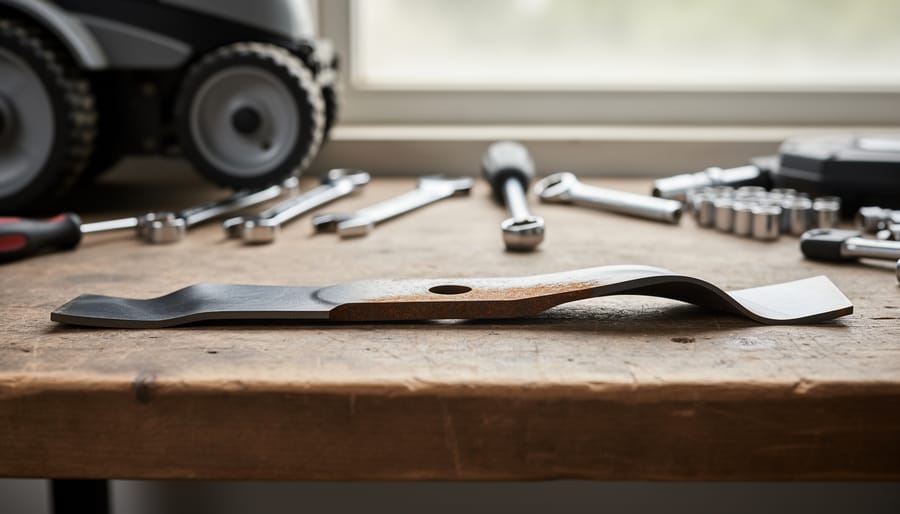
- Inspect the blade and spin it by hand. Tip the mower on its side (carburetor and air filter facing up, so fuel and oil don’t run where they shouldn’t). Look for a bent blade, a loose blade bolt, or a clump of wet grass or a stick jamming the deck. Turn the blade by hand. It should rotate freely with some compression resistance. If it’s locked up or hits something, you may have found the reason the pop happened and the engine died.
- Check the flywheel key. Remove the flywheel cover or shroud (usually a few bolts) and look at the flywheel. The key is a small metal wedge that locks the flywheel to the crankshaft. If the blade struck a rock or stump, the key can shear. That lets the flywheel shift slightly on the crank, which throws off ignition timing. The spark then fires at the wrong moment, and you get a loud pop or backfire followed by hard starting or no start at all. If you can rock or rotate the flywheel a little without turning the crank, or the key looks sheared or chewed up, replace it.
- Pull and inspect the spark plug. Remove it with a spark plug socket (check the spark plug size if you’re unsure which socket you need). A plug that’s black, oily, cracked, or has a worn electrode should be replaced. They’re cheap. Also confirm the gap matches your engine’s spec.
- Check the air filter. Pop the cover and pull the filter. A clogged filter starves the engine of air, and one soaked in oil can choke it out completely. Clean or replace it as needed.
- Check the fuel and the fuel filter. Smell the gas. If it’s sour, dark, or has been sitting for months, drain it. Then inspect the inline fuel filter. If it’s discolored or you can’t see fuel moving through it, replace it.
A quick word on fuel, because it trips up a lot of people. Ethanol-blended gas starts to degrade within a few months, absorbing moisture and leaving gummy deposits in the carburetor and filter. If your mower sat since spring or last season, assume the gas is stale. Dump it, refill with fresh fuel, and consider a fuel stabilizer for the next time you store it. Stale fuel alone can cause popping, sputtering, and a mower that won’t start.
Why does the flywheel key matter so much? It’s a tiny, inexpensive part that controls the timing relationship between the flywheel magnets and the piston. When it shears, the ignition fires early or late. That’s the classic story behind a lawn mower loud pop and died after hitting something hard.
If you’ve worked through the whole list and the mower still won’t start, or you find a bent crankshaft (the blade wobbles or the pulley looks off-center), it’s time for a repair shop. A bent crank isn’t a driveway fix, and it’s better to know that early than to keep replacing parts that were never the problem.
When to Fix It Yourself vs. Call a Pro After a Loud Pop
A lawn mower that made a loud pop and died is usually telling you something specific. The trick is knowing which fixes are safe to try in your driveway and which ones should go to a repair shop.
Fix it yourself if the problem is simple
If the pop was a backfire and the mower now cranks but won’t catch, start with the cheap, low-risk jobs:
- Replace a fouled spark plug and check the gap.
- Swap a dirty air filter or a clogged fuel filter.
- Drain stale gas and refill with fresh fuel.
- Pull the flywheel cover and inspect the flywheel key.
Each of these takes basic hand tools and under an hour. A plug and filter together often cost less than a single shop diagnostic fee, so it makes sense to rule them out first.
Call a pro when the damage may be internal
Some symptoms point past the easy fixes. Stop and get the mower looked at if you notice any of these:
- The pull cord won’t move or the engine feels locked up.
- You hear metal knocking or grinding after the pop.
- Smoke, oil leaks, or a cracked housing showed up right after the bang.
- A new flywheel key and fresh plug still leave you with no spark or no start.
A seized engine, bent crankshaft, or damaged valve train needs proper tools and testing. Forcing the starter over and over can turn a small repair into a replacement engine.
My rule of thumb: if you’ve checked fuel, spark, air, and the flywheel key and the mower still won’t run, the next dollar is better spent on a technician than on guessing with parts.
Conclusion: Ensuring Your Lawn Mower’s Longevity and Smooth Operation
A loud pop followed by a mower that won’t start usually traces back to one of four things. A sheared flywheel key throws off the ignition timing, so the spark fires at the wrong moment. A blade that hit a rock, stump, or curb can jam against the engine and stop it cold. A bad fuel and air mixture, from stale gas, a clogged carburetor, or a dirty air filter, can cause a backfire. And a blocked or damaged exhaust can trap that pressure and produce the same bang.
Most of these are cheaper to prevent than to fix. Start each season with fresh fuel, and don’t let old gas sit in the tank over winter. Check the spark plug and air filter once a year, and swap them out if they look fouled or worn. Inspect the blade for bends, nicks, and a loose mounting bolt before you mow, especially if you’ve hit something solid. Taking care of your mower on a regular schedule keeps small problems from turning into expensive ones, and a mower that gets that attention will start reliably for years.