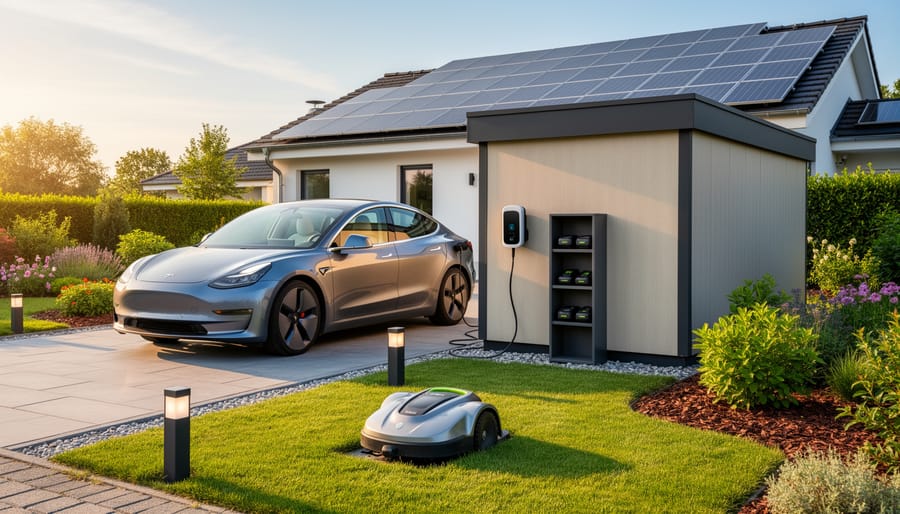
Charging your electric vehicle doesn’t have to compete with your outdoor power needs—the right smart EV charger integrates seamlessly into your yard’s electrical ecosystem while supporting your sustainable lifestyle. Picture this: you’ve just finished edging your lawn with your electric trimmer, and now your EV needs a charge, but you’re worried about tripping breakers or overloading circuits that also power your shed, outdoor lighting, and irrigation system.
Smart EV chargers solve this problem by managing electrical loads intelligently, scheduling charging during off-peak hours when your yard equipment sits idle, and preventing circuit overloads that could disrupt everything from your lawn sprinkler timer to your workshop tools. These devices connect to your home’s electrical system and often integrate with solar panels, making them perfect companions for gardeners already committed to reducing their environmental footprint through electric lawn equipment and sustainable yard practices.
The transition to electric extends beyond just your mower or leaf blower. Installing a smart charger in your garage, carport, or outdoor charging station means you’re creating a unified sustainable power strategy for both transportation and yard maintenance. Many smart chargers offer features like weather-resistant outdoor ratings, load balancing that ensures your garden shed circuits remain stable, and smartphone apps that let you monitor energy use from the backyard.
For environmentally-conscious homeowners managing both electric vehicles and battery-powered yard tools, understanding smart charger technology becomes essential. These systems help you avoid expensive electrical panel upgrades, maximize solar energy usage if you have panels, and ensure reliable power distribution across all your outdoor electrical needs. Whether you’re powering a robotic lawn mower, charging cordless hedge trimmers, or running LED landscape lighting, your smart EV charger works behind the scenes to optimize everything efficiently.
The key is choosing equipment that grows with your sustainable yard management goals while protecting your existing electrical infrastructure.
What Makes an EV Charger ‘Smart’ (And Why Your Yard Cares)
The Basics: Beyond Just Plugging In
Think of a smart EV charger as the difference between a traditional garden hose and a programmable irrigation system. Sure, both get water to your plants, but one does it with considerably more finesse and efficiency.
A basic Level 2 charger is straightforward: you plug in your electric vehicle, and it charges at a steady rate until full. It’s reliable, much like that garden hose. But a smart charger? That’s where things get interesting for those of us managing both electric vehicles and electric yard equipment.
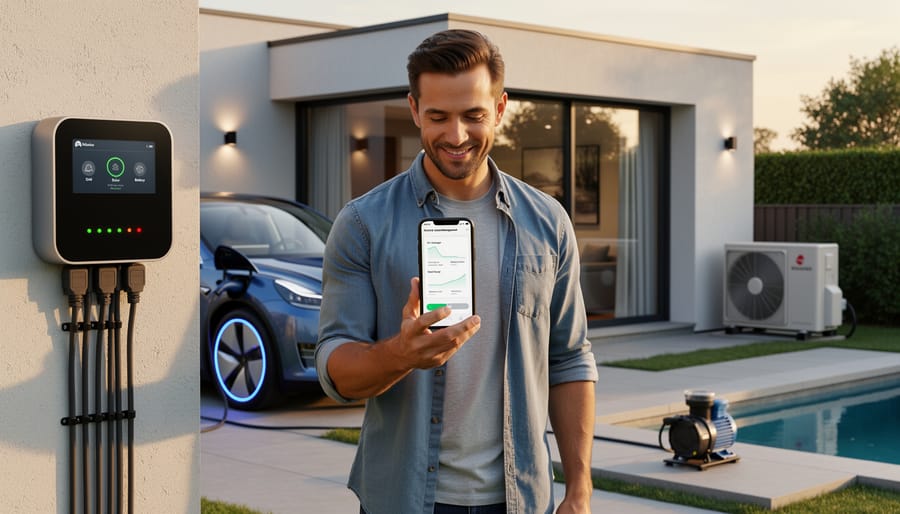
Smart chargers connect to your home’s Wi-Fi network, similar to how smart yard connectivity works with robotic mowers. This connection allows you to control charging through a smartphone app, schedule charging sessions during off-peak electricity hours when rates are lower, and monitor your energy usage in real-time.
The practical benefits align perfectly with sustainable yard care practices. You can automatically charge your EV overnight when your electric mower, trimmer, and blower aren’t drawing power, preventing electrical overload. Many smart chargers also integrate with solar panel systems, letting you power your vehicle with the same renewable energy philosophy you apply to your garden.
Most importantly, smart chargers help you understand your overall electrical consumption. When you’re running multiple electric tools and charging an EV from the same outdoor circuit, knowing exactly how much power you’re using prevents tripped breakers and helps you make informed decisions about your home’s energy capacity.
Features That Matter for Outdoor Installations
When you’re setting up a smart EV charger in your yard, you need to think about it much like you would a high-quality outdoor irrigation system – it’s going to face the elements year-round, so durability matters tremendously.
First and foremost, look for chargers with proper weatherproofing ratings. You’ll want an IP rating of at least IP65, which means the unit can handle rain, snow, and dust without missing a beat. This is especially important if your charging station will be exposed rather than under a carport or garage overhang. Think of it as choosing weather-resistant garden tools – you wouldn’t leave delicate equipment outside, and your EV charger needs that same resilient construction.
Cable management is another practical consideration that often gets overlooked until installation day. A good outdoor charger should have a cable holder or retractor to keep the charging cable off the ground when not in use. This prevents tripping hazards in your yard and protects the cable from lawn mowers, trimmers, and other garden equipment. Some models include wall-mounted holsters that keep things tidy, much like organizing your garden hoses.
Temperature tolerance is equally crucial. Quality outdoor chargers operate reliably in extreme conditions, from freezing winters to scorching summers. Check the manufacturer’s operating temperature range to ensure it matches your climate zone.
Finally, consider UV resistance in the housing materials. Just as prolonged sun exposure can fade garden furniture, it can degrade cheaper plastics on charging units. Investing in a charger built with UV-stabilized materials ensures longevity and maintains that clean, professional appearance in your outdoor space for years to come.
The Smart Yard Energy Ecosystem: More Than Just Charging Your Car
Your Growing Collection of Electric Yard Tools
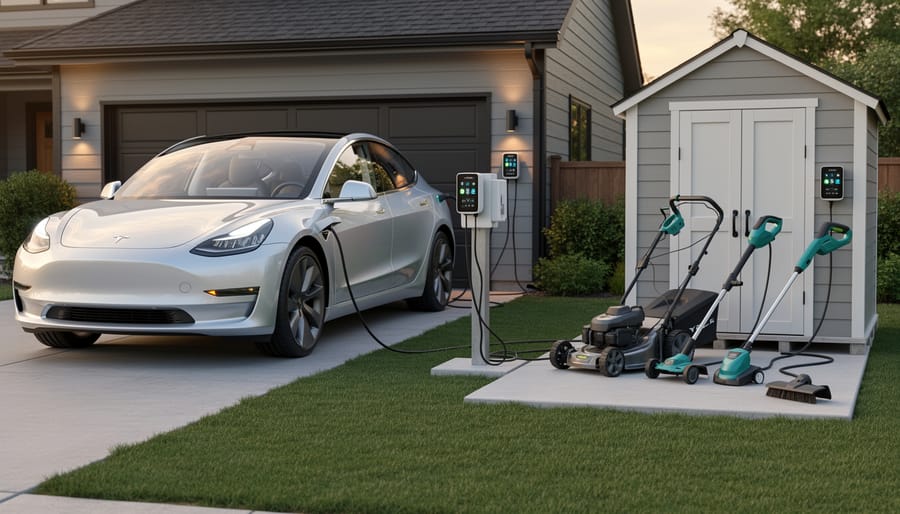
If you’re like most modern homeowners who care about their lawn, you’ve probably noticed your garage filling up with battery-powered equipment. That cordless mower you bought last year? It’s now joined by an electric trimmer, leaf blower, and maybe even a chainsaw. Welcome to the club! The shift away from gas-powered tools has been fantastic for reducing emissions and noise, but it’s also created a new challenge: managing multiple charging stations.
Here’s where things get interesting. As you prepare to add an EV charger to your outdoor electrical setup, you’re essentially creating a mini power hub. The good news is that today’s lithium-ion batteries, whether powering your car or your hedge trimmer, benefit from similar proper battery charging habits. Think of it as building an ecosystem rather than just installing another outlet.
Most battery-powered yard equipment uses 40V to 80V systems, drawing significantly less power than an EV charger. However, when you’re charging multiple tools simultaneously while your car is plugged in, the cumulative load matters. Smart EV chargers can actually help here by scheduling charging during off-peak hours, ensuring your electrical panel isn’t overwhelmed when you need to prep all your equipment for weekend yard work. This integrated approach to power management isn’t just convenient; it’s a practical step toward truly sustainable lawn care.
When Everything Needs Power at Once
If you’re like most homeowners embracing sustainable yard care, you’ve probably noticed a growing trend: everything outside needs to plug in these days. Between your EV sitting in the driveway and your collection of electric lawn equipment charging in the garage, there’s a lot of competition for those electrical outlets.
Here’s the reality many of us face. You come home after work, plug in your EV to charge overnight, and suddenly remember your robotic mower needs charging before tomorrow’s scheduled run. Meanwhile, your battery-powered hedge trimmer and leaf blower are sitting there with depleted batteries from last weekend’s yard work. Sound familiar?
Most residential electrical panels weren’t designed with this modern reality in mind. Your home has a finite amount of electrical capacity, typically between 100 and 200 amps total. When your EV charger draws 30 to 50 amps, your air conditioning is running, and you’re trying to charge multiple lawn tools simultaneously, you’re asking a lot from your electrical system.
This juggling act isn’t just inconvenient. It can actually trip your circuit breaker, leaving you with an uncharged vehicle in the morning or postponing your weekend lawn maintenance. Some homeowners resort to creating charging schedules in their heads, unplugging one device to charge another, which defeats the whole purpose of having convenient electric equipment.
The good news is you don’t have to choose between a fully charged EV and maintaining your sustainable lawn care routine. Smart EV chargers offer an elegant solution to this modern dilemma through intelligent load management, ensuring everything gets the power it needs without overwhelming your home’s electrical system.
Load Management Explained: Keeping Your Circuit Breaker Happy
Understanding Your Home’s Power Limits
Think of your home’s electrical system like your garden’s water supply. Just as your sprinkler system can only handle so much flow before pressure drops, your home has a limit to how much electricity it can safely deliver at once. Understanding this capacity is essential before adding a smart EV charger, especially if you’re already running power-hungry equipment like electric mowers, hedge trimmers, or landscape lighting.
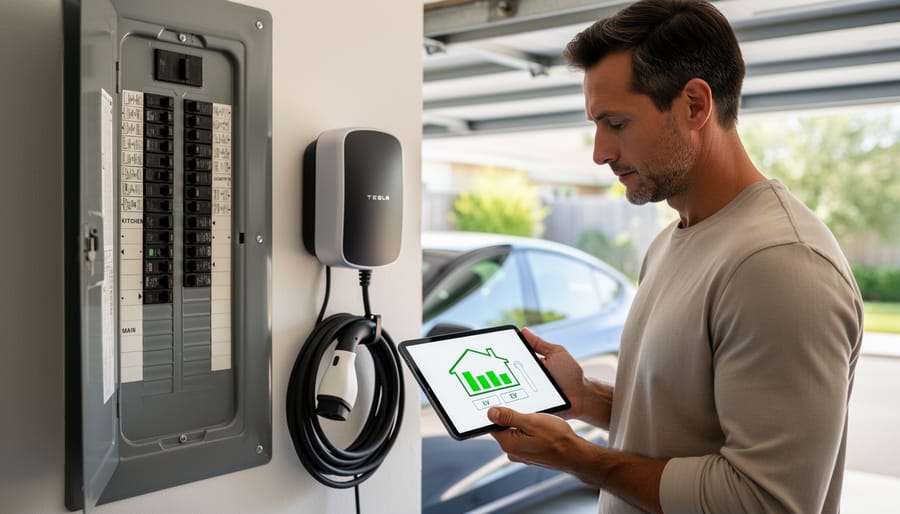
Most homes have either 100-amp or 200-amp electrical service. You can find this information by checking the main breaker in your electrical panel, usually located in your garage or basement. The number will be clearly stamped on the large switch at the top. Think of this like knowing your garden hose’s diameter before adding another sprinkler zone.
Here’s where it gets practical: add up your major electrical loads during peak use. Your central air conditioning might draw 20-30 amps, your electric water heater another 20 amps, and a standard EV charger could need 30-50 amps. If you’re charging your mower battery, running power tools in the shed, and cooling your home simultaneously, you’re stacking demand quickly.
A simple way to check if you’re approaching limits is to notice whether lights dim when heavy equipment starts up. This is your electrical system saying it’s working hard. For a more precise assessment, many utility companies offer free energy audits, or you can hire a licensed electrician for about the same cost as a quality garden tool.
The good news? Smart EV chargers can actually help manage this capacity by automatically adjusting charging speed based on your home’s current electrical demand, preventing overloads while keeping your vehicle ready for tomorrow’s tasks.
How Smart Chargers Automatically Balance the Load
Think of your home’s electrical system like a garden irrigation setup – you wouldn’t run every sprinkler zone at full blast simultaneously because you’d lose water pressure everywhere. Smart EV chargers work on the same principle, automatically managing your home’s electrical load to prevent overloads and keep everything running smoothly.
Dynamic load management is the real game-changer here. These intelligent chargers constantly monitor your home’s total electricity usage in real-time. When you’re running your electric lawn mower, charging power tools in the garage, and have the air conditioning going on a hot summer day, your smart charger automatically adjusts how much power flows to your EV. It’s like having an experienced gardener who knows exactly how much water each plant needs without drowning the roots.
Power sharing takes this further if you have multiple EVs or need to charge while operating outdoor equipment. Many smart chargers can distribute available electricity between your car and other devices, ensuring nothing gets starved of power. You won’t experience that frustrating circuit breaker trip right in the middle of mowing your lawn.
The scheduling capability is especially handy for those of us managing outdoor projects. Set your charger to power up your EV during off-peak hours – typically late at night when you’re not using yard equipment. This not only prevents overload but often takes advantage of lower electricity rates, making your sustainable transportation even more cost-effective.
The beauty of this technology is its hands-off nature. Once configured, it works automatically in the background, protecting your electrical system while keeping your EV ready for tomorrow’s errands or your electric garden tools charged for weekend yard work.
Choosing the Right Smart Charger for Your Yard Setup
Location, Location, Location: Placement Strategies
When you’re planning where to install your smart EV charger, think of it like choosing the perfect spot for a rain barrel or tool shed. You want convenience, but you also need to consider practical limitations and long-term functionality.
Start by evaluating your parking area’s proximity to your electrical panel and your yard equipment storage. Most residential EV chargers come with 18 to 25-foot cables, which sounds generous until you factor in the distance from your mounting location to where your vehicle actually parks. I learned this the hard way when I first installed mine and discovered I’d need to repark at an awkward angle every single time!
Consider weather exposure carefully. While quality smart chargers are built to withstand the elements, mounting yours under an eave or in a carport extends its lifespan and keeps you dry during rainy charging sessions. This is especially important if you’re someone who frequently transitions between charging your EV and plugging in electric mowers or trimmers stored nearby.
If you’re managing both vehicle charging and battery-powered yard equipment, positioning your charger near your garden shed or garage creates a centralized charging station. This approach supports your sustainable practices by making it easy to keep all your electric tools topped up and ready to go.
Don’t forget to account for future needs. Maybe you’re planning to add more electric equipment or a second EV down the line. Choosing a flexible location now, even if it requires slightly longer initial cable runs, can save you from costly relocations later.
Must-Have Features vs. Nice-to-Haves
When shopping for a smart EV charger for your home, it helps to separate the essential features from the extras that might sound appealing but aren’t crucial for everyone. Let’s break down what you truly need versus what’s simply nice to have.
The must-have features start with appropriate charging speed for your vehicle and electrical capacity. A Level 2 charger with at least 32 amps is essential for overnight charging of most EVs. You’ll also want built-in safety features like ground fault protection and overcurrent protection, which are non-negotiable for outdoor installation. WiFi connectivity has become a must-have rather than a luxury because it enables you to monitor energy usage, schedule charging during off-peak hours to save money, and receive important maintenance alerts. Weather resistance with a NEMA rating suitable for your climate is absolutely essential since your charger will live outdoors year-round, exposed to the same elements as your garden tools.
Smart scheduling capabilities should be on your must-have list too, especially if you’re running electric lawn equipment and irrigation systems. The ability to automatically charge your vehicle during times when you’re not using power-hungry yard tools prevents circuit overload and optimizes your home’s electrical capacity. Energy monitoring features help you track consumption patterns, which is particularly valuable if you’re committed to sustainable practices and want to understand your overall outdoor power usage.
Nice-to-have features include voice control integration with systems like Alexa or Google Assistant. While convenient, you can easily manage charging through an app instead. Solar panel integration is wonderful if you already have or plan to install solar, but it’s not essential for basic operation. Cable management systems and customizable LED lighting are aesthetic touches that improve user experience but don’t affect functionality. Load balancing with other home systems is beneficial for larger properties with extensive electrical demands, but most homeowners can manage perfectly well with smart scheduling alone. Dynamic pricing optimization that automatically responds to utility rate changes is a premium feature that offers savings but isn’t critical for everyone.
Installation Considerations for Outdoor Smart Charging Stations
Working With Your Electrician: Questions to Ask
Finding the right electrician for your smart EV charger installation is like choosing a landscape professional—you want someone who truly understands your specific needs. Before scheduling that first consultation, prepare a few key questions that’ll help you assess their expertise and ensure your project aligns with your sustainable yard management goals.
Start by asking about their experience with smart chargers specifically. How many installations have they completed? Are they familiar with models that integrate with solar panels or time-of-use pricing—features that appeal to environmentally conscious homeowners? Request to see examples of similar projects, particularly installations that involved load management for properties running multiple electric devices.
Next, discuss your property’s electrical capacity. Can your current panel handle an EV charger alongside your electric lawn mower, leaf blower, and other yard equipment? What load management solutions do they recommend? This conversation should cover whether you’ll need a panel upgrade and how the charger can be programmed to avoid overloading during peak usage times.
Don’t hesitate to ask about permits and electrical safety requirements in your area. A qualified electrician should handle this process seamlessly and explain timeline expectations clearly.
Finally, request a detailed written estimate that breaks down materials, labor, and any additional electrical work needed. Understanding these costs upfront prevents surprises and helps you budget for this important addition to your sustainable home ecosystem.
Protecting Your Investment: Weatherproofing and Maintenance
Just like you protect your lawn mower and hedge trimmer from the elements, your smart EV charger deserves the same attention. Think of it as another essential piece of outdoor equipment that’ll serve you better with a little TLC.
Most quality outdoor-rated chargers come with weatherproof enclosures, but that doesn’t mean they’re maintenance-free. I recommend checking your charger monthly, just as you might inspect your garden tools. Look for debris buildup around vents, spider webs in crevices, or any signs of moisture intrusion. A quick wipe-down with a dry cloth keeps connections clean and prevents corrosion.
Consider installing your charger under an eave or pergola if possible. While it’s built to handle rain and snow, reducing direct exposure extends its lifespan significantly. If that’s not feasible, many manufacturers offer protective covers or canopies designed specifically for their units.
Here’s a sustainability win: coordinate your charger maintenance with your regular yard equipment checkups. When you’re cleaning your electric mower or trimmer after use, take a moment to inspect your charger’s cable for wear and ensure the connector housing stays dry when not in use.
During winter months in colder climates, brush snow away from the unit and ensure drainage paths remain clear. Ice buildup can stress housing seals over time. Some chargers include heating elements that activate in freezing temperatures, but keeping them accessible helps ensure reliable performance year-round. Regular attention means your charger will reliably power both your vehicle and your sustainable yard care routine for years to come.
Maximizing Sustainability: Solar Integration and Off-Peak Charging
Pairing Your Charger With Solar Panels
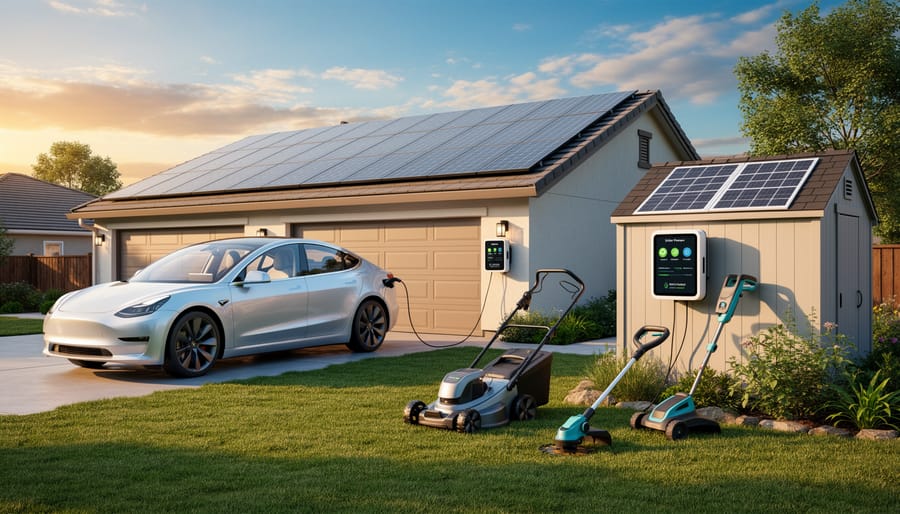
If you’ve already invested in solar panels for your home—or you’re considering them as part of your sustainable gardening journey—pairing them with a smart EV charger is a game-changer. Just like solar-powered yard systems that harness the sun to illuminate your landscape, smart chargers can be programmed to prioritize your solar energy for charging your vehicle and electric lawn equipment.
Here’s how it works: many smart chargers integrate with your solar system to monitor real-time energy production. When your panels are generating excess power during sunny days, the charger automatically pulls from that renewable source first, reducing or eliminating reliance on grid electricity. Some models even delay charging until peak solar production hours, ensuring you’re maximizing every ray of sunshine.
This is particularly brilliant for gardeners who run multiple electric tools. Imagine charging your EV overnight on stored solar power, then topping up your electric mower, trimmer, and leaf blower during the day when the sun is strongest. You’re essentially running your entire outdoor operation on clean, free energy.
The environmental benefits are obvious, but the financial perks are equally compelling. You’ll slash your electricity costs while reducing your carbon footprint—a win-win that aligns perfectly with sustainable lawn care practices. Plus, you’re future-proofing your property as renewable energy becomes increasingly essential.
Smart Scheduling for Lower Bills and Greener Energy
Here’s the thing about smart EV chargers that really makes them shine: they can actually save you money while being kinder to the planet. Think of it like watering your garden during the cooler evening hours instead of the heat of midday – timing matters!
Most smart chargers let you schedule charging sessions for off-peak hours, typically late at night or early morning when electricity rates are lowest. I know folks who’ve cut their charging costs by 30-40% just by programming their charger to start at 11 PM instead of plugging in right after dinner. It’s set-it-and-forget-it simple, much like setting your irrigation timer.
Even better, many advanced chargers can tap into real-time grid data to charge when renewable energy sources like solar and wind are most abundant. Some utilities even offer special programs that reward you for charging during these greener periods. You’re essentially growing your own sustainable energy garden, prioritizing clean power when it’s available.
The beauty of this approach is that your car still gets fully charged by morning – you’re just being smarter about when it happens. It’s practical sustainability that actually pays dividends, aligning perfectly with the earth-friendly mindset that drives most of us who care about our yards and the environment.
Real-World Setup: A Practical Example for Homeowners
Let me walk you through how my neighbor Sarah set up her smart EV charger last spring, because her experience offers some valuable lessons for anyone juggling electric vehicles and a lawn care routine.
Sarah drives a Chevy Bolt and maintains a beautiful quarter-acre yard with an electric mower, hedge trimmer, and leaf blower. When she decided to install a Level 2 charger in her driveway, her biggest concern wasn’t just charging the car—it was making sure she wouldn’t trip the breaker every time she needed to charge her EV while her lawn equipment batteries were plugged in.
Her first smart move was calling an electrician before buying anything. This is where many folks stumble. They purchase a charger online, then discover their garage’s electrical panel can’t handle the additional load without a costly upgrade. Sarah’s electrician confirmed she needed a 50-amp circuit, which meant running new wiring from her main panel. The total cost came to about $1,200 for installation, on top of the $600 charger itself.
She chose a smart charger specifically because it let her schedule charging during off-peak hours when electricity rates are lower. This matters more than you might think—her utility company offers 40 percent cheaper rates between 11 PM and 7 AM. Since her car sits overnight anyway, this simple feature saves her roughly $35 monthly. That’s money she happily redirects toward organic lawn fertilizers and compost.
Here’s a practical tip Sarah learned the hard way: position your charger where the cable can reach your charge port without stretching across walkways. She initially mounted hers too far left, creating a tripping hazard with the cable. After repositioning, everything flows much better.
The sustainability angle really clicked for Sarah when she realized her solar panels were now powering both her transportation and her lawn care equipment. Her smart charger’s app shows exactly how much energy comes from solar versus grid, which feels incredibly satisfying.
One realistic expectation to set: smart features require stable WiFi connectivity in your driveway or garage. Sarah added a WiFi extender for $40 to ensure reliable connection, allowing her to monitor charging status from inside while she’s planning her weekend mowing schedule.
Adding a smart EV charger to your outdoor space isn’t just about powering your vehicle—it’s a natural extension of the sustainable yard management practices you’re already embracing. Just as you’ve thoughtfully chosen electric lawn equipment to reduce emissions and noise pollution, integrating smart charging technology demonstrates the same commitment to environmental stewardship. Your yard becomes a cohesive ecosystem where every element, from your solar-powered pathway lights to your electric mower’s charging station, works together toward a greener future.
The beauty of smart EV chargers lies in their ability to blend seamlessly into your existing outdoor infrastructure. They’re not competing with your garden shed or disrupting your carefully planned landscape design. Instead, they become part of your sustainable toolkit, helping you manage energy efficiently while maintaining the beautiful outdoor space you’ve worked so hard to cultivate.
As you move forward, start by assessing your current electrical capacity and identifying the best location for installation. Consider how a smart charger can optimize your energy usage during off-peak hours, potentially saving money while supporting grid stability. Look for models with weather-resistant features and scheduling capabilities that align with your yard maintenance routines.
Remember, every step toward electrification—whether it’s switching to battery-powered tools or installing an EV charger—contributes to cleaner air and a healthier environment for your plants, your family, and your community. You’re not just maintaining a yard; you’re cultivating a sustainable lifestyle. Take that next step with confidence, knowing that smart outdoor charging is both practical and purposeful. Your garden, and the planet, will thank you.