Soil organic matter is the hidden powerhouse beneath your feet that separates struggling lawns from thriving green carpets. It’s the dark, spongy component made up of decomposed plant material, living microorganisms, and their byproducts, working tirelessly to feed your grass, retain moisture, and build disease resistance. When you understand this living layer, you unlock the secret to reducing fertilizer needs, improving drought tolerance, and creating that enviable lawn texture everyone notices.
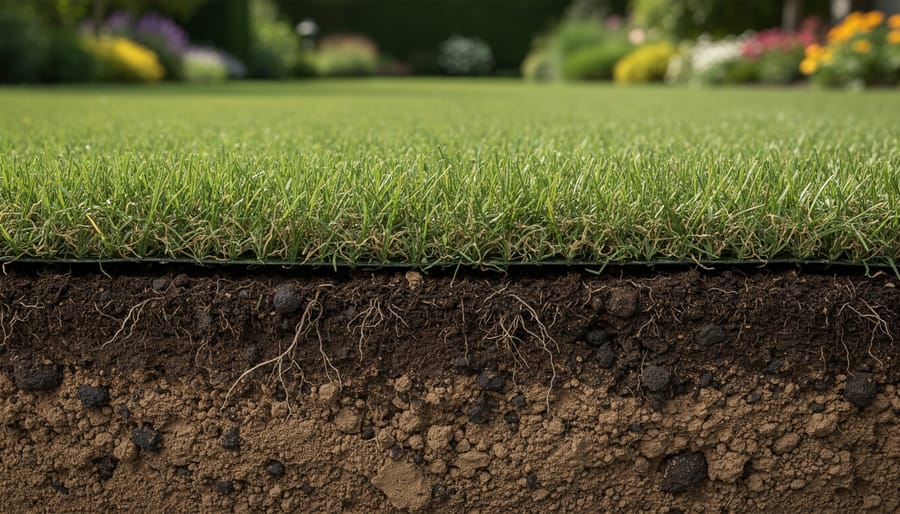
Think of organic matter as your soil’s savings account. Healthy turf soils should contain 3-5% organic matter by weight, yet most residential lawns fall dangerously short at 1-2%. This deficit explains why some lawns demand constant feeding and watering while others seem effortlessly lush. The difference lies in billions of beneficial bacteria and fungi breaking down dead roots, grass clippings, and other organic materials into humus, that rich, stable substance that transforms sandy or clay soils into the ideal growing medium.
The practical impact shows up immediately in your lawn care routine. Soil rich in organic matter holds up to twenty times its weight in water, meaning fewer irrigation sessions and lower water bills. It releases nutrients slowly throughout the growing season, eliminating the feast-or-famine cycle of synthetic fertilizers. Most importantly, it creates the soil structure that allows roots to penetrate deeply, establishing the foundation for grass that withstands heat, traffic, and pest pressure naturally.
What Exactly Is Soil Organic Matter?
The Four Stages of Organic Matter Breakdown
Think of organic matter decomposition like nature’s recycling program happening right beneath your feet. When you understand these four stages, you’ll see your lawn care efforts in a whole new light.
The first stage is the fresh material phase. This is what you see right after mowing when grass clippings are still bright green and recognizable, or when you’ve just added fallen leaves to your garden bed. These materials are packed with moisture and nutrients, but they’re too complex for plants to use directly. Think of them as ingredients waiting to be transformed into something your lawn can actually digest.
Next comes the active decomposition stage, where the real magic begins. Within days or weeks, those grass clippings start breaking down as bacteria and fungi get to work. You’ll notice the materials turning brown and shrinking in size. This stage generates heat, which is why compost piles can actually steam on cool mornings. The organisms are working overtime, releasing carbon dioxide and breaking down proteins and simple sugars.
The third stage is the slow decomposition phase. Here, tougher materials like lignin and cellulose finally start breaking down. This process takes months to years, and you’ll see materials becoming darker and less recognizable. What was once a grass clipping now looks more like dark, crumbly soil.
Finally, we reach the stable humus stage. This is the gold standard of organic matter: a dark, stable substance that can last decades in your soil. It’s what gives healthy soil that rich, earthy smell and chocolate-cake texture. This finished product improves everything from water retention to nutrient availability, creating the foundation for a thriving lawn.
How Much Organic Matter Should Your Turf Soil Have?
For a thriving lawn, you’ll want to aim for an organic matter content of 3-6% in your turf soil. This sweet spot provides enough nutrients and beneficial microbes to keep your grass healthy without creating problems that come from too much of a good thing.
Think of it like seasoning your favorite dish—you need enough to enhance the flavor, but too much ruins the meal. The same principle applies to your lawn’s organic matter content.
How can you tell if your lawn is sitting in the right range? Grab a handful of slightly moist soil from about 3-4 inches down. It should hold together loosely when you squeeze it, then crumble easily when you poke it. If it falls apart immediately like sand, you likely have too little organic matter. Your grass might look pale, grow slowly, and struggle during dry spells because the soil can’t hold water or nutrients effectively.
On the flip side, soil with excessive organic matter (above 8-10%) feels spongy underfoot and stays wet for too long after watering or rain. Your lawn might develop soft, puffy patches that feel unstable when you walk on it. This creates perfect conditions for fungal diseases and weak root systems that can’t support healthy grass growth.
Most established lawns naturally maintain adequate organic matter levels through regular mowing and leaving clippings to decompose. If you’re starting fresh or rehabilitating struggling turf, a soil test from your local extension office will give you precise numbers and personalized recommendations for reaching that ideal range.
The Hidden World: Soil Microbes and Your Lawn
Bacteria, Fungi, and the Decomposition Crew
Think of your soil as hosting a bustling underground city where billions of tiny workers are constantly on the job. The real heroes of decomposition are bacteria and fungi, the ultimate recycling crew that transforms dead plant material, fallen leaves, and grass clippings into the nutrients your lawn craves.
Bacteria are the speed demons of this operation. These microscopic organisms work best in warm, moist conditions and absolutely thrive when your soil has plenty of nitrogen-rich materials to munch on. They’re particularly efficient at breaking down fresh, soft organic matter like grass clippings and young plant tissue. As they feast, they release nutrients in forms your grass roots can readily absorb, essentially creating an all-you-can-eat buffet right in your soil.
Fungi, on the other hand, are the patient specialists. With their thread-like structures called hyphae, they excel at tackling tougher materials like woody stems, dried leaves, and older plant matter that bacteria struggle with. Think of fungi as having the heavy-duty equipment needed for the harder jobs. They also play a crucial role in forming beneficial relationships with grass roots, helping them access water and nutrients more effectively.
Together, this decomposition crew creates humus, that dark, crumbly material that’s essentially black gold for your lawn. The more diverse your microbial community, the healthier your soil becomes. You can support these hardworking microbes by keeping your soil properly moist, avoiding excessive chemical applications that might harm them, and regularly adding organic matter through composting and mulching practices. When you nurture these tiny workers, they’ll reward you with a naturally healthier, more resilient lawn.
Why Healthy Microbes Mean Healthy Grass
Think of soil microbes as your lawn’s behind-the-scenes crew, working tirelessly to keep everything running smoothly. These microscopic organisms are absolutely essential for transforming organic matter into the kind of nutrition your grass can actually use.
Here’s how it works: when beneficial bacteria and fungi break down organic matter like grass clippings and dead roots, they release nutrients in forms that grass roots can absorb. This natural nutrient cycling process is far more sustainable than relying solely on synthetic fertilizers. Instead of a quick nutrient spike followed by a crash, microbial activity provides a steady, balanced food supply that keeps your turf consistently healthy throughout the growing season.
But microbes do more than just feed your grass. Many beneficial organisms act as your lawn’s natural defense system, suppressing disease-causing pathogens before they can take hold. Certain soil fungi actually compete with harmful organisms for space and resources, creating a protective barrier around grass roots. This biological defense means fewer disease problems and less need for chemical treatments.
The physical benefits are impressive too. As microbes move through the soil and produce sticky substances during decomposition, they help bind soil particles together into aggregates. This improved soil structure creates better pore spaces for air and water movement, leading to deeper root growth and more drought-resistant turf.
The bottom line? A thriving microbial community transforms your soil into a living system that naturally supports vigorous, resilient grass. When you build organic matter, you’re really building this essential microscopic workforce.
Five Ways Organic Matter Transforms Your Lawn
Better Water Retention (Less Watering for You)
Think of organic matter as nature’s water-saving superhero for your lawn. Those decomposed leaves, grass clippings, and other organic materials work like tiny sponges throughout your soil, grabbing onto moisture and holding it right where your grass roots need it most. Soil rich in organic matter can hold up to 20 times its weight in water, which means you’ll spend less time dragging hoses around and see lower water bills too.
During those inevitable summer dry spells, lawns with healthy organic matter levels stay greener longer because the soil releases that stored moisture gradually to thirsty roots. This buffering effect is especially valuable if you’re aiming for a more sustainable lawn care routine. Instead of shallow, frequent watering that encourages weak root systems, organic-rich soil allows you to water deeply but less often. Your grass develops stronger, deeper roots that can tap into that moisture reservoir, making your entire lawn more resilient and drought-tolerant over time.
Natural Fertilizer Factory
Think of organic matter as your lawn’s built-in fertilizer factory, working 24/7 to feed your grass. As microorganisms break down leaves, grass clippings, and other organic materials, they release essential nutrients directly into the soil where roots can absorb them. This natural nitrogen release from organic matter happens gradually, providing steady nutrition rather than the quick spike-and-crash cycle of synthetic fertilizers.
This slow-release system means healthier grass with less effort and expense on your part. You’ll find yourself reaching for the fertilizer bag far less often, and when soil pH affects nutrient availability, organic matter helps buffer those fluctuations. Many experienced gardeners report cutting their fertilizer costs in half simply by building up soil organic matter through composting and leaving grass clippings on the lawn.
Improved Soil Structure and Root Growth
Think of organic matter as nature’s soil conditioner—it works wonders for your lawn’s foundation. When you add compost, mulched leaves, or other organic materials to your soil, you’re creating a crumbly, well-aerated structure that grass roots absolutely love. Unlike heavy clay or compacted soil that suffocates roots, organic matter acts like tiny sponges and binding agents, creating air pockets and channels throughout the soil profile.
This improved structure prevents the dreaded soil compaction that plagues so many lawns. Those air spaces allow roots to penetrate deeper—we’re talking 6 to 8 inches or more instead of struggling in the top 2 inches. Deeper roots mean your grass can access water and nutrients during dry spells, making your lawn more resilient and less dependent on constant watering. If you’ve noticed poor soil structure holding back your lawn’s potential, building organic matter is your most sustainable solution. The beauty is that this isn’t a one-time fix—organic matter continuously improves soil structure as it breaks down, creating an ever-better environment for robust root growth season after season.
Temperature Regulation
Organic matter acts like a thermal blanket for your lawn, moderating temperature swings that can stress grass roots. During scorching summer days, soil rich in organic matter stays cooler than bare or depleted soil, while in winter, it provides insulation against freezing temperatures. This buffering effect happens because organic matter retains moisture, which naturally regulates temperature, and creates air pockets that serve as insulation. Think of it as year-round protection that keeps your grass roots comfortable whether it’s 95 degrees or 25 degrees outside. This consistent environment allows roots to remain active longer in fall and bounce back faster in spring, giving you a healthier, more resilient lawn throughout the seasons.
Natural Pest and Disease Resistance
Here’s the exciting part: soil rich in organic matter hosts an army of beneficial microbes that work like a natural defense system for your lawn. These microscopic helpers, including bacteria and fungi, actively suppress harmful pathogens that cause brown patch, dollar spot, and other common turf diseases. Think of them as your lawn’s immune system. When you build organic matter levels, you’re essentially creating a thriving neighborhood where good microbes outnumber and outcompete the bad guys. This biological balance means fewer disease outbreaks and a turf that can bounce back quickly from stress, whether that’s drought, foot traffic, or temperature extremes. It’s nature’s way of protecting your investment without harsh chemicals.
Building Organic Matter in Your Turf: Sustainable Practices That Work
Grasscycling: Your Most Powerful Tool
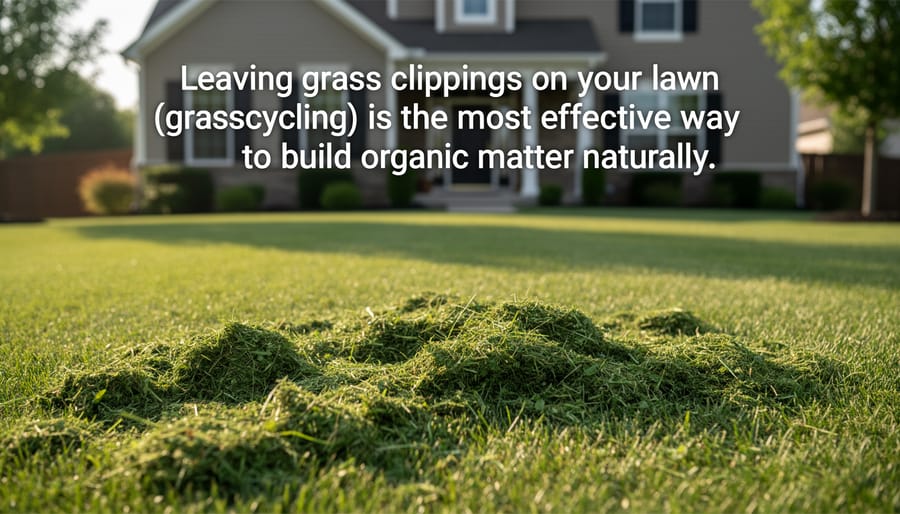
Here’s what might be the single most impactful thing you can do for your lawn’s organic matter levels: stop bagging those grass clippings. I know, I know—you’ve probably heard that leaving clippings causes thatch buildup or makes your lawn look messy. Let me put those worries to rest right now.
Grasscycling, the practice of leaving finely cut grass clippings on your lawn, is like giving your soil a constant supply of organic matter. Those clippings are about 85% water and break down remarkably fast—we’re talking days, not weeks. As they decompose, they feed soil microbes and release nutrients back into your lawn. In fact, grasscycling can provide up to 25% of your lawn’s nitrogen needs throughout the growing season.
The key to successful grasscycling is proper mowing height and frequency. Cut no more than one-third of the grass blade at a time. If your ideal height is 3 inches, mow when it reaches 4.5 inches. This creates short clippings that slip down between the grass blades and decompose quickly. Long clippings from infrequent mowing will clump and smother your grass, which is where that myth about grasscycling problems originated.
Keep your mower blade sharp too—clean cuts heal faster and the clippings break down more efficiently. During peak growing season, you might mow twice weekly, but that’s a small price to pay for the continuous organic matter boost your soil receives. You’re essentially composting in place, building that precious organic layer without any extra effort or expense.
Compost and Top-Dressing Applications
Top-dressing with compost is one of the most effective ways to boost organic matter in your existing lawn without tearing everything up and starting over. The process is simpler than you might think. Apply a quarter to half-inch layer of finely screened compost across your turf in spring or fall when grass is actively growing. Use a rake or specialized top-dressing tool to work the compost down through the grass blades so it reaches the soil surface. The grass will quickly grow through this thin layer, and those beneficial microbes will get straight to work.
For best results, choose compost that’s been screened to remove large chunks. Look for products labeled as “topdressing compost” or those screened to one-quarter inch or finer. Many communities offer high-quality municipal compost made from yard waste that works beautifully for this purpose. You can also make your own if you’ve got a good composting system going.
How often should you top-dress? Once or twice annually is perfect for most lawns. This regular addition of organic matter steadily builds soil health over time. Remember, you’re playing the long game here. Each application might seem modest, but these consistent additions compound into thriving, resilient turf that needs less water and fertilizer while naturally resisting pests and diseases.
Smart Aeration and Overseeding
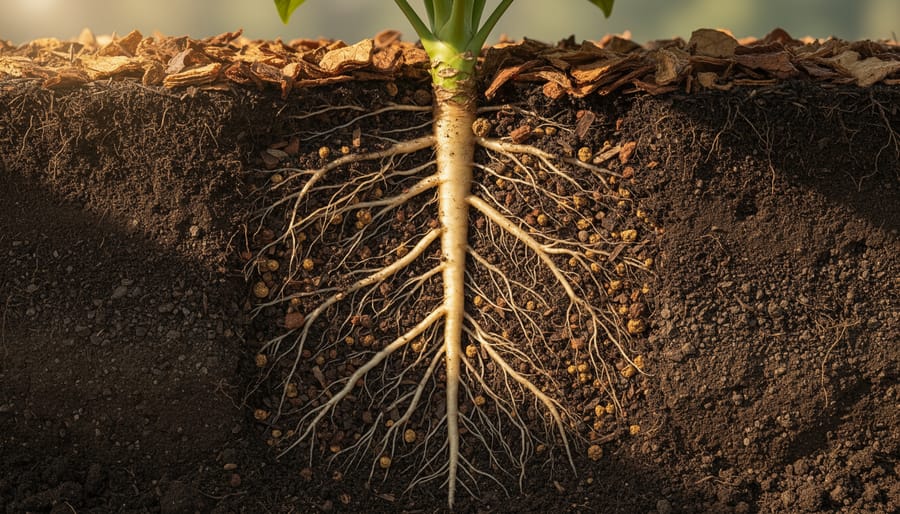
Compacted soil is one of the biggest enemies of organic matter and the microbial communities that depend on it. When soil becomes dense and airless, beneficial microbes struggle to survive, and organic matter decomposition slows to a crawl. This is where smart aeration and overseeding become your lawn’s best friends.
Aeration creates channels in compacted soil, allowing oxygen, water, and nutrients to penetrate deeper. This sudden influx of air kickstarts microbial activity, helping those tiny decomposers break down organic matter more efficiently. Think of it as opening windows in a stuffy room – everything comes back to life. The best part? Those aeration holes become perfect pockets for organic matter to collect and decompose right where your grass roots need it most.
Overseeding immediately after aeration takes this benefit even further. New grass varieties establish in those open channels, and their developing root systems pump fresh organic compounds into the soil through root exudates. These secretions feed soil microbes, creating a thriving underground ecosystem. Plus, a thicker lawn means more clippings and root turnover, continuously adding organic matter back into your soil naturally. For the best results, aerate in spring or fall when soil moisture is ideal and microbial activity peaks, then overseed with quality grass seed suited to your climate.
What Kills Soil Organic Matter (And How to Avoid It)
The Problem with Excessive Chemical Use
Here’s something many lawn enthusiasts discover the hard way: those quick-fix synthetic fertilizers and pesticides can actually work against you in the long run. While they promise fast results, excessive chemical use creates a domino effect in your soil that’s worth understanding.
Think of your soil’s microbial community as a bustling neighborhood. When you repeatedly apply heavy doses of synthetic chemicals, you’re essentially disrupting that neighborhood. High-salt synthetic fertilizers can burn beneficial bacteria and fungi, while broad-spectrum pesticides don’t discriminate between harmful pests and the helpful organisms breaking down organic matter. The result? Your soil becomes dependent on chemical inputs because the natural system that would feed your grass has been weakened.
The good news is there are sustainable alternatives that work with nature rather than against it. Switching to slow-release organic fertilizers feeds both your grass and the microbes simultaneously. Integrated pest management focuses on prevention and targeted solutions instead of blanket chemical applications. Compost topdressing introduces fresh beneficial organisms while adding organic matter.
The transition doesn’t have to be all-or-nothing either. Even reducing your synthetic fertilizer rates by half and supplementing with compost can start rebuilding that microbial community. Your lawn might not green up overnight, but you’re investing in soil health that pays dividends for years to come.
Compaction and Poor Aeration
When soil gets compacted from heavy foot traffic, lawn equipment, or even just settling over time, it’s like putting a plastic bag over your lawn’s roots. The tiny air pockets that normally exist between soil particles get squeezed out, creating an oxygen-starved environment. Think of it as your soil literally suffocating.
Here’s the problem: the beneficial microorganisms that break down organic matter are mostly aerobic, meaning they need oxygen to survive and do their work. When compaction reduces air flow, these microscopic helpers slow down dramatically or die off entirely. This brings organic matter decomposition to a crawl, and you might notice signs like yellowing grass or persistent wet spots.
Compacted soil also prevents water from infiltrating properly, which creates a vicious cycle. Without adequate drainage and aeration, anaerobic bacteria take over. These organisms work much slower and produce compounds that can actually harm plant roots.
The solution? Regular core aeration helps restore those crucial air passages. For heavily trafficked areas, consider creating designated pathways or using stepping stones. Your soil will breathe easier, beneficial organisms will thrive, and organic matter decomposition will return to its natural, healthy pace.
Here’s the truth that transforms how you’ll see your lawn forever: beneath every blade of grass lies an invisible world working tirelessly to create the lush, green carpet you admire. Organic matter isn’t just a fancy gardening term—it’s the foundation of that living, breathing ecosystem right outside your door.
Think of your lawn not as something you simply mow and water, but as a complex community where billions of microorganisms are your partners in creating beauty. When you nurture the soil with organic matter, you’re investing in a system that sustains itself more naturally over time, requiring fewer inputs and delivering better results than any quick-fix approach ever could.
The best part? You can start building organic matter today with something as simple as leaving grass clippings on your lawn after mowing. This single practice, called grasscycling, begins the cycle of returning nutrients to the soil immediately. From there, you might add a thin layer of compost in spring or autumn, or gradually reduce synthetic fertilizers as your soil biology strengthens.
Sustainable lawn care isn’t about perfection—it’s about progress. Every small step you take to increase organic matter compounds over seasons, creating deeper roots, better drought resistance, and that enviable green your neighbors will ask about. Start with one change this season, observe the results, and let your lawn teach you what thriving really looks like. The journey to healthier soil begins with a single decision to work with nature, not against it.