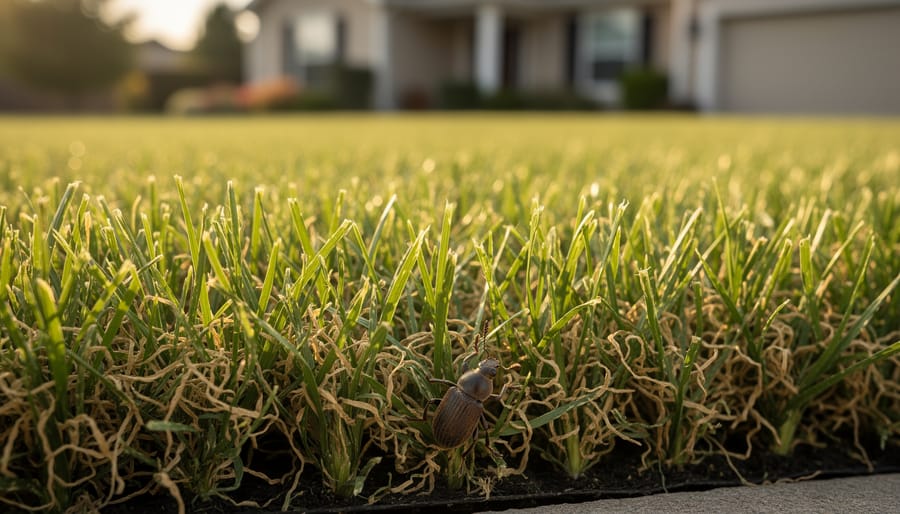
Choose grass cultivars bred specifically for pest resistance in your region—varieties like ‘Titanium’ tall fescue resist billbugs and armyworms, while endophyte-enhanced perennial ryegrasses naturally repel surface-feeding insects through beneficial fungal partnerships. Match your selection to your hardiness zone and local pest pressure by consulting university extension pest maps, which identify whether grubs, chinch bugs, or sod webworms dominate your area. Test soil health before installation, as nitrogen-starved or compacted lawns create stress that attracts pests regardless of cultivar genetics. Establish dense turf coverage through proper seeding rates—thin, struggling grass invites opportunistic pests that resistant varieties are designed to withstand.
The frustration of watching brown patches spread across your lawn despite regular treatments is entirely valid. You’ve likely spent hundreds on pesticides, only to see the same pests return season after season. The problem isn’t your dedication—it’s that you’re fighting genetics with chemicals when you could be leveraging genetics itself.
Modern turfgrass breeding has revolutionized how we approach lawn pests. Instead of relying on reactive treatments, you can now build resistance directly into your lawn through strategic cultivar selection. This approach forms the foundation of integrated pest defense, reducing chemical dependency while creating a naturally resilient landscape.
Not all grass is created equal. The Kentucky bluegrass dominating suburban lawns in 1970 differs vastly from today’s beetle-resistant cultivars. Understanding which varieties thrive against your specific regional pests transforms lawn care from an endless battle into a manageable, sustainable practice that actually works with nature rather than against it.
Why Your Grass Choice Matters More Than You Think
Here’s something I learned after years of battling grub damage in my own lawn: the grass I was growing was practically rolling out the welcome mat for pests. Different turfgrass species and cultivars aren’t just about aesthetics or how soft they feel underfoot. They’re your first line of defense against the insects, diseases, and other critters that can turn a beautiful lawn into a patchy mess.
Think of it this way. Over thousands of years, grasses have evolved specific chemical compounds and physical traits to defend themselves. Some varieties produce natural insecticides in their leaf tissue. Others have developed tougher cell walls that make it harder for insects to chew through. Certain cultivars even emit chemical signals that repel pests or attract their natural predators. When you choose the right grass variety for your climate and local pest pressures, you’re essentially recruiting a living, self-defending ground cover rather than committing yourself to an endless cycle of sprays and treatments.
The sustainability benefits here are huge. Instead of reaching for chemical pesticides every time you spot chinch bugs or armyworms, a pest-resistant cultivar does much of the work for you. This means fewer synthetic chemicals leaching into groundwater, less money spent on treatments, and a healthier ecosystem in your yard where beneficial insects can thrive alongside your grass.
Modern breeding programs have made remarkable progress too. Scientists are now developing endophyte-enhanced varieties where beneficial fungi live inside the grass plant, producing compounds that deter or even kill feeding insects without harming pollinators or other beneficial wildlife. These improved cultivars perform better year after year, maintaining their density and color even under moderate pest pressure.
The upfront research into choosing the right grass variety might take a weekend afternoon, but it pays dividends for years to come. You’re not just planting grass; you’re establishing a resilient ecosystem that works with nature rather than constantly fighting against it.

The Most Common Turfgrass Pests You’re Actually Fighting
Surface-Feeding Insects That Destroy Blade Health
Surface-feeding insects can wreak havoc on your lawn before you even realize there’s a problem. These pests munch on grass blades and stems, leaving behind patchy, discolored areas that can quickly spread if left unchecked.
Chinch bugs are particularly notorious, especially in warm-season grasses. These tiny insects suck plant juices from grass blades, causing yellowing and eventual death. The good news? Buffalo grass and some St. Augustine varieties show natural resistance. Armyworms and sod webworms are voracious eaters that work under cover of darkness, chewing through grass blades and leaving behind irregular brown patches. When identifying lawn insects, look for their telltale signs: small moths flying at dusk often indicate webworm activity.
Billbugs take a different approach, with larvae boring into grass stems and crowns. Endophyte-enhanced perennial ryegrass and tall fescue cultivars offer excellent billbug resistance through natural compounds that deter feeding.
The sustainable strategy here is choosing resistant cultivars from the start. While no grass is completely pest-proof, selecting varieties bred for resistance significantly reduces your reliance on chemical treatments. Pairing resistant cultivars with proper watering and mowing practices creates an environment where your lawn thrives and pests struggle to gain a foothold.
Root-Attacking Grubs and Underground Pests
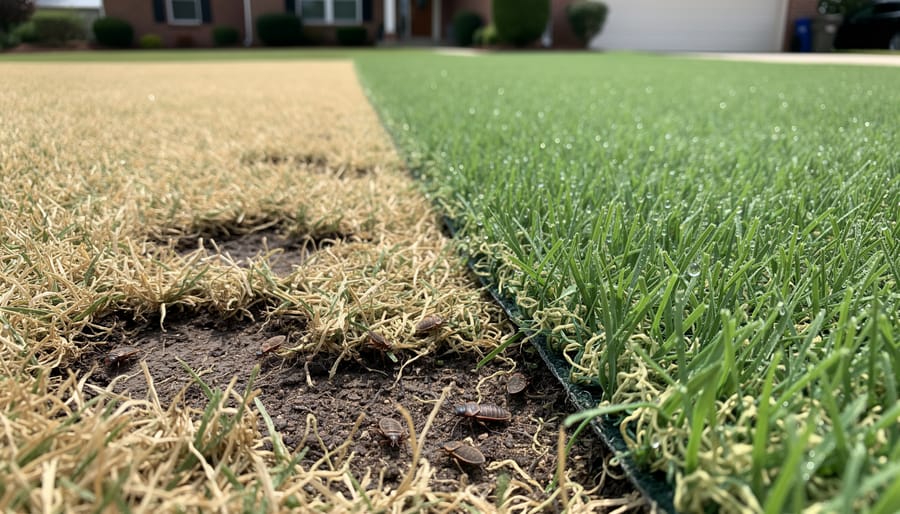
Below your lawn’s surface, a hidden battle often unfolds. White grubs—the C-shaped larvae of various beetles—feast on grassroots, creating brown patches that peel back like old carpet. Mole crickets tunnel through soil, severing roots and leaving raised trails across your yard. Both are frustratingly invisible until the damage appears.
The good news? Some turfgrass cultivars naturally discourage these underground invaders. Endophyte-enhanced tall fescue and perennial ryegrass varieties contain beneficial fungi that make roots less palatable to grubs and other chewing insects. While not completely immune, these grasses suffer significantly less damage than non-endophyte types.
For warmer climates battling mole crickets, certain bermudagrass and zoysiagrass cultivars show impressive resilience. Their dense root systems recover quickly from tunneling damage, and some varieties produce roots that these pests find less attractive.
When selecting cultivars, ask suppliers specifically about endophyte content and regional pest resistance ratings. Combining resistant varieties with healthy soil practices—like proper watering and mowing height—creates an environment where your grass outcompetes the pests naturally. This sustainable approach means fewer chemicals, healthier soil biology, and a lawn that truly thrives from the ground up.
Disease Pressures That Mimic or Attract Pests
Here’s a frustrating reality many lawn enthusiasts discover: weak, diseased grass becomes a magnet for pests. It’s like a welcome sign for every bug in the neighborhood. When your turf is struggling with fungal infections, it creates the perfect conditions for insects to move in and make things worse.
Think of it this way—a grass plant fighting off disease is already stressed and weakened. Its natural defenses are compromised, making it easier for pests like chinch bugs, billbugs, and grubs to attack. These opportunistic insects can detect vulnerable plants, and they’ll zero in on diseased patches faster than you can say “brown spot.” Once pests arrive, they further damage the grass, which can invite even more disease. It’s a vicious cycle that’s tough to break.
The good news? You can interrupt this cycle before it starts by choosing disease-resistant cultivars. When you select grass varieties bred to resist common fungal infections in your region, you’re essentially building a healthier foundation. Healthy grass with strong disease resistance maintains its natural pest defenses, making your lawn far less attractive to damaging insects.
Pay attention to disease warning signs like discolored patches or thinning areas, as these are often the first indicators that pests may soon follow. By investing in cultivars with proven disease resistance from the start, you’re taking a proactive, sustainable approach that reduces your reliance on both fungicides and pesticides—saving you time, money, and frustration down the road.
Matching Resistant Cultivars to Your Climate and Conditions
Cool-Season Grasses: Northern Lawns Built Tough
If you’re managing a lawn in the northern United States or similar cool-climate regions, you’re probably already familiar with the challenges of chinch bugs, billbugs, and grubs munching away at your turf. The good news? Choosing the right grass variety can dramatically reduce these headaches while cutting down on pesticide use.
Tall fescue stands out as a real workhorse for northern lawns, particularly newer cultivars like ‘Titanium’ and ‘Bullseye.’ These deep-rooted grasses naturally resist many common pests thanks to endophytes, beneficial fungi that live within the grass blades and make them unappetizing to insects. I’ve seen lawns switch from constant pest battles to virtually problem-free just by overseeding with endophyte-enhanced tall fescue. The trade-off? These endophytes work best in moderate temperatures, so they’re perfect for cool-season climates.
Perennial ryegrass cultivars like ‘Pizzazz’ and ‘Fiesta 4’ also pack endophyte protection while establishing quickly to outcompete weeds that often harbor pests. They’re excellent choices for high-traffic areas that need to bounce back fast.
Kentucky bluegrass remains a classic option, with cultivars such as ‘Blue Note’ and ‘NuGlade’ showing improved resistance to billbugs and sod webworms. While not quite as pest-resistant as tall fescue, their aggressive spreading habit helps them recover from damage more readily.
Fine fescues, including ‘Jamestown VII’ chewings fescue and ‘Radar’ hard fescue, thrive in shade where many pests struggle anyway. They require less water and fertilizer, creating conditions that naturally discourage pest populations.
When shopping, always ask specifically about endophyte levels in your seed blend. Look for products listing 85 percent or higher endophyte viability for maximum protection against those pesky invaders.
Warm-Season Champions for Southern Heat and Humidity
If you’re battling lawn pests in the South’s sweltering climate, choosing the right warm-season grass can be your first line of defense against frustrating invaders like chinch bugs and mole crickets. The good news? Several cultivars have been specifically bred to naturally resist these common troublemakers, meaning you’ll spend less time worrying about chemical treatments and more time enjoying your beautiful lawn.
Bermudagrass remains a Southern favorite, and newer varieties like TifTuf and Celebration offer exceptional drought tolerance while showing improved resistance to armyworms and fall armyworms. These cultivars establish dense root systems that help them recover quickly from pest damage, making them practical choices for high-traffic yards.
Zoysiagrass varieties, particularly Zeon and Empire, create thick, carpet-like lawns that naturally suppress chinch bug populations. The dense growth habit makes it harder for pests to establish colonies, giving you a sustainable advantage without reaching for the spray bottle. While zoysiagrass grows more slowly than Bermuda, this characteristic actually reduces mowing frequency and minimizes stress that can attract opportunistic pests.
St. Augustinegrass cultivars like Palmetto and Raleigh demonstrate better chinch bug tolerance than older varieties, though no St. Augustine is completely immune. These shade-tolerant options work well under trees where other warm-season grasses struggle.
For low-maintenance enthusiasts, centipedegrass varieties such as TifBlair offer decent resistance to mole crickets while requiring minimal fertilization. This apple-green grass thrives in acidic soils and won’t punish you for a more hands-off approach.
Remember, even resistant cultivars perform best when properly maintained. Healthy, well-watered grass naturally fights off pest pressure more effectively than stressed turf, making cultivar selection just one piece of your integrated lawn care strategy.
Transition Zone Solutions for Challenging Middle Regions
If you live in the transition zone—that tricky band stretching from the mid-Atlantic through the lower Midwest—you already know your lawn faces a perfect storm of challenges. You’re dealing with both cool-season and warm-season pests, plus temperature swings that stress your grass and make it vulnerable. The good news? Strategic cultivar selection can give you the upper hand.
Tall fescue remains the workhorse for transition zones, and newer varieties like ‘Titanium’ and ‘Rebel Exeda’ offer excellent resistance to armyworms and billbugs while tolerating summer heat stress. Their deep root systems naturally outcompete surface-feeding pests and reduce drought vulnerability, meaning fewer weak spots for insects to exploit.
For warmer microclimates within the transition zone, consider zoysia grass cultivars. Varieties such as ‘Innovation’ and ‘Zeon’ create such dense turf that many surface pests struggle to establish populations. Zoysia’s slower growth also means less succulent new tissue that attracts chinch bugs and other sap-feeders.
The hybrid approach works beautifully here: overseeding zoysia with perennial ryegrass in fall provides year-round coverage while confusing pest life cycles. Different grasses mean different chemical compositions, so pests adapted to one species find the mixed environment less hospitable. This biodiversity principle mirrors sustainable gardening at its finest—working with nature’s complexity rather than fighting it.
Understanding Endophyte-Enhanced Grasses: Nature’s Pest Defense
Here’s something you might not realize: some of your grass plants have a secret weapon against pests, and it’s hiding in plain sight. Endophytic fungi are nature’s built-in pest control system, living quietly inside certain grass varieties and making them naturally unappetizing to troublesome insects. It’s like having tiny bodyguards working around the clock to protect your lawn.
These beneficial fungi form a symbiotic relationship with specific turfgrass cultivars, particularly tall fescue and perennial ryegrass varieties. The endophytes live within the grass tissues without causing any harm, producing alkaloid compounds that taste awful to many common turfgrass pests. Think of it as the plant world’s version of hot sauce—perfectly fine for the grass, but decidedly unpleasant for unwanted visitors.
So which pests does this natural defense system deter? The list is impressive. Endophyte-enhanced grasses show strong resistance against surface-feeding insects like sod webworms, billbugs, chinch bugs, and certain armyworms. These are some of the most frustrating lawn pests you’ll encounter, and having grasses that naturally repel them means you can significantly reduce or even eliminate chemical pesticide use. It’s a win for both your lawn and the environment.
However, it’s important to understand that endophytes aren’t a magic bullet. They primarily work against above-ground, leaf-feeding insects. Grubs and other soil-dwelling pests that feed on roots aren’t affected by these compounds. Still, having protection against multiple common pests is a tremendous advantage.
Here’s the catch: maintaining these beneficial relationships requires proper lawn care practices. Endophyte levels are highest in the newest grass growth, so fresh seed contains the most endophytes. Over time, if your lawn becomes dominated by older plants or if you allow excessive thatch buildup, endophyte levels can decline. Regular overseeding with endophyte-enhanced seed every few years helps maintain strong pest resistance.
When purchasing seed, look for labels indicating “endophyte-enhanced” or showing specific endophyte percentages. Higher percentages mean better protection. Store unused seed in cool, dry conditions, as heat and moisture can reduce endophyte viability. Most importantly, avoid overusing nitrogen fertilizers, which can actually dilute endophyte concentrations in grass tissues. A balanced, sustainable fertilization approach keeps both your grass and its fungal partners thriving.
What to Look for When Shopping for Resistant Cultivars
Shopping for resistant grass cultivars doesn’t have to feel overwhelming once you know what to look for. Think of seed labels as your roadmap to a healthier, more resilient lawn that fights pests naturally.
Start by examining the seed tag attached to every quality grass seed product. This label lists the cultivar names, not just generic species like “tall fescue” or “perennial ryegrass.” Cultivars are specific breeding lines developed for particular traits, including pest resistance. Look for tags that provide actual cultivar names rather than vague descriptions.
Next, familiarize yourself with NTEP ratings—the National Turfgrass Evaluation Program. These independent, university-based trials test grass cultivars across the country for various traits, including insect resistance. You can access NTEP data online for free, where you’ll find ratings for characteristics like chinch bug resistance or billbug tolerance. Higher numerical ratings generally indicate better performance.
Many reputable seed companies now include resistance information directly on packaging or their websites. Brands committed to sustainable lawn care often highlight which pests their cultivars resist. Don’t hesitate to contact manufacturers directly if resistance data isn’t readily available—good companies welcome these questions.
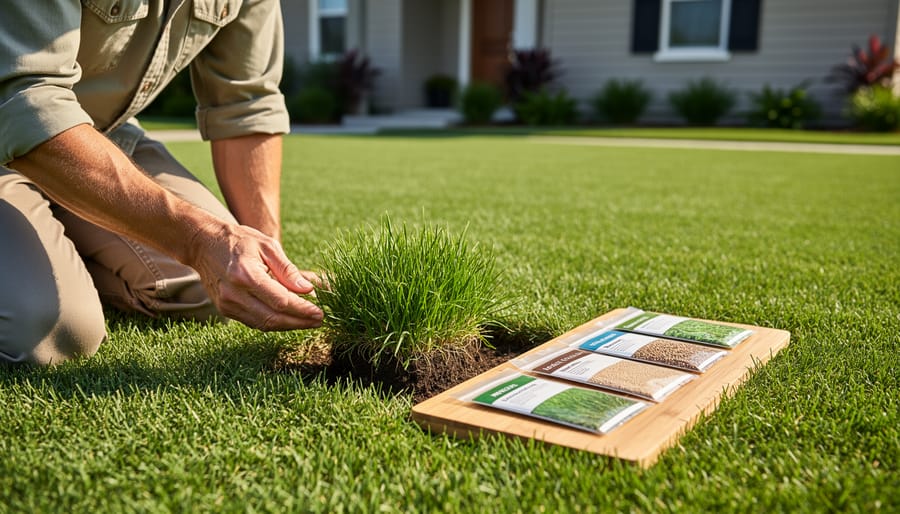
When shopping, prioritize suppliers who provide detailed cultivar information rather than generic grass seed mixes. University extension offices often maintain lists of recommended cultivars for your region, which can guide your purchasing decisions alongside proper lawn care practices.
Remember that resistant cultivars work best as part of an integrated approach. They significantly reduce pest pressure, but even the toughest varieties benefit from good growing conditions. When combined with supplemental pest management strategies when necessary, you’re setting yourself up for long-term success with fewer chemicals and less frustration.
Supporting Your Resistant Grass After Establishment
Mowing and Watering Practices That Strengthen Resistance
Choosing resistant cultivars is only half the battle—you’ve also got to give them the care they need to maximize their natural defenses. Think of it like this: even the healthiest person needs proper nutrition and rest to fight off illness, and your grass is no different.
Start with proper mowing height. Taller grass (typically 3-4 inches for most cool-season varieties) develops deeper root systems that help withstand pest stress and recover quickly from damage. I know it’s tempting to scalp your lawn for that golf course look, but short grass is stressed grass, and stressed grass sends out chemical signals that actually attract pests. Set your mower blade higher than you think you should—your lawn will thank you.
Watering deeply but infrequently is equally crucial for building pest resistance. Instead of daily sprinkles, water thoroughly once or twice weekly, applying about an inch of water per session. This encourages roots to grow deeper in search of moisture, creating a more resilient plant. Deep roots mean your grass can better tolerate pest feeding and environmental stress. Early morning watering also helps foliage dry quickly, reducing disease pressure that often accompanies pest infestations.
Finally, maintain sharp mower blades to prevent ragged cuts that invite disease and weaken your grass’s natural defenses. These simple practices work synergistically with your resistant cultivar choice to create a truly pest-resistant lawn.

When Supplemental Pest Management Still Makes Sense
Let’s be real here—choosing pest-resistant cultivars is a fantastic first line of defense, but it doesn’t mean you’ll never see another grub or chinch bug again. Resistant varieties simply have traits that make them less attractive or more tolerant to specific pests, not completely immune. Think of it like choosing a car with good safety features; you still wear your seatbelt and drive carefully.
When you’re facing a severe infestation, an integrated pest management approach makes the most sense. This means combining your resistant turf with targeted, sustainable interventions. Start by confirming what pest you’re dealing with—misidentification leads to wasted effort and money. For moderate problems, beneficial nematodes, milky spore disease, or neem oil can work wonders without harsh chemicals. Regular core aeration and proper watering also create conditions that favor your grass over pests.
Sometimes, particularly stubborn infestations may require selective pesticide use, and that’s okay. The goal isn’t perfection; it’s reducing your reliance on treatments over time. Your resistant cultivar is doing the heavy lifting, and you’re just providing backup when truly needed. This realistic, balanced approach keeps your lawn healthy while honoring your commitment to sustainability.
Choosing the right turfgrass cultivar isn’t just about filling your yard with green—it’s about setting yourself up for long-term success and fewer headaches down the road. When you select pest-resistant varieties suited to your specific climate and conditions, you’re making a foundational investment that pays dividends season after season. Think of it as building your lawn on solid ground rather than constantly patching problems as they arise.
The beauty of this approach is that it aligns perfectly with sustainable lawn care. By reducing your reliance on pesticides and interventions, you’re creating a healthier ecosystem in your own backyard while saving time, money, and effort. Whether you’re a seasoned gardener or just starting out, understanding that grass selection is a powerful pest management tool puts you firmly in control.
Take the time to research cultivars proven to resist the pests common in your area. Consult local extension offices, talk to reputable nurseries, and don’t hesitate to ask questions. You now have the knowledge to make informed decisions that will transform your lawn care experience from reactive frustration to proactive confidence. Your future self—and your lawn—will thank you.