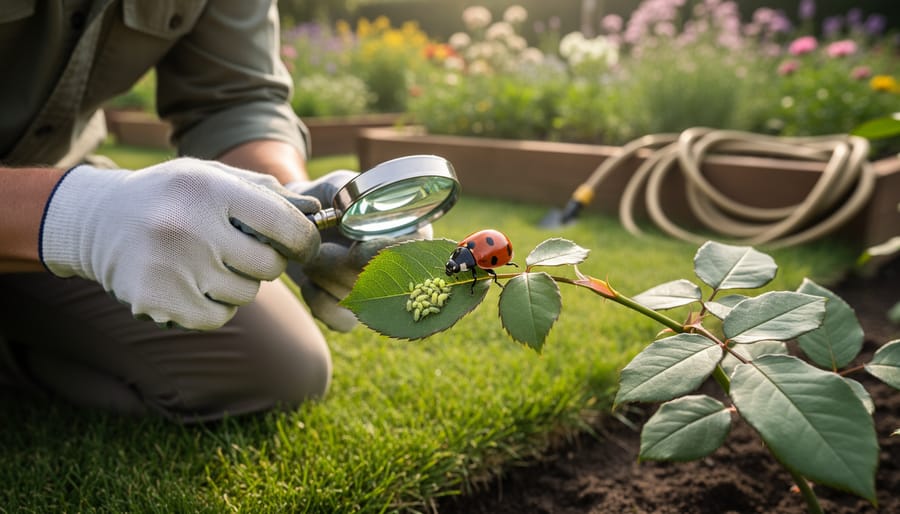
Monitor your garden weekly for pest activity before reaching for any spray bottle, keeping detailed notes about what insects you spot, where they congregate, and whether plant damage actually threatens your harvest or is merely cosmetic. This observation-first approach—the cornerstone of UC Davis’s Integrated Pest Management program—prevents unnecessary chemical applications and helps you distinguish beneficial insects from true pests.
Set action thresholds based on actual damage levels rather than the mere presence of insects, recognizing that a few aphids on your roses or caterpillars on your cabbage rarely justify intervention. UC Davis researchers have spent decades determining these thresholds for California gardens, finding that most landscapes can tolerate 10-20% pest damage without compromising plant health or aesthetics.
Prioritize cultural and mechanical controls by selecting pest-resistant plant varieties adapted to your microclimate, maintaining proper irrigation schedules that don’t create fungal-friendly conditions, and physically removing pests through handpicking or targeted pruning of infested branches. These methods form your first line of defense and often eliminate problems before they escalate.
Introduce biological controls like ladybugs for aphid management, lacewings for soft-bodied insects, and beneficial nematodes for soil-dwelling grubs, allowing these natural predators to establish populations that provide season-long protection. UC Davis’s IPM framework emphasizes working with nature’s pest control systems rather than against them.
Reserve chemical interventions as your final option, choosing the least-toxic effective solution—such as insecticidal soaps, horticultural oils, or targeted applications of approved organic pesticides—applied only to affected areas during times that minimize harm to beneficial insects. This strategic, science-backed approach transforms pest management from a reactive battle into a proactive partnership with your garden’s ecosystem.
What Makes UC Davis IPM Different From Traditional Pest Control
The Four-Pillar Strategy That Actually Works
Think of IPM as a ladder where you start at the bottom with the gentlest approaches and only climb higher when absolutely necessary. UC Davis research shows this tiered system protects beneficial insects, saves money, and actually delivers better long-term results than reaching for chemicals first.
The foundation is cultural control, which means creating conditions where pests struggle to thrive. In your lawn, this might mean adjusting your mowing height to shade out weeds naturally or watering deeply but infrequently to encourage drought-resistant grass roots instead of shallow-rooted pests. For your vegetable garden, try rotating crop families each season so pests can’t establish permanent homes in your soil. I’ve seen gardeners eliminate entire aphid populations simply by planting basil alongside their tomatoes.
Next comes mechanical control, the hands-on tier. This includes physical barriers like row covers over tender seedlings, copper tape around planters to deter slugs, or simply handpicking Japanese beetles into soapy water during your morning coffee routine. One of my favorite mechanical tricks is using a strong spray from the garden hose to dislodge aphids before they multiply.
Biological control harnesses nature’s own pest management team. Introduce ladybugs for aphid control, encourage lacewings with pollen-rich flowers, or apply beneficial nematodes to your lawn for grub control. UC Davis emphasizes that these biological warriors often provide season-long protection once established.
Finally, chemical control serves as your last resort, but even here IPM offers smarter options. Start with targeted solutions like insecticidal soap or horticultural oils that break down quickly. Save broad-spectrum pesticides for true emergencies, and always spot-treat rather than blanket-spraying your entire landscape.

Understanding Your Lawn’s Pest Ecosystem (Before You Do Anything)
How to Scout Your Lawn Like a Professional
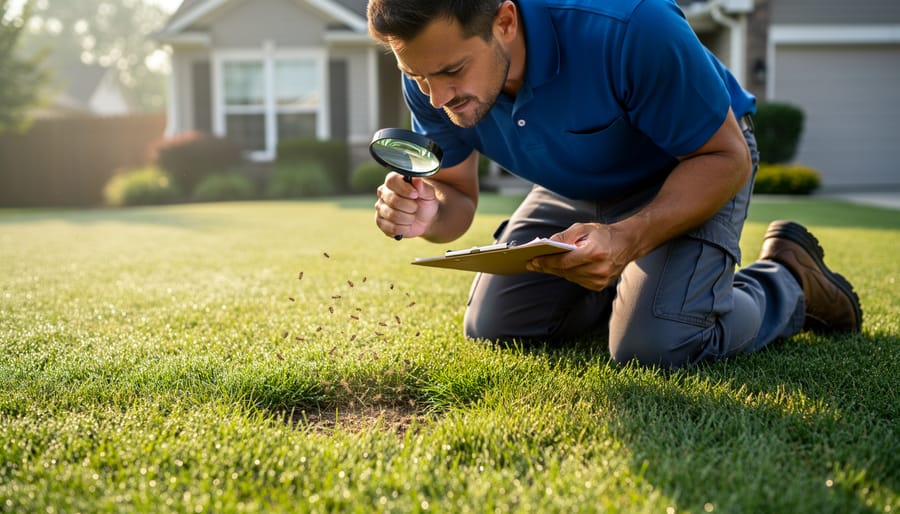
Scouting your lawn regularly is the cornerstone of effective IPM, and honestly, it’s easier than you might think. The key is consistency and knowing what you’re looking at. UC Davis recommends checking your lawn weekly during the growing season, ideally in the morning when pest activity is most visible.
Start by walking your lawn in a systematic pattern, examining different areas. Look for discolored patches, irregular growth patterns, or signs of insect damage like chewed grass blades. Get down on your hands and knees every few feet to part the grass and inspect the thatch layer where many pests hide. Check for grubs by pulling back a square foot of turf in suspicious areas—more than five grubs per square foot typically indicates a problem worth addressing.
Pay attention to environmental clues too. Are there dead patches in sunny spots that might indicate drought stress rather than disease? Is the damage near sidewalks where salt or foot traffic could be the culprit? This detective work helps you avoid treating problems that aren’t pest-related.
Document your findings with photos and simple notes using your smartphone. UC Davis offers excellent monitoring tools through their IPM website, including identification guides and threshold charts that tell you when pest numbers actually warrant intervention. Their pest notes are downloadable and incredibly helpful for comparing what you’re seeing with common lawn issues.
Remember, most lawns can tolerate some pest presence without requiring treatment. The goal isn’t perfection but balance, and regular scouting helps you catch problems early when they’re easiest to manage sustainably.
The Damage Threshold Concept That Saves Money and Time
Here’s something that might surprise you: not every pest in your lawn requires immediate action. In fact, one of the most practical concepts from UC Davis’s IPM approach is the damage threshold, sometimes called the action threshold. This simple idea can save you considerable time, money, and unnecessary pesticide applications.
The damage threshold is the point at which pest numbers actually cause enough harm to justify intervention. Below this threshold, the pests are present but causing minimal damage that your lawn can tolerate without aesthetic or health impacts. It’s like having a few weeds in your yard—annoying, perhaps, but not destroying your entire landscape.
Let’s look at practical examples. For white grubs, UC Davis research suggests that fewer than 5-10 grubs per square foot rarely cause noticeable damage to healthy lawns. You might dig up a few during routine gardening, but that doesn’t mean you need to treat your entire property. Similarly, billbugs become problematic only when populations exceed certain levels that vary based on your grass type and local conditions.
Chinch bugs offer another great example. A few bugs scattered across your lawn won’t trigger widespread damage. However, when populations reach 20-25 bugs per square foot in vulnerable areas, you’ll start seeing those telltale yellow patches that spread quickly.
The beauty of understanding thresholds is learning when to simply monitor rather than react. Regular observation helps you catch problems early if numbers climb, but it also prevents unnecessary treatments when pest levels remain harmless. This patience-based approach protects beneficial insects while keeping your lawn care budget in check.
Cultural Controls: Building a Pest-Resistant Lawn From the Ground Up

The Mowing Height Secret That Stops Pests Before They Start
Here’s something that might surprise you: the height of your grass can be one of your most powerful pest-prevention tools. UC Davis research has consistently shown that proper mowing height strengthens your lawn’s natural defenses, making it far less attractive to pests and diseases.
For cool-season grasses like tall fescue and perennial ryegrass, aim for 2.5 to 3.5 inches. These popular California grasses develop deeper root systems at taller heights, helping them withstand stress and resist pest invasions. Warm-season grasses like Bermuda and zoysia thrive at 1 to 2 inches, though letting them grow slightly taller during hot periods provides extra protection.
The science is straightforward: taller grass shades the soil, reducing weed germination and creating an environment that many lawn pests find inhospitable. It also allows your grass to photosynthesize more efficiently, producing healthier, more resilient plants that can naturally fend off pest problems.
Follow the one-third rule recommended by UC Davis experts: never remove more than one-third of the grass blade in a single mowing. Scalping your lawn stresses plants and opens the door to pest infestations and disease. This simple practice, combined with keeping your mower blades sharp, creates the foundation for a naturally pest-resistant lawn that needs fewer interventions throughout the growing season.
Smart Watering Strategies That Discourage Destructive Insects
Here’s something I learned from UC Davis IPM researchers that changed my whole approach to garden pest control: when and how you water can be just as important as what pest control methods you use. It turns out that many destructive insects absolutely thrive in specific moisture conditions, so adjusting your irrigation habits is a surprisingly effective prevention strategy.
According to UC Davis IPM guidelines, watering early in the morning is your best bet. This timing allows foliage to dry quickly as the day warms up, which discourages fungal diseases that attract certain pests. Evening watering, while tempting after a long workday, leaves plants damp overnight, creating a pest paradise. Think of it as rolling out the welcome mat for slugs, snails, and disease-carrying insects.
The delivery method matters too. Deep, infrequent watering encourages strong root systems while keeping the soil surface drier between sessions. This approach disrupts the lifecycle of soil-dwelling pests like root weevils and reduces habitat for surface pests. Drip irrigation and soaker hoses are particularly effective because they minimize leaf wetness and reduce humidity around plants.
UC Davis recommends checking soil moisture before watering rather than following a rigid schedule. These smart watering strategies not only discourage pests but also conserve water and promote healthier, more resilient plants that can naturally resist pest damage.
Mechanical and Physical Controls for Common Lawn Pests
Tools and Equipment That Make IPM Easier
Getting the right tools doesn’t just make IPM easier—it transforms your entire approach from reactive to proactive. Let’s talk about what actually works.
A good dethatcher is worth its weight in gold. I recommend power rakes over manual ones for lawns larger than 500 square feet. They remove the thatch layer that harbors pests and disease while improving air circulation. You can rent these for about $50-75 per day, and honestly, that’s the smartest move for most homeowners since you’ll only need it once or twice yearly.
For mechanical pest control, a soil thermometer (around $15-20) helps you time beneficial nematode applications perfectly. These microscopic helpers work best when soil temperatures hit 55-85°F, and guessing just wastes money.
Beneficial insect habitats are game-changers. Simple bug hotels constructed from bamboo tubes and drilled wood blocks cost $20-40 and provide nesting sites for native bees and predatory insects. Place them near flowering plants for maximum effectiveness.
Row covers and physical barriers might seem old-fashioned, but they’re incredibly effective for vegetable gardens. Lightweight floating row covers run about $0.50 per square foot and exclude pests without chemicals.
Finally, invest in a quality hand weeder with a long handle. The Hori Hori knife-style weeders (around $30) make mechanical weed removal almost enjoyable, getting deep taproots without disturbing beneficial soil organisms.
The UC Davis IPM program emphasizes that these simple tools, used consistently, often outperform expensive chemical solutions while supporting your lawn’s ecosystem.
Biological Controls: Recruiting Nature’s Pest Management Team
Where to Buy and How to Release Beneficial Insects Successfully
Ready to welcome some pest-fighting allies to your garden? Purchasing beneficial insects has become easier than ever, with several reputable suppliers offering quality options. Look for established companies like Rincon-Vitova Insectaries, Arbico Organics, or Nature’s Control, which provide healthy specimens with clear instructions. UC Davis recommends buying from suppliers who guarantee live delivery and provide guidance on species selection for your specific pest problems.
Timing is everything when releasing beneficial insects. Release them during cooler parts of the day, either early morning or evening, when they’re less likely to fly away immediately. Make sure pest populations are present but not overwhelming—beneficial insects need food to stick around, but too many pests means you’ve waited too long. For ladybugs and lacewings, lightly misting your plants before release encourages them to stay and drink.
Creating an inviting habitat is crucial for long-term success. Your beneficial insects need more than just pests to eat; they need pollen, nectar, and shelter to complete their life cycles. Plant diverse flowering species that bloom at different times, providing continuous food sources. Small flowers like alyssum, yarrow, and fennel are particularly attractive to many beneficial species. This approach aligns perfectly with pollinator-friendly lawn care practices.
Avoid pesticides for at least two weeks before and after release, and provide water sources like shallow dishes with pebbles. With the right conditions, these helpful insects will establish permanent populations in your landscape.

When Chemical Controls Are Necessary (And How to Use Them Responsibly)
UC Davis’s Least-Toxic Product Recommendations for Common Lawn Pests
When you’ve exhausted cultural and mechanical controls and still face persistent pest problems, UC Davis recommends starting with the least-toxic chemical options available. Think of this as your final line of defense, not your first response.
For grub control, products containing Bacillus thuringiensis galleriae (Btg) or beneficial nematodes are your greenest choices. These biological controls specifically target beetle larvae without harming earthworms, pollinators, or beneficial insects. Apply nematodes when soil temperatures reach 60°F and keep the area moist for best results.
Dealing with surface-feeding pests like chinch bugs or sod webworms? Insecticidal soaps and horticultural oils work effectively when applied directly to pests. The key is thorough coverage and timing applications when insects are most vulnerable, typically in their early life stages. These products break down quickly and won’t persist in your soil.
For stubborn weed issues, spot-treat with iron-based herbicides like those containing ferric sodium EDTA. Unlike broad-spectrum weed killers, these products target broadleaf weeds while being gentler on the environment. Always apply on calm days to prevent drift onto desirable plants.
Remember that proper application technique matters as much as product selection. Read labels carefully, apply at recommended rates (more isn’t better), and target specific problem areas rather than broadcasting treatments across your entire lawn. UC Davis emphasizes that even low-toxicity products should be used judiciously, with careful attention to timing, weather conditions, and potential impacts on beneficial organisms sharing your lawn ecosystem.
Accessing UC Davis IPM Resources for Your Specific Region
Navigating UC Davis’s IPM resources might feel overwhelming at first, but once you know where to look, you’ll wonder how you ever gardened without them. The university has created one of the most comprehensive pest management databases available, and the best part? It’s completely free and designed for home gardeners like us.
Start your journey at the UC IPM website, where you’ll find their searchable database organized by pest type, plant category, and location. The site’s homepage features a handy search bar where you can type in your specific problem—whether it’s aphids on roses or grubs in your lawn. For California gardeners, the site automatically tailors recommendations to your region’s climate and growing conditions, which means you’re getting advice that actually applies to your backyard.
The Pest Notes section is your go-to resource for detailed pest profiles. Each note provides full-color photos for identification, lifecycle information, and step-by-step management strategies following IPM principles. These aren’t generic pamphlets—they’re research-backed guides written by university specialists who understand both the science and the practical realities of home gardening.
For real-time decision making, explore their degree-day calculators and phenology models. These tools help you predict when specific pests will emerge based on temperature patterns in your area, allowing you to take preventive action before problems escalate. You’ll find these particularly useful for timing treatments and understanding seasonal pest cycles.
The Quick Tips section offers condensed guidance when you need answers fast, while their monthly IPM newsletters keep you informed about timely pest issues in your region. Download their mobile-friendly PDF guides for reference while you’re actually in the garden.
When you encounter something truly puzzling, UC Davis maintains a network of Master Gardener helplines throughout California. These trained volunteers can provide personalized advice for unusual situations or help interpret the online resources for your specific circumstances. Don’t hesitate to reach out—helping gardeners succeed with sustainable practices is exactly what they’re there for.
Adopting integrated pest management practices based on UC Davis research isn’t just good for your lawn today—it’s an investment in a healthier, more sustainable future. Think of it this way: every time you choose IPM methods, you’re reducing chemical dependency, protecting beneficial insects, improving soil health, and ultimately saving money on unnecessary treatments. Your lawn becomes more resilient, requiring fewer interventions over time because the ecosystem is working with you rather than against you.
The beauty of IPM is that you don’t need to overhaul everything overnight. Start small. Maybe this week, you identify one pest problem correctly before reaching for any product. Next month, you introduce some beneficial nematodes or adjust your mowing height to strengthen grass roots. The following season, you’re monitoring pest thresholds and only treating when truly necessary. These incremental changes add up to significant environmental and financial benefits.
Remember, even UC Davis researchers developed these principles through careful observation and patience—the same qualities that make successful gardeners. You already have what it takes to implement IPM effectively. Your willingness to learn and adapt matters more than perfect execution from day one.
So take that first step today. Choose one IPM practice that resonates with you and commit to trying it. Your lawn, your wallet, and the environment will thank you. You’ve got this, and the results will speak for themselves.