**Stihl Battery-Powered Lawn Mowers: Quiet Power for Your Sustainable Lawn Care**
The rumble of gas-powered mowers once defined weekend mornings, but Stihl’s battery-powered lawn mowers are rewriting that narrative with whisper-quiet operation and zero emissions. If you’re weighing whether to make the switch from gas to battery, you’re asking the right questions—and Stihl’s lineup offers compelling answers for homeowners ready to embrace cleaner, quieter lawn care without sacrificing cutting performance.
Stihl has engineered their battery mowers to deliver professional-grade results while addressing the environmental concerns that matter to conscious gardeners. These machines run on lithium-ion battery technology that powers through typical residential lawns on a single charge, eliminating the hassle of mixing fuel, pulling starter cords, or scheduling seasonal tune-ups. The instant-start convenience means you can tackle that unexpected afternoon mowing session without the prep work gas mowers demand.
What sets Stihl apart in the crowded battery mower market is their commitment to durability and power retention. Their motors maintain consistent blade speed even in thick, damp grass—a common weakness in budget battery models. Whether you’re managing a compact urban yard or a sprawling suburban landscape, understanding which Stihl battery mower matches your specific needs will help you invest wisely in equipment that serves both your lawn and your values for years to come.
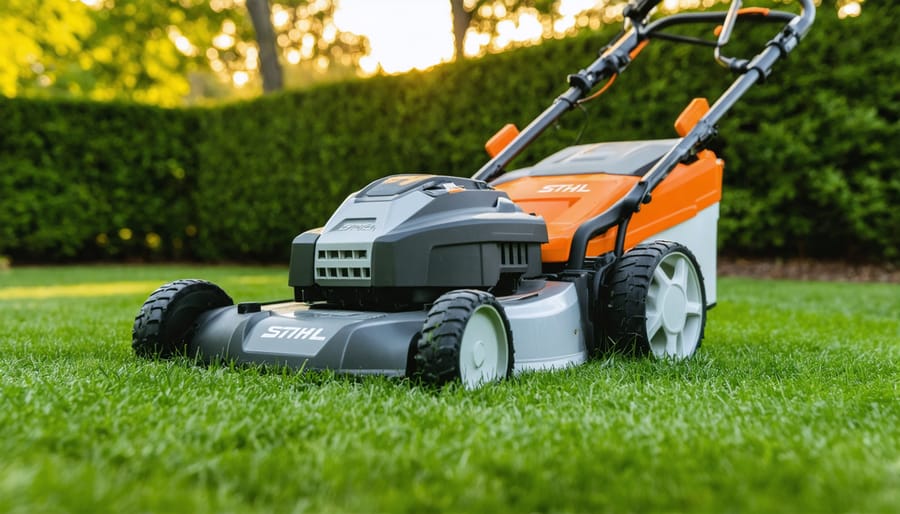
The Stihl Battery Revolution: What Makes Them Different
The AP Battery System Explained
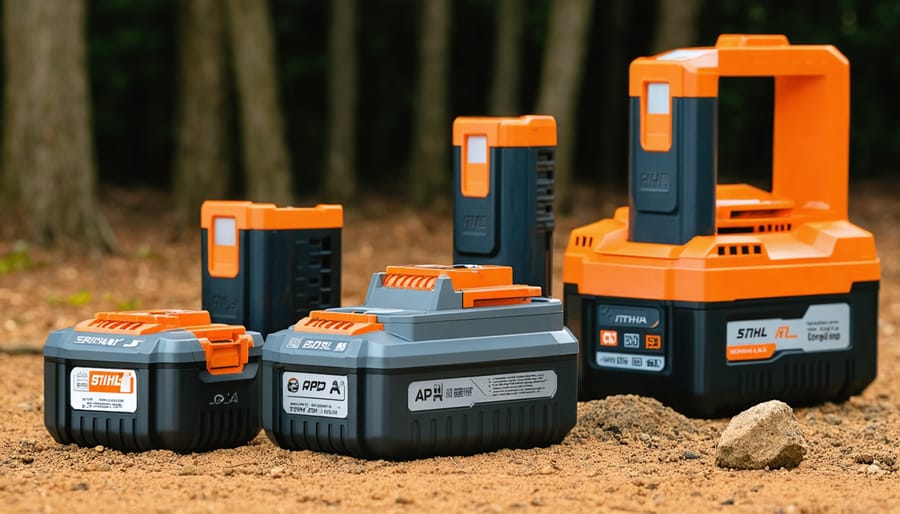
One of the smartest features of Stihl’s battery-powered mowers is their AP (All-Purpose) battery system—a refreshingly practical approach to cordless yard care. Think of it as building a sustainable power ecosystem for your entire garden toolkit.
The AP batteries come in three main sizes to suit different lawn care needs. The AP 200 (187 Wh) is perfect for smaller yards under a quarter-acre, offering lighter weight and easy handling. The AP 300 (281 Wh) strikes that sweet middle ground for most suburban lawns, typically covering up to half an acre on a single charge. For larger properties or thick grass conditions, the AP 500 (468 Wh) delivers extended runtime without breaking stride.
Here’s where it gets exciting for environmentally-conscious gardeners: these batteries aren’t married to just your mower. They’re compatible across Stihl’s entire cordless lineup—trimmers, blowers, hedge clippers, even chainsaws. Buy once, use everywhere. This interchangeable system means you’re not accumulating a drawer full of proprietary chargers and incompatible batteries, which is both wallet-friendly and wonderfully sustainable.
For the average homeowner, this translates to real flexibility. Start with one or two batteries for your mower, then gradually expand your cordless collection without additional battery investments. Many users find that having two batteries—one charging while one’s working—eliminates any runtime anxiety. The batteries charge relatively quickly too, with the AP 300 reaching full capacity in about 80 minutes using Stihl’s AL 300 rapid charger.
Built to Last: Stihl’s Professional DNA
When you pick up a Stihl battery mower, you’re holding decades of professional-grade engineering in your hands. Unlike many battery-powered alternatives designed primarily for occasional homeowners, Stihl built its reputation equipping forestry professionals and landscaping crews who demand equipment that performs day after day, season after season.
This professional DNA shows up in thoughtful details: reinforced polymer decks that resist impacts and corrosion, commercial-grade bearings that handle continuous operation, and motor designs derived from their professional tool lineup. Where consumer-grade mowers might use cost-cutting plastics and simplified components, Stihl applies the same durability standards they use for equipment that needs to survive jobsite conditions.
For you as a homeowner, this translates into a mower that won’t disappoint after the first season or two. The build quality means fewer trips to the repair shop and components that maintain their performance over time—a sustainable choice that reduces waste while delivering reliable results. It’s the difference between buying a tool and making an investment in your lawn care routine.
Stihl’s Battery Mower Lineup: Finding Your Perfect Match
RMA Series: The Residential Workhorses
Choosing the right RMA model is like matching the perfect tool to your garden—it makes all the difference in how enjoyable your mowing experience becomes. Let me walk you through Stihl’s residential lineup so you can find your ideal match.
The **RMA 339** is the perfect entry point for smaller yards up to about 2,500 square feet. With its 13-inch cutting width, this compact powerhouse maneuvers beautifully around flower beds and tight spaces. I always recommend this model to friends with cozy urban lawns who value nimbleness over raw cutting capacity. It’s surprisingly capable for its size and won’t overwhelm you with unnecessary bulk.
Moving up, the **RMA 443** series expands to a 16-inch deck, handling properties up to 5,000 square feet comfortably. This is where you’ll notice Stihl’s attention to detail—better grass collection, improved height adjustment, and that satisfying balance between power and efficiency. It’s become the go-to choice for typical suburban lots.
For larger properties between 5,000 and 10,000 square feet, the **RMA 460** with its 18-inch cutting width becomes your best friend. The wider deck means fewer passes across your lawn, saving both time and battery life. You’ll appreciate the self-propelled option here, especially if your yard has any slopes.
The top-tier **RMA 510** handles up to 15,000 square feet with its robust 21-inch deck and enhanced battery capacity. This model bridges the gap between residential and light commercial use, offering professional-grade features wrapped in user-friendly design.
Each model shares Stihl’s commitment to sustainability—zero emissions, quieter operation, and reduced environmental impact—while delivering the performance your specific lawn requires.
Self-Propelled vs. Push: Which Do You Really Need?
Choosing between self-propelled and push models really comes down to your specific lawn situation. If you’re working with flat terrain and a smaller yard (under 1,500 square feet), a push model like the RMA 235 offers excellent maneuverability and a lighter build that’s easier to store. You’ll save money too, making it perfect for beginners or those who enjoy the physical activity.
However, self-propelled models shine on slopes, larger lawns, or if you have mobility concerns. The RMA 460 V, for instance, takes the strain off your arms and back, letting the mower do the heavy lifting while you guide. I’ve found that many gardeners underestimate how tiring pushing becomes over time, especially on uneven ground.
Consider this practical test: if your lawn takes more than 30 minutes to mow with a push model, or if you’re dealing with inclines that leave you winded, investing in self-propelled technology is worthwhile. It’s not about taking shortcuts—it’s about sustainable lawn care that doesn’t exhaust you, ensuring you’ll actually enjoy maintaining your garden for years to come.
Special Features Worth Knowing About
Stihl’s battery-powered mowers pack some genuinely useful features that make lawn care easier and more sustainable. Most models offer **multiple cutting height adjustments**—typically between 1 to 3 inches—letting you adapt to seasonal growth patterns or achieve that perfect manicured look. The **mulching capability** is a personal favorite; it finely chops grass clippings and returns nutrients directly to your soil, reducing waste while naturally fertilizing your lawn.
Look for models with **foldable handles**, which are brilliant for compact storage in smaller sheds or garages. Many Stihl mowers also feature **eco-mode settings** that automatically adjust power consumption based on grass thickness, extending battery life without compromising cut quality. This smart technology means you’re using only the energy you actually need—perfect for those of us committed to sustainable gardening practices. The intuitive controls make these features accessible even if you’re new to powered lawn equipment.
Real-World Performance: What You Can Actually Expect
Runtime Reality: How Long Will It Actually Last?
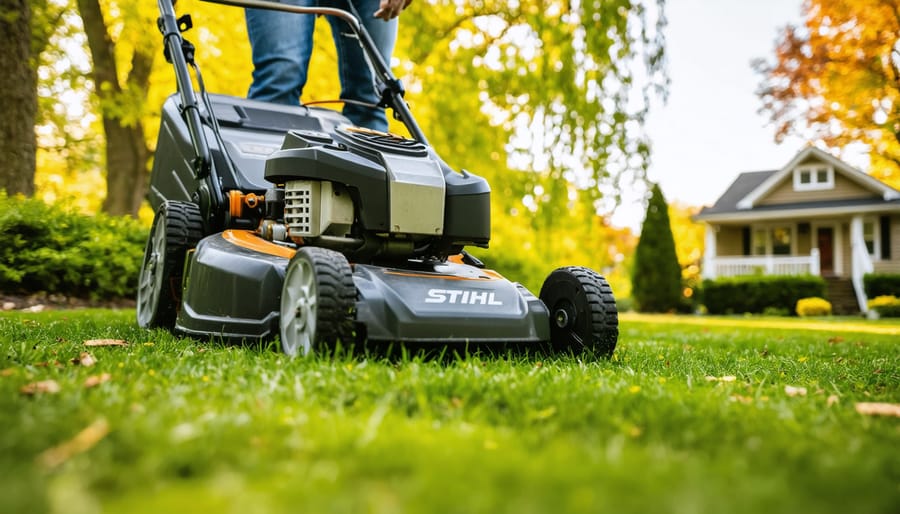
Let’s get real about what you can expect from your Stihl battery-powered mower when you’re actually out there tackling your lawn. The runtime varies significantly depending on which battery you choose and what you’re cutting through.
With Stihl’s compact AK 20 battery (118 Wh), you’re looking at roughly 20-30 minutes of mowing time on well-maintained grass—perfect for smaller yards up to about 250 square meters. Step up to the AK 30 (180 Wh), and you’ll extend that to 30-45 minutes, handling around 400 square meters comfortably.
For most homeowners, the real sweet spot is the AP 300 battery (227 Wh). In real-world conditions with average grass height, you can expect 45-60 minutes of runtime, covering approximately 600 square meters. That’s plenty for typical suburban lawns without needing a battery swap.
Here’s where conditions matter: If you’re cutting through thick, wet spring growth or tackling overgrown grass that’s been neglected for a couple of weeks, expect your runtime to drop by 20-30%. The motor works harder, drawing more power. Conversely, regular weekly mowing of dry grass in optimal conditions can actually extend your runtime beyond these estimates.
The sustainable approach? Invest in a second battery if you have a larger property. While one charges, you mow with the other—no downtime, no compromises, and you’re still avoiding fossil fuels entirely.
Power Performance: Can It Handle Tough Grass?
Let’s address the question on every lawn owner’s mind: can a battery-powered mower really match the muscle of traditional gas models?
The good news is that Stihl’s battery technology has come remarkably far. Their RMA and RLA series mowers deliver impressive torque that handles regular lawn maintenance with ease. For typical residential lawns with grass cut at recommended intervals, you honestly won’t notice a performance difference from gas mowers. The brushless motors maintain consistent power throughout the battery’s charge, meaning no sputtering or loss of cutting efficiency as you work.
Where these mowers truly shine is in dry to moderately damp conditions with grass at normal height. They slice through regular growth beautifully, and because there’s no engine vibration, you’ll actually achieve cleaner cuts that promote healthier grass. For homeowners dealing with challenging terrain conditions, the lighter weight makes maneuvering significantly easier.
However, let’s be honest about limitations. Very thick, overgrown grass—especially when wet—can bog down battery mowers faster than gas equivalents. If you’re tackling grass that’s grown several inches beyond ideal cutting height or working through heavy morning dew, expect reduced runtime and potentially multiple passes. The sustainable solution? Mow more frequently. Regular maintenance prevents overwhelming the mower while promoting better lawn health anyway.
Battery mowers also struggle with extremely dense weeds or tough vegetation that gas mowers might power through. For most suburban lawns with consistent care, though, Stihl’s battery models provide more than adequate power while eliminating emissions entirely.
The Sustainability Factor: Why This Matters for Your Lawn and the Planet
Zero Emissions, Zero Compromise
One of the most compelling reasons to switch to a Stihl battery-powered mower is the significant environmental impact you’ll make. Traditional gas mowers are surprisingly polluting—a single hour of operation can produce emissions equivalent to driving a new car over 300 miles! With a battery-powered mower, you’re eliminating those harmful exhaust fumes entirely, contributing to cleaner air in your yard and neighborhood.
Beyond emissions, there’s the noise factor to consider. Gas mowers typically roar at around 90 decibels, while Stihl’s battery models operate at a whisper-quiet 75-85 decibels. That’s roughly the difference between a busy highway and normal conversation. You can mow early in the morning without disturbing sleeping neighbors or enjoy a Saturday afternoon trim without reaching for ear protection.
This shift also means no more storing gasoline in your garage, eliminating potential spills and fumes. You’re not just making a purchase decision—you’re choosing a more sustainable lawn care practice that respects both your environment and your community’s quality of life, all while maintaining the professional cutting performance Stihl is known for.
Energy Efficiency and Your Carbon Footprint
Switching to a Stihl battery-powered mower can genuinely make a difference in your carbon footprint. These mowers produce zero direct emissions, meaning you’re not releasing exhaust fumes into your backyard ecosystem while you work. That’s a win for both your health and the environment!
Let’s talk charging costs—they’re surprisingly low. Most Stihl battery mowers cost between $0.15 to $0.30 per full charge, depending on your local electricity rates. Compare that to constantly buying gas, and you’ll see the savings add up quickly. Plus, if you’re using solar panels or green energy at home, you’re taking your sustainable lawn care to the next level.
Battery mowers fit beautifully into a broader eco-friendly approach. Pair your Stihl mower with practices like grasscycling (leaving clippings on the lawn), reducing mowing frequency, and maintaining sharp blades for efficient cutting. These habits conserve energy while keeping your lawn healthy and vibrant. You’re not just choosing better equipment—you’re embracing a whole philosophy of working with nature rather than against it.
The True Cost of Ownership: Investment vs. Long-Term Value
Upfront Investment: What You’ll Actually Spend
Let’s talk numbers, because understanding the investment helps you plan wisely. Stihl’s battery-powered mowers span a range that accommodates different budgets and lawn sizes.
Entry-level models like the RMA 235 typically start around $300-$400 without a battery, making them accessible for smaller yards and first-time battery mower buyers. Mid-range options, such as the RMA 460, generally fall between $500-$700 with battery and charger included—a sweet spot for most homeowners with quarter-acre to half-acre properties.
For those with larger lawns or professional needs, premium models like the RMA 765 V can reach $1,200-$1,500 when fully equipped with high-capacity batteries. Remember, battery configuration significantly impacts your total cost. A single battery setup saves money upfront but might require charging breaks, while investing in a second battery ($150-$300 depending on capacity) ensures uninterrupted mowing sessions.
The good news? This upfront investment pays environmental dividends immediately—no gas purchases, no oil changes, and quieter operation that your neighbors will appreciate. Consider it a long-term commitment to sustainable lawn care that simplifies your weekend routine while reducing your carbon footprint.
Maintenance Savings That Add Up
One of the most appealing aspects of switching to a Stihl battery-powered mower is the dramatic reduction in maintenance demands—and the money you’ll save over time really adds up. If you’ve been wrestling with gas mower upkeep, you’ll immediately appreciate the difference.
With gas mowers, there’s a perpetual shopping list: engine oil, oil filters, spark plugs, air filters, fuel stabilizers for off-season storage, and fresh gas at the start of each season. These costs might seem small individually, but they accumulate to $100-200 annually for many homeowners. Battery mowers? They eliminate virtually all of this. No oil changes mean no messy disposal or environmental concerns. No spark plugs to gap or replace. No carburetor cleanings or fuel system troubles from ethanol-blended gas sitting in your tank.
The maintenance you do need is refreshingly simple: keep the blade sharp, clear grass clippings from the deck after use, and occasionally wipe down electrical contacts. That’s essentially it. Many users report the only real expense is blade sharpening or replacement every year or two—something gas mowers also require.
This simplicity translates directly to time savings too. Those Saturday mornings previously spent on mower maintenance can now go toward actually enjoying your garden. While competitors like the Greenworks battery mower offer similar low-maintenance benefits, Stihl’s reputation for durability means fewer unexpected repairs down the road. From both an environmental and practical standpoint, battery technology just makes sense for the modern sustainable gardener.
Making the Switch: Practical Tips for First-Time Battery Mower Users
Battery Management for Maximum Efficiency
Getting the most from your Stihl battery is easier than you might think, and honestly, it’s one of the simplest ways to protect your investment while keeping your lawn care routine sustainable.
First, let’s talk charging. Always use Stihl’s genuine chargers—they’re designed to optimize battery health and longevity. I recommend charging your battery after each mowing session rather than waiting until it’s completely drained. Modern lithium-ion batteries actually prefer partial discharge cycles, which helps maintain their capacity over time.
Storage matters tremendously, especially during seasonal transitions. For long-term storage during winter months, charge your battery to about 40-60% and keep it in a cool, dry place—ideally between 50-68°F. Avoid leaving batteries in freezing garages or hot sheds, as extreme temperatures can significantly reduce their lifespan.
During the growing season, store batteries away from direct sunlight and remove them from the mower between uses. This simple habit prevents unnecessary drainage and protects the contacts from moisture and debris.
One eco-friendly bonus? Stihl batteries have no memory effect, so you can top them off whenever convenient without worrying about reducing capacity. This flexibility makes maintaining your equipment refreshingly straightforward while supporting your sustainable gardening goals.
Mowing Techniques That Maximize Runtime
Timing your mowing makes a surprising difference in battery performance. Tackle your lawn when grass is dry—typically mid-morning after dew evaporates—since wet grass creates more resistance and drains your battery faster. You’ll also get a cleaner cut and avoid clumping.
For maximum runtime, mow regularly rather than letting grass grow too tall. Keeping your lawn at the recommended height means your Stihl mower works less hard with each pass. If you’ve let things get away from you, raise the deck for the first pass, then lower it for a second mow a few days later.
When facing thick patches or overgrown areas, slow your walking pace slightly. This gives the blade time to cut efficiently without overworking the motor. Similarly, overlap your passes by about one-third to ensure complete coverage without unnecessary back-and-forth that wastes precious battery power. These simple adjustments help you complete more lawn on a single charge while maintaining that beautiful, sustainable outdoor space you’re working toward.
Who Should (and Shouldn’t) Choose a Stihl Battery Mower
Stihl battery mowers are an excellent match for homeowners with small to medium-sized lawns—typically up to half an acre. If you’re committed to sustainable gardening practices and value quiet operation (your early-bird neighbors will thank you!), these mowers deserve serious consideration. They’re particularly ideal for those who appreciate German engineering quality and don’t mind investing upfront for long-term reliability and environmental benefits.
You’ll love a Stihl battery mower if you’re tired of wrestling with pull-cords, dealing with gas spills, or scheduling annual engine maintenance. The instant-start convenience and minimal upkeep make them perfect for busy gardeners who’d rather spend time tending flower beds than maintaining equipment. Plus, if you already own other Stihl battery tools, the shared battery system creates a remarkably efficient ecosystem for all your yard work needs.
However, Stihl battery mowers might not be your best choice if you’re managing acreage beyond three-quarters of an acre, especially with thick, overgrown grass. The runtime limitations, even with multiple batteries, can become frustrating on larger properties where gas-powered or riding mowers make more practical sense. If you’re exploring different mower types, consider your property size carefully.
Budget-conscious shoppers should also think carefully—the initial investment is substantial, and while you’ll save on fuel and maintenance over time, those upfront costs can be steep. If you need the absolute lowest entry price or require maximum power for challenging terrain, traditional gas mowers still hold certain advantages.
The sweet spot? Environmentally conscious homeowners with manageable lawns who value quality, convenience, and sustainability over rock-bottom pricing.
Making the switch to a Stihl battery-powered lawn mower represents more than just upgrading your equipment—it’s a meaningful step toward a quieter, cleaner, and more sustainable approach to lawn care. As we’ve explored throughout this guide, these innovative machines deliver impressive cutting performance while eliminating the hassles of gas engines, all without the limiting cords of traditional electric mowers.
For environmentally conscious homeowners, the benefits are clear: zero direct emissions, reduced noise pollution, and lower long-term maintenance requirements. You’ll enjoy peaceful weekend mornings without disturbing the neighbors, and your family and pets can return to the lawn immediately after mowing without worrying about fuel residue or exhaust fumes.
Whether you’re managing a compact urban yard or a more expansive suburban lawn, Stihl’s range of battery-powered options offers solutions tailored to different needs and budgets. The key is honestly assessing your property size, terrain challenges, and usage patterns to select the model that aligns with your specific situation.
Yes, the upfront investment may be higher than traditional gas mowers, but consider the broader picture: minimal maintenance costs, no fuel expenses, and equipment that fits seamlessly into a sustainable lifestyle. As battery technology continues advancing, you’re positioning yourself at the forefront of modern lawn care.
Ready to embrace a greener approach to lawn maintenance? Your journey toward more sustainable gardening starts with a single decision—and a Stihl battery-powered mower might be exactly the tool to get you there.