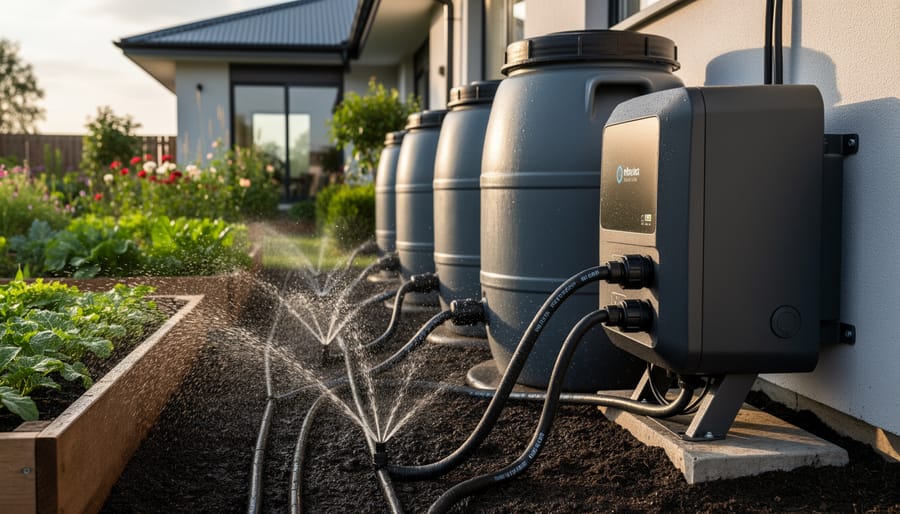
Harness every drop of collected rainwater by matching your pump’s gallons-per-hour rating to your irrigation zone requirements—a quarter-acre garden typically needs 1,500-2,500 GPH, while smaller beds manage perfectly with 500-800 GPH units. Install a smart controller between your rain barrel pump and existing irrigation lines to automate watering schedules based on soil moisture sensors and weather forecasts, eliminating the guesswork that leads to overwatering or dried-out plants.
Position your pump intake at least 2 inches above your collection tank’s bottom to prevent sediment damage, and select models with built-in filters and self-priming capabilities for maintenance-free operation throughout the growing season. Variable-pressure pumps adapt automatically to different irrigation methods—from gentle drip systems requiring 15-30 PSI to sprinkler heads needing 40-50 PSI—making them worth the investment if you’re mixing irrigation types across your landscape.
The transformation from manual watering to automated rainwater irrigation isn’t just about convenience. You’re converting free, chemical-free rainfall into targeted hydration that reduces municipal water bills by 40-60% during peak growing months while delivering the soft water your plants genuinely prefer over treated tap water. Modern rainwater pumps integrate seamlessly with existing smart yard systems, allowing you to monitor tank levels remotely, receive low-water alerts, and switch automatically to backup sources when rainfall hasn’t kept pace with your garden’s thirst. This technology turns sustainable gardening from an admirable goal into an effortless daily reality.
What Makes a Rainwater Irrigation Pump ‘Smart’?
A traditional rainwater pump is a straightforward piece of equipment that moves water from point A to point B when you flip a switch. Think of it like the difference between a basic alarm clock and your smartphone – both tell time, but one does so much more. Smart rainwater irrigation pumps bring that same leap forward to your garden watering system.
The magic happens through automation and intelligence. Instead of manually turning your pump on and off, smart systems can schedule watering times based on your garden’s needs. They integrate with moisture sensors that detect when your soil actually needs water, preventing the waste that comes from watering on a rigid schedule regardless of conditions. On a rainy Tuesday? Your smart pump knows to skip the morning watering session.
Pressure regulation is another key feature that sets smart pumps apart. Traditional pumps deliver water at whatever pressure they’re capable of, which can damage delicate plants or waste water through excessive spray. Smart systems maintain consistent, appropriate pressure throughout your irrigation zones, ensuring each area of your garden gets exactly what it needs.
Connectivity transforms your pump from a standalone tool into part of an integrated system. Many smart pumps connect via WiFi or Bluetooth to smartphone apps, letting you monitor water usage, adjust schedules from your couch, and receive alerts if something goes wrong. Some even integrate with weather forecasting services, automatically adjusting watering plans based on upcoming rainfall predictions.
The practical benefit is impressive: you save water, reduce electricity costs, and give your plants more consistent care without constant hands-on management. For those of us committed to sustainable gardening, smart pumps turn rainwater harvesting from a good idea into an effortlessly efficient reality. You’ve already done the work of collecting that precious rainwater – why not let technology help you use it wisely?
The Real Benefits of Automating Your Rainwater System
Water Conservation That Actually Works
Smart rainwater irrigation pumps transform your collected rainwater from a simple barrel into a precision watering system that rivals municipal water in efficiency. These systems use pressure sensors and flow meters to deliver exactly the right amount of water your plants need, nothing more. Instead of watching precious rainwater overflow or evaporate, you’re directing every drop where it counts.
Modern smart pumps integrate with sustainable yard automation systems to monitor soil moisture levels and weather forecasts. When rain is coming, they hold back. When your garden beds are thirsty, they activate automatically. This intelligent approach prevents the common mistake of overwatering, which not only wastes your harvested rainwater but can also harm plant roots and promote disease.
The real magic happens with features like variable speed control and zone-based irrigation. Your pump adjusts its pressure based on which area it’s watering, ensuring delicate seedlings get gentle moisture while established shrubs receive deeper watering. Many users report reducing their overall water consumption by forty to sixty percent compared to traditional irrigation methods, making every raindrop count toward a healthier, more sustainable garden.
Set It and Forget It: Time You’ll Save
Picture this: You’re sipping your morning coffee while your garden waters itself perfectly, rain or shine. That’s the beauty of automated watering systems paired with a rainwater irrigation pump.
Once you program your system, it handles everything. Most smart rainwater pumps connect to timers or controllers that run your sprinklers or drip lines automatically. Set it to water your vegetable garden every other morning at 6 AM, and you’ll never need to drag hoses around again. That’s 15-20 minutes saved daily, which adds up to over 100 hours per year you can spend actually enjoying your garden.
The real magic happens when you integrate weather sensors. Modern systems detect rainfall and automatically skip scheduled waterings when Mother Nature does the job for you. No more rushing home to turn off sprinklers during unexpected showers. Soil moisture sensors take it further by measuring actual ground wetness, ensuring your plants get exactly what they need without guesswork.
During vacations, your garden thrives without asking neighbors for help. One gardener I know traveled for three weeks last summer while her tomatoes and roses flourished under automated care. Her rainwater system even sent smartphone alerts when the collection barrel ran low.
The setup requires an afternoon of initial planning, but then you’re genuinely free. No daily watering schedules to remember, no wilted plants from forgotten sessions, just healthy growth powered by sustainable harvested rainwater.
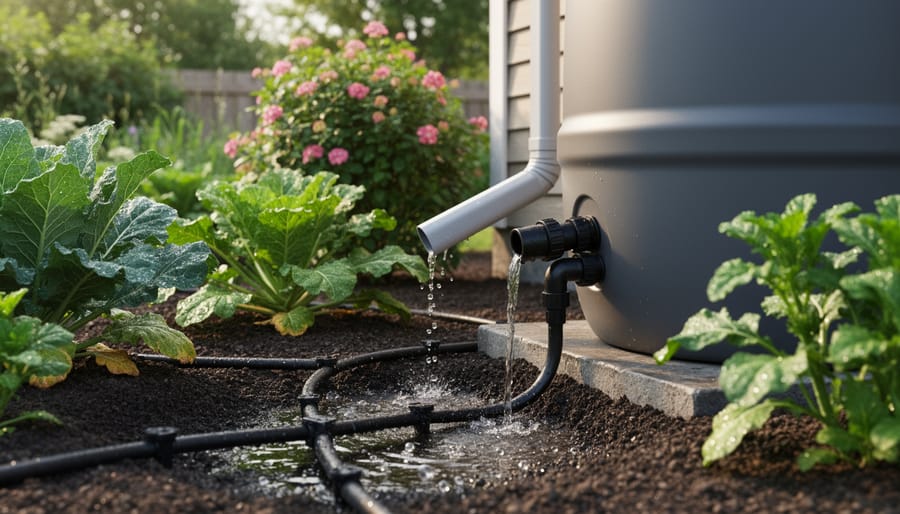
Key Features to Look for in a Rainwater Pump System
Pump Capacity and Pressure Requirements
Choosing the right pump capacity starts with understanding GPM, or gallons per minute—essentially, how much water your pump can move. Think of it as the flow rate that determines whether your garden gets a gentle drink or a satisfying soak. For most residential rainwater irrigation setups, you’ll need between 5 and 20 GPM, depending on your yard’s size and irrigation method.
Here’s where it gets practical: drip irrigation systems are wonderfully efficient and require less pressure—typically around 20 to 30 PSI (pounds per square inch). They’re perfect for sustainable gardening because they deliver water directly to plant roots with minimal waste. Sprinkler systems, on the other hand, need more oomph—usually 30 to 50 PSI—to achieve that satisfying spray pattern across your lawn.
To calculate your needs, start by mapping your irrigation zones. A small garden bed with drip lines might only need 2 to 5 GPM, while a larger lawn with rotating sprinklers could demand 10 to 15 GPM. Add up all zones that might run simultaneously—that’s your minimum GPM requirement.
A helpful rule of thumb: for every 1,000 square feet of lawn using sprinklers, expect to need about 5 to 7 GPM. Garden beds with drip irrigation use considerably less, making them both water-wise and pump-friendly. Don’t forget to factor in elevation changes too—every 10 feet of vertical rise requires an additional 4 to 5 PSI. It’s better to slightly oversize your pump than struggle with inadequate pressure during peak watering times.
Control Systems: From Basic Timers to Full Automation
Let’s talk about finding the right level of control for your rainwater irrigation system – because you don’t need to go all-in on fancy technology if a simpler solution works for your garden.
Starting with the basics, timer-based systems are wonderfully straightforward. You set watering times and durations, and the pump delivers rainwater on that schedule. These mechanical or digital timers cost anywhere from $20 to $100 and work perfectly if you have a consistent watering routine. I’ve found they’re ideal for smaller gardens or raised beds where you can predict moisture needs pretty reliably. The downside? They don’t know if it rained yesterday or if a storm is coming this afternoon.
Stepping up to intermediate automation, you’ll find soil moisture sensors that prevent watering when the ground is already saturated. These systems typically range from $100 to $300 and represent a sweet spot for many gardeners – they’re sustainable, preventing water waste, yet remain affordable and relatively simple to install.
For those ready to embrace full automation, smart controllers are game-changers. These weather-responsive systems connect to local forecasts, adjust schedules based on temperature and rainfall predictions, and often include smartphone apps for remote management. Expect to invest $200 to $600 for quality smart controllers. They’re particularly valuable if you travel frequently or manage larger properties where manual adjustments become tedious.
The beauty of rainwater systems is that you can start simple and upgrade gradually as your confidence and needs grow.
Safety and Durability Features
Protecting your investment starts with understanding key safety features that keep your rainwater pump running smoothly for years. Dry-run protection is essential—this feature automatically shuts off the pump when water levels drop too low, preventing motor burnout that could otherwise ruin your system. Think of it as a safety net for those unexpected dry spells when your rain barrel runs empty.
Filtration is another critical consideration. Even collected rainwater contains debris like leaves, twigs, and sediment that can clog your pump or irrigation lines. Installing a simple mesh filter at the intake prevents these issues and extends pump life significantly. I recommend checking and cleaning filters monthly during peak growing season.
Weatherproofing matters too, especially if your pump sits outdoors. Look for models with corrosion-resistant materials like stainless steel or reinforced plastic housings rated for outdoor use. Quality pumps feature sealed electrical components that withstand moisture and temperature fluctuations.
Build quality separates reliable pumps from frequent replacements. Check for sturdy construction, quality seals, and brands offering solid warranties—typically two to five years for residential models. While budget options tempt, investing in durable equipment aligns perfectly with sustainable gardening principles by reducing waste and long-term costs.
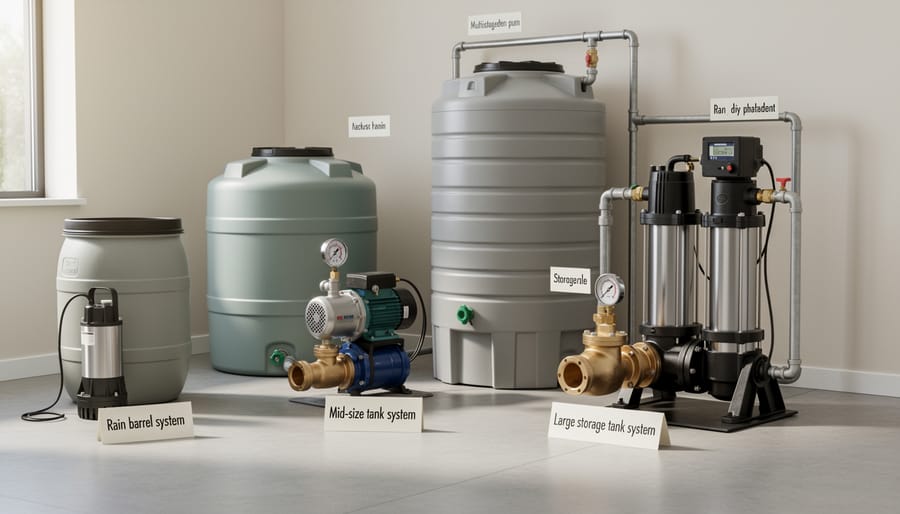
Popular Types of Rainwater Irrigation Pumps
Submersible Pumps for Large Storage Tanks
If you’ve got a substantial rainwater collection system with a large storage tank (think 500 gallons or more), a submersible pump might be your best friend. These hardworking pumps sit right inside your tank, staying cool and quiet while doing their job efficiently.
The beauty of submersible pumps is their self-priming nature—they don’t struggle to pull water like surface pumps can. This makes them perfect for those deeper tanks where suction can become an issue. Plus, they’re whisper-quiet since water acts as a natural sound dampener. Your neighbors won’t even know you’re running an irrigation system!
Installation is straightforward: lower the pump into your tank, secure the suspension cables, and connect your outlet pipe. Just make sure you can access it for maintenance—you’ll want to check and clean the intake screen periodically to prevent debris buildup.
On the sustainability front, submersible pumps typically use less energy than comparable surface pumps because they push rather than pull water. They do require occasional inspection for seal integrity and potential sediment buildup, but with proper filtration at your tank inlet, maintenance stays minimal. Schedule a quick check twice yearly, and these pumps can reliably serve your garden for many seasons.
Surface Pumps for Rain Barrels
Surface pumps are perfect if you’re just starting your rainwater harvesting journey or working with a standard 50-100 gallon rain barrel setup. These pumps sit outside your barrel and draw water through an inlet hose, making them incredibly easy to install and maintain. You simply connect the pump to your barrel’s spigot or drop a suction hose inside, plug it in, and you’re ready to water.
What I love about surface pumps is their accessibility. When something needs checking or cleaning, everything’s right there in front of you—no fishing around inside barrels or dealing with complicated installations. Models like the Wayne PC4 and Rainwater Solutions BarrelPro typically cost between $150-$300 and deliver enough pressure (30-50 PSI) to run a couple of soaker hoses or a basic drip irrigation setup.
The tradeoff? They’re a bit noisier than submersible options and need protection from weather and freezing temperatures. Most folks keep them in a small weatherproof enclosure or bring them inside during winter. For smaller gardens under 1,000 square feet, though, surface pumps offer the sweet spot of affordability, simplicity, and plenty of power for sustainable watering without the commitment of a more complex system.
Pressure Tank Systems for Consistent Flow
If you’ve ever experienced the frustrating pulsing of water from a basic pump setup, a pressure tank system might be your solution. Think of it as giving your rainwater irrigation the same smooth, consistent delivery you’re used to from city water lines.
Here’s how it works: the pressure tank stores water under pressure, so your pump doesn’t need to kick on every single time you turn on a sprinkler zone. Instead, the pump fills the tank, then rests while the tank delivers steady pressure. This means less wear on your pump and more reliable flow for your garden beds and lawn.
For most home gardening setups, a 20 to 40-gallon pressure tank paired with your rainwater pump creates that municipal-style experience. The tank also prevents water hammer, which protects your irrigation lines from damage. As a sustainable bonus, you’ll use less electricity since the pump cycles less frequently. It’s particularly valuable if you’re running drip irrigation or want to water multiple zones without pressure drops that leave some plants thirsty while others get drenched.
Setting Up Your Smart Rainwater Pump Control
Planning Your System Layout
Before you purchase your rainwater irrigation pump, take time to sketch out your garden’s watering needs. Start by dividing your yard into irrigation zones based on plant types and water requirements—vegetables typically need more frequent watering than established shrubs, for example. This mapping exercise helps you determine the flow rate and pressure your pump needs to deliver.
Next, consider pump placement carefully. Position your pump close to your rainwater storage tank to minimize suction distance and maximize efficiency. The pump should be accessible for maintenance but protected from extreme weather. A covered location near your collection barrel works perfectly for most home setups.
For electrical connections, you’ll need a GFCI-protected outdoor outlet near the pump location. If you’re planning a smart system with automated controls, ensure WiFi signal reaches the area or plan for a wireless extender. Many modern rainwater pumps integrate beautifully with smart controllers, allowing you to program watering schedules based on weather forecasts and soil moisture levels—a truly sustainable approach that prevents overwatering while keeping your garden thriving. Measure twice, install once, and you’ll enjoy years of efficient, eco-friendly irrigation.
Installation Essentials and Safety Considerations
Setting up your rainwater irrigation pump can be a rewarding weekend project, though knowing when to call in a professional is equally important. Let’s walk through the essentials together.
First, assess your comfort level with basic plumbing and electrical work. If you’re handy with tools and have successfully tackled similar projects, installing a simple above-ground pump system is typically manageable. However, if your setup requires hardwiring into your home’s electrical system or integrating with smart yard systems, consider hiring a licensed electrician for at least the electrical portion.
Start with location. Your pump should sit on a stable, level surface near your rainwater collection barrel or tank. Ensure it’s protected from weather extremes, either in a pump house or under weatherproof housing.
For plumbing connections, you’ll need appropriate inlet and outlet fittings that match your pump specifications. Always install a pre-filter or first-flush diverter to catch debris before it reaches your pump. This simple step dramatically extends pump life and prevents clogged irrigation lines. Use Teflon tape on threaded connections to prevent leaks.
Electrical safety cannot be overstated. Use GFCI-protected outlets rated for outdoor use, and never operate the pump in standing water. If running extension cords, choose heavy-duty outdoor-rated cables. Battery-powered pumps simplify installation but require regular charging maintenance.
When in doubt, professional installation typically costs between two hundred and five hundred dollars and provides peace of mind along with proper warranties.
Configuring Smart Controls and Sensors
Setting up smart controls transforms your rainwater irrigation system from manual to effortless. Start by programming your automation schedule through the pump’s control panel or companion app. Most systems let you create multiple watering zones with different timing—perhaps 20 minutes for your thirsty vegetable garden and 10 for established shrubs.
Moisture sensors are game-changers for water conservation. Install them 4-6 inches deep in representative areas of your garden. These clever devices communicate with your pump controller, automatically skipping scheduled watering when soil moisture is adequate. It’s like having a gardening assistant who checks the soil for you.
Weather integration takes automation further by accessing local forecasts and rainfall data. Your system can postpone watering when rain is predicted or adjust run times based on temperature and humidity. This smart feature prevents the embarrassing scenario of your sprinklers running during a downpour.
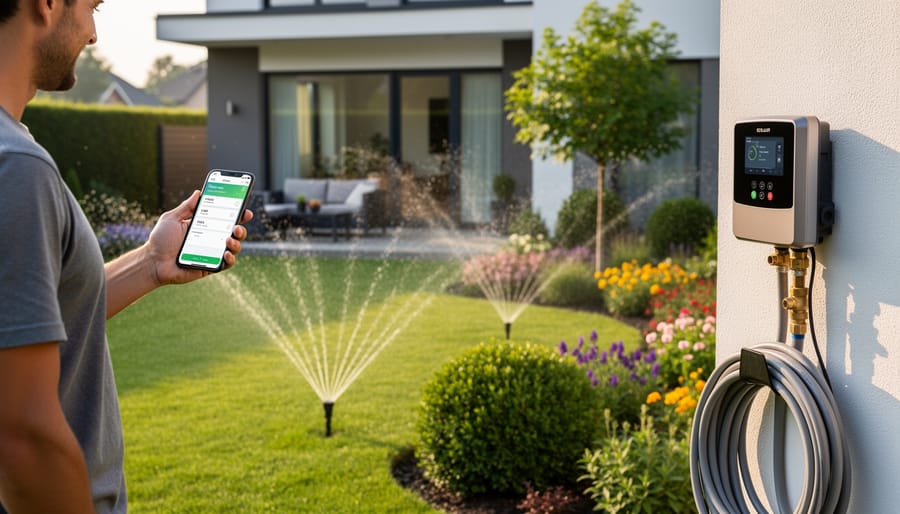
For app configuration, download your pump manufacturer’s application and follow the setup wizard. You’ll typically connect via WiFi or Bluetooth, name your zones, and set baseline schedules. Most apps also provide water usage tracking—perfect for monitoring your sustainability efforts and spotting potential system issues early.
Maintaining Your Rainwater Pump System
A well-maintained rainwater pump system can serve you faithfully for years, but like any garden tool, it needs a little TLC to stay in top shape. The good news? Most maintenance tasks are straightforward and can prevent frustrating breakdowns during peak watering season.
Start each season with a thorough inspection. Check all connections for leaks, examine hoses for cracks or wear, and clean your pump’s intake screen. Debris like leaves and sediment can accumulate over winter, reducing efficiency and potentially damaging your pump. I’ve learned this lesson the hard way after finding a clogged filter had been working my pump twice as hard for weeks! A quick monthly cleaning during active use keeps everything running smoothly.
Your pump’s performance tells a story. If water pressure drops suddenly, first check for clogs in filters or screens. Air in the lines often causes sputtering, which usually means checking your foot valve or ensuring your water level hasn’t dropped below the intake. Strange noises typically signal bearing issues or debris interference, so don’t ignore them. Addressing these common issues early prevents minor problems from becoming expensive repairs.
Winterization is crucial for longevity, especially in cold climates. Before the first freeze, completely drain your pump and all connected lines. Even small amounts of trapped water can cause devastating damage when temperatures drop. Store removable components in a protected area, and if your pump stays outdoors, disconnect it and cover it with weatherproof material. This simple step extends equipment lifespan significantly while supporting sustainable practices by reducing waste.
During the growing season, test your system weekly, especially if you’ve automated it with smart controls. Verify that pressure switches activate correctly and timers function as programmed. Keep a maintenance log noting any adjustments or repairs. This record helps identify patterns and proves invaluable when troubleshooting future issues. Remember, preventive care takes minutes but saves hours of frustration and supports your commitment to sustainable, efficient water management.
Top Rainwater Irrigation Pump Systems Worth Considering
Let me share some rainwater irrigation pump systems that consistently deliver great results for gardeners working with different budgets and yard sizes.
For those just getting started, the Superior Pump Utility Pump offers remarkable value. Priced under $100, this 1/4 HP pump handles most residential rainwater setups beautifully. I’ve recommended it to countless beginners who appreciate its straightforward operation and surprising durability. It moves about 1,800 gallons per hour, which is perfect for small to medium gardens. The built-in thermal overload protection gives you peace of mind, and the compact design means it won’t dominate your rain barrel space. While it lacks smart features, you can easily pair it with an affordable timer to create a simple automated system.
Moving up in capability, the Wayne WaterBUG Submersible Pump strikes an excellent balance between performance and affordability. Around $150, this pump impresses with its multi-function design that works both as a utility pump and irrigation solution. The automatic on/off float switch saves water by preventing unnecessary running, which aligns perfectly with sustainable gardening practices. Users consistently praise its reliability and quiet operation, making it ideal for neighborhoods where noise matters.
For gardeners ready to invest in premium performance, the Zoeller M53 Mighty-Mate represents the gold standard. Yes, it costs more at roughly $200, but the cast iron construction and commercial-grade components justify the investment. This pump handles debris better than plastic alternatives, which matters when you’re working with real-world rainwater that occasionally carries leaves or sediment. The impressive 43-gallon-per-minute flow rate means you can water larger properties efficiently.
If you’re specifically interested in creating a fully automated smart system, consider the RainPerfect Complete System. This all-in-one package includes the pump, filtration, and smart controller that connects to your smartphone. While the $400-500 price point seems steep, you’re getting professional-grade automation that adjusts watering schedules based on weather forecasts and soil moisture. For busy gardeners committed to water conservation, the convenience and water savings quickly offset the initial investment.
Remember, the best pump for your situation depends on your specific needs. A smaller garden with a single rain barrel thrives with basic equipment, while larger properties with multiple zones benefit from more robust systems. Focus on reliability and appropriate capacity rather than maximum features you won’t actually use.
Making the switch to a smart rainwater irrigation pump isn’t just about convenience—it’s about making a real difference in how we care for our lawns while respecting our planet’s resources. If you’ve been manually watering from your rain barrel or leaving your garden’s fate to unpredictable weather patterns, automation can transform your entire approach to lawn care.
Take a moment to honestly assess your current watering habits. Are you overwatering in some areas while missing others entirely? Do you forget to water during busy weeks? A smart rainwater pump system eliminates these inconsistencies, delivering precisely what your lawn needs, exactly when it needs it. The result is a healthier, more vibrant yard that thrives on nature’s own water supply.
The environmental benefits extend far beyond your property line. Every gallon of rainwater you use is one less gallon drawn from municipal systems or groundwater reserves. You’re reducing stormwater runoff, lowering your utility bills, and setting an example for sustainable practices in your community.
Ready to get started? Begin by evaluating your existing rainwater collection capacity and your lawn’s square footage. Research pump systems that match your needs, focusing on smart features that align with your lifestyle. Consider starting with a single zone if you’re new to automation—you can always expand as you become more comfortable with the technology.
Remember, sustainable gardening doesn’t require perfection. It simply asks that we make thoughtful choices that benefit both our gardens and the environment we all share.