Group plants by their water needs before you even turn on the hose. Your sun-loving roses shouldn’t share irrigation time with your shade-dwelling hostas, and that simple mismatch explains most uneven watering problems in home landscapes. Water zoning—or hydrozoning—solves this by creating distinct irrigation zones based on plant requirements, potentially cutting your water bill by 30-50% while dramatically improving plant health.
Divide your yard into high, medium, and low water zones by walking through your landscape with a simple checklist: sun exposure, soil type, and plant species. Place thirsty vegetables and annual flowers together in your high-water zone, drought-tolerant natives and established shrubs in the low-water zone, and perennials with moderate needs in between. This isn’t about installing expensive new systems—you can implement water zones with your existing sprinklers, hoses, or drip lines by simply adjusting run times and frequencies for each area.
The results speak for themselves: healthier plants that aren’t constantly stressed by too much or too little water, significantly lower utility bills, and a landscape that practically takes care of itself. Whether you’re battling brown patches in an overwatered lawn or watching container plants wilt while your lawn floods, water zoning transforms frustrating guesswork into a straightforward system that works with nature rather than against it.
What Exactly Is Hydrozoning (And Why Should You Care)?
Think of hydrozoning like organizing a potluck dinner. You wouldn’t seat your vegetarian friends next to the barbecue station, right? The same logic applies to your garden. Hydrozoning is simply the practice of grouping plants together based on their water needs, ensuring that thirsty hostas aren’t planted alongside drought-tolerant succulents that prefer to stay on the drier side.
At its core, this concept is beautifully straightforward: create zones in your landscape where all the plants share similar watering requirements. Your water-loving ferns and astilbes hang out together in one area, while your sedums and ornamental grasses enjoy their own low-water neighborhood elsewhere. Instead of applying the same amount of water everywhere and hoping for the best, you’re tailoring your irrigation to match what each zone actually needs.
So why should this matter to you? Let’s talk about the benefits that’ll make an immediate difference in your gardening life.
First, your water bills will thank you. By avoiding overwatering in areas that don’t need it, you’re not literally pouring money down the drain. Many homeowners report saving 30-50% on outdoor water use after implementing hydrozones.
Second, you’ll see healthier, more vibrant plants. Overwatering kills more plants than underwatering ever could. When plants get precisely what they need, they thrive. No more root rot for your lavender or crispy brown leaves on your hydrangeas.
Third, you’ll spend less time wrestling with the hose. Efficient watering zones mean you can set up automated systems or simply water less frequently overall. That’s more time enjoying your garden instead of maintaining it.
Finally, there’s the environmental angle. In an era where water conservation matters more than ever, hydrozoning represents responsible stewardship. You’re working with nature, not against it, creating a sustainable landscape that respects our precious water resources while still looking absolutely gorgeous.

The Three Water Zones Every Garden Needs
High Water Zone: Your Thirsty Plants
Think of your high water zone as the VIP section of your garden—these are the plants that need regular attention and consistent moisture to truly thrive. This zone typically includes your lawn, vegetable gardens, annual flowers, and any container plantings.
Lawns generally need about 1 to 1.5 inches of water per week, whether from rainfall or irrigation. Vegetables are equally thirsty, especially during fruit production—tomatoes, cucumbers, and squash will literally wilt before your eyes if they don’t get enough water. Annual flowers like petunias, impatiens, and marigolds also fall into this category, as their shallow root systems mean they can’t reach deep moisture reserves.
The key to success here is consistency. These plants perform best with frequent watering, typically two to three times weekly during dry spells, though sandy soils may require even more attention. Watch for tell-tale signs of thirst: grass blades folding in half, vegetable leaves drooping in the morning (not just afternoon heat stress), or annuals looking sad despite adequate sunlight.
Here’s a sustainable tip: even within this high-need zone, you can reduce water waste by watering deeply but less frequently once plants are established. This encourages deeper root growth, making your plants more resilient over time while still meeting their higher moisture requirements.
Moderate Water Zone: The Goldilocks Plants
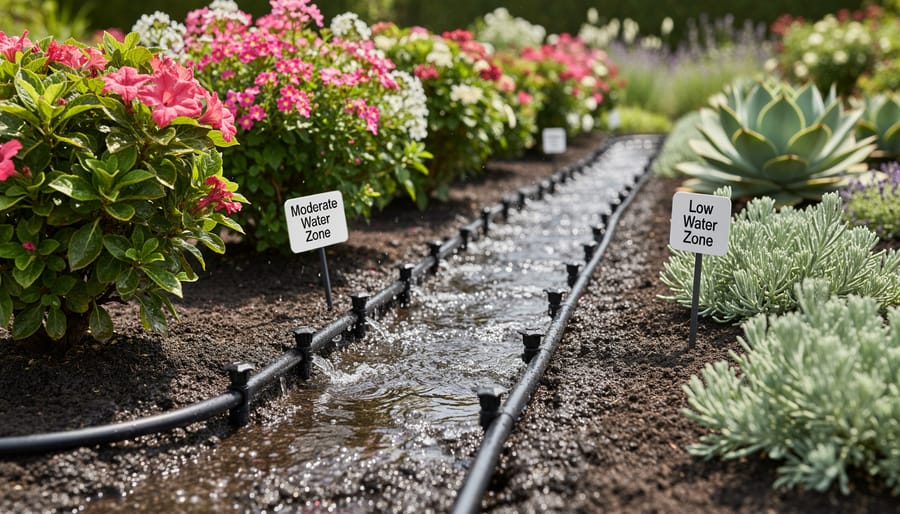
This is where most of your garden probably lives, and honestly, it’s the sweet spot that gives you the most breathing room. Your moderate water zone includes most perennials, established shrubs, many vegetables, and that beautiful rose garden you’ve been nurturing. These plants need consistent moisture but won’t throw a fit if you miss a watering day here and there.
Think of these as your flexible friends. During spring’s naturally wet periods, you might only water once a week or even skip watering entirely if Mother Nature cooperates. Come summer’s heat, bump it up to two or three times weekly. The beauty of this zone is that these plants actually tell you what they need through subtle cues like slightly drooping leaves in the afternoon.
Here’s my favorite trick for this zone: group your flowering perennials together and your herb garden nearby. They share similar watering schedules, making your life infinitely easier. Plus, established shrubs in this category develop deep root systems over time, meaning they’ll gradually need less frequent watering as they mature.
The sustainability win here is significant. By right-sizing your watering schedule to match actual plant needs rather than running sprinklers on autopilot, you’ll likely cut your water usage by 30-40 percent in this zone alone while keeping everything healthier and happier.
Low Water Zone: Drought-Tolerant Champions
This is where your garden really earns its eco-friendly stripes. Low water zones are home to the true champions of water conservation—plants that thrive on minimal moisture and look fantastic doing it. Think of this area as your landscape’s most sustainable real estate, requiring the least amount of supplemental watering once established.
Native grasses are the backbone of any successful low water zone. They’ve spent millennia adapting to your region’s rainfall patterns, so they’re naturally equipped to handle dry spells. Varieties like blue grama, buffalo grass, or fescue blends can create beautiful textured landscapes while drinking far less water than traditional turf.
Succulents and cacti bring architectural interest and surprising variety to drought-tolerant gardens. From the sculptural forms of agave to the colorful rosettes of sempervivum, these water-wise wonders store moisture in their leaves, allowing them to sail through dry periods with ease.
Mediterranean herbs like rosemary, lavender, thyme, and oregano are triple-threat plants—they’re drought-tolerant, beautiful, and useful in the kitchen. These fragrant favorites actually prefer drier conditions and can suffer from overwatering, making them perfect low-zone candidates.
The sustainability payoff here is substantial. Low water zones can reduce your irrigation needs by up to seventy percent compared to traditional landscaping. That means lower water bills, reduced environmental impact, and less time spent dragging hoses around. Once established, many of these plants need watering only during extended droughts, essentially becoming self-sufficient members of your garden community.
How to Map Your Yard’s Water Zones
Take Inventory of What You Already Have
Before you start creating water zones, take a walk around your garden with a notepad and really observe what you’ve got growing. This inventory process is like getting to know your plant community, and it’s actually pretty enlightening—you might discover you have plants you didn’t even realize were there!
Start by sketching a rough map of your garden beds and noting where each plant or grouping is located. Then, identify each plant and jot down its water needs. If you inherited a garden from a previous homeowner or simply can’t remember what you planted three years ago, don’t worry. There are some great plant identification apps like PlantSnap or PictureThis that can help you figure out what’s what just by taking a photo.
You can also take clear photos of mystery plants and visit your local nursery or cooperative extension office—the staff are usually happy to help identify plants and share their water requirements. Look for visual clues too: plants with thick, waxy, or silvery leaves typically need less water, while those with large, thin leaves usually prefer more moisture.
As you inventory, group plants into three categories: high water needs, moderate water needs, and low water needs. This simple categorization will form the foundation of your water zones and help you spot any plants that might be in the wrong place.
Consider Your Yard’s Microclimates
Your yard isn’t one uniform environment—it’s actually a patchwork of microclimates, each with unique watering needs. Understanding these variations is the secret to creating effective water zones that save water while keeping plants thriving.
Start by observing sun exposure throughout the day. That south-facing flower bed baking in afternoon sun will need more frequent watering than the shady spot under your oak tree. I’ve found that areas receiving six or more hours of direct sunlight often require twice as much water as shaded zones.
Slope matters more than you might think. Water naturally runs downhill, meaning plants at the bottom receive extra moisture while those at the top may struggle. If you’re watering a sloped area uniformly, you’re likely overwatering below and underwatering above—a perfect recipe for creating separate zones.
Soil type dramatically impacts water retention. Clay soils hold moisture longer but drain slowly, while sandy soils drain quickly but dry out fast. Dig a small test hole in different areas and notice the texture differences—these variations should inform your zone boundaries.
Don’t overlook wind patterns. Windy areas experience faster evaporation, especially on exposed hilltops or near buildings that create wind tunnels. These spots need their own zone with adjusted watering schedules to compensate for moisture loss.
Draw Your Water Zone Map
You don’t need fancy software to create an effective water zone map. Grab a piece of paper and a pencil, and start with a simple overhead sketch of your yard. Walk your property and note existing plants, hardscaping features, and any areas that stay consistently wet or dry.
Mark your zones using circles or shaded areas, labeling them as high, moderate, or low water needs. Include trees, which often create their own microclimate underneath their canopy. Don’t worry about perfect accuracy—even a rough sketch gives you a roadmap for smarter watering.
As you draw, think about grouping plants with similar water requirements. Notice where your lawn transitions to garden beds, and consider whether those transitions make sense from a watering perspective. You might discover that your thirsty hydrangeas are sitting right next to drought-tolerant lavender, competing for the same irrigation schedule.
Take photos of your yard from different angles and print them out if sketching feels intimidating. You can draw directly on the photos to identify zones. This visual reference becomes invaluable when planning future plantings—you’ll know exactly which zone a new plant fits into before you dig the first hole, saving water and setting your garden up for long-term success.

Setting Up Irrigation Zones That Actually Work
Matching Irrigation Methods to Water Zones
Once you’ve identified your water zones, matching them with the right irrigation method makes all the difference in plant health and water conservation. Think of it as giving each zone exactly what it needs, no more and no less.
For high-water zones like lawns, traditional sprinkler systems work beautifully. They provide even coverage across large areas, and modern timer-controlled systems prevent overwatering. If you’re on a budget, oscillating sprinklers attached to hose timers offer excellent results for under fifty dollars.
Medium-water zones, particularly vegetable and flower gardens, thrive with drip irrigation systems. These deliver water directly to root zones, reducing evaporation by up to seventy percent compared to overhead watering. You can start with basic drip tape for raised beds or invest in adjustable emitters for container gardens. The beauty of drip systems is their flexibility—add or remove lines as your garden evolves.
Low-water zones, including perennial beds and native plantings, pair perfectly with soaker hoses. These porous hoses weep water slowly into the soil, encouraging deep root growth while minimizing waste. They’re incredibly affordable and easy to install, making them ideal for beginners.
Don’t feel pressured to install everything at once. Start with your highest-priority zone—maybe that struggling vegetable garden—and expand gradually. Many gardeners successfully mix methods, using sprinklers for lawns while hand-watering containers until budget allows for a complete system upgrade.
Scheduling Your Irrigation Zones
Once you’ve mapped out your water zones, the next step is creating schedules that give each area exactly what it needs—no more, no less. This is where water zoning really pays off, both in plant health and water savings.
For manual watering, think of your zones like different rooms in your house that need attention on different days. Your high-water zone might need watering three times per week during summer, while your drought-tolerant zone gets by with once weekly deep watering. I like to dedicate specific mornings to each zone—Mondays and Thursdays for thirsty perennials, Saturdays for established natives. This prevents the common mistake of giving everything the same treatment.
If you’re using irrigation timers, program each zone’s valve separately. Most modern controllers let you set duration and frequency independently for each station. Start conservatively—perhaps 15 minutes for shade zones and 20-25 minutes for sun-exposed areas—then adjust based on what you observe. The soil should be moist several inches down, not soggy or barely damp.
Seasonal adjustments are crucial for sustainability. As temperatures drop in fall, reduce watering frequency by about 25-50 percent. Many gardeners forget this step and essentially waste water on plants entering dormancy. Come spring, gradually increase as new growth emerges. During rainy periods, skip scheduled waterings entirely—your plants and water bill will thank you. Consider installing a rain sensor to automate this process, making water-wise gardening even easier.
Common Irrigation Mistakes That Waste Water
Even well-intentioned gardeners can fall into common traps when setting up irrigation zones. One of the biggest mistakes is overwatering drought-tolerant plants by grouping them with thirsty perennials. Your succulents and native grasses simply don’t need the same moisture as your tomatoes or roses, yet many people run a single zone across mixed plantings, essentially wasting water and money.
Another frequent error is ignoring microclimates in your yard. That sunny south-facing bed dries out much faster than the shaded north side, but both often get watered identically. Setting timers and forgetting them is equally problematic. Your irrigation needs change dramatically between spring and summer, yet static schedules continue running regardless of rainfall or temperature shifts.
The fix? Audit your current zones, separate plants by water needs, and invest in a smart controller that adjusts to weather conditions. These simple changes can cut water use by thirty percent while keeping your landscape healthier.
Redesigning Problem Areas with Hydrozoning in Mind
When to Move or Replace Plants
Sometimes despite your best planning, you’ll discover plants struggling in their current zones. The telltale signs are pretty obvious once you know what to look for: constant wilting despite regular watering, soggy soil that never seems to dry out, or plants that look perpetually stressed even though their neighbors are thriving.
Here’s the good news: moving a plant doesn’t have to be scary. If you catch the problem early, especially with younger plants or perennials, relocation often works beautifully. Spring and fall are your best windows for moving most plants, when cooler temperatures reduce transplant shock. Dig a generous root ball, prepare the new spot with proper soil amendments, and water thoroughly after replanting.
However, sometimes replacement makes more sense. If a plant has been struggling for multiple seasons, developed root rot, or simply isn’t suited to your climate, starting fresh with an appropriate species saves time and water in the long run. Think of it as an investment in your garden’s future rather than admitting defeat.
The decision becomes easier when you consider sustainability: a well-placed, water-appropriate plant will thrive with minimal intervention, reducing your water consumption and maintenance time while supporting local ecosystems with native or adapted species.
Creating Buffer Zones Between Different Water Needs
Creating smooth transitions between zones is where many gardeners stumble, but with a few practical strategies, you can avoid those frustrating brown patches and waterlogged spots where different watering needs collide.
The most effective approach is establishing overlap zones—transitional areas about 12 to 18 inches wide between your high and low-water zones. Think of these as buffer strips where you gradually adjust watering frequency rather than making abrupt changes. For example, if your main lawn needs three waterings per week while your drought-tolerant border requires one, the buffer area might receive two waterings. This creates a gentle gradient that prevents the stress lines you’d otherwise see.
Physical barriers work wonders too. A simple gravel path, decorative border, or raised bed between zones naturally separates different watering needs while adding visual interest to your landscape. These hardscape elements act as natural dividers that prevent overspray and runoff from affecting adjacent zones.
When positioning your sprinkler heads, aim them away from zone boundaries rather than across them. This small adjustment prevents the common problem of high-water plants getting drenched while their drought-loving neighbors sit inches away. Consider using spray heads with adjustable patterns so you can fine-tune coverage right at your property’s edges.
Remember, boundaries don’t need to be rigid lines. Nature itself works in gradients, and your garden will look more cohesive when zones blend naturally. If conflicts persist, it might signal that you need to rethink plant placement rather than fighting against incompatible watering needs.

Water Zoning Tools and Products That Make Life Easier
Smart Controllers vs. Traditional Timers
Let’s be honest: traditional timers are affordable and reliable, but they’re also pretty inflexible. They water on schedule regardless of whether it just rained or if your soil is already saturated. For basic hydrozoning, a multi-station traditional timer absolutely works—you’ll just set different zones to run for different durations based on plant needs. They typically cost between $30-$80 and get the job done without fuss.
Smart controllers, on the other hand, adjust watering based on weather data, soil moisture, and evaporation rates. The sustainability benefits are real—many users report 20-40% water savings. They’re perfect if you travel frequently or simply want to stop thinking about irrigation adjustments. The downside? They cost $100-300 and require WiFi setup, which some folks find intimidating.
For residential hydrozoning, the features that actually matter are multiple independent zones (at least 4-6 stations), adjustable run times per zone, and seasonal adjustment capability. Rain sensors are valuable on both systems. Smart features like weather integration are genuinely useful for busy gardeners, but if you’re hands-on and observant about your landscape, a quality traditional timer serves most hydrozoning needs perfectly well.
Moisture Meters and Sensors Worth Buying
Getting accurate moisture readings is like having a conversation with your soil—it tells you exactly what your plants need rather than making you guess. I’ve found that investing in good moisture monitoring tools has completely transformed how I approach watering different zones.
For most gardeners, a simple soil moisture meter like the XLUX Soil Moisture Sensor is an excellent starting point. At under twenty dollars, it requires no batteries and gives instant readings. Just push the probe into the soil at root depth in each zone, and you’ll quickly see which areas are genuinely thirsty and which are still holding moisture. I keep mine by the back door and do quick checks twice weekly during growing season.
If you’re managing larger properties or want to eliminate the guesswork entirely, smart sensors like the Ecowitt Soil Moisture Sensor or Rainbird’s Wireless Moisture Sensor take things further. These connect to your irrigation controller or smartphone, sending real-time data about each zone. They’re particularly valuable for those hard-to-reach areas or if you travel frequently. The upfront cost is higher, but the water savings typically pay for themselves within a season or two.
Here’s my practical tip: start with one basic meter to understand your yard’s patterns. Once you’ve identified your most problematic zones—maybe that shady corner that stays perpetually damp or the sunny strip that dries out quickly—consider upgrading to smart sensors for those specific areas. This targeted approach keeps costs reasonable while giving you precision where it matters most.
The Environmental Impact: Why Water Zoning Matters Beyond Your Yard
When you implement water zoning in your garden, you’re not just making a smart choice for your plants and wallet—you’re becoming part of a much bigger solution. Every gallon of water you save through strategic hydrozoning adds up to make a real difference in your community and ecosystem.
Think about it this way: municipal water systems require energy to treat and pump water to your home. When you zone your garden efficiently, you’re reducing demand on these systems, which means less energy consumption and a smaller carbon footprint. In drought-prone areas especially, responsible water conservation through hydrozoning helps ensure that essential water supplies remain available for everyone.
But the benefits extend even further into your local environment. Overwatering doesn’t just waste water—it creates runoff that carries fertilizers, pesticides, and soil into storm drains, eventually reaching rivers, lakes, and oceans. When you water appropriately for each zone’s needs, you minimize this runoff and protect waterways from pollution. Your soil structure also benefits, staying healthier and more capable of filtering water naturally.
There’s something genuinely empowering about knowing your garden practices support the broader ecosystem. Native plants in your dry zones provide habitat for local pollinators and birds while requiring minimal resources. Meanwhile, your high-water zones remain lush without excess that would otherwise drain aquifers or reservoirs that entire communities depend on.
The beauty of hydrozoning is that it makes environmental responsibility feel effortless rather than sacrificial. You’re not giving anything up—you’re gaining a healthier, more vibrant landscape while contributing to sustainability. It’s practical stewardship that works with nature instead of against it, creating a garden you can feel genuinely good about nurturing.
Here’s the truth about hydrozoning: you don’t need a perfect plan or a complete landscape overhaul to start seeing real benefits. This simple concept of grouping plants with similar water needs can transform how you garden, and the beauty is that you can start as small as you like.
If redesigning your entire yard feels overwhelming, begin with just one problem area. Maybe it’s that strip along the driveway where some plants are drowning while others are struggling, or perhaps it’s a single garden bed where you’ve noticed inconsistent growth. Create one zone, observe what happens, and build your confidence from there. Even dividing your landscape into just two basic zones—high water and low water—will make a noticeable difference in plant health and your water bill.
Remember, hydrozoning isn’t about achieving perfection on the first try. It’s about making thoughtful improvements that add up over time. You might discover you’ve placed a plant in the wrong zone, and that’s completely fine. Gardens are living, evolving spaces, and adjustments are part of the process. The key is simply being more intentional about water use than you were before.
Every step you take toward better water management matters. Whether you save 10 gallons per week or 100, whether you reduce your watering time by five minutes or fifty, you’re making a positive impact. Your plants will be healthier, your water consumption more sustainable, and your maintenance routine more efficient. That’s worth celebrating, no matter where you start.