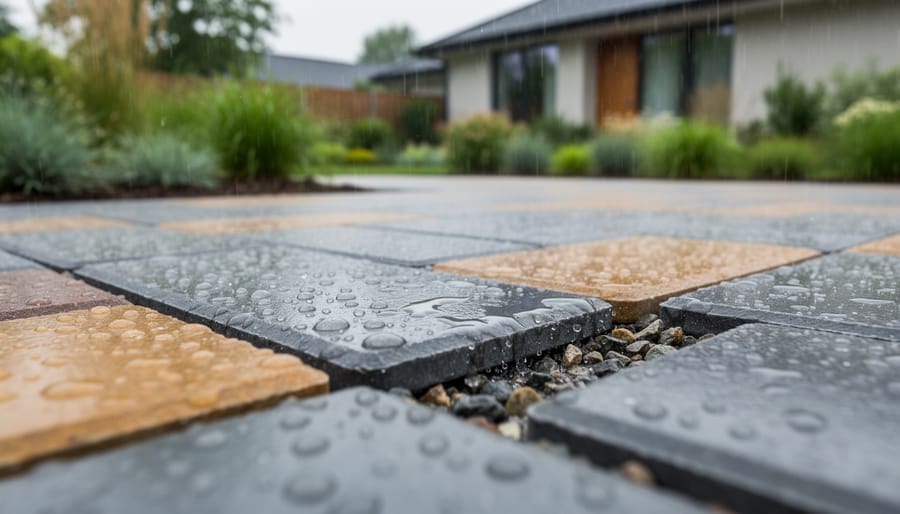
Look beneath your patio next time it rains. If you see puddles pooling on the surface, water rushing toward your foundation, or worse, creating erosion channels through your garden beds, you’re watching your hardscaping fail one of its most important jobs. Traditional concrete and asphalt create impermeable barriers that force thousands of gallons of stormwater to go somewhere—often straight into overwhelmed municipal systems or flooding your basement.
Permeable hardscaping flips this problem into an environmental solution. These specially designed surfaces allow rainwater to filter through the material itself, mimicking how healthy soil naturally absorbs moisture. Instead of creating runoff that carries pollutants into local waterways, permeable pavers, porous concrete, and gravel systems let water recharge groundwater supplies right where it falls.
The benefits extend far beyond preventing puddles. You’ll reduce strain on storm sewers, minimize erosion around your property, and filter out contaminants before they reach streams and rivers. Many municipalities now offer incentives or rebates for installing permeable surfaces, recognizing their role in sustainable water management. Even better, these systems prove surprisingly durable and attractive, with design options ranging from rustic gravel pathways to sophisticated interlocking pavers that rival traditional hardscaping in curb appeal.
Whether you’re planning a new patio, replacing an aging driveway, or simply tired of mud-streaked walkways after every storm, permeable hardscaping deserves consideration as both a practical fix and an investment in environmental stewardship.
What Permeable Hardscaping Actually Means (In Plain English)
Think of traditional hardscaping like wearing a raincoat. When it rains, water hits that concrete driveway or asphalt path and has nowhere to go except sideways, creating runoff that carries pollutants into storm drains and contributes to flooding. Permeable hardscaping, on the other hand, works more like a breathable jacket. It lets water pass right through.
Here’s what makes the difference: permeable hardscaping includes intentional gaps, pores, or spaces that allow water to filter down through the surface instead of pooling on top. Rather than creating an impenetrable barrier between sky and soil, these materials work with nature’s drainage system.
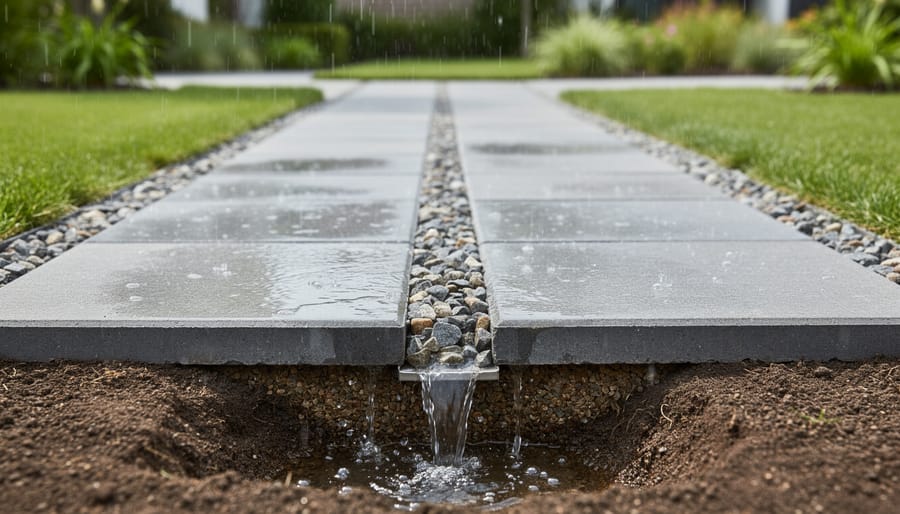
The magic happens in layers. Most permeable hardscaping systems have three parts working together. The visible surface layer might be permeable pavers with spaces between them, porous concrete with tiny connected air pockets, or gravel held in place by a grid system. Below that sits a layer of smaller stone that filters water as it moves downward. Finally, a deep base layer of larger crushed stone acts like a temporary reservoir, holding water until it gradually soaks into the soil beneath.
When rain falls on your permeable patio or walkway, gravity pulls water through these layers at a natural pace. The ground underneath absorbs moisture just like it would in an undeveloped area, recharging groundwater supplies and keeping your local water cycle healthy. Meanwhile, those layers filter out pollutants, meaning cleaner water reaches the soil.
The practical upside? No more puddles on your walkways, reduced flooding in your yard, and you’re doing something genuinely good for your local environment. Plus, many municipalities actually offer incentives for installing permeable hardscaping since it reduces strain on stormwater systems. It’s one of those win-win solutions where taking the sustainable route also solves everyday problems around your property.
The Real Problems Traditional Hardscaping Creates
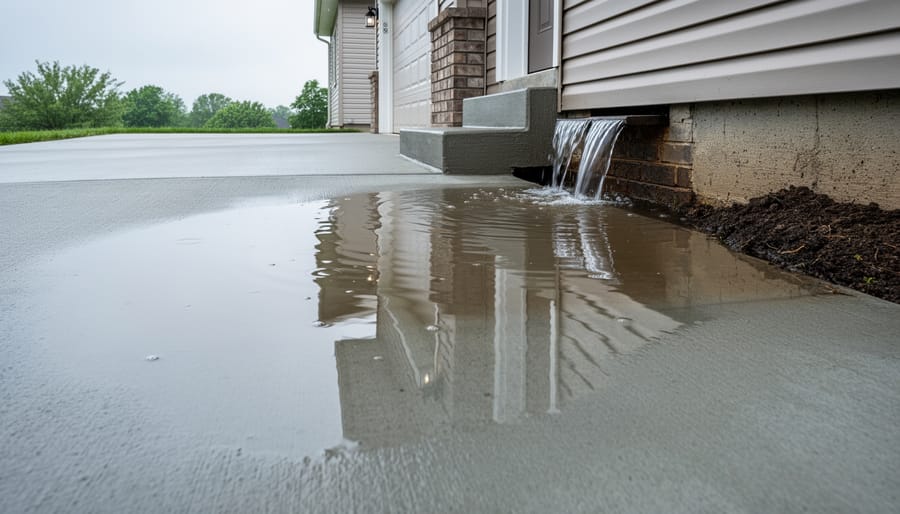
You’ve probably noticed it yourself after a heavy rainstorm: water pooling at the end of your driveway, rushing down your walkway like a miniature river, or worse, finding its way into your basement. These aren’t just inconveniences. They’re symptoms of a larger problem created by traditional hardscaping materials like concrete and asphalt that cover an increasing portion of our residential landscapes.
When rain falls on impermeable surfaces, it has nowhere to go but sideways and down, creating fast-moving runoff that causes a cascade of issues. That rushing water doesn’t just disappear. It carries with it motor oil from driveways, fertilizers from lawns, pet waste, and other pollutants directly into storm drains and, ultimately, into local waterways. Your beautiful patio or driveway is essentially creating a highway for contaminants to reach streams, rivers, and groundwater supplies.
The erosion problem is equally frustrating. That concentrated water flow carves channels through your garden beds, washes away mulch you just spread last weekend, and creates unsightly gullies in your carefully maintained lawn. Many homeowners find themselves constantly repairing these areas, only to watch the next storm undo their work.
There’s also the financial impact to consider. When water can’t soak into the ground naturally, your lawn and garden plants become completely dependent on irrigation during dry periods. The soil beneath impermeable surfaces becomes compacted and depleted, affecting nearby plant health. This leads to higher water bills as you compensate for what nature would normally provide through groundwater recharge. Speaking of water-saving strategies, allowing rainwater to infiltrate naturally is one of the most effective approaches you can implement.
For those dealing with mature trees near hardscaping, the problems multiply. Tree roots need oxygen and water, both of which become scarce under impermeable surfaces. You might notice stressed trees with yellowing leaves or stunted growth, symptoms of suffocation happening right beneath your feet. Traditional hardscaping doesn’t just create problems during storms. It fundamentally disrupts the natural water cycle that healthy landscapes depend on year-round.
Types of Permeable Hardscaping That Actually Work
Permeable Pavers: The Popular Choice
If you’re looking for the perfect blend of beauty and sustainability, permeable pavers might just become your new favorite hardscaping solution. These interlocking units have won over countless homeowners, and for good reason.
Permeable pavers work by creating small gaps between each unit, allowing rainwater to filter through the spaces and into the ground below. During installation, they’re laid over a specially prepared base of graded stone that acts as a reservoir and filtration system. This layered approach means water doesn’t just disappear quickly – it actually gets cleaned as it moves through the materials.
What makes these pavers so appealing is their incredible versatility in appearance. You can choose from natural stone looks, sleek modern designs, classic brick patterns, or contemporary geometric shapes. Whether you’re going for a rustic cottage vibe or a minimalist aesthetic, there’s a permeable paver style that’ll complement your landscape perfectly.
These pavers shine in high-traffic areas where you need both durability and drainage. Driveways benefit immensely since they handle the weight of vehicles while preventing those annoying puddles that form after rainstorms. Patios become more enjoyable because water drains away instead of pooling where you want to place your outdoor furniture. Walkways stay safer and more accessible year-round, with better drainage reducing slip hazards.
The installation does require proper preparation – that stone base is critical for performance – but once in place, permeable pavers are remarkably low-maintenance. They’re also easier to repair than poured concrete since you can simply replace individual pavers if needed.
Porous Concrete and Asphalt
If you’ve ever dealt with puddles forming on your driveway after a rainstorm, you’ll appreciate what porous concrete and asphalt bring to the table. Unlike traditional versions that create impermeable barriers, these modified materials are designed with small gaps that allow water to filter straight through to the soil below.
The secret lies in their composition. Porous concrete and asphalt use the same basic ingredients as conventional versions but with significantly less sand. This creates a honeycomb-like structure with interconnected voids that can handle impressive amounts of water—typically allowing 2 to 5 gallons per square foot per minute to pass through.
Durability-wise, you’re looking at comparable lifespans to traditional materials when properly installed, generally 20 to 30 years for driveways and parking areas. The key difference is maintenance. You’ll need to vacuum sweep these surfaces once or twice yearly to prevent the pores from clogging with debris and sediment. Think of it like cleaning your gutters—a small investment of time that keeps everything functioning properly.
These materials shine in residential driveways, parking pads, and low-traffic pathways. However, they’re not ideal for areas that need frequent snow plowing (the equipment can damage the surface) or spots with heavy vehicle traffic. For homeowners committed to reducing runoff while maintaining that classic paved look, they’re an excellent sustainable choice.
Gravel and Stone Options
If you’re looking for the most wallet-friendly and DIY-accessible permeable hardscaping option, gravel and stone are your best friends. These materials let water filter through naturally while giving you plenty of creative freedom.
Crushed stone, typically ranging from quarter-inch to three-quarter-inch pieces, creates a stable surface perfect for pathways and patios. The angular edges lock together nicely, reducing shifting over time. It’s especially practical for high-traffic areas where you need durability without breaking the bank.
Pea gravel offers a softer, more decorative look with its smooth, rounded stones. It works beautifully for garden paths, around seating areas, or as a base material for larger pavers. The rounded shape means it shifts a bit more than crushed stone, but it’s gentler on bare feet and gives that pleasant crunching sound when you walk on it.
Decorative rock options like river rock, lava rock, or colored stone can elevate your design while maintaining excellent drainage. These larger stones work wonderfully as accents or ground covers around plants and trees.
The real beauty here? Installation is straightforward enough for most homeowners. You’ll need landscape fabric underneath to prevent weeds, edge restraints to keep everything contained, and a few basic tools. Your local garden center can help you calculate how much material you’ll need based on your project size.
Grass Pavers and Grid Systems
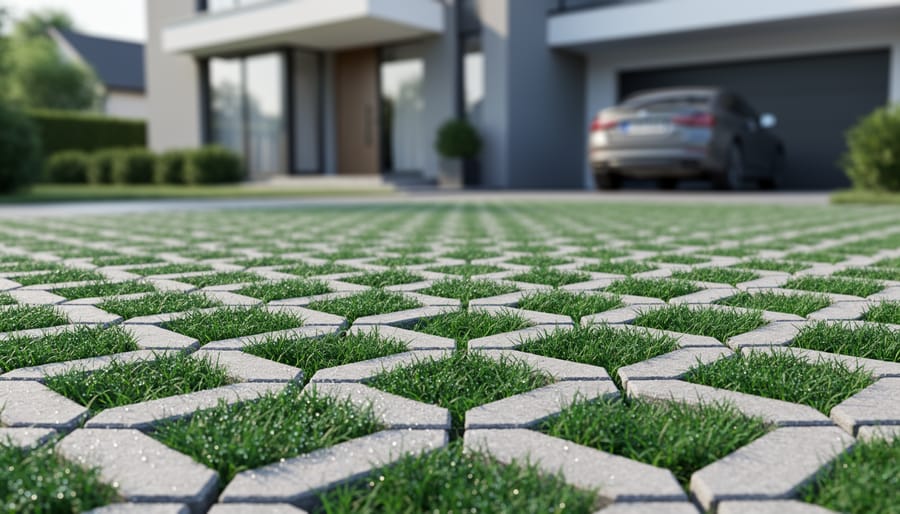
Grass pavers and grid systems offer the best of both worlds—a green, living surface that can handle vehicle traffic without turning into a muddy mess. These ingenious systems use plastic or concrete grids that sit just below the soil surface, creating reinforced cells where grass roots grow and thrive. The grid distributes weight across a wider area, preventing soil compaction and those frustrating ruts that develop in traditional grass parking areas.
I’ve seen these transform overflow parking areas at homes with large families or frequent gatherings. Instead of choosing between a sea of concrete or a lawn that gets destroyed every time guests arrive, you get a functional surface that remains predominantly green. The grass grows through the grid openings, maintaining about 90% vegetation coverage while the hidden framework does the heavy lifting.
These systems work beautifully for driveways used occasionally, RV parking pads, or fire access lanes that need to stay permeable. They’re particularly effective in areas with moderate traffic—think weekend use rather than daily wear. The root systems stay healthier because water and air can still reach them, and rainwater infiltrates naturally through the soil. Installation does require proper base preparation and selecting grass varieties that tolerate some compaction, but the sustainable result is worth the initial effort. Plus, you’re adding green space rather than removing it.
The Environmental Benefits That Matter to Your Property
Let’s talk about what permeable hardscaping can actually do for your yard, beyond just being a responsible environmental choice. The benefits extend right to your soil, your plants, and your daily experience of your outdoor space.
First and foremost, you’ll notice fewer puddles and soggy spots after rainstorms. Instead of water pooling on solid surfaces and either sitting there or rushing off to overwhelm your drainage systems, it seeps gradually through permeable pavers, gravel, or porous concrete. This means your patio stays usable sooner after rain, and you won’t be dealing with erosion channels carved through your garden beds.
Your soil and plants will thank you too. When rainwater infiltrates naturally where it falls, it carries oxygen down to plant roots and beneficial soil organisms. This gradual absorption maintains consistent soil moisture levels rather than creating those feast-or-famine cycles of flooding followed by drought. Your trees, shrubs, and garden beds near permeable hardscaping typically show better health and vigor because they’re receiving water the way nature intended.
Here’s something most homeowners don’t think about: groundwater recharge. Every gallon that soaks through your permeable driveway or walkway replenishes underground aquifers instead of becoming runoff. In practical terms, this helps maintain water table levels that feed nearby wells and springs, and it reduces the burden on municipal storm systems during heavy rain events.
The cooling effect is another tangible benefit. Traditional concrete and asphalt absorb heat and radiate it back, creating those uncomfortable hot zones in your yard. Permeable options, especially when combined with eco-friendly landscaping materials, stay significantly cooler because water evaporating through them provides natural cooling.
Perhaps most importantly for water quality, permeable hardscaping acts as a natural filter. As rainwater passes through the layers of aggregate base material, pollutants like oils, heavy metals, and debris get trapped and broken down by soil microbes before reaching groundwater. You’re essentially creating a mini water treatment system right in your yard, protecting local streams and reducing contamination that would otherwise flow directly into storm drains.
Where Permeable Hardscaping Makes the Most Sense
Permeable hardscaping shines in specific areas of your landscape where water management and functionality intersect. Let’s explore where it makes the most practical sense for your property.
Driveways are perhaps the most popular application, especially if you’ve noticed puddles after every rainstorm or your municipality has strict stormwater regulations. Whether you choose permeable pavers, porous asphalt, or pervious concrete, your driveway can handle daily vehicle traffic while allowing rainfall to infiltrate naturally. I’ve seen homeowners completely eliminate their driveway drainage problems with this one upgrade.
Patios and walkways also benefit tremendously from permeable solutions. Instead of water pooling on your entertaining space, it filters down into healthier soil below while supporting local ecosystems. Garden paths using permeable materials create natural-looking transitions between planting beds while maintaining excellent drainage.
Now, let’s talk about important considerations. Slope matters significantly. Gentle slopes under five percent work beautifully with most permeable systems, but steeper grades may require additional engineering or terracing to slow water flow. Your soil type influences installation too. Sandy, well-draining soils are ideal, while heavy clay requires more preparation, possibly including amended subbase layers or drainage systems.
Climate plays a crucial role in material selection. In freeze-thaw regions, choose systems designed to withstand winter expansion without cracking. Desert environments benefit from permeable surfaces that help recharge precious groundwater supplies.
Around trees, permeable hardscaping proves invaluable. Unlike solid concrete that suffocates roots, permeable materials allow oxygen and water to reach the root zone, keeping your trees thriving while providing functional pathways. This application particularly resonates with gardeners committed to sustainability throughout their landscapes.
Installation Considerations: What You Need to Know Before Starting
Let’s be honest—installing permeable hardscaping isn’t quite as simple as laying down regular pavers, but it’s not rocket science either. Understanding what you’re getting into helps you plan properly and avoid surprises down the road.
The foundation is everything here. You’ll need to excavate deeper than traditional hardscaping, typically 12-18 inches, to create room for the gravel base that stores and filters water. This base layer usually consists of three-quarter-inch crushed stone, which provides both structural support and drainage capacity. Think of it as creating an underground reservoir that slowly releases water back into the soil, improving soil health over time.
Before breaking ground, you’ll want to assess your soil’s infiltration rate. Clay-heavy soils drain slowly and might need additional planning, like incorporating drainage pipes to direct excess water away from foundations. Sandy soils, on the other hand, are ideal candidates for permeable systems.
When it comes to DIY versus hiring professionals, consider your project scope and comfort level. Smaller areas like walkways or patios are manageable weekend projects if you’re handy and patient. You’ll need basic tools, a plate compactor rental, and good back muscles. Larger areas like driveways demand precision grading and compaction to prevent settling, making professional installation worth considering.
Cost-wise, expect to pay 10-30 percent more than conventional hardscaping initially. DIY materials for permeable pavers run $8-15 per square foot, while professional installation ranges from $15-30 per square foot depending on your location and material choices. Pervious concrete and porous asphalt typically require professional installation, running $5-15 per square foot.
The good news? Many municipalities offer rebates or incentives for permeable installations as part of stormwater management programs, potentially offsetting that upfront premium. Check with your local water district before starting—you might recoup hundreds or even thousands of dollars while making your landscape more sustainable.
Keeping Your Permeable Surfaces Working Like New
Here’s the good news: keeping your permeable hardscaping in top shape is easier than you might think, and it fits right into your regular lawn care routine. Most homeowners find they can maintain their permeable surfaces with just a few simple tasks throughout the year.
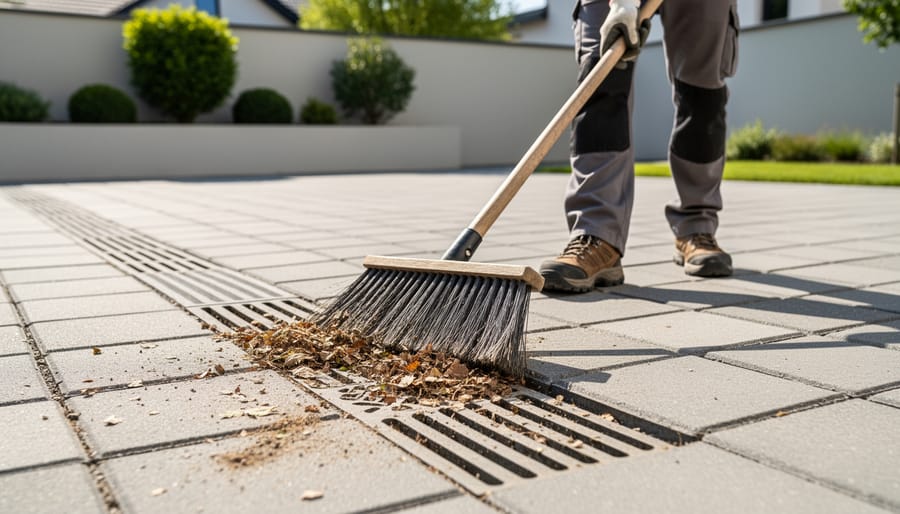
The most important habit is preventing debris from clogging those essential pores. Every few weeks during spring and fall when leaves are abundant, simply sweep or use a leaf blower to clear the surface. For a deeper clean once or twice a year, consider using a shop vacuum or specialized sweeper to pull out smaller particles that settle into the joints. Think of it like vacuuming your carpet—regular attention prevents buildup that’s harder to tackle later.
Weeds occasionally pop up between pavers, but don’t let this discourage you. A quick hand-pull when you spot them keeps things tidy, or you can use a weeding tool for stubborn roots. Many gardeners find that polymeric sand or joint stabilizers significantly reduce weed growth between pavers. If you prefer a preventive approach, applying corn gluten meal in early spring acts as a natural pre-emergent that aligns with sustainable gardening practices.
Seasonal inspections are your friend. Walk your permeable surfaces twice a year, checking for any settling, sunken spots, or areas where water pools instead of draining. These issues are usually easy fixes—adding more joint material or releveling a few pavers takes less time than you’d spend mowing the lawn.
Winter care is refreshingly simple. Permeable surfaces handle freeze-thaw cycles better than traditional hardscaping since water drains through instead of pooling and expanding. Skip the salt-based de-icers that can clog pores; sand provides traction without compromising drainage.
If you notice reduced drainage over time, it’s typically a sign that pores need cleaning. A pressure washer on a gentle setting or that trusty shop vacuum usually restores full function quickly. With these straightforward practices woven into your gardening calendar, your permeable hardscaping will continue performing beautifully for decades.
Common Concerns (And Why They Shouldn’t Stop You)
I get it—permeable hardscaping sounds wonderful in theory, but you’re probably wondering if it’ll actually hold up to real-world challenges. Let’s tackle the concerns I hear most often from homeowners like you.
First up: durability. Will permeable pavers crack or shift more than traditional concrete? Actually, properly installed permeable systems can be just as durable, sometimes even more so. The key is in the base preparation and choosing quality materials. Many permeable pavers are rated for driveways and can handle vehicle traffic without issue. Think of it this way—the joints between pavers allow for slight movement, which can actually reduce cracking compared to solid concrete slabs that have nowhere to go when temperatures fluctuate.
What about winter performance? This one surprises people: permeable surfaces often outperform traditional hardscaping in cold climates. Because water drains through rather than pooling on the surface, you’ll typically deal with less ice formation. Snow melts and drains away instead of creating those treacherous frozen puddles we all dread. Plus, you’ll use less salt, which is better for your surrounding plants and soil.
Now, let’s talk aesthetics. Some folks worry permeable options look industrial or utilitarian. Here’s the truth: modern permeable hardscaping comes in gorgeous varieties. From natural stone-look pavers to sleek contemporary designs, you’re not sacrificing beauty for function. Permeable gravel can be just as attractive as traditional pathways when edged properly.
Cost is always a concern. Yes, permeable installations often cost more upfront—typically 10-30% more than conventional hardscaping. But consider the savings: reduced flooding issues, potential stormwater fee reductions in some municipalities, less maintenance, and increased property value from sustainable features. You’re investing, not just spending.
Finally, the clay soil question. Heavy clay presents challenges, but it’s not a dealbreaker. The solution involves installing deeper aggregate bases that create temporary storage reservoirs. Water percolates slowly through clay, so the base acts as a buffer. You might also consider adding drainage pipes within the base to help move water along. It requires thoughtful design, but it absolutely works—even in clay-heavy regions.
Choosing permeable hardscaping isn’t just about installing a prettier patio or driveway. It’s about solving real problems that affect your property every single day. When you replace traditional concrete with permeable alternatives, you’re eliminating standing water that breeds mosquitoes, preventing erosion that washes away your garden soil, and reducing the strain on local stormwater systems that affect entire neighborhoods. These aren’t small wins—they’re meaningful improvements that make your outdoor space more functional while protecting the environment you care about.
The beauty of permeable hardscaping is that you don’t need to overhaul your entire landscape at once. Start small. Maybe it’s replacing a problem walkway that always puddles after rain, or creating a permeable patio area where water currently pools near your foundation. That single project will teach you about the materials, the installation process, and the immediate benefits you’ll notice after the first rainfall. You’ll see how quickly water drains, how much cleaner your space stays, and how natural it looks compared to traditional concrete.
Think about the long-term impact of your choice. Permeable hardscaping reduces your property’s contribution to urban flooding, filters pollutants before they reach groundwater, and recharges aquifers that supply drinking water. It also increases your property value and reduces maintenance headaches. No more standing water to mop up, no more ice patches forming in the same problematic spots every winter.
You have the power to make a difference, one square foot at a time. Your landscape decisions ripple outward, inspiring neighbors and contributing to healthier local ecosystems. Whether you tackle installation yourself or hire professionals, you’re investing in a solution that works harder and smarter than conventional hardscaping. Take that first step. Your property and the planet will thank you for generations to come.