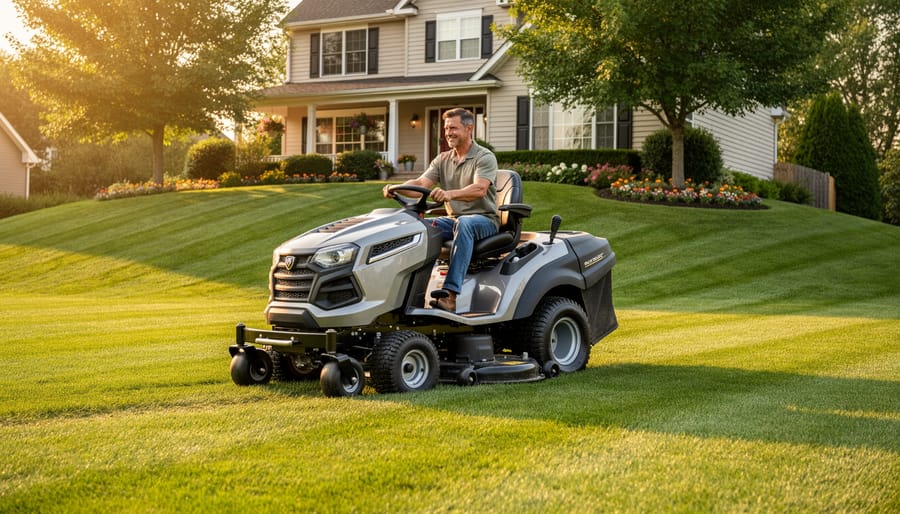
Match your tractor’s cutting deck to your terrain’s complexity: a 42-inch deck navigates obstacles and tight corners on irregularly shaped acres, while 46-48 inch decks cut mowing time by 20-30% on open, obstacle-free properties. Prioritize hydrostatic transmissions over manual gear systems for one-acre lots—you’ll shift smoothly around flower beds and trees without clutching, reducing operator fatigue during 45-60 minute mowing sessions.
Evaluate engine power in relation to your yard’s topography, not just acreage. Flat one-acre properties perform well with 18-20 HP single-cylinder engines, but slopes exceeding 10 degrees demand 22-24 HP twin-cylinder engines that maintain blade speed under load and prevent scalping on inclines. Test drive tractors on grades similar to your property before purchasing.
Consider fuel efficiency and maintenance accessibility as long-term cost factors that rival initial price differences. Tractors with accessible oil filters, easy-clean mower decks, and fuel-efficient engines save $200-400 annually in operation costs—equivalent to recovering a $1,000 price premium within three seasons. Look for models with tool-free deck leveling and washout ports that reduce maintenance time by half.
Invest in comfort features that directly impact mowing consistency: high-back seats with lumbar support and vibration dampening prevent the fatigue that leads to uneven cutting patterns and missed strips. Cup holders and storage compartments aren’t luxuries—they eliminate mid-mowing interruptions that waste fuel and create overlap marks. Your one-acre property deserves equipment that delivers professional results while supporting sustainable, efficient lawn care practices that minimize environmental impact through reduced fuel consumption and optimal cutting performance.
Why 1 Acre Is the Sweet Spot for Lawn Tractors
If you’re managing a 1-acre property, you’ve likely already discovered that push mowing takes forever—we’re talking two to three hours of sweaty work that eats up your entire weekend. On the flip side, investing in heavy-duty commercial equipment feels like overkill when you’re not maintaining a golf course. This is exactly why 1 acre sits in that Goldilocks zone where a residential lawn tractor becomes not just helpful, but genuinely practical.
Here’s the reality: at around 43,560 square feet, one acre is substantial enough that efficiency matters. A quality lawn tractor can cut your mowing time down to 45 minutes or less, transforming yard maintenance from an exhausting chore into a manageable Saturday morning task. You’ll save energy for the gardening projects you actually enjoy, whether that’s tending vegetable beds or establishing pollinator-friendly native plantings.
The beauty of tractors designed for this acreage is their balanced approach. You don’t need the raw power of a 25-horsepower commercial beast, but you do want enough muscle (typically 15-20 HP) to handle slopes, occasional thick grass, and seasonal leaf mulching. Modern residential tractors deliver this efficiency while remaining nimble enough to navigate around trees, garden beds, and landscape features without requiring a commercial driver’s license.
When considering your options, you might wonder about alternatives like a lawn tractor vs zero turn setup. For most 1-acre properties with varied terrain and obstacles, traditional tractors offer better versatility and attachment compatibility—think baggers, spreaders, and even snow blades for year-round usefulness.
This size property also makes financial sense for tractor ownership. You’ll recoup your investment through time savings and property value maintenance, without the ongoing expense of professional lawn services.
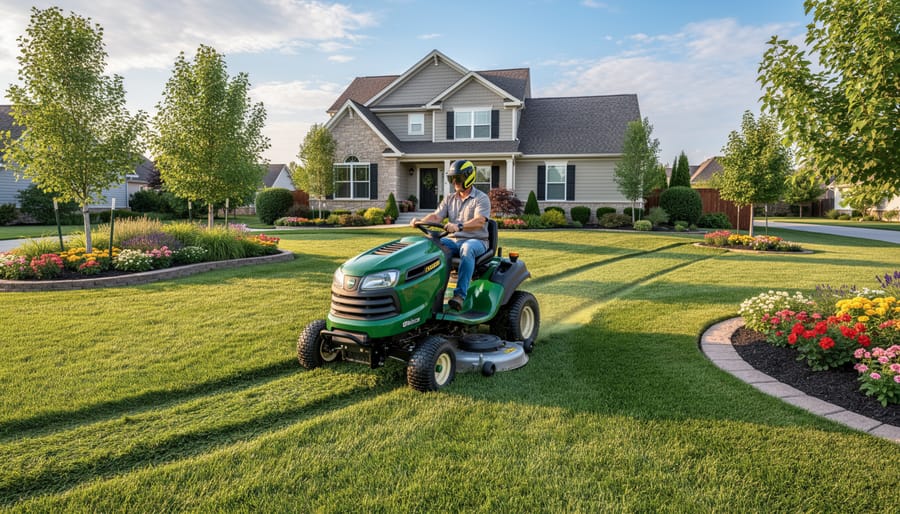
Engine Power: Finding Your Goldilocks Zone
When you’re mowing an acre of lawn, you don’t need the firepower of a commercial-grade beast, but you also don’t want to struggle with an underpowered machine that turns a Saturday morning task into an all-day ordeal. For properties around one acre, the sweet spot typically falls between 18 and 24 horsepower. This range gives you enough muscle to handle varied terrain and occasional thick grass without guzzling fuel or breaking your budget.
Think of engine selection like choosing hiking boots. You wouldn’t wear mountaineering boots for a neighborhood walk, right? The same principle applies here. An 18-20 HP engine works beautifully for relatively flat, well-maintained lawns. You’ll complete your mowing in about 45 minutes to an hour, maintain decent fuel efficiency, and enjoy a machine that’s built to last without unnecessary complexity.
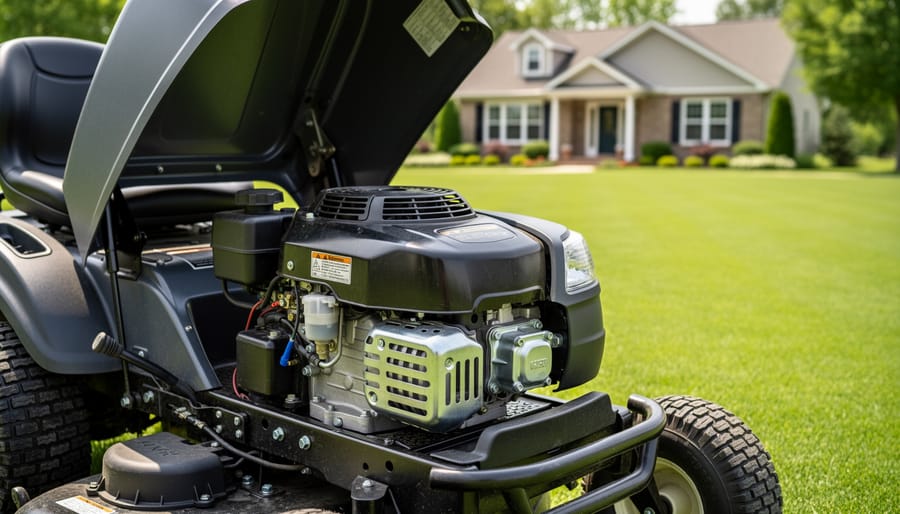
Now, let’s talk about what’s happening under the hood. Single-cylinder engines are simpler and more affordable, making them appealing for budget-conscious homeowners. They’ll get the job done, but they tend to vibrate more and work harder, especially on slopes or when pushing through damp grass. Twin-cylinder engines, on the other hand, deliver smoother operation and better power distribution. The twin-cylinder engine performance you’ll experience translates to less operator fatigue and improved longevity, making it a worthwhile investment if you plan to keep your tractor for years.
From a sustainability perspective, proper engine sizing matters more than you might think. An oversized engine burns unnecessary fuel and resources, while an undersized one runs at maximum capacity constantly, wearing out faster and requiring earlier replacement. That 20-22 HP twin-cylinder configuration hits the efficiency sweet spot for most one-acre properties, balancing performance with responsible resource use. You’ll spend less time mowing, consume fuel efficiently, and reduce the environmental impact of premature equipment replacement.
Cutting Deck Size and Configuration
Stamped vs. Fabricated Decks: What Really Matters
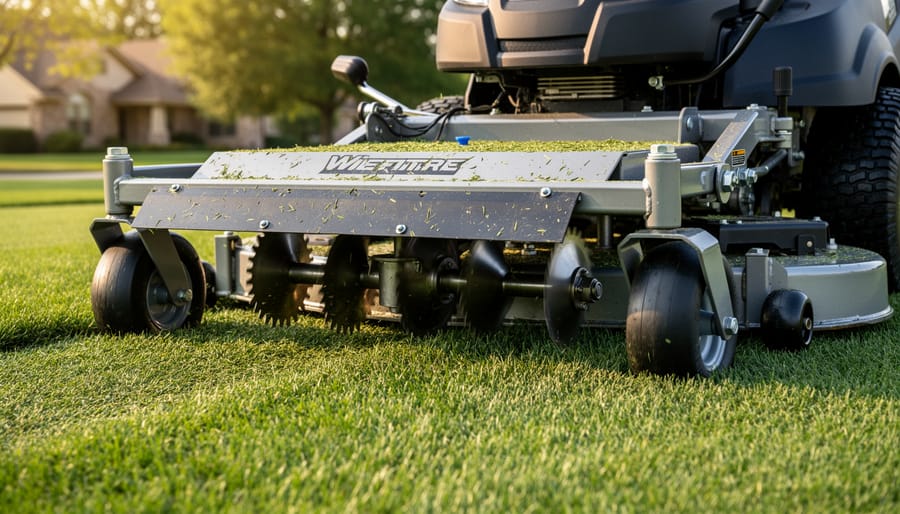
You’ll encounter two main deck types when shopping: stamped and fabricated. Stamped decks are pressed from a single sheet of metal, making them lighter and more affordable. They work perfectly fine for typical 1-acre properties with regular mowing schedules. Think of them as the practical choice for homeowners who maintain their lawns consistently.
Fabricated decks are welded together from multiple pieces of heavy-gauge steel, creating a more robust construction. They’re built to handle rougher terrain, occasional debris, and commercial-grade workloads. However, for most residential properties, this extra durability comes at a premium that doesn’t translate to noticeably better cuts or longer life under normal use.
Here’s what really matters: deck thickness and blade quality affect your results more than construction method. A well-maintained stamped deck from a reputable manufacturer will serve you reliably for years. Focus your budget on features that enhance your mowing experience, like comfortable seating and easy height adjustment, rather than chasing commercial-grade durability you probably won’t need. For sustainable lawn care, either deck type works fine as long as you’re mulching clippings back into your lawn to reduce waste and fertilizer needs.
Discharge Options and Mulching Capabilities
Most modern lawn tractors offer three discharge options, and understanding how each works can transform your lawn care routine. Side discharge is the default setting on most machines, shooting clippings out the side as you mow. It’s fast and efficient for tall grass or wet conditions, though you’ll need to watch where those clippings land.
Bagging collects clippings for a pristine look and works beautifully if you’re dealing with weeds gone to seed or prefer the manicured appearance of a golf course. However, here’s where sustainability comes in: those bagged clippings are actually free fertilizer you’re throwing away. Grass clippings contain about 4% nitrogen and break down quickly, feeding your lawn naturally.
That’s why mulching has become my go-to recommendation for most situations. A mulching blade chops clippings into fine pieces that filter back into the turf, reducing your fertilizer needs by up to 25%. It’s genuinely a win-win for your wallet and the environment. The key is never removing more than one-third of the grass blade at once, as mulching works best with shorter clippings.
For a one-acre property, look for tractors offering all three options as convertible kits. This flexibility lets you adapt to seasonal conditions and different areas of your lawn, giving you practical control over your lawn care approach year-round.
Transmission Types: Manual, Automatic, or Hydrostatic?
When you’re shopping for a lawn tractor for your 1-acre property, understanding transmission types can feel overwhelming at first. Think of the transmission as your tractor’s personality—it determines how smoothly you’ll glide across your lawn and how much effort you’ll need to put in. Let me break down the three main options so you can find your perfect match.
Manual transmissions work much like a car with a stick shift. You’ll use a clutch pedal and shift through gears as you mow. While these are the most affordable option and relatively simple to maintain, they require more attention and can be tiring on properties with hills or obstacles. For a typical 1-acre lot, you’ll be shifting frequently around trees, flower beds, and terrain changes, which might test your patience.
Automatic transmissions offer a step up in convenience. Similar to driving an automatic car, you simply press the pedal to go and release to slow down. They handle varying terrain reasonably well and require less physical effort than manual options. However, they may not provide the same level of precise speed control that some situations demand, particularly when navigating tight spaces or managing slopes.
Hydrostatic transmissions are the gold standard for most homeowners, and there are good reasons why. These systems use hydraulic fluid to transfer power, giving you infinitely variable speed control with just a foot pedal or lever—no shifting required. The hydrostatic transmission benefits include effortless operation on hills, smooth acceleration around obstacles, and the ability to fine-tune your speed for different mowing conditions. They’re particularly valuable for 1-acre properties with mixed terrain, gardens, or landscaping features that require frequent speed adjustments.
While hydrostatic models cost more upfront and may need occasional fluid maintenance, most homeowners find the ease of use and superior control worth the investment. For sustainable lawn care practices, the precise control also means less turf damage from sudden stops or jerky movements, helping your grass stay healthier throughout the season.
Turning Radius and Maneuverability Features
When you’re working with a one-acre property, chances are you’ve got more than just open lawn to navigate. Most homeowners have gardens, flower beds, trees, and maybe that charming stone pathway you installed last spring. This is where turning radius becomes your best friend or your biggest frustration.
Think of turning radius as your tractor’s ability to pivot and change direction without requiring a football field’s worth of space. For properties with landscaping features, a tighter turning radius means fewer three-point turns, less backing up, and significantly less time spent with a string trimmer afterward. I’ve found that tractors with turning radii under 18 inches can navigate around most obstacles with ease, while those requiring 20+ inches often leave you doing awkward maneuvers.
Modern lawn tractors offer several maneuverability technologies worth considering. Zero-turn capabilities, once reserved for commercial mowers, are now available on residential tractors and deliver exceptional precision around flower beds and trees. If zero-turn feels too advanced, look for tractors with tight-turn technology, which allows the rear wheels to follow a tighter path than traditional steering.
Steering responsiveness matters too. Test-drive if possible and notice how quickly the tractor responds to steering inputs. Sluggish steering makes navigating obstacles tedious, while responsive steering feels intuitive and reduces operator fatigue during those longer mowing sessions.
From a practical standpoint, better maneuverability directly translates to fewer passes with your trimmer and edger afterward. That’s time saved and less fuel consumed overall, making it both an efficiency and sustainability win for your lawn care routine.
Comfort Features That Actually Make a Difference
When you’re spending 45 to 90 minutes mowing your acre, comfort isn’t a luxury—it’s essential for getting the job done without feeling beaten up afterward. I learned this the hard way during my first season with a basic model that left me dreading mow day.
Start with the seat, which is where most manufacturers cut corners on budget models. Look for high-back seats with thick padding and lumbar support. Some premium tractors offer adjustable armrests and even air-ride suspension seats that absorb bumps as you traverse uneven terrain. The difference between a flat plastic seat and a contoured, cushioned one becomes painfully obvious after the first half-hour.
Vibration fatigue sneaks up on you. Quality tractors incorporate comfort and vibration reduction systems that isolate the operator platform from engine and ground vibrations. This means less hand numbness and a steadier ride over bumpy areas. Paired with rubberized, ergonomic steering wheels, these features transform the mowing experience from a chore into something you might actually enjoy.
Control placement matters more than you’d think. The best designs put your throttle, blade engagement, and parking brake within easy reach without requiring awkward stretches or position shifts. Test-drive before buying if possible—what feels intuitive for one person might be clumsy for another. Remember, sustainable lawn care starts with equipment you’ll actually want to use regularly, and comfort features directly impact your willingness to maintain a consistent mowing schedule that keeps your lawn healthy.
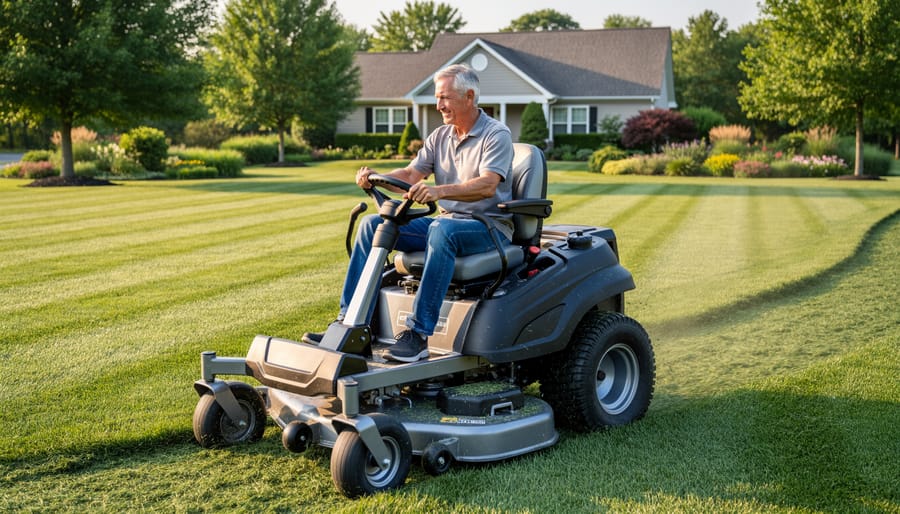
Durability and Build Quality Markers
When you’re investing in a lawn tractor for your acre of property, understanding what separates a reliable workhorse from a money pit makes all the difference. Let’s walk through the key indicators that signal quality construction.
Start by examining the frame and deck materials. Heavy-gauge steel frames provide the backbone your tractor needs to withstand years of use without flexing or cracking. Look for decks made from 11 or 12-gauge steel rather than thinner materials that dent easily. Some manufacturers stamp the deck thickness right on the housing, which shows confidence in their product. While stamped decks work fine for lighter duty, fabricated welded decks offer superior strength for consistent performance over time.
Component brands matter significantly. Major manufacturers like Kohler, Kawasaki, and Briggs & Stratton engines have established reputations you can research. Similarly, hydrostatic transmissions from Tuff Torq or Hydro-Gear typically outlast generic alternatives. Don’t hesitate to ask dealers about specific component manufacturers because these partnerships often indicate quality standards. You can learn more about which durable mower brands consistently deliver reliable components.
Warranty coverage tells you how much faith a company has in their product. Look beyond the basic bumper-to-bumper period and examine what’s actually covered. A three-year comprehensive warranty beats a two-year limited warranty every time. Pay attention to powertrain coverage specifically, as engine and transmission repairs represent your biggest potential expenses.
Finally, check for sealed bearings at pivot points, rust-resistant coatings on exposed metal, and quality fasteners rather than cheap bolts. These details might seem minor, but they predict how your tractor will perform five years down the road when you’re still maintaining a beautiful, sustainable lawn without constant repair bills.
Fuel Efficiency and Environmental Considerations
When you’re mowing a one-acre property, fuel efficiency might not seem like a major concern at first, but it adds up over a season. Most lawn tractors for this size property consume between 0.5 to 1.5 gallons per hour of operation, depending on engine size and mowing conditions. A typical mowing session for one acre takes about 45 minutes to an hour, meaning you’ll use roughly one gallon per mow. With weekly mowing during the growing season, that’s approximately 25-30 gallons annually, which translates to real savings when choosing a more efficient model.
Modern lawn tractors are increasingly designed with environmental considerations in mind. Look for engines that meet EPA Phase 3 emission standards, which significantly reduce harmful pollutants compared to older models. Some manufacturers now offer electric and battery-powered options that eliminate emissions entirely during operation, though these may have higher upfront costs. For one-acre properties, electric tractors are becoming genuinely viable alternatives with improved battery technology providing sufficient runtime.
Beyond the machine itself, you can adopt sustainable mowing practices that reduce environmental impact. Mulching your clippings returns valuable nutrients to your soil while eliminating the fuel consumption associated with bagging and disposal trips. Maintaining sharp blades cuts grass cleanly with less engine strain, improving fuel efficiency by 20-25 percent. Additionally, consider mowing less frequently, allowing grass to grow slightly taller between cuts, which promotes deeper root systems and reduces overall fuel consumption throughout the season. These small adjustments make your lawn care routine more sustainable without sacrificing results.
Essential vs. Nice-to-Have Features for 1-Acre Properties
When shopping for a lawn tractor for your 1-acre property, distinguishing between essential features and nice-to-have upgrades can save you money while ensuring you get a machine that truly meets your needs.
Let’s start with the must-haves. A comfortable, adjustable seat is non-negotiable since you’ll spend 45 minutes to an hour mowing each session. You absolutely need reliable attachment compatibility, particularly if you plan to use your tractor year-round for tasks like leaf collection or snow removal. A dependable transmission, whether automatic or manual, ranks as essential too. For properties with any slopes or uneven terrain, good traction and stability features aren’t optional. Finally, adequate cutting deck size (typically 42-48 inches for one acre) ensures efficient mowing without unnecessary passes.
Now for the nice-to-haves that enhance your experience but won’t make or break functionality. Headlights are wonderful if you occasionally mow early morning or evening, but most homeowners tackle lawn care during daylight hours. Cruise control reduces foot fatigue on larger properties and makes for more relaxing mowing, though it’s certainly manageable without. An hour meter helps track maintenance schedules, but you can achieve the same with a simple logbook. Cup holders and storage compartments add convenience, though they won’t affect mowing quality.
Here’s my practical advice: invest in quality where it counts—engine reliability, deck construction, and wheel design directly impact performance and longevity. Consider your specific situation too. If you genuinely plan to add a trailer or aerator attachment next season, prioritize compatibility now. But if LED lights sound appealing yet you’ve never mowed past sunset, redirect that budget toward a better warranty or more powerful engine. Smart feature selection means your tractor works efficiently for years without paying for bells and whistles gathering dust.
Price Points and Value Considerations
For a 1-acre property, expect to invest between $1,500 and $3,500 for a quality lawn tractor that will serve you well for years. While it’s tempting to grab that budget model at the big-box store for under $1,200, I’ve seen too many homeowners end up frustrated with underpowered engines and flimsy decks that struggle with their actual mowing conditions.
The sweet spot for most 1-acre yards sits around $2,000 to $2,500. At this price point, you’re getting reliable engines from trusted manufacturers, sturdy fabricated decks that resist damage, and comfortable features that make regular mowing less of a chore. Think of it as an investment in both your lawn’s health and your weekend sanity.
Here’s what really matters: a tractor that costs $2,200 with a solid transmission and durable construction will outlast two $1,100 models that need replacing every few seasons. I learned this the hard way with my first cheap tractor, which limped through just two years before major repairs made replacement the smarter choice.
Pay attention to warranty coverage too. Better tractors typically offer two to three-year comprehensive warranties, signaling manufacturer confidence in their durability. Also consider fuel efficiency and maintenance costs. A slightly pricier model with a more efficient engine can save you considerably over its lifetime, aligning with sustainable practices while reducing your operating expenses. Remember, the lowest sticker price rarely equals the best value when you factor in longevity, performance, and total ownership costs.
Choosing the right lawn tractor for your one-acre property doesn’t have to feel overwhelming. By now, you understand that the best machine for you depends on your unique situation—whether that’s tackling hilly terrain, navigating tight spaces around flower beds, or simply wanting to spend less time on maintenance and more time enjoying your yard.
Remember that investing in the right features upfront transforms lawn care from an exhausting chore into satisfying outdoor time. A tractor with appropriate power, a comfortable seat, and a suitable cutting deck makes those weekly mowing sessions something you might actually look forward to. The difference between struggling with an underpowered machine and gliding across your lawn with the right equipment is genuinely life-changing.
As you make your decision, consider how your choice impacts not just your immediate needs but also long-term sustainability. Look for models with fuel-efficient engines, durable construction that extends the product’s lifespan, and the ability to use mulching attachments that return nutrients to your soil. These choices benefit both your wallet and the environment.
Trust your research, prioritize the features that matter most for your property, and don’t let marketing hype sway you from what you genuinely need. Your perfect lawn tractor is out there, ready to help you create the beautiful, healthy lawn you’ve been dreaming about.