**Choose your riding lawn mower brand based on your actual lawn size and terrain, not aspirational marketing.** A half-acre suburban yard doesn’t need the same machine that maintains a three-acre property with hills, and understanding this distinction will save you thousands of dollars and years of frustration.
The riding mower market has become cluttered with brands making bold promises, but only a handful consistently deliver long-term reliability. Premium manufacturers like John Deere and Cub Cadet dominate professional landscaping for good reason—their components withstand decades of use—while budget brands often require replacement within five years. This isn’t about snobbery; it’s about understanding what you’re actually buying when you see that price tag.
**Your decision should weigh three critical factors:** the actual durability of the transmission system (the most common failure point), the availability of replacement parts in your region, and whether the cutting deck design promotes healthy grass growth rather than just making it shorter. Many riders unknowingly damage their lawns with poorly designed decks that scalp grass and create compaction problems, undermining all your other lawn care efforts.
This guide cuts through marketing noise to reveal which brands genuinely earn their reputation, which offer surprising value at mid-tier prices, and which you should avoid regardless of the discount. We’ll also explore sustainable considerations—because a mower that lasts twenty years is infinitely more environmentally friendly than replacing a cheap one every three years, no matter what the initial carbon footprint suggests.
What Really Matters When Choosing a Riding Mower Brand
Shopping for a riding mower isn’t like buying a new phone where you’ll upgrade in a couple years. This is a long-term relationship with a machine that needs to perform reliably season after season. That’s why focusing solely on the sticker price can leave you frustrated down the road.
**Durability should be your starting point.** Look beyond flashy features to the quality of the deck construction, engine reputation, and transmission type. A mower that costs $500 less but needs replacing in five years instead of fifteen isn’t the bargain it appears to be. I’ve learned this lesson the hard way—my neighbor’s budget mower is on its third one while my mid-tier model is still going strong after a decade.
**Parts availability matters more than you might think.** When something breaks (and eventually, something will), can you easily source replacement parts? Popular brands with extensive dealer networks mean you’re not waiting weeks for a specialty part to arrive by mail. This is especially crucial if you maintain a larger property where a week without your mower creates real problems.
**Dealer support can make or break your ownership experience.** A brand with authorized service centers nearby means convenient maintenance and warranty work. Ask local dealers which brands they service most confidently—their candid answers reveal a lot about reliability and manufacturer support.
**Environmental considerations are increasingly important.** Consider fuel efficiency, emission ratings, and whether the manufacturer offers electric options. Some premium brands now feature eco-modes that reduce fuel consumption without sacrificing performance—better for your wallet and the planet.
**Total cost of ownership tells the real story.** Factor in fuel consumption, maintenance frequency, typical repair costs, and resale value. A premium mower might cost 30% more upfront but save you money over ten years through better fuel efficiency, fewer repairs, and higher resale value. Calculate these real-world costs before deciding which brand truly fits your budget.
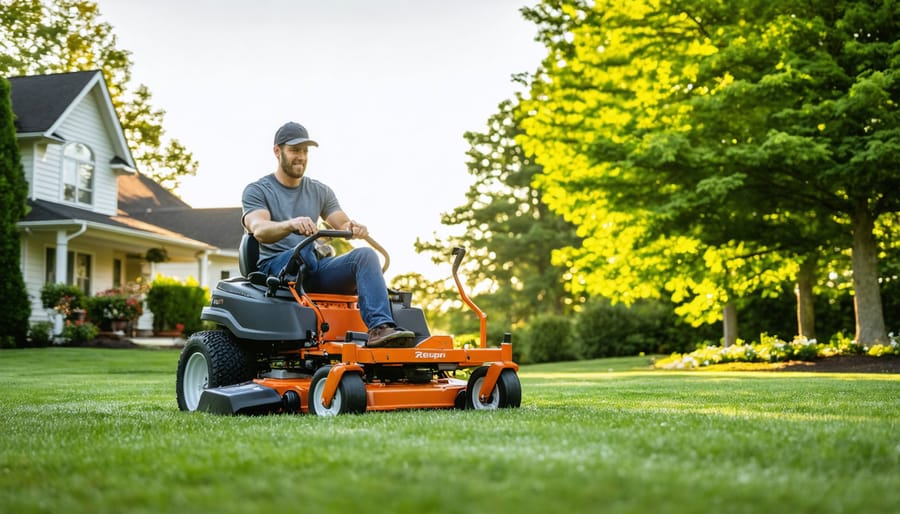
The Premium Tier: Brands Built for the Long Haul
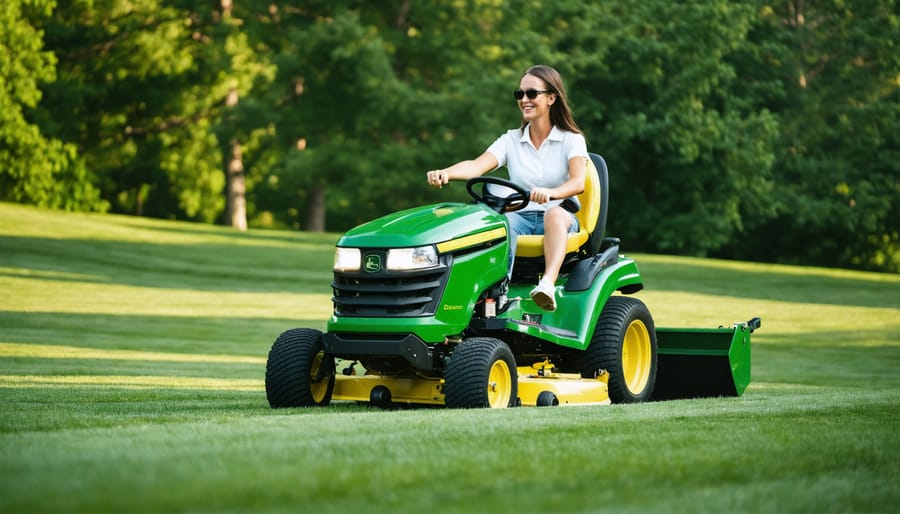
John Deere: The Gold Standard with a Price Tag
When you mention John Deere to any lawn care enthusiast, you’ll likely get knowing nods of approval. There’s a reason these green and yellow machines have become synonymous with quality—they’ve earned their reputation through decades of reliable performance and thoughtful engineering.
Let’s be honest: John Deere isn’t cheap. You’re paying a premium, sometimes 20-40% more than comparable models from other brands. But here’s what you’re getting for that investment. The build quality is exceptional, with heavier-gauge steel decks, commercial-grade transmissions, and components designed for longevity rather than just meeting price points. I’ve personally seen 15-year-old John Deeres still running strong with basic maintenance, while cheaper alternatives needed major repairs within five years.
The dealer network is John Deere’s secret weapon. Unlike brands sold exclusively through big-box stores, John Deere’s authorized dealers provide professional service, genuine parts availability, and expertise that can save you significant headaches. When your mower needs attention mid-season, this matters tremendously.
For sustainability-minded buyers, John Deere has made strides with fuel-efficient engines and longer-lasting components that reduce waste. Their John Deere E100 entry-level model demonstrates how even their affordable options maintain quality standards.
So who should invest in John Deere? If you’re managing 1+ acres, plan to keep your mower for 10+ years, and value dealer support, the premium is justified. For smaller properties under an acre or occasional use, you might find better value elsewhere. The key is matching the investment to your actual needs—John Deere excels when longevity and reliability matter most.
Cub Cadet: Commercial Quality for Homeowners
Cub Cadet brings something special to the residential market—engineering DNA borrowed directly from their commercial equipment division. Founded in 1961, this brand built its reputation on garden tractors tough enough for farm work, and that heritage shines through in their homeowner models today.
What sets Cub Cadet apart is their willingness to include features you’d typically find on commercial mowers at prices homeowners can actually afford. Their signature fabricated steel decks resist warping and hold up season after season, while heavy-duty transmissions handle hills and heavy grass without straining. The Cub Cadet XT2 series exemplifies this approach perfectly, offering genuine commercial-grade construction without the commercial price tag.
I’ve always appreciated how Cub Cadet focuses on practical innovation rather than gimmicks. Their tight turning radius designs make navigating around trees and garden beds remarkably easy, saving time and reducing the need for trimming afterward. The comfortable high-back seats and intuitive controls mean you’re not fighting the machine during those long mowing sessions.
From a sustainability perspective, their durable construction means these mowers last longer, reducing waste and the need for premature replacement. Many models also offer mulching capabilities that return nutrients to your lawn naturally, cutting down on fertilizer needs.
The value proposition here is straightforward: you’re getting professional-grade reliability at residential pricing. While they’re not budget mowers, the investment pays off through longevity and performance that consistently handles whatever your lawn throws at it.
Husqvarna: European Engineering Meets American Lawns
Husqvarna brings Swedish engineering precision to American yards, and you’ll notice the difference the moment you sit down. These machines are designed with ergonomics in mind—comfortable seats, intuitive controls, and remarkably smooth operation that makes mowing less of a chore and more of a pleasant task. If you’ve ever finished mowing with a sore back, you’ll appreciate what thoughtful design can accomplish.
Where Husqvarna truly shines is cutting performance. Their decks are engineered for superior airflow, which translates to cleaner cuts and better grass collection. You’ll see fewer clumps left behind, even when tackling thick, damp grass. Husqvarna’s residential models offer robust cutting capabilities that rival more expensive competitors, making them an excellent value proposition for serious homeowners.
From a sustainability perspective, Husqvarna deserves recognition. They’re actively reducing emissions across their lineup and investing heavily in battery-powered alternatives. Many models feature efficient engines that minimize fuel consumption without sacrificing power—a win for both your wallet and the environment.
The considerations? Parts availability can be spotty in rural areas, though online ordering has improved this situation considerably. Service networks aren’t quite as extensive as John Deere’s, so research local dealers before purchasing. Some users report that certain plastic components feel less durable than the overall machine quality suggests, though this varies by model.
Overall, Husqvarna represents a smart middle ground—premium performance and thoughtful features without the absolute top-tier price tag. They’re particularly well-suited for gardeners who value cutting quality and operator comfort.
Mid-Range Champions: Best Value for Most Homeowners
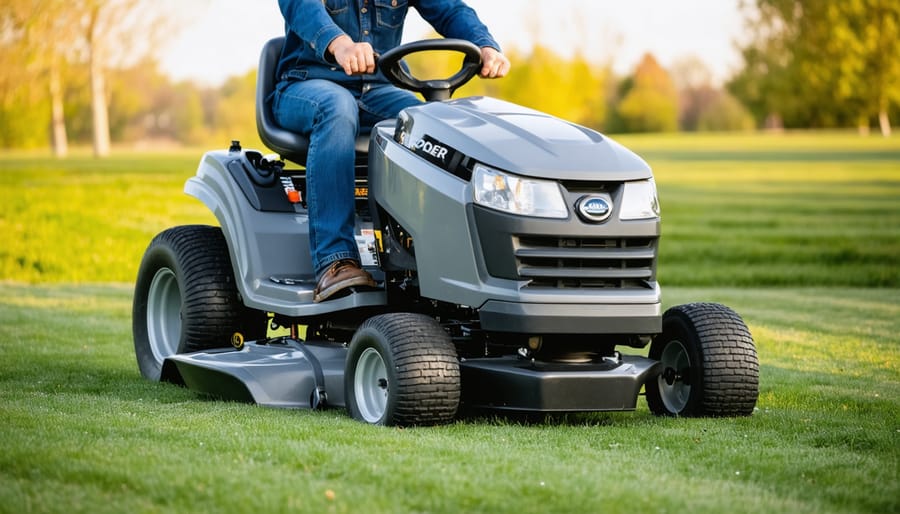
Troy-Bilt: Dependable Workhorse on a Budget
Troy-Bilt has earned its place as the reliable friend who always shows up when you need help—nothing fancy, but absolutely dependable. If you’re looking for a riding mower that gets the job done without depleting your savings account, Troy-Bilt deserves serious consideration.
What makes Troy-Bilt particularly appealing is their straightforward approach to lawn care equipment. These machines don’t come loaded with bells and whistles, but they deliver consistent performance year after year. I’ve talked with numerous homeowners who’ve run their Troy-Bilt mowers for over a decade with nothing more than routine maintenance—oil changes, blade sharpening, and the occasional belt replacement.
The real beauty of Troy-Bilt lies in its user-friendly maintenance. You won’t need specialized tools or a mechanical engineering degree to keep your mower running smoothly. Their design philosophy prioritizes accessibility, meaning filters, spark plugs, and other common maintenance points are easy to reach. This is especially valuable for beginners who want to handle basic upkeep themselves, reducing long-term costs and environmental impact by extending your machine’s lifespan.
Parts availability is another significant advantage. Troy-Bilt components are widely stocked at hardware stores and online retailers, so you won’t wait weeks for repairs. Their dealer network provides solid support, though many owners find the machines intuitive enough to troubleshoot independently.
For properties up to two acres with relatively flat terrain, Troy-Bilt offers excellent value, combining affordability with the durability that makes sustainable ownership truly practical.
Craftsman: The Comeback Story
Craftsman has had quite the journey over the past decade, and it’s a story worth understanding if you’re considering one of their mowers. Once the crown jewel of Sears, the brand faced uncertainty when its parent company struggled. In 2017, Stanley Black & Decker acquired Craftsman, marking the beginning of what many consider a renaissance.
Today’s Craftsman riding mowers occupy a comfortable middle ground—they’re more affordable than premium brands while offering better build quality than basic box-store options. The current lineup, manufactured through partnerships with MTD, delivers solid performance for suburban lawns up to two acres. You’ll find reliable Kohler or Briggs & Stratton engines, decent cutting decks, and warranties that actually mean something again.
Here’s the honest truth: Modern Craftsman mowers aren’t quite the bulletproof machines your grandfather might remember, but they’re significantly better than the brand’s lowest point in the mid-2010s. The steel decks are thicker now, the transmissions more durable, and customer service has improved considerably since Stanley Black & Decker took over.
For gardening enthusiasts looking for practical value, Craftsman represents a smart compromise. You’re getting a recognizable brand with improving quality standards at prices typically $500-800 less than comparable Cub Cadet or Husqvarna models. They’re particularly good for homeowners who maintain their equipment regularly and need dependable performance without premium pricing. Just remember—these machines reward proper maintenance with years of faithful service.
Toro: Precision Cutting Without Premium Pricing
Toro occupies that sweet spot many homeowners are searching for—professional-grade cutting performance without the eye-watering price tag. If you’ve ever admired your neighbor’s pristine lawn and wondered how they achieve those golf-course stripes, there’s a good chance a Toro mower is behind the magic.
What sets Toro apart is their obsessive focus on cut quality. Their Recycler cutting system doesn’t just chop grass; it finely mulches clippings to naturally feed your lawn, reducing fertilizer needs by up to 30%. This sustainable approach means you’re building healthier soil with every mow while saving money on lawn treatments. The bagging system is equally impressive, capturing nearly every clipping without constant stops to empty—a time-saver any weekend warrior can appreciate.
Maneuverability is another Toro hallmark. Their zero-turn models respond intuitively, making tight corners around garden beds feel effortless rather than stressful. Toro’s innovative suspension system deserves special mention—it genuinely transforms rough terrain mowing from a bone-jarring ordeal into a comfortable experience, which matters tremendously when you’re spending two hours on a larger property.
Environmental innovation runs deep at Toro. Their newer models feature efficient engines that use less fuel while meeting strict emissions standards. Some lines offer battery-electric options that deliver surprising power without gas, oil changes, or carbon emissions—perfect if sustainability matters to your household.
Pricing typically runs 15-25% below comparable John Deere or Husqvarna models, making Toro an intelligent choice for quality-conscious buyers who aren’t swayed by brand prestige alone. You’re essentially getting premium engineering with midrange pricing. The dealer network is extensive, ensuring parts availability and service support when needed. For homeowners seeking exceptional results without premium positioning, Toro consistently delivers remarkable value.
Budget-Friendly Options: Where to Save (and Where Not To)
Big Box Store Brands: What You’re Really Getting
Let’s be honest—when you’re shopping at the big box stores and spot brands like Murray, Yard Machines, or Yard-Man, you’re looking at the most budget-friendly entry into riding mower ownership. And that’s not automatically a bad thing, as long as you understand what you’re signing up for.
These mowers typically range from $1,300 to $2,000, and they’re manufactured with cost-savings at every turn. You’ll find lighter-gauge steel decks, less robust transmissions, and plastic components where pricier models use metal. The reality? These machines are engineered for smaller properties—think half an acre or less—and lighter-duty use. If you’re mowing once a week on relatively flat terrain without obstacles, they can serve you adequately for several seasons.
The common issues I hear about most often include transmission problems after a few years, deck rust (especially if stored outdoors), and difficulty finding replacement parts for discontinued models. The sustainability angle here is tricky—these mowers have shorter lifespans, which means more frequent replacements and potentially more landfill waste. However, if you maintain them diligently and store them properly, you can extend their useful life considerably.
Who should consider these brands? First-time riding mower owners who want to test the waters without major investment, or folks with genuinely small, simple lawns who don’t need commercial-grade durability. They’re also decent for properties where a push mower is just slightly too small but investing $3,000+ feels excessive.
Just remember: you’re not getting premium engineering here. Set realistic expectations, follow the maintenance schedule religiously, and consider it a stepping stone rather than a forever machine. Sometimes that’s exactly what makes sense for your situation and budget.
When Budget Brands Make Sense (and When They Don’t)
Budget-friendly riding mowers make perfect sense when you’re maintaining a relatively flat lawn under two acres without obstacles like trees or landscaping beds to navigate around. If you’re mowing weekly during the growing season and aren’t dealing with challenging terrain, a basic model from brands like Troy-Bilt or Murray will handle the job just fine. They’re also ideal for folks who are handy with maintenance—these mowers are simpler machines that you can often repair yourself with readily available parts.
However, investing more upfront becomes the smarter financial choice when you’re facing hills, dense grass varieties, or properties with lots of trimming around features. Budget mowers struggle with slopes and often lack the cutting power for thick turf, meaning you’ll spend more time making multiple passes and burning extra fuel. If you’re committed to sustainable lawn care practices like grasscycling or mulching, premium brands offer superior mulching decks that actually work, breaking down clippings effectively rather than leaving unsightly clumps.
Consider this: a budget mower lasting three to four years with frequent repairs costs more over a decade than a quality machine running smoothly for twelve years. The environmental impact matters too—cheaply made mowers consume more fuel inefficiently and end up in landfills sooner. Calculate your property’s demands honestly. Sometimes spending an extra $1,000 today saves you $3,000 in replacements, repairs, and frustration down the road while reducing your environmental footprint.
Specialty Considerations: Zero-Turn and Electric Riding Mowers
Zero-Turn Leaders: Speed and Precision
Zero-turn mowers represent the pinnacle of maneuverability and efficiency for homeowners who want professional-level results. If you’re weighing zero-turn versus traditional tractors, understanding the leading brands helps clarify whether the investment matches your lawn’s needs.
**Ariens** has earned a stellar reputation for building zero-turns that balance residential affordability with commercial durability. Their IKON series, particularly the Ariens IKON XD, delivers impressive cut quality and comfortable operation for homeowners with larger properties. The brand’s focus on accessible pricing without sacrificing build quality makes them a smart choice for lawn enthusiasts stepping up from traditional tractors.
**Bad Boy** stands out with their heavy-duty construction and innovative features. While their commercial models serve landscaping professionals, their residential ZT Elite series offers homeowners exceptional value with reinforced frames and powerful engines that handle tough terrain with ease.
**Gravely** bridges the residential-commercial gap beautifully. Their ZT series suits homeowners with demanding properties, while their Pro-Turn models meet professional landscaping standards. Gravely’s reputation for longevity means you’re investing in equipment that maintains performance season after season.
When choosing between these brands, consider your property size and terrain complexity. Residential models typically feature smaller engines and lighter frames, perfect for well-maintained lawns under five acres, while commercial-grade options tackle challenging conditions and extended daily use with greater fuel efficiency and durability.
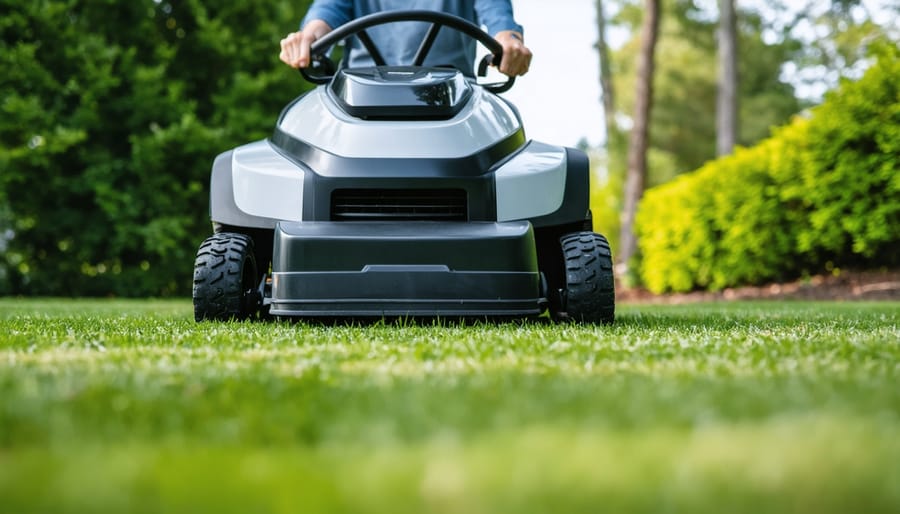
The Electric Revolution: Ryobi and Ego Lead the Charge
The landscape of riding mowers is undergoing a quiet transformation, and honestly, it’s pretty exciting to watch. Ryobi and Ego are pioneering the electric riding mower market, proving that battery-powered lawn care isn’t just for push mowers anymore.
Let’s talk sustainability first—because that matters. Electric riding mowers eliminate direct emissions, reduce noise pollution significantly (your neighbors will thank you for those early morning mowing sessions), and cut your carbon footprint considerably. No more storing gasoline, dealing with oil changes, or contributing to small engine emissions that, surprisingly, can be quite substantial.
But are they ready for prime time? That’s the real question on everyone’s mind.
Ego’s Z6 Zero Turn has genuinely impressed with its performance, offering comparable power to gas models for properties up to two acres. The battery technology has advanced remarkably—you’re looking at 45-60 minutes of runtime with their higher-capacity packs. Ryobi’s electric riding mowers offer more budget-friendly entry points, though with slightly less power and shorter runtimes.
The limitations are worth acknowledging: these machines work best for smaller to medium properties. If you’re managing five acres of thick grass, gas engines still hold the advantage. Battery costs remain high for replacement, though they’re lasting longer than early models suggested.
For environmentally conscious homeowners with manageable lawn sizes, electric riding mowers have absolutely arrived. They’re quiet, clean, and surprisingly capable—representing a genuine alternative rather than just a compromise.
Red Flags and Green Flags: What to Look for Beyond the Brand Name
When you’re standing in front of that shiny riding mower at the dealership, it’s easy to get swept up in brand loyalty or a persuasive sales pitch. But here’s what I’ve learned from talking to countless gardeners and maintenance professionals: the devil is in the details. Let me share some practical indicators that’ll help you separate the wheat from the chaff, regardless of whose logo is on the hood.
**Green Flags That Signal Quality**
First, check the deck construction. A quality mower features a stamped or fabricated steel deck—ideally 11-gauge or thicker. Lift it up (ask the dealer to help) and examine the underside. You want solid welds, reinforced edges, and anti-scalp wheels that actually look substantial. Thin, flimsy decks are your first red flag.
Next, examine the transmission type. Hydrostatic transmissions offer smoother operation and longer lifespans than gear-driven alternatives, though they cost more upfront. If you’re considering a gear-driven model for budget reasons, ensure it has at least five or six speeds for versatility.
Pay close attention to the seat and controls. I know it sounds simple, but comfort matters when you’re spending hours mowing. Quality indicators include high-back seats with armrests, easy-to-reach controls, and intuitive dashboard layouts. If something feels awkward during a five-minute test drive, imagine three hours on a hot Saturday.
**Understanding Warranties (The Real Story)**
Here’s where things get interesting. A warranty isn’t just about duration—it’s about coverage details. Some manufacturers offer impressive-sounding “3-year warranties” that only cover the frame, while excluding the engine, transmission, and electrical components where problems actually occur. Read the fine print carefully.
Look for comprehensive warranties that cover major components separately. Engine warranties often come from the engine manufacturer (Kawasaki, Kohler, Briggs & Stratton), not the mower brand itself. This is actually a green flag—it means specialized support.
**Red Flags to Avoid**
Be wary of models with predominantly plastic components in critical areas like wheel hubs, steering mechanisms, or blade housings. While strategic plastic use reduces weight and rust, excessive plastic suggests cost-cutting that’ll haunt you later.
Another warning sign: limited parts availability. Before purchasing, search online for common replacement parts for your specific model. If you can’t easily find blades, belts, or filters, you’ll face frustration down the road. This particularly affects discontinued models or lesser-known brands, regardless of initial quality.
Choosing the right riding lawn mower brand doesn’t have to feel overwhelming. By now, you’ve learned that the “best” brand truly depends on your unique situation—the size of your lawn, your budget constraints, and how much time you’re willing to invest in maintenance. A homeowner with a half-acre suburban lot has vastly different needs than someone managing three acres with slopes and obstacles.
Remember, the most expensive brand isn’t always the smartest choice for your circumstances. A mid-tier brand that perfectly matches your lawn’s demands and includes solid dealer support nearby often delivers better long-term satisfaction than a premium model that exceeds your needs. Similarly, budget-friendly options can serve you well if you’re realistic about their capabilities and committed to regular upkeep.
Here’s something experienced lawn care enthusiasts know: proper maintenance matters more than the badge on your mower’s hood. A well-maintained budget brand will outlast a neglected premium machine every single time. Regular oil changes, blade sharpening, air filter cleaning, and off-season storage protection extend any mower’s lifespan significantly. This sustainable approach—caring for what you have—reduces waste and saves money.
Before making your final decision, take time to research dealer support in your local area. Call nearby service centers, read local reviews, and ask neighbors about their experiences. A brand is only as good as the service backing it up. Can you get parts within days, not weeks? Will someone answer your questions without making you feel foolish?
Trust your research, match the machine to your needs rather than aspirations, and commit to caring for your investment. You’ve got this—now go find the mower that’ll help you maintain a beautiful, healthy lawn for years to come.