Switch to an electric irrigation pump and you could slash your watering costs by up to 50% compared to diesel alternatives while supporting your garden’s sustainability goals. These efficient workhorses convert nearly 90% of their electrical energy into pumping power, eliminating fuel storage hassles and reducing your carbon footprint with every watering cycle.
Electric pumps excel at delivering consistent water pressure across your entire irrigation system, whether you’re nurturing a small vegetable patch or maintaining several acres of landscape. They operate quietly enough that you won’t disturb your neighbors during early morning watering sessions, and their simple design means fewer mechanical failures and lower maintenance expenses over their 15-20 year lifespan.
The upfront investment typically ranges from $300 for basic quarter-horsepower models suitable for home gardens to $2,000 for robust systems powering larger properties. Most homeowners recover these costs within three to five years through reduced energy bills and eliminated fuel expenses. Modern variable-speed models automatically adjust their power consumption based on your system’s demands, preventing the energy waste common in older constant-speed designs that contribute to irrigation system inefficiencies.
This guide walks you through selecting the right electric pump capacity for your property size, understanding efficiency ratings that impact your utility bills, and implementing installation practices that maximize both performance and longevity while keeping your garden thriving sustainably.
Why Electric Irrigation Pumps Are Taking Over Home Lawns

The Real Cost of Running an Electric Pump
Let’s talk dollars and cents, because understanding what you’ll actually spend on electricity can help you make a confident decision about switching to an electric irrigation pump.
Here’s the good news: electric pumps are remarkably economical to run. A typical residential electric irrigation pump uses between 0.5 to 2 kilowatts per hour, depending on its size and your water pressure needs. To put this in perspective, if you’re running a 1-kilowatt pump for two hours daily during peak growing season and your electricity rate is around 13 cents per kilowatt-hour (the national average), you’re looking at about 26 cents per day, or roughly $7.80 per month.
Compare that to gas-powered alternatives, where you might spend $3 to $5 per gallon of fuel, and a typical pump could burn through a gallon every few hours of operation. Those costs add up quickly, often reaching $50 to $100 monthly during heavy use periods.
Of course, your actual costs will vary based on several factors. Larger properties requiring more powerful pumps will naturally use more electricity. Your local utility rates play a significant role too, and if you have access to time-of-use pricing, running your pump during off-peak hours can slash costs even further. The efficiency rating of your specific pump matters as well, which is why choosing an energy-efficient model pays off in the long run.
Don’t forget to factor in maintenance savings. Electric pumps require minimal upkeep compared to gas engines, which need regular oil changes, spark plug replacements, and seasonal tune-ups. When you add those maintenance costs to fuel expenses, the savings from going electric become even more compelling, often paying for the initial investment within just a few growing seasons.
Environmental Impact You Can Feel Good About
Making the switch to electric irrigation pumps is one of those decisions where doing right by your garden and doing right by the planet go hand in hand. Unlike their gas-powered counterparts, electric pumps produce zero direct emissions during operation. That means no exhaust fumes polluting your garden air or contributing to your carbon footprint while you’re nurturing your plants. For those of us trying to create more sustainable outdoor spaces, this is a significant step forward.
The noise difference is another benefit you’ll appreciate immediately. If you’ve ever run a gas-powered pump early in the morning, you know how disruptive that engine roar can be. Electric pumps operate at a whisper by comparison, letting you water at any hour without disturbing the peaceful ambiance of your garden or annoying your neighbors. Many gardeners find this quieter operation makes their entire watering routine more enjoyable and meditative.
When paired with renewable energy sources like solar panels, electric irrigation pumps become even more eco-friendly. You’re essentially running your entire irrigation system on sunshine, which is about as green as it gets. Even if you’re drawing from the conventional power grid, electric pumps are generally more energy-efficient than gas models, meaning less overall resource consumption.
This efficiency translates into practical savings too. Lower energy costs mean more money in your pocket for compost, seeds, or that new garden tool you’ve been eyeing. It’s sustainable lawn care that actually makes financial sense.
Understanding Your Irrigation Pump Station Setup

Key Components That Make It Work
Let’s demystify what makes an electric irrigation pump tick. Think of it as a team of components working together to get water exactly where your plants need it, when they need it.
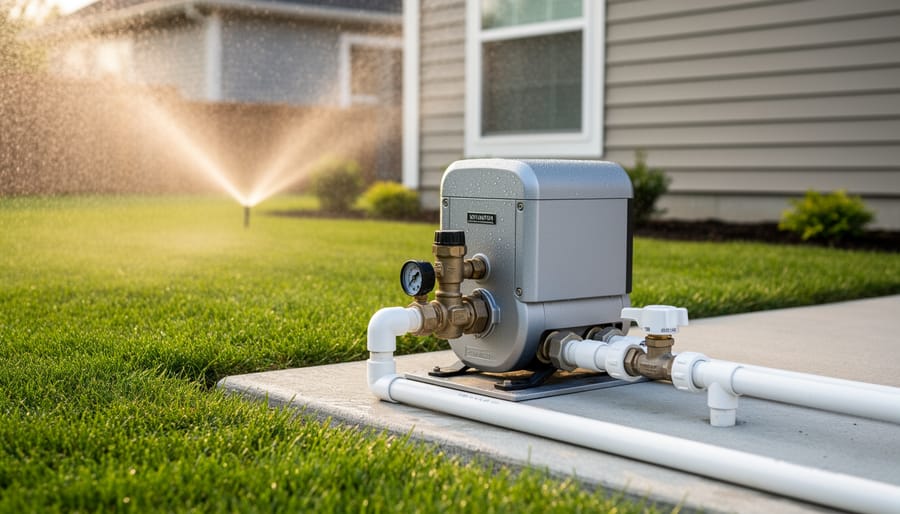
The heart of the system is the pump itself. This hardworking device draws water from your source—whether that’s a well, pond, or storage tank—and pushes it through your irrigation lines with enough force to reach every corner of your garden. Electric pumps are particularly efficient because they convert electrical energy directly into mechanical power with minimal waste. You’ll find two main types: submersible pumps that sit underwater in your source, and surface pumps that stay above ground. Your choice depends on your water source and how far the water needs to travel.
Next up is the pressure tank, which acts like a buffer between your pump and irrigation system. This clever component stores pressurized water so your pump doesn’t need to start and stop every single time you water. It’s a game-changer for efficiency, reducing wear on your pump and cutting down on energy consumption. Think of it as giving your pump regular breaks instead of making it sprint constantly.
The controller is your system’s brain. Modern controllers let you program watering schedules, adjust for seasonal changes, and even integrate with weather sensors to skip watering when it’s raining. This smart automation means your garden gets consistent care while you’re conserving water and electricity. Some advanced models connect to smartphone apps, putting irrigation management right in your pocket.
Finally, the pipes and fittings form your system’s circulatory network. Using the right diameter pipes ensures water flows efficiently without creating excess pressure that wastes energy. Quality connections prevent leaks that drain both water and your pump’s efficiency.
When these components work in harmony, you’ve got a sustainable irrigation solution that saves time, conserves resources, and keeps your garden thriving with minimal effort.
Sizing Your System for Your Lawn
Getting the right size electric irrigation pump is like finding the perfect pair of gardening gloves—too small and you’ll struggle, too large and you’re wasting resources. Let me walk you through a straightforward approach to sizing your system correctly.
Start by calculating your lawn’s watering needs. A typical lawn requires about 1 to 1.5 inches of water per week. Multiply your lawn’s square footage by 0.62 to find gallons needed per inch of water. For example, a 5,000 square foot lawn needs approximately 3,100 gallons per inch, or about 4,650 gallons weekly during growing season.
Next, consider your water source. If you’re drawing from a well, pond, or alternative water sources like rainwater collection, you’ll need to know the vertical distance (lift) from the water surface to your highest sprinkler head, plus horizontal distance. Here’s a helpful rule: every 100 feet of horizontal pipe equals about 10 feet of vertical lift in terms of pump requirements.
Calculate your required flow rate in gallons per minute (GPM). Divide your weekly gallons by the number of minutes you’ll run your system weekly. Most residential systems run 2-3 times weekly for 20-30 minutes per zone. A typical quarter-acre lawn needs a pump delivering 10-15 GPM at 30-50 PSI pressure.
For pump capacity, add 20 percent to your calculated needs as a safety margin. This ensures efficient operation without overworking the motor. A half-horsepower pump typically handles lawns up to 5,000 square feet, while three-quarter to one horsepower suits properties up to 10,000 square feet.
Remember, slightly oversizing beats undersizing, but going too large wastes electricity and money—the opposite of sustainable lawn care.
Energy-Efficient Features That Cut Your Bills
Variable Speed Motors: The Game Changer
Think of traditional irrigation pumps like driving a car with only two options: full throttle or completely off. You’re either burning maximum fuel or going nowhere. Now imagine having a cruise control system that automatically adjusts your speed based on road conditions – that’s essentially what Variable Frequency Drive (VFD) motors do for your irrigation pump.
VFD motors are genuine game changers in the world of electric irrigation pumps. Instead of running at a constant maximum speed regardless of your garden’s needs, these intelligent motors adjust their power consumption based on actual demand. When your system only needs to water a small section of your lawn, the motor slows down and uses less electricity. When you’re running multiple zones simultaneously, it ramps up accordingly.
Here’s where the magic happens in your wallet and for the environment. Traditional motors consume the same amount of energy whether they’re pumping at full capacity or barely working. VFD motors, however, reduce energy consumption proportionally. Many homeowners report energy savings of 30 to 50 percent after switching to VFD-equipped pumps. Over a growing season, that can translate to hundreds of dollars in reduced electricity bills.
The beauty of this technology extends beyond cost savings. By using only the energy you actually need, you’re reducing your carbon footprint without sacrificing your garden’s health. It’s like having a pump that thinks for itself, delivering water efficiently while protecting both your budget and the planet.
For those managing larger properties or operating irrigation systems with varying pressure requirements throughout the day, VFD motors eliminate the wasteful cycling of pumps turning on and off repeatedly. This not only saves energy but also extends the lifespan of your equipment by reducing mechanical wear and tear.

Smart Controllers and Automation
Here’s the thing about electric irrigation pumps—they’re incredibly efficient, but they become truly smart when paired with automation technology. Running your pump on a basic timer is fine, but it’s like driving with your eyes half-closed. You might be watering when it’s raining or pumping water into already-saturated soil, wasting both energy and precious resources.
This is where smart controllers transform your irrigation system from good to brilliant. These devices connect to local weather stations and automatically adjust watering schedules based on rainfall, temperature, and forecasts. If rain is coming tomorrow, your pump stays off. It’s automated conservation that saves you money on both water and electricity bills without requiring any daily thought.
Even better are soil moisture sensors that measure actual ground conditions. Instead of guessing whether your lawn needs water, these sensors tell your pump exactly when the soil has dried to the optimal point for irrigation. I’ve seen homeowners reduce their watering frequency by 40% simply by letting the soil do the talking.
The best part? Modern automation systems are surprisingly user-friendly. Most connect to smartphone apps, giving you complete control whether you’re in your backyard or on vacation. You’ll receive alerts, track water usage, and make adjustments remotely. The initial investment pays for itself through energy savings, usually within two growing seasons, while protecting your lawn from the stress of overwatering.
Best Electric Irrigation Pumps for Different Scenarios
For Small to Medium Lawns (Under 1 Acre)
If you’re managing a smaller property under an acre, you’ll be pleased to know that electric irrigation pumps for this size range are both affordable and energy-efficient. These compact powerhouses are designed to handle residential irrigation needs without breaking the bank or sending your electricity bills through the roof.
For most small to medium lawns, a pump with 0.5 to 1 horsepower will provide plenty of pressure to keep your grass lush and your garden beds thriving. I’ve found that pumps in the 500-750 watt range strike the perfect balance between performance and energy consumption. Look for models with Energy Star ratings or high-efficiency motors, as these can reduce your operating costs by up to 30% compared to older designs.
When shopping, pay attention to flow rates measured in gallons per minute. For properties under an acre, aim for pumps delivering 10-20 GPM, which is sufficient for most residential sprinkler systems and drip irrigation setups. Brands like Goulds, Wayne, and Flotec offer reliable options in the 200-400 dollar range that homeowners consistently praise for their durability and quiet operation.
Consider pumps with built-in pressure switches and thermal overload protection. These features not only simplify installation but also prevent damage from running dry or overheating, extending your pump’s lifespan considerably. Many modern compact pumps also feature eco-friendly components and recyclable materials, aligning perfectly with sustainable gardening practices while keeping your lawn beautifully hydrated throughout the growing season.
For Larger Properties and Multi-Zone Systems
When you’re managing a larger property or running multi-zone irrigation systems, you’ll need to step up to more robust electric pump solutions. These aren’t your basic garden pumps—they’re designed to handle the increased water demand and pressure requirements that come with irrigating expansive lawns, multiple garden beds, or commercial landscapes.
Multi-stage pumps are the workhorses for these larger applications. Unlike single-stage pumps that use one impeller to move water, multi-stage models employ multiple impellers stacked in series, with each stage boosting the pressure progressively. This design lets them deliver water across greater distances and higher elevations without losing effectiveness. If you’ve ever noticed your sprinklers getting weaker the farther they are from the water source, a multi-stage pump solves exactly that problem.
For properties requiring zone-based watering—where different areas need irrigation at different times—look for pumps with strong pressure-maintaining capabilities. These systems work brilliantly with programmable controllers, allowing you to water your vegetable garden in the morning and your ornamental beds in the evening, all while maintaining consistent pressure throughout.
The beauty of going electric with these larger pumps is the energy efficiency gains really add up. Yes, the initial investment is higher than smaller models, but the operational savings over time make them worthwhile. Plus, modern multi-stage electric pumps run quieter than their gas-powered equivalents, which your neighbors will definitely appreciate during those early morning watering sessions.
Installation Tips and What to Expect
Installing an electric irrigation pump might seem daunting at first, but with the right preparation, you can set yourself up for success. The good news? Many homeowners with moderate DIY skills can handle basic installations, especially for above-ground pump setups. However, knowing when to call in the professionals is equally important.
For straightforward applications like boosting water pressure from a rain barrel or pulling from a shallow pond, a DIY approach can work beautifully. You’ll need basic electrical knowledge and the ability to safely connect your pump to a power source, ideally with GFCI protection for outdoor safety. The key is ensuring you have a dedicated electrical circuit and proper grounding. If running new electrical lines or working with 240-volt systems makes you uncomfortable, that’s a clear sign to hire a licensed electrician.
The installation complexity jumps significantly with submersible pumps or deep well applications. These require precise sizing, proper depth placement, and sometimes special tools you won’t have lying around the garage. Professional installation makes sense here, and the peace of mind is worth the investment.
Common pitfalls to avoid include underestimating your water source’s capacity. I’ve seen enthusiastic gardeners install powerful pumps only to discover their well or pond can’t keep up with the flow rate. Always verify your water source can sustain your pump’s requirements. Another frequent mistake is neglecting proper priming for surface pumps, which can damage the motor and void warranties.
What makes installation easier? Starting with a quality pump station kit that includes mounting hardware, check valves, and clear instructions. Position your pump close to the power source to minimize electrical work, and ensure easy access for maintenance. A level, vibration-dampening base prevents noise and extends pump life.
Budget extra time for troubleshooting. Even straightforward installations can present surprises like discovering you need additional fittings or dealing with inconsistent power supply. The reward, though, is an efficient irrigation system that conserves both water and energy while keeping your garden thriving.
Maintenance That Keeps Efficiency High

Monthly and Seasonal Checklist
Staying on top of pump maintenance doesn’t have to be overwhelming. I like to think of it as giving your irrigation system the same care you’d give your favorite garden plants – a little attention goes a long way.
Every month, take ten minutes to inspect electrical connections for corrosion or looseness, and listen for unusual sounds during operation. Check your pressure gauge readings to ensure they’re consistent with normal levels. Clean or replace inlet screens to prevent debris buildup that forces your pump to work harder and waste energy.
When seasons change, you’ll want to dig a bit deeper. Before winter arrives in colder climates, drain all water from the pump and store it in a protected location to prevent freeze damage. Come spring, inspect seals and gaskets for wear, and lubricate moving parts according to your manufacturer’s guidelines. Summer’s the perfect time to verify your timer settings match your garden’s changing water needs – overwatering wastes both water and electricity.
Twice yearly, test your system’s amp draw with a clamp meter to catch efficiency issues early. A pump drawing more current than its rating indicates often signals impending problems. This preventive approach not only extends your pump’s lifespan but keeps energy costs predictable and minimal throughout the growing season.
Making the switch to electric irrigation pumps is one of the smartest investments you can make for both your lawn and your wallet. Throughout this guide, we’ve explored how these efficient systems can dramatically reduce your energy costs while supporting your commitment to sustainable gardening practices. The environmental benefits alone—lower carbon emissions, reduced fossil fuel dependence, and cleaner operation—make electric pumps a clear winner for eco-conscious gardeners.
Now it’s time to evaluate your current irrigation setup. Take a close look at your existing pump’s energy consumption, calculate your monthly costs, and compare them to what an electric system could offer. Consider factors like your lawn size, water source, and local electricity rates to determine your potential savings.
Ready to take the next step? Start by measuring your irrigation needs, researching models that fit your budget, and consulting with local suppliers about installation options. Remember, every sustainable choice you make contributes to a healthier planet and a more beautiful, efficiently-maintained lawn. Your garden will thank you, and so will future generations who benefit from your environmentally responsible decisions today.