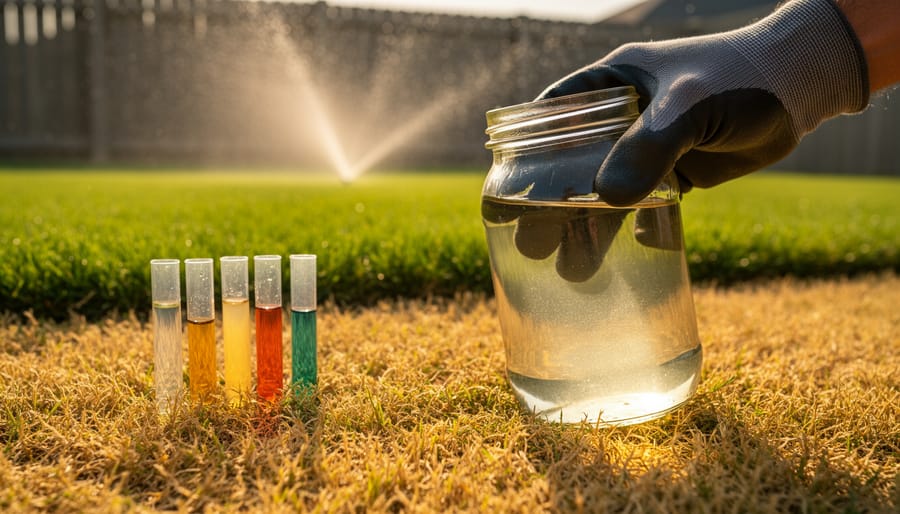
Check your water’s pH level with an inexpensive testing kit from your local garden center—most plants thrive between 6.0 and 7.5, and values outside this range lock up essential nutrients even when they’re present in your soil. Test for total dissolved solids using a TDS meter; readings above 2,000 ppm indicate salt accumulation that’s likely causing those brown leaf tips and stunted growth you’ve been puzzling over. Collect a water sample early in the morning and send it to your county extension office for a complete mineral analysis—this fifteen-dollar investment reveals hidden problems like excessive sodium, chlorine, or heavy metals that slowly poison your landscape.
Your irrigation water quality matters more than the frequency or duration of watering. Even with perfect scheduling and coverage, poor water quality sabotages your efforts through salt buildup, pH imbalances, and toxic mineral accumulation. The symptoms appear gradually—yellowing grass despite fertilization, plants that wilt even when soil is moist, white crusting on soil surfaces, or mysterious dieback that no amount of care seems to fix.
Understanding what flows through your sprinklers transforms frustrating lawn care into predictable success. Whether you’re drawing from municipal sources, wells, ponds, or reclaimed water, each supply carries a unique chemical signature that affects every plant differently. The good news? Once you identify your water’s specific challenges, proven solutions exist—from simple filtration and pH adjustment to strategic plant selection and soil amendments that neutralize problematic elements while supporting sustainable, thriving landscapes.
What Makes Irrigation Water ‘Good’ or ‘Bad’ for Your Lawn
Think of your irrigation water as a nutrient delivery system for your lawn, but one that can sometimes carry unwelcome guests. Just like you wouldn’t want to drink water filled with impurities, your grass has preferences too. The difference between good and bad water often comes down to what’s dissolved in it and how much.
At the heart of water quality are dissolved salts and minerals. While your lawn needs certain minerals like calcium and magnesium to thrive, too much of a good thing creates problems. Imagine trying to drink through a straw while someone’s squeezing it – that’s essentially what happens when salt levels get too high. The salt in the soil makes it harder for grass roots to absorb water, even when plenty is available. This condition, called osmotic stress, leaves your lawn thirsty despite regular watering.
The pH level of your water acts like a gatekeeper for nutrient availability. Most grasses prefer slightly acidic to neutral conditions, between 6.0 and 7.5 on the pH scale. Water that’s too acidic (below 6.0) or too alkaline (above 8.5) can lock up essential nutrients, making them unavailable to your grass even when they’re present in the soil. Think of it as having a pantry full of food but the door’s jammed – everything’s there, but you can’t access it.
Contaminants present another challenge. Heavy metals, excess chlorine, or industrial pollutants can accumulate in soil over time, gradually poisoning your lawn from the ground up. Well water might carry iron that leaves rusty stains, while municipal water may contain sodium from water softening processes.
The good news? Understanding these basics puts you ahead of most homeowners. Once you know what you’re working with, you can take practical steps to protect your lawn and create a more sustainable watering routine that works with your water’s natural chemistry rather than fighting against it.
The Silent Lawn Killer: Understanding Salinity
How Salt Sneaks Into Your Soil
Salt accumulation in your lawn doesn’t happen overnight, and understanding how it sneaks in can help you prevent problems before they start. The most obvious culprit is your irrigation water itself. Depending on your location, municipal or well water naturally contains dissolved minerals that leave behind salt residues each time you water. In areas with hard water, these concentrations can be significant.
Fertilizers contribute too, though they’re essential for lawn health. Many common fertilizers contain salts as part of their nutrient formulation. When you apply them regularly without adequate rainfall or irrigation to flush excess salts through the soil profile, they build up over time. It’s a balancing act between feeding your lawn and not overdoing it.
If you use a water softener in your home, be aware that softened water is loaded with sodium that replaces the calcium and magnesium. Never use softened water for irrigation if you can avoid it, as it’s one of the fastest ways to create salt problems.
Coastal homeowners face an additional challenge from salt spray and occasional storm surges that deposit sodium chloride directly onto lawns. Even homes several blocks inland can experience this effect during severe weather.
Finally, poor drainage issues prevent salts from naturally leaching away. When water can’t percolate through your soil properly, salts concentrate in the root zone where they cause the most damage. Good drainage is your first line of defense against salt accumulation.
Warning Signs Your Lawn Has a Salt Problem
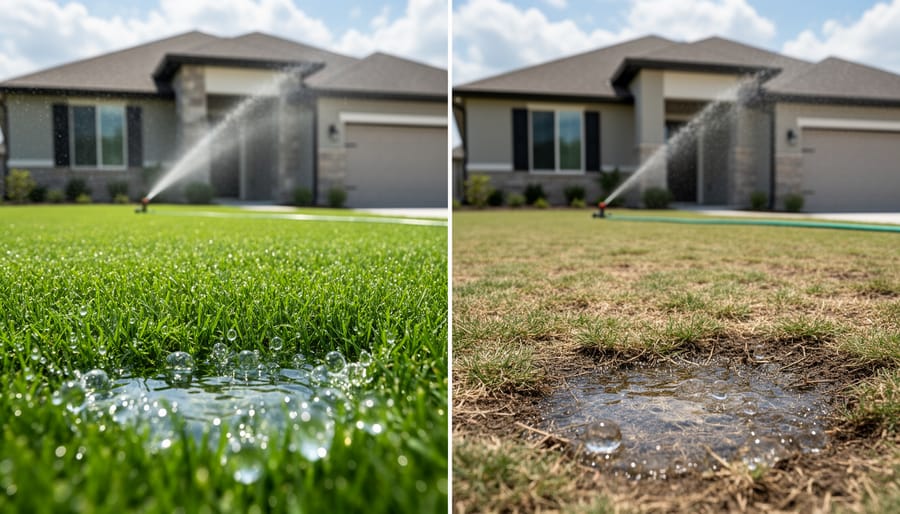
Your lawn will tell you when salt levels are becoming problematic—you just need to know what to look for. One of the earliest signs is browning or burned grass tips, particularly along the edges of your lawn where evaporation is highest. You might notice these brown tips even when you’re watering regularly, which can be frustrating and confusing.
Take a close look at your soil surface. If you spot a white or gray crusty layer forming, especially after watering or rainfall, that’s accumulated salt making itself visible. This crust is a clear red flag that your irrigation water contains excessive dissolved minerals.
Patchy, uneven growth is another telltale indicator. Some areas might appear stunted or thin while others grow normally, even though you’re watering consistently across your entire lawn. Salt-affected grass often develops a bluish-gray tint before turning brown, and the grass blades may feel unusually stiff or crispy to the touch.
You might also notice certain weeds thriving while your grass struggles. Some weed species are more salt-tolerant than turfgrass, so an unexpected increase in weeds like purslane or bermudagrass (in cool-season lawns) could signal salinity problems. If you’re seeing several of these symptoms together, it’s time to test your irrigation water quality and take corrective action.
Testing Your Water: What You Need to Know
Testing your irrigation water might sound intimidating, but it’s actually one of the smartest investments you can make for your lawn’s health. Think of it like getting a checkup at the doctor—you want to catch potential problems before they become serious issues.
The best time to test your water is before you notice problems, ideally when you first set up your irrigation system or at least once a year. If you’re already seeing unexplained yellow patches, stunted growth, or white crusty deposits on your soil despite proper watering, testing becomes urgent. Early spring is ideal timing since it gives you the whole growing season to address any issues you discover.
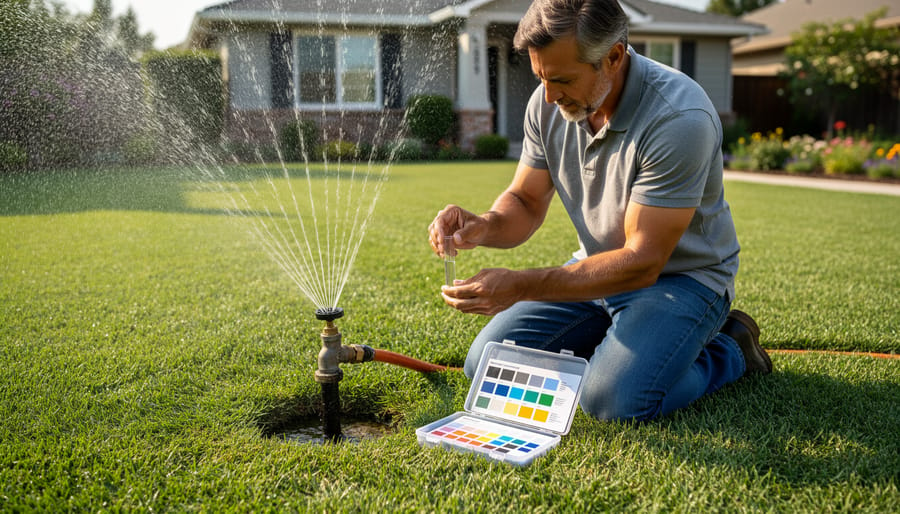
For basic home testing, you’ll want to check pH levels, total dissolved solids (TDS), and hardness. These three parameters give you a solid foundation for understanding what’s happening with your water. Home testing kits like the HoneForest Water Quality Tester or the General Hydroponics pH Test Kit are excellent starting points for beginners. These typically run between 15 and 40 dollars and provide quick readings you can do yourself in minutes.
However, DIY kits have limitations. For a complete picture, especially if you’re dealing with persistent lawn problems, professional lab analysis is worth every penny. Labs test for everything from heavy metals and sodium levels to specific nutrients and contaminants that home kits simply can’t detect. Expect to pay between 50 and 150 dollars depending on how comprehensive you want the analysis. Your local cooperative extension office often offers testing services at reasonable rates.
When you get your results back, don’t panic if the numbers seem overwhelming. Most labs provide interpretation guides, and pH between 6.0 and 7.5 is generally ideal for irrigation. TDS readings below 500 ppm indicate excellent water quality, while anything above 2,000 ppm suggests you’ll need to take corrective action. The key is understanding that you’re gathering information to make smarter choices about caring for your lawn sustainably.
Smart Salinity Management Strategies for Home Lawns
The Leaching Method: Your First Line of Defense
Think of leaching as giving your soil a deep, refreshing rinse to flush accumulated salts below the root zone where they can’t harm your grass. It’s remarkably straightforward and can save a struggling lawn when hard water or high-salt irrigation is your reality.
The basic principle involves applying extra water beyond what your lawn needs for growth. This excess water pushes salts downward through the soil profile. For most home lawns, applying 25-30% more water than normal during a leaching session does the trick. If your lawn typically needs one inch of water weekly, you’d apply about 1.3 inches during a leaching event.
Timing matters significantly. Early morning remains ideal, just like with strategic watering schedules, minimizing evaporation losses. The frequency depends on your water quality test results. Moderately salty water might require monthly leaching during the growing season, while highly saline water could need bi-weekly sessions.
Here’s a simple calculation: measure your sprinkler output by placing straight-sided containers around your lawn and timing how long it takes to collect one inch. Add 25% to that duration for leaching. If normal watering takes 30 minutes for one inch, run your system for about 40 minutes during leaching.
One important caution: ensure your soil drains reasonably well. Heavy clay soils might need aeration before leaching to prevent waterlogging. This sustainable practice keeps salts moving through rather than accumulating, protecting your investment in a healthy lawn.
Choosing Salt-Tolerant Grass Varieties
When your irrigation water carries high salt content, selecting the right grass variety becomes your first line of defense against lawn stress. Think of it as choosing plants that naturally speak the language of your water conditions rather than fighting against them.
For warm-season regions, Bermudagrass stands out as a champion salt warrior, tolerating challenging water with remarkable resilience. It’s perfect for active lawns in sunny climates. If you’re in a transitional zone, consider Tall Fescue, which offers moderate salt tolerance while maintaining that lush, deep-green appearance most homeowners love. The bonus? Its deep root system actually helps it cope better with occasional salt exposure.
Cool-season areas benefit from Perennial Ryegrass cultivars bred specifically for salt tolerance. They germinate quickly and establish well, making them ideal for overseeding projects where water quality poses challenges.
Here’s a sustainable approach I always recommend: start with a soil test to understand your baseline conditions, then choose native or regionally adapted varieties whenever possible. These grasses have evolved alongside local water sources and require fewer inputs overall. Buffalo grass and Blue Grama, for instance, are excellent low-maintenance options for areas with naturally saline groundwater.
Remember, even salt-tolerant varieties appreciate good irrigation practices. Occasional deep watering helps flush accumulated salts beyond the root zone, giving your grass the best chance to thrive despite less-than-perfect water quality.
Soil Amendments That Actually Work
When your irrigation water isn’t ideal, the right soil amendments can truly save your lawn. Let’s talk about what actually works, not just marketing hype.
Gypsum is my go-to recommendation for high-sodium water issues. It helps displace sodium from soil particles without changing pH levels, which is crucial for most lawns. Apply 40-50 pounds per 1,000 square feet annually. I’ve had excellent results with Down to Earth Gypsum for its fine particle size and purity. Spread it before heavy watering or rainfall for best penetration.
Organic matter is your long-term solution for building salt tolerance and improving soil structure. Compost, aged manure, or quality topsoil blends increase your soil’s ability to flush salts through rather than accumulating them. Work in 1-2 inches of compost during core aeration, or apply compost tea monthly during growing season. This approach supports beneficial microbes that help grass cope with water quality stress.
For quick fixes in salt-stressed areas, elemental sulfur can help if your water has created alkaline conditions. However, test your soil pH first since not every lawn needs it. Products like Espoma Organic Soil Acidifier work gradually and safely at recommended rates.
Remember, amendments work best as part of an overall strategy, not magical quick fixes.
pH Levels and Your Lawn: Finding the Sweet Spot
Think of pH as your lawn’s gatekeeper for nutrients. Even when your irrigation water contains everything your grass needs to thrive, the wrong pH level can lock those nutrients away, leaving your lawn starving despite your best efforts.
The sweet spot for most lawn grasses falls between 6.0 and 7.0 on the pH scale, with 6.5 being nearly perfect. Within this range, essential nutrients like nitrogen, phosphorus, and potassium remain readily available for grass roots to absorb. When irrigation water consistently falls outside this range, you’ll notice the effects: yellowing grass, patchy growth, or stubborn weeds that seem to love what your lawn hates.
Here’s where things get interesting. Your irrigation water’s pH doesn’t work in isolation. It interacts with your soil’s existing pH, gradually shifting it over time. If you’re using well water with a pH of 8.0 or higher, you’re essentially giving your lawn a slow alkaline treatment with every watering session. Conversely, acidic water below 6.0 can make your soil too acidic, limiting calcium and magnesium availability.
Testing your water’s pH is straightforward and inexpensive. Simple pH test strips from your local garden center work perfectly fine for most homeowners. Test during different seasons, as pH can fluctuate with water table changes or municipal treatment adjustments.
For naturally adjusting alkaline irrigation water, consider adding composted organic matter to your soil, which gradually lowers pH while improving overall soil health. Sulfur-based amendments work too, though they take several months to show effects. If dealing with acidic water, ground limestone incorporated into your soil provides a sustainable, long-lasting solution.
The beauty of addressing pH issues lies in how it amplifies every other lawn care practice you’re already doing, making your sustainable approach even more effective.
Irrigation System Adjustments for Problem Water
When you’re dealing with less-than-perfect water quality, tweaking your irrigation system can make a world of difference. Think of it as giving your lawn a fighting chance despite the challenges.
Let’s start with system type. If your water has high mineral content or particulates, drip irrigation might seem like the logical choice since it delivers water directly to roots. However, here’s the catch: drip emitters clog easily with poor water quality. Spray systems, while less water-efficient in theory, can actually be more practical when your water isn’t pristine. The larger orifices in spray heads are more forgiving of sediment and minerals. That said, if you love your drip system and want to keep it, investing in quality filtration options is non-negotiable.
Speaking of filters, they’re your first line of defense. For hard water, consider a sediment filter rated at 150-200 mesh for drip systems or 80-100 mesh for spray systems. Products like the Lakos Twist II Clean filters or Irritec disk filters have earned solid reputations among gardeners dealing with troublesome water. For severe cases involving high iron or manganese, you might need an oxidizing filter before your main irrigation filter.
Watering schedules need rethinking too. With salty or hard water, frequent light watering actually concentrates minerals in the root zone as water evaporates. Instead, water deeply but less frequently, allowing rainfall to help flush accumulated salts downward. This is where smart irrigation controllers shine. Models like the Rachio 3 or RainMachine can integrate local weather data to optimize watering schedules, reducing the frequency while maintaining deep watering when needed.
Finally, consider installing flush valves at the end of your irrigation lines. Regular flushing removes sediment buildup before it becomes a problem. It’s a simple modification that saves hours of maintenance headaches down the road.
Alternative Water Sources: Rainwater and Reclaimed Water
When your municipal water supply feels less than ideal—or you’re simply looking to be kinder to both your lawn and the planet—alternative water sources can be game-changers for your irrigation routine.
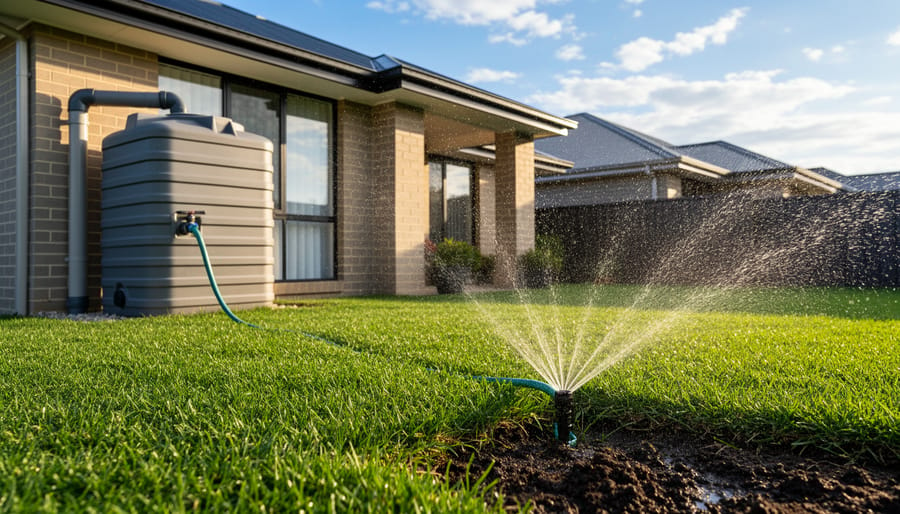
Rainwater is nature’s gift to gardeners. It’s naturally soft, free of chlorine and other treatment chemicals, and typically has a near-neutral pH that most grass species love. Setting up rainwater harvesting systems doesn’t have to be complicated. Even a simple barrel connected to your downspout can collect hundreds of gallons during a typical rainstorm. For larger lawns, consider investing in underground cisterns or linked barrel systems. The environmental benefits are impressive too—you’re reducing stormwater runoff while cutting your water bills.
Reclaimed water, including treated greywater from showers and laundry, offers another sustainable option. However, approach this carefully. Only use greywater that’s free from harsh chemicals, bleach, or excessive salts. Systems that filter and properly distribute greywater can safely irrigate lawns, though some municipalities have specific regulations about this practice. Never use water from dishwashers or toilets without professional treatment systems.
Blending water sources can balance quality concerns beautifully. If your tap water has high salinity, mixing it with collected rainwater dilutes problematic elements while stretching your harvested supply further. This strategy works particularly well during drier months when rainwater alone won’t meet your lawn’s needs.
Before implementing any alternative water system, check local regulations. Some areas actively encourage rainwater harvesting with tax incentives, while others have restrictions on greywater use. Your local extension office can guide you through the legal landscape while helping you choose the best sustainable solution for your situation.
When to Call It: Working with What You’ve Got
Sometimes the kindest thing you can do for yourself and your landscape is to work with nature instead of against it. If you’ve tested your water and discovered significant challenges like extremely high salinity, heavy metals, or very hard water, don’t feel defeated. This is actually an opportunity to create something uniquely beautiful.
Xeriscaping isn’t about giving up on a gorgeous yard. It’s about designing with drought-tolerant, native plants that actually thrive in your conditions. Many regions with challenging water quality are also naturally dry, making this approach doubly smart. Think ornamental grasses, succulents, and native wildflowers that evolved to handle exactly what you’re working with. You’ll save water, reduce maintenance, and create habitat for local pollinators in the process.
Consider mixing hardscaping elements like decorative rock, gravel pathways, and raised beds with strategic plantings. This approach reduces your irrigation needs while adding visual interest. In areas where you absolutely want grass, keep it small and choose the most salt-tolerant varieties available for your region.
When should you call a professional? If you’re dealing with commercial-scale irrigation, noticing rust staining on your home’s exterior, or if initial filtration attempts haven’t helped, it’s time. Water treatment specialists can design whole-property solutions that homeowner-grade equipment simply can’t match.
Remember, there’s no single definition of a beautiful landscape. Your water quality challenges might just lead you to create the most sustainable, distinctive yard on your block.
Here’s the empowering truth: water quality challenges aren’t roadblocks to a gorgeous lawn—they’re simply puzzles waiting to be solved. You’ve learned that mysterious brown patches, stubborn bare spots, and lackluster grass often trace back to what’s in your water, not how much you’re applying. The difference between frustration and success comes down to knowledge and action.
Start simple: get your water tested. Whether through your local extension office or a soil testing lab, understanding your water’s salt content, pH, and sodium levels transforms your entire approach from guessing to knowing. Once you have those numbers, you’re equipped to make informed decisions about amendment applications, irrigation scheduling, and grass variety selection.
Remember, managing irrigation water quality isn’t about achieving perfection—it’s about working intelligently with what you have. Even moderately saline water can grow healthy turf when you apply the right strategies. Deep, infrequent watering, proper drainage, strategic gypsum applications, and choosing salt-tolerant varieties turn challenging conditions into manageable ones.
Your lawn’s health is within your control. Take that first step today: schedule a water test, evaluate your current practices, and commit to science-based solutions. You’re not just watering grass anymore—you’re cultivating knowledge, sustainability, and results.