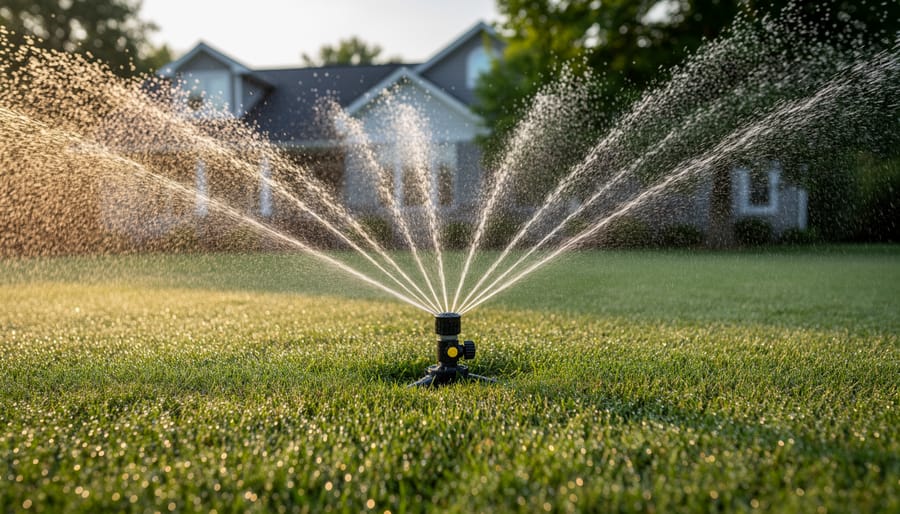
Water your lawn deeply for one hour, skip two days, water again for one hour, skip two more days, then give it a final one-hour session—this is the 12321 technique in action, a smart watering pattern that’s revolutionizing how homeowners maintain lush, resilient grass without wasting a drop.
The numbers represent watering days and rest intervals: one day of watering, two days off, three consecutive rest days, another two-day break, and one final watering session to complete the cycle. This alternating pattern works because it mimics natural rainfall patterns while encouraging grass roots to grow deeper into the soil, searching for moisture during those intentional dry periods. Unlike daily sprinkling that keeps roots shallow and dependent, the 12321 method trains your lawn to become drought-resistant and healthier over time.
Professional groundskeepers have used variations of this technique for years, but it’s only recently gained mainstream attention as water conservation becomes increasingly important. The science behind it is straightforward: grass develops stronger root systems when it experiences controlled moisture stress between watering sessions. Those rest days aren’t neglect—they’re strategic training periods that transform weak, water-dependent turf into resilient, self-sufficient grass.
Implementing this method requires some adjustment to traditional effective watering schedules, but the payoff includes reduced water bills, less frequent irrigation needs, and grass that stays green even during hot summer weeks when neighboring lawns turn brown. The technique adapts beautifully across seasons and climate zones with minor modifications, making it accessible whether you’re managing a small suburban yard or acres of residential property.
What Is the 12321 Lawn Watering Technique?
The 12321 lawn watering technique is a structured approach to irrigation that has taken the lawn care community by storm, and for good reason. This method gets its catchy name from the specific pattern of watering days it follows over a five-day cycle: 1 day of watering, 2 days off, 3 days of watering, 2 days off, then 1 day of watering before the cycle repeats.
Let me break that down more clearly. On day one, you water your lawn thoroughly. Then you skip the next two days completely, giving your grass time to absorb that moisture and encouraging roots to grow deeper as they search for water. Days four through six bring three consecutive watering sessions, which might seem counterintuitive at first. However, this period helps establish consistent moisture levels during your lawn’s active growing phase. You then take another two-day break, followed by one final watering day to complete the cycle.
The philosophy behind this technique centers on something lawn care experts call “training your lawn.” Rather than watering on a random schedule or daily light sprinklings that keep roots shallow, the 12321 method creates intentional wet and dry periods. These intervals encourage your grass to develop a robust, deep root system that can better withstand drought, heat stress, and disease pressure.
What makes this approach particularly appealing to environmentally conscious gardeners is its water efficiency. By spacing out watering sessions strategically, you’re actually using less water overall while achieving healthier results. The dry periods prevent overwatering, which can lead to fungal issues and water waste, while the watering clusters ensure your lawn receives adequate hydration when it needs it most.
This technique has gained popularity because it takes the guesswork out of lawn watering. Instead of wondering whether you’ve watered enough or too much, you follow a proven pattern that balances your lawn’s needs with sustainable water management. It’s essentially giving your grass the gift of consistency while promoting independence through stronger roots.
Why This Method Works: The Science Behind 12321
Deep Root Development
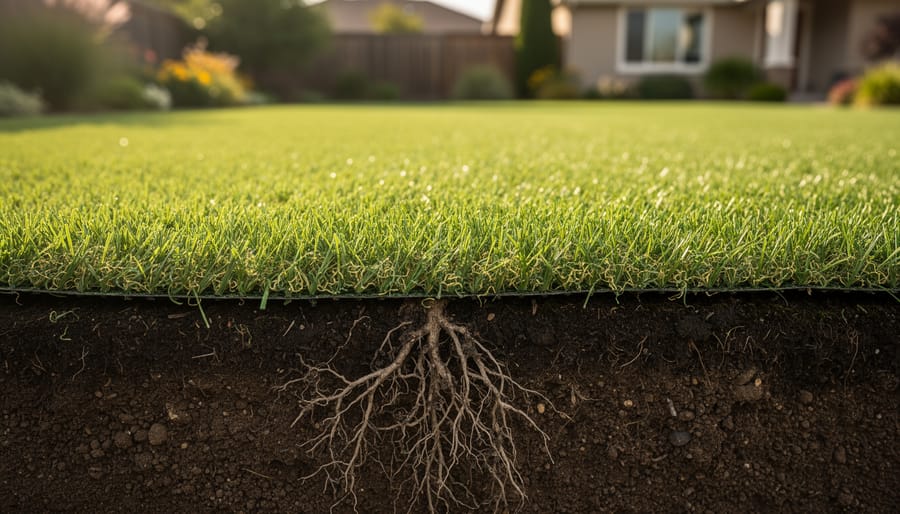
Here’s what makes the 12321 technique such a game-changer for your lawn’s resilience: it trains your grass roots to dig deep rather than spread shallow. When you water frequently with light sprinkles, roots get lazy and hang out near the surface where moisture is readily available. But the 12321 pattern flips this dynamic entirely.
By spacing out your watering sessions and allowing the soil to dry between cycles, you’re essentially encouraging roots to venture downward in search of moisture. Those deeper day-one and day-five soakings act as a beacon, drawing roots further into the soil profile. The result? A root system that can extend 6 to 8 inches deep instead of the typical 2 to 3 inches you’d get with daily shallow watering.
This deeper root development is like giving your lawn an insurance policy against drought. When summer heat intensifies or water restrictions kick in, your lawn can tap into moisture reserves that shallow-rooted grass simply can’t reach. You’ll notice your turf stays greener longer during dry spells and bounces back faster after stress. Plus, those robust roots create a stronger, more resilient lawn that’s better equipped to outcompete weeds and withstand foot traffic throughout the growing season.
Preventing Water Waste and Runoff
One of the biggest advantages of the 12321 technique is how effectively it prevents water waste and runoff, making it a win-win for both your lawn and the environment. When you water too frequently or apply too much at once, the soil simply can’t absorb it all. The result? Water runs off into gutters and storm drains, taking your time, money, and effort with it.
The 12321 method works with your soil’s natural absorption rate rather than against it. By spacing watering sessions two days apart, you give the ground time to fully absorb moisture and allow it to penetrate deep into the root zone where it’s actually needed. This deeper penetration encourages roots to grow downward, creating a more drought-resistant lawn over time.
Think about it like this: pouring a gallon of water on dry soil all at once creates puddles and runoff. But distributing that same gallon over several sessions lets every drop soak in completely. That’s exactly what the 12321 pattern accomplishes on a weekly scale.
This technique also helps you avoid the common mistake of overwatering, which wastes precious resources and can actually harm your lawn by creating shallow root systems and promoting disease. During each watering session, you’re applying just enough to moisten the soil without saturating it to the point of runoff.
For environmentally conscious gardeners, this approach aligns perfectly with water conservation goals while still maintaining a healthy, vibrant lawn. You’re being a responsible steward of resources without sacrificing results.
How to Implement the 12321 Technique: Step-by-Step
Setting Up Your Watering Schedule
Getting started with the 12321 technique is wonderfully straightforward, and I promise it’ll soon become second nature. Think of it as teaching yourself a new habit, like brushing your teeth—awkward at first, but automatic before you know it.
Begin by choosing your start day, ideally in early morning when evaporation is minimal and your lawn can absorb water most efficiently. On Day 1, water your entire lawn thoroughly, aiming for about one inch of water. A simple trick I love: place empty tuna cans around your lawn to measure exactly when you’ve hit that inch mark. This first deep watering sets the foundation for everything that follows.
Here’s where tracking becomes your best friend. Grab a calendar or use your phone’s notes app to mark each watering day with a number: 1, 2, 3, 2, 1. This visual reminder keeps you honest and prevents the “did I water yesterday?” confusion we’ve all experienced. Some folks even set recurring phone reminders for each session.
For Day 2, reduce your watering time to roughly two-thirds of Day 1. Day 3 gets about one-third. Then you’ll reverse course—Day 4 mirrors Day 2, and Day 5 returns to Day 1’s full watering. After completing the five-day cycle, take two full days off before starting again.
Pro tip: Keep notes about weather conditions and how your lawn responds during these first few cycles. This personalized data helps you fine-tune the technique for your specific grass type and climate, making each subsequent cycle more effective and sustainable.
Tools and Equipment You’ll Need
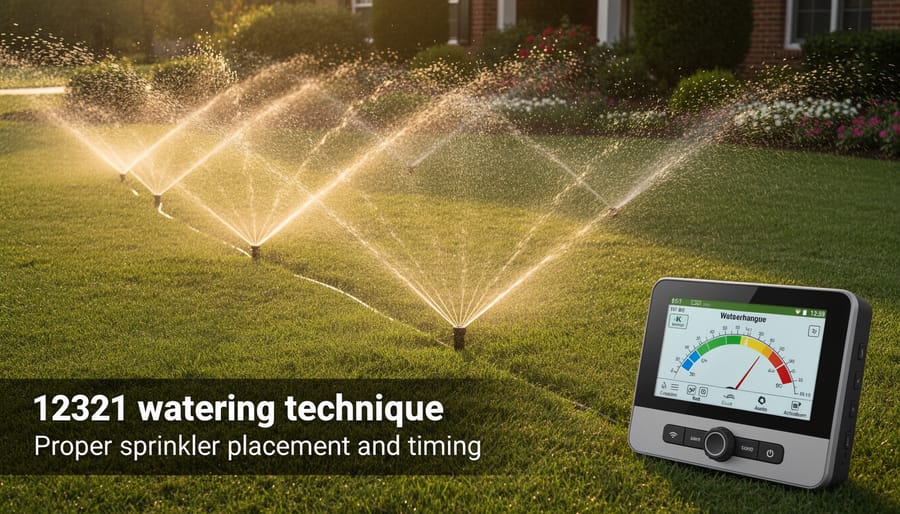
You don’t need fancy equipment to master the 12321 technique, but a few key tools will make your life much easier. First up is a reliable sprinkler system. For most homeowners, I recommend oscillating or rotary sprinklers that distribute water evenly across your lawn. Look for models with adjustable spray patterns so you can fine-tune coverage to match your yard’s layout.
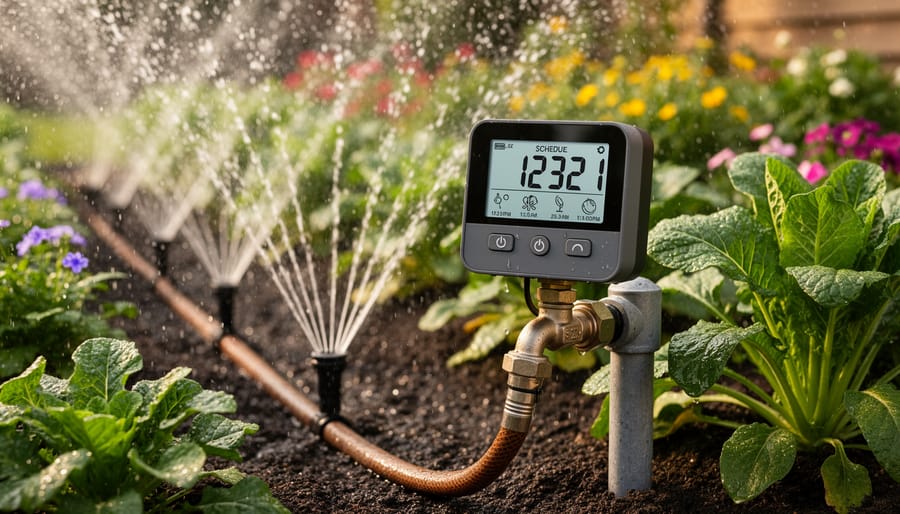
A programmable timer is your best friend here. It takes the guesswork out of remembering which day you’re on in the cycle and ensures consistency even when life gets busy. Choose one with multiple program settings and battery backup to avoid losing your schedule during power outages.
Don’t overlook a simple rain gauge. This humble tool helps you track natural rainfall so you can adjust your watering schedule accordingly. If Mother Nature provides an inch of rain, you can skip that week’s session and save water.
For those embracing sustainability, consider installing a soil moisture meter. These affordable devices tell you exactly when your lawn needs water, preventing waste and promoting healthier grass. Some gardeners also find soaker hoses useful for targeted watering in problem areas, though they’re optional for this technique.
Lastly, keep a basic garden journal or use a smartphone app to track your watering dates and lawn response. This simple habit helps you refine your approach season after season.
Measuring Success: How to Know It’s Working
You’ll know the 12321 technique is working when your lawn starts showing some encouraging signs. The most reliable indicator is soil moisture—grab a screwdriver and push it into your lawn about 6 inches deep. If it slides in easily, you’ve achieved proper water penetration. You can also use an inexpensive soil moisture meter for more precise readings.
Healthy grass should bounce back quickly when you walk on it, and the color should be a rich, vibrant green rather than that stressed-out bluish-gray tone. Check your lawn in the morning for signs of drought stress. If footprints remain visible for more than a few minutes, it’s time to adjust your schedule.
Root development is another telltale sign. After a few weeks, gently pull up a small section of turf. You should notice deeper, stronger roots compared to before—this is the magic of infrequent, deep watering at work. Your grass will also need less frequent watering overall as those roots dig deeper into the soil, making your lawn more drought-resistant and sustainable in the long run.
Seasonal Adjustments for the 12321 Method
Spring Watering Adjustments
As your lawn wakes up from winter dormancy, think of the 12321 technique as needing its own spring awakening. During early spring, your grass roots are just beginning to activate, so you’ll want to ease into the full watering schedule rather than jumping in immediately. Start by monitoring soil moisture levels closely—stick a screwdriver into your lawn, and if it penetrates easily to about six inches, you can hold off on watering.
Spring rainfall can be your best friend here, reducing or even eliminating the need for supplemental watering during wet weeks. This is where sustainability meets practicality. When Mother Nature provides, let her do the work! On weeks with significant rainfall, skip your scheduled watering entirely and resume the 12321 pattern once the soil begins to dry.
As temperatures climb and grass growth accelerates in late spring, gradually increase your watering duration while maintaining the 12321 frequency. Watch for that magical moment when your grass blades spring back quickly after being stepped on—that’s your sign that you’ve dialed in the perfect spring balance.
Summer: Peak Watering Season
Summer puts your lawn to the test, and that’s when the 12321 technique really proves its worth. During peak heat, you’ll likely need to increase your watering frequency while maintaining the pattern’s fundamental rhythm. Think of it as turning up the volume without changing the song.
When temperatures soar and evaporation rates spike, consider running your 12321 cycle more frequently—perhaps every five days instead of weekly. The key is keeping that deep-shallow-deep-shallow-deep sequence intact. Your lawn still benefits from the root-strengthening pattern, even when it needs more overall moisture.
Early morning watering becomes absolutely critical during summer months. Watering between 4 and 8 a.m. minimizes evaporation loss and gives grass blades time to dry before evening, reducing disease risk. I’ve found that checking soil moisture becomes my summer ritual—stick your finger two inches down before each session to ensure you’re watering when truly needed, not just on autopilot.
These summer watering strategies complement the 12321 technique beautifully. Watch for heat stress signs like footprints that don’t spring back quickly, and adjust accordingly. Your lawn will reward your attentiveness with sustained green growth even through the toughest conditions.
Fall Modifications
As temperatures begin to drop and your lawn prepares for its winter rest, it’s time to adjust your 12321 watering schedule. During early fall, you can gradually reduce watering frequency while maintaining the pattern’s structure. Instead of twice weekly, shift to once weekly sessions, keeping that valuable deep-watering approach that strengthens roots before dormancy.
By mid-autumn, most cool-season grasses need less water as they slow their growth and cooler temperatures reduce evaporation. This is when the 12321 technique really shines for sustainability—you’re working with nature’s rhythms rather than against them. Monitor rainfall more closely during this period, as fall showers often provide adequate moisture naturally.
Here’s a practical tip from my own yard: I start tapering my watering in September, watching for signs like slower grass growth and reduced soil drying between sessions. These fall watering practices set your lawn up for success, ensuring roots stay hydrated enough to survive winter without encouraging disease from overwatering. By late fall, you can usually stop supplemental watering entirely in most climates, letting your lawn enter dormancy naturally fortified.
Winter Considerations
Winter throws a wrench in your 12321 routine, but don’t worry—your lawn’s dormancy period doesn’t mean you’re completely off the hook. The key is understanding that dormant grass still has roots that need occasional hydration, though much less frequently than during active growing seasons.
In most regions with true winter dormancy, you can pause your regular watering schedule entirely. Cold temperatures and occasional precipitation typically provide sufficient moisture. However, if you’re experiencing an unusually dry winter with no snow cover or rain for three to four weeks, consider giving your lawn a light watering—about half an inch—during warmer periods when the ground isn’t frozen.
For those in mild climates where grass stays semi-active through winter, you’ll want to scale back your 12321 approach significantly. Instead of watering three times weekly during peak season, shift to once every ten to fourteen days, monitoring soil moisture closely. Your grass is growing minimally, so overwatering becomes especially problematic now, potentially inviting disease and shallow root development.
The sustainability angle here is beautiful: by respecting your lawn’s natural dormancy cycle, you’re conserving water when it’s least needed. Pay attention to natural rainfall, and only supplement when Mother Nature isn’t pulling her weight.
Common Mistakes to Avoid
Even with the best intentions, it’s easy to stumble when implementing the 12321 technique. Let’s talk about the most common pitfalls and how to sidestep them so your lawn thrives.
The biggest mistake? Treating all lawns like they’re identical. Your neighbor’s sandy soil drains much faster than your clay-heavy yard, so blindly copying their schedule won’t work. Sandy soils need more frequent watering with less volume each time, while clay soils benefit from deeper, less frequent watering. Before committing to any schedule, do a simple screwdriver test—if you can’t push it six inches into the soil after watering, you’re not watering deeply enough.
Another frequent error is ignoring Mother Nature’s contributions. I’ve seen folks religiously stick to their watering schedule even after a heavy rainstorm, leading to soggy, disease-prone grass. The 12321 technique provides a framework, not a rigid mandate. If it rains an inch on your scheduled watering day, skip it and adjust accordingly. This is where those optimal watering times really matter—early morning sessions allow you to assess overnight rainfall before making decisions.
Being too rigid about the numbers themselves is also problematic. Some gardeners water for exactly the prescribed minutes regardless of their sprinkler’s output. Instead, focus on applying the right amount of water—typically one inch per week total. Use tuna cans or rain gauges placed around your lawn to measure actual coverage, then adjust your timing based on those readings.
Finally, many people don’t recognize common overwatering mistakes until damage appears. Watch for mushrooms, persistent puddles, or a spongy feel underfoot—these signal you need to pull back.
The solution? Stay observant, remain flexible, and remember that the 12321 technique is a starting point that you’ll customize to your lawn’s unique personality. Your grass will tell you what it needs if you pay attention.
Adapting 12321 to Your Specific Lawn Conditions
Here’s the thing about the 12321 technique: it’s a fantastic framework, but your lawn didn’t read the manual. Every yard has its own personality shaped by grass type, soil, climate, and sun exposure, so let’s talk about making this method work for your specific conditions.
Start by considering your grass type. Cool-season grasses like Kentucky bluegrass and fescue generally need about 1 to 1.5 inches of water per week during their active growing periods, which fits beautifully with the 12321 schedule. Warm-season varieties like Bermuda and St. Augustine, however, can be more drought-tolerant and might thrive with slightly less frequent watering. You may find that adjusting to a 1-1-2-1-1 pattern during peak summer works better for these heat-lovers.
Soil composition plays a huge role too. Sandy soils drain quickly and may require shorter, more frequent sessions to prevent water from rushing past the root zone. If you’re working with clay soil that holds moisture longer, you might extend your deep watering day to ensure water penetrates deeply rather than pooling on the surface. A simple soil test can reveal whether you need to modify watering duration rather than frequency.
Climate zone matters tremendously. Those of you in humid regions might reduce overall watering amounts since natural rainfall contributes significantly, while arid climate gardeners may need to increase duration on those deeper watering days. Track your local rainfall and adjust accordingly—sustainability means working with nature, not against it.
Finally, observe sun exposure patterns. Shady areas retain moisture longer than full-sun spots. Consider dividing your yard into zones and adjusting your irrigation system to deliver different amounts based on each area’s needs while maintaining the basic 12321 rhythm.
The 12321 lawn watering technique offers a refreshing approach to lawn care that balances efficiency with environmental responsibility. By concentrating water delivery in those first and final minutes while allowing for deep soil penetration during the middle phase, you’re essentially training your grass to develop stronger, more resilient roots. This isn’t just good for your lawn—it’s better for your water bill and our planet’s precious resources.
What makes this method particularly valuable is its flexibility. As you’ve learned, the core principle remains consistent whether you’re dealing with scorching summer heat or mild spring conditions. The beauty lies in making those seasonal adjustments that respond to your lawn’s changing needs throughout the year.
Remember, successful lawn care is always a journey of observation and adaptation. Your soil type, grass variety, and local climate all play important roles in how this technique performs. Don’t be discouraged if you need to tweak the timing or frequency—that’s all part of becoming a more skilled gardener. The 12321 method provides you with a scientifically sound foundation, but your attention and willingness to experiment will ultimately determine your success. Start with these guidelines, observe how your lawn responds, and make adjustments as needed. You’ve got this!