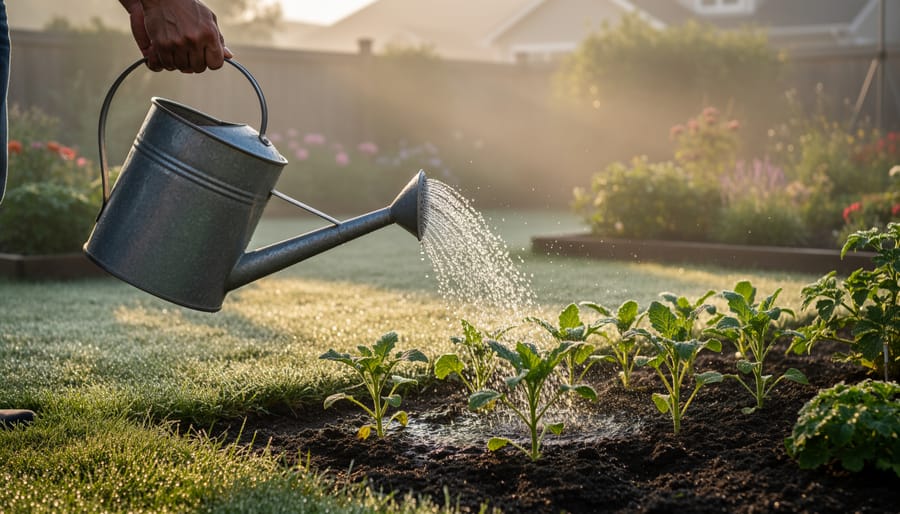
Watering your lawn by hand isn’t just a fallback option when sprinklers fail—it’s often the smarter choice for small yards, newly seeded areas, and anyone committed to water conservation. While automated systems spray indiscriminately, manual watering gives you complete control over where every drop lands, letting you target dry patches, avoid overwatering established areas, and reduce water waste by up to 40% compared to traditional sprinklers.
The technique matters more than most gardeners realize. Water deeply but infrequently, applying about one inch per session in early morning hours when evaporation is minimal. Use a fan spray nozzle that mimics gentle rainfall rather than a harsh jet that compacts soil and runs off before penetrating. Move methodically across your lawn in overlapping passes, spending 15-20 minutes per 500 square feet to ensure water reaches 6 inches deep where grass roots actually live.
Hand watering works best for lawns under 2,000 square feet—beyond that, the time investment becomes impractical for most homeowners. But for smaller spaces, the connection you develop with your lawn’s specific needs, combined with significant water savings and the meditative quality of the task itself, makes manual watering a genuinely rewarding approach to lawn care.
The Real Benefits of Hand Watering Your Lawn
Water Conservation and Cost Savings
One of the most compelling reasons to water your lawn by hand is the significant water savings you’ll achieve. When you’re standing there with a hose in hand, you develop an intimate awareness of exactly where every drop goes. Unlike sprinkler systems that mindlessly spray water onto sidewalks, driveways, and already-saturated areas, hand watering gives you complete control over water placement.
Studies consistently show that hand watering can reduce water consumption by 20-40% compared to automated irrigation systems. This happens because you’re eliminating three major sources of waste: overspray onto hardscapes, runoff from overwatering, and unnecessary watering of areas that don’t need it. You can target dry patches while skipping sections that received rain or still feel moist from the previous watering session.
This precision translates directly to lower water bills, which is especially meaningful in regions with tiered water pricing or during drought conditions when conservation matters most. You’re also preventing water waste from broken sprinkler heads or misaligned zones that often go unnoticed in automated systems. By watering only what needs it, when it needs it, you’re practicing truly sustainable lawn care while keeping more money in your pocket.
Spotting Problems Before They Spread
One of the biggest advantages of watering your lawn by hand is the opportunity to become intimately familiar with every square foot of your turf. Unlike standing at a distance while sprinklers do their work, hand watering puts you right there on the ground, giving you a front-row seat to what’s really happening in your lawn.
As you move across your yard with hose in hand, you’ll naturally notice things you might otherwise miss. That small brown patch near the fence? You’ll spot it when it’s just a few inches wide rather than discovering it weeks later when it’s spread into a major dead zone. The slight discoloration that signals the early stages of fungal disease becomes obvious when you’re walking slowly across the grass, paying attention.
This close-up inspection time is particularly valuable for catching pest problems early. You might notice the small holes left by grubs, the webbing of sod webworms, or unusual insect activity before these issues become widespread. Early detection means simpler, more sustainable solutions, often avoiding the need for harsh chemical interventions.
You’ll also discover the microclimates in your yard. That spot under the maple tree that dries out faster than everywhere else, or the low area that stays soggy longer than it should. These insights allow you to adjust your watering technique on the fly, giving each area exactly what it needs. This personalized approach not only keeps your lawn healthier but also conserves water by preventing overwatering in areas that don’t need it.
Essential Equipment for Hand Watering Success
Choosing the Right Hose and Nozzle
Having the right equipment makes hand watering far more enjoyable and effective. I learned this the hard way after spending my first summer fighting with a kinked hose and a trigger nozzle that left my hand cramping after ten minutes.
Start with hose length. Measure the distance from your outdoor faucet to the farthest corner of your lawn, then add at least 10-15 feet for comfortable maneuvering. A hose that’s too short forces you into awkward positions and leaves sections unreachable, while an excessively long hose becomes heavy and unwieldy to drag around.
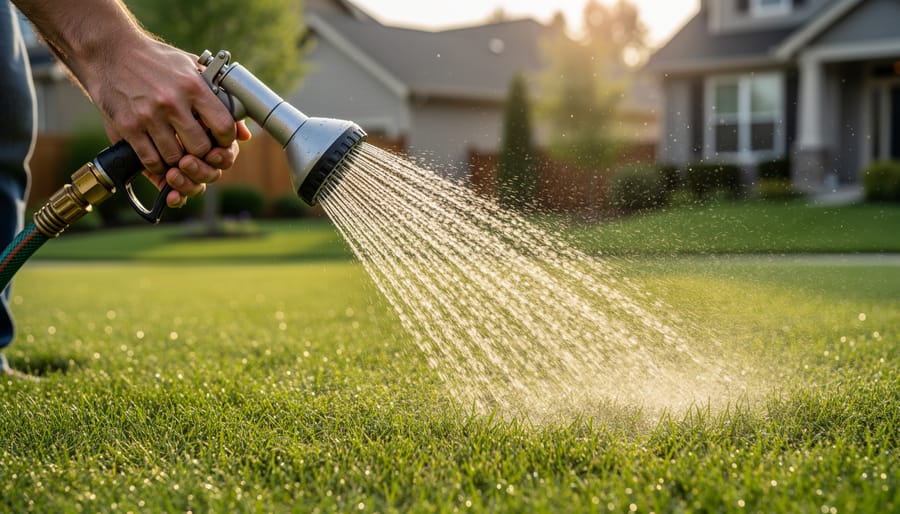
For nozzles, you have several excellent options. Fan spray nozzles distribute water in a wide, gentle pattern that mimics natural rainfall, perfect for established lawns. Shower settings deliver soft, soaking rain ideal for newly seeded areas or delicate grass. Adjustable nozzles offer versatility, letting you switch between patterns depending on what you’re watering.
The most important feature is actually flow control. Look for nozzles with a trigger lock that lets you maintain steady water flow without constantly squeezing. This simple feature dramatically reduces hand fatigue during longer watering sessions. Ergonomic handles with cushioned grips also make a real difference when you’re spending 20-30 minutes watering.
From a sustainability perspective, choose nozzles with shut-off valves at the tip. This prevents water waste as you move between sections and teaches you to be more mindful about every drop you’re applying to your lawn.
Watering Wands and Sprinkler Attachments
If you’re finding it challenging to reach those awkward spots in your yard, watering wands are about to become your new best friend. These extended-reach tools attach directly to your garden hose and typically feature a gentle shower head at the end, allowing you to water areas that would otherwise require uncomfortable stretching or acrobatic maneuvering. I’ve found them particularly useful for those hard-to-reach spots behind shrubs, under low-hanging branches, or along fence lines where dragging a traditional hose becomes frustrating.
The real magic of watering wands lies in their adjustable flow patterns. Most models let you switch between various spray settings, from a focused stream for established grass to a soft rain pattern perfect for newly seeded areas. This versatility means you’re not stuck with one-size-fits-all watering, which is especially valuable when you’re nurturing different lawn zones with varying needs.
Hand-held sprinkler attachments offer another excellent option, particularly for delicate new grass that needs consistent, gentle moisture. These attachments simulate natural rainfall patterns, delivering water in fine droplets that won’t disturb tender seedlings or wash away topsoil. They’re also surprisingly efficient from a sustainability standpoint because you maintain complete control over water distribution, directing it exactly where needed without the runoff common with stationary sprinklers.
For beginners, start with a basic watering wand featuring a comfortable grip and a shut-off valve. This simple setup gives you immediate control and helps prevent water waste while you’re moving between watering zones.
The Hand Watering Technique That Actually Works
How Long to Water Each Area
Getting the timing right is one of those aspects of hand watering that seems mysterious at first, but becomes second nature with a bit of practice. Generally, you’ll want to water each zone or section of your lawn for about 15 to 20 minutes to achieve that deep watering we’re after. This encourages roots to grow deeper into the soil, creating a more drought-resistant and healthier lawn overall.
Here’s a simple trick I’ve shared with countless gardeners: the screwdriver test. About an hour after watering, take a long screwdriver and push it into the soil. If you can easily insert it 6 to 8 inches deep, you’ve watered sufficiently. If it meets resistance earlier, your next session needs a few more minutes. This hands-on approach gives you immediate feedback and helps you understand your lawn’s specific needs.
Your timing will need adjustments based on what you’re working with. Sandy soils drain quickly and might need slightly longer watering sessions, while clay soils hold moisture longer and could require less time. Warm-season grasses like Bermuda typically develop deeper root systems and benefit from those full 20-minute sessions, while cool-season varieties such as fescue might need slightly less.
Don’t forget that environmental factors play a role too. On particularly hot or windy days, you might notice water evaporating faster, so adding an extra 5 minutes can compensate. The key is observing how your specific lawn responds and adjusting accordingly. This attentiveness is actually one of the hidden benefits of hand watering compared to automated systems.
Movement Patterns for Even Coverage
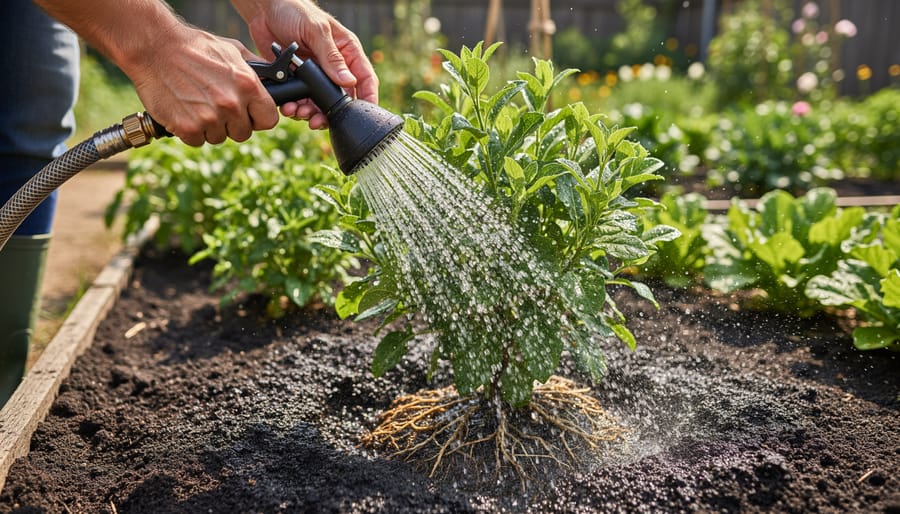
The secret to even hand watering lies in following a consistent pattern rather than randomly waving your hose around. Think of your lawn as a grid, dividing it mentally into sections about 10 feet square. Start at one corner and work methodically across each section before moving to the next. This grid method ensures you won’t accidentally skip areas or return to the same spot multiple times.
Another effective approach is the overlapping circles technique. As you water, move the spray pattern in slow, overlapping circles, ensuring each circle overlaps the previous one by about half. This prevents those telltale dry patches that appear a few days later. I learned this the hard way when my lawn developed a leopard-spot pattern of brown and green.
For larger lawns, consider using visual markers like garden stakes or natural landmarks to track your progress. Place them at section boundaries so you always know where you’ve finished. Walking backward as you water also helps maintain consistent coverage and prevents you from trampling freshly watered grass. The key is patience – rushing through the job almost always results in uneven coverage and wasted water, which isn’t good for your lawn or the environment.
Reading Your Lawn’s Water Needs
Your lawn will tell you when it needs water—you just need to know how to listen. Rather than sticking to a rigid watering schedule, learn to read the actual signs of thirst. Try the footprint test: walk across your lawn and look back. If your footprints remain visible for more than a few seconds, the grass blades lack the moisture needed to spring back up. Check blade color too—grass shifts from vibrant green to a dull blue-gray when stressed. Get hands-on by pressing your finger into the soil; it should feel slightly moist an inch down. Dry, hard soil indicates it’s time to water. These simple checks prevent overwatering, conserve water, and keep your lawn healthier by encouraging deeper root growth. Trust what you observe rather than the calendar.
Seasonal Adjustments for Hand Watering
Spring: Supporting Active Growth
As spring awakens your lawn from winter dormancy, you’ll need to gradually increase your watering frequency to support that vibrant new growth. This is when hand watering really shines, because you can target areas waking up at different rates. Notice how some patches green up faster than others? Those eager spots need consistent moisture to sustain their growth spurt.
Start by watering two to three times weekly, adjusting based on rainfall and soil conditions. Spring weather can be wonderfully unpredictable, so rather than sticking to a rigid schedule, let nature guide you. After a good spring shower, skip your planned watering session. Your lawn will thank you for the flexibility, and you’ll conserve water too.
Pay special attention to newer grass areas or patches you overseeded in fall. These spots need more frequent, gentle watering to establish strong root systems. When hand watering, use a sweeping motion to mimic natural rainfall, spending extra time on these developing areas. The beauty of manual watering is this ability to customize your approach, giving each section exactly what it needs without waste.
Summer: Deep Watering in Heat Stress
Summer brings unique challenges that require adjusting your hand-watering approach. The key is understanding early morning watering timing—aim for that sweet spot between 4-9 AM when temperatures are cooler and wind is minimal, reducing evaporation by up to 30%.
When facing summer heat stress, resist the temptation to water more frequently. Instead, focus on deeper, less frequent watering sessions. Your grass needs about 1-1.5 inches weekly, but deliver it in one or two thorough soakings rather than daily sprinkles. This encourages roots to grow deeper, making your lawn more resilient.
Watch for heat stress signs: bluish-gray tint, footprints that remain visible, or blades folding lengthwise. Here’s where sustainability meets practicality—cool-season grasses like fescue naturally go dormant in extreme heat, turning brown but staying alive. This is perfectly healthy and conserves water. Warm-season grasses like Bermuda, however, thrive in heat and need consistent moisture. Know your grass type and work with its natural rhythms rather than fighting them.
Fall: Preparing for Dormancy
As temperatures begin to drop and your lawn prepares for its winter rest, it’s time to adjust your hand-watering routine accordingly. Think of fall as your lawn’s preparation period, much like how we gradually slow down as evening approaches. During this transition, you’ll want to reduce watering frequency while focusing on deeper, less frequent sessions that encourage strong root development before dormancy sets in.
If you’ve tackled overseeding this fall, you’ll need to maintain consistent moisture for those first few weeks until new grass establishes itself. Once seedlings are up and growing, gradually taper back to match the cooling weather. Similarly, fall fertilization programs work best when paired with adequate moisture to help nutrients reach the root zone effectively.
As a sustainable practice, let cooler temperatures and increased rainfall do more of the work for you. Most established lawns need significantly less supplemental water in fall compared to summer’s demands. Monitor soil moisture by checking a few inches below the surface, and water only when necessary, allowing your grass to naturally harden off for winter’s challenges ahead.
Winter: Minimal Intervention Strategy
Winter transforms your lawn care routine dramatically. In most climates, grass goes dormant and requires minimal watering, giving you a well-deserved break from your hose. However, some situations call for attention. If you’re experiencing an unusually dry winter with less than an inch of precipitation monthly, your lawn still needs occasional hydration—aim for one deep watering per month on a day when temperatures are above freezing.
Evergreen grass types like certain fescues in milder climates continue growing slowly through winter and benefit from light watering every two to three weeks. A thoughtful winter watering strategy prevents winter desiccation while avoiding overwatering frozen ground.
Protection matters too. Always drain hoses completely after each use and store them indoors. Frozen water inside hoses causes splits and damage, turning an eco-friendly tool into landfill waste—definitely not sustainable.
When Hand Watering Makes the Most Sense
Small Lawns and Problem Areas
Hand watering truly shines in specific situations where it’s not just viable but actually the smartest choice. If your lawn is under 1,000 square feet, you’re in the sweet spot for manual watering. You can thoroughly cover this size in 20-30 minutes, giving you direct control without the hassle and expense of installing irrigation systems.
I’ve found hand watering invaluable for spot-treating those stubborn dry patches that seem to appear despite your best efforts. Rather than running your entire sprinkler system, you can target exactly where water is needed, conserving resources while solving the problem. This precision approach is particularly sustainable and cost-effective.
New sod areas absolutely benefit from hand watering during their critical establishment period. You can ensure consistent moisture without oversaturating surrounding established grass, giving your new turf the best start possible.
Hand watering also works beautifully as a supplement to existing sprinkler systems. Most automated systems have blind spots or areas with poor coverage. A quick walk-through with your hose once or twice weekly can address these missed zones, ensuring uniform lawn health without redesigning your entire irrigation setup. This hybrid approach combines convenience with the attentive care that creates truly healthy lawns.
Combining Methods for Best Results
You don’t have to choose between the efficiency of automation and the precision of hand watering. Many successful lawn enthusiasts find that combining both methods delivers the best results while maximizing sustainability and convenience.
Consider using an automated sprinkler system or irrigation setup to handle your lawn’s baseline watering needs during peak growing season. This ensures consistent coverage across large areas and takes the daily guesswork out of basic maintenance. Then, supplement with targeted hand watering for areas that need extra attention.
This hybrid approach works particularly well for trouble spots that your sprinklers miss, like narrow strips along walkways, shaded areas under trees, or corners where spray patterns don’t quite reach. You can also focus your hand watering efforts on high-value plantings within or bordering your lawn, giving extra care to flower beds, newly seeded patches, or premium grass varieties that deserve special attention.
The beauty of this combined strategy is flexibility. During cooler months or rainy periods, you might turn off your automated system entirely and rely solely on hand watering when needed, conserving water and reducing costs. This approach acknowledges that lawns have changing needs throughout the year, and adapting your methods accordingly creates the healthiest, most sustainable outcome for your green space.
Hand watering your lawn isn’t the fastest method, and it certainly won’t win any convenience awards in our automated world. But what it lacks in speed, it more than makes up for in control, connection, and environmental mindfulness. You’ll use exactly the water your lawn needs, nothing more. You’ll notice the dry spots before they become brown patches. You’ll catch pest problems early and celebrate those new grass shoots emerging after overseeding.
If you’re on the fence about trying it, start small. Choose one problem area or a single section of your yard and hand water it for a few weeks. Pay attention to how that grass responds compared to your sprinkler-watered zones. Many gardeners find this experiment eye-opening, and some never go back to their old methods.
Remember, the absolute best watering method is the one you’ll actually do consistently. Whether that’s entirely by hand, a hybrid approach, or supplementing your irrigation system during critical growth periods, what matters most is providing your lawn with deep, infrequent watering that encourages strong roots. Hand watering gives you the tools to do exactly that while building a deeper understanding of your lawn’s unique needs throughout the seasons.