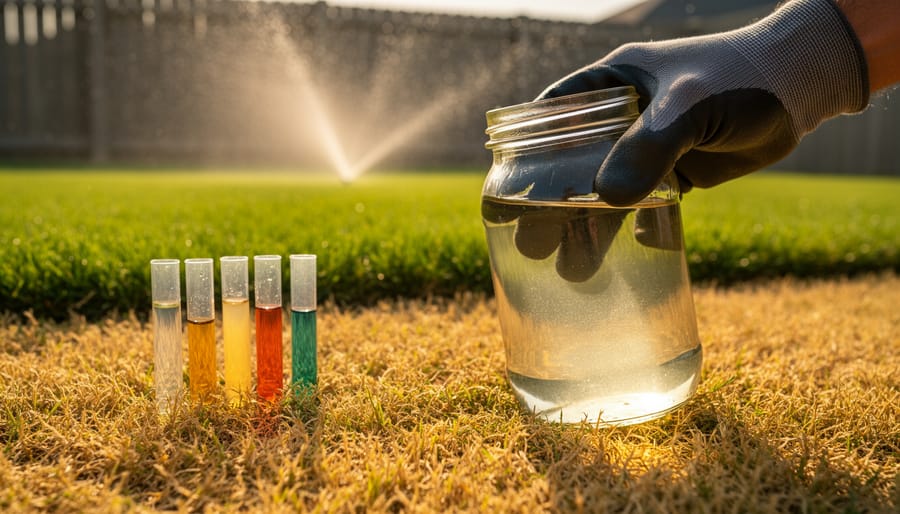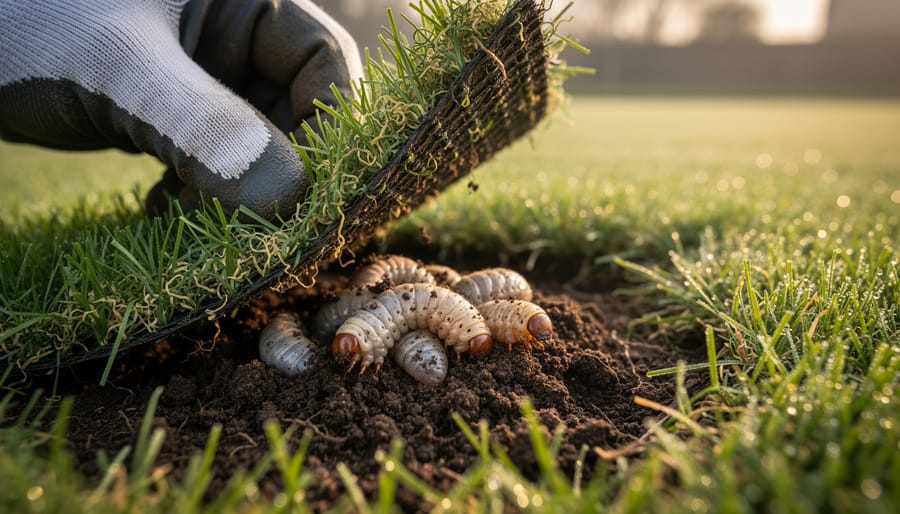
Examine your lawn in early morning or late evening when insects are most active, looking for irregular brown patches, thinning grass, or visible surface activity. Pull back the turf layer in damaged areas to expose soil-dwelling grubs, which appear as C-shaped white larvae feeding on grass roots. Pour two tablespoons of dish soap mixed with two gallons of water over a one-square-yard section of suspicious turf to bring hidden pests like chinch bugs, sod webworms, and armyworms to the surface within minutes.
Most lawn damage you attribute to pests may actually stem from other causes, so proper identification prevents unnecessary treatments and protects beneficial insects that naturally control pest populations. The key to smart lawn pest management lies in distinguishing between minor cosmetic damage that grass can tolerate and genuine threats requiring intervention. Action thresholds matter: finding five grubs per square foot rarely justifies treatment, while fifteen typically does.
This visual guide walks you through the most common lawn insects you’ll encounter, showing you exactly what to look for at each life stage, where damage typically appears, and when intervention makes sense. You’ll learn to differentiate between the beetles, bugs, and caterpillars sharing your turf, understanding which ones deserve your attention and which ones are actually helping your lawn thrive. Armed with accurate identification, you can make informed decisions that protect both your grass and the environment, choosing targeted solutions only when truly necessary.
Why Pictures Matter More Than Descriptions Alone
When you’re standing in your yard staring at brown patches or chewed grass blades, written descriptions like “small, brownish insect with six legs” aren’t particularly helpful. That description could match dozens of different creatures, some harmful and many completely beneficial. This is exactly why pictures become your most valuable diagnostic tool when identifying lawn pests.
Think about it: how would you describe the distinctive pattern on a chinch bug’s wings to someone who’s never seen one? Or explain the subtle difference between a beneficial ground beetle and a pest? Photos capture details that are nearly impossible to convey through words alone—the exact coloring, size relative to common objects, distinctive markings, and body shape that separate friend from foe in your lawn ecosystem.
I’ve seen countless homeowners misidentify beneficial insects as pests simply because a vague description led them astray. One common mistake is confusing predatory ground beetles with destructive grubs, resulting in unnecessary pesticide applications that actually eliminate helpful predators. When you’re distinguishing pest damage from disease, visual references become even more critical since similar symptoms can have completely different causes.
Quality lawn insect pictures reveal subtleties that matter tremendously for accurate identification: the way light reflects off a Japanese beetle’s metallic green body, the characteristic white tufts on billbug larvae, or the distinctive hopping behavior of froghopper nymphs surrounded by spittle. These visual cues help you spot pests at different life stages, which is essential since treatment timing often depends on whether you’re dealing with eggs, larvae, or adults.
From a sustainability standpoint, accurate photo-based identification prevents the most common mistake in lawn pest management: treating problems that don’t exist or applying pesticides when populations are below thresholds that actually cause damage. When you can confidently match what you’re seeing with reliable images, you’ll treat only when truly necessary, protecting beneficial insects and reducing chemical inputs in your yard.
The Most Common Lawn Insects You’ll Encounter
Grubs (Beetle Larvae): The Underground Destroyers
If you’ve ever walked across your lawn and felt the turf give way like a sponge underfoot, chances are you’ve got grubs working beneath the surface. These C-shaped, cream-colored larvae are the immature stage of various beetles, and they can cause significant damage before you even realize they’re there.
The most common culprits are Japanese beetle grubs and European chafer grubs. Japanese beetle grubs typically measure about three-quarters of an inch long when mature and feature a distinctive V-shaped arrangement of bristles on their rear end. European chafer grubs are slightly smaller and have a Y-shaped bristle pattern, though you’ll need to look closely to spot the difference. Both types have brown heads and six legs near the front of their bodies.
Grubs feed on grass roots from late summer through fall and again in spring, creating irregular brown patches that peel back like loose carpet. The damaged areas often attract secondary pests like skunks, raccoons, and birds who’ll dig up your lawn looking for a grub meal, sometimes causing more visible damage than the grubs themselves.
Timing matters when dealing with grubs. The most vulnerable stage is late summer when newly hatched grubs are small and feeding near the surface. To check for grubs, cut and peel back a one-foot square of turf in affected areas. Finding more than five to ten grubs per square foot generally warrants treatment. Beneficial nematodes offer an environmentally friendly control option, applied when soil temperatures are appropriate and grubs are actively feeding. Maintaining healthy, deep-rooted grass through proper watering and mowing practices also helps your lawn tolerate some grub presence naturally.

Chinch Bugs: The Summer Stress Multipliers
Chinch bugs are sneaky little pests that thrive in hot, dry weather, making your lawn’s summer stress even worse. These tiny insects—adults measure just 1/5 inch long—have distinctive white wings with black triangular markings when mature. The nymphs start out bright red with a white band across their backs, gradually darkening as they mature through five growth stages.
These sun-loving bugs have a particular fondness for St. Augustine grass in southern regions and Kentucky bluegrass up north. They pierce grass blades and suck out plant juices, leaving behind irregular yellow patches that expand outward in sunny areas. Here’s the tricky part: chinch bug damage looks almost identical to drought stress or lawn disease symptoms, which often delays proper treatment.
To confirm chinch bugs are your culprit, try the flotation test. Push a bottomless can into the soil at the edge of a damaged area, fill it with water, and wait ten minutes. Chinch bugs will float to the surface. You’ll typically find them concentrated where healthy grass meets damaged areas, particularly along sidewalks and driveways where heat reflects onto the lawn.

Armyworms and Cutworms: The Overnight Raiders
These sneaky caterpillar pests earn their name by doing most of their damage after dark. If you wake up to find irregular brown patches or completely stripped grass blades seemingly appearing overnight, armyworms or cutworms might be the culprits.
Armyworms are smooth caterpillars, typically greenish-brown or tan with distinct stripes running along their bodies. They measure about 1-2 inches when fully grown. Cutworms are plumper, appearing in various colors from gray to brown or even green, and they curl into a characteristic C-shape when disturbed.
The damage tells the story: armyworms create ragged, chewed grass blades and can mow down large sections of lawn in just a few days when populations are high. Cutworms prefer cutting grass stems right at the soil line, leaving small bare spots. You’ll often find grass blades with notched or completely severed edges.
To confirm their presence, inspect your lawn at dusk or use the simple soapy water test. Mix a tablespoon of dish soap in a gallon of water and drench a suspected area. The caterpillars will surface within minutes if they’re present. Early detection is key to preventing widespread damage, and fortunately, sustainable options like beneficial nematodes work effectively against both pests without harsh chemicals.
Billbugs: The Stem-Boring Specialists
Billbugs are sneaky pests that often fly under the radar until you’ve got dead patches scattered across your lawn. These weevils, about a quarter-inch long with distinctive snouts, don’t look particularly menacing, but their larvae do the real damage. Adult billbugs are dark brown to black with a slightly ridged back, and you’ll often spot them crawling on sidewalks or driveways in spring.
The real telltale sign? Check for sawdust-like frass at the base of grass plants. This fine, yellowish material is leftover from larvae tunneling through stems and crowns. Unlike grub damage that creates spongy, rollable turf, billbug damage shows up as irregular brown patches that don’t pull up easily. The grass simply dies from the inside out.
Here’s where misdiagnosis happens frequently: many homeowners assume they have a drought problem or fungal disease. To confirm billbugs, gently tug on affected grass. If stems break off easily at ground level and you see hollowed-out crowns with frass, you’ve found your culprit.
The good news? Healthy, well-maintained lawns typically tolerate low billbug populations without treatment. Focus on proper watering, appropriate mowing height, and encouraging beneficial insects that naturally keep billbug numbers in check. Chemical interventions should be your last resort, reserved only for severe infestations.
Sod Webworms: The Surface Feeders
Sod webworms are sneaky little pests that feed right at the surface of your lawn, often going unnoticed until the damage becomes obvious. You’ll first spot the adult moths fluttering around your grass in the evening, especially near porch lights. These buff-colored moths are about three-quarters of an inch long and fold their wings tightly against their bodies when resting, giving them a cigar-like appearance.
The real troublemakers are the larvae: slender, gray-brown caterpillars with dark spots that can reach about three-quarters of an inch long. Look for their telltale signs: irregular brown patches in your lawn that appear chewed rather than drought-stressed. Get down close to the grass and you might spot their silk-lined tunnels nestled in the thatch layer. A helpful identification clue? Check for tiny green fecal pellets scattered on grass blades near damaged areas.
Before reaching for pesticides, scout your lawn by mixing two tablespoons of dish soap in two gallons of water and pouring it over a square yard of damaged turf. If more than fifteen larvae surface within ten minutes, treatment might be warranted. Healthy lawns with proper mowing height and moisture often tolerate minor webworm activity without intervention, making prevention through good cultural practices your most sustainable defense.
Beneficial Insects You Don’t Want to Kill
Not every insect you spot in your lawn is the enemy. In fact, some of your best allies in pest control are already living there, working for free. Ground beetles, with their distinctive dark, shiny shells, patrol your turf at night, devouring grub eggs and other pests. Those spiders you might instinctively want to squash? They’re actually phenomenal pest managers, catching everything from chinch bugs to lawn moth adults in their webs. Parasitic wasps are tiny heroes too, laying their eggs inside pest insects and naturally keeping populations in check. This is why sustainable Integrated Pest Management (IPM) practices are so important. When you apply broad-spectrum insecticides, you’re killing these beneficial insects along with the pests, which creates a cycle where you’ll need more treatments down the road. Before reaching for any pesticide, take time to identify what you’re actually dealing with. A healthy lawn ecosystem includes both pests and predators, and maintaining that balance means you’ll have fewer serious pest problems over time.

Understanding Damage Thresholds: When to Act (and When to Wait)
How to Conduct a Proper Lawn Insect Scout
Proper scouting helps you identify pest problems before they get out of hand, saving you from unnecessary treatments. The best time to scout is early morning or late evening when many insects are most active. Focus on areas showing stress, like brown patches or thinning turf, as well as transition zones between sunny and shaded areas.
The soap flush method is wonderfully simple and effective. Mix 2 tablespoons of dish soap (the kind you’d use for washing dishes, nothing fancy) into a gallon of water. Pour this solution over a square yard of suspicious turf and wait about 10 minutes. Surface-dwelling pests like chinch bugs, sod webworms, and army worms will come scrambling to the surface where you can easily identify and count them.
For grubs and other subsurface pests, try the turf lifting technique. Use a spade to cut three sides of a square foot section, then peel back the turf like opening a book. Healthy soil should have fewer than five grubs per square foot. More than that means it’s time to consider treatment options.
Time your scouting to the pest’s life cycle. Check for grubs in late summer and early fall when they’re actively feeding near the surface. Scout for chinch bugs during hot, dry weather when they’re most damaging. Take clear pictures of any suspects for comparison with identification guides, noting their size, color, and location. This detective work helps you make informed, targeted decisions rather than applying broad-spectrum treatments unnecessarily.
Action Thresholds by Pest Type
Knowing when to treat is just as important as knowing what you’re dealing with. Let’s talk numbers, because understanding action thresholds helps you avoid unnecessary treatments while protecting your lawn when it really matters.
For grubs, the magic number is typically 5-10 per square foot. Here’s how to check: cut three sides of a 1-foot square section of turf, peel it back like opening a book, and count the C-shaped larvae in the top few inches of soil. Do this in at least four different spots across your lawn. If you’re consistently finding fewer than 5 grubs per square foot, your lawn can usually tolerate them without significant damage. Between 5-10 means consider treatment if you’ve noticed thinning grass. Above 10 per square foot? That’s when action becomes justified.
Chinch bugs require closer inspection. Get down on your hands and knees at the edge of damaged areas and part the grass near the soil line. If you’re seeing 15-20 or more chinch bugs per square foot, treatment makes sense. Fewer than that, and your lawn might rebound on its own with proper watering and care.
For armyworms and sod webworms, look for active feeding damage and check for 2-3 or more larvae per square foot. Mix a tablespoon of dish soap in two gallons of water and pour it over a square yard of turf—this irritates the insects and brings them to the surface for easy counting.
Remember, healthy lawns tolerate more pest pressure. Sometimes the best treatment is simply improving your lawn care practices rather than reaching for pesticides.
Creating Your Own Visual Reference Library
Building your own visual reference library is one of the smartest moves you can make as a lawn care enthusiast. Think of it as creating a personalized field guide for your specific yard, and it’s easier than you might think.
Start with your smartphone, which is already a powerful diagnostic tool in your pocket. When you spot an insect, take multiple photos from different angles. Get close-ups that show distinctive features like antennae, wing patterns, and leg structure, but also capture wider shots showing where the insect was located and any visible lawn damage nearby. Natural lighting works best, so early morning or late afternoon photos typically turn out clearer than midday shots.
Here’s a practical tip: photograph the same area weekly throughout the growing season. This creates a timeline that reveals patterns in pest activity. You’ll start noticing that certain insects appear like clockwork each year, which directly informs your season-by-season pest management approach.
Organize your photos by date and location within your yard. Most smartphones allow you to create albums, so consider categories like “Spring Arrivals,” “Summer Suspects,” or “Problem Areas Near Oak Tree.” Add notes about weather conditions, recent watering, or lawn treatments you’ve applied. This context becomes invaluable when you’re trying to determine whether an insect population is actually problematic or just passing through.
Over time, you’ll develop an instinct for what’s normal in your yard versus what requires action. Your library becomes a sustainable alternative to automatically reaching for treatments, helping you distinguish between beneficial insects and actual pests. Plus, these photos make consultations with extension offices or lawn care professionals much more productive.

Integrated Pest Management: The Sustainable Approach to Lawn Insects
Now that you’ve learned to identify the insects in your lawn, let’s talk about what to do with that information. This is where Integrated Pest Management, or IPM, comes into play. Think of IPM as a smart, measured approach that uses everything you’ve learned about identification and threshold monitoring to make informed decisions rather than reaching for a spray bottle at the first sign of a bug.
The beauty of IPM is that it starts with the least invasive methods first. Those pictures you’ve been studying help you determine not just what pest you have, but whether you actually need to take action at all. Remember, a few insects don’t constitute a crisis. Your lawn can typically handle some pest pressure without any intervention.
Start with cultural controls, which are simply good lawn care practices. Proper mowing height, adequate watering, and appropriate fertilization create a resilient lawn that can outcompete and tolerate pests. For instance, keeping your grass a bit taller shades out some grub eggs and creates a deeper root system that can withstand some feeding damage. These practices cost nothing extra and benefit your lawn year-round.
Next, consider biological controls. Beneficial nematodes work wonders against grubs, and they’re completely safe for your family and pets. Birds, ground beetles, and parasitic wasps are natural predators that keep pest populations in check when you avoid broad-spectrum pesticides that kill everything indiscriminately.
When monitoring shows pest numbers exceeding treatment thresholds, targeted treatments become appropriate. The key word here is targeted. Spot-treat problem areas rather than blanket-spraying your entire lawn. Use products specific to the pest you’ve identified through those pictures and threshold counts. This precision approach minimizes environmental impact while maximizing effectiveness.
This measured strategy also helps prevent pesticide resistance, which happens when pests develop immunity to frequently used chemicals. By reserving treatments for when they’re truly needed and rotating control methods, you keep all your management tools effective for the long haul. Your lawn stays healthier, your wallet stays fuller, and the environment benefits from reduced chemical inputs.
Armed with the knowledge to identify lawn insects by sight, you’re now equipped to become a thoughtful steward of your outdoor space. Remember, accurate visual identification isn’t just about putting a name to a bug—it’s the cornerstone of making smart, sustainable decisions about your lawn care approach.
Make it a habit to scout your lawn regularly, especially during peak growing season. A quick walk-through once a week, combined with occasionally getting down on your hands and knees for a closer look, will help you learn the natural rhythms and patterns of insect activity in your specific yard. You’ll begin to recognize which insects show up at certain times of year and what populations are typical for your area.
Here’s the encouraging truth: not every insect you find requires action. A healthy, thriving lawn can absolutely tolerate some pest presence without suffering significant damage. In fact, a few insects are completely normal and often indicate a balanced ecosystem. The key is understanding action thresholds—the point at which pest populations actually warrant intervention. Treating based on fear or simply because you spotted a grub can lead to unnecessary chemical applications that harm beneficial insects and disrupt soil health.
By combining regular observation with the visual identification skills you’ve developed, you’ll make treatment decisions grounded in evidence rather than anxiety. Your lawn, your wallet, and the environment will all benefit from this thoughtful approach to pest management.