Match your pipe diameter to your system’s gallons-per-minute (GPM) demand using the fundamental principle that smaller pipes restrict flow while oversized ones waste money and create installation headaches. Calculate your total GPM by adding up all sprinkler heads or drip emitters that will run simultaneously in a single zone, then cross-reference this number with friction loss charts that account for pipe length and material type.
Choose 3/4-inch pipes for most residential systems running 5-10 GPM, 1-inch for 10-15 GPM, and scale up to 1.5-inch or larger when demands exceed 20 GPM or pipe runs stretch beyond 100 feet. PVC and polyethylene pipes have different friction characteristics, so always consult manufacturer-specific sizing charts rather than assuming universal standards apply across all materials.
Prevent uneven watering and system failures by accounting for elevation changes that reduce pressure by approximately 0.43 PSI per foot of rise, requiring you to upsize pipes when water must travel uphill or across varied terrain. Measure your home’s static water pressure with a simple gauge attached to an outdoor faucet, then subtract 25% to determine your working pressure since you’ll lose pressure through valves, fittings, and pipe friction.
Getting pipe sizing wrong costs you twice: first in materials, then in disappointed expectations when your sprinklers sputter weakly or your garden beds receive inadequate coverage. This comprehensive guide demystifies irrigation pipe sizing charts so you can design a water-efficient system that delivers consistent pressure from the first sprinkler head to the last drip emitter.
Understanding Water Flow: Why Pipe Size Actually Matters
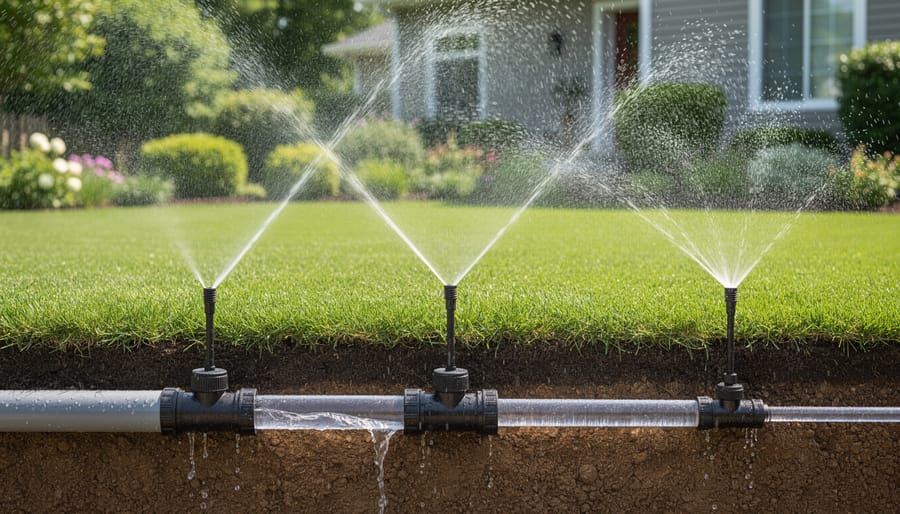
The Garden Hose Effect
Think about the last time you watered your garden with a hose. If you’ve ever tried switching from a standard 5/8-inch hose to a skinnier 1/2-inch one, you probably noticed the difference immediately. That thinner hose delivers less water, and if you partially cover the end with your thumb, the pressure drops even more as water struggles to push through the smaller opening.
This garden hose effect is exactly what happens in your irrigation system. When water travels through pipes, it experiences friction against the pipe walls. The narrower the pipe, the more friction and pressure loss you’ll encounter. It’s like trying to drink a thick milkshake through a narrow straw versus a wide one.
For irrigation systems, this means choosing pipes that are too small will leave your sprinklers sputtering weakly, especially those farthest from your water source. Meanwhile, oversized pipes waste money and resources without providing real benefits. The sweet spot is finding that Goldilocks diameter where water flows efficiently with minimal pressure loss, ensuring every corner of your garden gets the steady, reliable water flow it needs to thrive.
What Happens When Pipes Are Too Small
When your irrigation pipes are undersized, the problems become immediately apparent—and frustrating. The most noticeable sign is weak, sputtering sprinkler spray that barely reaches its intended coverage area. Instead of that satisfying arc of water you’re expecting, you’ll see limp streams that leave dry patches scattered across your lawn.
Here’s where it gets really inconvenient: you won’t be able to run multiple zones simultaneously. Trying to activate two or three zones at once will divide the already insufficient water flow, reducing pressure even further. This means longer watering times and more of your day spent managing the system instead of enjoying your garden.
The sustainability impact matters too. Undersized pipes lead to wasting water through inefficient coverage patterns. When sprinklers can’t deliver proper overlap, you’ll either underwater some areas (stressing your plants) or overwater others trying to compensate (running up your water bill and promoting disease). The uneven distribution means you’re using more water overall while getting worse results—exactly the opposite of what any environmentally conscious gardener wants to achieve.
Reading an Irrigation Pipe Sizing Chart: The Basics
The Three Numbers You Need to Know
Before you can select the right pipe size, you need three essential measurements. Think of these as your irrigation system’s vital signs—without them, you’re just guessing, and guessing often leads to disappointing results and wasted resources.
First up is GPM, or gallons per minute. This tells you how much water your system needs to deliver. To find this number, add up the GPM requirements of all the sprinkler heads or drip emitters you plan to run simultaneously. You’ll find these specifications on product packaging or manufacturer websites. For example, if you’re running six sprinkler heads that each use 2 GPM, you’ll need 12 GPM total. Don’t forget to check your water source capacity too—run an outdoor faucet into a bucket for one minute and measure how many gallons you collected. Your irrigation system can’t deliver more than your source provides.
Next is PSI, or pounds per square inch, which measures water pressure. Most homes have between 40-70 PSI, but don’t assume. You can purchase an inexpensive pressure gauge that screws onto any outdoor faucet for an accurate reading. Check pressure at different times of day since it can fluctuate.
Finally, measure your run length—the distance water travels from source to the farthest sprinkler. Longer runs mean more friction loss, requiring larger pipes to maintain adequate pressure. Simply use a measuring tape or walk the route, estimating about three feet per stride. These three numbers are your roadmap to proper pipe sizing and a thriving, efficiently watered landscape.
How to Use the Chart Step-by-Step
Let’s walk through a practical example together. Say you’re planning to water a vegetable garden that needs 10 gallons per minute (GPM) and your main water line is 100 feet from the garden.
First, determine your required flow rate. In this case, it’s 10 GPM. Next, measure the distance from your water source to the farthest sprinkler or drip line. For our example, that’s 100 feet.
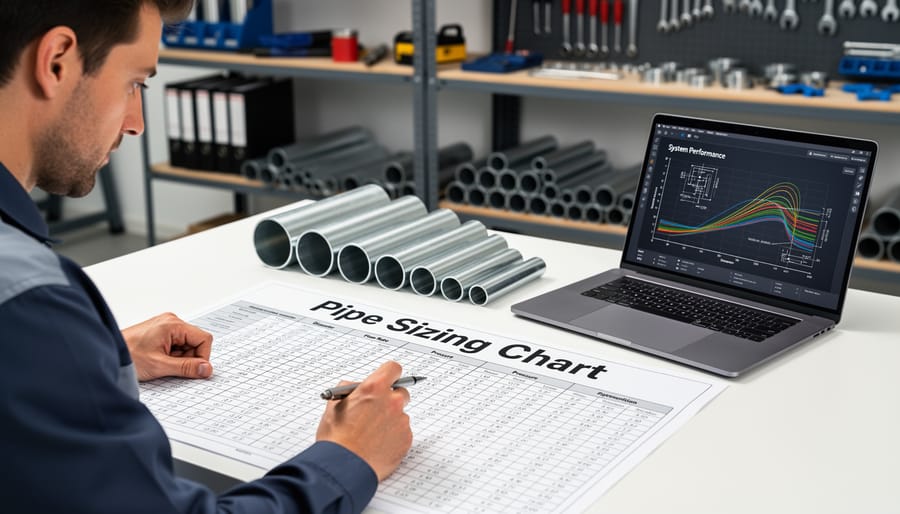
Now, locate 10 GPM on your irrigation pipe sizing chart’s left column. Run your finger across the row until you find the pipe size that maintains adequate pressure at 100 feet. Most charts will show that 1-inch pipe handles this flow comfortably, while 3/4-inch would create too much pressure loss.
Here’s a helpful tip from years of experience: always round up to the next size if you’re between recommendations. It’s much easier to reduce pressure with a valve than to fix inadequate flow after installation. Plus, slightly oversizing supports future expansion if you decide to add more garden beds.
Remember, sustainable watering means delivering the right amount of water efficiently, without waste from undersized pipes causing weak pressure or oversized ones encouraging excess use. Take your time with these measurements – getting it right the first time saves water, money, and plenty of frustration down the road.
Common Pipe Sizes for Home Irrigation Systems
Half-Inch and Three-Quarter-Inch Pipes
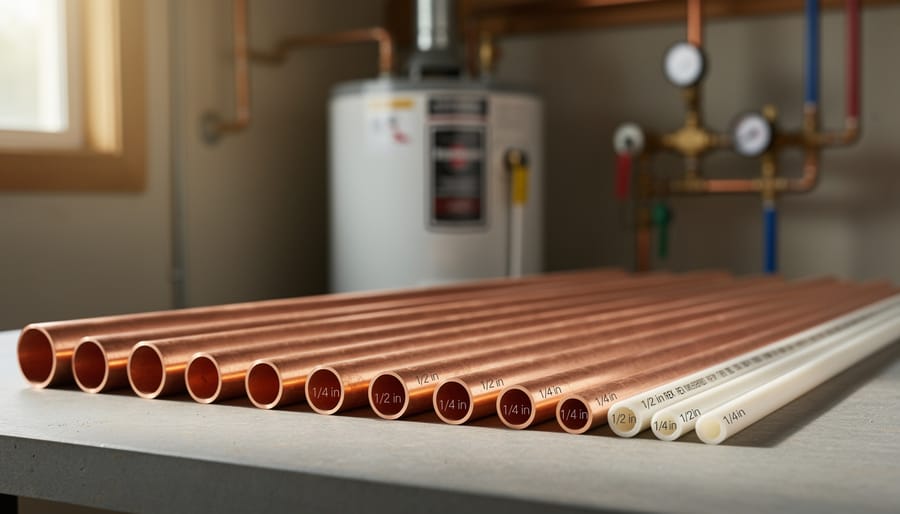
Half-inch and three-quarter-inch pipes are the workhorses of small-scale irrigation projects, and understanding their sweet spot will save you both money and frustration. Think of half-inch pipe as perfect for drip irrigation systems, small raised beds, or container gardens where you’re working with low water volume and minimal pressure requirements. It typically handles flow rates up to 5 gallons per minute over short distances of 25 feet or less.
Three-quarter-inch pipe offers more versatility for home gardeners. It’s ideal for small to medium irrigation zones, like a vegetable patch or flower bed section, and can manage up to 12 gallons per minute over runs up to 50 feet. This size works beautifully when you’re installing a dedicated zone for a portion of your yard rather than trying to water everything at once.
Here’s the reality check: these smaller pipes become inadequate quickly when distances increase or you’re trying to power multiple sprinkler heads simultaneously. If your water pressure drops noticeably when the system runs, or if sprinklers at the end of the line barely sputter, you’ve outgrown these sizes and need to upsize for optimal performance.
One-Inch and Larger: When to Make the Jump
Sometimes your lawn ambitions outgrow what smaller pipes can handle, and that’s when it’s time to consider one-inch diameter pipes or larger. Think of it like upgrading from a garden hose to a real irrigation workhorse.
If you’re running multiple zones simultaneously, larger pipes become essential. Each zone needs adequate pressure, and splitting water flow through undersized pipes is like asking everyone at a dinner party to share one drinking straw. Similarly, when your water source sits far from your irrigation area—say, more than 100 feet away—friction loss becomes your enemy. Larger pipes minimize this pressure drop over distance, ensuring your sprinklers perform as intended rather than sputtering weakly.
High-flow sprinklers and rotors, especially those covering large turf areas, demand serious water volume. A half-inch pipe simply can’t deliver the gallons per minute these heavy-duty heads require. Properties exceeding half an acre typically benefit from one-inch or larger mainlines, creating a strong foundation for your entire system.
Here’s the sustainability angle: properly sized larger pipes actually conserve water by maintaining consistent pressure, preventing misting and wasteful overspray. They also reduce strain on your pump or municipal connection, extending equipment life. Yes, larger pipes cost more upfront, but they’re an investment in system efficiency and long-term performance that pays dividends in lower water bills and healthier landscapes.
PVC vs. Poly: Does Material Affect Sizing?
Here’s a friendly heads-up that might surprise you: the material you choose absolutely affects your sizing decisions. PVC and polyethylene (poly) pipes have different interior surface textures, which impacts how smoothly water flows through them. PVC pipes generally have smoother walls, creating less friction and allowing slightly better flow rates than poly pipes of the same diameter. This means a 3/4-inch PVC pipe might perform comparably to a 1-inch poly pipe in some scenarios.
From a sustainability perspective, poly pipes deserve consideration. They’re more flexible, require fewer fittings (which means fewer potential leak points), and often last longer in challenging soil conditions. They’re also easier to repair without replacing entire sections. When consulting your sizing chart, check whether it’s calibrated for PVC or poly. If you’re working with poly and your chart assumes PVC, consider bumping up one size to compensate for the slightly higher friction loss. Many experienced gardeners find this small adjustment worthwhile, especially when choosing materials that align with long-term environmental goals. The key is matching your material choice with realistic flow expectations for your system.
Calculating Your System’s Flow Rate Requirements
Adding Up Your Sprinkler Heads
Before you can choose the right pipe size, you need to know how much water your system will actually use. This is where a bit of detective work comes in, but don’t worry—it’s easier than you might think!
Start by identifying each sprinkler head in your planned zone. Check the manufacturer’s specifications, which you’ll find on the packaging or their website. Look for the GPM (gallons per minute) rating at your specific water pressure. A typical spray head might use 2-4 GPM, while rotors often require 3-8 GPM depending on their coverage area.
Here’s where sustainability meets smart planning: group similar sprinkler types together in the same zone. Mixing spray heads with rotors not only complicates your calculations but also leads to uneven watering—some areas get drenched while others stay thirsty.
Add up the GPM for all heads in one zone to get your total flow requirement. For example, if you’re installing six spray heads at 3 GPM each, that zone needs 18 GPM total. This number becomes your key reference when consulting any pipe sizing chart. Remember, it’s better to slightly overestimate than undersize your pipes. Undersized pipes create pressure drops that leave your lawn looking patchy and stressed, wasting both water and your effort.
Planning for Future Expansion
When planning your irrigation system, think beyond today’s garden beds and consider tomorrow’s possibilities. I always recommend sizing your main pipes one step larger than current calculations suggest—it’s far easier and more sustainable than tearing up established landscaping later. For instance, if your current needs call for a three-quarter inch main line, consider installing a one-inch pipe instead. This modest upfront investment gives you flexibility to add another sprinkler zone, expand your vegetable garden, or incorporate that flower bed you’ve been dreaming about without worrying about pressure drops or flow restrictions. The extra cost is minimal compared to the hassle and expense of replacing buried pipes. Think of it as leaving room for your garden to grow with you, which aligns perfectly with sustainable planning practices that reduce future waste and disruption to your thriving landscape.
Finding Your Available Water Supply
Before you can choose the right pipe size, you need to know how much water your system can actually deliver. Here’s a simple bucket test that takes just a few minutes. Grab a 5-gallon bucket and a timer. Turn on your outdoor faucet at full blast and time how long it takes to fill the bucket completely. If it fills in 60 seconds, you have 5 gallons per minute (GPM). Fill in 30 seconds? That’s 10 GPM. This straightforward method gives you the real-world flow rate you’re working with, which is essential for sizing your irrigation pipes correctly. Remember, sustainable irrigation starts with knowing your actual water availability, not just what you think you have. Test each potential water source separately since flow rates can vary between spigots. Write down your results because this number becomes the foundation for every decision you’ll make about pipe diameter and system design.
Pressure Regulation and Why It Matters for Pipe Sizing
High Pressure Problems
While we often worry about low pressure, too much pressure creates its own set of headaches in your irrigation system. Picture this: you turn on your sprinklers and instead of nice, even droplets, you get a fine mist that drifts away in the slightest breeze. That’s high pressure at work, and it’s not just inefficient, it’s wasteful. When water atomizes into tiny particles, much of it evaporates before reaching the soil, meaning your plants miss out on the hydration they need.
Excessive pressure also puts unnecessary stress on your pipes, fittings, and sprinkler heads. Over time, this strain can lead to cracks, leaks, and premature failure of system components. You might notice water hammering sounds when valves close or find yourself replacing parts more frequently than you should.
The good news? Pressure regulators are an affordable, sustainable solution. These simple devices maintain consistent, optimal pressure throughout your system, typically between 30-50 PSI for most residential applications. By installing a pressure regulator at your system’s point of connection, you’ll reduce water waste, extend the life of your equipment, and ensure every drop counts. It’s a small investment that pays dividends in water conservation and system longevity, perfectly aligning with sustainable gardening practices.
Low Pressure Solutions
Low pressure can feel like a gardening setback, but the right pipe sizing strategy can help you work with what you’ve got. Here’s the thing: when water pressure is already on the low side, every bit of friction loss matters even more. Using pipes that are too narrow creates unnecessary resistance, essentially squeezing your already limited pressure even further. By choosing larger diameter pipes than you might initially think necessary, you reduce friction loss and help preserve whatever pressure your system starts with.
Think of it this way: wider pipes let water flow more freely, meaning less energy is wasted pushing it through. For low-pressure situations, going up one pipe size from what a standard chart suggests can make a surprising difference in performance. This is especially important for longer pipe runs where friction builds up over distance.
That said, proper pipe sizing has its limits. If your base pressure is consistently below 30 PSI, even perfectly sized pipes might not solve the problem entirely. In these cases, you may need to consider a pressure booster pump as a sustainable long-term solution. These pumps increase your system’s baseline pressure, allowing your irrigation to function as intended. Before investing in a booster, though, maximize your pipe sizing first since it’s a simpler, more cost-effective starting point.
Real-World Pipe Sizing Mistakes to Avoid
Undersizing the Mainline
Think of your mainline as the highway feeding traffic to neighborhood streets—if that highway’s too narrow, it doesn’t matter how wide the side streets are. Many homeowners make the mistake of sizing their mainline based on a single zone’s needs, forgetting that this supply pipe must deliver water to multiple zones throughout the day. When you undersize the main supply line, you’re creating a bottleneck that restricts flow before water even reaches your carefully planned zone pipes.
This common error often happens when trying to save money on materials, but it’s false economy. A mainline that’s too small forces your pump to work harder, wastes energy, and creates pressure drops that leave distant sprinkler heads sputtering weakly. The result? Uneven coverage, stressed plants, and higher water bills as you run zones longer to compensate. Always size your mainline for your system’s peak demand, accounting for future expansion. It’s far easier and more sustainable to install adequate piping from the start than to excavate and replace undersized lines later.
Ignoring Elevation Changes
Here’s something many DIYers overlook when planning their irrigation system: elevation changes can make or break your water pressure. When water travels uphill, it loses pressure—about 0.43 PSI for every foot of elevation gain. That might not sound like much, but if you’re pumping water 20 feet uphill to a vegetable garden, you’ve just lost nearly 9 PSI before the water even reaches your plants.
The opposite happens going downhill, where pressure increases. While that sounds like a bonus, too much pressure can damage emitters and create uneven watering patterns. If your irrigation chart suggests 1-inch pipe for level ground, you might need to size up to 1.25 inches when tackling significant slopes to maintain adequate flow. Think of it like this: your water needs a bigger highway to maintain its energy going uphill. Measuring your yard’s elevation changes with a simple line level or smartphone app helps you make these crucial adjustments. This sustainable approach ensures every zone receives consistent water without waste, whether you’re irrigating a hillside herb garden or a sloping lawn.
Mixing Incompatible Sprinkler Types
Here’s a mistake I see far too often in home irrigation systems: someone designs a zone that mixes high-flow rotor sprinklers with low-flow spray heads, thinking proper pipe sizing will solve everything. Unfortunately, no pipe diameter will fix this fundamental design flaw.
When rotors and spray heads share the same zone, the spray heads receive excessive water while rotors struggle to cover their intended areas. Rotors typically require 2-5 gallons per minute, while spray heads need only 1-2 GPM. This mismatch creates uneven coverage, with some areas drowning and others remaining parched—the opposite of sustainable water management.
The reality is that even perfectly sized pipes can’t compensate for incompatible flow requirements. Water naturally follows the path of least resistance, meaning your spray heads will gush while rotors barely turn. This wastes water, harms plant health, and defeats the purpose of careful irrigation planning. The solution? Always group sprinklers with similar flow rates and precipitation rates into separate zones. Think of it as matching dinner guests with similar appetites—everyone gets satisfied without waste.
Sustainable Irrigation: Right-Sizing for Water Conservation
Here’s a perspective that might surprise you: the right pipe size isn’t just about getting water from point A to point B—it’s one of the greenest choices you can make for your lawn. When you properly size your irrigation pipes, you’re essentially creating a system that delivers exactly what your plants need, nothing more and nothing less.
Think of undersized pipes like trying to water your garden through a coffee stirrer. The pressure drops, sprinkler heads sputter inefficiently, and you end up running the system longer to compensate. Those extra minutes multiply across a season into hundreds of gallons of wasted water. Oversized pipes create their own problems too, with surging pressure that causes misting and evaporation before water even reaches the soil.
A correctly sized system maintains optimal pressure throughout, ensuring water lands precisely where intended. This targeted delivery means your grass roots get deep, consistent hydration that encourages drought-resistant growth. You’ll actually need to water less frequently because the water penetrates properly rather than pooling on the surface. The environmental benefits extend beyond direct water savings, too.
Proper sizing helps reduce runoff that carries fertilizers and pesticides into storm drains and waterways. When water applies at the correct rate for your soil type, it absorbs rather than streams away, keeping nutrients where they belong—feeding your lawn, not local streams.
The beauty of this approach is that it aligns perfectly with effective lawn care. Your grass becomes healthier and more resilient while you use fewer resources. That’s the kind of win-win that makes sustainable gardening both practical and rewarding.
Getting your irrigation pipe sizing right isn’t just about avoiding frustration during installation—it’s the foundation of a healthy, sustainable lawn care system that serves you well for years to come. Think of it as setting up your garden for success from the ground up. While it might be tempting to eyeball measurements or go with whatever pipe size seems convenient, taking the time to measure your flow rate, calculate pressure loss, and consult a proper sizing chart will save you countless headaches down the road.
The upfront effort truly pays dividends. Correctly sized pipes mean your water flows efficiently exactly where it’s needed, reducing waste and lowering your utility bills. Your plants get consistent hydration without those frustrating dry spots or flooded areas. You’ll also avoid the expense and hassle of future repairs caused by inadequate pressure or pipe strain. Plus, there’s something deeply satisfying about watching a system you’ve thoughtfully planned work beautifully season after season.
If your system is particularly complex, involves steep elevation changes, or you’re simply feeling uncertain about your calculations, don’t hesitate to consult a professional irrigation designer. Sometimes that expert eye can spot issues before they become problems. But for most residential projects, armed with accurate measurements and a reliable sizing chart, you’ve got everything you need to create an irrigation system that’s both effective and environmentally responsible.