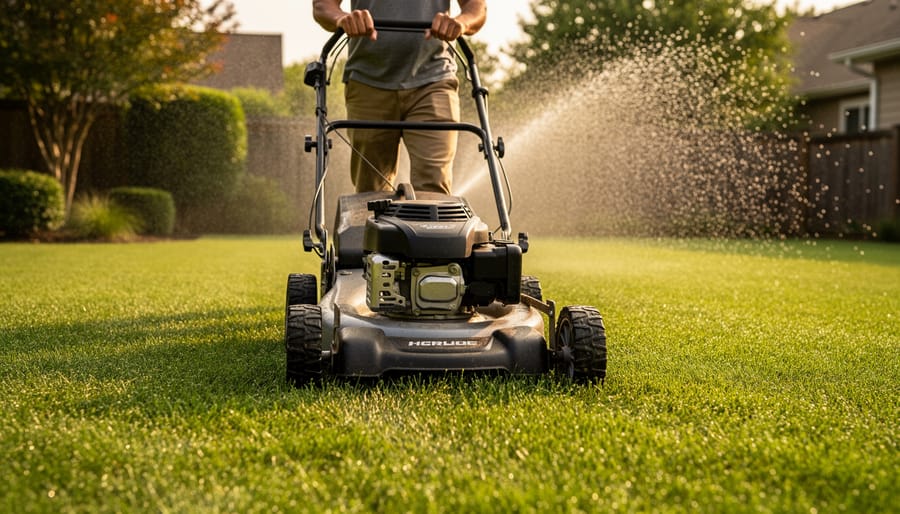
Mow your lawn at the highest recommended height for your grass type—typically 3 to 4 inches—to shade out weed seeds and promote deeper root growth that naturally crowds out invasive plants. Taller grass creates a dense canopy that blocks sunlight from reaching weed seedlings, effectively preventing germination without any chemicals. This simple adjustment to your mower settings transforms your regular cutting routine into a powerful pest prevention strategy.
Water deeply but infrequently, delivering about one inch of water per week in a single session rather than frequent shallow sprinklings. This encourages grass roots to grow 6 to 8 inches deep, creating a robust turf that outcompetes shallow-rooted weeds and resists pest damage. Deep watering also reduces surface moisture that attracts fungal diseases and harmful insects, making your lawn inherently less hospitable to common turf problems.
Apply fertilizer based on soil test results rather than guessing, feeding your lawn precisely what it needs to maintain vigorous growth without excess. Overfertilizing creates lush, weak growth that attracts pests like chinch bugs and armyworms, while underfertilizing leaves grass vulnerable to weed invasion. Strategic nutrient management keeps your turf dense enough to self-defend against most pest pressures.
Cultural control works because healthy, well-maintained grass is your lawn’s best defense system. When you align basic maintenance practices with your lawn’s biological needs, you create conditions where desirable turf thrives while pests and weeds struggle to establish. These aren’t just lawn care tasks—they’re preventive pest control measures that work continuously, season after season, without sprays or treatments. The beauty of this approach is that you’re already doing most of these activities; you simply need to optimize them for pest prevention.
What Cultural Control Really Means (And Why It Works)
Think of cultural control as creating a neighborhood where pests simply don’t want to live. Instead of waiting for problems to appear and then fighting them with sprays and treatments, you’re building an environment where issues rarely develop in the first place. It’s preventive care at its finest, working with nature’s own rhythms rather than against them.
At its heart, cultural control means using everyday lawn care practices strategically to make your turf inhospitable to weeds, diseases, and damaging insects while simultaneously creating ideal conditions for healthy grass growth. When your lawn is thriving, it naturally crowds out weeds and resists pest damage. It’s that simple, yet incredibly effective.
Here’s a relatable way to understand it: imagine trying to catch a cold. You’re far more likely to get sick when you’re run down, stressed, and not taking care of yourself, right? But when you’re well-rested, eating properly, and managing stress, your immune system fights off those germs before they take hold. Your lawn works exactly the same way. A well-maintained, vigorous lawn has its own natural defenses that keep problems at bay.
The beauty of this approach is that you’re probably already doing many of these practices. Mowing, watering, and fertilizing aren’t just maintenance tasks; they’re powerful pest prevention tools when done correctly. The difference lies in understanding how to optimize these routine activities for maximum protective benefit.
This method stands in stark contrast to relying solely on chemicals, which can create resistant pest populations over time. Cultural control addresses the root cause of lawn problems rather than just treating symptoms. You’re not just managing pests; you’re eliminating the conditions that allow them to thrive in the first place. It’s sustainable, cost-effective, and remarkably successful when implemented consistently.
The Foundation: Proper Mowing Practices

Mowing Height Makes or Breaks Your Defense
Your mower’s cutting height is one of the simplest yet most powerful weapons against weeds and lawn pests. Here’s the game-changer: taller grass shades out weed seeds, preventing them from getting the sunlight they need to germinate. Think of it as nature’s own weed barrier.
For cool-season grasses like Kentucky bluegrass, tall fescue, and perennial ryegrass, aim for 3 to 4 inches during the growing season. Warm-season varieties such as Bermuda and zoysia prefer 1.5 to 2.5 inches, while St. Augustine thrives at 2.5 to 4 inches.
Why does height matter so much? Taller grass blades support deeper, more extensive root systems that reach down for water and nutrients. This means your lawn naturally outcompetes shallow-rooted weeds and better withstands drought stress. Those deeper roots also create a denser turf that physically crowds out opportunistic invaders.
Here’s my practical tip: raise your mower deck one notch higher than you think you should. Most homeowners cut too short, weakening their lawn’s natural defenses. Remember, you’re growing grass, not maintaining a putting green.
Why Your Mowing Schedule Matters More Than You Think
Your mowing routine does more than keep your lawn looking neat—it’s one of your strongest defenses against pest invasions and disease. Here’s the golden rule: never remove more than one-third of the grass blade at a time. When you scalp your lawn by cutting too short, you stress the grass and create perfect conditions for weeds to muscle in and pests to take hold. Stressed turf simply can’t defend itself effectively.
Aim to mow when your grass reaches about one-third taller than your target height. For most cool-season grasses, that means maintaining a height of 3-4 inches, while warm-season varieties do well at 2-3 inches. Taller grass shades out weed seeds, develops deeper roots, and stays naturally more resilient against pest damage.
Adjust your schedule with the seasons too. During peak growing seasons, you’ll mow more frequently—perhaps weekly. As growth slows in extreme heat or cool weather, reduce mowing frequency accordingly. And here’s a pro tip: keep those mower blades sharp! Clean cuts heal faster and resist disease, while ragged tears from dull blades invite pathogens and pest problems. This simple practice strengthens your lawn’s natural defenses without any chemicals involved.
Watering Strategies That Starve Out Problems

The Deep Watering Advantage
Here’s a lawn care secret that might seem counterintuitive at first: watering less often can actually create a healthier, more pest-resistant lawn. The key is to water deeply when you do irrigate, encouraging your grass roots to grow down into the soil rather than spreading out near the surface.
Think of it this way: when you water lightly every day, grass roots get lazy. They hang out in the top inch or two of soil where water is readily available. But many common lawn weeds, like crabgrass and annual bluegrass, thrive in these same shallow conditions. They’re perfectly adapted to quick-drying surface soil and actually outcompete your grass in these circumstances.
When you shift to deep, infrequent watering—aiming for about one inch of water per week applied in one or two sessions—you’re essentially changing the playing field. Your desirable turfgrass develops a robust root system that reaches 6 to 8 inches deep, accessing moisture and nutrients that shallow-rooted weeds simply can’t reach. This makes your lawn naturally more competitive and resilient, crowding out unwanted plants before they can establish themselves.
Timing Your Watering to Prevent Disease
When you water your lawn matters just as much as how much you water, especially when it comes to preventing fungal disease development. Think of morning watering as giving your grass a head start on the day. Early watering, ideally between 4 AM and 10 AM, allows grass blades to dry thoroughly as the sun rises and temperatures increase. This quick-drying environment makes it difficult for fungal spores to germinate and establish themselves.
Evening watering, on the other hand, is like rolling out the welcome mat for disease. When grass stays wet overnight in cool, humid conditions, you’re creating the perfect breeding ground for brown patch, dollar spot, and other fungal problems. Those long hours of darkness with moisture sitting on leaf blades give fungi plenty of time to take hold.
If morning watering isn’t possible due to your schedule, aim for late morning rather than evening. Your grass will thank you with healthier, more disease-resistant growth.
Soil Health: The Underground Secret Weapon

Testing and Adjusting Your Soil pH
Understanding your soil pH is like knowing your lawn’s personality—it tells you what it needs to thrive and naturally resist pest problems. Soil that’s too acidic or alkaline stresses grass, making it vulnerable to disease, weeds, and insects.
Testing your soil is surprisingly simple. Pick up an affordable test kit from your local garden center or send a sample to your cooperative extension office for detailed results. I recommend testing every 2-3 years, or whenever your lawn seems lackluster despite your best efforts.
Most cool-season grasses like Kentucky bluegrass and fescues prefer a pH between 6.0 and 7.0, while warm-season varieties such as Bermuda and zoysia grass thrive at 6.0 to 6.5. When your soil hits this sweet spot, grass absorbs nutrients efficiently and develops the vigorous growth that crowds out pests naturally.
If your pH needs adjusting, reach for natural amendments. Lime raises pH in acidic soils—apply it in fall for best results. To lower pH in alkaline soils, incorporate elemental sulfur or compost rich in organic matter. Work amendments into the top few inches of soil, water thoroughly, and retest in six months. Patience pays off with healthier, more pest-resistant turf.
Aeration and Why Compacted Soil Invites Trouble
Compacted soil is like a brick wall for your lawn—it stops roots from growing deep and creates the perfect conditions for stubborn weeds. When soil gets packed down from foot traffic, heavy equipment, or just time, air pockets disappear, water pools on the surface, and roots struggle to penetrate. Shallow-rooted grass becomes weak and sparse, inviting opportunistic weeds like plantain and knotweed that actually thrive in these tough conditions.
Aeration is your solution. By removing small plugs of soil, you’re literally giving your lawn room to breathe. The best times to aerate are during active growing seasons—early fall for cool-season grasses and late spring for warm-season varieties. This timing ensures your grass can quickly fill in and take advantage of the improved conditions.
The benefits go beyond just pest control. Proper aeration allows water to penetrate deeper instead of running off, encourages robust root systems that can reach 6-8 inches deep, and creates an environment where beneficial soil microorganisms flourish. When your grass roots grow strong and deep, they naturally outcompete weeds for nutrients and water. Think of it as building a healthy foundation—you’re not just addressing symptoms, you’re creating conditions where problems can’t easily take hold.
Smart Fertilization to Outsmart Weeds
Think of fertilization as preparing a feast—and you want to make sure you’re feeding your grass, not the uninvited weed guests. Strategic fertilization is one of the most powerful tools in your cultural control arsenal, but timing and technique make all the difference.
Here’s the secret: healthy, well-fed grass grows thick and outcompetes weeds naturally. When your turf is dense and vigorous, it essentially creates a living carpet that blocks sunlight from reaching weed seeds and crowds out any would-be invaders. The challenge is feeding your grass without accidentally giving weeds the nutrients they crave.
Slow-release fertilizers are your best friend in this fight. Unlike quick-release options that dump nutrients all at once (feeding everything indiscriminately), slow-release formulas provide steady, measured nutrition over weeks or months. This sustained feeding keeps your grass consistently strong without creating the nutrient spikes that opportunistic weeds love to exploit. Think of it as meal-prepping for your lawn rather than binge-eating.
Quick-release fertilizers certainly have their place—they’re great for giving stressed lawns a rapid boost—but use them sparingly and strategically. Applied at the wrong time, they can actually encourage weed growth more than grass growth.
Organic fertilizers like compost, composted manure, or organic lawn food blends offer another sustainable advantage. They release nutrients gradually as soil microbes break them down, improving soil health while feeding your grass. This approach aligns beautifully with building long-term lawn resilience.
Timing matters enormously. Feed cool-season grasses in early fall and spring when they’re actively growing. For warm-season varieties, late spring through summer is ideal. Avoid fertilizing during your grass’s dormant periods—you’ll just be setting out a buffet for weeds.
The right amount matters too. Soil testing takes the guesswork out of fertilization, ensuring you’re providing exactly what your lawn needs without overdoing it. Over-fertilization wastes money, harms the environment, and ironically can weaken grass while strengthening certain weed species.
Choosing the Right Grass for Your Conditions
Think of grass selection as the foundation of your entire pest management strategy—get this right, and you’re already winning half the battle. When you match grass species to your specific growing conditions, you create a lawn that naturally resists disease, crowds out weeds, and withstands environmental stress without constant intervention.
The first decision you’ll face is choosing between cool-season and warm-season grasses. Cool-season grasses like tall fescue, Kentucky bluegrass, and perennial ryegrass thrive in northern climates where temperatures stay moderate. They green up beautifully in spring and fall but may struggle during hot summers. Warm-season varieties such as Bermuda grass, zoysia, and St. Augustine grass flourish in southern regions, staying vibrant through summer heat while going dormant in winter. Planting the wrong type for your climate zone creates a stressed lawn that becomes an easy target for pests and diseases.
Beyond the cool-versus-warm decision, examine your yard’s unique conditions. Does that shady corner under your oak tree get less than four hours of sunlight? Fine fescues handle shade far better than sun-loving Bermuda. Is your soil heavy clay or sandy? Certain varieties tolerate these conditions better than others. A grass variety perfectly suited to its environment grows thick and vigorous, which naturally prevents weed establishment and discourages pest infestations.
Here’s where it gets exciting: modern grass breeding has produced disease-resistant cultivars that dramatically reduce pest problems. When shopping for seed or sod, look for varieties labeled as resistant to common diseases in your area—brown patch, dollar spot, or rust. Yes, these cultivars might cost slightly more upfront, but they’ll save you countless hours and dollars fighting problems down the road. This is sustainable lawn care at its finest.
Overseeding and Thick Turf as Your Best Barrier
Think of your lawn as a competitive ecosystem where the goal is simple: if your grass is winning, weeds don’t stand a chance. Dense, healthy turf is nature’s own weed barrier, and overseeding is one of your most powerful tools for maintaining that competitive edge.
When bare spots appear in your lawn, they’re essentially “vacancy signs” for opportunistic weeds. Overseeding fills these gaps before unwanted guests move in. The concept is beautifully straightforward: more grass plants per square foot means less room for anything else. A thick lawn also shades the soil surface, preventing weed seeds from getting the light they need to germinate.
Timing is everything with overseeding. For cool-season grasses like fescue and bluegrass, early fall is ideal when soil temperatures remain warm but air temperatures cool down, giving new seedlings a competitive advantage. Warm-season grasses prefer late spring to early summer when soil temperatures climb above 65 degrees Fahrenheit.
Before overseeding, mow your existing grass shorter than usual and rake away debris to ensure seed-to-soil contact. This step dramatically improves germination rates. Spread seed at half the rate recommended for new lawns, focusing extra attention on thin areas. A simple broadcast spreader works perfectly for most homeowners.
After seeding, keep the soil consistently moist for the first two to three weeks. This doesn’t mean flooding; light, frequent watering is the key. Once seedlings reach mowing height, gradually return to your normal lawn care routine. The result? A lush, dense turf that naturally crowds out weeds without chemicals.

Thatch Management for Disease Prevention
Think of thatch as your lawn’s natural mulch layer—that spongy mat of dead grass stems, roots, and organic matter sitting between the green blades and the soil surface. A thin layer, about half an inch or less, is actually beneficial, cushioning your lawn and conserving moisture. But when thatch builds up beyond three-quarters of an inch, it becomes a cozy hideout for disease pathogens, insect larvae, and fungal spores. This thick barrier also prevents water, air, and nutrients from reaching grass roots, weakening your lawn and making it more vulnerable to pest invasions.
Excessive thatch often results from over-fertilizing (which encourages rapid growth), overwatering, or mowing too infrequently. Some grass species, particularly those with aggressive root systems like Kentucky bluegrass, naturally produce more thatch than others.
Managing thatch doesn’t require heavy machinery every year. Start by adjusting your fertilization schedule—feeding your lawn moderately rather than aggressively reduces the organic matter accumulation. Water deeply but less frequently to encourage beneficial microorganisms that naturally decompose thatch. When thatch does exceed that half-inch sweet spot, plan a dethatching session during your grass’s active growing period—spring for warm-season grasses, early fall for cool-season varieties.
Core aeration is another sustainable ally, pulling up soil plugs that help break down thatch naturally while improving drainage. For ongoing maintenance, consider incorporating your year-round cultural control calendar to time these practices effectively. By keeping thatch in check, you’re eliminating the underground apartments where pests love to settle in.
Putting It All Together: Your Year-Round Cultural Control Calendar
The beauty of cultural pest control is that it works with your existing lawn care routine rather than against it. Think of this calendar as your roadmap to a healthier, more resilient lawn that naturally resists pests, weeds, and diseases throughout the year.
Spring is your foundation-building season. As temperatures warm, focus on proper fertilization with slow-release products that feed your grass without creating the lush, weak growth that pests love. This is prime time for overseeding thin areas before weeds can establish. Set your mower height correctly now and commit to it for the season. Early spring is also when you’ll want to aerate compacted soil, allowing roots to develop the deep, robust systems that help grass outcompete problems later.
Summer shifts your focus to maintenance and stress management. Water deeply but infrequently, encouraging those deep roots you worked so hard to establish. Keep mowing regularly, never removing more than one-third of the blade height at once. Monitor for early signs of pest activity or disease, catching problems when cultural adjustments alone can solve them. This is when your spring preparations really pay off.
Fall is renovation season. Aerate again if needed, especially in high-traffic areas. This is actually the best time for overseeding in most climates, as cooler temperatures and reliable moisture give new grass a fighting chance. Apply fall fertilizer to strengthen roots for winter. Clean up leaves and debris that can harbor pests and disease over winter.
Winter in most regions means planning rather than action. Review what worked and what didn’t. Order soil tests. Plan next season’s improvements.
If this feels overwhelming, start with just two or three practices this year. Maybe focus on mowing height and watering deeply. Next year, add aeration and overseeding. Cultural control builds on itself, with each improvement making the next one more effective. You’re not just managing pests; you’re cultivating an ecosystem that takes care of itself.
Here’s the truth: you don’t need a picture-perfect lawn to have a healthy, beautiful outdoor space. Cultural control methods are about working with nature, not against it, and they form the sustainable foundation of effective lawn care. The best part? You don’t have to implement everything at once or achieve perfection to see real results.
Start small. Choose one or two practices that fit naturally into your routine. Maybe that’s adjusting your mowing height this weekend or tweaking your watering schedule. As these habits become second nature, you’ll notice your lawn becoming more resilient, better able to outcompete weeds and resist pest damage on its own. That’s the power of cultural controls—they create a self-sustaining system that gets easier over time.
Now, let’s be realistic. Sometimes, despite our best efforts, a pest problem requires additional intervention. Chemical controls have their place, and there’s no shame in using them when truly necessary. But here’s what you’ll discover: the more you invest in cultural practices, the less you’ll need those backup solutions. You’re reducing dependency, not creating rigid rules.
Think of cultural control as building your lawn’s immune system. Every good decision—proper mowing, smart watering, thoughtful fertilizing—strengthens it a little more. You’re not just managing pests; you’re creating an environment where problems struggle to take hold in the first place. That’s sustainable lawn care at its finest, and it’s absolutely within your reach. Start today, be patient with yourself, and watch your lawn thrive.