Walk your property during and immediately after a rainstorm to identify where water pools, runs off too quickly, or fails to reach plant roots. These problem zones reveal whether you need drainage solutions, irrigation adjustments, or both working together. Most homeowners treat these as separate headaches, but your lawn’s health depends on managing both water excess and water scarcity as interconnected challenges.
Install French drains or dry creek beds in areas where water consistently accumulates, directing excess moisture away from foundations, grass roots, and garden beds before rot and disease take hold. Slope these drainage features toward rain gardens or bioswales that capture runoff naturally, transforming a liability into a water storage asset for drier periods. This approach reduces your irrigation needs while protecting your landscape from waterlogging.
Design your irrigation system to complement natural drainage patterns rather than fighting against them. Zone your sprinklers or drip lines according to soil moisture retention, running them less frequently in areas with poor drainage and more consistently in fast-draining sandy spots or slopes where water rushes away. Smart controllers with rain sensors prevent irrigation systems from operating when soil is already saturated, avoiding the wasteful and damaging practice of adding water where drainage cannot keep pace.
Test soil drainage by digging holes twelve inches deep, filling them with water, and timing how long complete absorption takes. Drainage exceeding four hours signals clay-heavy soil needing amendment with compost and possible subsurface drainage installation. Drainage faster than two hours indicates sandy soil requiring organic matter and more efficient irrigation methods like drip systems that deliver water directly to root zones before it disappears into the subsoil.
The Hidden Connection Between Drainage and Irrigation
Here’s something I’ve learned after years of helping folks troubleshoot their lawn problems: treating drainage and irrigation as separate issues is like trying to fix a leaky boat by only bailing water without patching the holes. They’re two sides of the same coin, and ignoring one while addressing the other is a recipe for frustration.
Think about it this way. You’ve invested in a quality irrigation system, set your timers perfectly, and you’re delivering exactly the right amount of water to your lawn. Sounds great, right? But if your yard has poor drainage, that carefully calculated water has nowhere to go. It pools in low spots, creating soggy, oxygen-starved zones where grass roots literally drown. Meanwhile, just a few feet away on a slight rise, the soil stays bone-dry because water runs off before it can soak in. You end up with a patchwork lawn that looks like it can’t make up its mind—waterlogged in some areas, parched in others.
The reverse scenario is equally problematic. Excellent drainage without proper irrigation means water moves through your soil so quickly that plants never get a chance to absorb what they need. You’re essentially watering the subsoil layers while your grass roots go thirsty.
This is where the concept of holistic water management comes into play. Instead of viewing your landscape as having a drainage problem or an irrigation problem, consider it as a complete water ecosystem. Water needs to enter the system at the right rate, distribute evenly across your landscape, remain available to plant roots for an appropriate time, and then exit efficiently without causing erosion or waste.
When you approach water management this way, solutions become clearer. You’re not just installing drains or adding sprinkler heads—you’re creating a balanced system where water flows purposefully through your landscape, supporting healthy growth while preventing the extremes that damage your lawn. It’s a more sustainable approach that works with nature rather than fighting against it.
Reading Your Landscape: Signs You Need Both Systems
Red Flags in Your Yard
Your lawn is pretty good at telling you when something’s wrong with water management—you just need to know what to look for. Let’s talk about the telltale signs that your drainage and irrigation systems need attention.
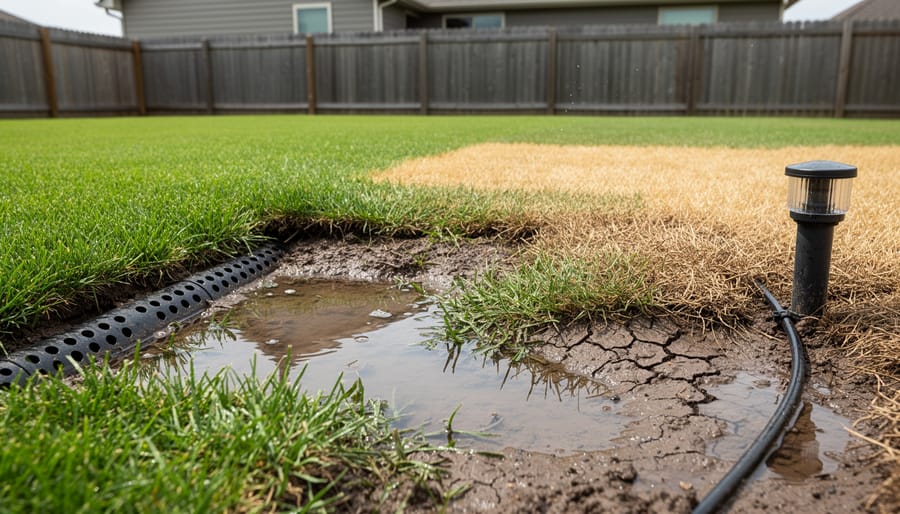
The most obvious red flag is standing water that lingers more than 24 hours after a good rain. Those persistent puddles aren’t just inconvenient; they’re drowning your grass roots and creating perfect breeding grounds for mosquitoes. On the flip side, if you’ve got bone-dry patches that stay crispy even after you’ve run the sprinklers, that’s your lawn waving a flag too.
Take a walk around your yard after watering and look for moss growth in shaded areas or along the foundation. While a little moss can be charming, excessive growth usually signals poor drainage and consistently damp soil conditions. Similarly, if certain zones of grass look yellowed or thin while neighboring areas thrive, you’re likely dealing with uneven water distribution.
Muddy pathways are another giveaway, especially if they appear in areas that shouldn’t naturally collect water. This often indicates either poor grading or runoff issues that need addressing. And here’s an easy test: watch your sprinklers run for a full cycle. If you notice some areas getting drenched while others barely get a sprinkle, or if you see water shooting onto your driveway instead of your lawn, your irrigation system needs adjustment or possibly a complete redesign to work harmoniously with your yard’s natural drainage patterns.
Understanding Your Soil’s Water Personality
Think of your soil as having a unique personality when it comes to water—some soils hold onto moisture like a sponge, while others let it slip through like a sieve. Understanding your soil’s water personality is the foundation for creating an effective drainage and irrigation system that doesn’t fight against nature.
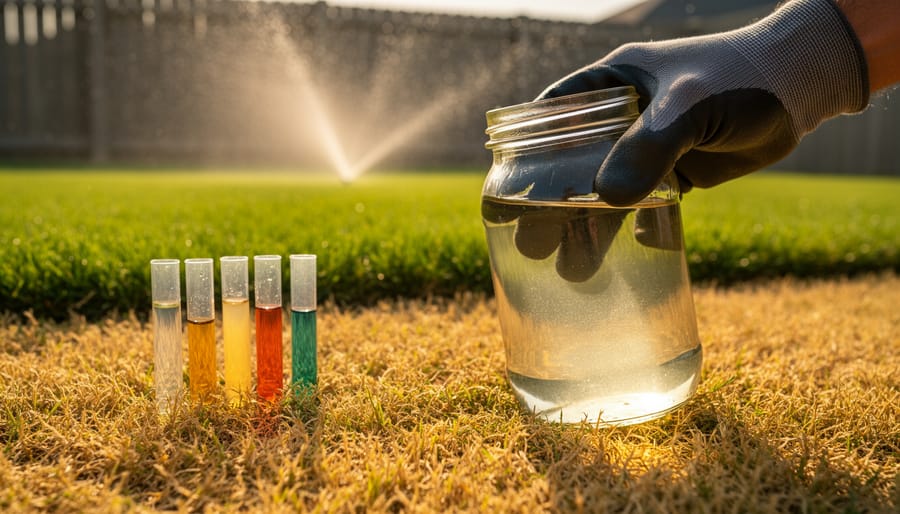
The simplest way to get acquainted with your soil is through the jar test. Grab a clear mason jar, fill it about one-third with soil from your garden, add water until it’s nearly full, then shake vigorously and let it settle for 24 hours. You’ll see distinct layers form: sand at the bottom, silt in the middle, and clay floating on top. This visual breakdown tells you everything about how water moves through your soil.
Clay soils are the water hoarders of the garden world. Their tiny, tightly packed particles create a dense structure that drains slowly and can become waterlogged easily. If you’ve ever noticed puddles lingering for hours after rain, you’re likely dealing with clay-heavy soil. The upside? Clay retains nutrients beautifully and needs less frequent watering once plants are established.
Sandy soils are the opposite—they’re the fast drainers. Water rushes through quickly, taking nutrients along for the ride. If your soil dries out within hours of watering, sandy composition is probably the culprit. You’ll need to water more frequently but in smaller amounts to keep plants happy.
Here’s a quick field test: squeeze a handful of moist soil. Clay forms a tight ball that holds its shape. Sandy soil crumbles immediately. Loam, the gardener’s dream, holds together loosely. Knowing your soil type helps you determine whether you need to focus more on improving drainage or enhancing water retention.

Building a Drainage Foundation That Works With Irrigation
Surface Drainage: Your First Line of Defense
Before you install a single drainage pipe or consider complex solutions, take a good look at your yard’s surface. Proper grading is truly your best friend when it comes to water management, and it’s often the most cost-effective solution to drainage woes.
The basic principle is wonderfully simple: water flows downhill. Your goal is to create gentle slopes that guide water away from your home’s foundation, planting beds, and low-lying areas where it tends to pool. Ideally, you want a slope of about 2-3% grade, which translates to roughly 2-3 inches of drop per 10 feet of distance. This is gentle enough to prevent erosion but effective enough to keep water moving.
Start by observing your yard after a good rain. Where does water collect? Where does it naturally flow? These observations are gold. Sometimes, you’ll discover that simply reshaping a few areas with a rake and some topsoil can redirect water beautifully.
Swales are another surface drainage hero that gardeners often overlook. These shallow, wide channels can be incredibly effective at capturing runoff and directing it where you want it to go. The beauty of swales is that they can double as attractive landscape features when planted with moisture-loving perennials or ornamental grasses.
Working with existing landscapes requires patience. You don’t need to tear everything out. Sometimes, adding a slight crown to lawn areas or creating subtle berms around garden beds can make a significant difference. Consider building up low spots with quality soil rather than trying to dig everything down. This approach is kinder to established plantings and maintains your soil’s health.
Remember, good surface drainage actually supports your irrigation efforts by preventing waterlogging, which means your watering schedule becomes more predictable and efficient.

Subsurface Solutions for Stubborn Problems
When persistent standing water won’t budge despite surface fixes, it’s time to go underground. These subsurface solutions might sound intimidating, but they’re often the most effective way to manage stubborn drainage problems while keeping your irrigation system running smoothly.
French drains are the workhorses of underground drainage. They’re essentially gravel-filled trenches containing a perforated pipe that intercepts and redirects water away from problem areas. Position them at least 18 inches away from your irrigation lines to prevent cross-contamination and accidental damage during maintenance. The beauty of French drains is their simplicity—gravity does all the work, making them incredibly reliable once properly installed.
Catch basins are perfect for collecting water from low spots or at the base of downspouts. These underground boxes with grated tops capture surface water and channel it into drainage pipes, keeping pooling water away from your lawn while directing it where you need it. When planning placement, map your irrigation zones first to avoid future headaches.
For a more sustainable approach, consider integrating rain gardens or dry wells. Rain gardens transform poorly draining areas into attractive landscape features that naturally filter and absorb excess water. Native plants thrive in these conditions while supporting local pollinators—a win-win for your yard and the environment. Dry wells work similarly by storing runoff underground where it gradually percolates into the soil, reducing strain on municipal systems and complementing rainwater harvesting systems.
The key to successful subsurface drainage is thorough planning. Always call 811 before digging to locate utilities, and create a detailed map showing both drainage and irrigation components. This prevents future confusion and ensures both systems work harmoniously to keep your landscape healthy and thriving.
Drainage Materials That Play Nice with Sprinklers
Choosing the right drainage materials makes all the difference in keeping your sprinkler system humming along happily. I’ve learned through trial and error that not all drainage solutions coexist peacefully with irrigation lines, so let’s talk about what actually works.
For gravel, stick with pea gravel or river rock in the 3/8 to 3/4-inch range. These rounded stones allow excellent water movement without shifting too much when your sprinklers run. Avoid crushed limestone or angular stone near irrigation lines—they can eventually compact and create problems.
Perforated drainage pipes are your underground allies. Look for Schedule 40 PVC or corrugated HDPE pipes with slots rather than holes. The slotted design prevents clogging from fine soil particles while maintaining water flow. Position them at least 12 inches away from sprinkler lines to prevent accidental damage during maintenance.
Landscape fabric deserves special attention here. Choose non-woven geotextile fabric specifically rated for drainage applications—typically 4 to 6 ounces per square yard. These fabrics filter sediment without restricting water movement, and they won’t deteriorate when exposed to fertilizers or irrigation chemicals. I always wrap drainage gravel in this fabric to prevent soil infiltration that could eventually clog your system.
For sustainability-minded gardeners, consider recycled drainage aggregates or bio-based geotextiles. These environmentally friendly options perform beautifully while reducing your project’s carbon footprint, and they typically last 20-plus years when properly installed.
Designing Irrigation Around Drainage Realities
Zoning Your Yard for Smart Water Management
Think of your yard as a neighborhood where different residents have different needs—some are water-lovers who thrive with regular moisture, while others prefer the drier side of town. This is the heart of hydrozoning, a smart approach that groups plants and lawn areas according to their water requirements and the natural drainage characteristics of your soil.
Start by walking your property and observing where water naturally collects after rainfall and which areas dry out quickly. You might notice that the shaded area under your oak tree stays damp longer than the sunny slope by the driveway. These observations are gold when planning your irrigation zones.
Create a simple sketch of your yard and divide it into three main hydrozones. Your high-water zone might include moisture-loving perennials, vegetable gardens, and areas with poor drainage that naturally retain water. The moderate zone typically houses your main lawn areas and most shrubs. Your low-water zone could include drought-tolerant plants, sloped areas with excellent drainage, and spots that receive full sun.
Here’s where sustainability meets practicality: by aligning your irrigation zones with these natural patterns, you’ll use significantly less water while keeping plants healthier. Install separate valves for each zone so you can customize watering schedules. Your thirsty vegetable garden might need daily attention during summer, while your native plant zone might only need occasional deep watering.
Don’t fight your yard’s natural tendencies. If you have a persistently soggy area, embrace it by creating a rain garden rather than trying to dry it out with expensive drainage solutions. Similarly, that fast-draining sandy patch is perfect for Mediterranean herbs or ornamental grasses that despise wet feet. Working with your landscape’s unique characteristics, rather than against them, creates a more resilient, water-efficient yard that practically takes care of itself.
Choosing Irrigation Methods That Respect Drainage
Your choice of irrigation method can make or break your drainage situation—literally. I learned this the hard way when my sprinkler system turned my clay-heavy backyard into a swamp every summer. Let me walk you through the options so you can avoid my soggy mistakes.
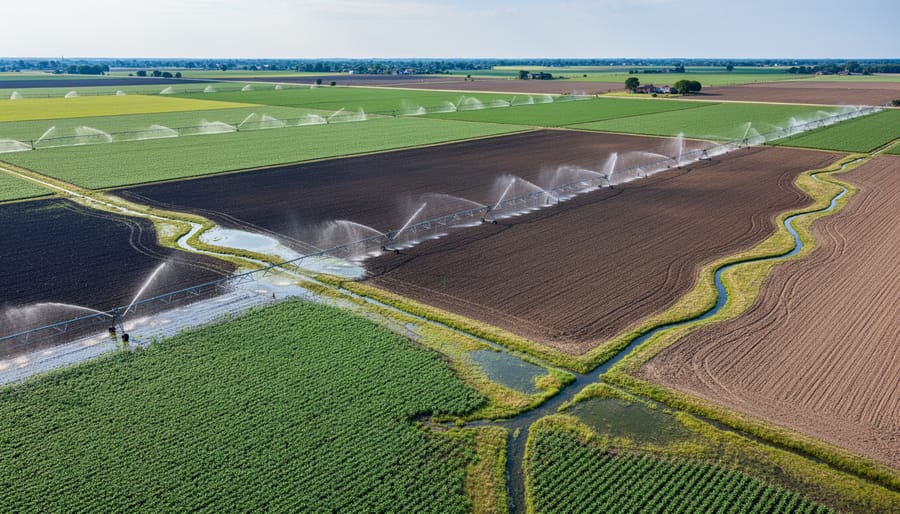
Sprinkler systems work beautifully for large, flat areas with decent drainage, but they can overwhelm poor-draining soil by dumping water faster than it can absorb. If you’re dealing with compacted soil or slopes, those inefficient sprinkler systems might be creating runoff and wasting water. The key is matching your sprinkler’s output rate to your soil’s infiltration rate—something worth checking before installation.
Drip irrigation is my go-to recommendation for areas with drainage challenges. By delivering water slowly and directly to plant roots, drip systems give soil time to absorb moisture without pooling or runoff. They’re perfect for slopes, heavy clay, or gardens with mixed plantings. Plus, they’re incredibly water-efficient, cutting usage by up to 50 percent compared to traditional sprinklers. Just stay on top of drip irrigation maintenance to prevent clogging issues.
Soaker hoses offer a middle ground—affordable, easy to install, and gentle on soil. They work well in vegetable gardens and flower beds where you want consistent, slow watering. For sustainable water conservation, consider pairing any method with rain sensors or smart controllers that prevent overwatering during wet periods.
Smart Controllers and Moisture Sensors: Your Water Management Team
Modern smart irrigation controllers are game-changers for managing challenging landscapes with both wet and dry spots. These devices use real-time weather data to adjust watering schedules automatically, preventing overwatering in poorly drained areas while ensuring dry zones get adequate moisture.
For homeowners, the Rachio 3 stands out as an exceptionally user-friendly option. Its smartphone app makes programming intuitive, and it integrates seamlessly with weather stations to skip watering when rain is forecasted. This prevents saturating already-soggy areas while maintaining consistent moisture elsewhere.
Pairing controllers with soil moisture sensors creates an even smarter system. The Orbit B-hyve system offers excellent value, with sensors that communicate directly with the controller to pause irrigation when soil moisture is sufficient. This targeted approach is particularly effective in yards with drainage variations.
For those managing specific problem areas, individual zone moisture sensors like the Hunter Soil-Clik can prevent runoff in slow-draining spots while allowing other zones to water normally. This precise control reduces water waste and promotes healthier grass by delivering moisture only where and when needed, supporting both sustainability and practical lawn care.
Installation Strategies: Doing Both Systems Right
The Order Matters: What Goes In First
Here’s a truth that surprised me when I first started planning my backyard makeover: installing your drainage system before or alongside your irrigation system can save you from a world of frustration later. Think of it like building a house—you wouldn’t install the plumbing after the walls are up, right?
Drainage needs to be your foundation. When you lay drainage pipes and create proper grading first, you establish the blueprint for how water naturally moves through your landscape. Then, when you add irrigation, you can strategically place sprinkler lines and emitters to work with, not against, your drainage patterns. Installing irrigation first and trying to retrofit drainage afterward often means digging up perfectly good irrigation lines or, worse, creating conflicts where irrigation water pools in areas with inadequate drainage.
The planning phase is where the magic happens. Grab some graph paper or use a simple landscape design app to map your yard. Mark existing low spots where water collects, downspouts from your roof, and areas that stay soggy after rain—these dictate your drainage needs. Then overlay your irrigation zones, keeping sprinkler lines away from drainage trenches and ensuring your watering schedule accounts for areas with different drainage characteristics.
This integrated approach is also more sustainable. You’ll avoid overwatering areas with poor drainage, which wastes water and creates unhealthy conditions for plants. When both systems work in harmony, you use less water overall while maintaining a healthier, more resilient landscape. Taking the time to plan both systems together before breaking ground might feel like extra work upfront, but it’s genuinely the smartest path forward.
DIY vs. Professional: Making the Right Choice
Let’s be honest—some drainage and irrigation projects are perfect weekend DIY adventures, while others are best left to the pros. Understanding the difference can save you money, headaches, and potential property damage.
Simple projects like installing soaker hoses, adding rain barrels, or creating small French drains (under 20 feet) are absolutely doable for confident homeowners. You’ll need basic tools, a free Saturday, and willingness to get your hands dirty. These projects typically cost under $300 in materials and offer great learning opportunities.
However, larger installations require professional expertise. Any project involving underground utilities, grading changes that affect your home’s foundation, or irrigation systems with multiple zones and automatic controllers deserves a professional’s touch. Similarly, if you’re dealing with chronic basement flooding or extensive yard drainage issues, hire an expert. The initial investment—usually $2,000 to $10,000 depending on scope—prevents costly mistakes that could double your expenses later.
Here’s the golden rule: if your project requires permits (many drainage and irrigation systems do), you probably need a professional who knows local codes and regulations. Don’t skip this step! Unpermitted work can void your homeowner’s insurance and create nightmares when selling your home.
Cost isn’t everything, either. Consider the complexity factor: working with slopes, calculating proper drainage flow, and sizing irrigation systems correctly requires experience. A professional brings specialized equipment and expertise that ensures your sustainable water management system actually works as intended. Sometimes the smartest DIY decision is knowing when to make that call.
Tools and Equipment You’ll Actually Use
You don’t need to break the bank to tackle drainage and irrigation projects effectively. For digging and trenching, a quality spade and trenching shovel are essential—I’ve had my Fiskars spade for eight years and it’s still going strong. A garden rake helps level soil after installations, while a good contractor’s wheelbarrow makes moving materials infinitely easier.
For irrigation work, invest in durable brass or stainless steel hose connectors rather than plastic ones. A soil moisture meter takes the guesswork out of watering schedules and typically costs under twenty dollars. If you’re installing drip irrigation, basic hole punches and tubing cutters are inexpensive must-haves.
Here’s a money-saving tip: rent expensive equipment like sod cutters, plate compactors, or trenchers from your local home improvement store. You’ll pay a fraction of the purchase price and avoid storing bulky machinery. Many rental centers also offer free tutorials on proper use, which is invaluable for first-timers.
Consider eco-friendly options too—rain barrels with overflow kits serve double duty for irrigation while managing excess water sustainably.
Maintaining Your Integrated System Through the Seasons
Spring and Fall: Your Critical Checkup Times
Think of spring and fall as your yard’s annual wellness visits. Just like you wouldn’t skip your doctor’s checkup, your drainage and irrigation systems need these twice-yearly inspections to catch small issues before they become expensive headaches.
Spring is your bounce-back season. After winter’s freeze-thaw cycles, walk your property and look for signs of shifted soil, clogged drain grates, or cracked irrigation lines. Turn on your system zone by zone, watching for leaks, misdirected sprinkler heads, or areas that aren’t getting coverage. I always flush my lines first to clear any debris that’s settled over winter. This is also the perfect time to adjust your irrigation timer for longer, warmer days and to clean out any leaves or sediment from your drainage channels.
Fall maintenance is all about preparing for dormancy and protecting your investment. Clear fallen leaves from drainage paths before they compact into water-blocking mats. Test your irrigation one last time, then winterize according to your climate. In colder regions, this means blowing out lines to prevent freeze damage. Check that your drainage is handling autumn rains effectively, because poor drainage combined with freezing temperatures can seriously damage your lawn’s root system.
Here’s a sustainability tip: use these checkup times to evaluate whether you’re overwatering. Many homeowners discover they can reduce irrigation frequency in spring and fall when rainfall typically increases, saving both water and money while keeping their lawns healthy.
Troubleshooting Common Integration Problems
Even well-designed drainage and irrigation systems can run into hiccups, but the good news is that many common problems have straightforward fixes you can tackle yourself.
If your irrigation is creating puddles or soggy spots, you’re likely dealing with overwatering in areas with poor drainage. Start by adjusting your watering schedule—reducing run times by 25-30% can make a huge difference. Check for low spots where water collects and consider aerating these areas to improve soil absorption. You might also need to redirect sprinkler heads away from problem zones.
Clogged drains often reveal themselves when irrigation water backs up instead of flowing away. Remove drain grates and clear out accumulated leaves, grass clippings, and debris. For stubborn clogs deeper in the system, a plumber’s snake or strong water blast from your hose can work wonders. Installing mesh screens over drain openings prevents future blockages while still allowing water through.
System conflicts—like downspouts dumping water onto irrigation zones or drainage pipes interfering with sprinkler coverage—require a bit of detective work. Walk your property during a watering cycle and during heavy rain to spot where systems clash. Simple solutions include extending downspouts to drainage areas, relocating sprinkler heads, or adjusting spray patterns.
Before making major changes, conduct a thorough irrigation system assessment to understand water distribution patterns. Sometimes what looks like a drainage problem is actually inefficient irrigation creating artificial wet spots. Remember, sustainable gardening means working with your landscape, not against it.
Environmental Benefits of Proper Water Management
When you design your drainage and irrigation systems to work together rather than as separate entities, you’re making a powerful choice for environmental stewardship that extends far beyond your property lines. Think of it this way: every drop of water that runs off your lawn is a missed opportunity—both for your garden and for the planet.
Integrated water management systems dramatically reduce water waste by capturing and redirecting excess water where it’s actually needed. Instead of watching irrigation water pool in low spots while elevated areas go thirsty, a well-planned system distributes moisture evenly, ensuring your lawn uses every available drop. This efficiency means you’re drawing less from municipal supplies or wells, preserving precious water resources for your community. Modern smart irrigation systems excel at reducing water waste by responding to actual soil conditions rather than arbitrary schedules.
Proper drainage also protects local waterways from pollution. When water rushes off your property, it carries fertilizers, pesticides, and sediment directly into storm drains and natural water bodies. By slowing and filtering runoff through strategic drainage design, you’re preventing these contaminants from reaching sensitive ecosystems. Your backyard becomes a mini water treatment facility, naturally cleansing water before it moves downstream.
Healthier soil ecosystems emerge when water management balances moisture levels without creating flood-or-drought extremes. Beneficial microorganisms thrive, earthworm populations increase, and plant roots develop the robust systems that support vigorous growth. This biological richness means less reliance on chemical inputs, creating a positive feedback loop of sustainability.
By embracing integrated drainage and irrigation, you’re not just solving a yard problem—you’re becoming part of the solution to larger water conservation challenges facing our communities.
You’ve made it this far, which means you’re already on the right path to solving your water management challenges. Here’s the empowering truth: drainage and irrigation aren’t competing systems fighting for dominance in your yard—they’re partners working together to create the perfect growing conditions for your lawn. Think of them as two sides of the same coin, both essential for a thriving, resilient landscape.
The beauty of understanding this relationship is that you don’t need to tackle everything at once. Start with a simple assessment of your property. Walk your yard after a heavy rain and notice where water pools. Observe which areas stay soggy and which dry out too quickly. This information becomes your roadmap for creating a customized water management plan that addresses your specific needs.
Whether you’re dealing with a chronically waterlogged lawn or struggling with dry patches despite regular watering, remember that solutions exist for every situation and skill level. Perhaps you’ll start with something as simple as adjusting your sprinkler timer or adding a rain barrel. Maybe you’re ready to install a French drain or upgrade to a smart irrigation controller. Every step forward, no matter how small, contributes to a healthier lawn.
By improving your water management practices, you’re not just solving immediate problems—you’re investing in a more sustainable future. Proper drainage and irrigation reduce water waste, prevent erosion, minimize fertilizer runoff, and create growing conditions where your grass naturally resists disease and stress. Your lawn becomes more beautiful while your environmental footprint shrinks. That’s a win worth celebrating.